
Navigation menu
Search
Databases
All Databases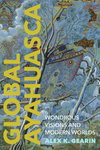
eBook
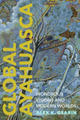
Global Ayahuasca : wondrous visions and modern worlds
Gearin, Alex K.
Stanford University Press
, 2024
; English
; 298 Pages
Surveying contemporary networks and practices in Peru, Australia, and China, anthropologist Alex K. Gearin explores the visionary marvels, wonders, and diversity of ayahuasca drinking today.
Ceremonies of drinking the psychoactive brew ayahuasca have flourished across the planet in recent decades. Emerging from Indigenous roots in the Amazon rainforest, the brew is now envisaged by many as the spiritual gateway to archaic and primordial worlds, with reports of healing, spiritual insight, and awe-inspiring visions placing ayahuasca among the burgeoning field of psychedelic medicines.
Astonished and allured by descriptions of ayahuasca experiences, researchers in psychology, anthropology, and philosophy have attempted to define the shared properties of the visions. In this book, Alex Gearin challenges this simplified obsession with universal truth and explores the embodied practices of contemporary ayahuasca drinkers to reveal how the brew has conjured contradictory experiences across the globe. These range from urban disenchantment and capitalist mastery to competitive sorcery and ecological harmony, wherein the plant-induced visions embody different attitudes towards capitalist modernity.
Based upon ethnographic research among Shipibo healers in remote Peru, alternative medicine groups in urban Australia, and entrepreneurs and corporate managers in mainland China, Global Ayahuasca examines how the wondrous visions of ayahuasca are entangled within the social and economic realities that they illuminate, revealing different tensions, fears, and hopes of everyday modern life.
Gearin, Alex K.
Stanford University Press
, 2024
; English
; 298 Pages
Surveying contemporary networks and practices in Peru, Australia, and China, anthropologist Alex K. Gearin explores the visionary marvels, wonders, and diversity of ayahuasca drinking today.
Ceremonies of drinking the psychoactive brew ayahuasca have flourished across the planet in recent decades. Emerging from Indigenous roots in the Amazon rainforest, the brew is now envisaged by many as the spiritual gateway to archaic and primordial worlds, with reports of healing, spiritual insight, and awe-inspiring visions placing ayahuasca among the burgeoning field of psychedelic medicines.
Astonished and allured by descriptions of ayahuasca experiences, researchers in psychology, anthropology, and philosophy have attempted to define the shared properties of the visions. In this book, Alex Gearin challenges this simplified obsession with universal truth and explores the embodied practices of contemporary ayahuasca drinkers to reveal how the brew has conjured contradictory experiences across the globe. These range from urban disenchantment and capitalist mastery to competitive sorcery and ecological harmony, wherein the plant-induced visions embody different attitudes towards capitalist modernity.
Based upon ethnographic research among Shipibo healers in remote Peru, alternative medicine groups in urban Australia, and entrepreneurs and corporate managers in mainland China, Global Ayahuasca examines how the wondrous visions of ayahuasca are entangled within the social and economic realities that they illuminate, revealing different tensions, fears, and hopes of everyday modern life.
eBook
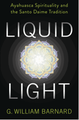
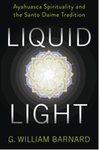
Liquid light : Ayahuasca spirituality and the Santo Daime tradition
Barnard, G. William
Columbia University Press
, 2022
; English
; 381 Pages
"In the last few years there has been a resurgence of interest in psychedelics across a number of fields from anthropology to religion, psychology, philosophy, and neuroscience. Whereas most recent publications have either stressed the potential therapeutic benefits of these powerful mind-altering substances or offered anthropological analyses of how these substances are utilized in different cultural contexts, Liquid Light takes a different approach. Using as a case study the Santo Daime community in Brazil, which practices a religion based on the sacramental use of ayahuasca, a psychedelic brew. Barnard gives readers a vivid, introspectively sophisticated depiction of the dramatic ritual and visionary worlds that appear in the life of a practitioner of this tradition--himself--arguing that careful examination of entheogenic religions, understood not only historically and culturally but also, as it were, "from within," can provide a rich empirical basis for sustained reflection on what psychedelics more generally can tell us about a wide range of key philosophical questions concerning the nature of consciousness, selfhood, and reality"
Barnard, G. William
Columbia University Press
, 2022
; English
; 381 Pages
"In the last few years there has been a resurgence of interest in psychedelics across a number of fields from anthropology to religion, psychology, philosophy, and neuroscience. Whereas most recent publications have either stressed the potential therapeutic benefits of these powerful mind-altering substances or offered anthropological analyses of how these substances are utilized in different cultural contexts, Liquid Light takes a different approach. Using as a case study the Santo Daime community in Brazil, which practices a religion based on the sacramental use of ayahuasca, a psychedelic brew. Barnard gives readers a vivid, introspectively sophisticated depiction of the dramatic ritual and visionary worlds that appear in the life of a practitioner of this tradition--himself--arguing that careful examination of entheogenic religions, understood not only historically and culturally but also, as it were, "from within," can provide a rich empirical basis for sustained reflection on what psychedelics more generally can tell us about a wide range of key philosophical questions concerning the nature of consciousness, selfhood, and reality"
eBook
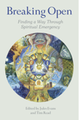
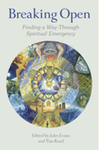
Breaking open: finding a way through spiritual emergencies
Evans, Jules; Read, Tim
Aeon Books
, 2020
; English
; 237 Pages
Personal accounts exploring the shift from mental illness to spiritual awakening
Evans, Jules; Read, Tim
Aeon Books
, 2020
; English
; 237 Pages
Personal accounts exploring the shift from mental illness to spiritual awakening
eBook
Johnson, Cody
Fair Winds Press
, 2018
; English
; 235 Pages
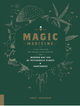
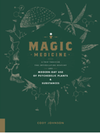
"Cody Johnson beautifully balanceshistorical knowledge with cutting-edge scienceto produce a thoroughly enjoyable and enlightening read which paints a holistic picture of the risks and benefits of psychedelic use in modern day medicine and culture. --Rick Doblin, Ph.D., Founder and Executive Director of the Multidisciplinary Association for Psychedelic Studies (MAPS). The history of psychedelic plants and substancesis full of colorful, fascinating facts and stories, and intriguing questions. Did U.S. Army Intelligence really use LSD as an enhanced military interrogation technique? Why does Ayahuasca have such a long history of use in Peru? Science is beginning to research what traditional cultures have told us for years: psychelics have transformative healing properties. Many psychedelic plants and substances have a long history of being incorporated into various healing traditions -- such as cannabis and opium in Traditional Chinese Medicine. This Magic Medicineexplores the fascinating history of psychedelic substances and provides a contemporary update about their growing inclusion modern medicine, science, and culture"
Johnson, Cody
Fair Winds Press
, 2018
; English
; 235 Pages
"Cody Johnson beautifully balanceshistorical knowledge with cutting-edge scienceto produce a thoroughly enjoyable and enlightening read which paints a holistic picture of the risks and benefits of psychedelic use in modern day medicine and culture. --Rick Doblin, Ph.D., Founder and Executive Director of the Multidisciplinary Association for Psychedelic Studies (MAPS). The history of psychedelic plants and substancesis full of colorful, fascinating facts and stories, and intriguing questions. Did U.S. Army Intelligence really use LSD as an enhanced military interrogation technique? Why does Ayahuasca have such a long history of use in Peru? Science is beginning to research what traditional cultures have told us for years: psychelics have transformative healing properties. Many psychedelic plants and substances have a long history of being incorporated into various healing traditions -- such as cannabis and opium in Traditional Chinese Medicine. This Magic Medicineexplores the fascinating history of psychedelic substances and provides a contemporary update about their growing inclusion modern medicine, science, and culture"
eBook
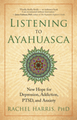
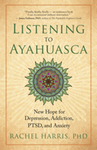
Listening to Ayahuasca : new hope for depression, addiction, PTSD, and anxiety
Harris, Rachel
New World Library
, 2017
; English
; 378 Pages
Used for thousands of years by indigenous tribes of the Amazon rain forest, the mystical brew ayahuasca is now becoming increasingly popular in the West. Psychologist Rachel Harris here shares her own healing experiences and draws on her original research (the largest study of ayahuasca use in North America) into the powerful medicine’s effects on depression, addiction, PTSD, and anxiety. In this wide-ranging and personal exploration, Harris details ayahuasca’s risks and benefits, helping readers clarify their intentions and giving psychotherapists a template for transformative care and healing.
Harris, Rachel
New World Library
, 2017
; English
; 378 Pages
Used for thousands of years by indigenous tribes of the Amazon rain forest, the mystical brew ayahuasca is now becoming increasingly popular in the West. Psychologist Rachel Harris here shares her own healing experiences and draws on her original research (the largest study of ayahuasca use in North America) into the powerful medicine’s effects on depression, addiction, PTSD, and anxiety. In this wide-ranging and personal exploration, Harris details ayahuasca’s risks and benefits, helping readers clarify their intentions and giving psychotherapists a template for transformative care and healing.
eBook
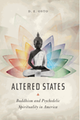
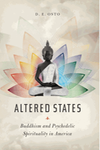
Altered states : Buddhism and psychedelic spirituality in America
Osto, Douglas
Columbia University Press
, 2016
; English
; 329 Pages
In the 1960s, Americans combined psychedelics with Buddhist meditation to achieve direct experience through altered states of consciousness. As some practitioners became more committed to Buddhism, they abandoned the use of psychedelics in favor of stricter mental discipline, but others carried on with the experiment, advancing a fascinating alchemy called psychedelic Buddhism.
Many think exploration with psychedelics in Buddhism faded with the revolutionary spirit of the sixties, but the underground practice has evolved into a brand of religiosity as eclectic and challenging as the era that created it. Altered States combines interviews with well-known figures in American Buddhism and psychedelic spirituality—including Lama Surya Das, Erik Davis, Geoffrey Shugen Arnold Sensei, Rick Strassman, and Charles Tart—and personal stories of everyday practitioners to define a distinctly American religious phenomenon. The nuanced perspective that emerges, grounded in a detailed history of psychedelic religious experience, adds critical depth to debates over the controlled use of psychedelics and drug-induced mysticism. The book also opens new paths of inquiry into such issues as re-enchantment, the limits of rationality, the biochemical and psychosocial basis of altered states of consciousness, and the nature of subjectivity.
Osto, Douglas
Columbia University Press
, 2016
; English
; 329 Pages
In the 1960s, Americans combined psychedelics with Buddhist meditation to achieve direct experience through altered states of consciousness. As some practitioners became more committed to Buddhism, they abandoned the use of psychedelics in favor of stricter mental discipline, but others carried on with the experiment, advancing a fascinating alchemy called psychedelic Buddhism.
Many think exploration with psychedelics in Buddhism faded with the revolutionary spirit of the sixties, but the underground practice has evolved into a brand of religiosity as eclectic and challenging as the era that created it. Altered States combines interviews with well-known figures in American Buddhism and psychedelic spirituality—including Lama Surya Das, Erik Davis, Geoffrey Shugen Arnold Sensei, Rick Strassman, and Charles Tart—and personal stories of everyday practitioners to define a distinctly American religious phenomenon. The nuanced perspective that emerges, grounded in a detailed history of psychedelic religious experience, adds critical depth to debates over the controlled use of psychedelics and drug-induced mysticism. The book also opens new paths of inquiry into such issues as re-enchantment, the limits of rationality, the biochemical and psychosocial basis of altered states of consciousness, and the nature of subjectivity.
eBook
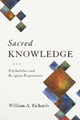
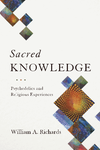
Sacred knowledge : psychedelics and religious experiences
Richards, William A.
Columbia University Press
, 2015
; English
; 279 Pages
Sacred Knowledge is the first well-documented, sophisticated account of the effect of psychedelics on biological processes, human consciousness, and revelatory religious experiences. Based on nearly three decades of legal research with volunteers, William A. Richards argues that, if used responsibly and legally, psychedelics have the potential to assuage suffering and constructively affect the quality of human life.
Richards's analysis contributes to social and political debates over the responsible integration of psychedelic substances into modern society. His book serves as an invaluable resource for readers who, whether spontaneously or with the facilitation of psychedelics, have encountered meaningful, inspiring, or even disturbing states of consciousness and seek clarity about their experiences. Testing the limits of language and conceptual frameworks, Richards makes the most of experiential phenomena that stretch our understanding of reality, advancing new frontiers in the study of belief, spiritual awakening, psychiatric treatment, and social well-being. His findings enrich humanities and scientific scholarship, expanding work in philosophy, anthropology, theology, and religious studies and bringing depth to research in mental health, psychotherapy, and psychopharmacology.
Richards, William A.
Columbia University Press
, 2015
; English
; 279 Pages
Sacred Knowledge is the first well-documented, sophisticated account of the effect of psychedelics on biological processes, human consciousness, and revelatory religious experiences. Based on nearly three decades of legal research with volunteers, William A. Richards argues that, if used responsibly and legally, psychedelics have the potential to assuage suffering and constructively affect the quality of human life.
Richards's analysis contributes to social and political debates over the responsible integration of psychedelic substances into modern society. His book serves as an invaluable resource for readers who, whether spontaneously or with the facilitation of psychedelics, have encountered meaningful, inspiring, or even disturbing states of consciousness and seek clarity about their experiences. Testing the limits of language and conceptual frameworks, Richards makes the most of experiential phenomena that stretch our understanding of reality, advancing new frontiers in the study of belief, spiritual awakening, psychiatric treatment, and social well-being. His findings enrich humanities and scientific scholarship, expanding work in philosophy, anthropology, theology, and religious studies and bringing depth to research in mental health, psychotherapy, and psychopharmacology.
eBook
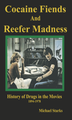
Cocaine fiends and reefer madness : an illustrated history of drugs in the movies, 1894-1978
Starks, Michael
Ronin Publishing
, 2015
; English
; 254 Pages
From the very beginning, filmmakers have struggled to free themselves from censorship and manipulation by special-interest groups, and this struggle is clearly evident in the history of drug films. "Cocaine Fiends and Reefer Madness" is an exhaustive exploration of the history of the depiction of psychoactive drugs in motion pictures from Thomas Edison's "Opium Smoker" (1894) to "Cocaine Cowboys" (1978), Included are over 400 silent and 1,000 sound films as well as nearly 500 drug-abuse films, 85 experimental films, and 135 television programs. More than 150 stills, most never before published and many extremely rare, illustrate the text. Arranged chronologically as well as by drug type and often by country, this book shows that, far from being a recent phenomenon, drug films were made in nearly every country and period that produced a significant body of films. Visit Edison's first film studio, reflect on the filmic consequences of Cocteau's opium addiction with Kenneth Anger's early experiences with magic mushrooms, see Charles Laughton smuggling cocaine inside a statute of the Buddha, and watch Douglas Fairbanks, Sr., consuming vast quantities of opium and cocaine in a World War I "Sherlock Holmes" parody.
Starks, Michael
Ronin Publishing
, 2015
; English
; 254 Pages
From the very beginning, filmmakers have struggled to free themselves from censorship and manipulation by special-interest groups, and this struggle is clearly evident in the history of drug films. "Cocaine Fiends and Reefer Madness" is an exhaustive exploration of the history of the depiction of psychoactive drugs in motion pictures from Thomas Edison's "Opium Smoker" (1894) to "Cocaine Cowboys" (1978), Included are over 400 silent and 1,000 sound films as well as nearly 500 drug-abuse films, 85 experimental films, and 135 television programs. More than 150 stills, most never before published and many extremely rare, illustrate the text. Arranged chronologically as well as by drug type and often by country, this book shows that, far from being a recent phenomenon, drug films were made in nearly every country and period that produced a significant body of films. Visit Edison's first film studio, reflect on the filmic consequences of Cocteau's opium addiction with Kenneth Anger's early experiences with magic mushrooms, see Charles Laughton smuggling cocaine inside a statute of the Buddha, and watch Douglas Fairbanks, Sr., consuming vast quantities of opium and cocaine in a World War I "Sherlock Holmes" parody.
eBook
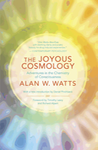
The joyous cosmology : adventures in the chemistry of consciousness
Watts, Alan W.; Pinchbeck, Daniel (With a new introduction by); Leary, Timothy (Foreword by); Alpert, Richard (Foreword by)
New World Library
, 2013
; English
; 154 Pages
In describing the effects of mescaline, Aldous Huxley’s The Doors of Perception opened a proverbial door for a generation of seekers. Watts walked through it with this classic account of the levels of insight that consciousness-changing drugs can facilitate “when accompanied with sustained philosophical reflection by a person who is in search, not of kicks, but of understanding.” Watts and peers including foreword authors Timothy Leary and Richard Alpert (then Harvard professors) anticipated physicists’ recognizing the individual’s “inseparability from the rest of the world,” the work of New Age thinkers who combine scientific findings and spiritual experiences, and federally funded clinical trials utilizing psilocybin to treat a variety of conditions. More than an artifact, The Joyous Cosmology is both a riveting memoir of Watts’s personal experiments and a profound meditation on our perennial questions about the nature of existence and the existence of the sacred.
Watts, Alan W.; Pinchbeck, Daniel (With a new introduction by); Leary, Timothy (Foreword by); Alpert, Richard (Foreword by)
New World Library
, 2013
; English
; 154 Pages
In describing the effects of mescaline, Aldous Huxley’s The Doors of Perception opened a proverbial door for a generation of seekers. Watts walked through it with this classic account of the levels of insight that consciousness-changing drugs can facilitate “when accompanied with sustained philosophical reflection by a person who is in search, not of kicks, but of understanding.” Watts and peers including foreword authors Timothy Leary and Richard Alpert (then Harvard professors) anticipated physicists’ recognizing the individual’s “inseparability from the rest of the world,” the work of New Age thinkers who combine scientific findings and spiritual experiences, and federally funded clinical trials utilizing psilocybin to treat a variety of conditions. More than an artifact, The Joyous Cosmology is both a riveting memoir of Watts’s personal experiments and a profound meditation on our perennial questions about the nature of existence and the existence of the sacred.
eBook
Growing marijuana hydroponically
Wright, Tina; Hans
Ronin Publishing
, 2012
; English
; 110 Pages
Combining environmental consciousness with organic techniques and a dusting of folk wisdom, this book reveals the growing secrets of sphagnum peat moss and intake air filters to increase yield.
Wright, Tina; Hans
Ronin Publishing
, 2012
; English
; 110 Pages
Combining environmental consciousness with organic techniques and a dusting of folk wisdom, this book reveals the growing secrets of sphagnum peat moss and intake air filters to increase yield.
