



Navigation menu
Search
eBook
Fundamentals of agricultural extension
Jarial, Sapna
NIPA GENX Electronic Resources & Solutions Pvt Ltd
, 2025
; English
; 312 Pages
The book Fundamentals of Agricultural Extension Education provides a thorough understanding of extension education and its role in agricultural development. This book covers various aspects such as effective teaching methods, organizational setup, ICT applications, rural and community development, extension administration, transfer of technology, monitoring and evaluation, new trends in agricultural extension, communication principles, diffusion and adoption of innovations, and agriculture journalism. The text is structured into six units, comprising a total of nineteen chapters, and includes mind maps, multiple-choice questions, and comprehensive exercises encompassing short and long-form questions to facilitate knowledge assimilation. After completing this course, undergraduate students majoring in BSc Agriculture, Forestry, Horticulture, Fisheries, or Veterinary Sciences will be able to demonstrate the following course outcomes.
Jarial, Sapna
NIPA GENX Electronic Resources & Solutions Pvt Ltd
, 2025
; English
; 312 Pages
The book Fundamentals of Agricultural Extension Education provides a thorough understanding of extension education and its role in agricultural development. This book covers various aspects such as effective teaching methods, organizational setup, ICT applications, rural and community development, extension administration, transfer of technology, monitoring and evaluation, new trends in agricultural extension, communication principles, diffusion and adoption of innovations, and agriculture journalism. The text is structured into six units, comprising a total of nineteen chapters, and includes mind maps, multiple-choice questions, and comprehensive exercises encompassing short and long-form questions to facilitate knowledge assimilation. After completing this course, undergraduate students majoring in BSc Agriculture, Forestry, Horticulture, Fisheries, or Veterinary Sciences will be able to demonstrate the following course outcomes.
eBook
Naorem, Anandkumar
NIPA GENX Electronic Resources & Solutions Pvt Ltd
, 2025
; English
; 152 Pages
Volume 03 highlights into the intricate world of soil salinity and alkalinity, addressing the challenges posed by salt-affected soils and the measures to remediate such stressed environments. Salt-affected soils, characterized by high levels of soluble salts, pose significant obstacles to agricultural productivity, ecosystem sustainability, and global food security. In this volume, we explore the criteria used to classify salt-affected soils, including electrical conductivity (EC), sodium adsorption ratio (SAR), and exchangeable sodium percentage (ESP). By understanding the indicators of soil salinity and alkalinity, readers gain insights into the extent and severity of soil stress and the potential impacts on soil quality and crop health. The importance of addressing soil salinity and alkalinity cannot be overstated, as these conditions can have far-reaching consequences for global food production. Saline soils can inhibit nutrient uptake by plants, reduce water availability, and induce physiological stress, leading to reduced crop yields and economic losses for farmers. Alkaline soils, characterized by high pH levels, can further exacerbate nutrient deficiencies and hinder plant growth, particularly for acid-sensitive crops. By examining the impacts of salt-affected soils on global food production, we gain a deeper appreciation for the urgency of addressing these soil stresses and promoting sustainable land management practices. In this volume, we also explore the measures available to remediate salt-affected soils and restore soil fertility and productivity. From leaching and drainage to soil amendments and crop selection, a range of strategies can be employed to mitigate the impacts of soil salinity and alkalinity and promote soil health and resilience. By integrating scientific knowledge with practical solutions, researchers, policymakers, and practitioners can develop tailored approaches to address salt-affected soils, fostering sustainable agriculture and food security for future generations
Naorem, Anandkumar
NIPA GENX Electronic Resources & Solutions Pvt Ltd
, 2025
; English
; 152 Pages
Volume 03 highlights into the intricate world of soil salinity and alkalinity, addressing the challenges posed by salt-affected soils and the measures to remediate such stressed environments. Salt-affected soils, characterized by high levels of soluble salts, pose significant obstacles to agricultural productivity, ecosystem sustainability, and global food security. In this volume, we explore the criteria used to classify salt-affected soils, including electrical conductivity (EC), sodium adsorption ratio (SAR), and exchangeable sodium percentage (ESP). By understanding the indicators of soil salinity and alkalinity, readers gain insights into the extent and severity of soil stress and the potential impacts on soil quality and crop health. The importance of addressing soil salinity and alkalinity cannot be overstated, as these conditions can have far-reaching consequences for global food production. Saline soils can inhibit nutrient uptake by plants, reduce water availability, and induce physiological stress, leading to reduced crop yields and economic losses for farmers. Alkaline soils, characterized by high pH levels, can further exacerbate nutrient deficiencies and hinder plant growth, particularly for acid-sensitive crops. By examining the impacts of salt-affected soils on global food production, we gain a deeper appreciation for the urgency of addressing these soil stresses and promoting sustainable land management practices. In this volume, we also explore the measures available to remediate salt-affected soils and restore soil fertility and productivity. From leaching and drainage to soil amendments and crop selection, a range of strategies can be employed to mitigate the impacts of soil salinity and alkalinity and promote soil health and resilience. By integrating scientific knowledge with practical solutions, researchers, policymakers, and practitioners can develop tailored approaches to address salt-affected soils, fostering sustainable agriculture and food security for future generations
eBook
Naorem, Anandkumar
NIPA GENX Electronic Resources & Solutions Pvt Ltd
, 2025
; English
; 128 Pages
Volume 02, dedicated to the "Management of Soil Structure." In this volume, we will discuss on a comprehensive exploration of soil structure, laying the foundation for understanding its importance, classification, and the physics behind it. We begin by unravelling the basic definitions of soil structure and related terms, providing readers with a solid conceptual framework for further exploration. From aggregates and peds to soil horizons and profiles, we delve into the terminology that forms the backbone of soil science, ensuring clarity and coherence throughout our discussions. The importance of soil structure cannot be overstated. It serves as the physical foundation upon which healthy soil ecosystems thrive, influencing water retention, nutrient distribution, root penetration, and overall soil health. By understanding the role of soil structure in regulating these essential processes, we gain insights into the mechanisms driving soil fertility, biological activity, and ecosystem resilience. Classification of soil structure provides a systematic framework for characterizing and categorizing soil types based on their physical properties. From granular to blocky, platy to prismatic, soil structure classifications offer valuable insights into soil behaviour, management practices, and potential constraints. By familiarizing ourselves with these classifications, we can better assess soil quality, diagnose issues, and devise tailored management strategies to optimize soil health and productivity. Behind the intricate patterns of soil structure lies a fascinating realm of physics, where forces of cohesion, adhesion, and capillarity interact to shape soil particles into aggregates of varying sizes and shapes. By exploring the physics behind soil structure, we gain a deeper appreciation for the complexities of soil behaviour and the dynamic interplay between soil particles, water, and air. Indeed, the insights and knowledge shared within this volume serve as the foundation for countless research endeavours in soil health and management. Soil physical health presents unique challenges, as it is relatively difficult to manage and is influenced by a myriad of factors, including soil texture, compaction, moisture content, and environmental conditions. In many parts of the world, soil physical constraints pose significant barriers to agricultural productivity, ecosystem sustainability, and land use management. By addressing these constraints and enhancing soil physical health, we can unlock the potential of soils to support thriving ecosystems, sustainable agriculture, and resilient communities.
Naorem, Anandkumar
NIPA GENX Electronic Resources & Solutions Pvt Ltd
, 2025
; English
; 128 Pages
Volume 02, dedicated to the "Management of Soil Structure." In this volume, we will discuss on a comprehensive exploration of soil structure, laying the foundation for understanding its importance, classification, and the physics behind it. We begin by unravelling the basic definitions of soil structure and related terms, providing readers with a solid conceptual framework for further exploration. From aggregates and peds to soil horizons and profiles, we delve into the terminology that forms the backbone of soil science, ensuring clarity and coherence throughout our discussions. The importance of soil structure cannot be overstated. It serves as the physical foundation upon which healthy soil ecosystems thrive, influencing water retention, nutrient distribution, root penetration, and overall soil health. By understanding the role of soil structure in regulating these essential processes, we gain insights into the mechanisms driving soil fertility, biological activity, and ecosystem resilience. Classification of soil structure provides a systematic framework for characterizing and categorizing soil types based on their physical properties. From granular to blocky, platy to prismatic, soil structure classifications offer valuable insights into soil behaviour, management practices, and potential constraints. By familiarizing ourselves with these classifications, we can better assess soil quality, diagnose issues, and devise tailored management strategies to optimize soil health and productivity. Behind the intricate patterns of soil structure lies a fascinating realm of physics, where forces of cohesion, adhesion, and capillarity interact to shape soil particles into aggregates of varying sizes and shapes. By exploring the physics behind soil structure, we gain a deeper appreciation for the complexities of soil behaviour and the dynamic interplay between soil particles, water, and air. Indeed, the insights and knowledge shared within this volume serve as the foundation for countless research endeavours in soil health and management. Soil physical health presents unique challenges, as it is relatively difficult to manage and is influenced by a myriad of factors, including soil texture, compaction, moisture content, and environmental conditions. In many parts of the world, soil physical constraints pose significant barriers to agricultural productivity, ecosystem sustainability, and land use management. By addressing these constraints and enhancing soil physical health, we can unlock the potential of soils to support thriving ecosystems, sustainable agriculture, and resilient communities.
eBook
Naorem, Anandkumar
NIPA GENX Electronic Resources & Solutions Pvt Ltd
, 2025
; English
; 134 Pages
Volume 04 uncovers the significance of soils subjected to waterlogging and submersion, particularly in the context of India. Submerged soils, also known as waterlogged soils or hydric soils, are those that experience prolonged periods of saturation or inundation with water. Found in wetlands, floodplains, rice paddies, and coastal areas, these soils play a critical role in regulating water flow, nutrient cycling, and biodiversity. Despite their importance, submerged soils are often understudied and underappreciated in soil science literature. In the Indian context, submerged soils hold particular significance due to the country's diverse landscape and agricultural practices. Wetlands and floodplains are integral components of India's ecosystem, providing essential services such as water purification, flood control, and habitat for wildlife. Moreover, rice paddies are a staple feature of Indian agriculture, supporting millions of livelihoods and contributing significantly to the country's food security. The nutrient dynamics of submerged soils differ from those of well-drained soils, presenting unique challenges and opportunities for agricultural productivity. Waterlogged conditions can lead to anaerobic environments, affecting the availability and mobility of nutrients such as nitrogen, phosphorus, and iron. As a result, nutrient management strategies must be tailored to the specific needs and constraints of submerged soils, balancing the requirements of crop growth with environmental sustainability. Furthermore, submerged soils can be significant sources of greenhouse gas (GHG) emissions, particularly methane (CH4), due to anaerobic microbial processes such as methanogenesis. Methane emissions from submerged soils contribute to climate change and global warming, highlighting the importance of studying and mitigating GHG emissions from these ecosystems. In light of these considerations, studying submerged soils is essential for understanding their ecological functions, agricultural potential, and environmental impacts. By understanding the complexities of submerged soil ecosystems, we can develop sustainable land management practices that promote soil health, biodiversity conservation, and climate resilience.
eBook
Naorem, Anandkumar
NIPA GENX Electronic Resources & Solutions Pvt Ltd
, 2025
; English
; 134 Pages
Volume 04 uncovers the significance of soils subjected to waterlogging and submersion, particularly in the context of India. Submerged soils, also known as waterlogged soils or hydric soils, are those that experience prolonged periods of saturation or inundation with water. Found in wetlands, floodplains, rice paddies, and coastal areas, these soils play a critical role in regulating water flow, nutrient cycling, and biodiversity. Despite their importance, submerged soils are often understudied and underappreciated in soil science literature. In the Indian context, submerged soils hold particular significance due to the country's diverse landscape and agricultural practices. Wetlands and floodplains are integral components of India's ecosystem, providing essential services such as water purification, flood control, and habitat for wildlife. Moreover, rice paddies are a staple feature of Indian agriculture, supporting millions of livelihoods and contributing significantly to the country's food security. The nutrient dynamics of submerged soils differ from those of well-drained soils, presenting unique challenges and opportunities for agricultural productivity. Waterlogged conditions can lead to anaerobic environments, affecting the availability and mobility of nutrients such as nitrogen, phosphorus, and iron. As a result, nutrient management strategies must be tailored to the specific needs and constraints of submerged soils, balancing the requirements of crop growth with environmental sustainability. Furthermore, submerged soils can be significant sources of greenhouse gas (GHG) emissions, particularly methane (CH4), due to anaerobic microbial processes such as methanogenesis. Methane emissions from submerged soils contribute to climate change and global warming, highlighting the importance of studying and mitigating GHG emissions from these ecosystems. In light of these considerations, studying submerged soils is essential for understanding their ecological functions, agricultural potential, and environmental impacts. By understanding the complexities of submerged soil ecosystems, we can develop sustainable land management practices that promote soil health, biodiversity conservation, and climate resilience.
eBook
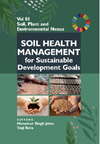
Soil health management for sustainable development goals
Jatav, Hanuman Singh; Raza, Taqi
NIPA GENX Electronic Resources & Solutions Pvt Ltd
, 2025
; English
; 476 Pages
Soil health is a state in which a soil fulfills its range of ecosystem functions appropriately in its environment. In simpler terms, the well-being of soil arises from favorable interactions among all its components, such as micro-biota, plants, and animals. The book Soil Health Management for Sustainable Development Goals primarily addresses the issue of soil management at the grassroots level. Soil fertility is the capacity of soil to sustain plant growth and optimize crop yield. This can be enhanced through the use of organic and inorganic fertilizers in the soil. As is widely recognized, the management of soil fertility is a prime concern for crop production and can be improved through the adoption of several sustainable management practices. Several techniques are suggested that enhance soil fertility and crop production while minimizing environmental impact. Soil fertility can be further improved by incorporating cover crops that add organic matter to the soil, leading to improved soil structure and promoting a healthy, fertile soil, by using green manure or growing legumes to fix nitrogen from the air through the process of biological nitrogen fixation by microbes. Healthy soils produce healthy crops that, in turn, nourish people and animals. Indeed, soil quality is directly linked to food quality and quantity. Soils supply essential nutrients, water, oxygen, and root support that our food-producing plants need to grow and thrive. The present book focuses on such global issues and offers possible solutions specifically related to UNSDG-17 goals. It also focuses on global strategies with possible solutions to manage sustainability.
Jatav, Hanuman Singh; Raza, Taqi
NIPA GENX Electronic Resources & Solutions Pvt Ltd
, 2025
; English
; 476 Pages
Soil health is a state in which a soil fulfills its range of ecosystem functions appropriately in its environment. In simpler terms, the well-being of soil arises from favorable interactions among all its components, such as micro-biota, plants, and animals. The book Soil Health Management for Sustainable Development Goals primarily addresses the issue of soil management at the grassroots level. Soil fertility is the capacity of soil to sustain plant growth and optimize crop yield. This can be enhanced through the use of organic and inorganic fertilizers in the soil. As is widely recognized, the management of soil fertility is a prime concern for crop production and can be improved through the adoption of several sustainable management practices. Several techniques are suggested that enhance soil fertility and crop production while minimizing environmental impact. Soil fertility can be further improved by incorporating cover crops that add organic matter to the soil, leading to improved soil structure and promoting a healthy, fertile soil, by using green manure or growing legumes to fix nitrogen from the air through the process of biological nitrogen fixation by microbes. Healthy soils produce healthy crops that, in turn, nourish people and animals. Indeed, soil quality is directly linked to food quality and quantity. Soils supply essential nutrients, water, oxygen, and root support that our food-producing plants need to grow and thrive. The present book focuses on such global issues and offers possible solutions specifically related to UNSDG-17 goals. It also focuses on global strategies with possible solutions to manage sustainability.

eBook
Roots of rural sociology & educational psychology
Jaisridhar, P.
NIPA GENX Electronic Resources & Solutions Pvt Ltd
, 2025
; English
; 224 Pages
In the complex tapestry of rural life, understanding its sociology and psychology is essential for effective engagement and development. Roots of Rural Sociology Educational Psychology is a compendium of lectures that delve into the intricacies of these fields and their significance in agricultural extension. Sociology forms the cornerstone of our exploration, illuminating the essence of rural communities. From unravelling the meaning and scope of rural sociology to deciphering the interplay between rural sociology and agricultural extension, this book navigates through Indian rural society vital characteristics, differences from urban counterparts, and the pivotal role of social groups, stratification, and institutions in agricultural development. Roots of Rural Sociology Educational Psychology is more than a mere academic exercise, it is a roadmap for practitioners, educators, and policymakers navigating the complexities of rural development. By weaving together sociological insights and psychological principles, this book aims to empower those engaged in agricultural extension with the knowledge and tools necessary to foster sustainable growth and prosperity in rural communities
Jaisridhar, P.
NIPA GENX Electronic Resources & Solutions Pvt Ltd
, 2025
; English
; 224 Pages
In the complex tapestry of rural life, understanding its sociology and psychology is essential for effective engagement and development. Roots of Rural Sociology Educational Psychology is a compendium of lectures that delve into the intricacies of these fields and their significance in agricultural extension. Sociology forms the cornerstone of our exploration, illuminating the essence of rural communities. From unravelling the meaning and scope of rural sociology to deciphering the interplay between rural sociology and agricultural extension, this book navigates through Indian rural society vital characteristics, differences from urban counterparts, and the pivotal role of social groups, stratification, and institutions in agricultural development. Roots of Rural Sociology Educational Psychology is more than a mere academic exercise, it is a roadmap for practitioners, educators, and policymakers navigating the complexities of rural development. By weaving together sociological insights and psychological principles, this book aims to empower those engaged in agricultural extension with the knowledge and tools necessary to foster sustainable growth and prosperity in rural communities

eBook
Sakhare, V.B.; Chalak, A.D.; Vasanthkumar, B.
NIPA GENX Electronic Resources & Solutions Pvt Ltd
, 2025
; English
; 224 Pages
Economic Zoology deals with the application of zoological knowledge for the benefit of mankind. It is a specialized branch of zoology which deals with the animal world that is associated with the economy, health and welfare of humans. The present book Economic Zoology contains more than 1400 multiple choice questions on various aspects of applied zoology like fish farming, prawn farming, Aquarium keeping, pearl culture Dairy farming, Lac culture, Vermitechnology, Apiculture, Sericulture, Poultry farming etc. The present book been specially developed keeping in mind the requirements of students,exam-aspirants and other readers with academic as well as competitions point of view.The book is especially useful for the aspirants of various competitive examinations where objective applied zoology forms an essential part of zoology forms as essential part of the examination.The main aim of the book is to present the specialized subject of applied zoology in an objective and reader -friendly manner to make the readers study and practice numerous questions on its various topics thoroughly.The book comprises a wide spectrum of question,covering all important topics which are frequently asked in various examinations. The book will act as an efficient tool to test your knowledge of the subject and preparation of the exam.The present book is the outcome of sincere efforts made by authors since last 3 years to bring ample number of multiple-choicequestions. It will definitely provide ready reference to the students, researchers and teachers and will cover state and central civil service examinations, JRF, SRF, NET, SET and other allied examinations as well.

eBook
Sakhare, V.B.; Chalak, A.D.; Vasanthkumar, B.
NIPA GENX Electronic Resources & Solutions Pvt Ltd
, 2025
; English
; 224 Pages
Economic Zoology deals with the application of zoological knowledge for the benefit of mankind. It is a specialized branch of zoology which deals with the animal world that is associated with the economy, health and welfare of humans. The present book Economic Zoology contains more than 1400 multiple choice questions on various aspects of applied zoology like fish farming, prawn farming, Aquarium keeping, pearl culture Dairy farming, Lac culture, Vermitechnology, Apiculture, Sericulture, Poultry farming etc. The present book been specially developed keeping in mind the requirements of students,exam-aspirants and other readers with academic as well as competitions point of view.The book is especially useful for the aspirants of various competitive examinations where objective applied zoology forms an essential part of zoology forms as essential part of the examination.The main aim of the book is to present the specialized subject of applied zoology in an objective and reader -friendly manner to make the readers study and practice numerous questions on its various topics thoroughly.The book comprises a wide spectrum of question,covering all important topics which are frequently asked in various examinations. The book will act as an efficient tool to test your knowledge of the subject and preparation of the exam.The present book is the outcome of sincere efforts made by authors since last 3 years to bring ample number of multiple-choicequestions. It will definitely provide ready reference to the students, researchers and teachers and will cover state and central civil service examinations, JRF, SRF, NET, SET and other allied examinations as well.

eBook
Mahapatra, Samarendra
NIPA GENX Electronic Resources & Solutions Pvt Ltd
, 2025
; English
; 196 Pages
This textbook on strategic management offers highly engaging and conceptually sound insights on the subject. It provides an up-to-date and detailed discussion on the core concepts of strategic management as per Indian curricula requirements. It guides the corporate managers about the course of action to be taken to face the challenges of competition by gaining and encashing competitive advantage and thus winning the minds of stakeholders. The book highlights the strategic framework in domestic as well as global context. It also provides both internal and external environmental analysis. It focuses on Strategic Management Planning process, including formulation of strategy at different levels i.e. Functional, Business, Corporate and Global. It also highlights Strategy implementation and control measures that includes behavioural dimensions, corporate governance, performance evaluation and corrective measures. This book offers an interesting reading for academicians, students, corporate officials to gain access on the strategic approach for success of all types of organisations.

eBook
Mahapatra, Samarendra
NIPA GENX Electronic Resources & Solutions Pvt Ltd
, 2025
; English
; 196 Pages
This textbook on strategic management offers highly engaging and conceptually sound insights on the subject. It provides an up-to-date and detailed discussion on the core concepts of strategic management as per Indian curricula requirements. It guides the corporate managers about the course of action to be taken to face the challenges of competition by gaining and encashing competitive advantage and thus winning the minds of stakeholders. The book highlights the strategic framework in domestic as well as global context. It also provides both internal and external environmental analysis. It focuses on Strategic Management Planning process, including formulation of strategy at different levels i.e. Functional, Business, Corporate and Global. It also highlights Strategy implementation and control measures that includes behavioural dimensions, corporate governance, performance evaluation and corrective measures. This book offers an interesting reading for academicians, students, corporate officials to gain access on the strategic approach for success of all types of organisations.
eBook
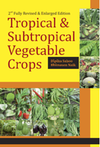
Tropical and subtropical vegetable crops, 2nd fully revised and enlarged edition
Sahoo, Dipika; Naik, Bhimasen
NIPA GENX Electronic Resources & Solutions Pvt Ltd
, 2025
; English
; 398 Pages
The present book is divided in two parts. Part-I deals with General Considerations and Part-II with Production Technology. The Part-I has two chapters and the Part-II is spread over six sections covering production technology of 33 crops. Simple and lucid language has been followed for easy understanding of the beginners. The information contained in the book has been gathered from various published sources and internet websites which are mentioned at thaze end of the book under bibliography. Attempts have been made to provide latest information, still some valuable information might have been missed. Questions are set at the end of each chapter under outcomes assessment to assess the understanding of the students.
Sahoo, Dipika; Naik, Bhimasen
NIPA GENX Electronic Resources & Solutions Pvt Ltd
, 2025
; English
; 398 Pages
The present book is divided in two parts. Part-I deals with General Considerations and Part-II with Production Technology. The Part-I has two chapters and the Part-II is spread over six sections covering production technology of 33 crops. Simple and lucid language has been followed for easy understanding of the beginners. The information contained in the book has been gathered from various published sources and internet websites which are mentioned at thaze end of the book under bibliography. Attempts have been made to provide latest information, still some valuable information might have been missed. Questions are set at the end of each chapter under outcomes assessment to assess the understanding of the students.

eBook
Kumar, Sanjeev
NIPA GENX Electronic Resources & Solutions Pvt Ltd
, 2025
; English
; 460 Pages
The primary objective of this book is to enable readers to comprehensively and systematically understand various topics in Plant Pathology This book is particularly useful for teachers, researchers, and development officers as a reference and resource for answering complex questions. The book is designed for individuals preparing for competitive examinations, including AIEEA-ICAR-Junior Research Fellow (JRF), Senior Research Fellowship (SRF), and IARI Ph.D. entrance exam, ICAR- National Eligibility Test (ICAR- NET) Agricultural Research Services (ARS), and for those seeking admission to PG and Ph.D. programs through entrance examinations of SAU and various institutions, as well as for clearing screening tests for jobs in Agricultural Sciences, Civil Services, Agricultural Officers (AO), Assistant Agricultural Officer (AAO), IBPS (SO) (Agriculture), ADO, and other related agricultural examinations conducted by various agencies of the Union Government.

eBook
Kumar, Sanjeev
NIPA GENX Electronic Resources & Solutions Pvt Ltd
, 2025
; English
; 460 Pages
The primary objective of this book is to enable readers to comprehensively and systematically understand various topics in Plant Pathology This book is particularly useful for teachers, researchers, and development officers as a reference and resource for answering complex questions. The book is designed for individuals preparing for competitive examinations, including AIEEA-ICAR-Junior Research Fellow (JRF), Senior Research Fellowship (SRF), and IARI Ph.D. entrance exam, ICAR- National Eligibility Test (ICAR- NET) Agricultural Research Services (ARS), and for those seeking admission to PG and Ph.D. programs through entrance examinations of SAU and various institutions, as well as for clearing screening tests for jobs in Agricultural Sciences, Civil Services, Agricultural Officers (AO), Assistant Agricultural Officer (AAO), IBPS (SO) (Agriculture), ADO, and other related agricultural examinations conducted by various agencies of the Union Government.
