


Navigation menu
Search
eBook
Catalogue of the Burney Parabaiks in the India Office Library
Blackmore, Thaung
The British Library
, 1985
; English
; 128 Pages
The Burmese word Parabaik is a generic term for the locally produced folding-books which fold backwards and forwards in concertina fashion. The reason for using the plural form of the word in this study is for the purpose of quantifying. The parabaiks can be folded flat neatly when not in use, and are therefore easy to store in a horizontal position. One side of the text recorded on the parabaik is read, fold after fold, until the end is reached, and then the reverse is read by the same process. In the days of Burmese monarchy, parabaiks had much practical use for the literati, but in time the steady stream of European-manufactured paper which flooded the Burmese market — especially after the British annexation of Upper Burma in 1886— superseded the parabaiks and made them obsolete. Their obsoleteness has in point of fact made them classifiable nowadays as highly valued curios. In the past there used to exist different kinds of parabaik, made from various materials such as gold, silver, leather, cloth and paper. The most commonly used were those made of paper which were available in two colours, white or black. The white parabaiks needed ink made from soot and fine brushes for the purpose of writing, whereas the black parabaiks only needed steatite pencils as writing implements. The parabaiks which form the basis of this study fall into the latter category. They are the parabaiks collected by Henry Burney, the first permanent British Resident at the Court of Ava, whose parabaiks now form part of the collection of oriental manuscripts amassed over the years by the India Office Library in London. To distinguish them from other oriental manuscripts, I refer to them as the Burney Parabaiks. Conclusive evidence is lacking as to when and how these parabaiks were acquired by the Library. It seems very likely however that Burney himself donated them, along with some Pali Buddhist works from his private collection, to the East India Company's Library at Leadenhall Street in London towards the end of his furlough in England, shortly before setting out on his last journey to India in January 1842. The Burney Parabaiks presumably form part of the legacy which the India Office Library received from the East India Company's Library.
Blackmore, Thaung
The British Library
, 1985
; English
; 128 Pages
The Burmese word Parabaik is a generic term for the locally produced folding-books which fold backwards and forwards in concertina fashion. The reason for using the plural form of the word in this study is for the purpose of quantifying. The parabaiks can be folded flat neatly when not in use, and are therefore easy to store in a horizontal position. One side of the text recorded on the parabaik is read, fold after fold, until the end is reached, and then the reverse is read by the same process. In the days of Burmese monarchy, parabaiks had much practical use for the literati, but in time the steady stream of European-manufactured paper which flooded the Burmese market — especially after the British annexation of Upper Burma in 1886— superseded the parabaiks and made them obsolete. Their obsoleteness has in point of fact made them classifiable nowadays as highly valued curios. In the past there used to exist different kinds of parabaik, made from various materials such as gold, silver, leather, cloth and paper. The most commonly used were those made of paper which were available in two colours, white or black. The white parabaiks needed ink made from soot and fine brushes for the purpose of writing, whereas the black parabaiks only needed steatite pencils as writing implements. The parabaiks which form the basis of this study fall into the latter category. They are the parabaiks collected by Henry Burney, the first permanent British Resident at the Court of Ava, whose parabaiks now form part of the collection of oriental manuscripts amassed over the years by the India Office Library in London. To distinguish them from other oriental manuscripts, I refer to them as the Burney Parabaiks. Conclusive evidence is lacking as to when and how these parabaiks were acquired by the Library. It seems very likely however that Burney himself donated them, along with some Pali Buddhist works from his private collection, to the East India Company's Library at Leadenhall Street in London towards the end of his furlough in England, shortly before setting out on his last journey to India in January 1842. The Burney Parabaiks presumably form part of the legacy which the India Office Library received from the East India Company's Library.
eBook
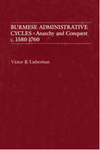
Burmese administrative cycles : anarchy and conquest, c. 1580-1760
Lieberman, Victor B.
Princeton University Press
, 1984
; English
; 357 Pages
There is no abstract available for this title.
Lieberman, Victor B.
Princeton University Press
, 1984
; English
; 357 Pages
There is no abstract available for this title.

eBook
McCrae, Alister; Prentice, Alan
JAMES PATON LIMITED
, 1978
; English
; 235 Pages
This book charts the company?s development against the background of British colonial policy and the economic growth of Burma, and describes its tragic end during the Second World War, when its ships were scuppered to prevent them falling into the hands of the Japanese.

eBook
McCrae, Alister; Prentice, Alan
JAMES PATON LIMITED
, 1978
; English
; 235 Pages
This book charts the company?s development against the background of British colonial policy and the economic growth of Burma, and describes its tragic end during the Second World War, when its ships were scuppered to prevent them falling into the hands of the Japanese.
eBook
Journal of the Burma Research Society, Vol. LVI, Part I & II
Burma Research Society; Hla, U Tin
Burma Research Society
, 1973
; English
; 140 Pages
The journal was the country's principal scholarly publication. By the mid-1910s, it was also the leading platform in the field of scholarly reviews of Burmese fiction. The journal analyzed a wide range of Burmese culture and Burmese history topics and published ethnographic studies, translations and reviews of Burmese literature, folklore, music and theology, fauna, geography and archaeology reports, historical essays, and annotated texts and essays of historical significance, translated from Burmese, Pali, Mon, and other languages.
Burma Research Society; Hla, U Tin
Burma Research Society
, 1973
; English
; 140 Pages
The journal was the country's principal scholarly publication. By the mid-1910s, it was also the leading platform in the field of scholarly reviews of Burmese fiction. The journal analyzed a wide range of Burmese culture and Burmese history topics and published ethnographic studies, translations and reviews of Burmese literature, folklore, music and theology, fauna, geography and archaeology reports, historical essays, and annotated texts and essays of historical significance, translated from Burmese, Pali, Mon, and other languages.
eBook
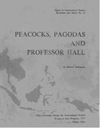
Sarkisyanz, Manuel
The Center for International Studies, Ohio University
, 1972
; English
; 73 Pages
There is no abstract available for this title.
Sarkisyanz, Manuel
The Center for International Studies, Ohio University
, 1972
; English
; 73 Pages
There is no abstract available for this title.
eBook
Journal of a residence in the Burmham empire, and more particularly at the court of Amarapoorah
Cox, Hiram
William Clowes
, 1971
; English
; 443 Pages
There is no abstract available for this title.
eBook
Cox, Hiram
William Clowes
, 1971
; English
; 443 Pages
There is no abstract available for this title.

eBook
Old Burma-Early Pagán, Volume two : Catalogue of plates indexes
Luce, Gordon H.
J. J. AUGUSTIN PUBLISHER
, 1970
; English
; 347 Pages
This is by far the most comprehensive work ever published on the ancient city Pagan (now Bagan). From the 9th to 13th centuries, the city was the capital of the Kingdom of Pagan, the first kingdom to unify the regions that would later constitute modern Burma (now Myanmar). During the kingdom's height between the 11th and 13th centuries, over 10,000 Buddhist temples, pagodas and monasteries were constructed in the Pagan plains alone, of which the remains of over 2200 temples and pagodas still survive to the present day (modified after Wiki). This work documents these remaining temples and pagodas and the Buddhist and other iconography housed within. No ownership marks and no signs of use.
Luce, Gordon H.
J. J. AUGUSTIN PUBLISHER
, 1970
; English
; 347 Pages
This is by far the most comprehensive work ever published on the ancient city Pagan (now Bagan). From the 9th to 13th centuries, the city was the capital of the Kingdom of Pagan, the first kingdom to unify the regions that would later constitute modern Burma (now Myanmar). During the kingdom's height between the 11th and 13th centuries, over 10,000 Buddhist temples, pagodas and monasteries were constructed in the Pagan plains alone, of which the remains of over 2200 temples and pagodas still survive to the present day (modified after Wiki). This work documents these remaining temples and pagodas and the Buddhist and other iconography housed within. No ownership marks and no signs of use.
eBook
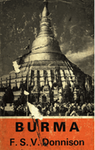
Donnison, F. S. V.
Ernest Benn Limited
, 1970
; English
; 280 Pages
There is no abstract available for this title.
eBook
Donnison, F. S. V.
Ernest Benn Limited
, 1970
; English
; 280 Pages
There is no abstract available for this title.
eBook
Old Burma-Early Pagán, Volume one : Text
Luce, Gordon H.
J. J. AUGUSTIN PUBLISHER
, 1969
; English
; 442 Pages
This is by far the most comprehensive work ever published on the ancient city Pagan (now Bagan). From the 9th to 13th centuries, the city was the capital of the Kingdom of Pagan, the first kingdom to unify the regions that would later constitute modern Burma (now Myanmar). During the kingdom's height between the 11th and 13th centuries, over 10,000 Buddhist temples, pagodas and monasteries were constructed in the Pagan plains alone, of which the remains of over 2200 temples and pagodas still survive to the present day (modified after Wiki). This work documents these remaining temples and pagodas and the Buddhist and other iconography housed within. No ownership marks and no signs of use.
Luce, Gordon H.
J. J. AUGUSTIN PUBLISHER
, 1969
; English
; 442 Pages
This is by far the most comprehensive work ever published on the ancient city Pagan (now Bagan). From the 9th to 13th centuries, the city was the capital of the Kingdom of Pagan, the first kingdom to unify the regions that would later constitute modern Burma (now Myanmar). During the kingdom's height between the 11th and 13th centuries, over 10,000 Buddhist temples, pagodas and monasteries were constructed in the Pagan plains alone, of which the remains of over 2200 temples and pagodas still survive to the present day (modified after Wiki). This work documents these remaining temples and pagodas and the Buddhist and other iconography housed within. No ownership marks and no signs of use.
eBook
Bibliographie birmane, années 1950-1960
Bernot, Denise
Centre National De La Recherche Scientifique
, 1968
; English
; 222 Pages
There is no abstract available for this title.
Bernot, Denise
Centre National De La Recherche Scientifique
, 1968
; English
; 222 Pages
There is no abstract available for this title.
