

Navigation menu
Search
eBook
Nonlinear optimal and flatness-based control methods and applications for complex dynamical systems
Rigatos, Gerasimos; Abbaszadeh, Masoud; Siano, Pierluigi
The Institution of Engineering and Technology
, 2025
; English
; 894 Pages
Robotics, mechatronics and autonomous systems can exhibit complex nonlinear dynamics which can lead to unsatisfactory transients and deviation from setpoints or even to instability.
A standard approach in the control of these systems had been the concept of diffeomorphisms to bring a system into a linear form.
However, these methods are not straightforward and result in complicated state-space model transformations.
In this monograph, new methods have been investigated which are not constrained by the shortcomings of global linearization-based control schemes.
They can be implemented in a computationally simple manner, are followed by global stability proofs, and perform better than previous optimal control approaches for a wider class of nonlinear dynamical systems and applications. In this monograph, the authors present two main proven control methods: the nonlinear optimal (H-infinity) control method, and the flatness-based control approach.
These methods have shown to be better suited than previous standard approaches in solving control issues, and can be used in a wide class of dynamical systems.
They can have a broad range of applications in mechatronics, industrial robotics, space robotics, robotic cranes and pendulums, autonomous vehicles, aerospace systems and satellites, power electronics, biosystems and financial systems. This very comprehensive monograph is a valuable resource for academic researchers and engineers working on control systems and estimation methods, and university staff and graduate students in the fields of control and automation, robotics and mechatronics, electrical engineering, electric power systems and power electronics, biosystems, computer science, financial systems, and physics.
The monograph is also a very useful reference for skilled technical professionals developing real world applications.
eBook
Rigatos, Gerasimos; Abbaszadeh, Masoud; Siano, Pierluigi
The Institution of Engineering and Technology
, 2025
; English
; 894 Pages
Robotics, mechatronics and autonomous systems can exhibit complex nonlinear dynamics which can lead to unsatisfactory transients and deviation from setpoints or even to instability.
A standard approach in the control of these systems had been the concept of diffeomorphisms to bring a system into a linear form.
However, these methods are not straightforward and result in complicated state-space model transformations.
In this monograph, new methods have been investigated which are not constrained by the shortcomings of global linearization-based control schemes.
They can be implemented in a computationally simple manner, are followed by global stability proofs, and perform better than previous optimal control approaches for a wider class of nonlinear dynamical systems and applications. In this monograph, the authors present two main proven control methods: the nonlinear optimal (H-infinity) control method, and the flatness-based control approach.
These methods have shown to be better suited than previous standard approaches in solving control issues, and can be used in a wide class of dynamical systems.
They can have a broad range of applications in mechatronics, industrial robotics, space robotics, robotic cranes and pendulums, autonomous vehicles, aerospace systems and satellites, power electronics, biosystems and financial systems. This very comprehensive monograph is a valuable resource for academic researchers and engineers working on control systems and estimation methods, and university staff and graduate students in the fields of control and automation, robotics and mechatronics, electrical engineering, electric power systems and power electronics, biosystems, computer science, financial systems, and physics.
The monograph is also a very useful reference for skilled technical professionals developing real world applications.
eBook
Kassem, Mohamad; Maciel, Abel; Hall, Daniel M.
The Institution of Engineering and Technology
, 2025
; English
; 468 Pages
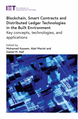
The built environment, encompassing the spaces we inhabit, the infrastructure that connects us, and the systems that sustain our societies, is foundational to human progress.
It shapes how we live, work and interact, serving as a fundamental for social and economic prosperity.
Yet, despite its importance, the sector faces enduring challenges: inefficiencies, insufficient collaboration, significant environmental impact, and a slow pace of transformative innovation, particularly in areas such as value creation, business model evolution, and major sector-wide transformations. Digitalisation and digital transformation, driven by technologies such as building information modelling (BIM), the internet of things (IoT), artificial intelligence, and immersive technologies, have become essential in helping the sector address these issues.
More recently, distributed ledger technologies (DLT), such as blockchain and self-executing contracts like smart contracts, have emerged, offering further opportunities for the built environment. Emerging evidence, as explored in this book, highlights DLT's capabilities in transparency and trust (immutable records and enhanced accountability), efficiency and automation (smart contracts and streamlined processes), data security (decentralised integrity), collaborative governance (shared decision-making), tokenisation (democratised ownership), integration (synergy with digital twins, BIM and IoT), and sustainability (circular economies, renewable energy).
However, adoption in the built environment faces several challenges, including legal, technical, ethical and stakeholder barriers. Combining theoretical and practical perspectives, this book examines the potential of blockchain and DLT in both the delivery and management of the built environment, addressing their adoption frameworks, applications and associated benefits and challenges. Intended for researchers, practitioners, students, technology developers and policymakers, Blockchain, Smart Contracts and Distributed Ledger Technologies in the Built Environment: Key concepts, technologies, and applications is a comprehensive guide to the adoption and integration of DLT in the built environment.
Kassem, Mohamad; Maciel, Abel; Hall, Daniel M.
The Institution of Engineering and Technology
, 2025
; English
; 468 Pages
The built environment, encompassing the spaces we inhabit, the infrastructure that connects us, and the systems that sustain our societies, is foundational to human progress.
It shapes how we live, work and interact, serving as a fundamental for social and economic prosperity.
Yet, despite its importance, the sector faces enduring challenges: inefficiencies, insufficient collaboration, significant environmental impact, and a slow pace of transformative innovation, particularly in areas such as value creation, business model evolution, and major sector-wide transformations. Digitalisation and digital transformation, driven by technologies such as building information modelling (BIM), the internet of things (IoT), artificial intelligence, and immersive technologies, have become essential in helping the sector address these issues.
More recently, distributed ledger technologies (DLT), such as blockchain and self-executing contracts like smart contracts, have emerged, offering further opportunities for the built environment. Emerging evidence, as explored in this book, highlights DLT's capabilities in transparency and trust (immutable records and enhanced accountability), efficiency and automation (smart contracts and streamlined processes), data security (decentralised integrity), collaborative governance (shared decision-making), tokenisation (democratised ownership), integration (synergy with digital twins, BIM and IoT), and sustainability (circular economies, renewable energy).
However, adoption in the built environment faces several challenges, including legal, technical, ethical and stakeholder barriers. Combining theoretical and practical perspectives, this book examines the potential of blockchain and DLT in both the delivery and management of the built environment, addressing their adoption frameworks, applications and associated benefits and challenges. Intended for researchers, practitioners, students, technology developers and policymakers, Blockchain, Smart Contracts and Distributed Ledger Technologies in the Built Environment: Key concepts, technologies, and applications is a comprehensive guide to the adoption and integration of DLT in the built environment.
eBook
Energy management systems for microgrids with wind, PV and battery storage
Bossoufi, Badre
The Institution of Engineering and Technology
, 2025
; English
; 408 Pages
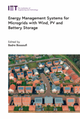
Growing shares of intermittent clean generation as well as variable loads lead to challenges for distribution systems at all levels.
Energy management systems (EMS) are systems of computer-aided tools used by operators of electric utility grids to monitor, control, and optimize the performance of the generation, distribution or transmission system.
EMS help to ensure grid stability and power quality, and can also be used in smaller scale systems such as microgrids. Energy Management Systems for Microgrids with Wind, PV and Battery Storage gives a broad overview of EMS technologies for researchers, designers, operators at electric utilities involved with managing power systems, as well as advanced energy engineering students working on power systems. Chapters cover AC network performance with flexible alternating current transmission system (FACTS) devices, metaheuristic optimization and hidden neuron count effect on microgrid management.
Ensuing chapters will focus on microgrids with storage, with control of microgrids with renewables and storage, while several chapters look at wind energy in smart grids, battery charge in wind turbines, field-programmable gate array for wind turbines, fuzzy logic for wind energy, and classical Boolean methods for hybrid systems with wind, PV and batteries.
Later chapters convey model predictive control and particle swarm optimization, and integration of and energy management for EV with support vector regression.
Bossoufi, Badre
The Institution of Engineering and Technology
, 2025
; English
; 408 Pages
Growing shares of intermittent clean generation as well as variable loads lead to challenges for distribution systems at all levels.
Energy management systems (EMS) are systems of computer-aided tools used by operators of electric utility grids to monitor, control, and optimize the performance of the generation, distribution or transmission system.
EMS help to ensure grid stability and power quality, and can also be used in smaller scale systems such as microgrids. Energy Management Systems for Microgrids with Wind, PV and Battery Storage gives a broad overview of EMS technologies for researchers, designers, operators at electric utilities involved with managing power systems, as well as advanced energy engineering students working on power systems. Chapters cover AC network performance with flexible alternating current transmission system (FACTS) devices, metaheuristic optimization and hidden neuron count effect on microgrid management.
Ensuing chapters will focus on microgrids with storage, with control of microgrids with renewables and storage, while several chapters look at wind energy in smart grids, battery charge in wind turbines, field-programmable gate array for wind turbines, fuzzy logic for wind energy, and classical Boolean methods for hybrid systems with wind, PV and batteries.
Later chapters convey model predictive control and particle swarm optimization, and integration of and energy management for EV with support vector regression.
eBook
Simulation and analysis of circuits for power electronics
Rashid, Muhammad H.
The Institution of Engineering and Technology
, 2025
; English
; 308 Pages
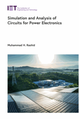
Power electronics play a vital role in many spheres, including integrating renewable energy, ensuring the reliability of complex power distribution systems, and in increasing efficiency of electric vehicles and industrial machines.
Simulation of power electronic circuitry is thus a key and cost-effective means to detect and avoid problems during development of circuitry in power generation, distribution and use.
This is true for both novel and established circuit designs. Simulation and Analysis of Circuits for Power Electronics gives particular consideration to power electronics consisting of piece-wise circuits, focusing especially on LTspice circuit simulation and performance analysis.
The book integrates the free-version LTspice for drawing schematics and simulating to generate waveforms of the output voltage and currents, mathematical derivations of the circuits, and the Mathcad software tool for computation of the mathematical derivations to determine the performance parameters. Starting with fundamentals, chapters cover switched RLC circuits, diode rectifiers, DC-DC and DC-AC converters
thereafter, treatment focuses on resonant pulse inverters, rectifiers, AC voltage controllers, and protection of semiconductor devices.
Readers become enabled to apply simulation to novel circuitry as part of their research activities.
Each chapter follows a unified structure in presenting the circuit, modelling approach, numerical examples, and use of data and results. Presenting fundamentals and strategies for circuitry simulation for power electronics, this book offers structured information from principles through to applications, so is a useful guide for students, researchers and anyone wishing to refresh their knowledge of this field.
It will also be useful for working engineers with some background in electric circuits and differential equations.
Rashid, Muhammad H.
The Institution of Engineering and Technology
, 2025
; English
; 308 Pages
Power electronics play a vital role in many spheres, including integrating renewable energy, ensuring the reliability of complex power distribution systems, and in increasing efficiency of electric vehicles and industrial machines.
Simulation of power electronic circuitry is thus a key and cost-effective means to detect and avoid problems during development of circuitry in power generation, distribution and use.
This is true for both novel and established circuit designs. Simulation and Analysis of Circuits for Power Electronics gives particular consideration to power electronics consisting of piece-wise circuits, focusing especially on LTspice circuit simulation and performance analysis.
The book integrates the free-version LTspice for drawing schematics and simulating to generate waveforms of the output voltage and currents, mathematical derivations of the circuits, and the Mathcad software tool for computation of the mathematical derivations to determine the performance parameters. Starting with fundamentals, chapters cover switched RLC circuits, diode rectifiers, DC-DC and DC-AC converters
thereafter, treatment focuses on resonant pulse inverters, rectifiers, AC voltage controllers, and protection of semiconductor devices.
Readers become enabled to apply simulation to novel circuitry as part of their research activities.
Each chapter follows a unified structure in presenting the circuit, modelling approach, numerical examples, and use of data and results. Presenting fundamentals and strategies for circuitry simulation for power electronics, this book offers structured information from principles through to applications, so is a useful guide for students, researchers and anyone wishing to refresh their knowledge of this field.
It will also be useful for working engineers with some background in electric circuits and differential equations.
eBook
Urban traffic analysis and control : the key challenges in the era of ITS
Roberta Di Pace; Cantarella, Giulio E.
The Institution of Engineering and Technology
, 2025
; English
; 457 Pages
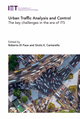
Urban Traffic Analysis and Control: The key challenges in the era of ITS explores urban traffic control strategies. It provides a comprehensive overview of traffic management methods, focusing on both static and dynamic applications. The book addresses issues related to transportation planning, or simpler cases where real-time adaptive control is not necessary, as well as traffic control applications based on real-time monitoring and dynamic models or data-driven methods for flow prediction.
Notably, this is the first book to address both fixed and adaptive signal-setting design, offering theory and practical applications at both the intersection and network-wide levels. It also incorporates the latest developments in Intelligent Transportation Systems, particularly how technologies impact traffic analysis and control. Additionally, the book discusses strategies for optimizing impacts related to safety, noise, fuel consumption, and emissions.
The four main topics covered are:
Methods for estimating dynamic traffic flows and evaluating performance;
Traffic control strategies, with a primary focus on signal coordination;
The impact of emerging technologies on enhancing traffic signals and management;
Methods for evaluating externalities (such as safety, emissions, energy consumption, and noise).
The book is intended to serve as a reference work for academic researchers and graduate students in the field of Intelligent Transportation Systems, as well as professionals and consultants working in this area.
Roberta Di Pace; Cantarella, Giulio E.
The Institution of Engineering and Technology
, 2025
; English
; 457 Pages
Urban Traffic Analysis and Control: The key challenges in the era of ITS explores urban traffic control strategies. It provides a comprehensive overview of traffic management methods, focusing on both static and dynamic applications. The book addresses issues related to transportation planning, or simpler cases where real-time adaptive control is not necessary, as well as traffic control applications based on real-time monitoring and dynamic models or data-driven methods for flow prediction.
Notably, this is the first book to address both fixed and adaptive signal-setting design, offering theory and practical applications at both the intersection and network-wide levels. It also incorporates the latest developments in Intelligent Transportation Systems, particularly how technologies impact traffic analysis and control. Additionally, the book discusses strategies for optimizing impacts related to safety, noise, fuel consumption, and emissions.
The four main topics covered are:
Methods for estimating dynamic traffic flows and evaluating performance;
Traffic control strategies, with a primary focus on signal coordination;
The impact of emerging technologies on enhancing traffic signals and management;
Methods for evaluating externalities (such as safety, emissions, energy consumption, and noise).
The book is intended to serve as a reference work for academic researchers and graduate students in the field of Intelligent Transportation Systems, as well as professionals and consultants working in this area.

eBook
Electric vehicle technologies : renewable energy for the road
Samuel, John; James, Pete
The Institution of Engineering and Technology
, 2025
; English
; 446 Pages
Electric Vehicle Technologies: Renewable energy for the road traces electric vehicle technology from its beginnings through the current state-of-the-art and onwards to future possibilities. Bringing together insights from technical and commercial perspectives, this book is collated and written by two experts - one a pioneer in the field of EV whose career spans decades of design and development, the other a highly experienced technical specialist in EV drive system and megawatt rapid charge system design.
The first chapter addresses the fundamental principles and strategies of EV design and development. Additional chapters provide important historical context, covering the development of the first all-electric and hybrid vehicles, discussing their advantages, limitations, and how they paved the way for future progress in EV. This concludes with the invention of the lithium-ion battery; discussing the transformative impact of this breakthrough on EV research.
The second part of the book addresses the current state of the EV industry and recent advances in research, with case studies on Tesla, Formula-E and the role of government policies in driving EV development in China. A chapter is devoted to rapid charge infrastructure, and the role of renewable energy is also discussed, including its inherent intermittency challenges and current and future energy storage solutions.
The final chapters of the book look to the future of EV, covering the near- and long-term future of lithium-ion batteries, fuel cell technologies and the potential prospects of the hydrogen economy, as well as touching on more speculative possibilities such as fusion energy.
This book is a valuable and fascinating resource for anyone working on the development of EV technologies who wishes to gain insights into the underlying trends and drivers in this field.
Samuel, John; James, Pete
The Institution of Engineering and Technology
, 2025
; English
; 446 Pages
Electric Vehicle Technologies: Renewable energy for the road traces electric vehicle technology from its beginnings through the current state-of-the-art and onwards to future possibilities. Bringing together insights from technical and commercial perspectives, this book is collated and written by two experts - one a pioneer in the field of EV whose career spans decades of design and development, the other a highly experienced technical specialist in EV drive system and megawatt rapid charge system design.
The first chapter addresses the fundamental principles and strategies of EV design and development. Additional chapters provide important historical context, covering the development of the first all-electric and hybrid vehicles, discussing their advantages, limitations, and how they paved the way for future progress in EV. This concludes with the invention of the lithium-ion battery; discussing the transformative impact of this breakthrough on EV research.
The second part of the book addresses the current state of the EV industry and recent advances in research, with case studies on Tesla, Formula-E and the role of government policies in driving EV development in China. A chapter is devoted to rapid charge infrastructure, and the role of renewable energy is also discussed, including its inherent intermittency challenges and current and future energy storage solutions.
The final chapters of the book look to the future of EV, covering the near- and long-term future of lithium-ion batteries, fuel cell technologies and the potential prospects of the hydrogen economy, as well as touching on more speculative possibilities such as fusion energy.
This book is a valuable and fascinating resource for anyone working on the development of EV technologies who wishes to gain insights into the underlying trends and drivers in this field.
eBook
Synchronized phasor measurements for smart grids, 2nd edition
Maddikara Jaya Bharata Reddy; Mohanta, Dusmanta Kumar
The Institution of Engineering and Technology
, 2025
; English
; 382 Pages
The use of advanced technologies is enabling the transformation of power grids to intelligent smart grids with real-time control and monitoring and integration of distributed renewable generation. With the development of phasor measurement units (PMUs) and the availability of real-time measurements, it has become possible to develop different power system applications to enhance stability and perform state estimation, load estimation, power network protection, and wide-area security assessment and reliability of the power grid.
This second edition of Synchronized Phasor Measurements for Smart Grids explores the ways in which these advanced technologies are continuing to improve power grid reliability and flexibility. All chapters have been expanded and updated for the new edition. Coverage includes optimal reliability criterion index (ORC), secured relaying, synchrophasor-assisted visualization, protection and power grid monitoring, cyber-physical attack detection, vulnerability assessment, load and generator parameter estimation, state estimation, wide-area security assessment, and micro phasor measurements for energy management.
Offering a thoroughly updated guide to the use of synchronised phasor measurements application to smart grids, this book is a useful resource for researchers involved with power system monitoring and smart grids.
Maddikara Jaya Bharata Reddy; Mohanta, Dusmanta Kumar
The Institution of Engineering and Technology
, 2025
; English
; 382 Pages
The use of advanced technologies is enabling the transformation of power grids to intelligent smart grids with real-time control and monitoring and integration of distributed renewable generation. With the development of phasor measurement units (PMUs) and the availability of real-time measurements, it has become possible to develop different power system applications to enhance stability and perform state estimation, load estimation, power network protection, and wide-area security assessment and reliability of the power grid.
This second edition of Synchronized Phasor Measurements for Smart Grids explores the ways in which these advanced technologies are continuing to improve power grid reliability and flexibility. All chapters have been expanded and updated for the new edition. Coverage includes optimal reliability criterion index (ORC), secured relaying, synchrophasor-assisted visualization, protection and power grid monitoring, cyber-physical attack detection, vulnerability assessment, load and generator parameter estimation, state estimation, wide-area security assessment, and micro phasor measurements for energy management.
Offering a thoroughly updated guide to the use of synchronised phasor measurements application to smart grids, this book is a useful resource for researchers involved with power system monitoring and smart grids.
eBook
Smart cities for inclusive innovation : concepts, technologies and solutions
Lazaroiu, George Cristian; Roscia, Mariacristina; Dancu, Vasile Sebastian
The Institution of Engineering and Technology
, 2025
; English
; 320 Pages
Cities that promote inclusion not only ensure greater opportunities for their citizens but often reap large economic benefits. In recent years, smart cities have exploited and used technologies to guarantee a better quality of services and to predictively analyse and provide responses to urban changes in a proactive way. However, it has become clear that some initiatives have made existing inequalities stronger by failing to address the needs of all citizens. Today, more than ever, it is necessary to address inclusiveness in smart cities from the ground up. Sustainable solutions and energy efficient methods have led to cleaner energy, pollution reduction, improvements in the life of citizens, and transformed environments and regulatory structures to be more inclusive. This is creating smarter cities where citizens, inclusivity and sustainability are at the core.
Designing a new smart city is much simpler than incorporating new technologies into an already built urban space. This book covers technology advances, innovative concepts, solutions and applications in smart cities, both from engineering and social perspectives.
Smart Cities for Inclusive Innovation: Concepts, technologies and solutions is a useful resource for researchers and engineers in smart cities and their associated technologies as well as specialists such as planners, decision-makers and stakeholders in urban communities and local governments, and administrators involved in current and impending smart cities-related activities.
Lazaroiu, George Cristian; Roscia, Mariacristina; Dancu, Vasile Sebastian
The Institution of Engineering and Technology
, 2025
; English
; 320 Pages
Cities that promote inclusion not only ensure greater opportunities for their citizens but often reap large economic benefits. In recent years, smart cities have exploited and used technologies to guarantee a better quality of services and to predictively analyse and provide responses to urban changes in a proactive way. However, it has become clear that some initiatives have made existing inequalities stronger by failing to address the needs of all citizens. Today, more than ever, it is necessary to address inclusiveness in smart cities from the ground up. Sustainable solutions and energy efficient methods have led to cleaner energy, pollution reduction, improvements in the life of citizens, and transformed environments and regulatory structures to be more inclusive. This is creating smarter cities where citizens, inclusivity and sustainability are at the core.
Designing a new smart city is much simpler than incorporating new technologies into an already built urban space. This book covers technology advances, innovative concepts, solutions and applications in smart cities, both from engineering and social perspectives.
Smart Cities for Inclusive Innovation: Concepts, technologies and solutions is a useful resource for researchers and engineers in smart cities and their associated technologies as well as specialists such as planners, decision-makers and stakeholders in urban communities and local governments, and administrators involved in current and impending smart cities-related activities.
eBook
Energy optimization and security in federated learning for IoT environments
Balusamy, Balamurugan; Arockiam, Daniel; Raj, Pethuru
The Institution of Engineering and Technology
, 2025
; English
; 349 Pages
Smart environments such as smart homes and industrial automation have been transformed by the rapid developments in internet of things (IoT) devices and systems. However, the widespread use of these devices poses significant difficulties, particularly in settings with limited energy resources. Due to the significant energy consumption and communication overhead associated with delivering huge amounts of data, traditional machine learning algorithms which rely on centralized cloud servers for training are not always suitable.
Federated learning is a decentralized strategy that enables collaborative machine learning model training while keeping the data local on edge devices. It has emerged as a suitable solution to overcome the energy constraints of IoT devices. Federated learning works by dividing the training process among several nodes and using the processing power of edge devices. As opposed to sending raw data to a central server, only the model changes are communicated thereby considerably lowering the communication costs while protecting data privacy. This strategy reduces energy usage while simultaneously reducing network latency and bandwidth-related problems.
In this book, the authors show how to optimise federated learning algorithms and develop new communication protocols and resource allocation methodologies to maximize energy savings while retaining respectable model accuracy, to develop long-lasting and scalable IoT solutions that can function independently with no dependency on an external cloud infrastructure.
Energy Optimization and Security in Federated Learning for IoT Environments is intended to be a useful resource for academic researchers, R&D professionals, IoT engineers in the IT industry, and data scientists creating optimised AI models to be run in cloud environments.
Balusamy, Balamurugan; Arockiam, Daniel; Raj, Pethuru
The Institution of Engineering and Technology
, 2025
; English
; 349 Pages
Smart environments such as smart homes and industrial automation have been transformed by the rapid developments in internet of things (IoT) devices and systems. However, the widespread use of these devices poses significant difficulties, particularly in settings with limited energy resources. Due to the significant energy consumption and communication overhead associated with delivering huge amounts of data, traditional machine learning algorithms which rely on centralized cloud servers for training are not always suitable.
Federated learning is a decentralized strategy that enables collaborative machine learning model training while keeping the data local on edge devices. It has emerged as a suitable solution to overcome the energy constraints of IoT devices. Federated learning works by dividing the training process among several nodes and using the processing power of edge devices. As opposed to sending raw data to a central server, only the model changes are communicated thereby considerably lowering the communication costs while protecting data privacy. This strategy reduces energy usage while simultaneously reducing network latency and bandwidth-related problems.
In this book, the authors show how to optimise federated learning algorithms and develop new communication protocols and resource allocation methodologies to maximize energy savings while retaining respectable model accuracy, to develop long-lasting and scalable IoT solutions that can function independently with no dependency on an external cloud infrastructure.
Energy Optimization and Security in Federated Learning for IoT Environments is intended to be a useful resource for academic researchers, R&D professionals, IoT engineers in the IT industry, and data scientists creating optimised AI models to be run in cloud environments.
eBook
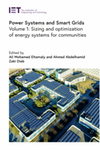
Power systems and smart grids, volume 1: sizing and optimization of energy systems for communities
Ali Mohamed Eltamaly; Ahmed Abdelhamid Zaki Diab
The Institution of Engineering and Technology
, 2025
; English
; 264 Pages
Power systems need to be optimised for efficient use of resources and in order to meet stringent requirements for power quality and reliability. Algorithms exist and are in development for various tasks including sizing, voltage and frequency control, demand response, fault identification, and for specific situations and systems such as hybrid energy systems and hot climates. Especially in urban areas with high population densities, researchers and experts need to be abreast of R&D trends, both for energy systems for communities as well as for smart grid developments.
This work on power systems for residential areas is presented in two volumes. Volume 1: Sizing and optimization of energy systems for communities begins with an overview of power systems and smart grids optimizations for sustainable cities, then goes on to explore optimization algorithms for sizing, economic dispatch, assessment of configuration of renewable energy systems, optimization and sizing of hybrid systems and 100% green hybrid energy systems.
Volume 2: Control, management and power quality of smart grids begins with a review of optimization algorithms. Further chapters cover smart grid concepts and dispatch strategies, energy allocation, power quality indices, load frequency control in smart grids, optimization for fault identification and protection, communication systems, and community energy cells.
These volumes offer a valuable resource for researchers, policymakers, and industry professionals involved with designing and refitting electric power systems, and for anyone seeking to advance the field of power systems and smart grid technology. By providing a comprehensive overview, highlighting key challenges and opportunities, and suggesting future research directions, the book contributes to the ongoing efforts to build a sustainable and resilient energy future.
eBook
Ali Mohamed Eltamaly; Ahmed Abdelhamid Zaki Diab
The Institution of Engineering and Technology
, 2025
; English
; 264 Pages
Power systems need to be optimised for efficient use of resources and in order to meet stringent requirements for power quality and reliability. Algorithms exist and are in development for various tasks including sizing, voltage and frequency control, demand response, fault identification, and for specific situations and systems such as hybrid energy systems and hot climates. Especially in urban areas with high population densities, researchers and experts need to be abreast of R&D trends, both for energy systems for communities as well as for smart grid developments.
This work on power systems for residential areas is presented in two volumes. Volume 1: Sizing and optimization of energy systems for communities begins with an overview of power systems and smart grids optimizations for sustainable cities, then goes on to explore optimization algorithms for sizing, economic dispatch, assessment of configuration of renewable energy systems, optimization and sizing of hybrid systems and 100% green hybrid energy systems.
Volume 2: Control, management and power quality of smart grids begins with a review of optimization algorithms. Further chapters cover smart grid concepts and dispatch strategies, energy allocation, power quality indices, load frequency control in smart grids, optimization for fault identification and protection, communication systems, and community energy cells.
These volumes offer a valuable resource for researchers, policymakers, and industry professionals involved with designing and refitting electric power systems, and for anyone seeking to advance the field of power systems and smart grid technology. By providing a comprehensive overview, highlighting key challenges and opportunities, and suggesting future research directions, the book contributes to the ongoing efforts to build a sustainable and resilient energy future.
