

Navigation menu
Search
eBook
Harmony by design : navigating work and life in healthcare
Weinstein, Sharon M.; Vannucci, Marla J.; Boston-Leary, Katie; Watson, Jean (Foreword by)
Sigma
, 2025
; English
; 218 Pages
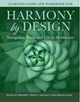
Harmony by Design: Navigating Work and Life in Healthcare reimagines how we approach well-being in a fast-paced, high-pressure world. Rather than striving for a rigid sense of balance, this book introduces a more flexible and fulfilling concept: harmony. It’s about aligning your values, goals, and daily actions to create a life that feels whole and sustainable. Authors Sharon M. Weinstein, Marla J. Vannucci, and Katie Boston-Leary blend practical tools with thoughtful reflection, drawing from the latest nursing competencies and real-world challenges to help readers manage stress, lead with empathy, and build meaningful careers without sacrificing personal well-being.Harmony by Design is more than a guide—it’s a blueprint for living and leading with clarity, compassion, and purpose. Whether you’re a healthcare professional, leader, or student, this book offers the tools and mindset for you to thrive in both your work and your life.Also available: Learning Guide and Workbook for Harmony by Design, including tools, activities, and resources to help put harmony concepts into practice.
Weinstein, Sharon M.; Vannucci, Marla J.; Boston-Leary, Katie; Watson, Jean (Foreword by)
Sigma
, 2025
; English
; 218 Pages
Harmony by Design: Navigating Work and Life in Healthcare reimagines how we approach well-being in a fast-paced, high-pressure world. Rather than striving for a rigid sense of balance, this book introduces a more flexible and fulfilling concept: harmony. It’s about aligning your values, goals, and daily actions to create a life that feels whole and sustainable. Authors Sharon M. Weinstein, Marla J. Vannucci, and Katie Boston-Leary blend practical tools with thoughtful reflection, drawing from the latest nursing competencies and real-world challenges to help readers manage stress, lead with empathy, and build meaningful careers without sacrificing personal well-being.Harmony by Design is more than a guide—it’s a blueprint for living and leading with clarity, compassion, and purpose. Whether you’re a healthcare professional, leader, or student, this book offers the tools and mindset for you to thrive in both your work and your life.Also available: Learning Guide and Workbook for Harmony by Design, including tools, activities, and resources to help put harmony concepts into practice.
eBook
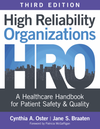
High reliability organizations : a healthcare handbook for patient safety & quality, third edition
Oster, Cynthia A.; Braaten, Jane S.
Sigma
, 2025
; English
; 508 Pages
atient safety and quality of care are critical concerns of healthcare consumers, payers, providers, organizations, health systems, and governments. Evidence shows that high reliability methods enable the most efficient, safe, and effective care; however, these methods are not the standard in all healthcare systems. Nurses—who are on the front line of providing safe and effective care—are ideally situated to drive high reliability.High Reliability Organizations: A Healthcare Handbook for Patient Safety & Quality, Third Edition, equips nurses and healthcare professionals with the tools necessary to establish an error detection and prevention system. In this new edition, authors Cynthia A. Oster and Jane S. Braaten build on the foundation of previous editions with best practices, relevant exemplars, and important discussions about cultural aspects essential to sustainability—solidifying process improvements and highlighting the contributing factors that lead to enhanced outcomes.
eBook
Oster, Cynthia A.; Braaten, Jane S.
Sigma
, 2025
; English
; 508 Pages
atient safety and quality of care are critical concerns of healthcare consumers, payers, providers, organizations, health systems, and governments. Evidence shows that high reliability methods enable the most efficient, safe, and effective care; however, these methods are not the standard in all healthcare systems. Nurses—who are on the front line of providing safe and effective care—are ideally situated to drive high reliability.High Reliability Organizations: A Healthcare Handbook for Patient Safety & Quality, Third Edition, equips nurses and healthcare professionals with the tools necessary to establish an error detection and prevention system. In this new edition, authors Cynthia A. Oster and Jane S. Braaten build on the foundation of previous editions with best practices, relevant exemplars, and important discussions about cultural aspects essential to sustainability—solidifying process improvements and highlighting the contributing factors that lead to enhanced outcomes.
eBook
Sillner, Andrea Yevchak; Reifsnyder, JoAnne; Kolanowski, Ann; Dunbar-Jacob, Jacqueline
Sigma
, 2025
; English
; 258 Pages
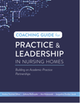
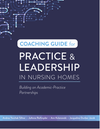
The Coaching Guide for Practice & Leadership in Nursing Homes, designed to be used alongside the Practice & Leadership in Nursing Homes textbook, is a practical guide that helps educators prepare nurses for practice in today’s increasingly complex nursing home settings and provide person- centered care to the residents within them.The Coaching Guide for Practice & Leadership in Nursing Homes is a practical guide that helps educators prepare nurses for practice in today’s increasingly complex nursing home settings and provide person-centered care to the residents within them. Designed to be used alongside the Practice & Leadership in Nursing Homes textbook and based on the American Association of Colleges of Nursing (AACN) Essentials, this Coaching Guide advances nursing education and practice to meet the demands of a diverse and aging population as well as a rapidly changing healthcare environment. Educator resources include discussion questions, NextGen NCLEX style questions with answer key and rationale, case studies with application ideas, classroom activities, and application of content in the clinical and/or simulation setting.
ABOUT THE TEXTBOOK: Long-term care settings are highly regulated environments where the emphasis historically has been on compliance. Many misconceptions persist about practice in nursing homes, and these go largely unaddressed within nursing education programs. Herein lies one of the significant barriers to improving nursing home care.
Practice & Leadership in Nursing Homes dispels many misconceptions and provides a foundation for clinical practice in a unique, exciting setting—illustrating how high-quality nursing care can result in positive resident outcomes. This book challenges educators and students to look beyond incorrect perceptions and negative attitudes to see a vibrant, growing healthcare sector ripe for nurses to make an impact and build rewarding careers. Coverage includes:
•Comprehensive care planning
•Models of care delivery
•Common geriatric syndromes
•Staff development and training
•Nursing home financing and regulatory information
This book challenges students, educators, and all nurses to lead the change to advance care for those who will live in the nursing homes of tomorrow. The Coaching Guide for Practice & Leadership in Nursing Homes is a practical guide that helps educators prepare nurses for practice in today’s increasingly complex nursing home settings and provide person-centered care to the residents within them. Designed to be used alongside the Practice & Leadership in Nursing Homes textbook and based on the American Association of Colleges of Nursing (AACN) Essentials, this Coaching Guide advances nursing education and practice to meet the demands of a diverse and aging population as well as a rapidly changing healthcare environment. Educator resources include discussion questions, NextGen NCLEX style questions with answer key and rationale, case studies with application ideas, classroom activities, and application of content in the clinical and/or simulation setting.
ABOUT THE TEXTBOOK: Long-term care settings are highly regulated environments where the emphasis historically has been on compliance. Many misconceptions persist about practice in nursing homes, and these go largely unaddressed within nursing education programs. Herein lies one of the significant barriers to improving nursing home care.
Practice & Leadership in Nursing Homes dispels many misconceptions and provides a foundation for clinical practice in a unique, exciting setting—illustrating how high-quality nursing care can result in positive resident outcomes. This book challenges educators and students to look beyond incorrect perceptions and negative attitudes to see a vibrant, growing healthcare sector ripe for nurses to make an impact and build rewarding careers. Coverage includes:
•Comprehensive care planning
•Models of care delivery
•Common geriatric syndromes
•Staff development and training
•Nursing home financing and regulatory information
This book challenges students, educators, and all nurses to lead the change to advance care for those who will live in the nursing homes of tomorrow.
Sillner, Andrea Yevchak; Reifsnyder, JoAnne; Kolanowski, Ann; Dunbar-Jacob, Jacqueline
Sigma
, 2025
; English
; 258 Pages
The Coaching Guide for Practice & Leadership in Nursing Homes, designed to be used alongside the Practice & Leadership in Nursing Homes textbook, is a practical guide that helps educators prepare nurses for practice in today’s increasingly complex nursing home settings and provide person- centered care to the residents within them.The Coaching Guide for Practice & Leadership in Nursing Homes is a practical guide that helps educators prepare nurses for practice in today’s increasingly complex nursing home settings and provide person-centered care to the residents within them. Designed to be used alongside the Practice & Leadership in Nursing Homes textbook and based on the American Association of Colleges of Nursing (AACN) Essentials, this Coaching Guide advances nursing education and practice to meet the demands of a diverse and aging population as well as a rapidly changing healthcare environment. Educator resources include discussion questions, NextGen NCLEX style questions with answer key and rationale, case studies with application ideas, classroom activities, and application of content in the clinical and/or simulation setting.
ABOUT THE TEXTBOOK: Long-term care settings are highly regulated environments where the emphasis historically has been on compliance. Many misconceptions persist about practice in nursing homes, and these go largely unaddressed within nursing education programs. Herein lies one of the significant barriers to improving nursing home care.
Practice & Leadership in Nursing Homes dispels many misconceptions and provides a foundation for clinical practice in a unique, exciting setting—illustrating how high-quality nursing care can result in positive resident outcomes. This book challenges educators and students to look beyond incorrect perceptions and negative attitudes to see a vibrant, growing healthcare sector ripe for nurses to make an impact and build rewarding careers. Coverage includes:
•Comprehensive care planning
•Models of care delivery
•Common geriatric syndromes
•Staff development and training
•Nursing home financing and regulatory information
This book challenges students, educators, and all nurses to lead the change to advance care for those who will live in the nursing homes of tomorrow. The Coaching Guide for Practice & Leadership in Nursing Homes is a practical guide that helps educators prepare nurses for practice in today’s increasingly complex nursing home settings and provide person-centered care to the residents within them. Designed to be used alongside the Practice & Leadership in Nursing Homes textbook and based on the American Association of Colleges of Nursing (AACN) Essentials, this Coaching Guide advances nursing education and practice to meet the demands of a diverse and aging population as well as a rapidly changing healthcare environment. Educator resources include discussion questions, NextGen NCLEX style questions with answer key and rationale, case studies with application ideas, classroom activities, and application of content in the clinical and/or simulation setting.
ABOUT THE TEXTBOOK: Long-term care settings are highly regulated environments where the emphasis historically has been on compliance. Many misconceptions persist about practice in nursing homes, and these go largely unaddressed within nursing education programs. Herein lies one of the significant barriers to improving nursing home care.
Practice & Leadership in Nursing Homes dispels many misconceptions and provides a foundation for clinical practice in a unique, exciting setting—illustrating how high-quality nursing care can result in positive resident outcomes. This book challenges educators and students to look beyond incorrect perceptions and negative attitudes to see a vibrant, growing healthcare sector ripe for nurses to make an impact and build rewarding careers. Coverage includes:
•Comprehensive care planning
•Models of care delivery
•Common geriatric syndromes
•Staff development and training
•Nursing home financing and regulatory information
This book challenges students, educators, and all nurses to lead the change to advance care for those who will live in the nursing homes of tomorrow.
eBook
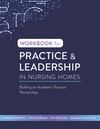
Workbook for practice & leadership in nursing homes : building on academic-practice partnerships
Sillner, Andrea Yevchak; Reifsnyder, JoAnne; Kolanowski, Ann; Dunbar-Jacob, Jacqueline
Sigma
, 2025
; English
; 210 Pages
The Workbook for Practice & Leadership in Nursing Homes is a practical guide to help nurses prepare for practice in today’s increasingly complex nursing home settings and provide person-centered care to the residents within them. Designed to be used alongside the Practice & Leadership in Nursing Homes textbook, this Workbook includes reflective questions, NextGen NCLEX style questions, case studies with application ideas, pre/post-clinical content topics, classroom activities, and application of content in the clinical and/or simulation setting.The Workbook for Practice & Leadership in Nursing Homes is a practical guide to help nurses prepare for practice in today's increasingly complex nursing home settings and provide person-centered care to the residents within them. Designed to be used alongside the Practice & Leadership in Nursing Homes textbook and based on the American Association of Colleges of Nursing (AACN) Essentials, this Workbook focuses on improving health outcomes for nursing home residents through collaboration, critical thinking, and continuous learning. Resources include reflective questions, NextGen NCLEX style questions, case studies with application ideas, pre/post-clinical content topics, classroom activities, and application of content in the clinical and/or simulation setting. ABOUT THE TEXTBOOK: Long-term care settings are highly regulated environments where the emphasis historically has been on compliance. Many misconceptions persist about practice in nursing homes, and these go largely unaddressed within nursing education programs. Herein lines one of the significant barriers to improving nursing home care. Practice & Leadership in Nursing Homes dispels many misconceptions and provides a foundation for clinical practice in a unique, exciting setting illustrating how high-quality nursing care can result in positive resident outcomes. This book challenges educators and students to look beyond incorrect perceptions and negative attitudes to see a vibrant, growing healthcare sector ripe for nurses to make an impact and build rewarding careers. Expert authors cover the following and more: Comprehensive care planning Models of care delivery Common geriatric syndromes Staff development and training Nursing home financing and regulatory informationThis book challenges students, educators, and all nurses to lead the change to advance care for those who will live in the nursing homes of tomorrow.
eBook
Sillner, Andrea Yevchak; Reifsnyder, JoAnne; Kolanowski, Ann; Dunbar-Jacob, Jacqueline
Sigma
, 2025
; English
; 210 Pages
The Workbook for Practice & Leadership in Nursing Homes is a practical guide to help nurses prepare for practice in today’s increasingly complex nursing home settings and provide person-centered care to the residents within them. Designed to be used alongside the Practice & Leadership in Nursing Homes textbook, this Workbook includes reflective questions, NextGen NCLEX style questions, case studies with application ideas, pre/post-clinical content topics, classroom activities, and application of content in the clinical and/or simulation setting.The Workbook for Practice & Leadership in Nursing Homes is a practical guide to help nurses prepare for practice in today's increasingly complex nursing home settings and provide person-centered care to the residents within them. Designed to be used alongside the Practice & Leadership in Nursing Homes textbook and based on the American Association of Colleges of Nursing (AACN) Essentials, this Workbook focuses on improving health outcomes for nursing home residents through collaboration, critical thinking, and continuous learning. Resources include reflective questions, NextGen NCLEX style questions, case studies with application ideas, pre/post-clinical content topics, classroom activities, and application of content in the clinical and/or simulation setting. ABOUT THE TEXTBOOK: Long-term care settings are highly regulated environments where the emphasis historically has been on compliance. Many misconceptions persist about practice in nursing homes, and these go largely unaddressed within nursing education programs. Herein lines one of the significant barriers to improving nursing home care. Practice & Leadership in Nursing Homes dispels many misconceptions and provides a foundation for clinical practice in a unique, exciting setting illustrating how high-quality nursing care can result in positive resident outcomes. This book challenges educators and students to look beyond incorrect perceptions and negative attitudes to see a vibrant, growing healthcare sector ripe for nurses to make an impact and build rewarding careers. Expert authors cover the following and more: Comprehensive care planning Models of care delivery Common geriatric syndromes Staff development and training Nursing home financing and regulatory informationThis book challenges students, educators, and all nurses to lead the change to advance care for those who will live in the nursing homes of tomorrow.
eBook
Learning guide and workbook for harmony & design : navigating work and life in healthcare
Weinstein, Sharon M.; Vannucci, Marla J.; Boston-Leary, Katie; Readinger, Dina (Foreword by)
Sigma
, 2025
; English
; 160 Pages
This Learning Guide and Workbook is designed to be used alongside Harmony by Design: Navigating Work and Life in Healthcare as a valuable resource for teaching and learning. Like the main book, it builds on the concept of embracing harmony so individuals and teams can thrive with intention—aligning values, goals, and daily actions to create a life that feels whole and sustainable.The Learning Guide and Workbook includes tools in every chapter, with detailed instructions, that will help readers put harmony concepts into practice. Also included are curated quotations, reflective activities, checklists, and resources tailored to enhance learning experiences. Whether you’re studying nursing, guiding healthcare teams, coaching professionals, supporting others seeking balance, or using it for your own self-improvement at any career level, this Learning Guide and Workbook encourages individuals to pause, reflect, and realign their priorities—fostering a sustainable approach to personal and professional success.
ABOUT THE MAIN BOOK: Harmony by Design reimagines how we approach well-being in a fast paced, high pressure world. It blends practical tools with thoughtful reflection, drawing from the latest nursing competencies and real-world challenges to help readers manage stress, lead with empathy, and build meaningful careers without sacrificing personal well-being. Rather than striving for a rigid sense of balance, this book introduces a more flexible and fulfilling concept: harmony. The Learning Guide and Workbook includes tools in every chapter, with detailed instructions, that will help readers put harmony concepts into practice. Also included are curated quotations, reflective activities, checklists, and resources tailored to enhance learning experiences. Whether you’re studying nursing, guiding healthcare teams, coaching professionals, supporting others seeking balance, or using it for your own self-improvement at any career level, this Learning Guide and Workbook encourages individuals to pause, reflect, and realign their priorities—fostering a sustainable approach to personal and professional success.
ABOUT THE MAIN BOOK: Harmony by Design reimagines how we approach well-being in a fast paced, high pressure world. It blends practical tools with thoughtful reflection, drawing from the latest nursing competencies and real-world challenges to help readers manage stress, lead with empathy, and build meaningful careers without sacrificing personal well-being. Rather than striving for a rigid sense of balance, this book introduces a more flexible and fulfilling concept: harmony.
Weinstein, Sharon M.; Vannucci, Marla J.; Boston-Leary, Katie; Readinger, Dina (Foreword by)
Sigma
, 2025
; English
; 160 Pages
This Learning Guide and Workbook is designed to be used alongside Harmony by Design: Navigating Work and Life in Healthcare as a valuable resource for teaching and learning. Like the main book, it builds on the concept of embracing harmony so individuals and teams can thrive with intention—aligning values, goals, and daily actions to create a life that feels whole and sustainable.The Learning Guide and Workbook includes tools in every chapter, with detailed instructions, that will help readers put harmony concepts into practice. Also included are curated quotations, reflective activities, checklists, and resources tailored to enhance learning experiences. Whether you’re studying nursing, guiding healthcare teams, coaching professionals, supporting others seeking balance, or using it for your own self-improvement at any career level, this Learning Guide and Workbook encourages individuals to pause, reflect, and realign their priorities—fostering a sustainable approach to personal and professional success.
ABOUT THE MAIN BOOK: Harmony by Design reimagines how we approach well-being in a fast paced, high pressure world. It blends practical tools with thoughtful reflection, drawing from the latest nursing competencies and real-world challenges to help readers manage stress, lead with empathy, and build meaningful careers without sacrificing personal well-being. Rather than striving for a rigid sense of balance, this book introduces a more flexible and fulfilling concept: harmony. The Learning Guide and Workbook includes tools in every chapter, with detailed instructions, that will help readers put harmony concepts into practice. Also included are curated quotations, reflective activities, checklists, and resources tailored to enhance learning experiences. Whether you’re studying nursing, guiding healthcare teams, coaching professionals, supporting others seeking balance, or using it for your own self-improvement at any career level, this Learning Guide and Workbook encourages individuals to pause, reflect, and realign their priorities—fostering a sustainable approach to personal and professional success.
ABOUT THE MAIN BOOK: Harmony by Design reimagines how we approach well-being in a fast paced, high pressure world. It blends practical tools with thoughtful reflection, drawing from the latest nursing competencies and real-world challenges to help readers manage stress, lead with empathy, and build meaningful careers without sacrificing personal well-being. Rather than striving for a rigid sense of balance, this book introduces a more flexible and fulfilling concept: harmony.
eBook
Oster, Cynthia A.; Braaten, Jane S.; Bernard, Noreen (Contributors by); Oster, Kristen A. (Contributors by)
Sigma
, 2025
; English
; 174 Pages
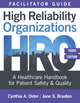
This Facilitator Guide is designed to be a companion resource for educators using High Reliability Organizations: A Healthcare Handbook for Patient Safety & Quality, Third Edition. For this edition, authors Cynthia A. Oster and Jane S. Braaten have developed this guide for educators to use in a variety of academic settings in courses focused on patient safety or
quality management in nursing, health services administration, and clinical programs.
The Facilitator Guide is divided into three sections:
Unit 1: Using the Textbook for Teaching and Learning
Unit 2: Resources for Teaching High Reliability for Patient Safety and Quality
Unit 3: Chapter Learning Activities and Instructor Support
This guide will help faculty, nurse leaders, clinical staff nurses, quality and safety staff, and other healthcare professionals teach HRO principles. It includes learning objectives, chapterby-
chapter learning activities, student evaluation, and additional resources to help facilitate application of high reliability to patient safety and quality.
About the textbook:
High Reliability Organizations: A Healthcare Handbook for Patient Safety & Quality, Third Edition, equips nurses and healthcare professionals with the tools necessary to establish an error detection and prevention system. In this new edition, authors Cynthia A. Oster and Jane S. Braaten build on the foundation of previous editions with best practices, relevant exemplars, and important discussions about cultural aspects essential to sustainability-solidifying process improvements and highlighting the contributing factors that lead to enhanced outcomes.
Oster, Cynthia A.; Braaten, Jane S.; Bernard, Noreen (Contributors by); Oster, Kristen A. (Contributors by)
Sigma
, 2025
; English
; 174 Pages
This Facilitator Guide is designed to be a companion resource for educators using High Reliability Organizations: A Healthcare Handbook for Patient Safety & Quality, Third Edition. For this edition, authors Cynthia A. Oster and Jane S. Braaten have developed this guide for educators to use in a variety of academic settings in courses focused on patient safety or
quality management in nursing, health services administration, and clinical programs.
The Facilitator Guide is divided into three sections:
Unit 1: Using the Textbook for Teaching and Learning
Unit 2: Resources for Teaching High Reliability for Patient Safety and Quality
Unit 3: Chapter Learning Activities and Instructor Support
This guide will help faculty, nurse leaders, clinical staff nurses, quality and safety staff, and other healthcare professionals teach HRO principles. It includes learning objectives, chapterby-
chapter learning activities, student evaluation, and additional resources to help facilitate application of high reliability to patient safety and quality.
About the textbook:
High Reliability Organizations: A Healthcare Handbook for Patient Safety & Quality, Third Edition, equips nurses and healthcare professionals with the tools necessary to establish an error detection and prevention system. In this new edition, authors Cynthia A. Oster and Jane S. Braaten build on the foundation of previous editions with best practices, relevant exemplars, and important discussions about cultural aspects essential to sustainability-solidifying process improvements and highlighting the contributing factors that lead to enhanced outcomes.
eBook
Oster, Cynthia A.; Braaten, Jane S.; Bernard, Noreen (Contributors by); Oster, Kristen A. (Contributors by)
Sigma
, 2025
; English
; 125 Pages
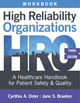
As a student in a healthcare profession, you have probably heard of the concept of high reliability as a means to reduce harm, enhance quality, and improve outcomes. This Workbook
-a companion resource for learners using the primary textbook, High Reliability Organizations: A Healthcare Handbook for Patient Safety & Quality, Third Edition-helps bring high
reliability concepts to life.
For this new edition, the Workbook has been developed for learners to use in a variety of academic settings in courses focused on patient safety or quality management in nursing, health services administration, and clinical programs, providing learning activities that relate to each chapter in the textbook. These activities explain the concepts of high reliability and high reliability organizations (HROs), including examples of what the concepts look like in everyday practice and the information and tools nurses and other healthcare providers need for the organization to become an HRO.
About the textbook:
High Reliability Organizations: A Healthcare Handbook for Patient Safety & Quality, Third Edition, equips nurses and healthcare professionals with the tools necessary to establish
an error detection and prevention system. In this new edition, authors Cynthia A. Oster and Jane S. Braaten build on the foundation of previous editions with best practices, relevant
exemplars, and important discussions about cultural aspects essential to sustainability-solidifying process improvements and highlighting the contributing factors that lead to enhanced outcomes.
Oster, Cynthia A.; Braaten, Jane S.; Bernard, Noreen (Contributors by); Oster, Kristen A. (Contributors by)
Sigma
, 2025
; English
; 125 Pages
As a student in a healthcare profession, you have probably heard of the concept of high reliability as a means to reduce harm, enhance quality, and improve outcomes. This Workbook
-a companion resource for learners using the primary textbook, High Reliability Organizations: A Healthcare Handbook for Patient Safety & Quality, Third Edition-helps bring high
reliability concepts to life.
For this new edition, the Workbook has been developed for learners to use in a variety of academic settings in courses focused on patient safety or quality management in nursing, health services administration, and clinical programs, providing learning activities that relate to each chapter in the textbook. These activities explain the concepts of high reliability and high reliability organizations (HROs), including examples of what the concepts look like in everyday practice and the information and tools nurses and other healthcare providers need for the organization to become an HRO.
About the textbook:
High Reliability Organizations: A Healthcare Handbook for Patient Safety & Quality, Third Edition, equips nurses and healthcare professionals with the tools necessary to establish
an error detection and prevention system. In this new edition, authors Cynthia A. Oster and Jane S. Braaten build on the foundation of previous editions with best practices, relevant
exemplars, and important discussions about cultural aspects essential to sustainability-solidifying process improvements and highlighting the contributing factors that lead to enhanced outcomes.
eBook
Loversidge, Jacqueline M.; Zurmehly, Joyce
Sigma
, 2025
; English
; 382 Pages
What happens in health policy at local, state, and federal levels directly affects patients, nurses, and nursing practice. Some healthcare professionals, though, are intimidated by the complex and often nonlinear policy process or simply don’t know how to take the first step toward implementing policy change. In the second edition of Evidence-Informed Health Policy, authors Jacqueline M. Loversidge and Joyce Zurmehly demystify health policymaking and equip nurses and other healthcare professionals with the knowledge, tools, and confidence to navigate the first of many steps into health policy. This book translates the EBP language of clinical decision-making into an evidence-informed health policy (EIHP) model—a foundation for integrating evidence into health policymaking and leveraging dialogue with stakeholders.
This new revised edition includes:
- Fresh perspectives on the use of evidence to inform smart health policy
- Lessons learned from the COVID-19 pandemic and the global crisis to more effectively strategize for sound policy informed by the best science
- A new visual representation of the EIHP model with added descriptions
- Beyond-borders strategies to develop a health policy worldview
- Updated model steps (Chapters 6–9) based on the results of a face-validation study
Loversidge, Jacqueline M.; Zurmehly, Joyce
Sigma
, 2025
; English
; 382 Pages
What happens in health policy at local, state, and federal levels directly affects patients, nurses, and nursing practice. Some healthcare professionals, though, are intimidated by the complex and often nonlinear policy process or simply don’t know how to take the first step toward implementing policy change. In the second edition of Evidence-Informed Health Policy, authors Jacqueline M. Loversidge and Joyce Zurmehly demystify health policymaking and equip nurses and other healthcare professionals with the knowledge, tools, and confidence to navigate the first of many steps into health policy. This book translates the EBP language of clinical decision-making into an evidence-informed health policy (EIHP) model—a foundation for integrating evidence into health policymaking and leveraging dialogue with stakeholders.
This new revised edition includes:
- Fresh perspectives on the use of evidence to inform smart health policy
- Lessons learned from the COVID-19 pandemic and the global crisis to more effectively strategize for sound policy informed by the best science
- A new visual representation of the EIHP model with added descriptions
- Beyond-borders strategies to develop a health policy worldview
- Updated model steps (Chapters 6–9) based on the results of a face-validation study
eBook
Loversidge, Jacqueline M.; Zurmehly, Joyce
Sigma
, 2025
; English
; 92 Pages
This Facilitator Guide for Evidence-Informed Health Policy, Revised Second Edition, is designed to be a companion to the textbook and a resource for educators in academic, professional association, regulatory, or practice environments. For faculty in particular, the menu of chapter-by-chapter learning activities, case studies, quizzes, and suggestions for student evaluation can be used as part of a health policy course at a variety of academic levels.
What happens in health policy at local, state, and federal levels directly affects patients, nurses, and nursing practice. Some healthcare professionals, though, are intimidated by the complex and often nonlinear policy process or simply don’t know how to take the first step toward implementing policy change. In the second edition of Evidence-Informed Health Policy, authors Jacqueline M. Loversidge and Joyce Zurmehly demystify health policymaking and equip nurses and other healthcare professionals with the knowledge, tools, and confidence to navigate the first of many steps into health policy. This book translates the EBP language of clinical decision-making into an evidence-informed health policy (EIHP) model—a foundation for integrating evidence into health policymaking and leveraging dialogue with stakeholders. This Facilitator Guide for Evidence-Informed Health Policy, Revised Second Edition, is designed to be a companion to the textbook and a resource for educators in academic, professional association, regulatory, or practice environments. For faculty in particular, the menu of chapter-by-chapter learning activities, case studies, quizzes, and suggestions for student evaluation can be used as part of a health policy course at a variety of academic levels.
What happens in health policy at local, state, and federal levels directly affects patients, nurses, and nursing practice. Some healthcare professionals, though, are intimidated by the complex and often nonlinear policy process or simply don’t know how to take the first step toward implementing policy change. In the second edition of Evidence-Informed Health Policy, authors Jacqueline M. Loversidge and Joyce Zurmehly demystify health policymaking and equip nurses and other healthcare professionals with the knowledge, tools, and confidence to navigate the first of many steps into health policy. This book translates the EBP language of clinical decision-making into an evidence-informed health policy (EIHP) model—a foundation for integrating evidence into health policymaking and leveraging dialogue with stakeholders.
Loversidge, Jacqueline M.; Zurmehly, Joyce
Sigma
, 2025
; English
; 92 Pages
This Facilitator Guide for Evidence-Informed Health Policy, Revised Second Edition, is designed to be a companion to the textbook and a resource for educators in academic, professional association, regulatory, or practice environments. For faculty in particular, the menu of chapter-by-chapter learning activities, case studies, quizzes, and suggestions for student evaluation can be used as part of a health policy course at a variety of academic levels.
What happens in health policy at local, state, and federal levels directly affects patients, nurses, and nursing practice. Some healthcare professionals, though, are intimidated by the complex and often nonlinear policy process or simply don’t know how to take the first step toward implementing policy change. In the second edition of Evidence-Informed Health Policy, authors Jacqueline M. Loversidge and Joyce Zurmehly demystify health policymaking and equip nurses and other healthcare professionals with the knowledge, tools, and confidence to navigate the first of many steps into health policy. This book translates the EBP language of clinical decision-making into an evidence-informed health policy (EIHP) model—a foundation for integrating evidence into health policymaking and leveraging dialogue with stakeholders. This Facilitator Guide for Evidence-Informed Health Policy, Revised Second Edition, is designed to be a companion to the textbook and a resource for educators in academic, professional association, regulatory, or practice environments. For faculty in particular, the menu of chapter-by-chapter learning activities, case studies, quizzes, and suggestions for student evaluation can be used as part of a health policy course at a variety of academic levels.
What happens in health policy at local, state, and federal levels directly affects patients, nurses, and nursing practice. Some healthcare professionals, though, are intimidated by the complex and often nonlinear policy process or simply don’t know how to take the first step toward implementing policy change. In the second edition of Evidence-Informed Health Policy, authors Jacqueline M. Loversidge and Joyce Zurmehly demystify health policymaking and equip nurses and other healthcare professionals with the knowledge, tools, and confidence to navigate the first of many steps into health policy. This book translates the EBP language of clinical decision-making into an evidence-informed health policy (EIHP) model—a foundation for integrating evidence into health policymaking and leveraging dialogue with stakeholders.
eBook
Loversidge, Jacqueline M.; Zurmehly, Joyce
Sigma
, 2025
; English
; 62 Pages
This Student Workbook for Evidence-Informed Health Policy, Revised Second Edition, is designed to be a companion to the textbook and provides learning activities and case studies to deepen your understanding of government structure, function, and evidence-informed health policymaking.
Each learning activity begins with objectives, and many suggest accompanying resource material or additional external resources, as well as specific instructions. What happens in health policy at local, state, and federal levels directly affects patients, nurses, and nursing practice.
Some healthcare professionals, though, are intimidated by the complex and often nonlinear policy process or simply don’t know how to take the first step toward implementing policy change.
In the second edition of Evidence-Informed Health Policy, authors Jacqueline M.
Loversidge and Joyce Zurmehly demystify health policymaking and equip nurses and other healthcare professionals with the knowledge, tools, and confidence to navigate the first of many steps into health policy.
This book translates the EBP language of clinical decision-making into an evidence-informed health policy (EIHP) model—a foundation for integrating evidence into health policymaking and leveraging dialogue with stakeholders.
Loversidge, Jacqueline M.; Zurmehly, Joyce
Sigma
, 2025
; English
; 62 Pages
This Student Workbook for Evidence-Informed Health Policy, Revised Second Edition, is designed to be a companion to the textbook and provides learning activities and case studies to deepen your understanding of government structure, function, and evidence-informed health policymaking.
Each learning activity begins with objectives, and many suggest accompanying resource material or additional external resources, as well as specific instructions. What happens in health policy at local, state, and federal levels directly affects patients, nurses, and nursing practice.
Some healthcare professionals, though, are intimidated by the complex and often nonlinear policy process or simply don’t know how to take the first step toward implementing policy change.
In the second edition of Evidence-Informed Health Policy, authors Jacqueline M.
Loversidge and Joyce Zurmehly demystify health policymaking and equip nurses and other healthcare professionals with the knowledge, tools, and confidence to navigate the first of many steps into health policy.
This book translates the EBP language of clinical decision-making into an evidence-informed health policy (EIHP) model—a foundation for integrating evidence into health policymaking and leveraging dialogue with stakeholders.
