




Navigation menu
Search
eBook
Lavieri, Edward
BPB Publications
, 2025
; English
; 522 Pages
Java is one of the most prevalent programming languages today, powering everything from enterprise applications to mobile platforms. It is the backbone of the global enterprise software industry and a major player in the mobile and big data ecosystems, valued for its performance, stability, and platform independence.
This book takes you step-by-step from the basics of Java syntax, data types, and control structures, through core object-oriented programming concepts, to advanced topics like concurrency, streams, and graphical user interfaces. Along the way, you can learn how to handle exceptions, work with collections, connect to databases, and gain experience with modern Java features such as lambdas and functional programming. Hands-on exercises, real-world projects, and clear examples can reinforce your understanding and provide practical skills you can apply immediately.
By the end of this book, you should not only understand Java but also have the confidence to build scalable, efficient applications and tackle real-world coding challenges with ease. Whether you are a student, developer, or IT professional, you will be fully equipped to understand, write, debug, and deploy high-quality, professional-grade Java code.
WHAT YOU WILL LEARN
● Understand Java fundamentals for creating scalable and efficient code.
● Learn object-oriented programming principles.
● Explore modern Java tools to write clean code.
● Apply Java programming to solve real-world problems.
● Develop skills for career advancement in software development roles.
● Analyze thread dumps, heap dumps, and flight recorder data for complex debugging.
● Build reactive, non-blocking APIs using the Flow API and back-pressure techniques.
WHO THIS BOOK IS FOR
This book is for beginners with no prior programming experience and professionals looking to switch to Java. Whether you are a developer or an enthusiast, this book provides a comprehensive guide to Java.
Lavieri, Edward
BPB Publications
, 2025
; English
; 522 Pages
Java is one of the most prevalent programming languages today, powering everything from enterprise applications to mobile platforms. It is the backbone of the global enterprise software industry and a major player in the mobile and big data ecosystems, valued for its performance, stability, and platform independence.
This book takes you step-by-step from the basics of Java syntax, data types, and control structures, through core object-oriented programming concepts, to advanced topics like concurrency, streams, and graphical user interfaces. Along the way, you can learn how to handle exceptions, work with collections, connect to databases, and gain experience with modern Java features such as lambdas and functional programming. Hands-on exercises, real-world projects, and clear examples can reinforce your understanding and provide practical skills you can apply immediately.
By the end of this book, you should not only understand Java but also have the confidence to build scalable, efficient applications and tackle real-world coding challenges with ease. Whether you are a student, developer, or IT professional, you will be fully equipped to understand, write, debug, and deploy high-quality, professional-grade Java code.
WHAT YOU WILL LEARN
● Understand Java fundamentals for creating scalable and efficient code.
● Learn object-oriented programming principles.
● Explore modern Java tools to write clean code.
● Apply Java programming to solve real-world problems.
● Develop skills for career advancement in software development roles.
● Analyze thread dumps, heap dumps, and flight recorder data for complex debugging.
● Build reactive, non-blocking APIs using the Flow API and back-pressure techniques.
WHO THIS BOOK IS FOR
This book is for beginners with no prior programming experience and professionals looking to switch to Java. Whether you are a developer or an enthusiast, this book provides a comprehensive guide to Java.
eBook
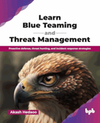
Hedaoo, Akash
BPB Publications
, 2025
; English
; 402 Pages
Cyber threats are more complicated than ever, from zero-day exploits to advanced persistent threats. To keep digital assets safe from a constantly changing attack landscape, there is a huge need for skilled cybersecurity defenders, also known as the blue team.
This book is a step-by-step guide to joining the front lines of defense. You will learn how to run a modern Security Operations Center (SOC) and how to handle incidents by starting with the basics of networking, logging, and security frameworks (NIST, MITRE ATT&CK). Some of the main things to focus on are advanced log analysis using tools like SIEM/SOAR/EDR, hypothesis-driven threat hunting to find hidden enemies, and dealing with serious threats like ransomware and APTs.
By the end of this book, you will have the skills and strategic mindset you need to confidently take on a blue team role, make smart choices, and actively protect your organization's most important assets.
WHAT YOU WILL LEARN
● Learn core defensive security tools like SIEM, EDR, and SOAR.
● Execute hypothesis-driven threat hunting to find hidden threats.
● Build and manage a modern SOC.
● Formulate and execute a complete incident response plan.
● Defend against advanced threats like ransomware and APTs.
● Confidently transition into a professional blue team defender role.
● Protect your organization's most critical digital assets strategically.
WHO THIS BOOK IS FOR
This book is for aspiring or current SOC analysts, incident responders, and security analysts ready to master defensive security. It is a hands-on guide for IT professionals aiming to specialize or move their career in proactive enterprise cyber defense.
Hedaoo, Akash
BPB Publications
, 2025
; English
; 402 Pages
Cyber threats are more complicated than ever, from zero-day exploits to advanced persistent threats. To keep digital assets safe from a constantly changing attack landscape, there is a huge need for skilled cybersecurity defenders, also known as the blue team.
This book is a step-by-step guide to joining the front lines of defense. You will learn how to run a modern Security Operations Center (SOC) and how to handle incidents by starting with the basics of networking, logging, and security frameworks (NIST, MITRE ATT&CK). Some of the main things to focus on are advanced log analysis using tools like SIEM/SOAR/EDR, hypothesis-driven threat hunting to find hidden enemies, and dealing with serious threats like ransomware and APTs.
By the end of this book, you will have the skills and strategic mindset you need to confidently take on a blue team role, make smart choices, and actively protect your organization's most important assets.
WHAT YOU WILL LEARN
● Learn core defensive security tools like SIEM, EDR, and SOAR.
● Execute hypothesis-driven threat hunting to find hidden threats.
● Build and manage a modern SOC.
● Formulate and execute a complete incident response plan.
● Defend against advanced threats like ransomware and APTs.
● Confidently transition into a professional blue team defender role.
● Protect your organization's most critical digital assets strategically.
WHO THIS BOOK IS FOR
This book is for aspiring or current SOC analysts, incident responders, and security analysts ready to master defensive security. It is a hands-on guide for IT professionals aiming to specialize or move their career in proactive enterprise cyber defense.
eBook
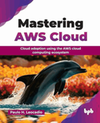
Mastering AWS cloud : cloud adoption using the AWS cloud computing ecosystem
Leocadio, Paulo H.
BPB Publications
, 2025
; English
; 499 Pages
Cloud computing has redefined how modern businesses scale, secure, and innovate. Amazon Web Services (AWS) is the world’s leading cloud platform, providing the essential compute, storage, networking, and database power that runs modern applications. It stands as the global leader in cloud platforms, empowering millions of organizations with robust infrastructure, automation, and AI-driven services.
This book provides a comprehensive, expert-guided journey through the AWS ecosystem. You will explore core services, advanced networking, infrastructure as code, serverless design, edge computing, and real-world deployment architectures. Each chapter demystifies one vital aspect of AWS mastery, including governance, observability, media streaming, IoT, AI, and global infrastructure best practices.
By the end, readers will confidently architect, secure, and optimize scalable cloud solutions using AWS. The readers will possess a vast, practical knowledge of over 200 AWS services and be able to confidently apply the AWS Well-Architected Framework's six strategic pillars to design, optimize, and manage any cloud solution.
WHAT YOU WILL LEARN
● Design enterprise-grade AWS architectures.
● Master Spark execution model RDDs, DAGs, Catalyst, and Adaptive Query Execution.
● Automate infrastructure with IaC tools.
● Apply secure networking and Zero Trust models.
● Build resilient serverless and edge solutions.
● Deploy AI/ML workloads with AWS services.
● Optimize media, IoT, and hybrid environments.
● Architect for observability and cost-efficiency.
● Scale infrastructure across global zones.
WHO THIS BOOK IS FOR
This book is for cloud architects, DevOps engineers, solution designers, IT managers, and technical leads aiming to gain practical mastery of AWS. It also benefits advanced learners, certification candidates, and professionals building real-world, production-ready cloud systems.
Leocadio, Paulo H.
BPB Publications
, 2025
; English
; 499 Pages
Cloud computing has redefined how modern businesses scale, secure, and innovate. Amazon Web Services (AWS) is the world’s leading cloud platform, providing the essential compute, storage, networking, and database power that runs modern applications. It stands as the global leader in cloud platforms, empowering millions of organizations with robust infrastructure, automation, and AI-driven services.
This book provides a comprehensive, expert-guided journey through the AWS ecosystem. You will explore core services, advanced networking, infrastructure as code, serverless design, edge computing, and real-world deployment architectures. Each chapter demystifies one vital aspect of AWS mastery, including governance, observability, media streaming, IoT, AI, and global infrastructure best practices.
By the end, readers will confidently architect, secure, and optimize scalable cloud solutions using AWS. The readers will possess a vast, practical knowledge of over 200 AWS services and be able to confidently apply the AWS Well-Architected Framework's six strategic pillars to design, optimize, and manage any cloud solution.
WHAT YOU WILL LEARN
● Design enterprise-grade AWS architectures.
● Master Spark execution model RDDs, DAGs, Catalyst, and Adaptive Query Execution.
● Automate infrastructure with IaC tools.
● Apply secure networking and Zero Trust models.
● Build resilient serverless and edge solutions.
● Deploy AI/ML workloads with AWS services.
● Optimize media, IoT, and hybrid environments.
● Architect for observability and cost-efficiency.
● Scale infrastructure across global zones.
WHO THIS BOOK IS FOR
This book is for cloud architects, DevOps engineers, solution designers, IT managers, and technical leads aiming to gain practical mastery of AWS. It also benefits advanced learners, certification candidates, and professionals building real-world, production-ready cloud systems.
eBook
Arunachalam, Arun
BPB Publications
, 2025
; English
; 390 Pages
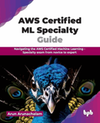
Amazon Web Services is the world's most comprehensive and broadly adopted cloud computing platform, providing on-demand access to IT resources, such as computing power, database storage, and other essential services, over the internet with pay-as-you-go pricing. With its vast array of services and tools, AWS provides a scalable and flexible environment for developing, deploying, and managing ML models.
The purpose of the book is to empower individuals with basic AWS Cloud knowledge to leverage this advanced technology and obtain the coveted AWS Certified Machine Learning - Specialty certification. By mastering the intricacies of AWS ML services, readers can unlock new career opportunities and contribute to the ever-evolving field of ML. It guides the readers through the domains of data engineering, exploratory data analysis, modeling, and ML implementation and operations. Covering key concepts and practices, this guide equips individuals with fundamental AWS Cloud knowledge.
By the end of this book, readers will learn to create efficient data repositories, perform data transformation, sanitize and prepare data, engineer features, select and train ML models, optimize performance, build scalable solutions, leverage AWS ML services, apply security practices, and deploy operational ML solutions.
WHAT YOU WILL LEARN
● Understanding AWS ML services, including SageMaker, Lambda, Glue, and other ML tools.
● Design secure S3, EFS, and EBS repositories, implement data ingestion solutions, and perform data transformation.
● Frame business problems
select supervised, unsupervised, or ensemble models.
● Sanitize and prepare data for modeling, perform feature engineering, and analyze data for ML.
● Solving ML problems by selecting and training appropriate ML models.
● Perform hyperparameter optimization, evaluate ML models, and build performant ML solutions.
● Deploy models, set A/B testing, IAM security, and auto-scaling pipelines.
● Apply AWS security practices to ML solutions and deploy operational ML systems.
WHO THIS BOOK IS FOR
This book is designed for aspiring ML specialists, data scientists, data engineers, cloud architects, and any professionals seeking to enhance their skills and knowledge in AWS ML services. Readers should possess a basic understanding of ML concepts, experience with a programming language like Python, and foundational familiarity with core AWS services.
Arunachalam, Arun
BPB Publications
, 2025
; English
; 390 Pages
Amazon Web Services is the world's most comprehensive and broadly adopted cloud computing platform, providing on-demand access to IT resources, such as computing power, database storage, and other essential services, over the internet with pay-as-you-go pricing. With its vast array of services and tools, AWS provides a scalable and flexible environment for developing, deploying, and managing ML models.
The purpose of the book is to empower individuals with basic AWS Cloud knowledge to leverage this advanced technology and obtain the coveted AWS Certified Machine Learning - Specialty certification. By mastering the intricacies of AWS ML services, readers can unlock new career opportunities and contribute to the ever-evolving field of ML. It guides the readers through the domains of data engineering, exploratory data analysis, modeling, and ML implementation and operations. Covering key concepts and practices, this guide equips individuals with fundamental AWS Cloud knowledge.
By the end of this book, readers will learn to create efficient data repositories, perform data transformation, sanitize and prepare data, engineer features, select and train ML models, optimize performance, build scalable solutions, leverage AWS ML services, apply security practices, and deploy operational ML solutions.
WHAT YOU WILL LEARN
● Understanding AWS ML services, including SageMaker, Lambda, Glue, and other ML tools.
● Design secure S3, EFS, and EBS repositories, implement data ingestion solutions, and perform data transformation.
● Frame business problems
select supervised, unsupervised, or ensemble models.
● Sanitize and prepare data for modeling, perform feature engineering, and analyze data for ML.
● Solving ML problems by selecting and training appropriate ML models.
● Perform hyperparameter optimization, evaluate ML models, and build performant ML solutions.
● Deploy models, set A/B testing, IAM security, and auto-scaling pipelines.
● Apply AWS security practices to ML solutions and deploy operational ML systems.
WHO THIS BOOK IS FOR
This book is designed for aspiring ML specialists, data scientists, data engineers, cloud architects, and any professionals seeking to enhance their skills and knowledge in AWS ML services. Readers should possess a basic understanding of ML concepts, experience with a programming language like Python, and foundational familiarity with core AWS services.
eBook
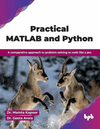
Practical MATLAB and Python : a comparative approach to problem-solving to code like a pro
Kapoor, Mamta; Arora, Geeta
BPB Publications
, 2025
; English
; 384 Pages
MATLAB and Python are the two powerhouse languages for engineers, scientists, and data analysts, essential for numerical computing, simulation, and analysis. MATLAB is highly used to tackle scenarios such as signal processing, thermal simulations, structural analysis, modeling of mathematical systems, etc. On the other hand, Python has its own demand in different fields, such as data analysis, data visualization, machine learning, statistical modeling, classification models, regression models, quantitative analysis, etc.
This book develops an understanding of how MATLAB and Python can be used in parallel ways to deal with coding problems. A deep understanding of several concepts is provided via MATLAB and Python, such as variables and data types, basic operations, control flow and structures, functions, data handling, plotting and visualization, signal processing, image processing, etc. With the help of several hands-on examples, readers will be able to gain practical insights and will also be able to tackle real-life problems.
By the end of this book, readers will be able to have confidence to code in MATLAB and Python, along with an understanding of the strengths of each tool. This book will give readers the ability to write efficient code, how to do data analysis, how to create visualizations, and how to deal with signal and image processing in an easy and efficient way.
WHAT YOU WILL LEARN
● Gain full insights about data handling and data visualization in MATLAB and Python.
● Knowledge about signal and image processing in MATLAB and Python.
● Apply coding skills to solve real-world problems.
● Selection of right language for specific coding tasks.
● Compare matrices, lists, tuples, and cell arrays.
● Execute matrix operations and advanced string handling.
● Implement conditional logic and iterative loop structures.
● Implement signal and image processing with OpenCV and libraries.
WHO THIS BOOK IS FOR
This book is ideal for engineering students, researchers, scientists, and data analysts with foundational programming knowledge who aim to efficiently transition or compare skills across MATLAB and Python for scientific computing.
Kapoor, Mamta; Arora, Geeta
BPB Publications
, 2025
; English
; 384 Pages
MATLAB and Python are the two powerhouse languages for engineers, scientists, and data analysts, essential for numerical computing, simulation, and analysis. MATLAB is highly used to tackle scenarios such as signal processing, thermal simulations, structural analysis, modeling of mathematical systems, etc. On the other hand, Python has its own demand in different fields, such as data analysis, data visualization, machine learning, statistical modeling, classification models, regression models, quantitative analysis, etc.
This book develops an understanding of how MATLAB and Python can be used in parallel ways to deal with coding problems. A deep understanding of several concepts is provided via MATLAB and Python, such as variables and data types, basic operations, control flow and structures, functions, data handling, plotting and visualization, signal processing, image processing, etc. With the help of several hands-on examples, readers will be able to gain practical insights and will also be able to tackle real-life problems.
By the end of this book, readers will be able to have confidence to code in MATLAB and Python, along with an understanding of the strengths of each tool. This book will give readers the ability to write efficient code, how to do data analysis, how to create visualizations, and how to deal with signal and image processing in an easy and efficient way.
WHAT YOU WILL LEARN
● Gain full insights about data handling and data visualization in MATLAB and Python.
● Knowledge about signal and image processing in MATLAB and Python.
● Apply coding skills to solve real-world problems.
● Selection of right language for specific coding tasks.
● Compare matrices, lists, tuples, and cell arrays.
● Execute matrix operations and advanced string handling.
● Implement conditional logic and iterative loop structures.
● Implement signal and image processing with OpenCV and libraries.
WHO THIS BOOK IS FOR
This book is ideal for engineering students, researchers, scientists, and data analysts with foundational programming knowledge who aim to efficiently transition or compare skills across MATLAB and Python for scientific computing.
eBook
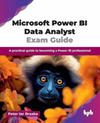
Microsoft power BI data analyst exam guide : a practical guide to becoming a power BI professional
Braake, Peter ter
BPB Publications
, 2025
; English
; 356 Pages
Microsoft Power BI is the world's leading business intelligence application, essential for transforming complex organizational data into clear, actionable reports and visual dashboards. This book is a practical guide that teaches you how to create a Power BI report from start to finish, and create compelling and insightful reports and dashboards. This comprehensive guide is your practical, start-to-finish roadmap to prepare you for the official PL-300 Microsoft Certified: Power BI Data Analyst Associate exam.
You will build a thorough understanding of the end-to-end data lifecycle, starting by architecting robust solutions with foundational dimensional modelling and optimal star schema design, combined with understanding licensing models. You will build the high-performance semantic model by defining proper relationships and writing powerful analytical DAX queries, including CALCULATE and context switching. The guide then teaches you how to design compelling and insightful reports before concluding with the necessary skills to ensure scalability with aggregation tables and incremental refresh, manage security, and deploy to the Power BI service app.
Upon completion, you will possess a professional, complete understanding of the entire Power BI process. This resource provides the technical competency and confidence needed to successfully attempt the PL-300 certification exam, and use proper security and configure the Power BI service.
WHAT YOU WILL LEARN
● Power BI components, data warehousing, and licensing models.
● Use Power Query to prepare data using M-code.
● Create scalable Power BI semantic models.
● Write powerful analytical DAX queries utilizing CALCULATE and context switching.
● Design effective and interactive Power BI reports.
● Publish reports and manage Power BI workspaces.
● Implement and setup Power BI security.
● Create and design interactive Power BI apps.
● Configure and monitor the Power BI service.
WHO THIS BOOK IS FOR
This book is ideal for anyone aiming to create insightful reports and analyze data using Power BI. It targets data analysts, data engineers, and professionals in fields like finance, accounting, and supply chain who work directly with data.

eBook
Braake, Peter ter
BPB Publications
, 2025
; English
; 356 Pages
Microsoft Power BI is the world's leading business intelligence application, essential for transforming complex organizational data into clear, actionable reports and visual dashboards. This book is a practical guide that teaches you how to create a Power BI report from start to finish, and create compelling and insightful reports and dashboards. This comprehensive guide is your practical, start-to-finish roadmap to prepare you for the official PL-300 Microsoft Certified: Power BI Data Analyst Associate exam.
You will build a thorough understanding of the end-to-end data lifecycle, starting by architecting robust solutions with foundational dimensional modelling and optimal star schema design, combined with understanding licensing models. You will build the high-performance semantic model by defining proper relationships and writing powerful analytical DAX queries, including CALCULATE and context switching. The guide then teaches you how to design compelling and insightful reports before concluding with the necessary skills to ensure scalability with aggregation tables and incremental refresh, manage security, and deploy to the Power BI service app.
Upon completion, you will possess a professional, complete understanding of the entire Power BI process. This resource provides the technical competency and confidence needed to successfully attempt the PL-300 certification exam, and use proper security and configure the Power BI service.
WHAT YOU WILL LEARN
● Power BI components, data warehousing, and licensing models.
● Use Power Query to prepare data using M-code.
● Create scalable Power BI semantic models.
● Write powerful analytical DAX queries utilizing CALCULATE and context switching.
● Design effective and interactive Power BI reports.
● Publish reports and manage Power BI workspaces.
● Implement and setup Power BI security.
● Create and design interactive Power BI apps.
● Configure and monitor the Power BI service.
WHO THIS BOOK IS FOR
This book is ideal for anyone aiming to create insightful reports and analyze data using Power BI. It targets data analysts, data engineers, and professionals in fields like finance, accounting, and supply chain who work directly with data.
eBook
Smith, Ross; Cubino, Mayte; McKeon, Emily
BPB Publications
, 2025
; English
; 409 Pages
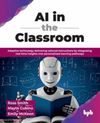
For thousands of years, education has been shaped by technology, from clay tablets and hornbooks to the printing press and now to digital learning platforms and remote education systems. As artificial intelligence becomes more embedded in our daily lives, its role in education continues to explode. AI tools offer personalized instruction, streamlined administrative tasks, and enhanced student engagement, creating a learning environment tailored to individual needs.
This book offers a guide to AI understanding and implementation in the classroom and how it makes personalized learning practical, scalable, and achievable for all. Readers will understand how the advances in technology over time have led to improvements in education and how AI can enhance a personalized learning experience. The authors go in-depth to find the latest research to explore the implementation of AI strategies and technology in the classroom, along with the critical and increasingly important focus on security, privacy, and ethical concerns.
By the end of this book, the reader will have a robust understanding of AI and how it can help implement, facilitate, and augment personalized instruction strategies and techniques to support student learning and growth. The future of education is here, and it is intelligent, adaptive, and inspiring.
WHAT YOU WILL LEARN
● Leverage AI to personalize learning.
● Prepare students for an AI-integrated world.
● Define a path for educators to navigate their professional development.
● Clarify how this technology will influence administrators.
● Gain insights into the ethical considerations of AI use.
● How to communicate the benefits of AI to parents.
● Enhance student engagement.
● What to look out for to ensure student privacy.
WHO THIS BOOK IS FOR
Written for educators, administrators, advanced students, parents, and policymakers looking to embrace the future of education. This book will empower educators and administrators to build an innovative and inclusive educational environment with the assistance of AI. Parents will benefit through deepening their understanding of AI and how it guides students toward success.
Smith, Ross; Cubino, Mayte; McKeon, Emily
BPB Publications
, 2025
; English
; 409 Pages
For thousands of years, education has been shaped by technology, from clay tablets and hornbooks to the printing press and now to digital learning platforms and remote education systems. As artificial intelligence becomes more embedded in our daily lives, its role in education continues to explode. AI tools offer personalized instruction, streamlined administrative tasks, and enhanced student engagement, creating a learning environment tailored to individual needs.
This book offers a guide to AI understanding and implementation in the classroom and how it makes personalized learning practical, scalable, and achievable for all. Readers will understand how the advances in technology over time have led to improvements in education and how AI can enhance a personalized learning experience. The authors go in-depth to find the latest research to explore the implementation of AI strategies and technology in the classroom, along with the critical and increasingly important focus on security, privacy, and ethical concerns.
By the end of this book, the reader will have a robust understanding of AI and how it can help implement, facilitate, and augment personalized instruction strategies and techniques to support student learning and growth. The future of education is here, and it is intelligent, adaptive, and inspiring.
WHAT YOU WILL LEARN
● Leverage AI to personalize learning.
● Prepare students for an AI-integrated world.
● Define a path for educators to navigate their professional development.
● Clarify how this technology will influence administrators.
● Gain insights into the ethical considerations of AI use.
● How to communicate the benefits of AI to parents.
● Enhance student engagement.
● What to look out for to ensure student privacy.
WHO THIS BOOK IS FOR
Written for educators, administrators, advanced students, parents, and policymakers looking to embrace the future of education. This book will empower educators and administrators to build an innovative and inclusive educational environment with the assistance of AI. Parents will benefit through deepening their understanding of AI and how it guides students toward success.
eBook
Kurni, Muralidhar; Krishnamaneni, Ramesh; K. G., Srinivasa
BPB Publications
, 2025
; English
; 412 Pages
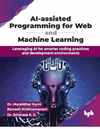
Artificial intelligence is redefining how software is created, enabling developers to code faster, improve accuracy, and bring innovative ideas to life. In today’s competitive technology landscape, AI-assisted programming is no longer optional
it’s a core skill for building modern web applications and machine learning solutions.
This book systematically guides you through the whole development cycle. You will start with the foundations of understanding AI-assisted programming, setting up your environment, and mastering prompt engineering. You will then discover how AI can accelerate front end and back end web development, enhance debugging, and optimize performance. You will also explore data preprocessing, model creation, training, and deploying optimized solutions with the help of real-world examples, case studies, and hands-on exercises, ensuring you can apply every concept in practice. Also, by mastering prompt engineering, you will be able to generate, debug, and optimize code across both these high-demand fields.
By the end of this book, you will have the confidence and skills to integrate AI into your workflow, automate time-consuming tasks, build intelligent applications, and deliver impactful, future-ready solutions.
WHAT YOU WILL LEARN
● Apply prompt engineering effectively for web and ML projects.
● Develop AI-powered front end and back end applications efficiently.
● Automate debugging, testing, and performance optimization with AI.
● Integrate AI tools seamlessly into full-stack development workflows.
● Train, fine-tune, and deploy scalable ML models in the cloud.
● Understand AI-assisted programming concepts and set up development tools.
● Preprocess data and create AI-driven machine learning pipelines.
WHO THIS BOOK IS FOR
This book is for learners who want to explore the power of AI-assisted programming in web development and machine learning. Software engineers, web developers, and data scientists who possess foundational programming skills, ideally with Python or JavaScript, can also use it to upgrade their skills.
Kurni, Muralidhar; Krishnamaneni, Ramesh; K. G., Srinivasa
BPB Publications
, 2025
; English
; 412 Pages
Artificial intelligence is redefining how software is created, enabling developers to code faster, improve accuracy, and bring innovative ideas to life. In today’s competitive technology landscape, AI-assisted programming is no longer optional
it’s a core skill for building modern web applications and machine learning solutions.
This book systematically guides you through the whole development cycle. You will start with the foundations of understanding AI-assisted programming, setting up your environment, and mastering prompt engineering. You will then discover how AI can accelerate front end and back end web development, enhance debugging, and optimize performance. You will also explore data preprocessing, model creation, training, and deploying optimized solutions with the help of real-world examples, case studies, and hands-on exercises, ensuring you can apply every concept in practice. Also, by mastering prompt engineering, you will be able to generate, debug, and optimize code across both these high-demand fields.
By the end of this book, you will have the confidence and skills to integrate AI into your workflow, automate time-consuming tasks, build intelligent applications, and deliver impactful, future-ready solutions.
WHAT YOU WILL LEARN
● Apply prompt engineering effectively for web and ML projects.
● Develop AI-powered front end and back end applications efficiently.
● Automate debugging, testing, and performance optimization with AI.
● Integrate AI tools seamlessly into full-stack development workflows.
● Train, fine-tune, and deploy scalable ML models in the cloud.
● Understand AI-assisted programming concepts and set up development tools.
● Preprocess data and create AI-driven machine learning pipelines.
WHO THIS BOOK IS FOR
This book is for learners who want to explore the power of AI-assisted programming in web development and machine learning. Software engineers, web developers, and data scientists who possess foundational programming skills, ideally with Python or JavaScript, can also use it to upgrade their skills.
eBook
Kar, Indrajit
BPB Publications
, 2025
; English
; 465 Pages
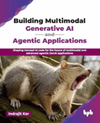
Generative AI and agentic AI are reshaping how we interact with data, enabling intelligent systems that can reason, generate, and autonomously act across multiple modalities. From text and images to voice and structured data, these technologies are increasingly essential in enterprise and research applications today.
This book offers a complete roadmap to mastering multimodal generative AI and agentic AI systems. It covers foundational concepts, vision-language models, retrieval-augmented generation, human-in-the-loop and multi-agent workflows, text-to-SQL, OCR, and hybrid AI integrations. Each chapter combines theory, practical guidance, code implementations, and real-world case studies, helping readers understand architectures, pipelines, and production-grade deployments.
By the end of this book, readers will be capable of designing, implementing, and scaling robust multimodal and agentic AI systems. They will gain hands-on expertise in reasoning, generation, retrieval, agent orchestration, and Ops, equipping them to build production-ready AI applications and excel in their roles.
WHAT YOU WILL LEARN
● Understand multimodal generative AI and agentic AI systems.
● Architecting RAG, vector DBs, embeddings, cross-encoders, and core agentic planning.
● Build retrieval-augmented generation workflows efficiently.
● Implement human-in-the-loop and multi-agent pipelines.
● Apply text-to-SQL for real-time data queries.
● Develop OCR solutions for images and documents.
● Integrate traditional ML models with GenAI workflows.
● Deploy production-grade AI with monitoring and observability.
WHO THIS BOOK IS FOR
This book is for AI enthusiasts, data scientists, ML engineers, and software developers with foundational Python and ML knowledge. It is ideal for tech leads, researchers, and enterprise architects aiming to build and scale multimodal, production-grade agentic AI systems.
Kar, Indrajit
BPB Publications
, 2025
; English
; 465 Pages
Generative AI and agentic AI are reshaping how we interact with data, enabling intelligent systems that can reason, generate, and autonomously act across multiple modalities. From text and images to voice and structured data, these technologies are increasingly essential in enterprise and research applications today.
This book offers a complete roadmap to mastering multimodal generative AI and agentic AI systems. It covers foundational concepts, vision-language models, retrieval-augmented generation, human-in-the-loop and multi-agent workflows, text-to-SQL, OCR, and hybrid AI integrations. Each chapter combines theory, practical guidance, code implementations, and real-world case studies, helping readers understand architectures, pipelines, and production-grade deployments.
By the end of this book, readers will be capable of designing, implementing, and scaling robust multimodal and agentic AI systems. They will gain hands-on expertise in reasoning, generation, retrieval, agent orchestration, and Ops, equipping them to build production-ready AI applications and excel in their roles.
WHAT YOU WILL LEARN
● Understand multimodal generative AI and agentic AI systems.
● Architecting RAG, vector DBs, embeddings, cross-encoders, and core agentic planning.
● Build retrieval-augmented generation workflows efficiently.
● Implement human-in-the-loop and multi-agent pipelines.
● Apply text-to-SQL for real-time data queries.
● Develop OCR solutions for images and documents.
● Integrate traditional ML models with GenAI workflows.
● Deploy production-grade AI with monitoring and observability.
WHO THIS BOOK IS FOR
This book is for AI enthusiasts, data scientists, ML engineers, and software developers with foundational Python and ML knowledge. It is ideal for tech leads, researchers, and enterprise architects aiming to build and scale multimodal, production-grade agentic AI systems.
eBook
Singh, Anil
BPB Publications
, 2025
; English
; 405 Pages
Angular is one of the most popular frameworks for building fast, dynamic, and scalable web applications. It is the foundational framework for building high-performance, single-page web and mobile applications across the globe. With the recent advancements, Angular remains highly relevant in today’s enterprise-grade frontend development.
This book is a comprehensive, hands-on guide to understanding Angular, from core concepts like components, templates, and directives to advanced topics such as routing, forms, dependency injection, etc.. It flows logically, starting with basic concepts of Angular, project setup, and the view layer of standalone components, templates, and directives. In this new edition, you will learn enhanced enterprise capabilities with in-depth chapters on internationalization (i18n), robust security with CSP and CI/CD integration, and expanded coverage of RxJS, build tools, and Angular Material. It also covers modern enhancements, including AI experimental features, SSR and hybrid rendering, Angular Material, and best practices.
By the end of this book, you can build high-performance Angular applications with confidence. Whether you are preparing for interviews or building robust web apps, you will gain the skills needed to become a proficient Angular developer.
WHAT YOU WILL LEARN
● Learn component communication, templating, and structural directives.
● Consume RESTful APIs using Angular HTTP client with RxJS.
● Optimize apps with server-side rendering and hybrid techniques.
● Apply best practices for performance, security, and testing.
● In this new edition, learn about standalone components use with Angular Material and deep security checks.
● Explore AI experimental features integrated in Angular 20+.
WHO THIS BOOK IS FOR
This book is for frontend developers, full-stack engineers, software architects, and technical leads who want to learn Angular from fundamentals to advanced features. It is ideal for professionals preparing for interviews or building scalable web and mobile applications using Angular.
Singh, Anil
BPB Publications
, 2025
; English
; 405 Pages
Angular is one of the most popular frameworks for building fast, dynamic, and scalable web applications. It is the foundational framework for building high-performance, single-page web and mobile applications across the globe. With the recent advancements, Angular remains highly relevant in today’s enterprise-grade frontend development.
This book is a comprehensive, hands-on guide to understanding Angular, from core concepts like components, templates, and directives to advanced topics such as routing, forms, dependency injection, etc.. It flows logically, starting with basic concepts of Angular, project setup, and the view layer of standalone components, templates, and directives. In this new edition, you will learn enhanced enterprise capabilities with in-depth chapters on internationalization (i18n), robust security with CSP and CI/CD integration, and expanded coverage of RxJS, build tools, and Angular Material. It also covers modern enhancements, including AI experimental features, SSR and hybrid rendering, Angular Material, and best practices.
By the end of this book, you can build high-performance Angular applications with confidence. Whether you are preparing for interviews or building robust web apps, you will gain the skills needed to become a proficient Angular developer.
WHAT YOU WILL LEARN
● Learn component communication, templating, and structural directives.
● Consume RESTful APIs using Angular HTTP client with RxJS.
● Optimize apps with server-side rendering and hybrid techniques.
● Apply best practices for performance, security, and testing.
● In this new edition, learn about standalone components use with Angular Material and deep security checks.
● Explore AI experimental features integrated in Angular 20+.
WHO THIS BOOK IS FOR
This book is for frontend developers, full-stack engineers, software architects, and technical leads who want to learn Angular from fundamentals to advanced features. It is ideal for professionals preparing for interviews or building scalable web and mobile applications using Angular.
