


Navigation menu
Search
eBook
Cross-border child relocation in the EU : the dynamics of Europeanisation
Ceran, Olga
INTERSENTIA
, 2024
; English
; 325 Pages
Cross-border child relocation cases are among the most difficult issues in family law. Commentators across the globe disagree on the interpretation of the child's best interests and the relevance of adults' autonomy in this context. As relocations touch upon free movement—the foundation of European Union law—there is an increasing interest among scholars and practitioners alike in the influence of EU law on child relocation. However, considering the EU’s scope of competence in family law matters and the limited jurisprudence of the Court of Justice on such issues, many questions regarding the reach of EU law have remained open.
This book is the first monograph to investigate the dynamics of Europeanisation of cross-border child relocation law. What is the scope and nature of EU law's influence—both current and prospective—on cross-border child relocation? What are its effects on national legal systems? The book analyses the European legal framework of child relocation and harmonisation prospects in the field. It demonstrates the limitations of the legal pressures potentially exerted by the EU, considering the nature of its competence, but simultaneously conceptualises EU law’s influences from a constructivist perspective. Free movement constitutes the main paradigm of EU law and a defining feature of its community, shifting the scope of autonomy granted to it by its members. Hence, a mixture of traditional values and new ways of life—sanctioned by supranational law—might lead to new dilemmas regarding the assessment of children's and adults’ interests in child relocation cases. The suggested approach allows such influences to be analysed together with legal doctrines, both at the EU and the national level. Therefore, despite the current lack of explicit EU action on child relocation, the book qualitatively examines the dynamics of Europeanisation of child relocation sensu stricto—the processes of adaptation to EU law to be observed in child relocation case law from Germany, Poland, and England and Wales. The book shows how national judges occasionally draw from EU law’s contextual and legal features, but EU law does not (yet) seem to fundamentally challenge the established child relocation doctrines and lead to their convergence.
Cross-Border Child Relocation in the EU: The Dynamics of Europeanisation will be valuable to scholars, legal practitioners and civil servants with an interest in (cross-border) family law issues. It may also be of interest to researchers interested in the Europeanisation of private law more broadly.
Ceran, Olga
INTERSENTIA
, 2024
; English
; 325 Pages
Cross-border child relocation cases are among the most difficult issues in family law. Commentators across the globe disagree on the interpretation of the child's best interests and the relevance of adults' autonomy in this context. As relocations touch upon free movement—the foundation of European Union law—there is an increasing interest among scholars and practitioners alike in the influence of EU law on child relocation. However, considering the EU’s scope of competence in family law matters and the limited jurisprudence of the Court of Justice on such issues, many questions regarding the reach of EU law have remained open.
This book is the first monograph to investigate the dynamics of Europeanisation of cross-border child relocation law. What is the scope and nature of EU law's influence—both current and prospective—on cross-border child relocation? What are its effects on national legal systems? The book analyses the European legal framework of child relocation and harmonisation prospects in the field. It demonstrates the limitations of the legal pressures potentially exerted by the EU, considering the nature of its competence, but simultaneously conceptualises EU law’s influences from a constructivist perspective. Free movement constitutes the main paradigm of EU law and a defining feature of its community, shifting the scope of autonomy granted to it by its members. Hence, a mixture of traditional values and new ways of life—sanctioned by supranational law—might lead to new dilemmas regarding the assessment of children's and adults’ interests in child relocation cases. The suggested approach allows such influences to be analysed together with legal doctrines, both at the EU and the national level. Therefore, despite the current lack of explicit EU action on child relocation, the book qualitatively examines the dynamics of Europeanisation of child relocation sensu stricto—the processes of adaptation to EU law to be observed in child relocation case law from Germany, Poland, and England and Wales. The book shows how national judges occasionally draw from EU law’s contextual and legal features, but EU law does not (yet) seem to fundamentally challenge the established child relocation doctrines and lead to their convergence.
Cross-Border Child Relocation in the EU: The Dynamics of Europeanisation will be valuable to scholars, legal practitioners and civil servants with an interest in (cross-border) family law issues. It may also be of interest to researchers interested in the Europeanisation of private law more broadly.

eBook
Dicey + 100 : Albert Venn Dicey: a centennial commemoration
Dickinson, Andrew; Endicott, Timothy; Ernst, Wolfgang
INTERSENTIA
, 2024
; English
; 207 Pages
Marking the centenary of the death of Albert Venn Dicey, this book addresses the implications and influence of his work in the 21st century, assessing also the late-19th-century context that shaped his attitudes, opinions and writing. Dicey’s Introduction to the Study of the Law of the Constitution (1st ed, 1885, 8th ed, 1915) is a cornerstone of modern constitutional law scholarship in the UK and worldwide
his Conflict of Laws (1896) quickly became the authoritative work in private international law (today, Dicey, Morris & Collins on the Conflict of Laws (16th ed, 2022)). These titles, together with his works on law and politics and his influence as Vinerian Professor of English Law in the University, made him an influential, and in some respects controversial, figure during his lifetime and in the following century.
In this volume, 12 leading experts in areas in which Dicey immersed himself contribute to the understanding of his ideas and their influence, 100 years after his death in 1922. The book is presented in four parts, addressing Dicey’s contributions to legal education
the constitution
conflict of laws
and political thought. The contributions present a modern synoptic view of the work of this leading figure in its context, which pays close attention to the ways in which his ideas have shaped the law and politics for the future.
Dickinson, Andrew; Endicott, Timothy; Ernst, Wolfgang
INTERSENTIA
, 2024
; English
; 207 Pages
Marking the centenary of the death of Albert Venn Dicey, this book addresses the implications and influence of his work in the 21st century, assessing also the late-19th-century context that shaped his attitudes, opinions and writing. Dicey’s Introduction to the Study of the Law of the Constitution (1st ed, 1885, 8th ed, 1915) is a cornerstone of modern constitutional law scholarship in the UK and worldwide
his Conflict of Laws (1896) quickly became the authoritative work in private international law (today, Dicey, Morris & Collins on the Conflict of Laws (16th ed, 2022)). These titles, together with his works on law and politics and his influence as Vinerian Professor of English Law in the University, made him an influential, and in some respects controversial, figure during his lifetime and in the following century.
In this volume, 12 leading experts in areas in which Dicey immersed himself contribute to the understanding of his ideas and their influence, 100 years after his death in 1922. The book is presented in four parts, addressing Dicey’s contributions to legal education
the constitution
conflict of laws
and political thought. The contributions present a modern synoptic view of the work of this leading figure in its context, which pays close attention to the ways in which his ideas have shaped the law and politics for the future.
eBook
Escarcena, Sebastián López; Poblete, Manuel Núñez; Wouters, Jan
INTERSENTIA
, 2024
; English
; 341 Pages
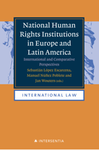
Over the past 20 years, national human rights institutions (NHRIs) have moved from the periphery to the centre of the human rights debate. The potential of NHRIs to transmit and implement international norms at the domestic level, and to transfer human rights expertise to regional and global human rights fora, is increasingly recognised. In Europe, the continent with the widest variety and density of human rights protection mechanisms, NHRIs are also gradually gaining recognition as actors that can enable more comprehensive and effective human rights promotion and protection.
Filling a gap in the legal literature, this book aims to bridge the gap between the European and Latin American experiences of national human rights institutions (NHRIs), exploring the impact that this has internationally. As such, it not only includes introductory chapters on the relationship between NHRIs and the United Nations, the European Union and the Inter-American Court of Human Rights, but also offers general contributions on other European and Latin American institutions and valuable deep dives into specific case studies on certain regional commissions, ombuds offices and institutes. In order to assess the distinct models these institutional organisations adopt, three of the major European NHRIs have been chosen: the Spanish Ombuds Office, which is especially relevant to Latin America
the French Commission, of great influence in the area
and the younger, and highly interesting, German Institute. The main Latin American NHRIs which adopt either an ombuds, a commission or an institute model are also analysed, including those of Argentina, Chile, Colombia, Ecuador, Mexico, Paraguay, and Uruguay.
Escarcena, Sebastián López; Poblete, Manuel Núñez; Wouters, Jan
INTERSENTIA
, 2024
; English
; 341 Pages
Over the past 20 years, national human rights institutions (NHRIs) have moved from the periphery to the centre of the human rights debate. The potential of NHRIs to transmit and implement international norms at the domestic level, and to transfer human rights expertise to regional and global human rights fora, is increasingly recognised. In Europe, the continent with the widest variety and density of human rights protection mechanisms, NHRIs are also gradually gaining recognition as actors that can enable more comprehensive and effective human rights promotion and protection.
Filling a gap in the legal literature, this book aims to bridge the gap between the European and Latin American experiences of national human rights institutions (NHRIs), exploring the impact that this has internationally. As such, it not only includes introductory chapters on the relationship between NHRIs and the United Nations, the European Union and the Inter-American Court of Human Rights, but also offers general contributions on other European and Latin American institutions and valuable deep dives into specific case studies on certain regional commissions, ombuds offices and institutes. In order to assess the distinct models these institutional organisations adopt, three of the major European NHRIs have been chosen: the Spanish Ombuds Office, which is especially relevant to Latin America
the French Commission, of great influence in the area
and the younger, and highly interesting, German Institute. The main Latin American NHRIs which adopt either an ombuds, a commission or an institute model are also analysed, including those of Argentina, Chile, Colombia, Ecuador, Mexico, Paraguay, and Uruguay.
eBook
The right to identity and access to information on genetic origin and parentage
Boone, Ingrid; Vonk, Machteld
INTERSENTIA
, 2024
; English
; 189 Pages
Do donor-conceived children have a right to know the identity of their sperm or egg donor or should donors have a choice to remain anonymous? What does relinquishing donor anonymity mean for establishing parentage? Should laws regulating access to donor information have a retroactive effect? What are the experiences of children conceived with donor sperm? How can we prepare prospective parents for raising a donor-conceived child? Finally, how can we facilitate contact between children and their donors? These are some of the questions that are discussed in this book, which is the result of a multidisciplinary seminar on the right to identity and access to information about genetic origins and parentage. In addition to legal analyses, the book includes findings from psychological research on the experiences of (intending) parents, donor-conceived people, and donors. It delves into the theoretical framework, and additionally, assesses the practices of counselling, registration and providing information, and DNA databases. In particular, the last two chapters focus on experiences in the Netherlands, which may be valuable for other jurisdictions developing regulations surrounding the knowledge of origins.
Boone, Ingrid; Vonk, Machteld
INTERSENTIA
, 2024
; English
; 189 Pages
Do donor-conceived children have a right to know the identity of their sperm or egg donor or should donors have a choice to remain anonymous? What does relinquishing donor anonymity mean for establishing parentage? Should laws regulating access to donor information have a retroactive effect? What are the experiences of children conceived with donor sperm? How can we prepare prospective parents for raising a donor-conceived child? Finally, how can we facilitate contact between children and their donors? These are some of the questions that are discussed in this book, which is the result of a multidisciplinary seminar on the right to identity and access to information about genetic origins and parentage. In addition to legal analyses, the book includes findings from psychological research on the experiences of (intending) parents, donor-conceived people, and donors. It delves into the theoretical framework, and additionally, assesses the practices of counselling, registration and providing information, and DNA databases. In particular, the last two chapters focus on experiences in the Netherlands, which may be valuable for other jurisdictions developing regulations surrounding the knowledge of origins.
eBook
The principles of European family law revisited
Boele-Woelki, Katharina; Ferrand, Frédérique; González Beilfuss, Cristina; Jänterä-Jareborg, Maarit; Lowe, Nigel; Martiny, Dieter; Todorova, Velina
INTERSENTIA
, 2024
; English
; 271 Pages
Based on national reports by family law experts from more than 20 European jurisdictions, The Principles of European Family Law Revisited provides an insight into recent developments in family law in Europe in the areas of divorce, maintenance between former spouses, parental responsibilities, property relations between spouses and de facto unions. This book presents a comparative analysis between these developments and the five sets of Principles that the Commission of European Family Law has established in these areas over the last 20 years. The Principles of European Family Law Revisited contains a wealth of information for comparative family lawyers in academia or practice, with the comparative charts in particular providing a useful reference for comparative research. Additionally, in a move that marks a historical first in legal publishing, this book reproduces all the CEFL Principles in one collective volume.
Boele-Woelki, Katharina; Ferrand, Frédérique; González Beilfuss, Cristina; Jänterä-Jareborg, Maarit; Lowe, Nigel; Martiny, Dieter; Todorova, Velina
INTERSENTIA
, 2024
; English
; 271 Pages
Based on national reports by family law experts from more than 20 European jurisdictions, The Principles of European Family Law Revisited provides an insight into recent developments in family law in Europe in the areas of divorce, maintenance between former spouses, parental responsibilities, property relations between spouses and de facto unions. This book presents a comparative analysis between these developments and the five sets of Principles that the Commission of European Family Law has established in these areas over the last 20 years. The Principles of European Family Law Revisited contains a wealth of information for comparative family lawyers in academia or practice, with the comparative charts in particular providing a useful reference for comparative research. Additionally, in a move that marks a historical first in legal publishing, this book reproduces all the CEFL Principles in one collective volume.
eBook
A Hague convention on jurisdiction and judgments : why did the Judgments Project (1992-2001) fail?
Jueptner, Eva
INTERSENTIA
, 2024
; English
; 275 Pages
A Hague Convention on Jurisdiction and Judgments (1992-2001): Why did the Judgments Project Fail? provides the first comprehensive analysis of the question of why the original Judgments Project of the Hague Conference on Private International Law failed in 2001. The 'Judgments Project', sometimes referred to as the holy grail of private international law, was a remarkable and important undertaking. Its purpose was to create a global regime to secure the recognition and enforcement of foreign judgments in civil and commercial matters, as well as globally applicable rules on international direct jurisdiction, determining which national courts can hear international civil and commercial proceedings. Key players in the project included the member states of the European Community and the United States of America.
eBook
Jueptner, Eva
INTERSENTIA
, 2024
; English
; 275 Pages
A Hague Convention on Jurisdiction and Judgments (1992-2001): Why did the Judgments Project Fail? provides the first comprehensive analysis of the question of why the original Judgments Project of the Hague Conference on Private International Law failed in 2001. The 'Judgments Project', sometimes referred to as the holy grail of private international law, was a remarkable and important undertaking. Its purpose was to create a global regime to secure the recognition and enforcement of foreign judgments in civil and commercial matters, as well as globally applicable rules on international direct jurisdiction, determining which national courts can hear international civil and commercial proceedings. Key players in the project included the member states of the European Community and the United States of America.
eBook
Climate change litigation in Europe : regional, comparative and sectoral perspectives
Alogna, Ivano; Billiet, Carole; Fermeglia, Matteo; Holzhausen, Alina
Intersentia
, 2023
; English
; 425 Pages
Climate change litigation is emerging as a global response to the unfolding climate crisis. As global warming increases and the catastrophic consequences of climate change become apparent, individuals and civil society as a whole are increasingly looking to the judiciary to uphold public and private entities' obligations to fight global warming and step-up actions to protect present and future generations.Climate change litigation is particularly pertinent in Europe. Since the landmark decision in Urgenda v. The Kingdom of The Netherlands in 2015, climate cases have been filed across European jurisdictions and reaching European regional courts, such as the Court of Justice of the European Union and the European Court of Human Rights. Consequently, climate change litigation is also emerging as a consolidated body of knowledge and practices, with the common objective of enhancing climate change mitigation and adaptation action. It is a multi-faceted phenomenon, engaging with a wide array of substantive and procedural legal challenges and issues. Legal architectures and strategies for climate cases include, among others, environmental law, tort law, constitutional law, consumer law, administrative law and human rights law.Against such a backdrop, Climate Change Litigation in Europe provides, for the first time, a comprehensive account of the most relevant developments around climate change litigation, with a specific focus on Europe. To this end, the book aims to address the phenomenon of climate change litigation from a threefold perspective. First, it unpacks the supranational dimension of climate change litigation within Europe, with a particular focus on European regional courts. Second, it provides a comparative analysis of climate change litigation from different European jurisdictions, in order to understand points of convergence and departures among the different approaches to the common problem of tackling global warming. Finally, it analyses relevant substantive and procedural issues underpinning both existing and future climate change litigation, ranging from human rights to state and corporate responsibilities, international trade and investment and procedural rights.The book comprises contributions from highly experienced law practitioners and academics, as well as emerging and established experts in the field of climate law and environmental law. It contributes meaningfully to the burgeoning body of literature on climate change litigation by providing a fully-fledged picture of this global phenomenon within Europe.About the EditorsIVANO ALOGNA is the Research Leader in Environmental and Climate Change Law at the British Institute of International and Comparative Law (BIICL) and leads BIICL's programme in this field. He is an associate member of the Sorbonne Research Institute in International and European Law (IREDIES), Sorbonne Law School. He is also a member of the World Commission on Environmental Law (WCEL) of the International Union for the Conservation of Nature (IUCN) and its Climate Change Expert Group, a member of the WCEL Taskforce on the Rights of Nature, and an expert of the 'Environmental Law and Policy' Commission, IUCN French Committee. He was the General Rapporteur of the 'Global Pact for the Environment' project (French Constitutional Council and Club des Juristes) and a member of the European Law Institute (ELI) project on 'Ecocide'. Furthermore, he is a licensed attorney-at-law at the Bar of Milan. Ivano lectures on international and comparative environmental law, climate change law and litigation, environmental liability, private law, sustainable consumer law and comparative law. He is the co-editor of the book Climate Change Litigation: Global Perspectives (2021, Brill). He holds a PhD in comparative and international environmental law from the Sorbonne Law School, University of Paris 1 Panthéon-Sorbonne and his PhD thesis on 'The Circulation of Legal Models in the Environmental Field: Toward a Global Environmental Law' was awarded the Special Jury Prize by the French Society of Environmental Law - SFDE.CAROLE BILLIET is Head of the Environmental Law Unit (ELU) at Hasselt University and a member of the Hasselt University Centre for Environmental Studies (CMK), an interdisciplinary research institute. She lectures on environmental law, environmental policy, and principles of private and public law. Her main research interests include environmental enforcement law and climate change law. She is the Editor-in-Chief of the legal journal Milieu- en Energierecht. She combines her academic work with her position as a lawyer (Brussels Bar), where she specialises in strategic environmental litigation, including climate change litigation. She holds a PhD in legal sciences from Ghent University.MATTEO FERMEGLIA is Assistant Professor of Climate Law and Governance at Amsterdam University, Faculty of Humanities. Previously, and throughout the development of this book, he was Assistant Professor of International and European Environmental Law and Post-Doctoral Assistant at Hasselt University. He obtained a PhD in legal sciences at the University of Trieste and Udine in 2019. In 2017, he was a visiting scholar at Columbia Law School, where he collaborated with the Sabin Center for Climate Change Law and the Columbia Center for Sustainable Investments. In 2017, he was awarded the Raúl Estrada-Oyuela Award for Emerging Scholars in Climate Law. ALINA HOLZHAUSEN is a Researcher in Environmental and Climate Change Law at the British Institute of International and Comparative Law (BIICL), and a PhD candidate at the University of Aberdeen. Alina graduated from the University of Bayreuth with a German diploma in law and holds a Maîtrise in international law (University of Bordeaux) and an LLM in international law and international relations (University of Aberdeen). She practised law at the German Parliament before coming to the United Kingdom in 2019. Her main research interests include human rights law, climate change law, international environmental law and public international law.List of Contributors With contributions by Ivano Alogna, Carole Billiet, Farah Bouquelle, Dorien Coppens, Matteo Fermeglia, Carlotta Garofalo, Giada Giacomini, Alexandru Gociu, Susann Handke, Alina Holzhausen, Jannis Krüßmann, Konrad Lachmayer, Luc Lavrysen, Ander Maglica, Marjan Peeters, Suryapratim Roy, Rhonson Salim, Joschka Schlake, Hendrik Schoukens, Jillian Sprenger, Patrick Thieffry, Maria Antonia Tigre, Marijn van der Sluis, Marta Zamorska and Alan Zukowski.
Alogna, Ivano; Billiet, Carole; Fermeglia, Matteo; Holzhausen, Alina
Intersentia
, 2023
; English
; 425 Pages
Climate change litigation is emerging as a global response to the unfolding climate crisis. As global warming increases and the catastrophic consequences of climate change become apparent, individuals and civil society as a whole are increasingly looking to the judiciary to uphold public and private entities' obligations to fight global warming and step-up actions to protect present and future generations.Climate change litigation is particularly pertinent in Europe. Since the landmark decision in Urgenda v. The Kingdom of The Netherlands in 2015, climate cases have been filed across European jurisdictions and reaching European regional courts, such as the Court of Justice of the European Union and the European Court of Human Rights. Consequently, climate change litigation is also emerging as a consolidated body of knowledge and practices, with the common objective of enhancing climate change mitigation and adaptation action. It is a multi-faceted phenomenon, engaging with a wide array of substantive and procedural legal challenges and issues. Legal architectures and strategies for climate cases include, among others, environmental law, tort law, constitutional law, consumer law, administrative law and human rights law.Against such a backdrop, Climate Change Litigation in Europe provides, for the first time, a comprehensive account of the most relevant developments around climate change litigation, with a specific focus on Europe. To this end, the book aims to address the phenomenon of climate change litigation from a threefold perspective. First, it unpacks the supranational dimension of climate change litigation within Europe, with a particular focus on European regional courts. Second, it provides a comparative analysis of climate change litigation from different European jurisdictions, in order to understand points of convergence and departures among the different approaches to the common problem of tackling global warming. Finally, it analyses relevant substantive and procedural issues underpinning both existing and future climate change litigation, ranging from human rights to state and corporate responsibilities, international trade and investment and procedural rights.The book comprises contributions from highly experienced law practitioners and academics, as well as emerging and established experts in the field of climate law and environmental law. It contributes meaningfully to the burgeoning body of literature on climate change litigation by providing a fully-fledged picture of this global phenomenon within Europe.About the EditorsIVANO ALOGNA is the Research Leader in Environmental and Climate Change Law at the British Institute of International and Comparative Law (BIICL) and leads BIICL's programme in this field. He is an associate member of the Sorbonne Research Institute in International and European Law (IREDIES), Sorbonne Law School. He is also a member of the World Commission on Environmental Law (WCEL) of the International Union for the Conservation of Nature (IUCN) and its Climate Change Expert Group, a member of the WCEL Taskforce on the Rights of Nature, and an expert of the 'Environmental Law and Policy' Commission, IUCN French Committee. He was the General Rapporteur of the 'Global Pact for the Environment' project (French Constitutional Council and Club des Juristes) and a member of the European Law Institute (ELI) project on 'Ecocide'. Furthermore, he is a licensed attorney-at-law at the Bar of Milan. Ivano lectures on international and comparative environmental law, climate change law and litigation, environmental liability, private law, sustainable consumer law and comparative law. He is the co-editor of the book Climate Change Litigation: Global Perspectives (2021, Brill). He holds a PhD in comparative and international environmental law from the Sorbonne Law School, University of Paris 1 Panthéon-Sorbonne and his PhD thesis on 'The Circulation of Legal Models in the Environmental Field: Toward a Global Environmental Law' was awarded the Special Jury Prize by the French Society of Environmental Law - SFDE.CAROLE BILLIET is Head of the Environmental Law Unit (ELU) at Hasselt University and a member of the Hasselt University Centre for Environmental Studies (CMK), an interdisciplinary research institute. She lectures on environmental law, environmental policy, and principles of private and public law. Her main research interests include environmental enforcement law and climate change law. She is the Editor-in-Chief of the legal journal Milieu- en Energierecht. She combines her academic work with her position as a lawyer (Brussels Bar), where she specialises in strategic environmental litigation, including climate change litigation. She holds a PhD in legal sciences from Ghent University.MATTEO FERMEGLIA is Assistant Professor of Climate Law and Governance at Amsterdam University, Faculty of Humanities. Previously, and throughout the development of this book, he was Assistant Professor of International and European Environmental Law and Post-Doctoral Assistant at Hasselt University. He obtained a PhD in legal sciences at the University of Trieste and Udine in 2019. In 2017, he was a visiting scholar at Columbia Law School, where he collaborated with the Sabin Center for Climate Change Law and the Columbia Center for Sustainable Investments. In 2017, he was awarded the Raúl Estrada-Oyuela Award for Emerging Scholars in Climate Law. ALINA HOLZHAUSEN is a Researcher in Environmental and Climate Change Law at the British Institute of International and Comparative Law (BIICL), and a PhD candidate at the University of Aberdeen. Alina graduated from the University of Bayreuth with a German diploma in law and holds a Maîtrise in international law (University of Bordeaux) and an LLM in international law and international relations (University of Aberdeen). She practised law at the German Parliament before coming to the United Kingdom in 2019. Her main research interests include human rights law, climate change law, international environmental law and public international law.List of Contributors With contributions by Ivano Alogna, Carole Billiet, Farah Bouquelle, Dorien Coppens, Matteo Fermeglia, Carlotta Garofalo, Giada Giacomini, Alexandru Gociu, Susann Handke, Alina Holzhausen, Jannis Krüßmann, Konrad Lachmayer, Luc Lavrysen, Ander Maglica, Marjan Peeters, Suryapratim Roy, Rhonson Salim, Joschka Schlake, Hendrik Schoukens, Jillian Sprenger, Patrick Thieffry, Maria Antonia Tigre, Marijn van der Sluis, Marta Zamorska and Alan Zukowski.
eBook
Legal capacity, disability and human rights
Intersentia
, 2023
; English
; 405 Pages
Article 12 of the UN Convention on the Rights of Persons with Disabilities recognises the equal right to exercise legal capacity without discrimination based on disability, and obliges state parties to ensure access to the support a person may require in exercising it. Since its adoption, there has been a growing body of work by the UN Committee on the Rights of Persons with Disabilities, domestic and human rights courts, legal and policy researchers and civil society activists critically examining laws which restrict or remove the exercise of legal capacity based on disability. Traditionally, this work has focused on constitutional and legal standards regulating the exercise of legal capacity - guardianship or substitute decision making laws and mental health laws. However, reforming legal capacity seems to be an all-encompassing enterprise, which requires deeper attention to be paid to its historical, social and legal foundations, as well as the wide array of institutions that it permeates and their internal coherence. Legal Capacity, Disability and Human Rights comprises chapters by key legal scholars and practitioners in the field of legal capacity, disability and human rights from the Americas, Europe, Asia, Oceania and Africa. The book aims to achieve three main goals to address the aforementioned issues. Part I explores several key concepts from the context of their historical evolution and their contemporary formulation, including through an intersectional lens. These concepts of "status", the "person", "capacity," "will and preferences," "autonomy," and the "self" together structure and define the parameters of legal capacity and its legal and social organisation.Part II examines how these concepts are being applied in law reform in a wide range of jurisdictions - in Latin America, the US, Bulgaria, Africa, India, mainland China and Hong Kong, and Australia. Despite the diversity of these jurisdictions and the legal systems that operate within them, the chapters show a remarkable commonality in the trajectories of law reform, the resistance encountered to the change imagined and promised by Article 12, and many of the approaches to replace substitute decision making with arrangements for supported decision making. In most cases, reforms are falling far short of the promise, but numerous lessons are recounted to provide pathways to more comprehensive and progressive reform efforts and outcomes. Each of the chapters in Part III grapple with fundamental questions and core challenges in designing legal regimes consistent with Article 12. They revolve around the extent to which legally established functional requirements for exercising legal capacity - so pervasive throughout the various sources of law regulating legal capacity and which are analysed in Part II - can be dispensed with given the law's understanding of what constitutes legally valid transactions. A particular challenge addressed in all the chapters in this Part is whether safeguards to address vulnerability, which many people with intellectual, cognitive, or psychosocial disabilities face, can in any way justifiably restrict the exercise of capacity. There is no simple answer. The authors expose what is at stake and seek to provide guidance for justified proportional responses in respecting autonomy while protecting the vulnerable from harm.MICHAEL BACH is Managing Director of the Institute for Research and Development on Inclusion and Society (IRIS), Adjunct Professor at the School of Disability Studies, Toronto Metropolitan University and was a Fellow at the Open Society Foundations, during which he conducted research on key concepts on which this collection is based, and convened with many of the authors. He has a PhD in Sociology and Equity Studies from the University of Toronto and has undertaken legal and policy research on disability rights, as well as published numerous professional papers, articles and books in this area.NICOLÁS ESPEJO-YAKSIC is Researcher at the Centre for Constitutional Studies (CEC) of the Supreme Court Justice of Mexico, Visiting Fellow at Exeter College, University of Oxford, Guest Lecturer in Law at the University of Leiden, Adjunct Professor at the School of Law, University College Cork and Corresponding Member of the Cambridge Family Law Centre at the University of Cambridge. He is also Chair of the International Network on Constitutional Family Law (INCFL) and has served as advisor for the United Nations. He has researched and published in the fields of children's rights in theory and practice, international human rights, family law, disability and comparative constitutional law.With a foreword by the Supreme Court of Justice of Mexico and contributions by Michael Bach, Javier Barrientos Grandon, Chen Bo, Renata Anahí Bregaglio Lazarte, Terry Carney AO, Urania Chiu, Pok Yin S. Chow, Renato Antonio Constantino Caycho, Amita Dhanda, Marieta Dimitrova, Nicolás Espejo-Yaksic, Maria Paz Garcia Rubio, Kristin Booth Glen, Piers Gooding, Federico Isaza, Lana Kerzner, Constanza López Radrigán, Pablo Marshall, Wayne Martin, Dianah Msipa, Agustina Palacios, Andrea Parra, Nadia Shabani, Alberto Vásquez and Huang Yi.
Intersentia
, 2023
; English
; 405 Pages
Article 12 of the UN Convention on the Rights of Persons with Disabilities recognises the equal right to exercise legal capacity without discrimination based on disability, and obliges state parties to ensure access to the support a person may require in exercising it. Since its adoption, there has been a growing body of work by the UN Committee on the Rights of Persons with Disabilities, domestic and human rights courts, legal and policy researchers and civil society activists critically examining laws which restrict or remove the exercise of legal capacity based on disability. Traditionally, this work has focused on constitutional and legal standards regulating the exercise of legal capacity - guardianship or substitute decision making laws and mental health laws. However, reforming legal capacity seems to be an all-encompassing enterprise, which requires deeper attention to be paid to its historical, social and legal foundations, as well as the wide array of institutions that it permeates and their internal coherence. Legal Capacity, Disability and Human Rights comprises chapters by key legal scholars and practitioners in the field of legal capacity, disability and human rights from the Americas, Europe, Asia, Oceania and Africa. The book aims to achieve three main goals to address the aforementioned issues. Part I explores several key concepts from the context of their historical evolution and their contemporary formulation, including through an intersectional lens. These concepts of "status", the "person", "capacity," "will and preferences," "autonomy," and the "self" together structure and define the parameters of legal capacity and its legal and social organisation.Part II examines how these concepts are being applied in law reform in a wide range of jurisdictions - in Latin America, the US, Bulgaria, Africa, India, mainland China and Hong Kong, and Australia. Despite the diversity of these jurisdictions and the legal systems that operate within them, the chapters show a remarkable commonality in the trajectories of law reform, the resistance encountered to the change imagined and promised by Article 12, and many of the approaches to replace substitute decision making with arrangements for supported decision making. In most cases, reforms are falling far short of the promise, but numerous lessons are recounted to provide pathways to more comprehensive and progressive reform efforts and outcomes. Each of the chapters in Part III grapple with fundamental questions and core challenges in designing legal regimes consistent with Article 12. They revolve around the extent to which legally established functional requirements for exercising legal capacity - so pervasive throughout the various sources of law regulating legal capacity and which are analysed in Part II - can be dispensed with given the law's understanding of what constitutes legally valid transactions. A particular challenge addressed in all the chapters in this Part is whether safeguards to address vulnerability, which many people with intellectual, cognitive, or psychosocial disabilities face, can in any way justifiably restrict the exercise of capacity. There is no simple answer. The authors expose what is at stake and seek to provide guidance for justified proportional responses in respecting autonomy while protecting the vulnerable from harm.MICHAEL BACH is Managing Director of the Institute for Research and Development on Inclusion and Society (IRIS), Adjunct Professor at the School of Disability Studies, Toronto Metropolitan University and was a Fellow at the Open Society Foundations, during which he conducted research on key concepts on which this collection is based, and convened with many of the authors. He has a PhD in Sociology and Equity Studies from the University of Toronto and has undertaken legal and policy research on disability rights, as well as published numerous professional papers, articles and books in this area.NICOLÁS ESPEJO-YAKSIC is Researcher at the Centre for Constitutional Studies (CEC) of the Supreme Court Justice of Mexico, Visiting Fellow at Exeter College, University of Oxford, Guest Lecturer in Law at the University of Leiden, Adjunct Professor at the School of Law, University College Cork and Corresponding Member of the Cambridge Family Law Centre at the University of Cambridge. He is also Chair of the International Network on Constitutional Family Law (INCFL) and has served as advisor for the United Nations. He has researched and published in the fields of children's rights in theory and practice, international human rights, family law, disability and comparative constitutional law.With a foreword by the Supreme Court of Justice of Mexico and contributions by Michael Bach, Javier Barrientos Grandon, Chen Bo, Renata Anahí Bregaglio Lazarte, Terry Carney AO, Urania Chiu, Pok Yin S. Chow, Renato Antonio Constantino Caycho, Amita Dhanda, Marieta Dimitrova, Nicolás Espejo-Yaksic, Maria Paz Garcia Rubio, Kristin Booth Glen, Piers Gooding, Federico Isaza, Lana Kerzner, Constanza López Radrigán, Pablo Marshall, Wayne Martin, Dianah Msipa, Agustina Palacios, Andrea Parra, Nadia Shabani, Alberto Vásquez and Huang Yi.
eBook
International survey of family law, 2023 edition
Wilson, Robin Fretwell; Carbone, June; Kruger, Emma
Intersentia
, 2023
; English
; 407 Pages
The International Society of Family Law is an independent, international, and non-political scholarly association dedicated to the study, research and discussion of family law and related disciplines. The Society’s membership currently includes professors, lecturers, scholars, teachers, and researchers from more than 50 different countries, offering a unique opportunity for networking within a truly international family law community.
The International Survey of Family Law is the annual review of the International Society of Family Law. It brings together reliable and clearly structured insights into the latest and most notable developments in family law from all around the globe. Chapters are prepared by an international team of selected experts in the field, usually covering 20 or more jurisdictions in each edition.
The 2023 Jubilee edition of the International Survey combines reflections on the history of the International Society of Family Law and the last 50 years of family law developments across the globe. It also covers the latest updates on topics such as the inclusion of artificial intelligence in family law dispute resolution, the evolution of the relationship between civil and Shari’a courts, the continuing discussion of the nature of marriage and the rights of same-sex couples, reconciling informal families with customary law, reforms in the legal treatment of the elderly, inheritance law, and a comparison of the right to privacy in the United States and Israel, in the wake of the US Supreme Court decision overturning a half century of abortion protections.
Wilson, Robin Fretwell; Carbone, June; Kruger, Emma
Intersentia
, 2023
; English
; 407 Pages
The International Society of Family Law is an independent, international, and non-political scholarly association dedicated to the study, research and discussion of family law and related disciplines. The Society’s membership currently includes professors, lecturers, scholars, teachers, and researchers from more than 50 different countries, offering a unique opportunity for networking within a truly international family law community.
The International Survey of Family Law is the annual review of the International Society of Family Law. It brings together reliable and clearly structured insights into the latest and most notable developments in family law from all around the globe. Chapters are prepared by an international team of selected experts in the field, usually covering 20 or more jurisdictions in each edition.
The 2023 Jubilee edition of the International Survey combines reflections on the history of the International Society of Family Law and the last 50 years of family law developments across the globe. It also covers the latest updates on topics such as the inclusion of artificial intelligence in family law dispute resolution, the evolution of the relationship between civil and Shari’a courts, the continuing discussion of the nature of marriage and the rights of same-sex couples, reconciling informal families with customary law, reforms in the legal treatment of the elderly, inheritance law, and a comparison of the right to privacy in the United States and Israel, in the wake of the US Supreme Court decision overturning a half century of abortion protections.
eBook
Mass harm in Europe : compensation and civil procedures
Arons, Tomas; Rijnhout, Rianka
Intersentia
, 2023
; English
; 521 Pages
This book comprises an in-depth and broad comparative law study on the meaning of tort law in mass harm cases in Europe, examining this phenomenon in the context of 12 different case studies in 12 European jurisdictions: Belgium, England and Wales, France, Germany, Greece, Ireland, Italy, Poland, Slovenia, Spain and the Netherlands. To meet the objectives of this analysis, this book's scope is not limited to an analysis of substantive tort law only, but also includes procedural law aspects and the shift of compensation beyond tort law. It marks a novelty in the common core tradition by mapping out procedural (im)possibilities of damages recovery in mass harm cases, thereby giving a clearer picture of what tort law can de facto mean in mass harm cases. Included are four general contributions that provide more context on the settlement of these types of mass harm cases. These contributions cover the role of the judge
mass harm from a law and economics perspective
alternative compensation schemes
and funding class actions. Overall, this book represents the first study to provide such a broad and comprehensive overview of what is likely to be the common core in the settlement of mass harm cases through private law in Europe.With contributions by Clémence Abitbol (Université Paris 1 Panthéon-Sorbonne, France), Tomas Arons (Utrecht University, the Netherlands), TT Arvind (University of York, United Kingdom), Ewa Baginska (University of Gdansk, Poland), Ursula Connolly (University of Galway, Ireland), Eugenia Dacoronia (National and Kapodistrian University of Athens, Greece), Matthias Dangl (Federal Ministry of Justice, Austria), Matthew Dyson (University of Oxford, United Kingdom), Michael Faure (Erasmus University Rotterdam
Maastricht University, the Netherlands), Matteo Fermeglia (Hasselt University, Belgium), Dominique dos Santos Ferreira (University of Münster, Germany), Steve Hedley (University College Cork, Ireland), Andrew Higgins (University of Oxford, United Kingdom), Emmanuel Jeuland (Université Paris 1 Panthéon-Sorbonne, France), Natalia Karczewska-Kaminska (Nicolaus Copernicus University in Torun, Poland), Artuur Keukeleire (University of Antwerp, Belgium), Georg E Kodek (Vienna University of Economics and Business
Supreme Court, Austria), Paola Monaco (University of Trieste, Italy), Damjan Mo×ina (University of Ljubljana, Slovenia), Pedro del Olmo García (Universidad Carlos III de Madrid, Spain), Sarah Popp (University of Münster, Germany), Julia Rechtman (Université Paris 1 Panthéon-Sorbonne, France), Rianka Rijnhout (Utrecht University, the Netherlands), María José Santos Morón (Universidad Carlos III de Madrid, Spain), Anthony J Sebok (Benjamin N. Cardozo School of Law, United States), Judith Skillen (University of Nottingham, United Kingdom),Astrid Stadler (University of Konstanz, Germany), Larissa Vanhooff (University of Antwerp, Belgium), Albert J Verheij (University of Groningen, the Netherlands), Louis Visscher (Erasmus University Rotterdam, the Netherlands), Kim Watts (University of Antwerp, Belgium), Britt Weyts (University of Antwerp, Belgium), Pim GJ Wissink (University of Groningen, the Netherlands) and Paulina Wyszynska-Slufinska (University of Gdansk, Poland).TOMAS ARONS is Professor of Financial Law and Collective Redress at Utrecht University and Senior Legal Counsel at the Dutch Shareholders Association (VEB), The Hague, the Netherlands. He regularly publishes in Dutch and international law journals, as well as in book series on (international) financial and company law matters. Furthermore, he teaches the post-academic legal professionals courses on liability law and collective redress at the Grotius Academy.RIANKA RIJNHOUT is Professor of Institutions, Conflict Resolution and Private Law at the research cluster Empirical Legal Research into Institutions for Conflict Resolution and Utrecht Centre for Accountability and Liability Law. Since 2019, she has been Director of the research cluster. She is a deputy judge in the district court of Overijssel and chairs the Standardisation Working Group of The Personal Injury Council. She is an editorial board member of Tijdschrift Vergoeding Personenschade, Overheid en Aansprakelijkheid and Utrecht Law Review.
Arons, Tomas; Rijnhout, Rianka
Intersentia
, 2023
; English
; 521 Pages
This book comprises an in-depth and broad comparative law study on the meaning of tort law in mass harm cases in Europe, examining this phenomenon in the context of 12 different case studies in 12 European jurisdictions: Belgium, England and Wales, France, Germany, Greece, Ireland, Italy, Poland, Slovenia, Spain and the Netherlands. To meet the objectives of this analysis, this book's scope is not limited to an analysis of substantive tort law only, but also includes procedural law aspects and the shift of compensation beyond tort law. It marks a novelty in the common core tradition by mapping out procedural (im)possibilities of damages recovery in mass harm cases, thereby giving a clearer picture of what tort law can de facto mean in mass harm cases. Included are four general contributions that provide more context on the settlement of these types of mass harm cases. These contributions cover the role of the judge
mass harm from a law and economics perspective
alternative compensation schemes
and funding class actions. Overall, this book represents the first study to provide such a broad and comprehensive overview of what is likely to be the common core in the settlement of mass harm cases through private law in Europe.With contributions by Clémence Abitbol (Université Paris 1 Panthéon-Sorbonne, France), Tomas Arons (Utrecht University, the Netherlands), TT Arvind (University of York, United Kingdom), Ewa Baginska (University of Gdansk, Poland), Ursula Connolly (University of Galway, Ireland), Eugenia Dacoronia (National and Kapodistrian University of Athens, Greece), Matthias Dangl (Federal Ministry of Justice, Austria), Matthew Dyson (University of Oxford, United Kingdom), Michael Faure (Erasmus University Rotterdam
Maastricht University, the Netherlands), Matteo Fermeglia (Hasselt University, Belgium), Dominique dos Santos Ferreira (University of Münster, Germany), Steve Hedley (University College Cork, Ireland), Andrew Higgins (University of Oxford, United Kingdom), Emmanuel Jeuland (Université Paris 1 Panthéon-Sorbonne, France), Natalia Karczewska-Kaminska (Nicolaus Copernicus University in Torun, Poland), Artuur Keukeleire (University of Antwerp, Belgium), Georg E Kodek (Vienna University of Economics and Business
Supreme Court, Austria), Paola Monaco (University of Trieste, Italy), Damjan Mo×ina (University of Ljubljana, Slovenia), Pedro del Olmo García (Universidad Carlos III de Madrid, Spain), Sarah Popp (University of Münster, Germany), Julia Rechtman (Université Paris 1 Panthéon-Sorbonne, France), Rianka Rijnhout (Utrecht University, the Netherlands), María José Santos Morón (Universidad Carlos III de Madrid, Spain), Anthony J Sebok (Benjamin N. Cardozo School of Law, United States), Judith Skillen (University of Nottingham, United Kingdom),Astrid Stadler (University of Konstanz, Germany), Larissa Vanhooff (University of Antwerp, Belgium), Albert J Verheij (University of Groningen, the Netherlands), Louis Visscher (Erasmus University Rotterdam, the Netherlands), Kim Watts (University of Antwerp, Belgium), Britt Weyts (University of Antwerp, Belgium), Pim GJ Wissink (University of Groningen, the Netherlands) and Paulina Wyszynska-Slufinska (University of Gdansk, Poland).TOMAS ARONS is Professor of Financial Law and Collective Redress at Utrecht University and Senior Legal Counsel at the Dutch Shareholders Association (VEB), The Hague, the Netherlands. He regularly publishes in Dutch and international law journals, as well as in book series on (international) financial and company law matters. Furthermore, he teaches the post-academic legal professionals courses on liability law and collective redress at the Grotius Academy.RIANKA RIJNHOUT is Professor of Institutions, Conflict Resolution and Private Law at the research cluster Empirical Legal Research into Institutions for Conflict Resolution and Utrecht Centre for Accountability and Liability Law. Since 2019, she has been Director of the research cluster. She is a deputy judge in the district court of Overijssel and chairs the Standardisation Working Group of The Personal Injury Council. She is an editorial board member of Tijdschrift Vergoeding Personenschade, Overheid en Aansprakelijkheid and Utrecht Law Review.
