
Navigation menu
Search
eBook
Advances in biocontrol of crop insect pests
Travis Glare,; Jehle, Johannes A.
Burleigh Dodds Science Publishing
, 2025
; English
; 312 Pages
As a result of increasing consumer and regulatory concern about the environmental impact of synthetic pesticide use, the biocontrol sector has rapidly expanded and continues to diversify in its product offering, with a suggested estimate of over 1700 different biocontrol products now available on the market.
Advances in biocontrol of crop insect pests provides a detailed overview of some of the key developments in this area, including the techniques used to disrupt insect pest behaviour, such as the use of semiochemicals and genetic engineering. The book also reviews recent advances in understanding plant defences against insect pest attacks and how these defences can be improved to limit crop damage and yield.
Through its exploration of the recent advances in the biocontrol sector, the book highlights the potential of novel biocontrol agents to reduce agriculture’s environmental impact, whilst also considering the key formulation issues and regulatory challenges that may arise during the product development stage.
Key Features
Provides a detailed overview of the recent advances in the biocontrol sector, focussing on the development of products to control crop insect pests
Considers the key issues and challenges that can arise as a result of the development of novel biocontrol agents, such as the challenge of commercialising a new product to a rapidly changing market
Addresses how breeding techniques can be optimised to improve plant defences against insect pest attacks
Travis Glare,; Jehle, Johannes A.
Burleigh Dodds Science Publishing
, 2025
; English
; 312 Pages
As a result of increasing consumer and regulatory concern about the environmental impact of synthetic pesticide use, the biocontrol sector has rapidly expanded and continues to diversify in its product offering, with a suggested estimate of over 1700 different biocontrol products now available on the market.
Advances in biocontrol of crop insect pests provides a detailed overview of some of the key developments in this area, including the techniques used to disrupt insect pest behaviour, such as the use of semiochemicals and genetic engineering. The book also reviews recent advances in understanding plant defences against insect pest attacks and how these defences can be improved to limit crop damage and yield.
Through its exploration of the recent advances in the biocontrol sector, the book highlights the potential of novel biocontrol agents to reduce agriculture’s environmental impact, whilst also considering the key formulation issues and regulatory challenges that may arise during the product development stage.
Key Features
Provides a detailed overview of the recent advances in the biocontrol sector, focussing on the development of products to control crop insect pests
Considers the key issues and challenges that can arise as a result of the development of novel biocontrol agents, such as the challenge of commercialising a new product to a rapidly changing market
Addresses how breeding techniques can be optimised to improve plant defences against insect pest attacks
eBook
Advances in bioprotection of plants against diseases
Sharma, Shashi; Ansari, Minshad
Burleigh Dodds Science Publishing
, 2025
; English
; 408 Pages
The bioprotectants market was estimated to be worth $5.5 billion in 2022, with this figure set to rise to over $11 billion by 2027. With more than 1000 products on the market, a greater understanding of how individual species/strains function as bioprotection agents is required.
Advances in bioprotection of plants against diseases considers recent advances in techniques used to identify and develop fungal and bacterial bioprotection agents, including Clonostachys rosea, Phytium oligandrum and Actinomycetes. The book also includes a variety of case studies which detail the successful implementation of bioprotection agents to control diseases in a variety of crops, including grapes, cereals and potatoes.
This book builds on and adds to the successful recent title published by Burleigh Dodds Science: Microbial bioprotectants for plant disease management (2021).
Key Features
Reviews the latest trends in the rapidly evolving bioprotectants sector
Highlights the importance of developing an effective regulatory regime for bioprotectants
Considers the range of techniques for identifying bioprotectants
Book Review
“Like a physician or a veterinarian, this book establishes a genuine biological diagnosis and an ecological prescription. It observes, analyses, and guides, not towards the domination of plants, but towards their healing through natural means. As a true manual of phytosanitary bioprotection, it stands as a reference for researchers, agronomists, and producers who seek to identify plant pathologies and to select suitable biological treatments. Yet beyond protocols and methods, this book conveys an essential message: sustainability is not born of domination, but of listening. To listen to nature is already to collaborate with it.” (Book Review Published in Natural Built Social Environment Health)
Sharma, Shashi; Ansari, Minshad
Burleigh Dodds Science Publishing
, 2025
; English
; 408 Pages
The bioprotectants market was estimated to be worth $5.5 billion in 2022, with this figure set to rise to over $11 billion by 2027. With more than 1000 products on the market, a greater understanding of how individual species/strains function as bioprotection agents is required.
Advances in bioprotection of plants against diseases considers recent advances in techniques used to identify and develop fungal and bacterial bioprotection agents, including Clonostachys rosea, Phytium oligandrum and Actinomycetes. The book also includes a variety of case studies which detail the successful implementation of bioprotection agents to control diseases in a variety of crops, including grapes, cereals and potatoes.
This book builds on and adds to the successful recent title published by Burleigh Dodds Science: Microbial bioprotectants for plant disease management (2021).
Key Features
Reviews the latest trends in the rapidly evolving bioprotectants sector
Highlights the importance of developing an effective regulatory regime for bioprotectants
Considers the range of techniques for identifying bioprotectants
Book Review
“Like a physician or a veterinarian, this book establishes a genuine biological diagnosis and an ecological prescription. It observes, analyses, and guides, not towards the domination of plants, but towards their healing through natural means. As a true manual of phytosanitary bioprotection, it stands as a reference for researchers, agronomists, and producers who seek to identify plant pathologies and to select suitable biological treatments. Yet beyond protocols and methods, this book conveys an essential message: sustainability is not born of domination, but of listening. To listen to nature is already to collaborate with it.” (Book Review Published in Natural Built Social Environment Health)
eBook
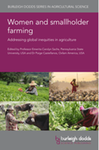
Women and smallholder farming : addressing global inequities in agriculture
Sachs, Emerita Carolyn; Castellanos, Paige
Burleigh Dodds Science Publishing
, 2025
; English
; 592 Pages
There are an estimated 500 million smallholder farmers across the world, of which a considerable percentage are women. Despite their large numbers and important roles, women smallholders remain largely unsupported and their contribution to agriculture is often devalued because of their sex.
Women and smallholder farming: Addressing global inequities in agriculture provides a comprehensive overview of the main obstacles and challenges women smallholders continue to face, such as restricted access to markets and education, as well as a lack of control over assets and property rights.
The book also assesses the impact of sociocultural factors on women smallholder farmers in different regions around the world, including Africa, Asia, Latin America and the Middle East. In highlighting these issues, the book considers how key stakeholders across the agri-food supply chain can support, empower and sufficiently compensate women smallholder farmers for their contribution to agriculture.
Key Features
Provides a comprehensive overview of the key challenges encountered by women smallholder farmers, such as restricted access to markets and technical training programmes
Addresses the critical role of women smallholder farmers to the success of global agricultural production
Includes a selection of case studies which highlight the development of programmes to aid women smallholder farmers in crop and livestock production
Sachs, Emerita Carolyn; Castellanos, Paige
Burleigh Dodds Science Publishing
, 2025
; English
; 592 Pages
There are an estimated 500 million smallholder farmers across the world, of which a considerable percentage are women. Despite their large numbers and important roles, women smallholders remain largely unsupported and their contribution to agriculture is often devalued because of their sex.
Women and smallholder farming: Addressing global inequities in agriculture provides a comprehensive overview of the main obstacles and challenges women smallholders continue to face, such as restricted access to markets and education, as well as a lack of control over assets and property rights.
The book also assesses the impact of sociocultural factors on women smallholder farmers in different regions around the world, including Africa, Asia, Latin America and the Middle East. In highlighting these issues, the book considers how key stakeholders across the agri-food supply chain can support, empower and sufficiently compensate women smallholder farmers for their contribution to agriculture.
Key Features
Provides a comprehensive overview of the key challenges encountered by women smallholder farmers, such as restricted access to markets and technical training programmes
Addresses the critical role of women smallholder farmers to the success of global agricultural production
Includes a selection of case studies which highlight the development of programmes to aid women smallholder farmers in crop and livestock production
eBook
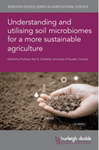
Understanding and utilising soil microbiomes for a more sustainable agriculture
Dunfield, Kari E.
Burleigh Dodds Science Publishing
, 2025
; English
; 449 Pages
Microbiomes are communities of microorganisms living in soil and other habitats. In recent years, a new wave of research into understanding soil microbiomes has emerged, with stakeholders across the supply chain recognising the fundamental importance of these communities in optimising both crop and soil health. Despite these advancements, many soil microorganisms and their ecological functions remain only partially understood.
Understanding and utilising soil microbiomes for a more sustainable agriculture summarises the wealth of recent research in this important area. It reviews advances in techniques for analysing soil microorganisms, the composition and dynamics of soil microbial communities, the ecosystem services they support and how they can be enhanced.
Key Features
Provides a comprehensive overview of the latest research in understanding the role of soil microbiomes in delivering key ecosystem services such as carbon and nutrient cycling
Reviews recent advances in understanding the role of different microbial communities in soil
Shows how the beneficial role of soil microbiomes can be promoted in achieving a more sustainable agriculture
Dunfield, Kari E.
Burleigh Dodds Science Publishing
, 2025
; English
; 449 Pages
Microbiomes are communities of microorganisms living in soil and other habitats. In recent years, a new wave of research into understanding soil microbiomes has emerged, with stakeholders across the supply chain recognising the fundamental importance of these communities in optimising both crop and soil health. Despite these advancements, many soil microorganisms and their ecological functions remain only partially understood.
Understanding and utilising soil microbiomes for a more sustainable agriculture summarises the wealth of recent research in this important area. It reviews advances in techniques for analysing soil microorganisms, the composition and dynamics of soil microbial communities, the ecosystem services they support and how they can be enhanced.
Key Features
Provides a comprehensive overview of the latest research in understanding the role of soil microbiomes in delivering key ecosystem services such as carbon and nutrient cycling
Reviews recent advances in understanding the role of different microbial communities in soil
Shows how the beneficial role of soil microbiomes can be promoted in achieving a more sustainable agriculture
eBook
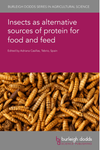
Insects as alternative sources of protein for food and feed
Casillas, Adriana
Burleigh Dodds Science Publishing
, 2025
; English
; 378 Pages
With significant concerns about the environmental impact of conventional crop and livestock production, there is a growing interest in utilising novel alternative sources of protein in both human and animal diets. Insects have long been consumed by an array of species, such as birds, fish and mammals, including humans.
Insects as alternative sources of protein for food and feed provides a comprehensive overview of the recent research undertaken in this rapidly-expanding area. The book reviews the production and application of black soldier flies, yellow mealworms and other insects as alternative protein sources in poultry, pig and fish feed, as well as their nutritional benefits and challenges that can arise as a result of their use.
Through its considered approach, the book explores how the safety of insect-derived protein can be ensured across the supply chain, as well as how we can optimise its use as a sustainable feed and food source which contributes to a more resilient food system.
Key Features
Reviews the nutritional benefits, applications and challenges of using protein from black soldier flies and yellow mealworms in poultry, pig and fish feed
Considers recent advances in the development of mass breeding/rearing techniques for the major insect species used as food or feed
Explores some of the key issues currently facing the sector, such as the need to ensure product safety, the development of effective extraction techniques and consumer attitudes towards eating protein derived from insects
Casillas, Adriana
Burleigh Dodds Science Publishing
, 2025
; English
; 378 Pages
With significant concerns about the environmental impact of conventional crop and livestock production, there is a growing interest in utilising novel alternative sources of protein in both human and animal diets. Insects have long been consumed by an array of species, such as birds, fish and mammals, including humans.
Insects as alternative sources of protein for food and feed provides a comprehensive overview of the recent research undertaken in this rapidly-expanding area. The book reviews the production and application of black soldier flies, yellow mealworms and other insects as alternative protein sources in poultry, pig and fish feed, as well as their nutritional benefits and challenges that can arise as a result of their use.
Through its considered approach, the book explores how the safety of insect-derived protein can be ensured across the supply chain, as well as how we can optimise its use as a sustainable feed and food source which contributes to a more resilient food system.
Key Features
Reviews the nutritional benefits, applications and challenges of using protein from black soldier flies and yellow mealworms in poultry, pig and fish feed
Considers recent advances in the development of mass breeding/rearing techniques for the major insect species used as food or feed
Explores some of the key issues currently facing the sector, such as the need to ensure product safety, the development of effective extraction techniques and consumer attitudes towards eating protein derived from insects
eBook
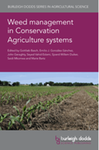
Weed management in conservation agriculture systems
Basch, Gottlieb; González-Sánc, Emilio; Geraghty, John; Eslami, Seyed Vahid; Duiker, Sjoerd W.; Mkomwam, Saidi; Bartz, Marie
Burleigh Dodds Science Publishing
, 2025
; English
; 361 Pages
There remains considerable uncertainty surrounding the future of effective weed control in agriculture. In Conservation Agriculture (CA) systems where ploughing has been replaced with no-tillage systems, weed management without reliance on herbicides has proven to be even more challenging.
Weed management in Conservation Agriculture systems reviews the range of alternative, non-chemical methods of weed control which can be implemented to improve the productivity and sustainability of CA. These methods include cultural and physical techniques such as allelopathy and thermal weed control. The book also assesses ways of optimising weed control in perennial, horticultural and other crops.
Key Features
Considers how weed management can be optimised in an array of different production systems, including perennial Conservation Agriculture (CA) systems and organic CA systems
Provides a comprehensive overview of the recent research on the use of cultural and physical weed management techniques in CA systems, such as the use of allelopathy and thermal weed control
Reviews the range of chemical and biological weed management techniques available to CA farmers, including the use of bioherbicides and other emerging methods of biological control
Basch, Gottlieb; González-Sánc, Emilio; Geraghty, John; Eslami, Seyed Vahid; Duiker, Sjoerd W.; Mkomwam, Saidi; Bartz, Marie
Burleigh Dodds Science Publishing
, 2025
; English
; 361 Pages
There remains considerable uncertainty surrounding the future of effective weed control in agriculture. In Conservation Agriculture (CA) systems where ploughing has been replaced with no-tillage systems, weed management without reliance on herbicides has proven to be even more challenging.
Weed management in Conservation Agriculture systems reviews the range of alternative, non-chemical methods of weed control which can be implemented to improve the productivity and sustainability of CA. These methods include cultural and physical techniques such as allelopathy and thermal weed control. The book also assesses ways of optimising weed control in perennial, horticultural and other crops.
Key Features
Considers how weed management can be optimised in an array of different production systems, including perennial Conservation Agriculture (CA) systems and organic CA systems
Provides a comprehensive overview of the recent research on the use of cultural and physical weed management techniques in CA systems, such as the use of allelopathy and thermal weed control
Reviews the range of chemical and biological weed management techniques available to CA farmers, including the use of bioherbicides and other emerging methods of biological control
eBook
Improving poultry meat safety and sustainability
Ricke, Steven C.
Burleigh Dodds Science Publishing
, 2025
; English
; 463 Pages
It’s been suggested that current poultry production must increase by at least 2.5% per year until 2030 to meet demand from a rapidly growing population. However, whilst modern, more intensive production systems offer the potential to meet this demand, they also bring with them increased safety and environmental risks.
Improving poultry meat safety and sustainability provides a comprehensive overview of how best to deal with zoonotic diseases which continue to threaten poultry meat safety, focussing on the major food pathogens Campylobacter, Salmonella and Escherichia coli. The book reviews how poultry meat safety can be optimised at the farm level as well as the effectiveness of methods for maintaining the postharvest safety and shelf-life of poultry meat.
With the livestock sector facing increasing pressure to reduce its carbon footprint, the book also details how poultry production can become more sustainable, whilst also ensuring that poultry meat safety isn’t compromised at any point along the value chain.
Key Features
Highlights the major zoonotic disease threats to poultry production, detailing their characterisation, identification and routes of transmission
Addresses both on-farm safety and postharvest management techniques in preventing the risk and spread of zoonotic and other diseases
Considers how elements of poultry production can be better managed to improve safety and sustainability, such as improving feed formulation and litter management to reduce environmental impact
Ricke, Steven C.
Burleigh Dodds Science Publishing
, 2025
; English
; 463 Pages
It’s been suggested that current poultry production must increase by at least 2.5% per year until 2030 to meet demand from a rapidly growing population. However, whilst modern, more intensive production systems offer the potential to meet this demand, they also bring with them increased safety and environmental risks.
Improving poultry meat safety and sustainability provides a comprehensive overview of how best to deal with zoonotic diseases which continue to threaten poultry meat safety, focussing on the major food pathogens Campylobacter, Salmonella and Escherichia coli. The book reviews how poultry meat safety can be optimised at the farm level as well as the effectiveness of methods for maintaining the postharvest safety and shelf-life of poultry meat.
With the livestock sector facing increasing pressure to reduce its carbon footprint, the book also details how poultry production can become more sustainable, whilst also ensuring that poultry meat safety isn’t compromised at any point along the value chain.
Key Features
Highlights the major zoonotic disease threats to poultry production, detailing their characterisation, identification and routes of transmission
Addresses both on-farm safety and postharvest management techniques in preventing the risk and spread of zoonotic and other diseases
Considers how elements of poultry production can be better managed to improve safety and sustainability, such as improving feed formulation and litter management to reduce environmental impact
eBook
Advances in organic dairy cattle farming
Vaarst, Mette; Roderick, Stephen; Whistance, Lindsay
Burleigh Dodds Science Publishing
, 2025
; English
; 375 Pages
“This 400-page book explores how organic dairy farming addresses challenges including environmental impact, animal welfare and antibiotic resistance. The book is aimed at academics, international policy professionals and organic farmers seeking research-based guidance, however it would also be a valuable addition to undergraduate reading lists in food science, biological sciences and agriculture. This is a timely and well-written resource.” (Book Review Published in the International Journal of Dairy Technology)
The dairy sector continues to face increasing scrutiny for its environmental impact and contribution to climate change.It must also address consumer concerns surrounding issues such as animal welfare, antibiotic usage/resistance and the ethics of intensive production systems.
Advances in organic dairy cattle farmingconsiders how organic dairy farming has the potential to address these challenges whilst also meeting the key organic principles of health, ecology, fairness and care. The book reviews advances in areas such as breeding, optimising pasture-based production and organic milk quality, improving the health and welfare of calves and adult cows, as well as promoting biodiversity and the move to a more circular, sustainable bioeconomy.
Key Features
Highlights the potential role organic dairy farming can play in addressing some of the key challenges facing the dairy sector
Considers how the one-welfare perspective can be utilised to optimise the welfare of calves, adult cows and the humans that care for them
Shows how pasture-based production can contribute to improved cattle health and welfare, product quality and sustainability
Vaarst, Mette; Roderick, Stephen; Whistance, Lindsay
Burleigh Dodds Science Publishing
, 2025
; English
; 375 Pages
“This 400-page book explores how organic dairy farming addresses challenges including environmental impact, animal welfare and antibiotic resistance. The book is aimed at academics, international policy professionals and organic farmers seeking research-based guidance, however it would also be a valuable addition to undergraduate reading lists in food science, biological sciences and agriculture. This is a timely and well-written resource.” (Book Review Published in the International Journal of Dairy Technology)
The dairy sector continues to face increasing scrutiny for its environmental impact and contribution to climate change.It must also address consumer concerns surrounding issues such as animal welfare, antibiotic usage/resistance and the ethics of intensive production systems.
Advances in organic dairy cattle farmingconsiders how organic dairy farming has the potential to address these challenges whilst also meeting the key organic principles of health, ecology, fairness and care. The book reviews advances in areas such as breeding, optimising pasture-based production and organic milk quality, improving the health and welfare of calves and adult cows, as well as promoting biodiversity and the move to a more circular, sustainable bioeconomy.
Key Features
Highlights the potential role organic dairy farming can play in addressing some of the key challenges facing the dairy sector
Considers how the one-welfare perspective can be utilised to optimise the welfare of calves, adult cows and the humans that care for them
Shows how pasture-based production can contribute to improved cattle health and welfare, product quality and sustainability
eBook
Advances in pig breeding and reproduction
Ross,, Jason
Burleigh Dodds Science Publishing
, 2025
; English
; 334 Pages
In recent years, there have been significant developments in the way that pigs are bred. This is primarily as a result of a shift in focus from production traits, such as meat quality, to other traits such as improved feed efficiency, reproductive performance and disease resistance. In light of this shift, a greater understanding of reproduction efficiency in pigs is required.
Advances in pig breeding and reproduction provides a comprehensive overview of the key research undertaken in these important areas and considers how reproduction efficiency can be optimised to achieve the desired breeding outcomes. The book also addresses recent advances in understanding how genetics can be engineered to breed pigs with an improved resistance to major diseases affecting pigs, such as porcine reproductive and respiratory syndrome virus.
Key Features
Provides a comprehensive assessment of the major developments in global pig breeding programmes
Considers how genetics and breeding can be utilised to improve the sustainability and reduce the environmental impact of pork production
Reviews the factors which can affect the reproductive efficiency of boars and sows, focussing on those that can impact semen quality and reproductive performance respectively
Ross,, Jason
Burleigh Dodds Science Publishing
, 2025
; English
; 334 Pages
In recent years, there have been significant developments in the way that pigs are bred. This is primarily as a result of a shift in focus from production traits, such as meat quality, to other traits such as improved feed efficiency, reproductive performance and disease resistance. In light of this shift, a greater understanding of reproduction efficiency in pigs is required.
Advances in pig breeding and reproduction provides a comprehensive overview of the key research undertaken in these important areas and considers how reproduction efficiency can be optimised to achieve the desired breeding outcomes. The book also addresses recent advances in understanding how genetics can be engineered to breed pigs with an improved resistance to major diseases affecting pigs, such as porcine reproductive and respiratory syndrome virus.
Key Features
Provides a comprehensive assessment of the major developments in global pig breeding programmes
Considers how genetics and breeding can be utilised to improve the sustainability and reduce the environmental impact of pork production
Reviews the factors which can affect the reproductive efficiency of boars and sows, focussing on those that can impact semen quality and reproductive performance respectively
eBook
Advances in temperate agroforestry
Mosquera-Losada, María Rosa; Martin, Ladislau; Pantera, Anastasia; Chatrchyan, Allison
Burleigh Dodds Science Publishing
, 2025
; English
; 355 Pages
With growing concern about the environmental impact of agriculture and its consequent contribution to climate change, there is an increasing interest in the implementation of agroecological approaches to achieve a more sustainable agriculture. Agroforestry is one area of research which has gained significant momentum in recent years.
Advances in temperate agroforestry reviews key recent advances in measuring and valuing how agroforestry systems promote biodiversity and deliver ecosystem services such as soil carbon sequestration. The book also considers the development of different silvopastoral and silvoarable practices, including integrating trees and livestock in timber forests, orchard and pasture systems, as well as alley cropping and intercropping.
Key Features
Provides a comprehensive overview of the ways agroforestry can support key ecosystem services
Reviews the range of silvopastoral and silvoarable systems and their application in agriculture to optimise crop and livestock production
Considers the benefits of temperate agroforestry in mitigating/adapting to climate change
Mosquera-Losada, María Rosa; Martin, Ladislau; Pantera, Anastasia; Chatrchyan, Allison
Burleigh Dodds Science Publishing
, 2025
; English
; 355 Pages
With growing concern about the environmental impact of agriculture and its consequent contribution to climate change, there is an increasing interest in the implementation of agroecological approaches to achieve a more sustainable agriculture. Agroforestry is one area of research which has gained significant momentum in recent years.
Advances in temperate agroforestry reviews key recent advances in measuring and valuing how agroforestry systems promote biodiversity and deliver ecosystem services such as soil carbon sequestration. The book also considers the development of different silvopastoral and silvoarable practices, including integrating trees and livestock in timber forests, orchard and pasture systems, as well as alley cropping and intercropping.
Key Features
Provides a comprehensive overview of the ways agroforestry can support key ecosystem services
Reviews the range of silvopastoral and silvoarable systems and their application in agriculture to optimise crop and livestock production
Considers the benefits of temperate agroforestry in mitigating/adapting to climate change
