


Navigation menu
Search
eBook
Re-examining the five-point consensus and ASEAN’s response to the Myanmar crisis
Mun, Tang Siew
ISEAS – Yusof Ishak Institute
, 2025
; English
; 35 Pages
•The Five-Point Consensus (5PC) encapsulates ASEAN’s response to the Myanmar crisis precipitated by the military’s seizure of power on 1 February 2021. •As criticism about the effectiveness of ASEAN continue to mount, the current chair of the association has proposed the appointment of a “permanent” special envoy by extending its term beyond one year. In addition to revisiting its tenure, ASEAN should also consider providing the special envoy with the necessary political backing, adequate funding and efficient administrative support. More importantly, ASEAN needs to expand its mandate from an exclusive focus on conflict management to conflict resolution. •Notwithstanding valid criticisms of the 5PC, it remains a significant development as the singular ASEAN document agreed upon by all the ASEAN Leaders, including the concurrence of Myanmar’s Senior General Min Aung Hlaing. •The 5PC is by no means a perfect framework. It lacks a clear “end game” beyond the advocacy for dialogue. From a strategic perspective, ASEAN made few attempts to leverage on “carrots and sticks” and relied heavily on persuading a disinterested Myanmar leadership on the implementation of the 5PC. The ability of the AHA Centre (ASEAN Coordinating Centre for Humanitarian Assistance on disaster management) to deliver humanitarian assistance to Myanmar is constrained by its limited resources. •ASEAN unity and support for an “upgrade” of the 5PC cannot be taken for granted as Cambodia, Laos and Thailand have broken ranks in recognizing the State Administration Council (SAC) bilaterally by appointing new ambassadors to Myanmar. •The SAC’s notion of calling for national elections is rightly seen by ASEAN as irrelevant and ill-timed. However, the idea of an election led by ASEAN or the United Nations or one supervised internationally may be worth considering at a later time as a possible solution to the current impasse. Cambodia’s experience with the United Nations Transitional Authority on Cambodia (UNTAC) may offer some positive lessons on national reconciliation and conflict resolution.
Mun, Tang Siew
ISEAS – Yusof Ishak Institute
, 2025
; English
; 35 Pages
•The Five-Point Consensus (5PC) encapsulates ASEAN’s response to the Myanmar crisis precipitated by the military’s seizure of power on 1 February 2021. •As criticism about the effectiveness of ASEAN continue to mount, the current chair of the association has proposed the appointment of a “permanent” special envoy by extending its term beyond one year. In addition to revisiting its tenure, ASEAN should also consider providing the special envoy with the necessary political backing, adequate funding and efficient administrative support. More importantly, ASEAN needs to expand its mandate from an exclusive focus on conflict management to conflict resolution. •Notwithstanding valid criticisms of the 5PC, it remains a significant development as the singular ASEAN document agreed upon by all the ASEAN Leaders, including the concurrence of Myanmar’s Senior General Min Aung Hlaing. •The 5PC is by no means a perfect framework. It lacks a clear “end game” beyond the advocacy for dialogue. From a strategic perspective, ASEAN made few attempts to leverage on “carrots and sticks” and relied heavily on persuading a disinterested Myanmar leadership on the implementation of the 5PC. The ability of the AHA Centre (ASEAN Coordinating Centre for Humanitarian Assistance on disaster management) to deliver humanitarian assistance to Myanmar is constrained by its limited resources. •ASEAN unity and support for an “upgrade” of the 5PC cannot be taken for granted as Cambodia, Laos and Thailand have broken ranks in recognizing the State Administration Council (SAC) bilaterally by appointing new ambassadors to Myanmar. •The SAC’s notion of calling for national elections is rightly seen by ASEAN as irrelevant and ill-timed. However, the idea of an election led by ASEAN or the United Nations or one supervised internationally may be worth considering at a later time as a possible solution to the current impasse. Cambodia’s experience with the United Nations Transitional Authority on Cambodia (UNTAC) may offer some positive lessons on national reconciliation and conflict resolution.
eBook
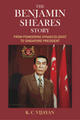
The Benjamin Sheares story : from pioneering gynaecologist to Singapore President
Vijayan, K.C.
ISEAS – Yusof Ishak Institute
, 2025
; English
; 247 Pages
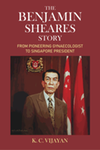
“My mum was told to abort the foetus after doctors told her the baby was stillborn. She refused to accept the opinions of three doctors consulted... (and) made the trip to Singapore where she consulted a doctor named Benjamin Sheares. He examined her, then reassured her with a smile: ‘Madam, your baby is alive, and fine.’ I would like to remember my mum and Dr Sheares, I would not be here today without either of them.” Michael Chiang, prominent Singaporean playwright, born 1955 “For once Mahathir agrees with him! We are mighty proud of Harry Lee’s choice of a president.” Tun Dr Siti Hasmah Mohamad Ali, 29 December 1970, on learning Lee Kuan Yew would nominate Benjamin Sheares as Singapore’s President. Step into an extraordinary life. The Benjamin Sheares Story: From Pioneering Gynaecologist to Singapore President is a rich tapestry of voices and reflections, anecdotes and historical snapshots weaving together the narrative of a man whose impact spanned both medicine and nation-building. From the crowded maternity wards during the baby boom to the highest office in the land at the Istana, Sheares carried with him the same quiet dignity and distinction. As Singapore’s second President (1971–81), he personified the success of a Singapore Story during a time of transformation for a young nation. Sheares was a Tamil-speaking Eurasian of humble beginnings and embodied the very spirit of Singapore: resilient, inclusive and forward-looking. More than a modest biography, this book is our SG60 tribute to Sheares, offering readers a deeply human portrait of a remarkable man.
Vijayan, K.C.
ISEAS – Yusof Ishak Institute
, 2025
; English
; 247 Pages
“My mum was told to abort the foetus after doctors told her the baby was stillborn. She refused to accept the opinions of three doctors consulted... (and) made the trip to Singapore where she consulted a doctor named Benjamin Sheares. He examined her, then reassured her with a smile: ‘Madam, your baby is alive, and fine.’ I would like to remember my mum and Dr Sheares, I would not be here today without either of them.” Michael Chiang, prominent Singaporean playwright, born 1955 “For once Mahathir agrees with him! We are mighty proud of Harry Lee’s choice of a president.” Tun Dr Siti Hasmah Mohamad Ali, 29 December 1970, on learning Lee Kuan Yew would nominate Benjamin Sheares as Singapore’s President. Step into an extraordinary life. The Benjamin Sheares Story: From Pioneering Gynaecologist to Singapore President is a rich tapestry of voices and reflections, anecdotes and historical snapshots weaving together the narrative of a man whose impact spanned both medicine and nation-building. From the crowded maternity wards during the baby boom to the highest office in the land at the Istana, Sheares carried with him the same quiet dignity and distinction. As Singapore’s second President (1971–81), he personified the success of a Singapore Story during a time of transformation for a young nation. Sheares was a Tamil-speaking Eurasian of humble beginnings and embodied the very spirit of Singapore: resilient, inclusive and forward-looking. More than a modest biography, this book is our SG60 tribute to Sheares, offering readers a deeply human portrait of a remarkable man.
eBook
A matter of duty: a memoir of my time in the Singapore Armed Forces (1967–1982)
Tiong, Tan Chin
ISEAS – Yusof Ishak Institute
, 2025
; English
; 205 Pages
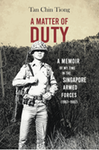
“A Matter of Duty needs to be required reading for all SAF officers and MINDEF professional staff. It is a lively, candid, engaging and, at times, surprising memoir that explains how the formative years were used to turn bits and pieces into a comprehensive and organised armed forces that are now a core institution of the country in an astonishingly short time. The array of different challenges and problems that had to be overcome to give Singapore the robust deterrent it now has will inform all readers, and surprise many, and no stone is left unturned herein. One hopes that the current and future generations of their successors tackle their duty with the same resolve displayed by Tan Chin Tiong and the mentor who called his generation to duty, the father of the SAF, Dr Goh Keng Swee.” —Brian Farrell, Professor of Military History at the History Department, National University of Singapore, and author of The Defence and Fall of Singapore “Many books have been written about Goh Keng Swee, but none were about his work in the Ministry of Defence, where he raised the SAF almost from scratch, starting with only two infantry battalions in 1967. This book breaks the trend as it provides a captivating account of Dr Goh’s monumental work in the SAF’s early military history as seen through the eyes of Tan Chin Tiong, the prototype soldier-scholar who answered the call of duty to assist him in the endeavour. Mr Tan highlights in readable prose how numerous Singapore and SAF institutions, policies, and practices familiar to our citizens and national servicemen bear the personal and farsighted imprint of Dr Goh. This book is recommended reading for all those who serve in the SAF.” —Kumar Ramakrishna, Professor and Dean of the S. Rajaratnam School of International Studies, Nanyang Technological University. Author of Extremist Islam: Recognition and Response in Southeast Asia “The author writes with clarity as well as with authority and candour. Drawing on his extensive personal involvement, he provides fresh insights into many aspects of the development of the Singapore Armed Forces (SAF) between the late 1960s and the early ‘80s under the ministerial leadership of Dr Goh Keng Swee. Among the many facets that he discusses are the development of the SAF command structure
the crucial influence of Israeli as well as German military advisors on the young SAF’s organisation, doctrine and training
the origins of SAF Armour
the early phases of the SAF’s overseas training arrangements with other countries
and the establishment of the Singapore Civil Defence Force. This book should contribute significantly to understanding how the SAF developed and came to play such a successful role in assuring Singapore’s security. It will be of interest not just within the local, regional and international expert communities concerned with Singapore’s defence, security and civil-military relations, but also to those who have served in the SAF.” —Tim Huxley, author of Defending the Lion City: The Armed Forces of Singapore “This compelling autobiographical account offers an insider’s view on the formative years of the Singapore Armed Forces. Through the eyes of someone who stood at the frontlines of institution-building, the book captures the vision, resolve, and ingenuity that led to the making of a modern military in a new nation-state. Clearly written, with vivid storytelling and useful historical context, the author reveals the journey that shaped a young nation’s endeavours in building up a citizen-led defence force almost from scratch. The book’s key themes highlight the close civil-military relationship that is quite unique to the Singapore experience. The author, who transitioned from the Administrative Service to play a significant role as a senior military officer from 1967 to 1982, details the outsized and pivotal part played by Singapore’s first Defence Minister, Dr Goh Keng Swee, a civilian political leader with no professional military background, in the establishment of the armed forces. I strongly recommend this book to anyone interested in military history, leadership studies, and the contemporary history of Singapore.” — Tan Tai Yong, President, Singapore University of Social Sciences. Author of Creating “Greater Malaysia”: Decolonization and the Politics of Merger
Tiong, Tan Chin
ISEAS – Yusof Ishak Institute
, 2025
; English
; 205 Pages
“A Matter of Duty needs to be required reading for all SAF officers and MINDEF professional staff. It is a lively, candid, engaging and, at times, surprising memoir that explains how the formative years were used to turn bits and pieces into a comprehensive and organised armed forces that are now a core institution of the country in an astonishingly short time. The array of different challenges and problems that had to be overcome to give Singapore the robust deterrent it now has will inform all readers, and surprise many, and no stone is left unturned herein. One hopes that the current and future generations of their successors tackle their duty with the same resolve displayed by Tan Chin Tiong and the mentor who called his generation to duty, the father of the SAF, Dr Goh Keng Swee.” —Brian Farrell, Professor of Military History at the History Department, National University of Singapore, and author of The Defence and Fall of Singapore “Many books have been written about Goh Keng Swee, but none were about his work in the Ministry of Defence, where he raised the SAF almost from scratch, starting with only two infantry battalions in 1967. This book breaks the trend as it provides a captivating account of Dr Goh’s monumental work in the SAF’s early military history as seen through the eyes of Tan Chin Tiong, the prototype soldier-scholar who answered the call of duty to assist him in the endeavour. Mr Tan highlights in readable prose how numerous Singapore and SAF institutions, policies, and practices familiar to our citizens and national servicemen bear the personal and farsighted imprint of Dr Goh. This book is recommended reading for all those who serve in the SAF.” —Kumar Ramakrishna, Professor and Dean of the S. Rajaratnam School of International Studies, Nanyang Technological University. Author of Extremist Islam: Recognition and Response in Southeast Asia “The author writes with clarity as well as with authority and candour. Drawing on his extensive personal involvement, he provides fresh insights into many aspects of the development of the Singapore Armed Forces (SAF) between the late 1960s and the early ‘80s under the ministerial leadership of Dr Goh Keng Swee. Among the many facets that he discusses are the development of the SAF command structure
the crucial influence of Israeli as well as German military advisors on the young SAF’s organisation, doctrine and training
the origins of SAF Armour
the early phases of the SAF’s overseas training arrangements with other countries
and the establishment of the Singapore Civil Defence Force. This book should contribute significantly to understanding how the SAF developed and came to play such a successful role in assuring Singapore’s security. It will be of interest not just within the local, regional and international expert communities concerned with Singapore’s defence, security and civil-military relations, but also to those who have served in the SAF.” —Tim Huxley, author of Defending the Lion City: The Armed Forces of Singapore “This compelling autobiographical account offers an insider’s view on the formative years of the Singapore Armed Forces. Through the eyes of someone who stood at the frontlines of institution-building, the book captures the vision, resolve, and ingenuity that led to the making of a modern military in a new nation-state. Clearly written, with vivid storytelling and useful historical context, the author reveals the journey that shaped a young nation’s endeavours in building up a citizen-led defence force almost from scratch. The book’s key themes highlight the close civil-military relationship that is quite unique to the Singapore experience. The author, who transitioned from the Administrative Service to play a significant role as a senior military officer from 1967 to 1982, details the outsized and pivotal part played by Singapore’s first Defence Minister, Dr Goh Keng Swee, a civilian political leader with no professional military background, in the establishment of the armed forces. I strongly recommend this book to anyone interested in military history, leadership studies, and the contemporary history of Singapore.” — Tan Tai Yong, President, Singapore University of Social Sciences. Author of Creating “Greater Malaysia”: Decolonization and the Politics of Merger
eBook
Kirpa Ram Vij: the volunteer who launched an army
Menon, Ramachandran
ISEAS – Yusof Ishak Institute
, 2025
; English
; 300 Pages
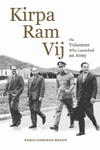
For the first ten years of the history of the Singapore Armed Forces (SAF), one soldier dominated its build-up. Mobilized by Defence Minister Dr Goh Keng Swee after Singapore’s expulsion from Malaysia on 9 August 1965, Kirpa Ram Vij, then a captain in the Singapore Volunteer Artillery, established the Singapore Armed Forces Training Institute (SAFTI) with Israeli Defence Force advisors. Together with them, he also formulated many SAF operational doctrines that still underlie SAF land forces’ training today. He launched advanced leadership training establishments including the School of Advanced Training for Officers (SATO) and the Goh Keng Swee Command and Staff College (CSC). He attained the then top uniformed appointment of Director, General Staff, as a Brigadier General. Overtaken by numerous cohorts of younger administrative service officers for senior civil service posts while in the SAF, he quit government service to join Neptune Orient Lines (NOL) where he mastered computer freight services as General Manager, Administration, among other top management jobs. On retirement from NOL, he was initially appointed Consultant and later Chief Executive Officer of Gateway Distriparks Limited (GDL, a Singapore consortium) and installed India’s first foreign-owned computer freight service terminal in Navi Mumbai, later to be listed in both India and New York with great success. Kirpa Ram passed away on 29 October 2022. This account traces his life story and his contributions to the SAF and Singapore.
Menon, Ramachandran
ISEAS – Yusof Ishak Institute
, 2025
; English
; 300 Pages
For the first ten years of the history of the Singapore Armed Forces (SAF), one soldier dominated its build-up. Mobilized by Defence Minister Dr Goh Keng Swee after Singapore’s expulsion from Malaysia on 9 August 1965, Kirpa Ram Vij, then a captain in the Singapore Volunteer Artillery, established the Singapore Armed Forces Training Institute (SAFTI) with Israeli Defence Force advisors. Together with them, he also formulated many SAF operational doctrines that still underlie SAF land forces’ training today. He launched advanced leadership training establishments including the School of Advanced Training for Officers (SATO) and the Goh Keng Swee Command and Staff College (CSC). He attained the then top uniformed appointment of Director, General Staff, as a Brigadier General. Overtaken by numerous cohorts of younger administrative service officers for senior civil service posts while in the SAF, he quit government service to join Neptune Orient Lines (NOL) where he mastered computer freight services as General Manager, Administration, among other top management jobs. On retirement from NOL, he was initially appointed Consultant and later Chief Executive Officer of Gateway Distriparks Limited (GDL, a Singapore consortium) and installed India’s first foreign-owned computer freight service terminal in Navi Mumbai, later to be listed in both India and New York with great success. Kirpa Ram passed away on 29 October 2022. This account traces his life story and his contributions to the SAF and Singapore.
eBook
The Jokowi Presidency : Indonesia’s decade of authoritarian revival
Jaffrey, Sana; Warburton, Eve
ISEAS – Yusof Ishak Institute
, 2025
; English
; 332 Pages
Mr Lewa Pardomuan, Senior Producer, Current Affairs, Channel NewsAsia, Mediacorp, September 2025
"A book worth reading about the disruptive president."
Jaffrey, Sana; Warburton, Eve
ISEAS – Yusof Ishak Institute
, 2025
; English
; 332 Pages
Mr Lewa Pardomuan, Senior Producer, Current Affairs, Channel NewsAsia, Mediacorp, September 2025
"A book worth reading about the disruptive president."
eBook
Youth perceptions of income inequality in six Southeast Asian countries, Issue 17
Halimatusa'diyah, Iim; Shukri, Syaza
ISEAS – Yusof Ishak Institute
, 2025
; English
; 39 Pages
While much research has explored how perceptions of income inequality influence political outcomes—such as political participation, behaviour, and support for democracy—less attention has been given to how a country’s economic and political conditions shape these perceptions. This article argues that economic outlook and political stability play a crucial role in shaping how youths perceive income inequality.
A youth and civic engagement survey conducted by the ISEAS – Yusof Ishak Institute between August and October 2024 found that Indonesian, Filipino and Thai youths are the most pessimistic about the economic prospects and political conditions of their countries. This bleak outlook aligns closely with their negative perceptions of income inequality.
In contrast, youths in Singapore and Vietnam exhibit higher levels of optimism, underpinned by the strong economic growth and political stability of their countries. These favourable conditions, in turn, contribute to more positive perceptions of fairness in wealth distribution in their respective countries.
Malaysia, however, presents a more nuanced picture. Despite relatively high levels of income inequality, Malaysian youths remain optimistic about the economic future of the country, revealing a disconnect between economic optimism and perceptions of income inequality.
Overall, this article urges policymakers to address objective measures as well as subjective perceptions of inequality by fostering economic environments and political systems that bolster youth optimism and confidence in equitable development. As these perceptions will shape future political landscapes significantly, ensuring a balanced narrative regarding economic growth and fair wealth distribution is essential for sociopolitical stability in Southeast Asia in the future.
Halimatusa'diyah, Iim; Shukri, Syaza
ISEAS – Yusof Ishak Institute
, 2025
; English
; 39 Pages
While much research has explored how perceptions of income inequality influence political outcomes—such as political participation, behaviour, and support for democracy—less attention has been given to how a country’s economic and political conditions shape these perceptions. This article argues that economic outlook and political stability play a crucial role in shaping how youths perceive income inequality.
A youth and civic engagement survey conducted by the ISEAS – Yusof Ishak Institute between August and October 2024 found that Indonesian, Filipino and Thai youths are the most pessimistic about the economic prospects and political conditions of their countries. This bleak outlook aligns closely with their negative perceptions of income inequality.
In contrast, youths in Singapore and Vietnam exhibit higher levels of optimism, underpinned by the strong economic growth and political stability of their countries. These favourable conditions, in turn, contribute to more positive perceptions of fairness in wealth distribution in their respective countries.
Malaysia, however, presents a more nuanced picture. Despite relatively high levels of income inequality, Malaysian youths remain optimistic about the economic future of the country, revealing a disconnect between economic optimism and perceptions of income inequality.
Overall, this article urges policymakers to address objective measures as well as subjective perceptions of inequality by fostering economic environments and political systems that bolster youth optimism and confidence in equitable development. As these perceptions will shape future political landscapes significantly, ensuring a balanced narrative regarding economic growth and fair wealth distribution is essential for sociopolitical stability in Southeast Asia in the future.
eBook
Nahdlatul Ulama and its political engagement with Indonesian Presidents
A'an Suryana
ISEAS – Yusof Ishak Institute
, 2025
; English
; 35 Pages
Since Indonesia adopted a direct presidential election in 2004, which applies a one-man, one-vote system, Nahdlatul Ulama (NU), the country’s largest Muslim organization, has played an increasingly significant role in elections.
Candidates actively develop ties with the organization’s leaders and vast voter base to improve their chances of winning elections.
Factors driving the political engagement between Indonesia’s presidents and NU are arguably contingent on the dynamics of the existing political situation. Whereas material or transactional factors defined the political engagement between NU and presidents Soeharto, Megawati Soekarnoputri and Prabowo Subianto, the relationships were driven mainly by ideological factors under the administrations of Soekarno and Joko Widodo.
This article seeks to trace, albeit briefly, the political engagement between Indonesia’s presidents and NU throughout the presidencies of Soekarno to Prabowo Subianto. This longitudinal research seeks to give readers a more comprehensive understanding of NU’s political engagement with different presidents throughout Indonesia’s history.
A'an Suryana
ISEAS – Yusof Ishak Institute
, 2025
; English
; 35 Pages
Since Indonesia adopted a direct presidential election in 2004, which applies a one-man, one-vote system, Nahdlatul Ulama (NU), the country’s largest Muslim organization, has played an increasingly significant role in elections.
Candidates actively develop ties with the organization’s leaders and vast voter base to improve their chances of winning elections.
Factors driving the political engagement between Indonesia’s presidents and NU are arguably contingent on the dynamics of the existing political situation. Whereas material or transactional factors defined the political engagement between NU and presidents Soeharto, Megawati Soekarnoputri and Prabowo Subianto, the relationships were driven mainly by ideological factors under the administrations of Soekarno and Joko Widodo.
This article seeks to trace, albeit briefly, the political engagement between Indonesia’s presidents and NU throughout the presidencies of Soekarno to Prabowo Subianto. This longitudinal research seeks to give readers a more comprehensive understanding of NU’s political engagement with different presidents throughout Indonesia’s history.
eBook
The democratic action party at sixty : struggles over seniority, structure and strategy, Issue 18
Hutchinson, Francis E.
ISEAS – Yusof Ishak Institute
, 2025
; English
; 40 Pages
Traditionally an opposition outfit, the Democratic Action Party (DAP) has evolved to become a mainstream operation. A consequential player in Malaysian politics, it now has forty mem-bers of parliament and ninety state assembly representatives.
Because of its cadre-based structure, the DAP usually has orderly party elections. Nonetheless, foundational issues have caused some disagreements to bubble to the sur-face—most recently at the 2025 National Party Congress.
Now approaching its sixtieth year, the party is grappling with three key challenges.
The first is the managing of generational change and the fostering of greater inclusive-ness. Senior leaders are retiring, not always willingly; and while the party is multiracial in out-look, it has struggled to diversify its leadership.
The second stems from it evolving from having a small group structure into a larger and more complex organization. No longer a uniquely nationally focused party, the DAP’s leaders are increasingly nourishing support bases at the state level—shifting power within the party structure outwards and downwards.
The third is the managing of diverse expectations. While much of its support base sees the DAP as the opposition, it is now in government. Navigating within the boundaries of what is politically feasible now calls for a different set of skills.
eBook
Hutchinson, Francis E.
ISEAS – Yusof Ishak Institute
, 2025
; English
; 40 Pages
Traditionally an opposition outfit, the Democratic Action Party (DAP) has evolved to become a mainstream operation. A consequential player in Malaysian politics, it now has forty mem-bers of parliament and ninety state assembly representatives.
Because of its cadre-based structure, the DAP usually has orderly party elections. Nonetheless, foundational issues have caused some disagreements to bubble to the sur-face—most recently at the 2025 National Party Congress.
Now approaching its sixtieth year, the party is grappling with three key challenges.
The first is the managing of generational change and the fostering of greater inclusive-ness. Senior leaders are retiring, not always willingly; and while the party is multiracial in out-look, it has struggled to diversify its leadership.
The second stems from it evolving from having a small group structure into a larger and more complex organization. No longer a uniquely nationally focused party, the DAP’s leaders are increasingly nourishing support bases at the state level—shifting power within the party structure outwards and downwards.
The third is the managing of diverse expectations. While much of its support base sees the DAP as the opposition, it is now in government. Navigating within the boundaries of what is politically feasible now calls for a different set of skills.
eBook
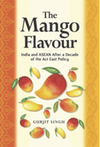
The mango flavour : India and ASEAN after a decade of the act east policy
Singh, Gurjit
ISEAS – Yusof Ishak Institute
, 2025
; English
; 299 Pages
“Readers benefit from a highly readable and policy-focused account of India’s ties with Southeast Asia with forward-looking insights across multiple chapters rather than just a short conclusion as may be the case in other works.”
Singh, Gurjit
ISEAS – Yusof Ishak Institute
, 2025
; English
; 299 Pages
“Readers benefit from a highly readable and policy-focused account of India’s ties with Southeast Asia with forward-looking insights across multiple chapters rather than just a short conclusion as may be the case in other works.”
eBook
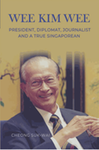
Wee Kim Wee : President, diplomat, journalist and a true Singaporean
Suk-Wai, Cheong
ISEAS – Yusof Ishak Institute
, 2025
; English
; 261 Pages
Dr Wee Kim Wee was a pioneering Singaporean journalist and diplomat with a most improbable rise and rise in life. Among his many other accomplishments, he helped end a regional war; kept one of the world’s oldest newspapers alive till today; and rescued the presidency of the Republic of Singapore from a spell in the gutter. Just as water softens stone, he overcame the grimmest odds with his winsome ways and unimpeachable character. This meticulously researched book brims with fresh insights about the man most Singaporeans claimed as “my President”. They include telling facets from the author’s interviews with more than 30 people who knew Dr Wee best in every decade of his storied life. Dr Wee started out being too poor to complete secondary school to holding Singapore’s highest office. His lightly worn shrewdness and genuine regard for all living things plucked him out of obscurity and thrust him into moments that shook Singapore, eventually making him a beloved household name. Dr Wee was the embodiment of Singapore exceptionalism and this biography is the last word on a sort of man that Singapore will rarely, if ever, encounter again.
Suk-Wai, Cheong
ISEAS – Yusof Ishak Institute
, 2025
; English
; 261 Pages
Dr Wee Kim Wee was a pioneering Singaporean journalist and diplomat with a most improbable rise and rise in life. Among his many other accomplishments, he helped end a regional war; kept one of the world’s oldest newspapers alive till today; and rescued the presidency of the Republic of Singapore from a spell in the gutter. Just as water softens stone, he overcame the grimmest odds with his winsome ways and unimpeachable character. This meticulously researched book brims with fresh insights about the man most Singaporeans claimed as “my President”. They include telling facets from the author’s interviews with more than 30 people who knew Dr Wee best in every decade of his storied life. Dr Wee started out being too poor to complete secondary school to holding Singapore’s highest office. His lightly worn shrewdness and genuine regard for all living things plucked him out of obscurity and thrust him into moments that shook Singapore, eventually making him a beloved household name. Dr Wee was the embodiment of Singapore exceptionalism and this biography is the last word on a sort of man that Singapore will rarely, if ever, encounter again.
