
Navigation menu
Search
eBook
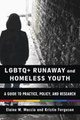
LGBTQ+ runaway and homeless youth: a guide to practice, policy, and research
Maccio, Elaine M.; Ferguson, Kristin
Columbia University Press
, 2026
; English
; 369 Pages
For years, 20 to 40 percent of the runaway and homeless youth (RHY) population have identified as LGBTQ+, a vastly disproportionate share relative to the general population.
These youths experience lower rates of family reunification compared with their heterosexual and cisgender counterparts, and there are few LGBTQ+-affirming programs and services to which they can turn. This book offers a comprehensive review of best practices, current policies, and the latest research regarding LGBTQ+ runaway and homeless youth.
Elaine M. Maccio and Kristin Ferguson describe the prevalence and demographics of LGBTQ+ youth in the context of the larger RHY population, sharing current understandings of sexual orientation and gender identity.
Combining empirical data with vivid case vignettes, they delve into the lives and experiences of LGBTQ+ RHY, considering a range of issues, including physical and mental health, risk and protective factors, and parents and families.
Maccio and Ferguson identify available and ideal support mechanisms, providing a detailed look at practice, programs, policies, and advocacy.
The book concludes with practical recommendations to improve well-being and promote positive outcomes. LGBTQ+ Runaway and Homeless Youth is the preeminent reference and resource for students, instructors, practitioners, service providers, researchers, policy makers, and other community partners who are invested in improving the lives of this vulnerable population.
Maccio, Elaine M.; Ferguson, Kristin
Columbia University Press
, 2026
; English
; 369 Pages
For years, 20 to 40 percent of the runaway and homeless youth (RHY) population have identified as LGBTQ+, a vastly disproportionate share relative to the general population.
These youths experience lower rates of family reunification compared with their heterosexual and cisgender counterparts, and there are few LGBTQ+-affirming programs and services to which they can turn. This book offers a comprehensive review of best practices, current policies, and the latest research regarding LGBTQ+ runaway and homeless youth.
Elaine M. Maccio and Kristin Ferguson describe the prevalence and demographics of LGBTQ+ youth in the context of the larger RHY population, sharing current understandings of sexual orientation and gender identity.
Combining empirical data with vivid case vignettes, they delve into the lives and experiences of LGBTQ+ RHY, considering a range of issues, including physical and mental health, risk and protective factors, and parents and families.
Maccio and Ferguson identify available and ideal support mechanisms, providing a detailed look at practice, programs, policies, and advocacy.
The book concludes with practical recommendations to improve well-being and promote positive outcomes. LGBTQ+ Runaway and Homeless Youth is the preeminent reference and resource for students, instructors, practitioners, service providers, researchers, policy makers, and other community partners who are invested in improving the lives of this vulnerable population.
eBook
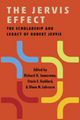
The Jervis effect : the scholarship and legacy of Robert Jervis
Immerman, Richard H.; Goddard, Stacie E.; Labrosse, Diane N.
Columbia University Press
, 2026
; English
; 389 Pages
Robert Jervis (1940–2021) was a titan in the field of international relations. Part political scientist, part psychologist, part historian, and part policy analyst, he drew on a vast array of theoretical approaches and empirical methods to develop keen and distinctive insights on a wide range of topics. From academic political science to the policy world, the scope of Jervis’s influence is astonishing. Bringing together top scholars in political science, international relations, and history, this book offers a deep dive into Jervis’s pathbreaking scholarship and its legacy across disciplines. The authors consider how his work reshaped subjects such as nuclear strategy, arms control, deterrence theory, structural realism, diplomatic history, intelligence analysis, and the causes of war. They further discuss Jervis’s leadership on the CIA’s declassification board, which provided a bridge between academics and the intelligence community, and his influence as a public intellectual. The contributors also pay tribute to Jervis as a mentor, colleague, and friend who worked to build and sustain a broad intellectual community. Offering a wide-ranging overview of Jervis’s most important contributions to many fields, this book provides a deep understanding of Jervis’s scholarly work, which continues to inspire new generations of scholars who seek to follow in his footsteps.
Immerman, Richard H.; Goddard, Stacie E.; Labrosse, Diane N.
Columbia University Press
, 2026
; English
; 389 Pages
Robert Jervis (1940–2021) was a titan in the field of international relations. Part political scientist, part psychologist, part historian, and part policy analyst, he drew on a vast array of theoretical approaches and empirical methods to develop keen and distinctive insights on a wide range of topics. From academic political science to the policy world, the scope of Jervis’s influence is astonishing. Bringing together top scholars in political science, international relations, and history, this book offers a deep dive into Jervis’s pathbreaking scholarship and its legacy across disciplines. The authors consider how his work reshaped subjects such as nuclear strategy, arms control, deterrence theory, structural realism, diplomatic history, intelligence analysis, and the causes of war. They further discuss Jervis’s leadership on the CIA’s declassification board, which provided a bridge between academics and the intelligence community, and his influence as a public intellectual. The contributors also pay tribute to Jervis as a mentor, colleague, and friend who worked to build and sustain a broad intellectual community. Offering a wide-ranging overview of Jervis’s most important contributions to many fields, this book provides a deep understanding of Jervis’s scholarly work, which continues to inspire new generations of scholars who seek to follow in his footsteps.
eBook
Kristeva, Julia; Bray, Barbara
Columbia University Press
, 2026
; English
; 220 Pages
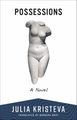
This sequel to Julia Kristeva’s celebrated allegory The Old Man and the Wolves returns to the corrupt seaside resort of a mythical town, where the boundaries between East and West, civilization and barbarism, and good and evil are erased. Part mystery, part meditation, this engrossing tale features the return of Parisian amateur detective and newspaper reporter Stephanie Delacour (Kristeva’s alter ego), drawn into the mystery of a friend's murder. The story opens with the gruesome discovery of the decapitated body of a gifted translator, Gloria Harrison. Delacour finds herself participating in the investigation in the company of Detective Superintendent Northrup Rilsky. As the mystery unfolds, Delacour veers away from Rilsky’s investigation, on to a trail that leads to the real killer. Kristeva uses the classic thriller genre to animate the themes that run through her work as a linguist and philosopher. While Stephanie Delacour probes a brilliant gallery of suspects, we read between the lines some of the sorrows and dilemmas that are the focus of Kristeva’s own life and work: motherhood and the complex relationship between mother and child; art and music; psychoanalysis; mourning and melancholia; language; the powers of horror; and the hostility aroused by a competent, gifted, and attractive woman who is at once devotedly maternal and capable of sexual passion.
eBook
Kristeva, Julia; Bray, Barbara
Columbia University Press
, 2026
; English
; 220 Pages
This sequel to Julia Kristeva’s celebrated allegory The Old Man and the Wolves returns to the corrupt seaside resort of a mythical town, where the boundaries between East and West, civilization and barbarism, and good and evil are erased. Part mystery, part meditation, this engrossing tale features the return of Parisian amateur detective and newspaper reporter Stephanie Delacour (Kristeva’s alter ego), drawn into the mystery of a friend's murder. The story opens with the gruesome discovery of the decapitated body of a gifted translator, Gloria Harrison. Delacour finds herself participating in the investigation in the company of Detective Superintendent Northrup Rilsky. As the mystery unfolds, Delacour veers away from Rilsky’s investigation, on to a trail that leads to the real killer. Kristeva uses the classic thriller genre to animate the themes that run through her work as a linguist and philosopher. While Stephanie Delacour probes a brilliant gallery of suspects, we read between the lines some of the sorrows and dilemmas that are the focus of Kristeva’s own life and work: motherhood and the complex relationship between mother and child; art and music; psychoanalysis; mourning and melancholia; language; the powers of horror; and the hostility aroused by a competent, gifted, and attractive woman who is at once devotedly maternal and capable of sexual passion.
eBook
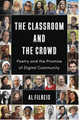
The classroom and the crowd : poetry and the promise of digital community
Filreis, Al
Columbia University Press
, 2025
; English
; 336 Pages
For more than a decade, Al Filreis has taught a free online course about experimental poetry, known as “ModPo,” that has drawn some 435,000 students from 179 countries. Online classes even a fraction of ModPo’s size have been criticized as impersonal and unengaging. But the citizens of ModPo have formed a generous and enduring intellectual community as together they read poems typically dismissed as difficult and inaccessible. In The Classroom and the Crowd, Filreis reflects on his decades of experience as a founder of participatory literary communities and teacher of online courses, demonstrating that student-centered education offers new possibilities for humane social networking. Introducing readers to ModPo participants and their open-ended, round-the-clock conversations, he shows how online learning can not only be accessible and educational but also deepen our commitment to democracy. Filreis argues that the emphasis on collaborative learning, space for discussion, and the inherent openness of poetry allows for a sense of community, continuity, and even intimacy that often eludes other online educational endeavors. ModPo embodies principles underlying both modern poetics and cooperative education: Writers and readers, like teachers and learners, create meaning together; many voices are clearer than one; and democracy is a creative practice. Proposing an optimistic vision of mass learning, this book contends that asynchronous education has surprising advantages over the traditional classroom, that panics about a crisis of attention and the death of reading are overblown—and that instead of logging off, we should all start reading with a crowd.
Filreis, Al
Columbia University Press
, 2025
; English
; 336 Pages
For more than a decade, Al Filreis has taught a free online course about experimental poetry, known as “ModPo,” that has drawn some 435,000 students from 179 countries. Online classes even a fraction of ModPo’s size have been criticized as impersonal and unengaging. But the citizens of ModPo have formed a generous and enduring intellectual community as together they read poems typically dismissed as difficult and inaccessible. In The Classroom and the Crowd, Filreis reflects on his decades of experience as a founder of participatory literary communities and teacher of online courses, demonstrating that student-centered education offers new possibilities for humane social networking. Introducing readers to ModPo participants and their open-ended, round-the-clock conversations, he shows how online learning can not only be accessible and educational but also deepen our commitment to democracy. Filreis argues that the emphasis on collaborative learning, space for discussion, and the inherent openness of poetry allows for a sense of community, continuity, and even intimacy that often eludes other online educational endeavors. ModPo embodies principles underlying both modern poetics and cooperative education: Writers and readers, like teachers and learners, create meaning together; many voices are clearer than one; and democracy is a creative practice. Proposing an optimistic vision of mass learning, this book contends that asynchronous education has surprising advantages over the traditional classroom, that panics about a crisis of attention and the death of reading are overblown—and that instead of logging off, we should all start reading with a crowd.
eBook
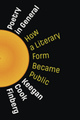
Poetry in general : how a literary form became public
Finberg, Keegan Cook; Hart, Matthew (Series Editors); James, David (Series Editors); Walkowitz, Rebecca L. (Series Editors)
Columbia University Press
, 2025
; English
; 262 Pages
In the second half of the twentieth century, poetry leapt out of books and became an interdisciplinary public form. Poetry entered bureaucratic systems of organization like index card catalogues; it pushed the boundaries of privately owned public parks. Keegan Cook Finberg argues that poetry became an increasingly capacious force during this period because it could speak directly to the degradation of the social-democratic notion of the public. Poetry in General explores how poets expanded their practice into the realms of politics, work, and everyday life from 1960 to the present, from the apex of the welfare state to an era of privatization and austerity. It considers a compelling array of figures—including Yoko Ono, George Brecht, Frank O’Hara, Amiri Baraka, Bernadette Mayer, Eleanor Antin, Adrian Piper, and M. NourbeSe Philip—whose works draw on conceptual techniques to transform official documents and spaces. Finberg shows how these public texts expose the mechanisms of the neoliberal consensus about work and leisure, the state’s facilitation of capitalism, and enduring racial and gender inequities. She also provides politically charged ways to interpret and critique racial capitalism, antiabortion legislation, and mass debt. A new literary and institutional history of postwar poetics, this book shows how poetic experiments address the privatization of collective life and rethink the category of the public.
Finberg, Keegan Cook; Hart, Matthew (Series Editors); James, David (Series Editors); Walkowitz, Rebecca L. (Series Editors)
Columbia University Press
, 2025
; English
; 262 Pages
In the second half of the twentieth century, poetry leapt out of books and became an interdisciplinary public form. Poetry entered bureaucratic systems of organization like index card catalogues; it pushed the boundaries of privately owned public parks. Keegan Cook Finberg argues that poetry became an increasingly capacious force during this period because it could speak directly to the degradation of the social-democratic notion of the public. Poetry in General explores how poets expanded their practice into the realms of politics, work, and everyday life from 1960 to the present, from the apex of the welfare state to an era of privatization and austerity. It considers a compelling array of figures—including Yoko Ono, George Brecht, Frank O’Hara, Amiri Baraka, Bernadette Mayer, Eleanor Antin, Adrian Piper, and M. NourbeSe Philip—whose works draw on conceptual techniques to transform official documents and spaces. Finberg shows how these public texts expose the mechanisms of the neoliberal consensus about work and leisure, the state’s facilitation of capitalism, and enduring racial and gender inequities. She also provides politically charged ways to interpret and critique racial capitalism, antiabortion legislation, and mass debt. A new literary and institutional history of postwar poetics, this book shows how poetic experiments address the privatization of collective life and rethink the category of the public.
eBook
Growing people : the enduring legacy of John Dewey
Alexander, Natalia Rogach
Columbia University Press
, 2025
; English
; 229 Pages
John Dewey is among history’s most celebrated thinkers on democracy and education, yet he has often been underappreciated and misunderstood as a philosopher. This book paints a fresh portrait of Dewey as not only a reformer of schooling but also a profound theorist of human development, whose vision of the centrality of education to democracy, philosophy, and flourishing can still inspire us today. What can we learn from this great thinker as we face challenges such as widespread drudgery and disaffection, estrangement among individuals and groups, and a crisis of democracy? This book supplies the answers, offering a bold new account of Dewey as an educational theorist who is essential for our troubled times. Revealing the true scope of Dewey’s educational vision, this book provides a new perspective on a neglected aspect of the philosophical tradition. Growing People presents an alternative canon—running from Plato to Rousseau to Du Bois—that recasts philosophy in terms of education and, in so doing, opens new pathways for social critique and the liberation of human potential.
Alexander, Natalia Rogach
Columbia University Press
, 2025
; English
; 229 Pages
John Dewey is among history’s most celebrated thinkers on democracy and education, yet he has often been underappreciated and misunderstood as a philosopher. This book paints a fresh portrait of Dewey as not only a reformer of schooling but also a profound theorist of human development, whose vision of the centrality of education to democracy, philosophy, and flourishing can still inspire us today. What can we learn from this great thinker as we face challenges such as widespread drudgery and disaffection, estrangement among individuals and groups, and a crisis of democracy? This book supplies the answers, offering a bold new account of Dewey as an educational theorist who is essential for our troubled times. Revealing the true scope of Dewey’s educational vision, this book provides a new perspective on a neglected aspect of the philosophical tradition. Growing People presents an alternative canon—running from Plato to Rousseau to Du Bois—that recasts philosophy in terms of education and, in so doing, opens new pathways for social critique and the liberation of human potential.
eBook
The future of seeing : how imaging is changing our world
Sodickson, Daniel K.
Columbia University Press
, 2025
; English
; 297 Pages
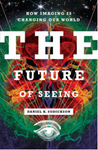
Over the centuries, we have learned to peer into what was once invisible. Imaging devices like cameras, telescopes, microscopes, and MRI machines map the world around, beyond, and within us in ways the naked eye could never see. In so doing, these technologies have transformed our understanding of our place in the universe and our conception of our own bodies-and we may be on the cusp of an even greater revolution.
Daniel K. Sodickson-a physicist and biomedical imaging innovator-explores the rich history and surprising future of vision, from the evolution of eyes to emerging high-tech devices. Beginning in the early oceans, when organisms first developed sight, The Future of Seeing tells the stories of the many remarkable tools people have invented to extend our natural vision. Ranging from the tales of brilliant inventors to profiles of everyday people, this book shows how imaging has transformed the practice of medicine, reshaped the global economy, and complicated the notion of privacy. In the era of artificial intelligence, Sodickson argues, it will be reinvented even further, emulating not only our senses but also our brains. Inviting and eye-opening, The Future of Seeing is a revelatory look at what imaging teaches us about the way we see the world, each other, and ourselves.
Sodickson, Daniel K.
Columbia University Press
, 2025
; English
; 297 Pages
Over the centuries, we have learned to peer into what was once invisible. Imaging devices like cameras, telescopes, microscopes, and MRI machines map the world around, beyond, and within us in ways the naked eye could never see. In so doing, these technologies have transformed our understanding of our place in the universe and our conception of our own bodies-and we may be on the cusp of an even greater revolution.
Daniel K. Sodickson-a physicist and biomedical imaging innovator-explores the rich history and surprising future of vision, from the evolution of eyes to emerging high-tech devices. Beginning in the early oceans, when organisms first developed sight, The Future of Seeing tells the stories of the many remarkable tools people have invented to extend our natural vision. Ranging from the tales of brilliant inventors to profiles of everyday people, this book shows how imaging has transformed the practice of medicine, reshaped the global economy, and complicated the notion of privacy. In the era of artificial intelligence, Sodickson argues, it will be reinvented even further, emulating not only our senses but also our brains. Inviting and eye-opening, The Future of Seeing is a revelatory look at what imaging teaches us about the way we see the world, each other, and ourselves.
eBook
Inside data science: hackers and the making of a new profession
Brandt, Philipp
Columbia University Press
, 2025
; English
; 368 Pages
Data scientists appeared suddenly in the early 2010s and quickly became ubiquitous.
Institutions, from established corporations to start-ups, universities to government agencies, scrambled to recruit specialists.
Somehow, a loose band of computer experts and hackers integrated established technologies and methodologies—and some questionable ideas—into a distinct profession.
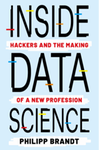
Where did data science come from, and why did it gain broad recognition?Inside Data Science examines how data scientists defined their professional role and identity, offering an empirically rich and theoretically grounded account of the emergence of a new field.
Philipp Brandt met data science's early protagonists in New York City's start-up spaces, coffee shops, and lecture halls, where they displayed a puzzling combination of enthusiasm and uncertainty.
At these seemingly casual gatherings, data scientists devised the machinery for seeing the world through datasets while also analyzing the social context of their technical work.
Retracing their conversations, Brandt demonstrates how the data scientist role emerged from the collective processing of personal struggles navigating the uncharted space between statistical expertise and coding skills.
Offering a novel analytical lens and critical perspective on data science, this book shows how the interplay of personal reflection, technical rigor, and collective scrutiny gave the big-data era, for better or for worse, a human face.
Brandt, Philipp
Columbia University Press
, 2025
; English
; 368 Pages
Data scientists appeared suddenly in the early 2010s and quickly became ubiquitous.
Institutions, from established corporations to start-ups, universities to government agencies, scrambled to recruit specialists.
Somehow, a loose band of computer experts and hackers integrated established technologies and methodologies—and some questionable ideas—into a distinct profession.
Where did data science come from, and why did it gain broad recognition?Inside Data Science examines how data scientists defined their professional role and identity, offering an empirically rich and theoretically grounded account of the emergence of a new field.
Philipp Brandt met data science's early protagonists in New York City's start-up spaces, coffee shops, and lecture halls, where they displayed a puzzling combination of enthusiasm and uncertainty.
At these seemingly casual gatherings, data scientists devised the machinery for seeing the world through datasets while also analyzing the social context of their technical work.
Retracing their conversations, Brandt demonstrates how the data scientist role emerged from the collective processing of personal struggles navigating the uncharted space between statistical expertise and coding skills.
Offering a novel analytical lens and critical perspective on data science, this book shows how the interplay of personal reflection, technical rigor, and collective scrutiny gave the big-data era, for better or for worse, a human face.
eBook
The moderator’s handbook : a comprehensive guide for facilitating panels
Dudley, Katrina
Columbia Business School Publishing
, 2025
; English
; 230 Pages
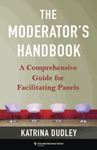
Panels often suffer from lackluster, disorganized discussions despite the presence of qualified experts. Frequently, the fault lies with poorly prepared moderators who fail to manage the panel effectively, resulting in a frustrating experience for audiences, panelists, and organizers alike. A well-trained moderator is essential for ensuring a successful panel by preparing thoroughly and engaging both the panelists and the audience.
This book, written by an experienced moderator who has led panels of all sizes, offers a comprehensive start-to-finish guide to facilitating a panel. It covers everything from understanding the panel's purpose and audience to selecting the right participants, conducting pre-panel preparation, and managing potential disruptions. Included are multiple checklists and sample documents to assist moderators throughout the process. The book also provides valuable insights for panelists, helping them improve their performance and contribute more effectively.
As panels become more prominent at conferences and events, the pressure to perform well has increased. A well-prepared and engaging panel provides exposure, resulting in opportunities for moderators and panelists to grow their brands and advance their careers. This essential book equips panel participants with the tools they need to excel and make a lasting impression.
Dudley, Katrina
Columbia Business School Publishing
, 2025
; English
; 230 Pages
Panels often suffer from lackluster, disorganized discussions despite the presence of qualified experts. Frequently, the fault lies with poorly prepared moderators who fail to manage the panel effectively, resulting in a frustrating experience for audiences, panelists, and organizers alike. A well-trained moderator is essential for ensuring a successful panel by preparing thoroughly and engaging both the panelists and the audience.
This book, written by an experienced moderator who has led panels of all sizes, offers a comprehensive start-to-finish guide to facilitating a panel. It covers everything from understanding the panel's purpose and audience to selecting the right participants, conducting pre-panel preparation, and managing potential disruptions. Included are multiple checklists and sample documents to assist moderators throughout the process. The book also provides valuable insights for panelists, helping them improve their performance and contribute more effectively.
As panels become more prominent at conferences and events, the pressure to perform well has increased. A well-prepared and engaging panel provides exposure, resulting in opportunities for moderators and panelists to grow their brands and advance their careers. This essential book equips panel participants with the tools they need to excel and make a lasting impression.
eBook
Kristeva, Julia; Bann, Stephen
Columbia University Press
, 2025
; English
; 137 Pages
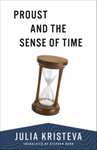
Julia Kristeva presents a thoroughly original and compelling reading of Proust's Remembrance of Things Past, first delivered at the 1992 T.S. Eliot Memorial Lectures at Canterbury. Kristeva's first essay, "Proust and Time Embodied," takes a broadly psychoanalytical, linguistically sensitive approach to Proust's exploration of time and the operation of memory. Next, in "In Search of Madeline," she delves into Proust's concept of the little cake that flooded him with the taste of childhood regained, providing an explanation for Proust's search for the deeper levels of childhood grounded in her psychoanalytic experience.
Throughout Proust and the Sense of Time, Kristeva draws on Proust's notebooks and manuscripts, pointing out significant variations in the different versions of his work. She examines his early philosophical training and the philosophical trends in Paris at the turn of the century, seeking to explain how he arrived at his concept of the primacy of memory and sensation.
Kristeva, Julia; Bann, Stephen
Columbia University Press
, 2025
; English
; 137 Pages
Julia Kristeva presents a thoroughly original and compelling reading of Proust's Remembrance of Things Past, first delivered at the 1992 T.S. Eliot Memorial Lectures at Canterbury. Kristeva's first essay, "Proust and Time Embodied," takes a broadly psychoanalytical, linguistically sensitive approach to Proust's exploration of time and the operation of memory. Next, in "In Search of Madeline," she delves into Proust's concept of the little cake that flooded him with the taste of childhood regained, providing an explanation for Proust's search for the deeper levels of childhood grounded in her psychoanalytic experience.
Throughout Proust and the Sense of Time, Kristeva draws on Proust's notebooks and manuscripts, pointing out significant variations in the different versions of his work. She examines his early philosophical training and the philosophical trends in Paris at the turn of the century, seeking to explain how he arrived at his concept of the primacy of memory and sensation.
