
Navigation menu
Search
eBook
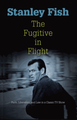
The fugitive in flight : faith, liberalism, and law in a classic TV show
Fish, Stanley
University of Pennsylvania Press
, 2024
; English
; 161 Pages
"In the 1990s when I was watching reruns of The Fugitive on the Arts and Entertainment Network twice a day, I couldn't take my eyes off it. . . . No one in The Fugitive ever relaxes as you watch and you can't relax either, even though for long stretches absolutely nothing happens.
It was the combination of nonstop tension with the (relative) absence of slam-bang action that attracted me, and as I now reflect on it, the same combination characterizes the literary works I have been reading and writing about for more than forty-five years."-Stanley Fish, from the Introduction In the stark television drama The Fugitive, Dr. Richard Kimble, an innocent man convicted of murder, is on the run from the police and in pursuit of the real killer.
The award-winning show, which aired on ABC from 1963 to 1967 and inspired a 1993 blockbuster movie, still has many devoted fans, none more passionate than literary and legal theorist and intellectual provocateur Stanley Fish.
In The Fugitive in Flight, Fish examines the moral structure of the long-running series and explains why he thinks this may well be the greatest show ever aired on American network television. Analyzing key episodes, The Fugitive in Flight goes beyond plot summaries and behind-the-scenes stories.
For Fish, the real action of The Fugitive takes place in confined spaces where the men and women Richard Kimble encounters are forced to choose what kind of person they will be for the rest of their lives.
Kimble is the catalyst of such choices and changes, but he himself never changes.
Breaking free from the political and social problems of his time, he is always the bearer and exemplar of the very middle-class values informing the system that has misjudged him.
Kimble is the perfect representative of a mid-twentieth-century liberalism that values above all independence, personal integrity, and the refusal to surrender oneself to obsessions or causes.
He is so consistently faithful to his liberal vision of life that he displays both its virtues and its dark side, the side that flees attachments, entanglements, responsibilities, and human connections.
Stanley Fish's Richard Kimble is the ultimate man in a gray flannel suit, even when he is wearing a windbreaker and walking down a dark, lonely road.
Fish, Stanley
University of Pennsylvania Press
, 2024
; English
; 161 Pages
"In the 1990s when I was watching reruns of The Fugitive on the Arts and Entertainment Network twice a day, I couldn't take my eyes off it. . . . No one in The Fugitive ever relaxes as you watch and you can't relax either, even though for long stretches absolutely nothing happens.
It was the combination of nonstop tension with the (relative) absence of slam-bang action that attracted me, and as I now reflect on it, the same combination characterizes the literary works I have been reading and writing about for more than forty-five years."-Stanley Fish, from the Introduction In the stark television drama The Fugitive, Dr. Richard Kimble, an innocent man convicted of murder, is on the run from the police and in pursuit of the real killer.
The award-winning show, which aired on ABC from 1963 to 1967 and inspired a 1993 blockbuster movie, still has many devoted fans, none more passionate than literary and legal theorist and intellectual provocateur Stanley Fish.
In The Fugitive in Flight, Fish examines the moral structure of the long-running series and explains why he thinks this may well be the greatest show ever aired on American network television. Analyzing key episodes, The Fugitive in Flight goes beyond plot summaries and behind-the-scenes stories.
For Fish, the real action of The Fugitive takes place in confined spaces where the men and women Richard Kimble encounters are forced to choose what kind of person they will be for the rest of their lives.
Kimble is the catalyst of such choices and changes, but he himself never changes.
Breaking free from the political and social problems of his time, he is always the bearer and exemplar of the very middle-class values informing the system that has misjudged him.
Kimble is the perfect representative of a mid-twentieth-century liberalism that values above all independence, personal integrity, and the refusal to surrender oneself to obsessions or causes.
He is so consistently faithful to his liberal vision of life that he displays both its virtues and its dark side, the side that flees attachments, entanglements, responsibilities, and human connections.
Stanley Fish's Richard Kimble is the ultimate man in a gray flannel suit, even when he is wearing a windbreaker and walking down a dark, lonely road.
eBook
Solomon, Michael
University of Pennsylvania Press
, 2023
; English
; 203 Pages
From the fourteenth through the sixteenth centuries in Spain, health-related information in the vernacular began to circulate widely in treatises, compendiums, manuals, plague tracts, summaries, encyclopedias, and recipe collections. These were often the work of concerned physicians who attempted to refashion medical information to appeal to nonprofessionals. In Fictions of Well-Being Michael Solomon explores the shaping of this audience of sickly readers, highly motivated individuals who, when confronted with the painful, disruptive, and often alienating conditions of physical disorder, looked for relief in books.
Vernacular medical writing from late medieval and early modern Spain emerged from the interrelated imperatives to address the immediate or future hygienic and pathological needs of the patient while promoting the reputation and learned credentials of the physician. For sickly readers, a medical treatise was more than just a collection of technical information
such a work implied that they could do with a medical text what the physician normally did at the bedside. In their imagination, the treatise became a type of palpable instrument that encouraged the reader to take advantage of its possible use and benefits. In these fictions of well-being, we may see the antecedents of the self-help and popular medical books so prominent on today's best-seller lists.
Solomon, Michael
University of Pennsylvania Press
, 2023
; English
; 203 Pages
From the fourteenth through the sixteenth centuries in Spain, health-related information in the vernacular began to circulate widely in treatises, compendiums, manuals, plague tracts, summaries, encyclopedias, and recipe collections. These were often the work of concerned physicians who attempted to refashion medical information to appeal to nonprofessionals. In Fictions of Well-Being Michael Solomon explores the shaping of this audience of sickly readers, highly motivated individuals who, when confronted with the painful, disruptive, and often alienating conditions of physical disorder, looked for relief in books.
Vernacular medical writing from late medieval and early modern Spain emerged from the interrelated imperatives to address the immediate or future hygienic and pathological needs of the patient while promoting the reputation and learned credentials of the physician. For sickly readers, a medical treatise was more than just a collection of technical information
such a work implied that they could do with a medical text what the physician normally did at the bedside. In their imagination, the treatise became a type of palpable instrument that encouraged the reader to take advantage of its possible use and benefits. In these fictions of well-being, we may see the antecedents of the self-help and popular medical books so prominent on today's best-seller lists.
eBook
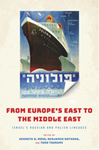
From Europe's east to the Middle East : Israel's Russian and polish lineages
Moss, Kenneth B.; Nathans, Benjamin; Tsurumi, Taro; Magid, Shaul (Series Editors); Trivellato, Francesca (Series Editors); Weitzman, Steven (Series Editors)
University of Pennsylvania Press
, 2022
; English
; 405 Pages
The overwhelming majority of Jews who laid the foundations of the Israeli state during the first half of the twentieth century came from the Polish lands and the Russian Empire. This is a fact widely known, yet its implications for the history of Israel and the Middle East and, reciprocally, for the history of what was once the demographic heartland of the Jewish diaspora remain surprisingly ill-understood.
Through fine-grained analyses of people, texts, movements, and worldviews in motion, the scholars assembled in From Europe's East to the Middle East—hailing from Europe, Israel, Japan, and the United States—rediscover a single transnational Jewish history of surprising connections, ideological cacophony, and entangled fates. Against the view of Israel as an outpost of the West, whether as a beacon of democracy or a creation of colonialism, this volume reveals how profoundly Zionism and Israel were shaped by the assumptions of Polish nationalism, Russian radicalism, and Soviet Communism
the unique ethos of the East European intelligentsia
and the political legacies of civil and national strife in the East European "shatter-zone." Against the view that Zionism effected a complete break from the diaspora that had birthed it, the book sheds new light on the East European sources of phenomena as diverse as Zionist military culture, kibbutz socialism, and ultra-Orthodox education for girls. Finally, it reshapes our understanding of East European Jewish life, from the Tsarist Empire, to independent Poland, to the late Soviet Union. Looking past siloed histories of both Zionism and its opponents in Eastern Europe, the authors reconstruct Zionism's transnational character, charting unexpected continuities across East European and Israeli Jewish life, and revealing how Jews in Eastern Europe grew ever more entangled with the changing realities of Jewish society in Palestine.
Moss, Kenneth B.; Nathans, Benjamin; Tsurumi, Taro; Magid, Shaul (Series Editors); Trivellato, Francesca (Series Editors); Weitzman, Steven (Series Editors)
University of Pennsylvania Press
, 2022
; English
; 405 Pages
The overwhelming majority of Jews who laid the foundations of the Israeli state during the first half of the twentieth century came from the Polish lands and the Russian Empire. This is a fact widely known, yet its implications for the history of Israel and the Middle East and, reciprocally, for the history of what was once the demographic heartland of the Jewish diaspora remain surprisingly ill-understood.
Through fine-grained analyses of people, texts, movements, and worldviews in motion, the scholars assembled in From Europe's East to the Middle East—hailing from Europe, Israel, Japan, and the United States—rediscover a single transnational Jewish history of surprising connections, ideological cacophony, and entangled fates. Against the view of Israel as an outpost of the West, whether as a beacon of democracy or a creation of colonialism, this volume reveals how profoundly Zionism and Israel were shaped by the assumptions of Polish nationalism, Russian radicalism, and Soviet Communism
the unique ethos of the East European intelligentsia
and the political legacies of civil and national strife in the East European "shatter-zone." Against the view that Zionism effected a complete break from the diaspora that had birthed it, the book sheds new light on the East European sources of phenomena as diverse as Zionist military culture, kibbutz socialism, and ultra-Orthodox education for girls. Finally, it reshapes our understanding of East European Jewish life, from the Tsarist Empire, to independent Poland, to the late Soviet Union. Looking past siloed histories of both Zionism and its opponents in Eastern Europe, the authors reconstruct Zionism's transnational character, charting unexpected continuities across East European and Israeli Jewish life, and revealing how Jews in Eastern Europe grew ever more entangled with the changing realities of Jewish society in Palestine.
eBook
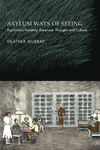
Asylum ways of seeing : psychiatric patients, American thought and culture
Murray, Heather
University of Pennsylvania Press
, 2022
; English
; 268 Pages
Asylum Ways of Seeing is a cultural and intellectual history of people with mental illnesses in the twentieth-century United States. While acknowledging the fraught, and often violent, histories of American psychiatric hospitals, Heather Murray also suggests that it is in these hospitals that patients became more intense observers: they gave more conscious consideration to institutional and broader kinds of citizenship, to the nature and needs of communities versus those of individuals, to scientific modernity, and to human rights and solidarities among the suffering. All of these ideas have animated twentieth-century America, and, as Murray shows, have not just flowed into psychiatric hospitals but outward from them as well. These themes are especially clear within patients' intimate, creative, and political correspondence, writings, and drawings, as well as in hospital publications and films.
This way of thinking and imagining contrasts with more common images of the patient—as passive, resigned, and absented from the world in the cloistered setting of the hospital—that have animated psychiatry over the course of the twentieth century. Asylum Ways of Seeing traces how it is that patient resignation went from being interpreted as wisdom in the early twentieth century, to being understood as a capitulation in scientific and political sources by mid-century, to being seen as a profound violation of selfhood and individual rights by the century's end. In so doing, it makes a call to reconsider the philosophical possibilities within resignation.
Murray, Heather
University of Pennsylvania Press
, 2022
; English
; 268 Pages
Asylum Ways of Seeing is a cultural and intellectual history of people with mental illnesses in the twentieth-century United States. While acknowledging the fraught, and often violent, histories of American psychiatric hospitals, Heather Murray also suggests that it is in these hospitals that patients became more intense observers: they gave more conscious consideration to institutional and broader kinds of citizenship, to the nature and needs of communities versus those of individuals, to scientific modernity, and to human rights and solidarities among the suffering. All of these ideas have animated twentieth-century America, and, as Murray shows, have not just flowed into psychiatric hospitals but outward from them as well. These themes are especially clear within patients' intimate, creative, and political correspondence, writings, and drawings, as well as in hospital publications and films.
This way of thinking and imagining contrasts with more common images of the patient—as passive, resigned, and absented from the world in the cloistered setting of the hospital—that have animated psychiatry over the course of the twentieth century. Asylum Ways of Seeing traces how it is that patient resignation went from being interpreted as wisdom in the early twentieth century, to being understood as a capitulation in scientific and political sources by mid-century, to being seen as a profound violation of selfhood and individual rights by the century's end. In so doing, it makes a call to reconsider the philosophical possibilities within resignation.
eBook
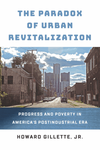
The paradox of urban revitalization : progress and poverty in America's postindustrial era
Gillette, Howard; Birch, Eugenie L. (Series Editors); Wachter, Susan M. (Series Editors)
University of Pennsylvania Press
, 2022
; English
; 338 Pages
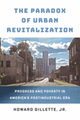
In the twenty-first century, cities in the United States that had suffered most the shift to a postindustrial era entered a period widely proclaimed as an urban renaissance. From Detroit to Newark to Oakland and elsewhere commentators saw cities rising again. Yet revitalization generated a second urban crisis marked by growing inequality and civil unrest reminiscent of the upheavals associated with the first urban crisis in the mid-twentieth century. The urban poor and residents of color have remained very much at a disadvantage in the face of racially biased capital investments, narrowing options for affordable housing, and mass incarceration. In profiling nine cities grappling with challenges of the twenty-first century, author Howard Gillette, Jr. evaluates the uneven efforts to secure racial and class equity as city fortunes have risen. Charting the tension between the practice of corporate subsidy and efforts to assure social justice, The Paradox of Urban Revitalization assesses the course of urban politics and policy over the past half century, before the COVID-19 pandemic upended everything, and details prospects for achieving greater equity in the years ahead.
Gillette, Howard; Birch, Eugenie L. (Series Editors); Wachter, Susan M. (Series Editors)
University of Pennsylvania Press
, 2022
; English
; 338 Pages
In the twenty-first century, cities in the United States that had suffered most the shift to a postindustrial era entered a period widely proclaimed as an urban renaissance. From Detroit to Newark to Oakland and elsewhere commentators saw cities rising again. Yet revitalization generated a second urban crisis marked by growing inequality and civil unrest reminiscent of the upheavals associated with the first urban crisis in the mid-twentieth century. The urban poor and residents of color have remained very much at a disadvantage in the face of racially biased capital investments, narrowing options for affordable housing, and mass incarceration. In profiling nine cities grappling with challenges of the twenty-first century, author Howard Gillette, Jr. evaluates the uneven efforts to secure racial and class equity as city fortunes have risen. Charting the tension between the practice of corporate subsidy and efforts to assure social justice, The Paradox of Urban Revitalization assesses the course of urban politics and policy over the past half century, before the COVID-19 pandemic upended everything, and details prospects for achieving greater equity in the years ahead.
eBook
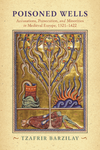
Poisoned wells : accusations, persecution, and minorities in medieval Europe, 1321-1422
Barzilay, Tzafrir; Karras, Ruth Mazo (Series Editor)
University of Pennsylvania Press
, 2022
; English
; 312 Pages
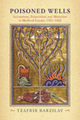
Between 1348 and 1350, Jews throughout Europe were accused of having caused the spread of the Black Death by poisoning the wells from which the entire population drank. Hundreds if not thousands were executed from Aragon and southern France into the eastern regions of the German-speaking lands. But if the well-poisoning accusations against the Jews during these plague years are the most frequently cited of such cases, they were not unique. The first major wave of accusations came in France and Aragon in 1321, and it was lepers, not Jews, who were the initial targets. Local authorities, and especially municipal councils, promoted these charges so as to be able to seize the property of the leprosaria, Tzafrir Barzilay contends. The allegations eventually expanded to describe an international conspiracy organized by Muslims, and only then, after months of persecution of the lepers, did some nobles of central France implicate the Jews, convincing the king to expel them from the realm.
In Poisoned Wells Barzilay explores the origins of these charges of well poisoning, asks how the fear took root and moved across Europe, which groups it targeted, why it held in certain areas and not others, and why it waned in the fifteenth century. He argues that many of the social, political, and environmental factors that fed the rise of the mass poisoning accusations had already appeared during the thirteenth century, a period of increased urbanization, of criminal poisoning charges, and of the proliferation of medical texts on toxins. In studying the narratives that were presented to convince officials that certain groups committed well poisoning and the legal and bureaucratic mechanisms that moved rumors into officially accepted and prosecutable crimes, Barzilay has written a crucial chapter in the long history of the persecution of European minorities.
Barzilay, Tzafrir; Karras, Ruth Mazo (Series Editor)
University of Pennsylvania Press
, 2022
; English
; 312 Pages
Between 1348 and 1350, Jews throughout Europe were accused of having caused the spread of the Black Death by poisoning the wells from which the entire population drank. Hundreds if not thousands were executed from Aragon and southern France into the eastern regions of the German-speaking lands. But if the well-poisoning accusations against the Jews during these plague years are the most frequently cited of such cases, they were not unique. The first major wave of accusations came in France and Aragon in 1321, and it was lepers, not Jews, who were the initial targets. Local authorities, and especially municipal councils, promoted these charges so as to be able to seize the property of the leprosaria, Tzafrir Barzilay contends. The allegations eventually expanded to describe an international conspiracy organized by Muslims, and only then, after months of persecution of the lepers, did some nobles of central France implicate the Jews, convincing the king to expel them from the realm.
In Poisoned Wells Barzilay explores the origins of these charges of well poisoning, asks how the fear took root and moved across Europe, which groups it targeted, why it held in certain areas and not others, and why it waned in the fifteenth century. He argues that many of the social, political, and environmental factors that fed the rise of the mass poisoning accusations had already appeared during the thirteenth century, a period of increased urbanization, of criminal poisoning charges, and of the proliferation of medical texts on toxins. In studying the narratives that were presented to convince officials that certain groups committed well poisoning and the legal and bureaucratic mechanisms that moved rumors into officially accepted and prosecutable crimes, Barzilay has written a crucial chapter in the long history of the persecution of European minorities.
eBook
Frontiers of Jewish scholarship : expanding origins, transcending borders
Albert, Anne O.; Gerber, Noah S.; Meyer, Michael A.; Magid, Shaul (Series Editors); Trivellato, Francesca (Series Editors); Weitzman, Steven (Series Editors)
University of Pennsylvania Press
, 2022
; English
; 270 Pages
The birth of modern Jewish studies can be traced to the nineteenth-century emergence of the Wissenschaft des Judentums, a movement to promote a scholarly approach to the study of Judaism and Jewish culture. Frontiers of Jewish Scholarship offers a collection of essays examining how Wissenschaft extended beyond its original German intellectual contexts and was transformed into a diverse, global field. From the early expansion of the new scholarly approaches into Jewish publications across Europe to their translation and reinterpretation in the twentieth century, the studies included here collectively trace a path through largely neglected subject matter, newly recognized as deserving attention.
Beginning with an introduction that surveys the field's German origins, fortunes, and contexts, the volume goes on to document dimensions of the growth of Wissenschaft des Judentums elsewhere in Europe and throughout the world. Some of the contributions turn to literary and semantic issues, while others reveal the penetration of Jewish studies into new national contexts that include Hungary, Italy, and even India. Individual essays explore how the United States, along with Israel, emerged as a main center for Jewish historical scholarship and how critical Jewish scholarship began to accommodate Zionist ideology originating in Eastern Europe and eventually Marxist ideology, primarily in the Soviet Union. Finally, the focus of the volume moves on to the land of Israel, focusing on the reception of Orientalism and Jewish scholarly contacts with Yemenite and native Muslim intellectuals.
Taken together, the contributors to the volume offer new material and fresh approaches that rethink the relationship of Jewish studies to the larger enterprise of critical scholarship while highlighting its relevance to the history of humanistic inquiry worldwide.
Albert, Anne O.; Gerber, Noah S.; Meyer, Michael A.; Magid, Shaul (Series Editors); Trivellato, Francesca (Series Editors); Weitzman, Steven (Series Editors)
University of Pennsylvania Press
, 2022
; English
; 270 Pages
The birth of modern Jewish studies can be traced to the nineteenth-century emergence of the Wissenschaft des Judentums, a movement to promote a scholarly approach to the study of Judaism and Jewish culture. Frontiers of Jewish Scholarship offers a collection of essays examining how Wissenschaft extended beyond its original German intellectual contexts and was transformed into a diverse, global field. From the early expansion of the new scholarly approaches into Jewish publications across Europe to their translation and reinterpretation in the twentieth century, the studies included here collectively trace a path through largely neglected subject matter, newly recognized as deserving attention.
Beginning with an introduction that surveys the field's German origins, fortunes, and contexts, the volume goes on to document dimensions of the growth of Wissenschaft des Judentums elsewhere in Europe and throughout the world. Some of the contributions turn to literary and semantic issues, while others reveal the penetration of Jewish studies into new national contexts that include Hungary, Italy, and even India. Individual essays explore how the United States, along with Israel, emerged as a main center for Jewish historical scholarship and how critical Jewish scholarship began to accommodate Zionist ideology originating in Eastern Europe and eventually Marxist ideology, primarily in the Soviet Union. Finally, the focus of the volume moves on to the land of Israel, focusing on the reception of Orientalism and Jewish scholarly contacts with Yemenite and native Muslim intellectuals.
Taken together, the contributors to the volume offer new material and fresh approaches that rethink the relationship of Jewish studies to the larger enterprise of critical scholarship while highlighting its relevance to the history of humanistic inquiry worldwide.
eBook
Fictions of consent : slavery, servitude, and free service in early modern England
Chakravarty, Urvashi; Heng, Geraldine (Series editors); Thompson, Ayanna (Series editors)
University of Pennsylvania Press
, 2022
; English
; 306 Pages
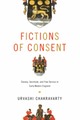
In Fictions of Consent Urvashi Chakravarty excavates the ideologies of slavery that took root in early modern England in the period that preceded the development of an organized trade in enslaved persons.
Despite the persistent fiction that England was innocent of racialized slavery, Chakravarty argues that we must hold early modern England—and its narratives of exceptional and essential freedom—to account for the frameworks of slavery that it paradoxically but strategically engendered. Slavery was not a foreign or faraway phenomenon, she demonstrates
rather, the ideologies of slavery were seeded in the quotidian spaces of English life and in the everyday contexts of England's service society, from the family to the household, in the theater and, especially, the grammar school classroom, where the legacies of classical slavery and race were inherited and negotiated. The English conscripted the Roman freedman's figurative "stain of slavery" to register an immutable sign of bondage and to secure slavery to epidermal difference, even as early modern frameworks of "volitional service" provided the strategies for later fictions of "happy slavery" in the Atlantic world. Early modern texts presage the heritability of slavery in early America, reveal the embeddedness of slavery within the family, and illuminate the ways in which bloodlines of descent underwrite the racialized futures of enslavement.
Fictions of Consent intervenes in a number of areas including early modern literary and cultural studies, premodern critical race studies, the reception of classical antiquity, and the histories of law, education, and labor to uncover the conceptual genealogies of slavery and servitude and to reveal the everyday sites where the foundations of racialized slavery were laid. Although early modern England claimed to have "too pure an Air for Slaves to breathe in," Chakravarty reveals slavery was a quintessentially English phenomenon.
Chakravarty, Urvashi; Heng, Geraldine (Series editors); Thompson, Ayanna (Series editors)
University of Pennsylvania Press
, 2022
; English
; 306 Pages
In Fictions of Consent Urvashi Chakravarty excavates the ideologies of slavery that took root in early modern England in the period that preceded the development of an organized trade in enslaved persons.
Despite the persistent fiction that England was innocent of racialized slavery, Chakravarty argues that we must hold early modern England—and its narratives of exceptional and essential freedom—to account for the frameworks of slavery that it paradoxically but strategically engendered. Slavery was not a foreign or faraway phenomenon, she demonstrates
rather, the ideologies of slavery were seeded in the quotidian spaces of English life and in the everyday contexts of England's service society, from the family to the household, in the theater and, especially, the grammar school classroom, where the legacies of classical slavery and race were inherited and negotiated. The English conscripted the Roman freedman's figurative "stain of slavery" to register an immutable sign of bondage and to secure slavery to epidermal difference, even as early modern frameworks of "volitional service" provided the strategies for later fictions of "happy slavery" in the Atlantic world. Early modern texts presage the heritability of slavery in early America, reveal the embeddedness of slavery within the family, and illuminate the ways in which bloodlines of descent underwrite the racialized futures of enslavement.
Fictions of Consent intervenes in a number of areas including early modern literary and cultural studies, premodern critical race studies, the reception of classical antiquity, and the histories of law, education, and labor to uncover the conceptual genealogies of slavery and servitude and to reveal the everyday sites where the foundations of racialized slavery were laid. Although early modern England claimed to have "too pure an Air for Slaves to breathe in," Chakravarty reveals slavery was a quintessentially English phenomenon.

eBook
Citizenship on the edge : sex/gender/race
Hirschmann, Nancy J.; Thomas, Deborah A.; Smith, Rogers M. (Series Editors); Dudziak, Mary L. (Series Editors)
University of Pennsylvania Press
, 2022
; English
; 266 Pages
What does it mean to claim, two decades into the twenty-first century, that citizenship is on the edge? The questions that animate this volume focus attention on the relationships between liberal conceptions of citizenship and democracy on one hand, and sex, race, and gender on the other. Who "counts" as a citizen in today's world, and what are the mechanisms through which the rights, benefits, and protections of liberal citizenship are differentially bestowed upon diverse groups? What are the relationships between global economic processes and political and legal empowerment? What forms of violence emerge in order to defend and define these rights, benefits, and protections, and how do these forms of violence reflect long histories? How might we recognize and account for the various avenues through which people attempt to make themselves as political subjects?
Citizenship on the Edge approaches these questions from multiple disciplines, including Africana Studies, anthropology, disability studies, film studies, gender studies, history, law, political science, and sociology. Contributors explore the ways in which compounding social inequalities redound to the conditions and expressions of citizenship in the U.S. and throughout the world. They give a sense of the breathtaking range of the ways that citizenship is controlled, repressed, undercut, and denied at the same time as they outline people's attempts to claim citizenship in ways that are meaningful to them. From university speech policies, to labor and immigration policies, to a rethinking of the security theatre, to women's empowerment in the family and economy and a rethinking of marriage and the family, we see slivers of possibility for a more inclusive and less hostile world, in which citizenship is no longer so in doubt, so on the edge, for so many. As a whole, the volume argues that citizenship cannot be conceptualized as a transcendent good but must instead always be contextualized within specific places and times, and in relation to dynamic struggle.
Contributors: Erez Aloni, Ange-Marie Hancock Alfaro, Nancy J. Hirschmann, Samantha Majic, Valentine M. Moghadam, Michael Rembis, Tracy Robinson, Ellen Samuels, Kimberly Theidon, Deborah A. Thomas.
Hirschmann, Nancy J.; Thomas, Deborah A.; Smith, Rogers M. (Series Editors); Dudziak, Mary L. (Series Editors)
University of Pennsylvania Press
, 2022
; English
; 266 Pages
What does it mean to claim, two decades into the twenty-first century, that citizenship is on the edge? The questions that animate this volume focus attention on the relationships between liberal conceptions of citizenship and democracy on one hand, and sex, race, and gender on the other. Who "counts" as a citizen in today's world, and what are the mechanisms through which the rights, benefits, and protections of liberal citizenship are differentially bestowed upon diverse groups? What are the relationships between global economic processes and political and legal empowerment? What forms of violence emerge in order to defend and define these rights, benefits, and protections, and how do these forms of violence reflect long histories? How might we recognize and account for the various avenues through which people attempt to make themselves as political subjects?
Citizenship on the Edge approaches these questions from multiple disciplines, including Africana Studies, anthropology, disability studies, film studies, gender studies, history, law, political science, and sociology. Contributors explore the ways in which compounding social inequalities redound to the conditions and expressions of citizenship in the U.S. and throughout the world. They give a sense of the breathtaking range of the ways that citizenship is controlled, repressed, undercut, and denied at the same time as they outline people's attempts to claim citizenship in ways that are meaningful to them. From university speech policies, to labor and immigration policies, to a rethinking of the security theatre, to women's empowerment in the family and economy and a rethinking of marriage and the family, we see slivers of possibility for a more inclusive and less hostile world, in which citizenship is no longer so in doubt, so on the edge, for so many. As a whole, the volume argues that citizenship cannot be conceptualized as a transcendent good but must instead always be contextualized within specific places and times, and in relation to dynamic struggle.
Contributors: Erez Aloni, Ange-Marie Hancock Alfaro, Nancy J. Hirschmann, Samantha Majic, Valentine M. Moghadam, Michael Rembis, Tracy Robinson, Ellen Samuels, Kimberly Theidon, Deborah A. Thomas.
eBook
The difference is spreading : fifty contemporary poets on fifty poems
Filreis, Al; Safford, Anna Strong
University of Pennsylvania Press
, 2022
; English
; 256 Pages
Since its inception in 2012, the hugely successful online introduction to modern poetry known as ModPo has engaged some 415,000 readers, listeners, teachers, and poets with its focus on a modern and contemporary American tradition that runs from Walt Whitman and Emily Dickinson up to some of today's freshest and most experimental written and spoken verse. In The Difference Is Spreading, ModPo's Al Filreis and Anna Strong Safford have handed the microphone over to the poets themselves, by inviting fifty of them to select and comment upon a poem by another writer.
The approaches taken are various, confirming that there are as many ways for a poet to write about someone else's poem as there are poet-poem matches in this volume. Yet a straight-through reading of the fifty poems anthologized here, along with the fifty responses to them, emphatically demonstrates the importance to poetry of community, of socioaesthetic networks and lines of connection, and of expressions of affection and honor due to one's innovative colleagues and predecessors. Through the curation of these selections, Filreis and Safford express their belief that the poems that are most challenging and most dynamic are those that are open—the writings, that is, that ask their readers to participate in making their meaning. Poetry happens when a reader and a poet come in contact with one another, when the reader, whether celebrated poet or novice, is invited to do interpretive work—for without that convergence, poetry is inert.
Filreis, Al; Safford, Anna Strong
University of Pennsylvania Press
, 2022
; English
; 256 Pages
Since its inception in 2012, the hugely successful online introduction to modern poetry known as ModPo has engaged some 415,000 readers, listeners, teachers, and poets with its focus on a modern and contemporary American tradition that runs from Walt Whitman and Emily Dickinson up to some of today's freshest and most experimental written and spoken verse. In The Difference Is Spreading, ModPo's Al Filreis and Anna Strong Safford have handed the microphone over to the poets themselves, by inviting fifty of them to select and comment upon a poem by another writer.
The approaches taken are various, confirming that there are as many ways for a poet to write about someone else's poem as there are poet-poem matches in this volume. Yet a straight-through reading of the fifty poems anthologized here, along with the fifty responses to them, emphatically demonstrates the importance to poetry of community, of socioaesthetic networks and lines of connection, and of expressions of affection and honor due to one's innovative colleagues and predecessors. Through the curation of these selections, Filreis and Safford express their belief that the poems that are most challenging and most dynamic are those that are open—the writings, that is, that ask their readers to participate in making their meaning. Poetry happens when a reader and a poet come in contact with one another, when the reader, whether celebrated poet or novice, is invited to do interpretive work—for without that convergence, poetry is inert.
