
Navigation menu
Search
eBook
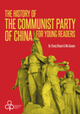
The history of the communist party of China for young readers
Zhang, Shujun; Wu, Guoyu
Asian Century Publishing
, 2022
; English
; 282 Pages
This book was written for the young readers to learn about the history of China Communist Party in a concise way.
It is brief, clear and fascinating, so that the majority of young people can master the subject in a more pleasant reading.
The authors integrated the history and tradition of the party into a poetic language description, and shows the development trajectory of the party's policies and strategies.
The readers should also understand the arduous journey the party has gone through, and truly understand its relationship in modern day geopolitical world.
Zhang, Shujun; Wu, Guoyu
Asian Century Publishing
, 2022
; English
; 282 Pages
This book was written for the young readers to learn about the history of China Communist Party in a concise way.
It is brief, clear and fascinating, so that the majority of young people can master the subject in a more pleasant reading.
The authors integrated the history and tradition of the party into a poetic language description, and shows the development trajectory of the party's policies and strategies.
The readers should also understand the arduous journey the party has gone through, and truly understand its relationship in modern day geopolitical world.
eBook
Hu, Angang
Enrich Professional Publishing
, 2019
; English
; 332 Pages
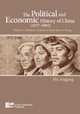
The Political and Economic History of China (1977–1992)
Volume 1: Political Transition from Mao to Deng (1977–1981)
A detailed chronicle of an era of chaos and political turbulence, The Political and Economic History of China (1977–1992) is a must-read series for anyone interested in the history of modern China. Continuing on from his first series covering the years 1949–1976, Hu Angang returns with a new installment detailing the political and economic developments in the People’s Republic of China from 1977 to 1992. This period saw the political transition from the end of the Cultural Revolution to the Reform and Opening-up era under Deng Xiaoping. Hu explains the numerous policy changes that transformed China during this period, as the nation evolved from an isolated and underdeveloped country into a global political and economic power.
Volume 1 chronicles the important events in the history of New China from 1977 to 1981 and details the political transition from Mao Zedong to Deng Xiaoping. Based on the theoretical framework of a national development life cycle, Hu probes into the international background of China’s Reform and Opening-up and discusses China’s advantages and disadvantages in the initial period of the reform. This is followed by an analysis of the political motivations and preparations for the reform, such as redressing historical injustices and overhauling the basic systems of the
Chinese Communist Party and the nation.
Hu, Angang
Enrich Professional Publishing
, 2019
; English
; 332 Pages
The Political and Economic History of China (1977–1992)
Volume 1: Political Transition from Mao to Deng (1977–1981)
A detailed chronicle of an era of chaos and political turbulence, The Political and Economic History of China (1977–1992) is a must-read series for anyone interested in the history of modern China. Continuing on from his first series covering the years 1949–1976, Hu Angang returns with a new installment detailing the political and economic developments in the People’s Republic of China from 1977 to 1992. This period saw the political transition from the end of the Cultural Revolution to the Reform and Opening-up era under Deng Xiaoping. Hu explains the numerous policy changes that transformed China during this period, as the nation evolved from an isolated and underdeveloped country into a global political and economic power.
Volume 1 chronicles the important events in the history of New China from 1977 to 1981 and details the political transition from Mao Zedong to Deng Xiaoping. Based on the theoretical framework of a national development life cycle, Hu probes into the international background of China’s Reform and Opening-up and discusses China’s advantages and disadvantages in the initial period of the reform. This is followed by an analysis of the political motivations and preparations for the reform, such as redressing historical injustices and overhauling the basic systems of the
Chinese Communist Party and the nation.
eBook
Hu, Angang
Enrich Professional Publishing
, 2019
; English
; 304 Pages
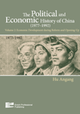
The Political and Economic History of China (1977–1992)
Volume 2: Economic Development during Reform and Opening-Up (1977–1992)
A detailed chronicle of an era of chaos and political turbulence, The Political and Economic History of China (1977–1992) is a must-read series for anyone interested in the history of modern China. Continuing on from his first series covering the years 1949–1976, Hu Angang returns with a new installment detailing the political and economic developments in the People’s Republic of China from 1977 to 1992. This period saw the political transition from the end of the Cultural Revolution to the Reform and Opening-up era under Deng Xiaoping. Hu explains the numerous policy changes that transformed China during this period, as the nation evolved from an isolated and underdeveloped country into a global political and economic power.
Volume 2 analyzes China’s major economic achievements during the Reform and Opening-up era, with a specific focus on three aspects: rural reform, urban reform, and strategic choice. China’s economic reform of 1978 was first launched in rural areas, where the household responsibility system was introduced to fight the agricultural crisis which took place in the late 1970s. This system generated a dramatic rise in agricultural productivity, which in turn contributed to the disintegration of people’s communes and the surge of township enterprises. In urban areas, several reforms were carried out in a wide range of fields, such as business, finance and education, to smooth China’s transition from a planned economy into a socialist market economy. As the government’s role in economic activities was diminishing, the non-state sector was beginning to boom. Finally, the author attempts to explain how the above economic achievements were affected by the changes in China’s development strategy.
Hu, Angang
Enrich Professional Publishing
, 2019
; English
; 304 Pages
The Political and Economic History of China (1977–1992)
Volume 2: Economic Development during Reform and Opening-Up (1977–1992)
A detailed chronicle of an era of chaos and political turbulence, The Political and Economic History of China (1977–1992) is a must-read series for anyone interested in the history of modern China. Continuing on from his first series covering the years 1949–1976, Hu Angang returns with a new installment detailing the political and economic developments in the People’s Republic of China from 1977 to 1992. This period saw the political transition from the end of the Cultural Revolution to the Reform and Opening-up era under Deng Xiaoping. Hu explains the numerous policy changes that transformed China during this period, as the nation evolved from an isolated and underdeveloped country into a global political and economic power.
Volume 2 analyzes China’s major economic achievements during the Reform and Opening-up era, with a specific focus on three aspects: rural reform, urban reform, and strategic choice. China’s economic reform of 1978 was first launched in rural areas, where the household responsibility system was introduced to fight the agricultural crisis which took place in the late 1970s. This system generated a dramatic rise in agricultural productivity, which in turn contributed to the disintegration of people’s communes and the surge of township enterprises. In urban areas, several reforms were carried out in a wide range of fields, such as business, finance and education, to smooth China’s transition from a planned economy into a socialist market economy. As the government’s role in economic activities was diminishing, the non-state sector was beginning to boom. Finally, the author attempts to explain how the above economic achievements were affected by the changes in China’s development strategy.
eBook
Hu, Angang
Enrich Professional Publishing
, 2019
; English
; 243 Pages
A detailed chronicle of an era of chaos and political turbulence, The Political and Economic History of China is a must-read series for anyone interested in the history of modern China. Continuing on from his first series, which covered the years 1949–1976, Hu Angang returns with a new installment detailing the political and economic development in the People’s Republic of China from 1977 to 1992. This period saw the political transition from the end of the Cultural Revolution to the Reform and Opening-up era under Deng Xiaoping. Hu explains the numerous policy changes that transformed China during this period from an isolated and underdeveloped country to a global political and economic power, as well as the Politburo’s management of domestic political challenges as it set the precedence for future leadership transitions.
Hu, Angang
Enrich Professional Publishing
, 2019
; English
; 243 Pages
A detailed chronicle of an era of chaos and political turbulence, The Political and Economic History of China is a must-read series for anyone interested in the history of modern China. Continuing on from his first series, which covered the years 1949–1976, Hu Angang returns with a new installment detailing the political and economic development in the People’s Republic of China from 1977 to 1992. This period saw the political transition from the end of the Cultural Revolution to the Reform and Opening-up era under Deng Xiaoping. Hu explains the numerous policy changes that transformed China during this period from an isolated and underdeveloped country to a global political and economic power, as well as the Politburo’s management of domestic political challenges as it set the precedence for future leadership transitions.
eBook
The political and economic history of China (1977–1992), (3-volume set)
Hu, Angang
Enrich Professional Publishing
, 2019
; English
; 875 Pages
A detailed chronicle of an era of chaos and political turbulence, The Political and Economic History of China is a must-read series for anyone interested in the history of modern China. Continuing on from his first series, which covered the years 1949–1976, Hu Angang returns with a new installment detailing the political and economic development in the People’s Republic of China from 1977 to 1992. This period saw the political transition from the end of the Cultural Revolution to the Reform and Opening-up era under Deng Xiaoping. Hu explains the numerous policy changes that transformed China during this period from an isolated and underdeveloped country to a global political and economic power, as well as the Politburo’s management of domestic political challenges as it set the precedence for future leadership transitions. The Political and Economic History of China is written by Hu Angang of Tsinghua University. He is the director of the National Research Group of the Chinese Academy of Social Sciences, China's most prominent political think-tank
Hu, Angang
Enrich Professional Publishing
, 2019
; English
; 875 Pages
A detailed chronicle of an era of chaos and political turbulence, The Political and Economic History of China is a must-read series for anyone interested in the history of modern China. Continuing on from his first series, which covered the years 1949–1976, Hu Angang returns with a new installment detailing the political and economic development in the People’s Republic of China from 1977 to 1992. This period saw the political transition from the end of the Cultural Revolution to the Reform and Opening-up era under Deng Xiaoping. Hu explains the numerous policy changes that transformed China during this period from an isolated and underdeveloped country to a global political and economic power, as well as the Politburo’s management of domestic political challenges as it set the precedence for future leadership transitions. The Political and Economic History of China is written by Hu Angang of Tsinghua University. He is the director of the National Research Group of the Chinese Academy of Social Sciences, China's most prominent political think-tank
eBook
Reforming China's capital market: the future development path (volume 2)
Wu, Xiaoqiu; Cao, Barbara
Enrich Professional Publishing
, 2019
; English
; 264 Pages
In Reforming China’s Capital Market, Wu Xiaoqiu, forefather of China’s securities theory, examines the most critical issues with this volatile but booming market. This book also offers studies of prominent cases of trading irregularities in China over the past 20 years, as well as suggestions of the regulatory system and the policy orientation for future reforms such as the creation of market watchdogs in order to deter unfair trading practices.
Wu, Xiaoqiu; Cao, Barbara
Enrich Professional Publishing
, 2019
; English
; 264 Pages
In Reforming China’s Capital Market, Wu Xiaoqiu, forefather of China’s securities theory, examines the most critical issues with this volatile but booming market. This book also offers studies of prominent cases of trading irregularities in China over the past 20 years, as well as suggestions of the regulatory system and the policy orientation for future reforms such as the creation of market watchdogs in order to deter unfair trading practices.
eBook
The general distribution of China's productivity in the 21st century, volume 1
Sun, Jiuwen; Xiao, Chunmei; Cao, Barbara; Chan, Christopher
Enrich Professional Publishing
, 2018
; English
; 149 Pages
Productivity distribution is a concept which describes how factors of production, production activities, and producing organizations are allocated in a given area for a particular purpose. China boasts a vast territory and the vastness also entails enormous differences in natural endowments between regions. China's industrial development is troubled by resource mismatches and spatial disequilibrium, and the nation's productivity is heavily tilted toward the eastern coastal area. With these issues in mind, this series collects the voices of leading experts and scholars in the field to give an authoritative account of the principles and models of productivity optimization. By drawing on extensive official statistics over the research period 1997 to 2007, this series reviews the changes in the distribution of China's productivity from the perspectives of three economic sectors and four major economic regions in hopes of pointing out the solutions to the above problems. An elaborate blueprint is devised at the closing for geographically plotting China's productivity in the 21st century based on the goals, visions, and frameworks of optimal productivity distribution, and the functional and strategic positioning of urban-industrial growth poles.
Volume 1 of The General Distribution of China's Productivity in the 21st Century kicks off with a thorough introduction of the theoretical background behind model selection for obtaining optimal productivity distribution. It then gives an in-depth examination of the spatial distribution of agriculture, industry, and metallurgical engineering, richly illustrated with a significant number of figures and tables. Distribution characteristics are discussed to steer the direction for future productivity enhancements.
Sun, Jiuwen; Xiao, Chunmei; Cao, Barbara; Chan, Christopher
Enrich Professional Publishing
, 2018
; English
; 149 Pages
Productivity distribution is a concept which describes how factors of production, production activities, and producing organizations are allocated in a given area for a particular purpose. China boasts a vast territory and the vastness also entails enormous differences in natural endowments between regions. China's industrial development is troubled by resource mismatches and spatial disequilibrium, and the nation's productivity is heavily tilted toward the eastern coastal area. With these issues in mind, this series collects the voices of leading experts and scholars in the field to give an authoritative account of the principles and models of productivity optimization. By drawing on extensive official statistics over the research period 1997 to 2007, this series reviews the changes in the distribution of China's productivity from the perspectives of three economic sectors and four major economic regions in hopes of pointing out the solutions to the above problems. An elaborate blueprint is devised at the closing for geographically plotting China's productivity in the 21st century based on the goals, visions, and frameworks of optimal productivity distribution, and the functional and strategic positioning of urban-industrial growth poles.
Volume 1 of The General Distribution of China's Productivity in the 21st Century kicks off with a thorough introduction of the theoretical background behind model selection for obtaining optimal productivity distribution. It then gives an in-depth examination of the spatial distribution of agriculture, industry, and metallurgical engineering, richly illustrated with a significant number of figures and tables. Distribution characteristics are discussed to steer the direction for future productivity enhancements.
eBook
The general distribution of China's productivity in the 21st century, volume 2
Sun, Jiuwen; Xiao, Chunmei
Enrich Professional Publishing
, 2018
; English
; 188 Pages
Productivity distribution is a concept which describes how factors of production, production activities, and producing organizations are allocated in a given area for a particular purpose. China boasts a vast territory and the vastness also entails enormous differences in natural endowments between regions. China's industrial development is troubled by resource mismatches and spatial disequilibrium, and the nation's productivity is heavily tilted toward the eastern coastal area. With these issues in mind, this series collects the voices of leading experts and scholars in the field to give an authoritative account of the principles and models of productivity optimization. By drawing on extensive official statistics over the research period 1997 to 2007, this series reviews the changes in the distribution of China's productivity from the perspectives of three economic sectors and four major economic regions in hopes of pointing out the solutions to the above problems. An elaborate blueprint is devised at the closing for geographically plotting China's productivity in the 21st century based on the goals, visions, and frameworks of optimal productivity distribution, and the functional and strategic positioning of urban-industrial growth poles.
Volume 2 continues the analysis of the distribution of industry subsectors in China, including the manufacture of equipment, pharmaceuticals, chemicals and petrochemicals, and textiles, clothing and paper, as well as the production of energy. By drawing on quantitative analytical tools, such as concentration ratios, location quotients, Ellison-Glaeser indices, and Herfindahl-Hirschman indices, the author determines the trends and patterns for the distribution of these industries at provincial, regional and national levels. Policy suggestions are offered at the end of each chapter to propose options for overcoming any challenges in optimizing China's productivity distribution.
Sun, Jiuwen; Xiao, Chunmei
Enrich Professional Publishing
, 2018
; English
; 188 Pages
Productivity distribution is a concept which describes how factors of production, production activities, and producing organizations are allocated in a given area for a particular purpose. China boasts a vast territory and the vastness also entails enormous differences in natural endowments between regions. China's industrial development is troubled by resource mismatches and spatial disequilibrium, and the nation's productivity is heavily tilted toward the eastern coastal area. With these issues in mind, this series collects the voices of leading experts and scholars in the field to give an authoritative account of the principles and models of productivity optimization. By drawing on extensive official statistics over the research period 1997 to 2007, this series reviews the changes in the distribution of China's productivity from the perspectives of three economic sectors and four major economic regions in hopes of pointing out the solutions to the above problems. An elaborate blueprint is devised at the closing for geographically plotting China's productivity in the 21st century based on the goals, visions, and frameworks of optimal productivity distribution, and the functional and strategic positioning of urban-industrial growth poles.
Volume 2 continues the analysis of the distribution of industry subsectors in China, including the manufacture of equipment, pharmaceuticals, chemicals and petrochemicals, and textiles, clothing and paper, as well as the production of energy. By drawing on quantitative analytical tools, such as concentration ratios, location quotients, Ellison-Glaeser indices, and Herfindahl-Hirschman indices, the author determines the trends and patterns for the distribution of these industries at provincial, regional and national levels. Policy suggestions are offered at the end of each chapter to propose options for overcoming any challenges in optimizing China's productivity distribution.
eBook
The general distribution of China's productivity in the 21st century, volume 3
Sun, Jiuwen; Xiao, Chunmei; Cao, Barbara; Chan, Christopher
Enrich Professional Publishing
, 2018
; English
; 190 Pages
Productivity distribution is a concept which describes how factors of production, production activities, and producing organizations are allocated in a given area for a particular purpose. China boasts a vast territory and the vastness also entails enormous differences in natural endowments between regions. China's industrial development is troubled by resource mismatches and spatial disequilibrium, and the nation's productivity is heavily tilted toward the eastern coastal area. With these issues in mind, this series collects the voices of leading experts and scholars in the field to give an authoritative account of the principles and models of productivity optimization. By drawing on extensive official statistics over the research period 1997 to 2007, this series reviews the changes in the distribution of China's productivity from the perspectives of three economic sectors and four major economic regions in hopes of pointing out the solutions to the above problems. An elaborate blueprint is devised at the closing for geographically plotting China's productivity in the 21st century based on the goals, visions, and frameworks of optimal productivity distribution, and the functional and strategic positioning of urban-industrial growth poles.
Sun, Jiuwen; Xiao, Chunmei; Cao, Barbara; Chan, Christopher
Enrich Professional Publishing
, 2018
; English
; 190 Pages
Productivity distribution is a concept which describes how factors of production, production activities, and producing organizations are allocated in a given area for a particular purpose. China boasts a vast territory and the vastness also entails enormous differences in natural endowments between regions. China's industrial development is troubled by resource mismatches and spatial disequilibrium, and the nation's productivity is heavily tilted toward the eastern coastal area. With these issues in mind, this series collects the voices of leading experts and scholars in the field to give an authoritative account of the principles and models of productivity optimization. By drawing on extensive official statistics over the research period 1997 to 2007, this series reviews the changes in the distribution of China's productivity from the perspectives of three economic sectors and four major economic regions in hopes of pointing out the solutions to the above problems. An elaborate blueprint is devised at the closing for geographically plotting China's productivity in the 21st century based on the goals, visions, and frameworks of optimal productivity distribution, and the functional and strategic positioning of urban-industrial growth poles.
eBook
The general distribution of China's productivity in the 21st century, 3 volume set
Sun, Jiuwen; Xiao, Chunmei; Cao, Barbara; Chan, Christopher
Enrich Professional Publishing
, 2018
; English
; 523 Pages
Productivity distribution is a concept which describes how factors of production, production activities, and producing organizations are allocated in a given area for a particular purpose. China boasts a vast territory and the vastness also entails enormous differences in natural endowments between regions. China's industrial development is troubled by resource mismatches and spatial disequilibrium, and the nation's productivity is heavily tilted toward the eastern coastal area. With these issues in mind, this series collects the voices of leading experts and scholars in the field to give an authoritative account of the principles and models of productivity optimization. By drawing on extensive official statistics over the research period 1997 to 2007, this series reviews the changes in the distribution of China's productivity from the perspectives of three economic sectors and four major economic regions in hopes of pointing out the solutions to the above problems. An elaborate blueprint is devised at the closing for geographically plotting China's productivity in the 21st century based on the goals, visions, and frameworks of optimal productivity distribution, and the functional and strategic positioning of urban-industrial growth poles.
Sun, Jiuwen; Xiao, Chunmei; Cao, Barbara; Chan, Christopher
Enrich Professional Publishing
, 2018
; English
; 523 Pages
Productivity distribution is a concept which describes how factors of production, production activities, and producing organizations are allocated in a given area for a particular purpose. China boasts a vast territory and the vastness also entails enormous differences in natural endowments between regions. China's industrial development is troubled by resource mismatches and spatial disequilibrium, and the nation's productivity is heavily tilted toward the eastern coastal area. With these issues in mind, this series collects the voices of leading experts and scholars in the field to give an authoritative account of the principles and models of productivity optimization. By drawing on extensive official statistics over the research period 1997 to 2007, this series reviews the changes in the distribution of China's productivity from the perspectives of three economic sectors and four major economic regions in hopes of pointing out the solutions to the above problems. An elaborate blueprint is devised at the closing for geographically plotting China's productivity in the 21st century based on the goals, visions, and frameworks of optimal productivity distribution, and the functional and strategic positioning of urban-industrial growth poles.
