
Navigation menu
Search
eBook
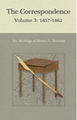
The correspondence of Henry D. Thoreau: volume 3: 1857–1862
Thoreau, Henry David; Hudspeth, Robert N.; Witherell, Elizabeth Hall; Xie, Lihong
Princeton University Press
, 2026
; English
; 737 Pages
The final volume of the definitive edition of Thoreau's correspondence
This is the third and final volume of the first full-scale scholarly edition of Thoreau's correspondence in more than half a century. Together, the volumes present every known letter written or received by Thoreau, almost 650 in all, including more than 100 that have never been published before.
Correspondence 3: 1857–1862 contains 239 letters, 121 written by Thoreau and 118 written to him. Sixty-seven letters are collected here for the first time; of these, forty-four have not been published before, including five dated between 1837 and 1855 that are included in an addenda. During this period, Thoreau was well established as a writer and lecturer, and he continued to pursue the interests and activities that had occupied him earlier in the 1850s. Letters document the publication of "Chesuncook" (1858) and "An Address on the Succession of Forest Trees" (1860), as well as his preparations, a few months before his death, for the posthumous publication of The Maine Woods and the essays "Walking," "Autumnal Tints," "Wild Apples," and "Life without Principle." Two weeks after John Brown's raid on Harpers Ferry, he delivered the country's first public defense of Brown's character and actions; his address, "A Plea for Captain John Brown," was published in 1860. Correspondents during this period include a robust network of friends, several of whom joined him on hiking and canoeing trips in 1857, 1858, and 1860. His ongoing phenological studies are reflected in letters to other scientific naturalists, and this volume contains letters indicating his appointment as an examiner for Harvard's Department of Natural History in 1859 and 1860.
Following every letter, annotations identify correspondents, individuals mentioned, and books quoted, and describe events to which the letter refers. A historical introduction sets the letters in the context of Thoreau's life and times, a textual introduction lays out the editorial principles and procedures followed, and a general introduction discusses the history of the publication of Thoreau's correspondence. Proper names, publications, events, and ideas found in both the letters and the annotations are included in a comprehensive index.
Thoreau, Henry David; Hudspeth, Robert N.; Witherell, Elizabeth Hall; Xie, Lihong
Princeton University Press
, 2026
; English
; 737 Pages
The final volume of the definitive edition of Thoreau's correspondence
This is the third and final volume of the first full-scale scholarly edition of Thoreau's correspondence in more than half a century. Together, the volumes present every known letter written or received by Thoreau, almost 650 in all, including more than 100 that have never been published before.
Correspondence 3: 1857–1862 contains 239 letters, 121 written by Thoreau and 118 written to him. Sixty-seven letters are collected here for the first time; of these, forty-four have not been published before, including five dated between 1837 and 1855 that are included in an addenda. During this period, Thoreau was well established as a writer and lecturer, and he continued to pursue the interests and activities that had occupied him earlier in the 1850s. Letters document the publication of "Chesuncook" (1858) and "An Address on the Succession of Forest Trees" (1860), as well as his preparations, a few months before his death, for the posthumous publication of The Maine Woods and the essays "Walking," "Autumnal Tints," "Wild Apples," and "Life without Principle." Two weeks after John Brown's raid on Harpers Ferry, he delivered the country's first public defense of Brown's character and actions; his address, "A Plea for Captain John Brown," was published in 1860. Correspondents during this period include a robust network of friends, several of whom joined him on hiking and canoeing trips in 1857, 1858, and 1860. His ongoing phenological studies are reflected in letters to other scientific naturalists, and this volume contains letters indicating his appointment as an examiner for Harvard's Department of Natural History in 1859 and 1860.
Following every letter, annotations identify correspondents, individuals mentioned, and books quoted, and describe events to which the letter refers. A historical introduction sets the letters in the context of Thoreau's life and times, a textual introduction lays out the editorial principles and procedures followed, and a general introduction discusses the history of the publication of Thoreau's correspondence. Proper names, publications, events, and ideas found in both the letters and the annotations are included in a comprehensive index.
eBook
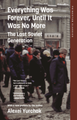
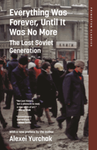
Everything was forever, until it was no more : the last Soviet generation
Yurchak, Alexei; Rabinow, Paul (Series Editor)
Princeton University Press
, 2026
; English
; 496 Pages
Soviet socialism was based on paradoxes that were revealed by the peculiar experience of its collapse. To the people who lived in that system the collapse seemed both completely unexpected and completely unsurprising. At the moment of collapse it suddenly became obvious that Soviet life had always seemed simultaneously eternal and stagnating, vigorous and ailing, bleak and full of promise. Although these characteristics may appear mutually exclusive, in fact they were mutually constitutive. This book explores the paradoxes of Soviet life during the period of “late socialism” (1960s-1980s) through the eyes of the last Soviet generation.
Focusing on the major transformation of the 1950s at the level of discourse, ideology, language, and ritual, Alexei Yurchak traces the emergence of multiple unanticipated meanings, communities, relations, ideals, and pursuits that this transformation subsequently enabled. His historical, anthropological, and linguistic analysis draws on rich ethnographic material from Late Socialism and the post-Soviet period.
The model of Soviet socialism that emerges provides an alternative to binary accounts that describe that system as a dichotomy of official culture and unofficial culture, the state and the people, public self and private self, truth and lie—and ignore the crucial fact that, for many Soviet citizens, the fundamental values, ideals, and realities of socialism were genuinely important, although they routinely transgressed and reinterpreted the norms and rules of the socialist state.
Yurchak, Alexei; Rabinow, Paul (Series Editor)
Princeton University Press
, 2026
; English
; 496 Pages
Soviet socialism was based on paradoxes that were revealed by the peculiar experience of its collapse. To the people who lived in that system the collapse seemed both completely unexpected and completely unsurprising. At the moment of collapse it suddenly became obvious that Soviet life had always seemed simultaneously eternal and stagnating, vigorous and ailing, bleak and full of promise. Although these characteristics may appear mutually exclusive, in fact they were mutually constitutive. This book explores the paradoxes of Soviet life during the period of “late socialism” (1960s-1980s) through the eyes of the last Soviet generation.
Focusing on the major transformation of the 1950s at the level of discourse, ideology, language, and ritual, Alexei Yurchak traces the emergence of multiple unanticipated meanings, communities, relations, ideals, and pursuits that this transformation subsequently enabled. His historical, anthropological, and linguistic analysis draws on rich ethnographic material from Late Socialism and the post-Soviet period.
The model of Soviet socialism that emerges provides an alternative to binary accounts that describe that system as a dichotomy of official culture and unofficial culture, the state and the people, public self and private self, truth and lie—and ignore the crucial fact that, for many Soviet citizens, the fundamental values, ideals, and realities of socialism were genuinely important, although they routinely transgressed and reinterpreted the norms and rules of the socialist state.
eBook
The papers of Thomas Jefferson, volume 49: 2 March to 10 July 1806
Jefferson, Thomas; McClure, James P.
Princeton University Press
, 2026
; English
; 871 Pages
A definitive scholarly edition of the correspondence and papers of Thomas Jefferson The Senate confirms John Armstrong and James Bowdoin as commissioners to negotiate with Spain and James Monroe and William Pinkney to do the same with Great Britain
Jefferson, Thomas; McClure, James P.
Princeton University Press
, 2026
; English
; 871 Pages
A definitive scholarly edition of the correspondence and papers of Thomas Jefferson The Senate confirms John Armstrong and James Bowdoin as commissioners to negotiate with Spain and James Monroe and William Pinkney to do the same with Great Britain
eBook
On the altar : a history of sacrifice from the sacred to the secular
Sheehan, Jonathan
Princeton University Press
, 2026
; English
; 604 Pages
From the beginning, sacrifice lived a double life in Christianity, both abandoned and essential. Christ’s death on the cross was the sacrifice to end all sacrifice, eclipsing the temple sacrifices of Judaism and paganism. And yet at the center of the lived faith was the repetition of sacrifice: the offering of Christ’s body, the sacrifices of ancient patriarchs, and the sacrifices of martyrs woven through liturgy, theology, and popular devotion.
But this double life collapsed in the Reformation. Quarreling heirs to Christian truth discovered that the sacrifices they once called Christian might be nothing of the sort. To build their new faiths—to discover the truth of Christian sacrifice—they turned to the past, learning from Christianity as it was how Christianity ought to be.
In On the Altar, Jonathan Sheehan offers a new account of sacrifice both sacred and secular. His story is in part a history of the Christian imagination across the centuries of the Reformation, when new martyrs and holy warriors fought for the truth of their sacrifices, when the empire of New World sacrifice was recruited to settle Christian conflicts, and when the sacrifices of the ancient Hebrews were weaponized for orthodoxy. But it is a history of the secular imagination as well, as the vast archive of Christian sacrifice was dispersed and applied to things that humans make, their religions, politics, and societies. With On the Altar, Sheehan reveals a new history of both Christianity and the secular world in which we still live.
Sheehan, Jonathan
Princeton University Press
, 2026
; English
; 604 Pages
From the beginning, sacrifice lived a double life in Christianity, both abandoned and essential. Christ’s death on the cross was the sacrifice to end all sacrifice, eclipsing the temple sacrifices of Judaism and paganism. And yet at the center of the lived faith was the repetition of sacrifice: the offering of Christ’s body, the sacrifices of ancient patriarchs, and the sacrifices of martyrs woven through liturgy, theology, and popular devotion.
But this double life collapsed in the Reformation. Quarreling heirs to Christian truth discovered that the sacrifices they once called Christian might be nothing of the sort. To build their new faiths—to discover the truth of Christian sacrifice—they turned to the past, learning from Christianity as it was how Christianity ought to be.
In On the Altar, Jonathan Sheehan offers a new account of sacrifice both sacred and secular. His story is in part a history of the Christian imagination across the centuries of the Reformation, when new martyrs and holy warriors fought for the truth of their sacrifices, when the empire of New World sacrifice was recruited to settle Christian conflicts, and when the sacrifices of the ancient Hebrews were weaponized for orthodoxy. But it is a history of the secular imagination as well, as the vast archive of Christian sacrifice was dispersed and applied to things that humans make, their religions, politics, and societies. With On the Altar, Sheehan reveals a new history of both Christianity and the secular world in which we still live.
eBook
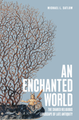
An enchanted world: the shared religious landscape of late antiquity
Satlow, Michael L.
Princeton University Press
, 2026
; English
; 360 Pages
Uncovering the vibrant spiritual life of Late Antiquity In Late Antiquity (ca.200-600 CE), the world was alive with unseen forces--divine agents who influenced every aspect of daily life
Satlow, Michael L.
Princeton University Press
, 2026
; English
; 360 Pages
Uncovering the vibrant spiritual life of Late Antiquity In Late Antiquity (ca.200-600 CE), the world was alive with unseen forces--divine agents who influenced every aspect of daily life
eBook
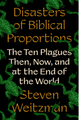
Disasters of Biblical proportions: the ten plagues then, now, and at the end of the world
Weitzman, Steven
Princeton University Press
, 2026
; English
; 353 Pages
How people have reimagined the story of the ten plagues of Egypt, from antiquity to our own era of relentless catastrophe People have been telling and retelling stories about disasters for as long as they have been telling stories
Weitzman, Steven
Princeton University Press
, 2026
; English
; 353 Pages
How people have reimagined the story of the ten plagues of Egypt, from antiquity to our own era of relentless catastrophe People have been telling and retelling stories about disasters for as long as they have been telling stories
eBook
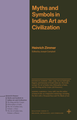
Myths and symbols in Indian art and civilization
Zimmer, Heinrich; Campbell, Joseph
Princeton University Press
, 2026
; English
; 297 Pages
In this landmark study of Indian art and religion, Heinrich Zimmer offers a compelling introduction to the visual language of India’s sacred traditions. Featuring seventy illustrations and drawing directly from Sanskrit sources, Myths and Symbols in Indian Art and Civilization explores the meanings of key motifs in myth, legend, and folklore. With clarity and insight, the book reveals how Hindu and Buddhist symbols express timeless human concerns in ways that resonate across cultures and eras.
Zimmer, Heinrich; Campbell, Joseph
Princeton University Press
, 2026
; English
; 297 Pages
In this landmark study of Indian art and religion, Heinrich Zimmer offers a compelling introduction to the visual language of India’s sacred traditions. Featuring seventy illustrations and drawing directly from Sanskrit sources, Myths and Symbols in Indian Art and Civilization explores the meanings of key motifs in myth, legend, and folklore. With clarity and insight, the book reveals how Hindu and Buddhist symbols express timeless human concerns in ways that resonate across cultures and eras.
eBook
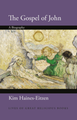
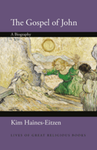
The Gospel of John: a biography
Haines-Eitzen, Kim
Princeton University Press
, 2026
; English
; 209 Pages
The contentious life and times of the most widely cited book of the New Testament
Written some two thousand years ago, the Gospel of John is the only Christian Gospel to place Jesus at the creation of the world, and the only one where we find the stories of the raising of Lazarus, the woman taken in adultery, and the changing of water into wine at the wedding in Cana. The Gospel of John also points an accusing finger at Jesus's Jewish opponents and has been used by medieval crusaders, Protestant reformers, and white supremacists to legitimize antisemitic violence. Kim Haines-Eitzen traces the legacy of this complex, beautiful, and at times deeply troubling work, from its composition in the late first century to its enduring power today.
Haines-Eitzen sheds light on the book's reception by early Christian gnostic and patristic commentators, its use in the Crusades and Reformation, its revered status among American evangelicals, and the many ways it has inspired novels, films, music, and art. The earliest papyrus fragment of an identifiably Christian Gospel is a fragment of John, and John is the only canonical Gospel that depicts Jesus as a savior who teaches openly about his divinity. Haines-Eitzen shows how John simultaneously carries a message of inclusion and intolerance, and how its story teaches us about the nature and enormous influence of scriptural religions.
Compelling and provocative, The Gospel of John reveals how this dynamic, malleable biblical work has both unified and divided Christians over centuries of translation, interpretation, and creative reimagining.
Haines-Eitzen, Kim
Princeton University Press
, 2026
; English
; 209 Pages
The contentious life and times of the most widely cited book of the New Testament
Written some two thousand years ago, the Gospel of John is the only Christian Gospel to place Jesus at the creation of the world, and the only one where we find the stories of the raising of Lazarus, the woman taken in adultery, and the changing of water into wine at the wedding in Cana. The Gospel of John also points an accusing finger at Jesus's Jewish opponents and has been used by medieval crusaders, Protestant reformers, and white supremacists to legitimize antisemitic violence. Kim Haines-Eitzen traces the legacy of this complex, beautiful, and at times deeply troubling work, from its composition in the late first century to its enduring power today.
Haines-Eitzen sheds light on the book's reception by early Christian gnostic and patristic commentators, its use in the Crusades and Reformation, its revered status among American evangelicals, and the many ways it has inspired novels, films, music, and art. The earliest papyrus fragment of an identifiably Christian Gospel is a fragment of John, and John is the only canonical Gospel that depicts Jesus as a savior who teaches openly about his divinity. Haines-Eitzen shows how John simultaneously carries a message of inclusion and intolerance, and how its story teaches us about the nature and enormous influence of scriptural religions.
Compelling and provocative, The Gospel of John reveals how this dynamic, malleable biblical work has both unified and divided Christians over centuries of translation, interpretation, and creative reimagining.
eBook
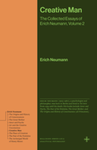
Creative man: the collected essays of Erich Neumann, volume 2
Neumann, Erich; Rolfe, Eugene
Princeton University Press
, 2026
; English
; 287 Pages
An essential exploration of creativity by one of the twentieth century's foremost Jungian psychologists Though said to be C.G.Jung's favorite and most innovative student, Erich Neumann provoked controversy within the Jungian community
Neumann, Erich; Rolfe, Eugene
Princeton University Press
, 2026
; English
; 287 Pages
An essential exploration of creativity by one of the twentieth century's foremost Jungian psychologists Though said to be C.G.Jung's favorite and most innovative student, Erich Neumann provoked controversy within the Jungian community
eBook
Zimmer, Heinrich; Campbell, Joseph
Princeton University Press
, 2026
; English
; 720 Pages
Philosophies of India is a landmark work on the foundations of Indian philosophy. Based on the copious notes of the great Indologist, linguist, and historian Heinrich Zimmer, and edited by Joseph Campbell, the book is organized into three sections. “The Highest Good” examines Eastern and Western thought, their convergence, and the foundations of Indian philosophy
“The Philosophies of Time” discusses the philosophies of success, pleasure, and duty
and “The Philosophies of Eternity” presents the fundamental concepts of Jainism, Sankhya and Yoga, Brahmanism, Buddhism, and Tantra. The subjects examined include the Buddhist Tantras, Buddhist Genesis, the Tantric presentation of divinity, the preparation of disciples and the meaning of initiation, and the symbolism of the mandala-palace Tantric ritual and twilight language.
eBook
Zimmer, Heinrich; Campbell, Joseph
Princeton University Press
, 2026
; English
; 720 Pages
Philosophies of India is a landmark work on the foundations of Indian philosophy. Based on the copious notes of the great Indologist, linguist, and historian Heinrich Zimmer, and edited by Joseph Campbell, the book is organized into three sections. “The Highest Good” examines Eastern and Western thought, their convergence, and the foundations of Indian philosophy
“The Philosophies of Time” discusses the philosophies of success, pleasure, and duty
and “The Philosophies of Eternity” presents the fundamental concepts of Jainism, Sankhya and Yoga, Brahmanism, Buddhism, and Tantra. The subjects examined include the Buddhist Tantras, Buddhist Genesis, the Tantric presentation of divinity, the preparation of disciples and the meaning of initiation, and the symbolism of the mandala-palace Tantric ritual and twilight language.
