



Navigation menu
Search
eBook
Global economic prospects, January 2024
World Bank Group
World Bank Publications
, 2024
; English
; 229 Pages
Global Economic Prospects is a World Bank Group Flagship Report that examines global economic developments and prospects, with a special focus on emerging market and developing economies, on a semiannual basis (in January and June). Each edition includes analytical pieces on topical policy challenges faced by these economies.
World Bank Group
World Bank Publications
, 2024
; English
; 229 Pages
Global Economic Prospects is a World Bank Group Flagship Report that examines global economic developments and prospects, with a special focus on emerging market and developing economies, on a semiannual basis (in January and June). Each edition includes analytical pieces on topical policy challenges faced by these economies.
eBook
The World Bank
World Bank Publications
, 2024
; English
; 175 Pages
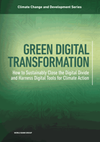
Climate change is unfolding amid the greatest information and communication revolution in human history. From e-commerce and social media to smart manufacturing and precision farming, digital technologies have become prevalent in all aspects of economic and social life.
Digital technologies also have the potential to shape climate change action. Green digital transformation can help countries adapt e¬ffectively to the impacts of climate change and create greener growth pathways.
Doing this means combining a focus on digital transformation and inclusion with a strategic and sustainable use of digital technologies to address climate change.
Green Digital Transformation: How to Sustainably Close the Digital Divide and Harness Digital Tools for Climate Action illuminates the channels through which digital technologies intersect with climate change, and it proposes a path to low-emissions applications of digital technologies to help countries mitigate and adapt to climate change.
The World Bank
World Bank Publications
, 2024
; English
; 175 Pages
Climate change is unfolding amid the greatest information and communication revolution in human history. From e-commerce and social media to smart manufacturing and precision farming, digital technologies have become prevalent in all aspects of economic and social life.
Digital technologies also have the potential to shape climate change action. Green digital transformation can help countries adapt e¬ffectively to the impacts of climate change and create greener growth pathways.
Doing this means combining a focus on digital transformation and inclusion with a strategic and sustainable use of digital technologies to address climate change.
Green Digital Transformation: How to Sustainably Close the Digital Divide and Harness Digital Tools for Climate Action illuminates the channels through which digital technologies intersect with climate change, and it proposes a path to low-emissions applications of digital technologies to help countries mitigate and adapt to climate change.
eBook
Thriving : making cities green, resilient, and inclusive in a changing climate
Roberts, Mark; Mukim, Megha
World Bank Publications
, 2023
; English
; 354 Pages
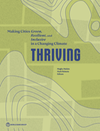
Between 1970 and 2021, the number of people living in cities increased from 1.19 billion to 4.46 billion, while the Earth’s surface temperature climbed by 1.19 degrees Celsius above its preindustrial levels. Because of the prosperity they helped generate, cities have been a major cause of this climate change.
However, it is also in cities that many of the solutions to the climate crisis—in terms of both adaptation and mitigation—will be found, not least because by 2050, almost 70 percent of the world’s population will call cities home. As such, cities are the key to arguably the greatest public policy challenge of our times.
To take stock of how green, how resilient, and how inclusive cities globally are today, Thriving: Making Cities Green, Resilient, and Inclusive in a Changing Climate defines a global typology of more than 10,000 cities. It finds that there is wide variation in how green, resilient, and inclusive cities are around the world.
It asks how climate change impacts cities and, conversely, how cities affect climate. Vicious cycles in development could occur as cities become more vulnerable to extreme events and the challenges compound and cascade. Finally, this report provides a compass for policy makers on policies that can help cities not only survive but also thrive in the face of the perils of climate change. Policy makers can and must act now to chart a more sustainable trajectory.
Roberts, Mark; Mukim, Megha
World Bank Publications
, 2023
; English
; 354 Pages
Between 1970 and 2021, the number of people living in cities increased from 1.19 billion to 4.46 billion, while the Earth’s surface temperature climbed by 1.19 degrees Celsius above its preindustrial levels. Because of the prosperity they helped generate, cities have been a major cause of this climate change.
However, it is also in cities that many of the solutions to the climate crisis—in terms of both adaptation and mitigation—will be found, not least because by 2050, almost 70 percent of the world’s population will call cities home. As such, cities are the key to arguably the greatest public policy challenge of our times.
To take stock of how green, how resilient, and how inclusive cities globally are today, Thriving: Making Cities Green, Resilient, and Inclusive in a Changing Climate defines a global typology of more than 10,000 cities. It finds that there is wide variation in how green, resilient, and inclusive cities are around the world.
It asks how climate change impacts cities and, conversely, how cities affect climate. Vicious cycles in development could occur as cities become more vulnerable to extreme events and the challenges compound and cascade. Finally, this report provides a compass for policy makers on policies that can help cities not only survive but also thrive in the face of the perils of climate change. Policy makers can and must act now to chart a more sustainable trajectory.
eBook
Innovative Korea : lessons on leveraging innovation and technology for development
Soh, Hoon Sahib; Koh, Youngsun; Aridi, Anwar
World Bank Publications
, 2023
; English
; 319 Pages
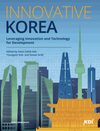
The Republic of Korea today is a highly industrialized, global leader in innovation and technology. It is the 10th largest economy in the world and has a per capita income approaching the average of OECD countries. In the 1950s, however, it was one of the world’s poorest countries, with decidedly bleak prospects. Its transformation has made Korea a well-known case study of successful development.
Innovative Korea: Leveraging Innovation and Technology for Development summarizes the sources of Korea’s remarkable growth and the policies and institutional reforms that made it possible. The report focuses on Korea’s successful transition from a middle-income to a high-income economy. Korea escaped from the “middle-income trap†? by fundamentally transforming its growth paradigm to a more private-sector-led model emphasizing market competition, innovation, and technology. Compared to the previous emphasis on large fi rms and industries, the government became more focused on promoting small and medium enterprises and technology entrepreneurs. Exports expanded significantly through greater integration in global value chains. Already-high levels of human capital development were complemented by an expanded social safety net and a more integrated approach to education and training.
Korea succeeded by focusing on the foundations of long-run growth, building global capabilities in innovation and technology, and adapting and evolving its growth paradigm to promote new sources of growth. Innovative Korea, jointly prepared by the World Bank and the Korea Development Institute, provides useful insights on Korea’s development story and practical lessons for public policy making.
Soh, Hoon Sahib; Koh, Youngsun; Aridi, Anwar
World Bank Publications
, 2023
; English
; 319 Pages
The Republic of Korea today is a highly industrialized, global leader in innovation and technology. It is the 10th largest economy in the world and has a per capita income approaching the average of OECD countries. In the 1950s, however, it was one of the world’s poorest countries, with decidedly bleak prospects. Its transformation has made Korea a well-known case study of successful development.
Innovative Korea: Leveraging Innovation and Technology for Development summarizes the sources of Korea’s remarkable growth and the policies and institutional reforms that made it possible. The report focuses on Korea’s successful transition from a middle-income to a high-income economy. Korea escaped from the “middle-income trap†? by fundamentally transforming its growth paradigm to a more private-sector-led model emphasizing market competition, innovation, and technology. Compared to the previous emphasis on large fi rms and industries, the government became more focused on promoting small and medium enterprises and technology entrepreneurs. Exports expanded significantly through greater integration in global value chains. Already-high levels of human capital development were complemented by an expanded social safety net and a more integrated approach to education and training.
Korea succeeded by focusing on the foundations of long-run growth, building global capabilities in innovation and technology, and adapting and evolving its growth paradigm to promote new sources of growth. Innovative Korea, jointly prepared by the World Bank and the Korea Development Institute, provides useful insights on Korea’s development story and practical lessons for public policy making.
eBook
Detox development : repurposing environmentally harmful subsidies
Damania, Richard; Balseca, Esteban; de Fontaubert, Charlotte; Gill, Joshua; Rentschler, Jun; Russ, Jason; Zaveri, Esha
World Bank Publications
, 2023
; English
; 307 Pages
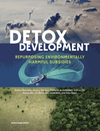
Clean air, land, and oceans are critical for human health and nutrition and underpin much of the world's economy. Yet they suffer from degradation, poor management, and overuse due to government subsidies.
'Detox Development: Repurposing Environmentally Harmful Subsidies' examines the impact of subsidies on these foundational natural assets. Explicit and implicit subsidies--estimated to exceed US$7 trillion per year--not only promote inefficiencies but also cause much environmental harm. Poor air quality is responsible for approximately 1 in 5 deaths globally. And as the new analyses in this report show, a significant number of these deaths can be attributed to fossil fuel subsidies. Agriculture is the largest user of land worldwide, feeding the world and employing 1 billion people, including 78 percent of the world's poor. But it is subsidized in ways that promote inefficiency, inequity, and unsustainability. Subsidies are shown to drive the deterioration of water quality and increase water scarcity by incentivizing overextraction. In addition, they are responsible for 14 percent of annual deforestation, incentivizing the production of crops that are cultivated near forests. These subsidies are also implicated in the spread of zoonotic and vector-borne diseases, especially malaria. Finally, oceans support the world's fisheries and supply about 3 billion people with almost 20 percent of their protein intake from animals. Yet they are in a collective state of crisis, with more than 34 percent of fisheries overfished, exacerbated by open-access regimes and capacity-increasing subsidies.
Although the literature on subsidies is large, this report fills significant knowledge gaps using new data and methods. In doing so, it enhances understanding of the scale and impact of subsidies and offers solutions to reform or repurpose them in efficient and equitable ways. The aim is to enhance understanding of the magnitude, consequences, and drivers of policy successes and failures in order to render reforms more achievable.
Damania, Richard; Balseca, Esteban; de Fontaubert, Charlotte; Gill, Joshua; Rentschler, Jun; Russ, Jason; Zaveri, Esha
World Bank Publications
, 2023
; English
; 307 Pages
Clean air, land, and oceans are critical for human health and nutrition and underpin much of the world's economy. Yet they suffer from degradation, poor management, and overuse due to government subsidies.
'Detox Development: Repurposing Environmentally Harmful Subsidies' examines the impact of subsidies on these foundational natural assets. Explicit and implicit subsidies--estimated to exceed US$7 trillion per year--not only promote inefficiencies but also cause much environmental harm. Poor air quality is responsible for approximately 1 in 5 deaths globally. And as the new analyses in this report show, a significant number of these deaths can be attributed to fossil fuel subsidies. Agriculture is the largest user of land worldwide, feeding the world and employing 1 billion people, including 78 percent of the world's poor. But it is subsidized in ways that promote inefficiency, inequity, and unsustainability. Subsidies are shown to drive the deterioration of water quality and increase water scarcity by incentivizing overextraction. In addition, they are responsible for 14 percent of annual deforestation, incentivizing the production of crops that are cultivated near forests. These subsidies are also implicated in the spread of zoonotic and vector-borne diseases, especially malaria. Finally, oceans support the world's fisheries and supply about 3 billion people with almost 20 percent of their protein intake from animals. Yet they are in a collective state of crisis, with more than 34 percent of fisheries overfished, exacerbated by open-access regimes and capacity-increasing subsidies.
Although the literature on subsidies is large, this report fills significant knowledge gaps using new data and methods. In doing so, it enhances understanding of the scale and impact of subsidies and offers solutions to reform or repurpose them in efficient and equitable ways. The aim is to enhance understanding of the magnitude, consequences, and drivers of policy successes and failures in order to render reforms more achievable.
eBook
Global economic prospects, June 2023
World Bank
World Bank Publications
, 2023
; English
; 185 Pages
Global growth is projected to slow significantly in the second half of this year, with weakness continuing in 2024. Inflation pressures persist, and tight monetary policy is expected to weigh substantially on activity. The possibility of more widespread bank turmoil and tighter monetary policy could result in even weaker global growth. Rising borrowing costs in advanced economies could lead to financial dislocations in the more vulnerable emerging market and developing economies (EMDEs). In low-income countries, in particular, fiscal positions are increasingly precarious.
Comprehensive policy action is needed at the global and national levels to foster macroeconomic and financial stability. Among many EMDEs, and especially in low-income countries, bolstering fiscal sustainability will require generating higher revenues, making spending more efficient, and improving debt management practices. Continued international cooperation is also necessary to tackle climate change, support populations affected by crises and hunger, and provide debt relief where needed. In the longer term, reversing a projected decline in EMDE potential growth will require reforms to bolster physical and human capital and labor-supply growth.
World Bank
World Bank Publications
, 2023
; English
; 185 Pages
Global growth is projected to slow significantly in the second half of this year, with weakness continuing in 2024. Inflation pressures persist, and tight monetary policy is expected to weigh substantially on activity. The possibility of more widespread bank turmoil and tighter monetary policy could result in even weaker global growth. Rising borrowing costs in advanced economies could lead to financial dislocations in the more vulnerable emerging market and developing economies (EMDEs). In low-income countries, in particular, fiscal positions are increasingly precarious.
Comprehensive policy action is needed at the global and national levels to foster macroeconomic and financial stability. Among many EMDEs, and especially in low-income countries, bolstering fiscal sustainability will require generating higher revenues, making spending more efficient, and improving debt management practices. Continued international cooperation is also necessary to tackle climate change, support populations affected by crises and hunger, and provide debt relief where needed. In the longer term, reversing a projected decline in EMDE potential growth will require reforms to bolster physical and human capital and labor-supply growth.
eBook
Cust, James; Zeufack, Albert
World Bank Publications
, 2023
; English
; 274 Pages
This book examines the role for natural resource wealth in driving Africa’s economic transformation and the implications of the low-carbon transition for resource-rich economies. Resource wealth remains central to most Sub-Saharan African economies, and significant untapped potential is in the ground. Subsoil assets—such as metals, minerals, oil, and gas—are key sources of government revenues, export earnings, and development potential in most countries in the Africa region. Despite large reserves, success in converting subsoil wealth into aboveground sustainable prosperity has been limited. Since the decline in commodity prices in 2014, resource-rich Africa has grown more slowly than the region’s average growth rate. Finding ways to more effectively harness natural resource wealth to drive economic transformation will be central to Africa’s economic future.
As the world moves away from fossil fuels in alignment with commitments under the Paris Agreement, Africa’s resource-rich countries face new risks and opportunities. Recent estimates suggest that 80 percent of the world’s proven fossil fuel reserves must remain underground to meet the Paris targets, and much of these stranded reserves may be in Africa. This issue of stranded assets and, relatedly, “stranded nations,†? has major implications for the many African economies that are dependent on petroleum extraction and export. On the other hand, the energy transition will increase demand for raw material inputs involved in clean energy technologies. The transition from fossil fuels to clean energy may create demand by 2050 for 3 billion tons of minerals and metals that are needed to deploy solar, wind, and geothermal energy. How can African economies tap into these opportunities while managing the downside risk to their fossil fuel wealth? Africa’s Resource Future explores these themes and offers policy makers insights to help them navigate the coming years of uncertainty.
Cust, James; Zeufack, Albert
World Bank Publications
, 2023
; English
; 274 Pages
This book examines the role for natural resource wealth in driving Africa’s economic transformation and the implications of the low-carbon transition for resource-rich economies. Resource wealth remains central to most Sub-Saharan African economies, and significant untapped potential is in the ground. Subsoil assets—such as metals, minerals, oil, and gas—are key sources of government revenues, export earnings, and development potential in most countries in the Africa region. Despite large reserves, success in converting subsoil wealth into aboveground sustainable prosperity has been limited. Since the decline in commodity prices in 2014, resource-rich Africa has grown more slowly than the region’s average growth rate. Finding ways to more effectively harness natural resource wealth to drive economic transformation will be central to Africa’s economic future.
As the world moves away from fossil fuels in alignment with commitments under the Paris Agreement, Africa’s resource-rich countries face new risks and opportunities. Recent estimates suggest that 80 percent of the world’s proven fossil fuel reserves must remain underground to meet the Paris targets, and much of these stranded reserves may be in Africa. This issue of stranded assets and, relatedly, “stranded nations,†? has major implications for the many African economies that are dependent on petroleum extraction and export. On the other hand, the energy transition will increase demand for raw material inputs involved in clean energy technologies. The transition from fossil fuels to clean energy may create demand by 2050 for 3 billion tons of minerals and metals that are needed to deploy solar, wind, and geothermal energy. How can African economies tap into these opportunities while managing the downside risk to their fossil fuel wealth? Africa’s Resource Future explores these themes and offers policy makers insights to help them navigate the coming years of uncertainty.

eBook
Silver Opportunity : building integrated services for older adults around primary health care
Hou, Xiaohui; Sharma, Jigyasa; Zhao, Feng
World Bank Publications
, 2023
; English
; 215 Pages
We live in a rapidly aging world, in which people who are age 60 and older outnumber children under the age of five. This book reveals large and growing gaps in care for older adults in countries at all income levels and shows how to leverage reforms for improving health outcomes for older adults and create healthier, more prosperous communities. Aimed at policy makers and other health and development stakeholders who want to promote healthier aging, Silver Opportunity compiles the latest evidence on care needs and gaps for aging populations. It argues that primary health care should be the cornerstone of integrated service delivery for older people, but primary health care systems must first build their capacity to respond to older people’s health needs. It presents an original framework for policy action to advance primary health care†“centered, integrated senior care
documents the experiences of pioneering countries in delivering community-based care to older people
and provides recommendations for decision-makers. The framework presents four policy levers with which to improve health care for seniors—financing, innovation, regulation, and evaluation and measurement—or FIRE. Finally, the book posits that by acting now, countries can leverage population aging to accelerate progress toward health equity and universal health coverage.
Hou, Xiaohui; Sharma, Jigyasa; Zhao, Feng
World Bank Publications
, 2023
; English
; 215 Pages
We live in a rapidly aging world, in which people who are age 60 and older outnumber children under the age of five. This book reveals large and growing gaps in care for older adults in countries at all income levels and shows how to leverage reforms for improving health outcomes for older adults and create healthier, more prosperous communities. Aimed at policy makers and other health and development stakeholders who want to promote healthier aging, Silver Opportunity compiles the latest evidence on care needs and gaps for aging populations. It argues that primary health care should be the cornerstone of integrated service delivery for older people, but primary health care systems must first build their capacity to respond to older people’s health needs. It presents an original framework for policy action to advance primary health care†“centered, integrated senior care
documents the experiences of pioneering countries in delivering community-based care to older people
and provides recommendations for decision-makers. The framework presents four policy levers with which to improve health care for seniors—financing, innovation, regulation, and evaluation and measurement—or FIRE. Finally, the book posits that by acting now, countries can leverage population aging to accelerate progress toward health equity and universal health coverage.
eBook
Hidden potential : rethinking informality in South Asia
Bussolo, Maurizio; Sharma, Siddharth
World Bank Publications
, 2023
; English
; 355 Pages
Informality remains widespread in South Asia despite decades of economic growth. The low earnings and high vulnerability in the informal sector make this a major development issue for the region. Yet, there is no consensus on its causes and consequences, with the debate polarized between a view that informality is a problem of regulatory evasion and should be eradicated, and another that equates informality with economic exclusion. Recent advances in analyzing informality as the outcome of firm dynamics in distorted economic environments can help reconcile them. Building on these advances, the approach adopted in this volume clarifies that there are different types of informality, with different drivers and consequences. The report has four main messages that underscore the need for a multipronged strategy. First, informality in South Asia is dominated by firms that happen to be outside the purview of regulations because they are small, as opposed to those that remain small to escape regulations. Second, reforms of business regulations tend to have small direct effects on the informal sector, although they could have sizable indirect impacts on it if they succeed in removing major inefficiencies in the broader economy. Third, e-commerce platforms offer new opportunities to informal firms and workers, but many of them lack complementary skills or credit to benefit from such technologies. Fourth, a combination of contributory and non-contributory programs recognizing the heterogenous saving capacities of informal workers may be necessary to achieve more universal coverage of social insurance.
Bussolo, Maurizio; Sharma, Siddharth
World Bank Publications
, 2023
; English
; 355 Pages
Informality remains widespread in South Asia despite decades of economic growth. The low earnings and high vulnerability in the informal sector make this a major development issue for the region. Yet, there is no consensus on its causes and consequences, with the debate polarized between a view that informality is a problem of regulatory evasion and should be eradicated, and another that equates informality with economic exclusion. Recent advances in analyzing informality as the outcome of firm dynamics in distorted economic environments can help reconcile them. Building on these advances, the approach adopted in this volume clarifies that there are different types of informality, with different drivers and consequences. The report has four main messages that underscore the need for a multipronged strategy. First, informality in South Asia is dominated by firms that happen to be outside the purview of regulations because they are small, as opposed to those that remain small to escape regulations. Second, reforms of business regulations tend to have small direct effects on the informal sector, although they could have sizable indirect impacts on it if they succeed in removing major inefficiencies in the broader economy. Third, e-commerce platforms offer new opportunities to informal firms and workers, but many of them lack complementary skills or credit to benefit from such technologies. Fourth, a combination of contributory and non-contributory programs recognizing the heterogenous saving capacities of informal workers may be necessary to achieve more universal coverage of social insurance.
eBook
Global economic prospects, January 2023
World Bank Group
World Bank Publications
, 2023
; English
; 198 Pages
Global growth is expected to decelerate sharply, reflecting synchronous policy tightening aimed at containing very high inflation, worsening financial conditions, and continued disruptions from Russia’s invasion of Ukraine. Investment growth in emerging market and developing economies (EMDEs) is expected to remain below its average rate of the past two decades. Further adverse shocks could push the global economy into recession. Small states are especially vulnerable to such shocks because of the reliance on external trade and financing, limited economic diversification, elevated debt, and susceptibility to natural disasters. Against this backdrop, it is critical that EMDE policy makers ensure that any fiscal support is focused on vulnerable groups, that inflation expectations remain well anchored, and that financial systems continue to be resilient. Urgent global and national efforts are also needed to mitigate the risks of global recession and debt distress in EMDEs and to support a major increase in EMDE investment.
World Bank Group
World Bank Publications
, 2023
; English
; 198 Pages
Global growth is expected to decelerate sharply, reflecting synchronous policy tightening aimed at containing very high inflation, worsening financial conditions, and continued disruptions from Russia’s invasion of Ukraine. Investment growth in emerging market and developing economies (EMDEs) is expected to remain below its average rate of the past two decades. Further adverse shocks could push the global economy into recession. Small states are especially vulnerable to such shocks because of the reliance on external trade and financing, limited economic diversification, elevated debt, and susceptibility to natural disasters. Against this backdrop, it is critical that EMDE policy makers ensure that any fiscal support is focused on vulnerable groups, that inflation expectations remain well anchored, and that financial systems continue to be resilient. Urgent global and national efforts are also needed to mitigate the risks of global recession and debt distress in EMDEs and to support a major increase in EMDE investment.
