


Navigation menu
Search

eBook
The range of the river : a riverine history of empire across China, India, and Southeast Asia
Iqbal, Iftekhar
Stanford University Press
, 2025
; English
; 274 Pages
Spanning nearly 4 million square kilometers, the Tibetan river system—including the Brahmaputra, Irrawaddy, Salween, Mekong, Red, and Yangzi—forms the largest contiguous network of rivers on the planet, stretching across eastern South Asia, mainland Southeast Asia, and southern China.
The Range of the River uncovers the entwined histories of these vast waterways and the empires, human actors, and other-than-human forces that have shaped Asia since the 1850s.
Both ethnodiverse and biodiverse, these rivers were more than contested imperial spaces—they were also channels of communal and material exchange, linking near and distant contact zones.
They fostered connections across Asia, driving commerce, mobility, and cultural encounters that transformed them into shared, living commons bridging societies, political powers, and economic interests. Tracing six major rivers across eight countries, Iftekhar Iqbal argues that these river systems formed the core of a discursive space where empires, regional political forces, ethnic groups, boaters, peddlers, explorers, merchants, and mules encountered each other in layered pathos and pathways.
This groundbreaking study reimagines the river not as merely a tool of empire but as a dynamic force in itself, shaping a truly transregional Asia.
By weaving together diverse riverine life-worlds, The Range of the River invites us to rethink Asia's spatial history.
Iqbal, Iftekhar
Stanford University Press
, 2025
; English
; 274 Pages
Spanning nearly 4 million square kilometers, the Tibetan river system—including the Brahmaputra, Irrawaddy, Salween, Mekong, Red, and Yangzi—forms the largest contiguous network of rivers on the planet, stretching across eastern South Asia, mainland Southeast Asia, and southern China.
The Range of the River uncovers the entwined histories of these vast waterways and the empires, human actors, and other-than-human forces that have shaped Asia since the 1850s.
Both ethnodiverse and biodiverse, these rivers were more than contested imperial spaces—they were also channels of communal and material exchange, linking near and distant contact zones.
They fostered connections across Asia, driving commerce, mobility, and cultural encounters that transformed them into shared, living commons bridging societies, political powers, and economic interests. Tracing six major rivers across eight countries, Iftekhar Iqbal argues that these river systems formed the core of a discursive space where empires, regional political forces, ethnic groups, boaters, peddlers, explorers, merchants, and mules encountered each other in layered pathos and pathways.
This groundbreaking study reimagines the river not as merely a tool of empire but as a dynamic force in itself, shaping a truly transregional Asia.
By weaving together diverse riverine life-worlds, The Range of the River invites us to rethink Asia's spatial history.
eBook
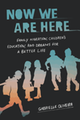
Now we are here : family migration, children’s education, and dreams for a better life
Oliveira, Gabrielle
Stanford University Press
, 2025
; English
; 252 Pages
Who gets to live a life with dignity? Each day, families around the world make the difficult decision to leave their homes in search of safety, stability, and opportunity. For many migrant families, this search centers on access to strong, caring, and equitable educational systems that enable children to flourish. Now We Are Here follows the lives of 16 migrant families from Brazil, El Salvador, Guatemala, and Honduras as they navigate the promises and challenges of the American education system. Drawing on immersive ethnographic research in homes and schools from 2018 to 2021, Gabrielle Oliveira offers an intimate portrait of these families' experiences. She weaves together stories of parental sacrifice, children's educational and migration journeys, and educators' responses to trauma—all shaped by the additional disruption of the COVID-19 pandemic.
Oliveira highlights the perseverance of families confronting the overlapping crises of border detention, family separation, and a public health emergency. These experiences forced them to reimagine education and what it means to build a future in the U.S. By examining how migrant children engage in classrooms, how teachers understand their needs, and how hope evolves, this book offers vital insights into the intersections of schooling and immigration. It calls for more responsive educational practices and policies that affirm the dignity and potential of all migrant children.
Oliveira, Gabrielle
Stanford University Press
, 2025
; English
; 252 Pages
Who gets to live a life with dignity? Each day, families around the world make the difficult decision to leave their homes in search of safety, stability, and opportunity. For many migrant families, this search centers on access to strong, caring, and equitable educational systems that enable children to flourish. Now We Are Here follows the lives of 16 migrant families from Brazil, El Salvador, Guatemala, and Honduras as they navigate the promises and challenges of the American education system. Drawing on immersive ethnographic research in homes and schools from 2018 to 2021, Gabrielle Oliveira offers an intimate portrait of these families' experiences. She weaves together stories of parental sacrifice, children's educational and migration journeys, and educators' responses to trauma—all shaped by the additional disruption of the COVID-19 pandemic.
Oliveira highlights the perseverance of families confronting the overlapping crises of border detention, family separation, and a public health emergency. These experiences forced them to reimagine education and what it means to build a future in the U.S. By examining how migrant children engage in classrooms, how teachers understand their needs, and how hope evolves, this book offers vital insights into the intersections of schooling and immigration. It calls for more responsive educational practices and policies that affirm the dignity and potential of all migrant children.
eBook
A world of wounds : rebuilding a bipartisan environmental movement and cultivating authentic hope
Manring, Nancy J.
Stanford University Press
, 2025
; English
; 290 Pages
At the end of the Reagan administration, American public opinion polls showed there were no discernible differences based on political party in response to the question, "Do you consider yourself an environmentalist?" However, in the early 1990s, a partisan gulf between conservatives and liberals emerged around environmental issues. Today, half as many Republicans self-identify as environmentalists when compared to Democrats. Political stagnation on climate action, in turn, has led to a growing number of Americans of all ages who experience ecological grief (known as solastalgia) and eco-anxiety (a chronic fear of environmental doom). These emotions emerged in response to the existential distress associated with living in a world of relentless environmental damage and irreversible ecological losses: a world of wounds.
This book offers an antidote to political frustration and hopelessness. Nancy J. Manring provides an indispensable analysis of the multi-decade, conservative war against American environmentalism and maps out realistic strategies for rebuilding a bipartisan environmental movement. Nurturing authentic hope, in contrast to blind optimism or false promises, begins with an unflinching look at both planetary and political realities. Choosing authentic hope is an ongoing process that requires emotional honesty, courage, and action. This forceful book serves as both a tool for change and a spirited scholarly intervention.
eBook
Manring, Nancy J.
Stanford University Press
, 2025
; English
; 290 Pages
At the end of the Reagan administration, American public opinion polls showed there were no discernible differences based on political party in response to the question, "Do you consider yourself an environmentalist?" However, in the early 1990s, a partisan gulf between conservatives and liberals emerged around environmental issues. Today, half as many Republicans self-identify as environmentalists when compared to Democrats. Political stagnation on climate action, in turn, has led to a growing number of Americans of all ages who experience ecological grief (known as solastalgia) and eco-anxiety (a chronic fear of environmental doom). These emotions emerged in response to the existential distress associated with living in a world of relentless environmental damage and irreversible ecological losses: a world of wounds.
This book offers an antidote to political frustration and hopelessness. Nancy J. Manring provides an indispensable analysis of the multi-decade, conservative war against American environmentalism and maps out realistic strategies for rebuilding a bipartisan environmental movement. Nurturing authentic hope, in contrast to blind optimism or false promises, begins with an unflinching look at both planetary and political realities. Choosing authentic hope is an ongoing process that requires emotional honesty, courage, and action. This forceful book serves as both a tool for change and a spirited scholarly intervention.
eBook
Abiding influence : presidents, nationalist beliefs, and U.S. policy in the Asia Pacific, 1898-1972
Paparella, Giuseppe
Stanford University Press
, 2025
; English
; 270 Pages
How do nationalist beliefs shape and influence American foreign policy? What are the contemporary implications of America's long-standing engagement in the Asia Pacific? This book unearths the varied processes underpinning the relationship between nationalism and the formulation of foreign policy, highlighting the central function of leaders' nationalist beliefs in the history of America's international behavior. By developing a novel theoretical framework and drawing on original archival research and methods of process-tracing, Paparella shows how presidents' nationalist beliefs can influence distinct foreign policy attitudes that have underpinned important foreign policy decisions and turning points in the Asia Pacific. By putting nationalism back on center stage, Paparella makes a strong case for looking at this history as a complex succession of interactions—between states, but also between leaders—that are highly contingent and shaped by the nationalist views of the leading US decision-makers over time. This thoughtful study provides scholars and students with an interpretative key to understand the multifaceted role of the United States in the Asia Pacific, as well as policy recommendations to overcome the security and the credibility challenges posed by the rise of China in the region today.

eBook
Paparella, Giuseppe
Stanford University Press
, 2025
; English
; 270 Pages
How do nationalist beliefs shape and influence American foreign policy? What are the contemporary implications of America's long-standing engagement in the Asia Pacific? This book unearths the varied processes underpinning the relationship between nationalism and the formulation of foreign policy, highlighting the central function of leaders' nationalist beliefs in the history of America's international behavior. By developing a novel theoretical framework and drawing on original archival research and methods of process-tracing, Paparella shows how presidents' nationalist beliefs can influence distinct foreign policy attitudes that have underpinned important foreign policy decisions and turning points in the Asia Pacific. By putting nationalism back on center stage, Paparella makes a strong case for looking at this history as a complex succession of interactions—between states, but also between leaders—that are highly contingent and shaped by the nationalist views of the leading US decision-makers over time. This thoughtful study provides scholars and students with an interpretative key to understand the multifaceted role of the United States in the Asia Pacific, as well as policy recommendations to overcome the security and the credibility challenges posed by the rise of China in the region today.
eBook
American medium : a new film philosophy
Peretz, Eyal
Stanford University Press
, 2025
; English
; 246 Pages
In this masterful new work, film critic and philosopher Eyal Peretz forges a new connection between the concept of "America" and the medium of film. Through exemplary close readings of six fundamental American films—John Ford's Young Mr. Lincoln and The Man Who Shot Liberty Valance, Francis Ford Coppola's The Godfather, Steven Spielberg's West Side Story, and Sofia Coppola's Lost in Translation and Marie Antoinette—Peretz demonstrates the way the connection between "America" and film is enabled through the development of a philosophical concept of medium that allows both "America" and film to be thought anew.
As Peretz shows, "America" can be understood as a medium providing a new framework for understanding human life in modernity—an era that's seen the demise of theology (or the "death of god," as Nietzsche declared). Through incisive readings of the films mentioned above, Peretz shows each to function in its own singular fashion as an allegory of the way that "America"—that is, the demand to ground human life non-theologically—becomes the notion around which the medium of Hollywood film circulates.
Peretz, Eyal
Stanford University Press
, 2025
; English
; 246 Pages
In this masterful new work, film critic and philosopher Eyal Peretz forges a new connection between the concept of "America" and the medium of film. Through exemplary close readings of six fundamental American films—John Ford's Young Mr. Lincoln and The Man Who Shot Liberty Valance, Francis Ford Coppola's The Godfather, Steven Spielberg's West Side Story, and Sofia Coppola's Lost in Translation and Marie Antoinette—Peretz demonstrates the way the connection between "America" and film is enabled through the development of a philosophical concept of medium that allows both "America" and film to be thought anew.
As Peretz shows, "America" can be understood as a medium providing a new framework for understanding human life in modernity—an era that's seen the demise of theology (or the "death of god," as Nietzsche declared). Through incisive readings of the films mentioned above, Peretz shows each to function in its own singular fashion as an allegory of the way that "America"—that is, the demand to ground human life non-theologically—becomes the notion around which the medium of Hollywood film circulates.
eBook
From dominance to parity : America’s political parties and the new era of electoral instability
Brady, David W.; Parker, Brett
Stanford University Press
, 2025
; English
; 226 Pages
At the time Jimmy Carter was inaugurated as the 39th president of the United States, the Democratic Party had been enjoying a half-century of sustained electoral advantage.
It had long controlled Congress and dominated measures of party identification.
When Carter defeated Gerald Ford in 1976, 40% of Americans called themselves Democrats and another 12% told survey takers they leaned towards the party.
To win the election of 1976, Carter just needed to hold the voters that started out on his side.
Nearly fifty years later, American politics has inverted itself.
Close electoral competition is the norm, and politics are at a stalemate.
Brady and Parker call the existing deadlock the era of party parity, an age of division unseen since the late-nineteenth century.
This book explains this profound shift in electoral politics.
Drawing on fresh datasets and long-running surveys, the authors trace the decline of the Democratic majority and consider how this decline differed from past realignments.
They show why modern American presidential elections are always close and argue that the rise of Donald Trump largely reinforced preexisting trends.
Their work represents a significant contribution to the scholarly literature on party identification and realignment.
eBook
Brady, David W.; Parker, Brett
Stanford University Press
, 2025
; English
; 226 Pages
At the time Jimmy Carter was inaugurated as the 39th president of the United States, the Democratic Party had been enjoying a half-century of sustained electoral advantage.
It had long controlled Congress and dominated measures of party identification.
When Carter defeated Gerald Ford in 1976, 40% of Americans called themselves Democrats and another 12% told survey takers they leaned towards the party.
To win the election of 1976, Carter just needed to hold the voters that started out on his side.
Nearly fifty years later, American politics has inverted itself.
Close electoral competition is the norm, and politics are at a stalemate.
Brady and Parker call the existing deadlock the era of party parity, an age of division unseen since the late-nineteenth century.
This book explains this profound shift in electoral politics.
Drawing on fresh datasets and long-running surveys, the authors trace the decline of the Democratic majority and consider how this decline differed from past realignments.
They show why modern American presidential elections are always close and argue that the rise of Donald Trump largely reinforced preexisting trends.
Their work represents a significant contribution to the scholarly literature on party identification and realignment.
eBook
Sovereignty disrupted : Spinoza and the disparity of reality
Kletenik, Gilah
Stanford University Press
, 2025
; English
; 498 Pages
Anthropocentrism, white supremacy, and cishetsexism remain with us.
The intransigence of such oppressions, this book proposes, is stayed by the unrecognized force that sovereignty maintains across the domains of "Western" philosophy.
To corroborate this original thesis, the book uncovers how the rationales of sovereignty secure dominant "Western" theories about the nature of reality, the promise of reason, and the status of humans.
Such approaches rely on properties of sovereignty that essentialize difference, naturalize hierarchy, and valorize autonomy. To redress these models and the supremacies they promote, Gilah Kletenik turns to Spinoza.
Through a fresh reading of his Ethics, Kletenik develops an egalitarian alternative that starts with denaturalizing sovereignty.
It is not a coincidence that Spinoza critiques the hegemonic rationales of "Western" philosophy nor that his doing so has eluded analysis.
This is because his insurrection against "Western" sovereignties is sparked by the scintillas of immanence that he inherits from medieval Jewish and Islamic naturalism, the very philosophies that Christian, "Western," thought has repressed.
This book recovers these marginalized voices, exposing centuries of interpretations that assimilate Spinoza's program to the sovereignties he disrupts.
Kletenik thinks with Spinoza to unmask the supremacies of colonialism, neoliberalism, and cishetsexism alongside the sovereignties anchoring contemporary theory.
In critiquing "Western" philosophy, Kletenik limns a more ethical alternative, oriented by immanence and disparity.
Kletenik, Gilah
Stanford University Press
, 2025
; English
; 498 Pages
Anthropocentrism, white supremacy, and cishetsexism remain with us.
The intransigence of such oppressions, this book proposes, is stayed by the unrecognized force that sovereignty maintains across the domains of "Western" philosophy.
To corroborate this original thesis, the book uncovers how the rationales of sovereignty secure dominant "Western" theories about the nature of reality, the promise of reason, and the status of humans.
Such approaches rely on properties of sovereignty that essentialize difference, naturalize hierarchy, and valorize autonomy. To redress these models and the supremacies they promote, Gilah Kletenik turns to Spinoza.
Through a fresh reading of his Ethics, Kletenik develops an egalitarian alternative that starts with denaturalizing sovereignty.
It is not a coincidence that Spinoza critiques the hegemonic rationales of "Western" philosophy nor that his doing so has eluded analysis.
This is because his insurrection against "Western" sovereignties is sparked by the scintillas of immanence that he inherits from medieval Jewish and Islamic naturalism, the very philosophies that Christian, "Western," thought has repressed.
This book recovers these marginalized voices, exposing centuries of interpretations that assimilate Spinoza's program to the sovereignties he disrupts.
Kletenik thinks with Spinoza to unmask the supremacies of colonialism, neoliberalism, and cishetsexism alongside the sovereignties anchoring contemporary theory.
In critiquing "Western" philosophy, Kletenik limns a more ethical alternative, oriented by immanence and disparity.
eBook
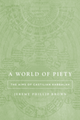
A world of piety : the aims of Castilian kabbalah
Brown, Jeremy Phillip
Stanford University Press
, 2025
; English
; 316 Pages
A World of Piety examines the historical aspirations of kabbalah to prompt a revival of ancient rabbinic piety in medieval Castile.
What were the aims of the celebrated works of rabbinic wisdom fashioned during the reigns of Alfonso X and Sancho IV of Castile, including the formative Book of the Zohar? In pursuit of this question, Judaica scholar Jeremy Phillip Brown turns to the Hebrew and Aramaic writings composed by Todros ben Joseph ha-Levi Abulafia of Toledo, Joseph Gikatilla of Medinaceli, and especially Moses de León of Guadalajara. These writings set out to disseminate the secret patrimony of ancients: a knowledge of divinity comprised of essentially Jewish attributes as a basis for human emulation. According to these texts, God models a pious form of life—not merely a life of Torah and the commandments, but a program exceeding the norms of religious obligation. Midnight vigils for prayer and study, guarding the eyes and tongue,sexual austerity, spiritual poverty and concern for the materially poor—the texts affirm that God exemplifies these and other modes of piety, prompting their imitation as a penitential means of individual and even socialtransformation. By means of their writings, the Castilian authors sought to form penitents as "other people" created anew in the Judeomorphic image of God. A World of Piety sheds light on the core motivations of a discourse that would emerge as a major domain of religion and thought by reconstructing the socio-historical ambitions of a little-known cadre of medieval rabbis active in a Christian milieu.
Brown, Jeremy Phillip
Stanford University Press
, 2025
; English
; 316 Pages
A World of Piety examines the historical aspirations of kabbalah to prompt a revival of ancient rabbinic piety in medieval Castile.
What were the aims of the celebrated works of rabbinic wisdom fashioned during the reigns of Alfonso X and Sancho IV of Castile, including the formative Book of the Zohar? In pursuit of this question, Judaica scholar Jeremy Phillip Brown turns to the Hebrew and Aramaic writings composed by Todros ben Joseph ha-Levi Abulafia of Toledo, Joseph Gikatilla of Medinaceli, and especially Moses de León of Guadalajara. These writings set out to disseminate the secret patrimony of ancients: a knowledge of divinity comprised of essentially Jewish attributes as a basis for human emulation. According to these texts, God models a pious form of life—not merely a life of Torah and the commandments, but a program exceeding the norms of religious obligation. Midnight vigils for prayer and study, guarding the eyes and tongue,sexual austerity, spiritual poverty and concern for the materially poor—the texts affirm that God exemplifies these and other modes of piety, prompting their imitation as a penitential means of individual and even socialtransformation. By means of their writings, the Castilian authors sought to form penitents as "other people" created anew in the Judeomorphic image of God. A World of Piety sheds light on the core motivations of a discourse that would emerge as a major domain of religion and thought by reconstructing the socio-historical ambitions of a little-known cadre of medieval rabbis active in a Christian milieu.
eBook
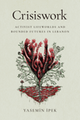
Crisiswork : activist lifeworlds and bounded futures in Lebanon
İpek, Yasemin
Stanford University Press
, 2025
; English
; 334 Pages
The world's attention has often turned to Lebanon in moments of crisis, including, recently, during the Beirut Port Explosion in 2020 and the 2024 Israeli invasion of Lebanon. Less told is the story of how such major events, and other predicaments from Lebanon's long history, have mobilized a thriving network of activists whose lived experiences of multiple crises have shaped their politics, belonging, and vision of Lebanon's future. Crisiswork presents a story of Lebanon through the lens of activist lifeworlds, showing how, amid crisis, both political structures and everyday life become a terrain of generative possibility.
Through an ethnographic investigation into the relationship between crisis and political imagination, Yasemin İpek examines activism as an open-ended process, looking at the diversity of experiences that leads to ambivalent political engagements. She follows a range of self-identified activists—including unemployed NGO volunteers, middle-class consultants, and leftist entrepreneurs—as their crisiswork, and response to contradictory pressures, leads them to new ways of being and acting. Crisiswork demonstrates how class-based and other inequalities on local and global scales affect the lived realities and political imaginations of activists. It provides an innovative analytical framework for understanding the complex political and social struggles against crises in the global South.
İpek, Yasemin
Stanford University Press
, 2025
; English
; 334 Pages
The world's attention has often turned to Lebanon in moments of crisis, including, recently, during the Beirut Port Explosion in 2020 and the 2024 Israeli invasion of Lebanon. Less told is the story of how such major events, and other predicaments from Lebanon's long history, have mobilized a thriving network of activists whose lived experiences of multiple crises have shaped their politics, belonging, and vision of Lebanon's future. Crisiswork presents a story of Lebanon through the lens of activist lifeworlds, showing how, amid crisis, both political structures and everyday life become a terrain of generative possibility.
Through an ethnographic investigation into the relationship between crisis and political imagination, Yasemin İpek examines activism as an open-ended process, looking at the diversity of experiences that leads to ambivalent political engagements. She follows a range of self-identified activists—including unemployed NGO volunteers, middle-class consultants, and leftist entrepreneurs—as their crisiswork, and response to contradictory pressures, leads them to new ways of being and acting. Crisiswork demonstrates how class-based and other inequalities on local and global scales affect the lived realities and political imaginations of activists. It provides an innovative analytical framework for understanding the complex political and social struggles against crises in the global South.
eBook
Unseparate: Modernism, Interdisciplinary Art, and Network Aesthetics
Madoff, Steven Henry
Stanford University Press
, 2025
; English
; 294 Pages
Art historian and critic Steven Henry Madoff offers a contemporary reframing of modernist art and the way it presages installation and performance art
For more than a century, European modernist art has been written about as a profound expression of fragmentation—of an alienated world in pieces. In Unseparate, Steven Henry Madoff proposes that there was always another artistic intention present among the modernists, offering visions of wholeness in the face of the instability and alienation brought on by war and new technologies.
Blending history, philosophy, and media theory, Madoff argues that from the mid-nineteenth century—when Richard Wagner championed his idea of the Gesamtkunstwerk (the total work of art)—to the rise of the Bauhaus, the urge to connect different art forms into single, unified works anticipates our contemporary networked culture.
Madoff revisits the artworks and projects of such leading figures of European modernism as Paul Cézanne, Marcel Duchamp, Hugo Ball, and Walter Gropius, proposing that their various ambitions for totality were both aesthetically beneficent and politically dangerous. This striking contemporary rethinking gives readers a way to understand modernism's complex history more fully. Modernism, seen through the lens of network aesthetics and its emphasis on interconnectivity, presages many different forms of contemporary art, including installation and performance art. Further, as Madoff reveals, the modernist drive for wholeness and unity can give us a way to look at our own increasingly divisive society.
Madoff, Steven Henry
Stanford University Press
, 2025
; English
; 294 Pages
Art historian and critic Steven Henry Madoff offers a contemporary reframing of modernist art and the way it presages installation and performance art
For more than a century, European modernist art has been written about as a profound expression of fragmentation—of an alienated world in pieces. In Unseparate, Steven Henry Madoff proposes that there was always another artistic intention present among the modernists, offering visions of wholeness in the face of the instability and alienation brought on by war and new technologies.
Blending history, philosophy, and media theory, Madoff argues that from the mid-nineteenth century—when Richard Wagner championed his idea of the Gesamtkunstwerk (the total work of art)—to the rise of the Bauhaus, the urge to connect different art forms into single, unified works anticipates our contemporary networked culture.
Madoff revisits the artworks and projects of such leading figures of European modernism as Paul Cézanne, Marcel Duchamp, Hugo Ball, and Walter Gropius, proposing that their various ambitions for totality were both aesthetically beneficent and politically dangerous. This striking contemporary rethinking gives readers a way to understand modernism's complex history more fully. Modernism, seen through the lens of network aesthetics and its emphasis on interconnectivity, presages many different forms of contemporary art, including installation and performance art. Further, as Madoff reveals, the modernist drive for wholeness and unity can give us a way to look at our own increasingly divisive society.
