
Navigation menu
Search
Databases
All Databases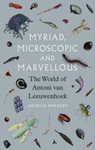
eBook
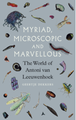
Myriad, microscopic and marvellous: the world of Antoni van Leeuwenhoek
Dekkers, Geertje; Brown, Andy
Reaktion Books
, 2025
; English
; 241 Pages
The hidden, minuscule worlds of pioneering Dutch microbiologist Antoni van Leeuwenhoek
Dekkers, Geertje; Brown, Andy
Reaktion Books
, 2025
; English
; 241 Pages
The hidden, minuscule worlds of pioneering Dutch microbiologist Antoni van Leeuwenhoek
eBook
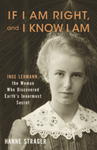
If I am right, and I know I am : Inge Lehmann, the woman who discovered earth’s innermost secret
Strager, Hanne
Columbia University Press
, 2025
; English
; 317 Pages
"Inge Lehmann is one of the most important female scientists in history, yet it's likely that interested readers have never heard of her. She was a Danish seismologist and geophysicist who made the groundbreaking discovery in 1936 that Earth has a solid inner core. This would forever change our understanding of our own planet. In an era when women researchers were not always taken seriously, Inge Lehmann displayed exceptional genius and had to forge her own path. Her personal life (all 104 years of it!) was equally captivating and shrouded in mystery until now. She lived and worked in the United States for a significant portion of her life and was awarded an honorary doctorate from Columbia University in 1964
in 1971 she became the first woman to receive the William Bowie Medal, the highest honor given by the American Geophysical Union. Surprisingly, no books about this remarkable woman have been published in the US market. It is long overdue for her extraordinary story to be told. At the heart of this first biography of Inge Lehmann is her personal correspondence, made available to author Hanna Strager through Lehmann's great-nephew. Inge Lehmann never married and didn't have any children. Her great-nephew reports that she lived alone all her life. Yet, in a dusty cardboard box filled with her letters and stowed away in the attic of his house, Strager discovered the first page of a love letter discussing plans for Inge Lehmann and the letter's writer to move in together. The unsigned letter and the detective work to identify its writer frames this portrait of Inge Lehmann and her life. In the epilogue of the biography, the writer is identified as Florence Sykes, a British woman whom Inge Lehmann had known for 25 years at the time of the writing. The story of Inge Lemann's life is a universal tale of an extraordinary woman's struggle to find her footing in life and a path to thrive intellectually and personally"-- Provided by publisher
eBook
Strager, Hanne
Columbia University Press
, 2025
; English
; 317 Pages
"Inge Lehmann is one of the most important female scientists in history, yet it's likely that interested readers have never heard of her. She was a Danish seismologist and geophysicist who made the groundbreaking discovery in 1936 that Earth has a solid inner core. This would forever change our understanding of our own planet. In an era when women researchers were not always taken seriously, Inge Lehmann displayed exceptional genius and had to forge her own path. Her personal life (all 104 years of it!) was equally captivating and shrouded in mystery until now. She lived and worked in the United States for a significant portion of her life and was awarded an honorary doctorate from Columbia University in 1964
in 1971 she became the first woman to receive the William Bowie Medal, the highest honor given by the American Geophysical Union. Surprisingly, no books about this remarkable woman have been published in the US market. It is long overdue for her extraordinary story to be told. At the heart of this first biography of Inge Lehmann is her personal correspondence, made available to author Hanna Strager through Lehmann's great-nephew. Inge Lehmann never married and didn't have any children. Her great-nephew reports that she lived alone all her life. Yet, in a dusty cardboard box filled with her letters and stowed away in the attic of his house, Strager discovered the first page of a love letter discussing plans for Inge Lehmann and the letter's writer to move in together. The unsigned letter and the detective work to identify its writer frames this portrait of Inge Lehmann and her life. In the epilogue of the biography, the writer is identified as Florence Sykes, a British woman whom Inge Lehmann had known for 25 years at the time of the writing. The story of Inge Lemann's life is a universal tale of an extraordinary woman's struggle to find her footing in life and a path to thrive intellectually and personally"-- Provided by publisher
eBook
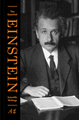
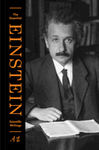
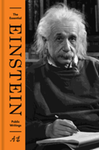
The essential Einstein : scientific writings
Einstein, Albert; Buchwald, Diana Kormos; Sauer, Tilman
Princeton University Press
, 2025
; English
; 555 Pages
The Essential Einstein: Scientific Writings presents Einstein’s most important physics papers, spanning his groundbreaking contributions to statistical mechanics, quantum theory, and relativity as well as his ambitious yet ultimately unrealized attempts at a general unified field theory. This incisive collection contains works that profoundly influenced the trajectory of modern science. Each piece serves not only as a reflection of his intellectual rigor and creativity but also as a cornerstone of contemporary scientific thought.
The Essential Einstein is a two-volume compendium offering general readers and specialists alike a comprehensive resource on the pivotal writings of Albert Einstein. Organized chronologically by leading authorities on Einstein and his work, this collection illuminates the evolution of Einstein’s scientific and humanistic ideas throughout his life. Each selection is accompanied by explanatory notes that detail the work’s background and significance.
Together with The Essential Einstein: Public Writings, this authoritative collection invites a deeper engagement with the intellectual legacy and enduring influence of Albert Einstein.
Einstein, Albert; Buchwald, Diana Kormos; Sauer, Tilman
Princeton University Press
, 2025
; English
; 555 Pages
The Essential Einstein: Scientific Writings presents Einstein’s most important physics papers, spanning his groundbreaking contributions to statistical mechanics, quantum theory, and relativity as well as his ambitious yet ultimately unrealized attempts at a general unified field theory. This incisive collection contains works that profoundly influenced the trajectory of modern science. Each piece serves not only as a reflection of his intellectual rigor and creativity but also as a cornerstone of contemporary scientific thought.
The Essential Einstein is a two-volume compendium offering general readers and specialists alike a comprehensive resource on the pivotal writings of Albert Einstein. Organized chronologically by leading authorities on Einstein and his work, this collection illuminates the evolution of Einstein’s scientific and humanistic ideas throughout his life. Each selection is accompanied by explanatory notes that detail the work’s background and significance.
Together with The Essential Einstein: Public Writings, this authoritative collection invites a deeper engagement with the intellectual legacy and enduring influence of Albert Einstein.
eBook
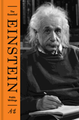
The essential Einstein : public writings
Einstein, Albert; Buchwald, Diana Kormos; Sauer, Tilman
Princeton University Press
, 2025
; English
; 399 Pages
The Essential Einstein: Public Writings presents a rich selection of Einstein’s humanistic writings drawn from a diverse array of materials he sanctioned for publication during his lifetime. Distinct from previous collections, this incisive book presents previously excerpted works in their entirety, including key articles, lectures, and speeches. These writings delve into significant topics such as philosophy, religion, and art, but also specific important and often contentious issues in education, politics, disarmament, pacifism, international cooperation, the atomic bomb, and Zionism. Among these works, readers will find the brilliant “Notes for an Autobiography” alongside selected popular science articles, which offer a profound understanding of Einstein’s ethical and political worldview.
The Essential Einstein is a two-volume compendium offering general readers and specialists alike a comprehensive resource on the pivotal writings of Albert Einstein. Organized chronologically by leading authorities on Einstein and his work, this collection illuminates the evolution of Einstein’s scientific and humanistic ideas throughout his life. Each selection is accompanied by explanatory notes that detail the work’s background and significance.
Together with The Essential Einstein: Scientific Writings, this authoritative collection invites a deeper engagement with the intellectual legacy and enduring influence of Albert Einstein.
Einstein, Albert; Buchwald, Diana Kormos; Sauer, Tilman
Princeton University Press
, 2025
; English
; 399 Pages
The Essential Einstein: Public Writings presents a rich selection of Einstein’s humanistic writings drawn from a diverse array of materials he sanctioned for publication during his lifetime. Distinct from previous collections, this incisive book presents previously excerpted works in their entirety, including key articles, lectures, and speeches. These writings delve into significant topics such as philosophy, religion, and art, but also specific important and often contentious issues in education, politics, disarmament, pacifism, international cooperation, the atomic bomb, and Zionism. Among these works, readers will find the brilliant “Notes for an Autobiography” alongside selected popular science articles, which offer a profound understanding of Einstein’s ethical and political worldview.
The Essential Einstein is a two-volume compendium offering general readers and specialists alike a comprehensive resource on the pivotal writings of Albert Einstein. Organized chronologically by leading authorities on Einstein and his work, this collection illuminates the evolution of Einstein’s scientific and humanistic ideas throughout his life. Each selection is accompanied by explanatory notes that detail the work’s background and significance.
Together with The Essential Einstein: Scientific Writings, this authoritative collection invites a deeper engagement with the intellectual legacy and enduring influence of Albert Einstein.
eBook
Grandin, Karl
World Scientific
, 2025
; English
; 271 Pages
The Nobel Prizes is the official yearbook of the Nobel Foundation. This edition provides extensive information about the 2022 laureates: their Nobel Prize lectures and their autobiographies, as well as presentation speeches and background about the Nobel festivities.Published on behalf of the Nobel Foundation.
eBook
Grandin, Karl
World Scientific
, 2025
; English
; 271 Pages
The Nobel Prizes is the official yearbook of the Nobel Foundation. This edition provides extensive information about the 2022 laureates: their Nobel Prize lectures and their autobiographies, as well as presentation speeches and background about the Nobel festivities.Published on behalf of the Nobel Foundation.
eBook
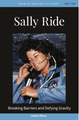
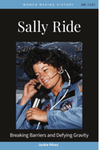
Sally Ride : breaking barriers and defying gravity
Pérez, Jackie
ABC-CLIO
, 2025
; English
; 241 Pages
Showcases the life of the first American woman in space, from her childhood, to her accomplishments as a tennis star, and her pioneering achievements as an astronaut and science educator.
Explore Sally Ride's life and contributions and understand the historical context of landmark events, movements, and women who paved the way for her success. Ride's groundbreaking achievement represented a moment of triumph in an ongoing struggle for gender equality propelled by pivotal events such as the 1960's Civil Rights Movement advocating for equal rights for all individuals, and the enactment of Title IX in 1972 ensuring gender equity in education. Written for students of American and women's history, this examination of Ride's life places each milestone in its historical context. This illuminates not only the world she lived in, but also her enduring significance to the contemporary challenges women and LGBTQ+ people continue to face in their efforts to pursue careers in STEM. A detailed chronology, curated sidebars throughout, chronological sequencing, and primary source documents make this a singular and necessary first-stop reference resource on Ride's life and work.
Pérez, Jackie
ABC-CLIO
, 2025
; English
; 241 Pages
Showcases the life of the first American woman in space, from her childhood, to her accomplishments as a tennis star, and her pioneering achievements as an astronaut and science educator.
Explore Sally Ride's life and contributions and understand the historical context of landmark events, movements, and women who paved the way for her success. Ride's groundbreaking achievement represented a moment of triumph in an ongoing struggle for gender equality propelled by pivotal events such as the 1960's Civil Rights Movement advocating for equal rights for all individuals, and the enactment of Title IX in 1972 ensuring gender equity in education. Written for students of American and women's history, this examination of Ride's life places each milestone in its historical context. This illuminates not only the world she lived in, but also her enduring significance to the contemporary challenges women and LGBTQ+ people continue to face in their efforts to pursue careers in STEM. A detailed chronology, curated sidebars throughout, chronological sequencing, and primary source documents make this a singular and necessary first-stop reference resource on Ride's life and work.
eBook
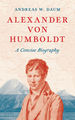
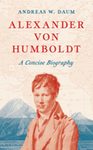
Alexander von Humboldt: a concise biography
Daum, Andreas W.; Savage, Robert
Princeton University Press
, 2024
; English
; 217 Pages
An engaging account of the life and work of the legendary polymath Alexander von Humboldt
In this lucid biography, Andreas Daum offers a succinct and novel interpretation of the life and oeuvre of Alexander von Humboldt (1769―1859). A Prussian nobleman born into the age of European Enlightenment, Humboldt was a contemporary of Napoleon, Simón Bolívar, and Charles Darwin. As a naturalist and scholar, he traveled the world, from the Americas to Central Asia, and recorded his observations in multiple volumes. Humboldt is still admired today for his interdisciplinary outreach and ecological awareness.
Moving beyond the conventional views of Humboldt as either intellectual superhero or gentleman colonizer, Daum's incisive account focuses on Humboldt in the context of the tumultuous period of history in which he lived. Humboldt embodied the contradictions that marked the age of Atlantic Revolutions. He became a critic of slavery and embraced the emerging civil society but remained close to authoritarian rulers. He dedicated his life to scientific research yet was driven by emotional impulses and pleaded for an aesthetic appreciation of nature. Daum introduces a man passionately striving to establish a "cosmic" understanding of nature while grappling with the era's explosion of knowledge.
This book provides the first concise biography of Humboldt, covering all periods of his life, exploring his personality, the vast range of his works, and his intellectual networks. Daum helps us understand Humboldt as a seminal historical figure and illuminates the role of science at the dawn of the global world.
Daum, Andreas W.; Savage, Robert
Princeton University Press
, 2024
; English
; 217 Pages
An engaging account of the life and work of the legendary polymath Alexander von Humboldt
In this lucid biography, Andreas Daum offers a succinct and novel interpretation of the life and oeuvre of Alexander von Humboldt (1769―1859). A Prussian nobleman born into the age of European Enlightenment, Humboldt was a contemporary of Napoleon, Simón Bolívar, and Charles Darwin. As a naturalist and scholar, he traveled the world, from the Americas to Central Asia, and recorded his observations in multiple volumes. Humboldt is still admired today for his interdisciplinary outreach and ecological awareness.
Moving beyond the conventional views of Humboldt as either intellectual superhero or gentleman colonizer, Daum's incisive account focuses on Humboldt in the context of the tumultuous period of history in which he lived. Humboldt embodied the contradictions that marked the age of Atlantic Revolutions. He became a critic of slavery and embraced the emerging civil society but remained close to authoritarian rulers. He dedicated his life to scientific research yet was driven by emotional impulses and pleaded for an aesthetic appreciation of nature. Daum introduces a man passionately striving to establish a "cosmic" understanding of nature while grappling with the era's explosion of knowledge.
This book provides the first concise biography of Humboldt, covering all periods of his life, exploring his personality, the vast range of his works, and his intellectual networks. Daum helps us understand Humboldt as a seminal historical figure and illuminates the role of science at the dawn of the global world.
eBook
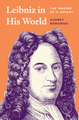
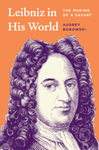
Leibniz in his world : the making of a savant
Borowski, Audrey
Princeton University Press
, 2024
; English
; 321 Pages
A sweeping intellectual biography that restores the Enlightenment polymath to the intellectual, scientific, and courtly worlds that shaped his early life and thought
Described by Voltaire as "perhaps a man of the most universal learning in Europe," Gottfried Wilhelm Leibniz (1646–1716) is often portrayed as a rationalist and philosopher who was wholly detached from the worldly concerns of his fellow men. Leibniz in His World provides a groundbreaking reassessment of Leibniz, telling the story of his trials and tribulations as an aspiring scientist and courtier navigating the learned and courtly circles of early modern Europe and the Republic of Letters.
Drawing on extensive correspondence by Leibniz and many leading figures of the age, Audrey Borowski paints a nuanced portrait of Leibniz in the 1670s, during his "Paris sojourn" as a young diplomat and in Germany at the court of Duke Johann Friedrich of Hanover. She challenges the image of Leibniz as an isolated genius, revealing instead a man of multiple identities whose thought was shaped by a deep engagement with the social and intellectual milieus of his time. Borowski shows us Leibniz as he was known to his contemporaries, enabling us to rediscover him as an enigmatic young man who was complex and all too human.
An exhilarating work of scholarship, Leibniz in His World demonstrates how this uncommon intellect, torn between his ideals and the necessity to work for absolutist states, struggled to make a name for himself during his formative years.
Borowski, Audrey
Princeton University Press
, 2024
; English
; 321 Pages
A sweeping intellectual biography that restores the Enlightenment polymath to the intellectual, scientific, and courtly worlds that shaped his early life and thought
Described by Voltaire as "perhaps a man of the most universal learning in Europe," Gottfried Wilhelm Leibniz (1646–1716) is often portrayed as a rationalist and philosopher who was wholly detached from the worldly concerns of his fellow men. Leibniz in His World provides a groundbreaking reassessment of Leibniz, telling the story of his trials and tribulations as an aspiring scientist and courtier navigating the learned and courtly circles of early modern Europe and the Republic of Letters.
Drawing on extensive correspondence by Leibniz and many leading figures of the age, Audrey Borowski paints a nuanced portrait of Leibniz in the 1670s, during his "Paris sojourn" as a young diplomat and in Germany at the court of Duke Johann Friedrich of Hanover. She challenges the image of Leibniz as an isolated genius, revealing instead a man of multiple identities whose thought was shaped by a deep engagement with the social and intellectual milieus of his time. Borowski shows us Leibniz as he was known to his contemporaries, enabling us to rediscover him as an enigmatic young man who was complex and all too human.
An exhilarating work of scholarship, Leibniz in His World demonstrates how this uncommon intellect, torn between his ideals and the necessity to work for absolutist states, struggled to make a name for himself during his formative years.
eBook
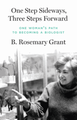
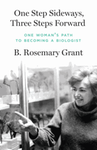
One step sideways, three steps forward : one woman’s path to becoming a biologist
Grant, B. Rosemary
Princeton University Press
, 2024
; English
; 329 Pages
The story of the unorthodox and inspiring life and career of a pioneering biologist
Scientist Rosemary Grant's journey in life has involved detours and sidesteps—not the shortest or the straightest of paths, but one that has led her to the top of evolutionary biology. In this engaging and moving book, Grant tells the story of her life and career—from her childhood love of nature in England's Lake District to an undergraduate education at the University of Edinburgh through a swerve to Canada and teaching, followed by marriage, children, a PhD at age forty-nine, and her life's work with Darwin's finches in the Galápagos islands. Grant's unorthodox career is one woman's solution to the problem of combining professional life as a field biologist with raising a family.
Grant describes her youthful interest in fossils, which inspired her to imagine another world, distant yet connected in time—and which anticipated her later work in evolutionary biology. She and her husband, Peter Grant, visited the Galápagos archipelago annually for forty years, tracking the fates of the finches on the small, uninhabited island of Daphne Major. Their work has profoundly altered our understanding of how a group of eighteen species has diversified from a single ancestral species, demonstrating that evolution by natural selection can be observed and interpreted in an entirely natural environment. Grant's story shows the rewards of following a winding path and the joy of working closely with a partner, sharing ideas, disappointments, and successes.
Grant, B. Rosemary
Princeton University Press
, 2024
; English
; 329 Pages
The story of the unorthodox and inspiring life and career of a pioneering biologist
Scientist Rosemary Grant's journey in life has involved detours and sidesteps—not the shortest or the straightest of paths, but one that has led her to the top of evolutionary biology. In this engaging and moving book, Grant tells the story of her life and career—from her childhood love of nature in England's Lake District to an undergraduate education at the University of Edinburgh through a swerve to Canada and teaching, followed by marriage, children, a PhD at age forty-nine, and her life's work with Darwin's finches in the Galápagos islands. Grant's unorthodox career is one woman's solution to the problem of combining professional life as a field biologist with raising a family.
Grant describes her youthful interest in fossils, which inspired her to imagine another world, distant yet connected in time—and which anticipated her later work in evolutionary biology. She and her husband, Peter Grant, visited the Galápagos archipelago annually for forty years, tracking the fates of the finches on the small, uninhabited island of Daphne Major. Their work has profoundly altered our understanding of how a group of eighteen species has diversified from a single ancestral species, demonstrating that evolution by natural selection can be observed and interpreted in an entirely natural environment. Grant's story shows the rewards of following a winding path and the joy of working closely with a partner, sharing ideas, disappointments, and successes.
eBook
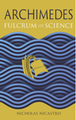
Archimedes: fulcrum of science
Nicastro, Nicholas
Reaktion Books
, 2024
; English
; 192 Pages
A bold reimagining of the Greek mathematician’s singular life as a truly modern scientist.
Galileo, Leonardo, Newton, and Tesla revered him: Archimedes of Syracuse—an engineer who single-handedly defied the world’s most powerful army and a mathematician who knew more in 212 BCE than all of Europe would know for the next seventeen centuries. In this bold reimagining, modern polymath Nicholas Nicastro shines a new light on Archimedes’ life and work. Far from the aloof, physically inept figure of historical myth, Archimedes is revealed to be an ambitious, combative, and fiercely competitive man. A genius who challenged an empire, Archimedes emerges in this book as the world’s first fully modern scientist—millennia before his intellectual descendants transformed our world.
Nicastro, Nicholas
Reaktion Books
, 2024
; English
; 192 Pages
A bold reimagining of the Greek mathematician’s singular life as a truly modern scientist.
Galileo, Leonardo, Newton, and Tesla revered him: Archimedes of Syracuse—an engineer who single-handedly defied the world’s most powerful army and a mathematician who knew more in 212 BCE than all of Europe would know for the next seventeen centuries. In this bold reimagining, modern polymath Nicholas Nicastro shines a new light on Archimedes’ life and work. Far from the aloof, physically inept figure of historical myth, Archimedes is revealed to be an ambitious, combative, and fiercely competitive man. A genius who challenged an empire, Archimedes emerges in this book as the world’s first fully modern scientist—millennia before his intellectual descendants transformed our world.
