
Navigation menu
Search
Databases
All Databases
eBook
The Benjamin Sheares story : from pioneering gynaecologist to Singapore President
Vijayan, K.C.
ISEAS – Yusof Ishak Institute
, 2025
; English
; 247 Pages
“My mum was told to abort the foetus after doctors told her the baby was stillborn. She refused to accept the opinions of three doctors consulted... (and) made the trip to Singapore where she consulted a doctor named Benjamin Sheares. He examined her, then reassured her with a smile: ‘Madam, your baby is alive, and fine.’ I would like to remember my mum and Dr Sheares, I would not be here today without either of them.” Michael Chiang, prominent Singaporean playwright, born 1955 “For once Mahathir agrees with him! We are mighty proud of Harry Lee’s choice of a president.” Tun Dr Siti Hasmah Mohamad Ali, 29 December 1970, on learning Lee Kuan Yew would nominate Benjamin Sheares as Singapore’s President. Step into an extraordinary life. The Benjamin Sheares Story: From Pioneering Gynaecologist to Singapore President is a rich tapestry of voices and reflections, anecdotes and historical snapshots weaving together the narrative of a man whose impact spanned both medicine and nation-building. From the crowded maternity wards during the baby boom to the highest office in the land at the Istana, Sheares carried with him the same quiet dignity and distinction. As Singapore’s second President (1971–81), he personified the success of a Singapore Story during a time of transformation for a young nation. Sheares was a Tamil-speaking Eurasian of humble beginnings and embodied the very spirit of Singapore: resilient, inclusive and forward-looking. More than a modest biography, this book is our SG60 tribute to Sheares, offering readers a deeply human portrait of a remarkable man.
Vijayan, K.C.
ISEAS – Yusof Ishak Institute
, 2025
; English
; 247 Pages
“My mum was told to abort the foetus after doctors told her the baby was stillborn. She refused to accept the opinions of three doctors consulted... (and) made the trip to Singapore where she consulted a doctor named Benjamin Sheares. He examined her, then reassured her with a smile: ‘Madam, your baby is alive, and fine.’ I would like to remember my mum and Dr Sheares, I would not be here today without either of them.” Michael Chiang, prominent Singaporean playwright, born 1955 “For once Mahathir agrees with him! We are mighty proud of Harry Lee’s choice of a president.” Tun Dr Siti Hasmah Mohamad Ali, 29 December 1970, on learning Lee Kuan Yew would nominate Benjamin Sheares as Singapore’s President. Step into an extraordinary life. The Benjamin Sheares Story: From Pioneering Gynaecologist to Singapore President is a rich tapestry of voices and reflections, anecdotes and historical snapshots weaving together the narrative of a man whose impact spanned both medicine and nation-building. From the crowded maternity wards during the baby boom to the highest office in the land at the Istana, Sheares carried with him the same quiet dignity and distinction. As Singapore’s second President (1971–81), he personified the success of a Singapore Story during a time of transformation for a young nation. Sheares was a Tamil-speaking Eurasian of humble beginnings and embodied the very spirit of Singapore: resilient, inclusive and forward-looking. More than a modest biography, this book is our SG60 tribute to Sheares, offering readers a deeply human portrait of a remarkable man.
eBook
Wee Kim Wee : President, diplomat, journalist and a true Singaporean
Suk-Wai, Cheong
ISEAS – Yusof Ishak Institute
, 2025
; English
; 261 Pages
Dr Wee Kim Wee was a pioneering Singaporean journalist and diplomat with a most improbable rise and rise in life. Among his many other accomplishments, he helped end a regional war; kept one of the world’s oldest newspapers alive till today; and rescued the presidency of the Republic of Singapore from a spell in the gutter. Just as water softens stone, he overcame the grimmest odds with his winsome ways and unimpeachable character. This meticulously researched book brims with fresh insights about the man most Singaporeans claimed as “my President”. They include telling facets from the author’s interviews with more than 30 people who knew Dr Wee best in every decade of his storied life. Dr Wee started out being too poor to complete secondary school to holding Singapore’s highest office. His lightly worn shrewdness and genuine regard for all living things plucked him out of obscurity and thrust him into moments that shook Singapore, eventually making him a beloved household name. Dr Wee was the embodiment of Singapore exceptionalism and this biography is the last word on a sort of man that Singapore will rarely, if ever, encounter again.
Suk-Wai, Cheong
ISEAS – Yusof Ishak Institute
, 2025
; English
; 261 Pages
Dr Wee Kim Wee was a pioneering Singaporean journalist and diplomat with a most improbable rise and rise in life. Among his many other accomplishments, he helped end a regional war; kept one of the world’s oldest newspapers alive till today; and rescued the presidency of the Republic of Singapore from a spell in the gutter. Just as water softens stone, he overcame the grimmest odds with his winsome ways and unimpeachable character. This meticulously researched book brims with fresh insights about the man most Singaporeans claimed as “my President”. They include telling facets from the author’s interviews with more than 30 people who knew Dr Wee best in every decade of his storied life. Dr Wee started out being too poor to complete secondary school to holding Singapore’s highest office. His lightly worn shrewdness and genuine regard for all living things plucked him out of obscurity and thrust him into moments that shook Singapore, eventually making him a beloved household name. Dr Wee was the embodiment of Singapore exceptionalism and this biography is the last word on a sort of man that Singapore will rarely, if ever, encounter again.
eBook
The papers of Thomas Jefferson, retirement series, volume 21: 1 April to 31 October 1824
Jefferson, Thomas; Looney, J. Jefferson
Princeton University Press
, 2025
; English
; 814 Pages
A definitive new volume of the retirement papers of Thomas Jefferson
The 533 documents in this volume include revealing material on Jefferson's health. He is limited to a liquid diet for weeks due to an abscess under his jaw. Although daily horseback rides take him "3. or 4. to 8. or 10. miles without fatigue," he cannot walk "further than my garden." He has lost only one tooth due to age and is glad not to need "teeth of porcelain."
Due to debility, Jefferson's only serious occupation is the effort to open the University of Virginia. Francis W. Gilmer travels to Great Britain to recruit professors and buy "a library and apparatus." Jefferson is determined to hire only faculty of "the first grade of science." The Rotunda is still unfinished but fit for use "until funds may occur to compleat it."
Jefferson predicts that a plan to send freed African Americans to Africa will fail. He observes that "barbarism" is in decline and "will in time I trust disappear from the earth." To another correspondent he defends "the principles which have guided my public life," but adds that, when altered circumstances make changes of principle beneficial, "then let such changes take place, and the means yield to the end."
Jefferson, Thomas; Looney, J. Jefferson
Princeton University Press
, 2025
; English
; 814 Pages
A definitive new volume of the retirement papers of Thomas Jefferson
The 533 documents in this volume include revealing material on Jefferson's health. He is limited to a liquid diet for weeks due to an abscess under his jaw. Although daily horseback rides take him "3. or 4. to 8. or 10. miles without fatigue," he cannot walk "further than my garden." He has lost only one tooth due to age and is glad not to need "teeth of porcelain."
Due to debility, Jefferson's only serious occupation is the effort to open the University of Virginia. Francis W. Gilmer travels to Great Britain to recruit professors and buy "a library and apparatus." Jefferson is determined to hire only faculty of "the first grade of science." The Rotunda is still unfinished but fit for use "until funds may occur to compleat it."
Jefferson predicts that a plan to send freed African Americans to Africa will fail. He observes that "barbarism" is in decline and "will in time I trust disappear from the earth." To another correspondent he defends "the principles which have guided my public life," but adds that, when altered circumstances make changes of principle beneficial, "then let such changes take place, and the means yield to the end."
eBook
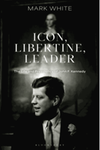
Icon, libertine, leader : the life and presidency of John. F. Kennedy
White, Mark
Bloomsbury Academic
, 2024
; English
; 289 Pages
This new biography of JFK offers a comprehensive analysis of the man, the leader, and the cultural icon. Mark White, the leading authority in Britain on JFK, draws on more than 30 years of research to provide a nuanced portrait of one of the most iconic figures in American and world history.
John F. Kennedy was a president like no other, with a movie star's public image and an extraordinary private life. He was no less remarkable politically, with his achievements including the resolution of the 1961 Berlin crisis and the Cuban missile crisis, the Nuclear Test Ban Treaty, and a strong commitment to civil rights.
This book provides what no previous biography has: an in-depth analysis of not only JFK's political life, particularly his record as a policymaker in the White House, but also his private life, his role as a cultural icon, and what might have happened to a Kennedy presidency had he not been assassinated.
This sophisticated, multi-dimensional biography sheds new light on JFK's life and legacy, and makes a compelling case for why he was the finest president of his generation.
White, Mark
Bloomsbury Academic
, 2024
; English
; 289 Pages
This new biography of JFK offers a comprehensive analysis of the man, the leader, and the cultural icon. Mark White, the leading authority in Britain on JFK, draws on more than 30 years of research to provide a nuanced portrait of one of the most iconic figures in American and world history.
John F. Kennedy was a president like no other, with a movie star's public image and an extraordinary private life. He was no less remarkable politically, with his achievements including the resolution of the 1961 Berlin crisis and the Cuban missile crisis, the Nuclear Test Ban Treaty, and a strong commitment to civil rights.
This book provides what no previous biography has: an in-depth analysis of not only JFK's political life, particularly his record as a policymaker in the White House, but also his private life, his role as a cultural icon, and what might have happened to a Kennedy presidency had he not been assassinated.
This sophisticated, multi-dimensional biography sheds new light on JFK's life and legacy, and makes a compelling case for why he was the finest president of his generation.
eBook
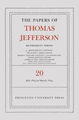
The papers of Thomas Jefferson. Retirement series, volume 20: 1 July 1823 to 31 March 1824
Jefferson, Thomas; Looney, J. Jefferson
Princeton University Press
, 2024
; English
; 788 Pages
A definitive new volume of the retirement papers of Thomas Jefferson
During the period covered by the 575 documents in this volume, Jefferson advises President James Monroe on what later becomes known as the “Monroe Doctrine.” He also approves of the Greek independence movement in correspondence with the scholar and political leader Adamantios Coray.
Jefferson says that the “most dangerous blot” on the U.S. Constitution is the provision under which a vote by the states in the House of Representatives decides elections not settled by the Electoral College. With his allies in Virginia’s General Assembly, he succeeds in converting the University of Virginia’s loans from the state Literary Fund into an outright grant and obtains an additional $50,000 for books and scientific instruments. He seeks advice on regulating and equipping the institution, helps to obtain its architectural capitals, and designs its gymnasia.
Jefferson describes coffee as “the favorite beverage of the civilised world” and advises a namesake child to “Adore God. reverence and cherish your parents. love your neighbor as yourself
and your country more than life. be just. be true. murmur not at the ways of Providence, and the life into which you have entered will be the passage to one of eternal and ineffable bliss.”
Jefferson, Thomas; Looney, J. Jefferson
Princeton University Press
, 2024
; English
; 788 Pages
A definitive new volume of the retirement papers of Thomas Jefferson
During the period covered by the 575 documents in this volume, Jefferson advises President James Monroe on what later becomes known as the “Monroe Doctrine.” He also approves of the Greek independence movement in correspondence with the scholar and political leader Adamantios Coray.
Jefferson says that the “most dangerous blot” on the U.S. Constitution is the provision under which a vote by the states in the House of Representatives decides elections not settled by the Electoral College. With his allies in Virginia’s General Assembly, he succeeds in converting the University of Virginia’s loans from the state Literary Fund into an outright grant and obtains an additional $50,000 for books and scientific instruments. He seeks advice on regulating and equipping the institution, helps to obtain its architectural capitals, and designs its gymnasia.
Jefferson describes coffee as “the favorite beverage of the civilised world” and advises a namesake child to “Adore God. reverence and cherish your parents. love your neighbor as yourself
and your country more than life. be just. be true. murmur not at the ways of Providence, and the life into which you have entered will be the passage to one of eternal and ineffable bliss.”
eBook
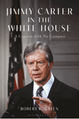
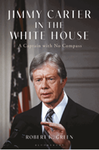
Jimmy Carter in the white house : a captain with no compass
Green, Robert K.
Bloomsbury Academic
, 2024
; English
; 273 Pages
This fresh examination of Carter's presidency (1977-1981), the first in over twenty years, sheds new light on his time in office, reflecting on his domestic record, his key policies on the economy, civil rights, and energy, and challenging misconceptions about his character and leadership.
The success of Jimmy Carter's post-presidential career and the scandals of his successors, have begun to generate a nostalgic view of Carter's time in the White House. This book looks at his presidency during a time of ideological conflict in the US political landscape, between liberalism and rising conservatism, embodied respectively by Kennedy and Reagan, Carter's efforts to hold the centre or non-ideological, moral position, and the impact of his character, particularly his faith, on how he exercised power in Washington. In doing so, it reveals new interpretations of his leadership style, and its impact on his time in office.
Green, Robert K.
Bloomsbury Academic
, 2024
; English
; 273 Pages
This fresh examination of Carter's presidency (1977-1981), the first in over twenty years, sheds new light on his time in office, reflecting on his domestic record, his key policies on the economy, civil rights, and energy, and challenging misconceptions about his character and leadership.
The success of Jimmy Carter's post-presidential career and the scandals of his successors, have begun to generate a nostalgic view of Carter's time in the White House. This book looks at his presidency during a time of ideological conflict in the US political landscape, between liberalism and rising conservatism, embodied respectively by Kennedy and Reagan, Carter's efforts to hold the centre or non-ideological, moral position, and the impact of his character, particularly his faith, on how he exercised power in Washington. In doing so, it reveals new interpretations of his leadership style, and its impact on his time in office.
eBook
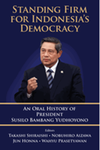
Standing firm for Indonesia’s democracy : an oral history of president Susilo Bambang Yudhoyono
Yudhoyono, Susilo Bambang; Shiraishi, Takashi; Aizawa, Nobuhiro
World Scientific
, 2024
; English
; 351 Pages
"This book presents the first oral history of Indonesia's President Susilo Bambang Yudhoyono (SBY) (2004-2014). As the first directly elected president, he played a very important role in Indonesia's democratization. Indonesia's economy also got back on the path of growth under his administration. In a series of interviews, SBY tells how he handled military affairs in 1990s, what he did as minister and coordinating minister under President Abdurrahman Wahid and President Megawati Sukarnoputri, challenges he confronted and how he managed those challenges in his administration. Readers will learn his thought about statecraft, his view of the future, his style of leadership, and the critical decisions he made and the thinking that informed his decisions. Interviewed by a team of Indonesia specialists for more than 30 hours, the oral recording helps the reader understand President Yudhoyono's thinking in his own voice"
eBook
Yudhoyono, Susilo Bambang; Shiraishi, Takashi; Aizawa, Nobuhiro
World Scientific
, 2024
; English
; 351 Pages
"This book presents the first oral history of Indonesia's President Susilo Bambang Yudhoyono (SBY) (2004-2014). As the first directly elected president, he played a very important role in Indonesia's democratization. Indonesia's economy also got back on the path of growth under his administration. In a series of interviews, SBY tells how he handled military affairs in 1990s, what he did as minister and coordinating minister under President Abdurrahman Wahid and President Megawati Sukarnoputri, challenges he confronted and how he managed those challenges in his administration. Readers will learn his thought about statecraft, his view of the future, his style of leadership, and the critical decisions he made and the thinking that informed his decisions. Interviewed by a team of Indonesia specialists for more than 30 hours, the oral recording helps the reader understand President Yudhoyono's thinking in his own voice"
eBook
Abraham Lincoln’s wilderness years : collected works of J. Edward Murr
Murr, J. Edward; Claybourn, Joshua A.
Indiana University Press
, 2023
; English
; 298 Pages
Abraham Lincoln spent a quarter of his life—from 1816 to 1830, ages 7 to 21—learning and growing in southwestern Indiana. Despite the importance of these formative years, Lincoln rarely discussed this period, and with his sudden, untimely death in 1865, mysterious gaps appear in recorded history.
In Abraham Lincoln's Wilderness Years, Joshua Claybourn collects and annotates the most significant scholarship from J. Edward Murr, one of the only writers to cover this lost period of Lincoln's life. A Hoosier minister who grew up with the 16th president's cousins, Murr interviewed locals who knew Lincoln. Part I features selected portions of Murr's book-length manuscript on Lincoln's youth, published here for the first time. Part II offers a series by Murr on Lincoln's life in Indiana, originally printed in the Indiana Magazine of History. Part III reveals letters between Murr and US Senator Albert J. Beveridge, a prominent historian, about Beveridge's early manuscript of the biography Abraham Lincoln, 1809–1858.
Of all Lincoln's biographers, none knew his boyhood associates and Indiana environment as well as Murr, whose complete Lincoln research and scholarship have never been published—until now. Abraham Lincoln's Wilderness Years preserves and celebrates this important source material, unique for studying Lincoln's boyhood years in Indiana.
Murr, J. Edward; Claybourn, Joshua A.
Indiana University Press
, 2023
; English
; 298 Pages
Abraham Lincoln spent a quarter of his life—from 1816 to 1830, ages 7 to 21—learning and growing in southwestern Indiana. Despite the importance of these formative years, Lincoln rarely discussed this period, and with his sudden, untimely death in 1865, mysterious gaps appear in recorded history.
In Abraham Lincoln's Wilderness Years, Joshua Claybourn collects and annotates the most significant scholarship from J. Edward Murr, one of the only writers to cover this lost period of Lincoln's life. A Hoosier minister who grew up with the 16th president's cousins, Murr interviewed locals who knew Lincoln. Part I features selected portions of Murr's book-length manuscript on Lincoln's youth, published here for the first time. Part II offers a series by Murr on Lincoln's life in Indiana, originally printed in the Indiana Magazine of History. Part III reveals letters between Murr and US Senator Albert J. Beveridge, a prominent historian, about Beveridge's early manuscript of the biography Abraham Lincoln, 1809–1858.
Of all Lincoln's biographers, none knew his boyhood associates and Indiana environment as well as Murr, whose complete Lincoln research and scholarship have never been published—until now. Abraham Lincoln's Wilderness Years preserves and celebrates this important source material, unique for studying Lincoln's boyhood years in Indiana.
eBook
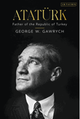
Atatürk : father of the Republic of Turkey
Gawrych, George W.
Bloomsbury Publishing
, 2023
; English
; 295 Pages
Mustafa Kemal Atatürk was one of the most significant political leaders of the twentieth century. He rose from obscure origins to become the founder of the new Republic of Turkey out of the ashes of the Ottoman Empire and go on to radically transform Turkish society. How should one understand Atatürk and his legacy?
In this book, George Gawrych studies Atatürk's career in detail, showing how Atatürk married the traits of the classic military man-of-action with those of the intellectual, theorist and pragmatist as a statesman. Gawrych places Atatürk in the context of his times to reveal how he harnessed wider forces to set Turkey on a path of secular nationalism and comprehensive modernization. His legacy can be seen everywhere in Turkey today, from the role and rights of women in society to the struggle for developing a democracy in the Republic. Gawrych addresses the costs of Atatürk's policies, including the suppression of minorities and the imposition of a cult of personality and authoritarian rule in the name of 'Turkification'. The book presents a nuanced analysis of a complex figure who consciously created a living legacy that still casts a shadow over Turkey's political and intellectual discourse.
Gawrych, George W.
Bloomsbury Publishing
, 2023
; English
; 295 Pages
Mustafa Kemal Atatürk was one of the most significant political leaders of the twentieth century. He rose from obscure origins to become the founder of the new Republic of Turkey out of the ashes of the Ottoman Empire and go on to radically transform Turkish society. How should one understand Atatürk and his legacy?
In this book, George Gawrych studies Atatürk's career in detail, showing how Atatürk married the traits of the classic military man-of-action with those of the intellectual, theorist and pragmatist as a statesman. Gawrych places Atatürk in the context of his times to reveal how he harnessed wider forces to set Turkey on a path of secular nationalism and comprehensive modernization. His legacy can be seen everywhere in Turkey today, from the role and rights of women in society to the struggle for developing a democracy in the Republic. Gawrych addresses the costs of Atatürk's policies, including the suppression of minorities and the imposition of a cult of personality and authoritarian rule in the name of 'Turkification'. The book presents a nuanced analysis of a complex figure who consciously created a living legacy that still casts a shadow over Turkey's political and intellectual discourse.
eBook
Thomas Jefferson as political leader
Malone, Dumas
University of California Press
, 2023
; English
; 87 Pages
This title is part of UC Press's Voices Revived program, which commemorates University of California Press's mission to seek out and cultivate the brightest minds and give them voice, reach, and impact. Drawing on a backlist dating to 1893, Voices Revived makes high-quality, peer-reviewed scholarship accessible once again using print-on-demand technology. This title was originally published in 1963.
Malone, Dumas
University of California Press
, 2023
; English
; 87 Pages
This title is part of UC Press's Voices Revived program, which commemorates University of California Press's mission to seek out and cultivate the brightest minds and give them voice, reach, and impact. Drawing on a backlist dating to 1893, Voices Revived makes high-quality, peer-reviewed scholarship accessible once again using print-on-demand technology. This title was originally published in 1963.
