

Navigation menu
Search
Databases
All Databases
eBook
Richardson, Glenn
Reaktion Books
, 2025
; English
; 225 Pages
A vivid portrait of the achievements, challenges and legacy of the 'knight-king', Francis I
Richardson, Glenn
Reaktion Books
, 2025
; English
; 225 Pages
A vivid portrait of the achievements, challenges and legacy of the 'knight-king', Francis I
eBook
Kirpa Ram Vij: the volunteer who launched an army
Menon, Ramachandran
ISEAS – Yusof Ishak Institute
, 2025
; English
; 300 Pages
For the first ten years of the history of the Singapore Armed Forces (SAF), one soldier dominated its build-up. Mobilized by Defence Minister Dr Goh Keng Swee after Singapore’s expulsion from Malaysia on 9 August 1965, Kirpa Ram Vij, then a captain in the Singapore Volunteer Artillery, established the Singapore Armed Forces Training Institute (SAFTI) with Israeli Defence Force advisors. Together with them, he also formulated many SAF operational doctrines that still underlie SAF land forces’ training today. He launched advanced leadership training establishments including the School of Advanced Training for Officers (SATO) and the Goh Keng Swee Command and Staff College (CSC). He attained the then top uniformed appointment of Director, General Staff, as a Brigadier General. Overtaken by numerous cohorts of younger administrative service officers for senior civil service posts while in the SAF, he quit government service to join Neptune Orient Lines (NOL) where he mastered computer freight services as General Manager, Administration, among other top management jobs. On retirement from NOL, he was initially appointed Consultant and later Chief Executive Officer of Gateway Distriparks Limited (GDL, a Singapore consortium) and installed India’s first foreign-owned computer freight service terminal in Navi Mumbai, later to be listed in both India and New York with great success. Kirpa Ram passed away on 29 October 2022. This account traces his life story and his contributions to the SAF and Singapore.
Menon, Ramachandran
ISEAS – Yusof Ishak Institute
, 2025
; English
; 300 Pages
For the first ten years of the history of the Singapore Armed Forces (SAF), one soldier dominated its build-up. Mobilized by Defence Minister Dr Goh Keng Swee after Singapore’s expulsion from Malaysia on 9 August 1965, Kirpa Ram Vij, then a captain in the Singapore Volunteer Artillery, established the Singapore Armed Forces Training Institute (SAFTI) with Israeli Defence Force advisors. Together with them, he also formulated many SAF operational doctrines that still underlie SAF land forces’ training today. He launched advanced leadership training establishments including the School of Advanced Training for Officers (SATO) and the Goh Keng Swee Command and Staff College (CSC). He attained the then top uniformed appointment of Director, General Staff, as a Brigadier General. Overtaken by numerous cohorts of younger administrative service officers for senior civil service posts while in the SAF, he quit government service to join Neptune Orient Lines (NOL) where he mastered computer freight services as General Manager, Administration, among other top management jobs. On retirement from NOL, he was initially appointed Consultant and later Chief Executive Officer of Gateway Distriparks Limited (GDL, a Singapore consortium) and installed India’s first foreign-owned computer freight service terminal in Navi Mumbai, later to be listed in both India and New York with great success. Kirpa Ram passed away on 29 October 2022. This account traces his life story and his contributions to the SAF and Singapore.
eBook
Liberal worlds : James Bryce and the democratic intellect
Jones, H. S.
Princeton University Press
, 2025
; English
; 465 Pages
James Bryce (1838–1922) was a leading figure in Britain’s Liberal Party and a distinguished historian, a versatile scholar-politician who moved seamlessly between academia and politics. He was, among many other things, a cabinet minister and a popular ambassador, an expert on American politics and on Roman law, an advocate for the Armenian people and an architect of the League of Nations, a world traveller and a climber of Mount Ararat. In Liberal Worlds, Stuart Jones offers an intellectual biography of Bryce, tracing a Scots-Ulster Presbyterian’s assimilation to the increasingly multiconfessional Victorian state, and a late Victorian Liberal’s encounter with the wider world. Jones shows how a polymathic intelligence grappled with a dizzyingly wide range of concerns and issues, including the challenges of democracy and race relations, the rise of modern universities and the reconstruction of the international order after World War I.
In mapping the evolution of Bryce’s thought, Liberal Worlds illuminates the international intellectual networks and the many places across the globe that shaped his thinking. Jones considers, for example, why a man who had a lifelong revulsion against slavery seemed to accept racial segregation in the American South
how a vigorous activist for girls’ and women’s education became a tenacious parliamentary critic of women’s suffrage
and why, over the objections of his Ulster Presbyterian family, he backed Irish home rule. Above all, Jones rescues Bryce—immensely influential in his time, now little remembered—from being consigned to a historical pigeonhole, restoring him to the centre of late nineteenth- and early twentieth-century debates over the nature of democratic politics.
Jones, H. S.
Princeton University Press
, 2025
; English
; 465 Pages
James Bryce (1838–1922) was a leading figure in Britain’s Liberal Party and a distinguished historian, a versatile scholar-politician who moved seamlessly between academia and politics. He was, among many other things, a cabinet minister and a popular ambassador, an expert on American politics and on Roman law, an advocate for the Armenian people and an architect of the League of Nations, a world traveller and a climber of Mount Ararat. In Liberal Worlds, Stuart Jones offers an intellectual biography of Bryce, tracing a Scots-Ulster Presbyterian’s assimilation to the increasingly multiconfessional Victorian state, and a late Victorian Liberal’s encounter with the wider world. Jones shows how a polymathic intelligence grappled with a dizzyingly wide range of concerns and issues, including the challenges of democracy and race relations, the rise of modern universities and the reconstruction of the international order after World War I.
In mapping the evolution of Bryce’s thought, Liberal Worlds illuminates the international intellectual networks and the many places across the globe that shaped his thinking. Jones considers, for example, why a man who had a lifelong revulsion against slavery seemed to accept racial segregation in the American South
how a vigorous activist for girls’ and women’s education became a tenacious parliamentary critic of women’s suffrage
and why, over the objections of his Ulster Presbyterian family, he backed Irish home rule. Above all, Jones rescues Bryce—immensely influential in his time, now little remembered—from being consigned to a historical pigeonhole, restoring him to the centre of late nineteenth- and early twentieth-century debates over the nature of democratic politics.
eBook
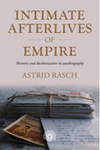
Intimate afterlives of empire : memory and decolonisation in autobiography
Rasch, Astrid
Manchester University Press
, 2025
; English
; 251 Pages
Intimate afterlives of empire is the first comprehensive study of an important genre of cultural memory, the post-imperial autobiography. Through close readings of personal narratives from four corners of the globe, it examines the dialogue between individual and collective memory in the wake of empire
Rasch, Astrid
Manchester University Press
, 2025
; English
; 251 Pages
Intimate afterlives of empire is the first comprehensive study of an important genre of cultural memory, the post-imperial autobiography. Through close readings of personal narratives from four corners of the globe, it examines the dialogue between individual and collective memory in the wake of empire
eBook
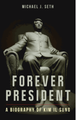
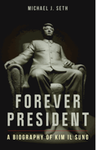
Forever president : a biography of Kim Il Sung
Seth, Michael J.
Reaktion Books
, 2025
; English
; 289 Pages
Kim Il Sung ruled his country, North Korea, for longer and shaped it more profoundly than almost any other modern leader. He created a unique and seemingly bizarre and menacing political and social system, establishing a dynasty that has maintained it for two more generations. Yet he remains a curiously inaccessible, little understood figure, partly due to the closed and secretive nature of the state he founded.
Michael J. Seth puts together what we know of Kim’s life from all available sources and places it in the context of Korean and modern world history to make both Kim and North Korea comprehensible. He looks at the unusual circumstances that contributed to Kim's rise to power and at the early experiences that help to explain the directions he took his country. Seth examines his impressive early achievements and his later failures, which left North Korea the isolated, impoverished half of a divided nation.
Kim was a charismatic and resourceful leader determined to reunify and modernize his country. But he pursued these aims with ruthlessness, egotism and extreme narrow-mindedness. Ultimately, his political inflexibility led to disaster.
Seth, Michael J.
Reaktion Books
, 2025
; English
; 289 Pages
Kim Il Sung ruled his country, North Korea, for longer and shaped it more profoundly than almost any other modern leader. He created a unique and seemingly bizarre and menacing political and social system, establishing a dynasty that has maintained it for two more generations. Yet he remains a curiously inaccessible, little understood figure, partly due to the closed and secretive nature of the state he founded.
Michael J. Seth puts together what we know of Kim’s life from all available sources and places it in the context of Korean and modern world history to make both Kim and North Korea comprehensible. He looks at the unusual circumstances that contributed to Kim's rise to power and at the early experiences that help to explain the directions he took his country. Seth examines his impressive early achievements and his later failures, which left North Korea the isolated, impoverished half of a divided nation.
Kim was a charismatic and resourceful leader determined to reunify and modernize his country. But he pursued these aims with ruthlessness, egotism and extreme narrow-mindedness. Ultimately, his political inflexibility led to disaster.
eBook
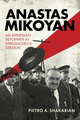
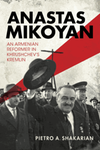
Anastas mikoyan: an armenian reformer in Khrushchev's Kremlin
Shakarian, Pietro A.
Indiana University Press
, 2025
; English
; 376 Pages
Veteran Soviet statesman and longtime Politburo member Anastas Ivanovich Mikoyan is perhaps best remembered in both the West and the post-Soviet space as a master political survivor who weathered every Soviet leader from Lenin to Brezhnev.
Less well known is the pivotal role that Mikoyan played in dismantling and rejecting the Stalinist legacy and guiding Khrushchev's nationality policy toward greater decentralization and cultural expression for nationalities. Based on new discoveries from the Russian and Armenian archives, Anastas Mikoyan is the first major biographical study in English of a key figure in Soviet politics.
The book focuses on the Armenian statesman's role as a reformer during the Thaw of 1953–1964, when Stalin's death and Khrushchev's ascension opened the door to greater pluralism and democratization in the Soviet Union.
Mikoyan had been a loyal Stalinist, but his background as a native Armenian guided his Thaw-era reform initiatives on nationality policy and de-Stalinization.
The statesman advocated a dynamic approach to governance, rejecting national nihilism and embracing a multitude of ethnicities under the aegis of "socialist democracy," using Armenia as his exemplar.
While the Soviet government adopted most of Mikoyan's recommendations, Khrushchev's ouster in 1964 ended the prospects for political change and led to Mikoyan's own resignation the following year.
Nevertheless, Mikoyan remained a prominent public figure until his death in 1978. Following a storied statesman through his personal and professional connections within and beyond the Soviet state, Anastas Mikoyan offers important insights into nation-building, the politics of difference, and the lingering possibilities of political reform in the USSR.
Shakarian, Pietro A.
Indiana University Press
, 2025
; English
; 376 Pages
Veteran Soviet statesman and longtime Politburo member Anastas Ivanovich Mikoyan is perhaps best remembered in both the West and the post-Soviet space as a master political survivor who weathered every Soviet leader from Lenin to Brezhnev.
Less well known is the pivotal role that Mikoyan played in dismantling and rejecting the Stalinist legacy and guiding Khrushchev's nationality policy toward greater decentralization and cultural expression for nationalities. Based on new discoveries from the Russian and Armenian archives, Anastas Mikoyan is the first major biographical study in English of a key figure in Soviet politics.
The book focuses on the Armenian statesman's role as a reformer during the Thaw of 1953–1964, when Stalin's death and Khrushchev's ascension opened the door to greater pluralism and democratization in the Soviet Union.
Mikoyan had been a loyal Stalinist, but his background as a native Armenian guided his Thaw-era reform initiatives on nationality policy and de-Stalinization.
The statesman advocated a dynamic approach to governance, rejecting national nihilism and embracing a multitude of ethnicities under the aegis of "socialist democracy," using Armenia as his exemplar.
While the Soviet government adopted most of Mikoyan's recommendations, Khrushchev's ouster in 1964 ended the prospects for political change and led to Mikoyan's own resignation the following year.
Nevertheless, Mikoyan remained a prominent public figure until his death in 1978. Following a storied statesman through his personal and professional connections within and beyond the Soviet state, Anastas Mikoyan offers important insights into nation-building, the politics of difference, and the lingering possibilities of political reform in the USSR.
eBook
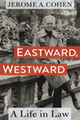
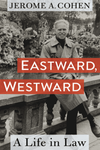
Eastward, Westward : a life in law
Cohen, Jerome A.
Columbia University Press
, 2025
; English
; 385 Pages
Few Americans have done more than Jerome A. Cohen to advance the rule of law in East Asia. The founder of the study of Chinese law in the United States and a tireless advocate for human rights, Cohen has been a scholar, teacher, lawyer, and activist for more than sixty years. Moving among the United States, China, and Taiwan, he has encouraged legal reforms, promoted economic cooperation, mentored law students—including a future president of Taiwan—and brokered international crises.
In this compelling, conversational memoir, Cohen recounts a dramatic life of striving for a better world from Washington, DC, to Beijing, offering vital first-hand insights from the study and practice of Sino-American relations. In the early 1960s, when Americans were not permitted to enter China, he met with émigrés in Hong Kong and interviewed them on Chinese criminal procedure. After economic reform under Deng Xiaoping, Cohen’s knowledge of Chinese law took on a new importance as foreign companies began to pursue business opportunities. Helping China develop and reconstruct its legal system, he made an influential case for the roles of Western law and lawyers. Cohen helped break political barriers in both China and Taiwan, and he was instrumental in securing the release of political prisoners in several countries. Sharing these experiences and many others, this book tells the full story of an unparalleled career bridging East and West.
Cohen, Jerome A.
Columbia University Press
, 2025
; English
; 385 Pages
Few Americans have done more than Jerome A. Cohen to advance the rule of law in East Asia. The founder of the study of Chinese law in the United States and a tireless advocate for human rights, Cohen has been a scholar, teacher, lawyer, and activist for more than sixty years. Moving among the United States, China, and Taiwan, he has encouraged legal reforms, promoted economic cooperation, mentored law students—including a future president of Taiwan—and brokered international crises.
In this compelling, conversational memoir, Cohen recounts a dramatic life of striving for a better world from Washington, DC, to Beijing, offering vital first-hand insights from the study and practice of Sino-American relations. In the early 1960s, when Americans were not permitted to enter China, he met with émigrés in Hong Kong and interviewed them on Chinese criminal procedure. After economic reform under Deng Xiaoping, Cohen’s knowledge of Chinese law took on a new importance as foreign companies began to pursue business opportunities. Helping China develop and reconstruct its legal system, he made an influential case for the roles of Western law and lawyers. Cohen helped break political barriers in both China and Taiwan, and he was instrumental in securing the release of political prisoners in several countries. Sharing these experiences and many others, this book tells the full story of an unparalleled career bridging East and West.
eBook
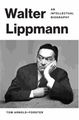
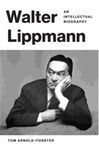
Walter Lippmann: an intellectual biography
Arnold-Forster, Tom
Princeton University Press
, 2025
; English
; 366 Pages
The life and ideas of one of the twentieth century's leading political thinkersWalter Lippmann (1889-1974) was among the most influential and wide-ranging political writers in modern America. As both a journalist and political theorist, he shaped ideas about liberalism and democracy, the nature of public opinion, US power and empire, and the roles of journalists, experts, and citizens. Tom Arnold-Forster provides a bold historical reassessment of Lippmann's intellectual life, offering fresh perspectives on a career at the intersection of daily news and democratic theory.This incisive book shows how Lippmann helped define the public debates of American liberalism from the Progressive Era to the Cold War. By exploring his ideas in their historical context, Arnold-Forster challenges the claim that Lippmann was primarily a theorist of expertise and technocracy. Instead, Lippmann emerges as a strikingly political thinker, public-facing and multifarious, who focused on what politics meant and how it worked in modern democracies. Covering subjects from press freedom to urban reform to economic and foreign policy, while tracing the evolution from his early liberal socialism to later conservative liberalism, this book explores Lippmann's thought as reflecting the protean character of liberal politics and the crises and paradoxes of democracy.Walter Lippmann: An Intellectual Biography is a richly historical account of a complex political thinker. Lippmann's ideas played a formative role in the twentieth century and resonate powerfully with our fraught present
Arnold-Forster, Tom
Princeton University Press
, 2025
; English
; 366 Pages
The life and ideas of one of the twentieth century's leading political thinkersWalter Lippmann (1889-1974) was among the most influential and wide-ranging political writers in modern America. As both a journalist and political theorist, he shaped ideas about liberalism and democracy, the nature of public opinion, US power and empire, and the roles of journalists, experts, and citizens. Tom Arnold-Forster provides a bold historical reassessment of Lippmann's intellectual life, offering fresh perspectives on a career at the intersection of daily news and democratic theory.This incisive book shows how Lippmann helped define the public debates of American liberalism from the Progressive Era to the Cold War. By exploring his ideas in their historical context, Arnold-Forster challenges the claim that Lippmann was primarily a theorist of expertise and technocracy. Instead, Lippmann emerges as a strikingly political thinker, public-facing and multifarious, who focused on what politics meant and how it worked in modern democracies. Covering subjects from press freedom to urban reform to economic and foreign policy, while tracing the evolution from his early liberal socialism to later conservative liberalism, this book explores Lippmann's thought as reflecting the protean character of liberal politics and the crises and paradoxes of democracy.Walter Lippmann: An Intellectual Biography is a richly historical account of a complex political thinker. Lippmann's ideas played a formative role in the twentieth century and resonate powerfully with our fraught present

eBook
American Maccabee : Theodore Roosevelt and the Jews
Porwancher, Andrew
Princeton University Press
, 2025
; English
; 366 Pages
A scion of the Protestant elite, Theodore Roosevelt was an unlikely ally of the waves of impoverished Jewish newcomers who crowded the docks at Ellis Island. Yet from his earliest years he forged ties with Jews never before witnessed in a president. American Maccabee traces Roosevelt’s deep connection with the Jewish people at every step of his dazzling ascent. But it also reveals a man of contradictions whose checkered approach to Jewish issues was no less conflicted than the nation he led.
As a rising political figure in New York, Roosevelt barnstormed the Lower East Side, giving speeches to packed halls of Jewish immigrants. He rallied for reform of the sweatshops where Jewish laborers toiled for pitiful wages in perilous conditions. And Roosevelt repeatedly venerated the heroism of the Maccabee warriors, upholding those storied rebels as a model for the American Jewish community. Yet little could have prepared him for the blood-soaked persecution of Eastern European Jews that brought a deluge of refugees to American shores during his presidency. Andrew Porwancher uncovers the vexing challenges for Roosevelt as he confronted Jewish suffering abroad and antisemitic xenophobia at home.
Drawing on new archival research to paint a richly nuanced portrait of an iconic figure, American Maccabee chronicles the complicated relationship between the leader of a youthful nation and the people of an ancient faith.
Porwancher, Andrew
Princeton University Press
, 2025
; English
; 366 Pages
A scion of the Protestant elite, Theodore Roosevelt was an unlikely ally of the waves of impoverished Jewish newcomers who crowded the docks at Ellis Island. Yet from his earliest years he forged ties with Jews never before witnessed in a president. American Maccabee traces Roosevelt’s deep connection with the Jewish people at every step of his dazzling ascent. But it also reveals a man of contradictions whose checkered approach to Jewish issues was no less conflicted than the nation he led.
As a rising political figure in New York, Roosevelt barnstormed the Lower East Side, giving speeches to packed halls of Jewish immigrants. He rallied for reform of the sweatshops where Jewish laborers toiled for pitiful wages in perilous conditions. And Roosevelt repeatedly venerated the heroism of the Maccabee warriors, upholding those storied rebels as a model for the American Jewish community. Yet little could have prepared him for the blood-soaked persecution of Eastern European Jews that brought a deluge of refugees to American shores during his presidency. Andrew Porwancher uncovers the vexing challenges for Roosevelt as he confronted Jewish suffering abroad and antisemitic xenophobia at home.
Drawing on new archival research to paint a richly nuanced portrait of an iconic figure, American Maccabee chronicles the complicated relationship between the leader of a youthful nation and the people of an ancient faith.
eBook
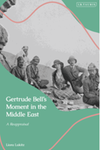
Gertrude Bell's moment in the Middle East : a reappraisal
Lukitz, Liora
I.B. Tauris
, 2025
; English
; 249 Pages
An explorer, archaeologist, scholar, writer, and policymaker, Gertude Bell was a colourful figure who played an outsize role in the history of the Middle East in the early twentieth century.
This book carefully examines Bell's published and unpublished letters, diaries, notes, and publications to reconstruct and reevaluate Bell's intentions and legacy in the Middle East in the aftermath of the First World War. It focuses on her correspondence with senior figures to examine the well-networked Bell as a policymaker in waiting. It also reappraises Bell's role in the formation of the Kingdom of Iraq, assessing her public statements in support of Faisal, Iraq's future king, against the doubts she expressed in private. Centering her own experience and reflections in the context of wider events, it adds nuance to perceptions of Bell as an agent of the British Empire and explores the legacy of her actions in Iraq today.
Lukitz, Liora
I.B. Tauris
, 2025
; English
; 249 Pages
An explorer, archaeologist, scholar, writer, and policymaker, Gertude Bell was a colourful figure who played an outsize role in the history of the Middle East in the early twentieth century.
This book carefully examines Bell's published and unpublished letters, diaries, notes, and publications to reconstruct and reevaluate Bell's intentions and legacy in the Middle East in the aftermath of the First World War. It focuses on her correspondence with senior figures to examine the well-networked Bell as a policymaker in waiting. It also reappraises Bell's role in the formation of the Kingdom of Iraq, assessing her public statements in support of Faisal, Iraq's future king, against the doubts she expressed in private. Centering her own experience and reflections in the context of wider events, it adds nuance to perceptions of Bell as an agent of the British Empire and explores the legacy of her actions in Iraq today.
