
Navigation menu
Search
Databases
All Databases
eBook
Fantin, Emmanuelle; Nicol, Bran
Reaktion Books
, 2025
; English
; 183 Pages
Jean Baudrillard, once hailed as a ‘historian of the future’, remains a vital figure for understanding modern life. Famous for ideas like ‘simulation’ and the ‘hyperreal’, linked to postmodernism and The Matrix, Baudrillard was both celebrated and controversial, known for bold pronouncements about events like the Gulf War and 9/11. Yet the man himself was enigmatic, leading a public life while remaining personally elusive.
This first biography in English explores Baudrillard’s life and work, tracing his journey from the early years and French intellectual prominence to his global influence as a thinker, photographer and public intellectual. Using newly uncovered material, it provides fresh insights into his major works and ideas, offering readers a clear guide to his singular, uncompromising philosophy.
eBook
Fantin, Emmanuelle; Nicol, Bran
Reaktion Books
, 2025
; English
; 183 Pages
Jean Baudrillard, once hailed as a ‘historian of the future’, remains a vital figure for understanding modern life. Famous for ideas like ‘simulation’ and the ‘hyperreal’, linked to postmodernism and The Matrix, Baudrillard was both celebrated and controversial, known for bold pronouncements about events like the Gulf War and 9/11. Yet the man himself was enigmatic, leading a public life while remaining personally elusive.
This first biography in English explores Baudrillard’s life and work, tracing his journey from the early years and French intellectual prominence to his global influence as a thinker, photographer and public intellectual. Using newly uncovered material, it provides fresh insights into his major works and ideas, offering readers a clear guide to his singular, uncompromising philosophy.
eBook
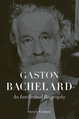
Gaston Bachelard: an intellectual biography
Connor, Steven
Reaktion Books
, 2025
; English
; 201 Pages
A complete portrait of French philosopher Gaston Bachelard, who plumbed both science and imagination.
Connor, Steven
Reaktion Books
, 2025
; English
; 201 Pages
A complete portrait of French philosopher Gaston Bachelard, who plumbed both science and imagination.
eBook
Bell, Matthew
Princeton University Press
, 2025
; English
; 772 Pages
Johann Wolfgang von Goethe (1749–1832) was a poet, a novelist, a scientist and an essayist on a dizzying range of topics. In the nineteenth century, he was widely regarded as one of the most important thinkers of modern Europe. In this important and ambitious work, Matthew Bell offers a wide-ranging intellectual biography of Goethe, tracing the evolution of his thought and reassessing its value. Bell examines the full spectrum of Goethe’s writing, from his most well-known works, including the dramatic poem Faust and the novels Wilhelm Meister and The Sorrows of Young Werther, to lesser-known essays and reviews. Throughout, Bell draws on Goethe’s letters and diaries, most of which are stll only available in German, embedding Goethe’s thought in his lived experience and in the cultural and intellectual life of Europe from the 1750s to the 1830s.
Bell presents new interpretations of Goethe’s work as one of the first evolutionary biologists, describing discoveries that anticipated Darwin’s, and of his political ideas, which pervade his literary work in ways that have not been fully recognized. Bell offers an original and illuminating explanation for the paradox of Goethe’s thought, exploring how a radical individualist who espoused liberal and innovative ideas in some areas—in particular, religion, sexuality and science—could remain consistently conservative and authoritarian in his political outlook. Rereading Goethe through this new lens, Bell shows, reveals new dimensions of work we thought we knew well.
eBook
Bell, Matthew
Princeton University Press
, 2025
; English
; 772 Pages
Johann Wolfgang von Goethe (1749–1832) was a poet, a novelist, a scientist and an essayist on a dizzying range of topics. In the nineteenth century, he was widely regarded as one of the most important thinkers of modern Europe. In this important and ambitious work, Matthew Bell offers a wide-ranging intellectual biography of Goethe, tracing the evolution of his thought and reassessing its value. Bell examines the full spectrum of Goethe’s writing, from his most well-known works, including the dramatic poem Faust and the novels Wilhelm Meister and The Sorrows of Young Werther, to lesser-known essays and reviews. Throughout, Bell draws on Goethe’s letters and diaries, most of which are stll only available in German, embedding Goethe’s thought in his lived experience and in the cultural and intellectual life of Europe from the 1750s to the 1830s.
Bell presents new interpretations of Goethe’s work as one of the first evolutionary biologists, describing discoveries that anticipated Darwin’s, and of his political ideas, which pervade his literary work in ways that have not been fully recognized. Bell offers an original and illuminating explanation for the paradox of Goethe’s thought, exploring how a radical individualist who espoused liberal and innovative ideas in some areas—in particular, religion, sexuality and science—could remain consistently conservative and authoritarian in his political outlook. Rereading Goethe through this new lens, Bell shows, reveals new dimensions of work we thought we knew well.
eBook
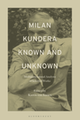
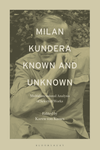
Milan Kundera known and unknown : multidimensional analysis of selected works
Karen von Kunes
Bloomsbury Academic
, 2024
; English
; 289 Pages
This collection of essays offers crucial and luminous insights into one of the best-known Czech authors, Milan Kundera, including his lesser known works.
With essays that focus on Kundera's poetry and plays, his last four novels written in French, and his nonfiction writings on the novelistic form and translation, Milan Kundera Known and Unknown explores the complex and productive career of this globally recognized author. The approach begins by examining Kundera's distinctive literary style, and then how his voice radiated outward from the small communist country of Czechoslovakia to the world.
Starting as a poet and playwright, Kundera transcended the Czech literary scene and rose to global prominence with his novelistic style of variations, paradoxes, humor, and clairvoyance into human relationships mixed with political tensions. His multi-dimensional existential topics introduced complex novelistic characters that have reached a large audience and remain evocative. Kundera also critically commented on creative works – his own and of others – thus contributing a unique approach to a specific aesthetic ideal and within the masterworks of world-renowned authors.
Chapters on Kundera's aesthetics and form, his philosophical leanings, his relationship to the burgeoning concept of “world literature,” and translations of his writings offer new perspectives on his life's work. These insights shed light on Kundera's understudied works, such as his early poetry and his recent French novels, making connections between his early and later writing, and cementing his literary legacy for English-language audiences.
Karen von Kunes
Bloomsbury Academic
, 2024
; English
; 289 Pages
This collection of essays offers crucial and luminous insights into one of the best-known Czech authors, Milan Kundera, including his lesser known works.
With essays that focus on Kundera's poetry and plays, his last four novels written in French, and his nonfiction writings on the novelistic form and translation, Milan Kundera Known and Unknown explores the complex and productive career of this globally recognized author. The approach begins by examining Kundera's distinctive literary style, and then how his voice radiated outward from the small communist country of Czechoslovakia to the world.
Starting as a poet and playwright, Kundera transcended the Czech literary scene and rose to global prominence with his novelistic style of variations, paradoxes, humor, and clairvoyance into human relationships mixed with political tensions. His multi-dimensional existential topics introduced complex novelistic characters that have reached a large audience and remain evocative. Kundera also critically commented on creative works – his own and of others – thus contributing a unique approach to a specific aesthetic ideal and within the masterworks of world-renowned authors.
Chapters on Kundera's aesthetics and form, his philosophical leanings, his relationship to the burgeoning concept of “world literature,” and translations of his writings offer new perspectives on his life's work. These insights shed light on Kundera's understudied works, such as his early poetry and his recent French novels, making connections between his early and later writing, and cementing his literary legacy for English-language audiences.
eBook
Essays on German literature and culture, part II
Vanden Bossche, Chris Ramon
University of California Press
, 2024
; English
; 711 Pages
In the early 1820s, the acclaimed Victorian philosopher, social critic, and essayist Thomas Carlyle achieved a level of expertise in German language and literature that prompted editors to seek him out as a reviewer and launched his career as an essayist. Carlyle has long been credited with establishing the importance of new German writing in Britain at the time, and Essays on German Literature and Culture brings together his complete writings on the topic. This volume will be published in two parts. The essays in part 2 include historical overviews of German literature from the Middle Ages to the present and a series of commentaries marking the passing of Goethe.
In keeping with the Norman and Charlotte Strouse Edition of the Writings of Thomas Carlyle, these essays are accompanied by a thorough historical introduction to the material, extensive notes providing historical and cultural context while expanding on references and allusions, and a textual apparatus that carefully details and explains the editorial decisions made in reconciling the editions of each essay.
Vanden Bossche, Chris Ramon
University of California Press
, 2024
; English
; 711 Pages
In the early 1820s, the acclaimed Victorian philosopher, social critic, and essayist Thomas Carlyle achieved a level of expertise in German language and literature that prompted editors to seek him out as a reviewer and launched his career as an essayist. Carlyle has long been credited with establishing the importance of new German writing in Britain at the time, and Essays on German Literature and Culture brings together his complete writings on the topic. This volume will be published in two parts. The essays in part 2 include historical overviews of German literature from the Middle Ages to the present and a series of commentaries marking the passing of Goethe.
In keeping with the Norman and Charlotte Strouse Edition of the Writings of Thomas Carlyle, these essays are accompanied by a thorough historical introduction to the material, extensive notes providing historical and cultural context while expanding on references and allusions, and a textual apparatus that carefully details and explains the editorial decisions made in reconciling the editions of each essay.
eBook
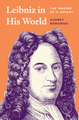
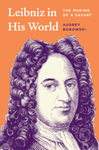
Leibniz in his world : the making of a savant
Borowski, Audrey
Princeton University Press
, 2024
; English
; 321 Pages
A sweeping intellectual biography that restores the Enlightenment polymath to the intellectual, scientific, and courtly worlds that shaped his early life and thought
Described by Voltaire as "perhaps a man of the most universal learning in Europe," Gottfried Wilhelm Leibniz (1646–1716) is often portrayed as a rationalist and philosopher who was wholly detached from the worldly concerns of his fellow men. Leibniz in His World provides a groundbreaking reassessment of Leibniz, telling the story of his trials and tribulations as an aspiring scientist and courtier navigating the learned and courtly circles of early modern Europe and the Republic of Letters.
Drawing on extensive correspondence by Leibniz and many leading figures of the age, Audrey Borowski paints a nuanced portrait of Leibniz in the 1670s, during his "Paris sojourn" as a young diplomat and in Germany at the court of Duke Johann Friedrich of Hanover. She challenges the image of Leibniz as an isolated genius, revealing instead a man of multiple identities whose thought was shaped by a deep engagement with the social and intellectual milieus of his time. Borowski shows us Leibniz as he was known to his contemporaries, enabling us to rediscover him as an enigmatic young man who was complex and all too human.
An exhilarating work of scholarship, Leibniz in His World demonstrates how this uncommon intellect, torn between his ideals and the necessity to work for absolutist states, struggled to make a name for himself during his formative years.
Borowski, Audrey
Princeton University Press
, 2024
; English
; 321 Pages
A sweeping intellectual biography that restores the Enlightenment polymath to the intellectual, scientific, and courtly worlds that shaped his early life and thought
Described by Voltaire as "perhaps a man of the most universal learning in Europe," Gottfried Wilhelm Leibniz (1646–1716) is often portrayed as a rationalist and philosopher who was wholly detached from the worldly concerns of his fellow men. Leibniz in His World provides a groundbreaking reassessment of Leibniz, telling the story of his trials and tribulations as an aspiring scientist and courtier navigating the learned and courtly circles of early modern Europe and the Republic of Letters.
Drawing on extensive correspondence by Leibniz and many leading figures of the age, Audrey Borowski paints a nuanced portrait of Leibniz in the 1670s, during his "Paris sojourn" as a young diplomat and in Germany at the court of Duke Johann Friedrich of Hanover. She challenges the image of Leibniz as an isolated genius, revealing instead a man of multiple identities whose thought was shaped by a deep engagement with the social and intellectual milieus of his time. Borowski shows us Leibniz as he was known to his contemporaries, enabling us to rediscover him as an enigmatic young man who was complex and all too human.
An exhilarating work of scholarship, Leibniz in His World demonstrates how this uncommon intellect, torn between his ideals and the necessity to work for absolutist states, struggled to make a name for himself during his formative years.
eBook
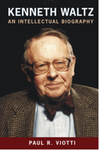
Kenneth Waltz : an intellectual biography
Viotti, Paul R.
Columbia University Press
, 2024
; English
; 278 Pages
Kenneth Waltz (1924–2013) is perhaps the most enduringly influential figure in international relations theory of the second half of the twentieth century. He is considered the father of the structural-realist or neorealist school, and his views on core questions, such as the causes of war and the structure of the international system, are foundational to the field today and likely will remain so for decades to come. Waltz’s writings on both theoretical and policy-related topics, from the balance of power to the spread of nuclear weapons, continue to fuel debate.
This book is a groundbreaking intellectual biography of Kenneth Waltz, shedding new light on the development and significance of his key contributions. Paul R. Viotti draws on extensive, candid interviews with Waltz as well as Waltz’s personal files and archival research to provide a nuanced account of the great scholar’s life and thought. He traces the intellectual sources and personal experiences that shaped Waltz’s work, including an intense Lutheran upbringing
service in World War II and the Korean War
and the academic environments of Oberlin College, Columbia University, and the University of California, Berkeley. Viotti examines the key influences on Waltz’s major works, Man, the State, and War and Theory of International Politics, and analyzes their distinctive insights. Engaging with the views of Waltz’s critics and featuring reminiscences from his colleagues, this book is a compelling portrait of an intellectual titan.
Viotti, Paul R.
Columbia University Press
, 2024
; English
; 278 Pages
Kenneth Waltz (1924–2013) is perhaps the most enduringly influential figure in international relations theory of the second half of the twentieth century. He is considered the father of the structural-realist or neorealist school, and his views on core questions, such as the causes of war and the structure of the international system, are foundational to the field today and likely will remain so for decades to come. Waltz’s writings on both theoretical and policy-related topics, from the balance of power to the spread of nuclear weapons, continue to fuel debate.
This book is a groundbreaking intellectual biography of Kenneth Waltz, shedding new light on the development and significance of his key contributions. Paul R. Viotti draws on extensive, candid interviews with Waltz as well as Waltz’s personal files and archival research to provide a nuanced account of the great scholar’s life and thought. He traces the intellectual sources and personal experiences that shaped Waltz’s work, including an intense Lutheran upbringing
service in World War II and the Korean War
and the academic environments of Oberlin College, Columbia University, and the University of California, Berkeley. Viotti examines the key influences on Waltz’s major works, Man, the State, and War and Theory of International Politics, and analyzes their distinctive insights. Engaging with the views of Waltz’s critics and featuring reminiscences from his colleagues, this book is a compelling portrait of an intellectual titan.
eBook
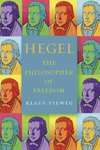
Hegel : the philosopher of freedom
Vieweg, Klaus; Kottman, Sophia
Stanford University Press
, 2023
; English
; 486 Pages
A monumental new biography of a pivotal yet poorly understood pioneer in modern philosophy.
When a painter once told Goethe that he wanted to paint the most celebrated man of the age, Goethe directed him to Georg Wilhelm Friedrich Hegel. Hegel worked from the credo: To philosophize is to learn to live freely. While he was slow and cautious in the development of his philosophy, his intellectual growth was like an odyssey of the mind, and, contrary to popular belief, his life was full of twists and turns, suspense and even danger.
In this landmark biography, the philosopher Klaus Vieweg paints a new picture of the life and work of the most important representative of German idealism. His vivid portrait provides readers an intimate account of Hegel's times and the milieu in which he developed his thought, along with detailed, clear-sighted analyses of Hegel's four major works. What results is a new interpretation of Hegel through the lens of reason and freedom.
Vieweg draws on extensive archival research that has brought to light a wealth of hitherto undiscovered documents and handwritten notes relating to Hegel's work, touching on Hegel's engagement with the leading thinkers and writers of his age: Kant, Fichte, Schelling, Hölderlin, and others. Combatting clichés and misunderstandings about Hegel, Vieweg also offers a sustained defense of the philosopher's more progressive impulses. Highly praised upon its release in Germany as having set the new biographical standard, this monumental work emphasizes Hegel's relevance for today, depicting him as a vital figure in the history of philosophy.
Vieweg, Klaus; Kottman, Sophia
Stanford University Press
, 2023
; English
; 486 Pages
A monumental new biography of a pivotal yet poorly understood pioneer in modern philosophy.
When a painter once told Goethe that he wanted to paint the most celebrated man of the age, Goethe directed him to Georg Wilhelm Friedrich Hegel. Hegel worked from the credo: To philosophize is to learn to live freely. While he was slow and cautious in the development of his philosophy, his intellectual growth was like an odyssey of the mind, and, contrary to popular belief, his life was full of twists and turns, suspense and even danger.
In this landmark biography, the philosopher Klaus Vieweg paints a new picture of the life and work of the most important representative of German idealism. His vivid portrait provides readers an intimate account of Hegel's times and the milieu in which he developed his thought, along with detailed, clear-sighted analyses of Hegel's four major works. What results is a new interpretation of Hegel through the lens of reason and freedom.
Vieweg draws on extensive archival research that has brought to light a wealth of hitherto undiscovered documents and handwritten notes relating to Hegel's work, touching on Hegel's engagement with the leading thinkers and writers of his age: Kant, Fichte, Schelling, Hölderlin, and others. Combatting clichés and misunderstandings about Hegel, Vieweg also offers a sustained defense of the philosopher's more progressive impulses. Highly praised upon its release in Germany as having set the new biographical standard, this monumental work emphasizes Hegel's relevance for today, depicting him as a vital figure in the history of philosophy.
eBook
Williams, James S.
Reaktion Books
, 2023
; English
; 205 Pages
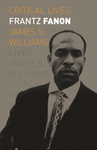
Doctor, militant, political essayist, teacher, journalist, diplomat, pan-Africanist: Frantz Fanon represented a new model of multi-engaged intellectual who sought to decolonize mid-twentieth-century thought, society and culture and move beyond the ideology of race. Born Black in colonial Martinique, he fought for France during the Second World War but later renounced his native land and aspired to be Algerian during the Algerian War of Independence. Foregrounding Fanon’s gift for self-invention and performance, James S. Williams charts the major turning points in the short, extraordinary life of this visionary figure, and reveals how Fanon’s pioneering work in psychiatry influenced his revolutionary writing and philosophy.

eBook
Williams, James S.
Reaktion Books
, 2023
; English
; 205 Pages
Doctor, militant, political essayist, teacher, journalist, diplomat, pan-Africanist: Frantz Fanon represented a new model of multi-engaged intellectual who sought to decolonize mid-twentieth-century thought, society and culture and move beyond the ideology of race. Born Black in colonial Martinique, he fought for France during the Second World War but later renounced his native land and aspired to be Algerian during the Algerian War of Independence. Foregrounding Fanon’s gift for self-invention and performance, James S. Williams charts the major turning points in the short, extraordinary life of this visionary figure, and reveals how Fanon’s pioneering work in psychiatry influenced his revolutionary writing and philosophy.
eBook
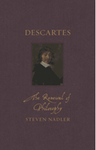
Descartes : the renewal of philosophy
Nadler, Steven; Quiviger, François
Reaktion Books
, 2023
; English
; 289 Pages
"Often called 'the father of modern philosophy', Reň Descartes' contributions to philosophy, mathematics and natural science set the intellectual agenda for the seventeenth century. In this biography and assessment of his works, based on the most up-to-date research, Steven Nadler follows Descartes from his early years and education in France to the Dutch Republic, where he lived most of his adult life, to his final months as tutor to Queen Christina of Sweden. Nadler shows how Descartes' 'renewal' of philosophy involved a transformation in both the way in which philosophy is done and the fundamental understanding of the cosmos, the natural world and human nature. His work was a springboard for many of the metaphysical and epistemological problems that continue to engage philosophers today"--Provided by publisher.
Nadler, Steven; Quiviger, François
Reaktion Books
, 2023
; English
; 289 Pages
"Often called 'the father of modern philosophy', Reň Descartes' contributions to philosophy, mathematics and natural science set the intellectual agenda for the seventeenth century. In this biography and assessment of his works, based on the most up-to-date research, Steven Nadler follows Descartes from his early years and education in France to the Dutch Republic, where he lived most of his adult life, to his final months as tutor to Queen Christina of Sweden. Nadler shows how Descartes' 'renewal' of philosophy involved a transformation in both the way in which philosophy is done and the fundamental understanding of the cosmos, the natural world and human nature. His work was a springboard for many of the metaphysical and epistemological problems that continue to engage philosophers today"--Provided by publisher.
