

Navigation menu
Search
Databases
All Databases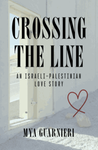
eBook
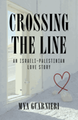
Crossing the line : an Israeli-Palestinian love story
Guarnieri, Mya
Red Lightning Books
, 2025
; English
; 292 Pages
In Crossing the Line, journalist and writer Mya Guarnieri recounts the story of a real-life Romeo and Juliet: herself, a Jewish American immigrant to Israel lecturing at a Palestinian university, and Mohamed, a fellow journalist and the son of a member of the Palestine Liberation Organization.
This timely memoir chronicles how, despite the Israeli-built separation barrier that stood between them, Mya and Mohamed managed to meet, fall in love, and overcome the external and internal obstacles that threatened to keep them apart. With a reporter's eye for detail and a storyteller's knack for nuance, she shares the political, cultural, and family problems the star-crossed lovers faced throughout their courtship. Crossing the Line is not only a reflection on her own story, however; this compelling memoir also offers an intimate look at daily life in Palestinian areas of the Israeli-occupied West Bank; it explores the complexity of loving one's "enemy"; and it serves as a tortured love letter to the land and the people who call the place home.
In a dark moment in the long history of the conflict between Israelis and Palestinians, Crossing the Line is a spot of light that imagines a different future for the two peoples. It is also a universal story about the challenges of overcoming our innermost emotional barriers and making ourselves vulnerable to love.
Guarnieri, Mya
Red Lightning Books
, 2025
; English
; 292 Pages
In Crossing the Line, journalist and writer Mya Guarnieri recounts the story of a real-life Romeo and Juliet: herself, a Jewish American immigrant to Israel lecturing at a Palestinian university, and Mohamed, a fellow journalist and the son of a member of the Palestine Liberation Organization.
This timely memoir chronicles how, despite the Israeli-built separation barrier that stood between them, Mya and Mohamed managed to meet, fall in love, and overcome the external and internal obstacles that threatened to keep them apart. With a reporter's eye for detail and a storyteller's knack for nuance, she shares the political, cultural, and family problems the star-crossed lovers faced throughout their courtship. Crossing the Line is not only a reflection on her own story, however; this compelling memoir also offers an intimate look at daily life in Palestinian areas of the Israeli-occupied West Bank; it explores the complexity of loving one's "enemy"; and it serves as a tortured love letter to the land and the people who call the place home.
In a dark moment in the long history of the conflict between Israelis and Palestinians, Crossing the Line is a spot of light that imagines a different future for the two peoples. It is also a universal story about the challenges of overcoming our innermost emotional barriers and making ourselves vulnerable to love.
eBook
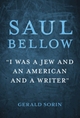
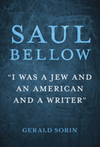
Saul Bellow : "I was a Jew and an American and a writer"
Sorin, Gerald
Indiana University Press
, 2024
; English
; 602 Pages
Saul Bellow: "I Was a Jew and an American and a Writer" offers a fresh and original perspective on the life and works of Saul Bellow, the Nobel Prize winner in Literature in 1976. Author Gerald Sorin emphasizes Bellow's Jewish identity as fundamental to his being and the content and meaning of his fiction. Bellow's work from the 1940s to 2000, when he wrote his last novel at the age of 84, centers on the command in Deuteronomy to "Choose life" as distinct from nihilistic withdrawal and the defense of meaninglessness.
Although Bellow disdained the label of "American Jewish Writer," Sorin conjectures that he was an outstanding representative of the classification. Bellow and the characters in his fiction not only choose life but also explore what it means to live a good life, however difficult that may be to define, and regardless of how much harder it is to achieve. For Sorin, Bellow realized that at least two obstacles stood in the way: the imperfection of the world and the frailty of the human pursuer.
Saul Bellow: "I Was a Jew and an American and a Writer" provides a new and insightful narrative of the life and works of Saul Bellow. By using Bellow's deeply internalized Jewishness and his remarkable imagination and creativity as a lens, Sorin examines how he captured the shifting atmosphere of postwar American culture.
Sorin, Gerald
Indiana University Press
, 2024
; English
; 602 Pages
Saul Bellow: "I Was a Jew and an American and a Writer" offers a fresh and original perspective on the life and works of Saul Bellow, the Nobel Prize winner in Literature in 1976. Author Gerald Sorin emphasizes Bellow's Jewish identity as fundamental to his being and the content and meaning of his fiction. Bellow's work from the 1940s to 2000, when he wrote his last novel at the age of 84, centers on the command in Deuteronomy to "Choose life" as distinct from nihilistic withdrawal and the defense of meaninglessness.
Although Bellow disdained the label of "American Jewish Writer," Sorin conjectures that he was an outstanding representative of the classification. Bellow and the characters in his fiction not only choose life but also explore what it means to live a good life, however difficult that may be to define, and regardless of how much harder it is to achieve. For Sorin, Bellow realized that at least two obstacles stood in the way: the imperfection of the world and the frailty of the human pursuer.
Saul Bellow: "I Was a Jew and an American and a Writer" provides a new and insightful narrative of the life and works of Saul Bellow. By using Bellow's deeply internalized Jewishness and his remarkable imagination and creativity as a lens, Sorin examines how he captured the shifting atmosphere of postwar American culture.
eBook
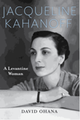
Jacqueline Kahanoff : a Levantine woman
Ohana, David
Indiana University Press
, 2023
; English
; 393 Pages
Jacqueline Kahanoff: A Levantine Woman is the first intellectual biography of this remarkable Egyptian-Jewish intellectual, whose work has secured her place in literary pantheon as a herald of Levantine, Mediterranean, and transnational culture. Growing up Jewish in cosmopolitan Egypt in the 1920s and 1930s, Jacqueline Kahanoff experienced a bustling Middle East enriched by diverse languages, religions, and peoples who nonetheless were deeply connected to each other through history, business, daily practices, and shared landscape.
At the age of twenty-four, Kahanoff immigrated to the United States. Her stories, essays, and short autobiographical novel attest to her penchant to cross boundaries, generations, social classes, sexes, and Western and Eastern constructs. After immigrating to Israel in the early 1950s, she critically addressed the country's "provinciality" and "ethnic nationalism" as seen through her conception of a transnational Levantine culture. Through many writings, Kahanoff set forth her distinctive vision of Israel as a Mediterranean country with a broad, multicultural Levantine identity.
Drawing on an extensive array of sources, ranging from interviews with Jacqueline Kahanoff's acquaintances and contemporaries to unpublished writings, David Ohana explores her fascinating life and intellectual journey from Cairo to Tel Aviv. The encompassing vision of a Levantine Israel made Kahanoff the initiator of a different cultural possibility, more extensive than that offered in her time, and also, perhaps, than is offered today.
Ohana, David
Indiana University Press
, 2023
; English
; 393 Pages
Jacqueline Kahanoff: A Levantine Woman is the first intellectual biography of this remarkable Egyptian-Jewish intellectual, whose work has secured her place in literary pantheon as a herald of Levantine, Mediterranean, and transnational culture. Growing up Jewish in cosmopolitan Egypt in the 1920s and 1930s, Jacqueline Kahanoff experienced a bustling Middle East enriched by diverse languages, religions, and peoples who nonetheless were deeply connected to each other through history, business, daily practices, and shared landscape.
At the age of twenty-four, Kahanoff immigrated to the United States. Her stories, essays, and short autobiographical novel attest to her penchant to cross boundaries, generations, social classes, sexes, and Western and Eastern constructs. After immigrating to Israel in the early 1950s, she critically addressed the country's "provinciality" and "ethnic nationalism" as seen through her conception of a transnational Levantine culture. Through many writings, Kahanoff set forth her distinctive vision of Israel as a Mediterranean country with a broad, multicultural Levantine identity.
Drawing on an extensive array of sources, ranging from interviews with Jacqueline Kahanoff's acquaintances and contemporaries to unpublished writings, David Ohana explores her fascinating life and intellectual journey from Cairo to Tel Aviv. The encompassing vision of a Levantine Israel made Kahanoff the initiator of a different cultural possibility, more extensive than that offered in her time, and also, perhaps, than is offered today.
eBook
Chasin, Stephanie M.
Bloomsbury Publishing
, 2023
; English
; 245 Pages
"In the wake of the devastating WWI, three Jews headed the most valuable territory in the British Empire in addition to a strategically important new addition. Edwin Montagu held the position of Secretary of State for India, Rufus Isaacs (Lord Reading) was the newly appointed Viceroy of India, and Herbert Samuel arrived in Jerusalem as the first High Commissioner of Palestine. Their appointments came at a time of great upheaval as Indian nationalists clamoured for independence, pan-Islamists fought to keep the defeated Ottoman Empire intact and the sultan in Constantinople, and Zionists sought to build on the wartime promise by the British government to create a Jewish homeland in Palestine in face of opposition by Palestinians and pan-Islamists. The task of tackling these issues was made all the more difficult by accusations that Jews were not loyal to the British Empire and its goals, a view promoted by the appearance of the antisemitic Protocols of the Elders of Zion in English translation. This book follows this web of divisive imperial politics, and nationalist and pan-Islamist aspirations in India and Palestine, through the lives and work of these three men whose efforts were coloured by the post-war fear of a declining empire that was being corroded from within"-- Provided by publisher.
Chasin, Stephanie M.
Bloomsbury Publishing
, 2023
; English
; 245 Pages
"In the wake of the devastating WWI, three Jews headed the most valuable territory in the British Empire in addition to a strategically important new addition. Edwin Montagu held the position of Secretary of State for India, Rufus Isaacs (Lord Reading) was the newly appointed Viceroy of India, and Herbert Samuel arrived in Jerusalem as the first High Commissioner of Palestine. Their appointments came at a time of great upheaval as Indian nationalists clamoured for independence, pan-Islamists fought to keep the defeated Ottoman Empire intact and the sultan in Constantinople, and Zionists sought to build on the wartime promise by the British government to create a Jewish homeland in Palestine in face of opposition by Palestinians and pan-Islamists. The task of tackling these issues was made all the more difficult by accusations that Jews were not loyal to the British Empire and its goals, a view promoted by the appearance of the antisemitic Protocols of the Elders of Zion in English translation. This book follows this web of divisive imperial politics, and nationalist and pan-Islamist aspirations in India and Palestine, through the lives and work of these three men whose efforts were coloured by the post-war fear of a declining empire that was being corroded from within"-- Provided by publisher.
eBook
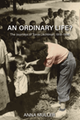
An ordinary life? : the journeys of Tonia Lechtman, 1918-1996
Müller, Anna
Ohio University Press
, 2023
; English
; 377 Pages
"A Jew, Pole, daughter, mother, wife, Communist, migrant, Holocaust survivor, and refugee driven to fight for a better world. Ordinary or anything but? In Tonia Lechtman's life, the lofty and the quotidian intertwined, making everything she did both monumental and mundane. Who was she?"
Müller, Anna
Ohio University Press
, 2023
; English
; 377 Pages
"A Jew, Pole, daughter, mother, wife, Communist, migrant, Holocaust survivor, and refugee driven to fight for a better world. Ordinary or anything but? In Tonia Lechtman's life, the lofty and the quotidian intertwined, making everything she did both monumental and mundane. Who was she?"
eBook
Rosselson, Leon
PM Press
, 2023
; English
; 185 Pages
Fierce and funny, this memor in essay and song is full of wonderful tales of art and protest. Leon Rossleson's Where are the Elephants is a rare behind the scenes look at the life and times of one of England's foremost folksingers. This clear-eyed portrait of an activist who never gave up and whose talent, wit, and verve brought the world into finer focus provides a model for a whole new generation of radicals. Fans will love revisiting the lyrics from his hits—and behind the scenes glimpses of the stories and events that inspired his songs, but Rosselson's story of growing from a red diaper baby into a modern troubador up against the barricades is a tale for the ages.
eBook
Rosselson, Leon
PM Press
, 2023
; English
; 185 Pages
Fierce and funny, this memor in essay and song is full of wonderful tales of art and protest. Leon Rossleson's Where are the Elephants is a rare behind the scenes look at the life and times of one of England's foremost folksingers. This clear-eyed portrait of an activist who never gave up and whose talent, wit, and verve brought the world into finer focus provides a model for a whole new generation of radicals. Fans will love revisiting the lyrics from his hits—and behind the scenes glimpses of the stories and events that inspired his songs, but Rosselson's story of growing from a red diaper baby into a modern troubador up against the barricades is a tale for the ages.
eBook
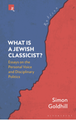
What is a Jewish classicist? : essays on the personal voice and disciplinary politics
Goldhill, Simon; Harrison, Thomas (Series Editor)
Bloomsbury Academic
, 2022
; English
; 201 Pages
In recent years, there has been no issue that has convulsed academia and its role in society more stridently than the personal politics of its institutions: who has access to education? How does who you are change what you study and how you engage with it? How does scholarship reflect the politics of society – how should it? These new essays from one of the best-known scholars of ancient Greece offer a refreshing and provocative contribution to these discussions.
What Is a Jewish Classicist? analyses how the personal voice of a scholar plays a role in scholarship, how religion and cultural identity are acted out within an academic discipline, and how translation, the heart of any engagement with the literature of antiquity, is a transformational practice. Topical, engaging, revelatory, this book opens a sharp and personal perspective on how and why the study of antiquity has become such a battlefield in contemporary culture.
The first essay looks at how academics can and should talk about themselves, and how such positionality affects a scholar's work – can anyone can tell his or her own story with enough self-consciousness, sophistication and care? The second essay, which gives the book its title, takes a more socio-anthropological approach to the discipline, and asks how its patterns of inclusion and exclusion, its strategies of identification and recognition, have contributed to the shape of the discipline of classics. This initial enquiry opens into a fascinating history of change – how Jews were excluded from the discipline for many years but gradually after the Second World war became more easily assimilated into it. This in turn raises difficult questions for the current focus on race and colour as the defining aspects of personal identification, and about how academia reflects or contributes to the broader politics of society. The third essay takes a different historical approach and looks at the infrastructure or technology of the discipline through one of its integral and time-honoured practices, namely, translation. It discusses how translation, far from being a mere technique, is a transformational activity that helps make each classicist what they are. Indeed, each generation needs its own translations as each era redefines its relation to antiquity.
Goldhill, Simon; Harrison, Thomas (Series Editor)
Bloomsbury Academic
, 2022
; English
; 201 Pages
In recent years, there has been no issue that has convulsed academia and its role in society more stridently than the personal politics of its institutions: who has access to education? How does who you are change what you study and how you engage with it? How does scholarship reflect the politics of society – how should it? These new essays from one of the best-known scholars of ancient Greece offer a refreshing and provocative contribution to these discussions.
What Is a Jewish Classicist? analyses how the personal voice of a scholar plays a role in scholarship, how religion and cultural identity are acted out within an academic discipline, and how translation, the heart of any engagement with the literature of antiquity, is a transformational practice. Topical, engaging, revelatory, this book opens a sharp and personal perspective on how and why the study of antiquity has become such a battlefield in contemporary culture.
The first essay looks at how academics can and should talk about themselves, and how such positionality affects a scholar's work – can anyone can tell his or her own story with enough self-consciousness, sophistication and care? The second essay, which gives the book its title, takes a more socio-anthropological approach to the discipline, and asks how its patterns of inclusion and exclusion, its strategies of identification and recognition, have contributed to the shape of the discipline of classics. This initial enquiry opens into a fascinating history of change – how Jews were excluded from the discipline for many years but gradually after the Second World war became more easily assimilated into it. This in turn raises difficult questions for the current focus on race and colour as the defining aspects of personal identification, and about how academia reflects or contributes to the broader politics of society. The third essay takes a different historical approach and looks at the infrastructure or technology of the discipline through one of its integral and time-honoured practices, namely, translation. It discusses how translation, far from being a mere technique, is a transformational activity that helps make each classicist what they are. Indeed, each generation needs its own translations as each era redefines its relation to antiquity.

Audiobook
Nein, Nein, Nein!: One Man's Tale of Depression, Psychic Torment, and a Bus Tour of the Holocaust
Stahl, Jerry
Blackstone Publishing
, 2022
; English
A guided group tour to concentration camps in Poland and Germany allows Stahl to confront personal and historical demons with both despair and humor.
In September 2016, Jerry Stahl was feeling nervous on the eve of a two-week trip across Poland and Germany. But it was not just the stops at Auschwitz, Buchenwald, and Dachau that gave him anxiety. It was the fact that he would be traveling with two dozen strangers, by bus. In a tour group. And he was not a tour-group kind of guy.
The decision to visit Holocaust-world did not come easy. Stahl's lifelong depression at an all-time high, his career and personal life at an all-time low, he had the idea to go on a trip where the despair he was feeling—out-of-control sadness, regret, and fear, not just for himself, but for our entire country—would be appropriate. And where was despair more appropriate than the land of the Six Million?
Seamlessly weaving global and personal history, through the lens of Stahl's own bent perspective, Nein, Nein, Nein! stands out as a triumph of strange-o reporting, a tale that takes us from gang polkas to tour-rash to the truly disturbing snack bar at Auschwitz. Strap in for a raw, surreal, and redemptively hilarious trip. Get on the bus.

Audiobook
Stahl, Jerry
Blackstone Publishing
, 2022
; English
A guided group tour to concentration camps in Poland and Germany allows Stahl to confront personal and historical demons with both despair and humor.
In September 2016, Jerry Stahl was feeling nervous on the eve of a two-week trip across Poland and Germany. But it was not just the stops at Auschwitz, Buchenwald, and Dachau that gave him anxiety. It was the fact that he would be traveling with two dozen strangers, by bus. In a tour group. And he was not a tour-group kind of guy.
The decision to visit Holocaust-world did not come easy. Stahl's lifelong depression at an all-time high, his career and personal life at an all-time low, he had the idea to go on a trip where the despair he was feeling—out-of-control sadness, regret, and fear, not just for himself, but for our entire country—would be appropriate. And where was despair more appropriate than the land of the Six Million?
Seamlessly weaving global and personal history, through the lens of Stahl's own bent perspective, Nein, Nein, Nein! stands out as a triumph of strange-o reporting, a tale that takes us from gang polkas to tour-rash to the truly disturbing snack bar at Auschwitz. Strap in for a raw, surreal, and redemptively hilarious trip. Get on the bus.

Audiobook
Escape to the Tatras: A Boy, a War, and Life Interrupted
Sladek, Oscar; Monsef, Ramiz
Blackstone Publishing
, 2022
; English
A coming-of-age story set against the rise of fascism, the collapse of democracy in Slovakia and Hungary, the attempted genocide of the Jewish people, and the eventual conquest of the Allied Forces over Nazi Germany, ESCAPE TO THE TATRAS tells the story of one child's remarkable journey encompassing the essence of life before and throughout World War II.
During the terrifying years of deprivation, deportation, and imprisonment of Jews, many of whom were sent off to Nazi labor and extermination camps, the Štaub family (mother Irene, father Frici, and their young son Oskar), citizens of Prešov, Slovakia, fled for their lives in order to hide from the brutal Slovakian forces and their German operatives. Young Osi, who witnessed it all, found the courage and resiliency to cope with challenges far beyond his years. Written seven decades later with the precision of unfailing memory and the pain of personal experience, Oscar (Osi) (Staub) Sladek tells an unforgettable story of resilience and personal triumph.
Sladek, Oscar; Monsef, Ramiz
Blackstone Publishing
, 2022
; English
A coming-of-age story set against the rise of fascism, the collapse of democracy in Slovakia and Hungary, the attempted genocide of the Jewish people, and the eventual conquest of the Allied Forces over Nazi Germany, ESCAPE TO THE TATRAS tells the story of one child's remarkable journey encompassing the essence of life before and throughout World War II.
During the terrifying years of deprivation, deportation, and imprisonment of Jews, many of whom were sent off to Nazi labor and extermination camps, the Štaub family (mother Irene, father Frici, and their young son Oskar), citizens of Prešov, Slovakia, fled for their lives in order to hide from the brutal Slovakian forces and their German operatives. Young Osi, who witnessed it all, found the courage and resiliency to cope with challenges far beyond his years. Written seven decades later with the precision of unfailing memory and the pain of personal experience, Oscar (Osi) (Staub) Sladek tells an unforgettable story of resilience and personal triumph.

Audiobook
Arthur Miller: American Witness
Lahr, John; Rubinstein, John
Blackstone Publishing
, 2022
; English
A distinguished theater critic brings twentieth-century playwright Arthur Miller's dramatic story to life with bold and revealing new insights.
John Lahr brings unique perspective to the life of Arthur Miller (1915-2005), the playwright who almost single-handedly propelled twentieth-century American theater to a new level of cultural sophistication.
This book, organized around the fault lines of Miller's life—his family, the Great Depression, the rise of fascism, Elia Kazan and the House Committee on Un-American Activities, Marilyn Monroe, Vietnam, and the rise and fall of Miller's role as a public intellectual—demonstrates the synergy between Arthur Miller's psychology and his plays.
Concentrating largely on Miller's most prolific decades of the 1940s, 1950s, and 1960s, Lahr probes Miller's early playwriting failures; his work writing radio plays during World War II after being rejected for military service; his only novel, Focus; and his succession of award-winning and canonical plays that include All My Sons, Death of a Salesman, and The Crucible, providing an original interpretation of Miller's work and his personality.

Audiobook
Lahr, John; Rubinstein, John
Blackstone Publishing
, 2022
; English
A distinguished theater critic brings twentieth-century playwright Arthur Miller's dramatic story to life with bold and revealing new insights.
John Lahr brings unique perspective to the life of Arthur Miller (1915-2005), the playwright who almost single-handedly propelled twentieth-century American theater to a new level of cultural sophistication.
This book, organized around the fault lines of Miller's life—his family, the Great Depression, the rise of fascism, Elia Kazan and the House Committee on Un-American Activities, Marilyn Monroe, Vietnam, and the rise and fall of Miller's role as a public intellectual—demonstrates the synergy between Arthur Miller's psychology and his plays.
Concentrating largely on Miller's most prolific decades of the 1940s, 1950s, and 1960s, Lahr probes Miller's early playwriting failures; his work writing radio plays during World War II after being rejected for military service; his only novel, Focus; and his succession of award-winning and canonical plays that include All My Sons, Death of a Salesman, and The Crucible, providing an original interpretation of Miller's work and his personality.
