



Navigation menu
Search
Databases
All Databases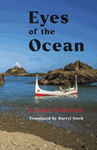
eBook
Rapongan, Syaman; Simon, Scott E. (Introduction by); Sterk, Darryl C.
Columbia University Press
, 2025
; English
; 272 Pages
Syaman Rapongan—one of the Indigenous Tao people of Orchid Island near Taiwan—calls himself an “ocean writer.” His works blend Tao folklore and accounts of maritime life with keen critique of the social, psychological, and ecological harms of colonialism. Eyes of the Ocean is his literary autobiography, both a powerful story of survival in a settler state and a masterful portrait of the Indigenous artist as a young man. In colloquial and vivid prose, Syaman Rapongan depicts Tao beliefs in ghosts, practices of exorcism, and the parallel worlds that exist alongside the human realm. He recounts his difficulties speaking Mandarin in school, his experiences of racial discrimination and exploitation in Taipei, and his decision to return to Orchid Island to rediscover his cultural heritage, as well as his travels to visit other Indigenous artists in places such as Greenland. Eyes of the Ocean also tells the story of Syaman Rapongan’s formation as a writer, a practitioner of a genre of his own creation: colonial ocean island literature. Introducing English-language readers to one of the leading Indigenous writers in Taiwan, this book shares a profound and deeply humane vision of Oceanic art and identity.
eBook
Rapongan, Syaman; Simon, Scott E. (Introduction by); Sterk, Darryl C.
Columbia University Press
, 2025
; English
; 272 Pages
Syaman Rapongan—one of the Indigenous Tao people of Orchid Island near Taiwan—calls himself an “ocean writer.” His works blend Tao folklore and accounts of maritime life with keen critique of the social, psychological, and ecological harms of colonialism. Eyes of the Ocean is his literary autobiography, both a powerful story of survival in a settler state and a masterful portrait of the Indigenous artist as a young man. In colloquial and vivid prose, Syaman Rapongan depicts Tao beliefs in ghosts, practices of exorcism, and the parallel worlds that exist alongside the human realm. He recounts his difficulties speaking Mandarin in school, his experiences of racial discrimination and exploitation in Taipei, and his decision to return to Orchid Island to rediscover his cultural heritage, as well as his travels to visit other Indigenous artists in places such as Greenland. Eyes of the Ocean also tells the story of Syaman Rapongan’s formation as a writer, a practitioner of a genre of his own creation: colonial ocean island literature. Introducing English-language readers to one of the leading Indigenous writers in Taiwan, this book shares a profound and deeply humane vision of Oceanic art and identity.
eBook
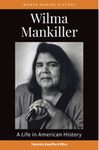
Wilma Mankiller : a life in American history
Swafford Bliss, Tamrala
Bloomsbury Publishing
, 2023
; English
; 216 Pages
An excellent resource for students of Native American women's history, Wilma Mankiller provides an overview of contemporary federal Indian policy and explores how Mankiller negotiated the relationship between the Cherokee Nation and the United States in the late 20th century.
Incorporating aspects of federal Indian policy and Cherokee History, chapters explore Mankiller's involvement at the Indian Center, her interactions with other Indian activists, and her participation in the occupation of Alcatraz Island in 1969 and the Pit River tribes struggle in the early 1970s. Also covered is Cherokee history from the 1830s concerning the Trail of Tears and its impact on Cherokee identity.
Chronological organization allows readers to discover Mankiller's growth and development from a student activist in San Francisco to a Principal Chief of the Cherokee Nation in rural northeastern Oklahoma. The book explores the themes of land, education, community, identity, treaty rights and sovereignty, and traditional tribal knowledge.
Swafford Bliss, Tamrala
Bloomsbury Publishing
, 2023
; English
; 216 Pages
An excellent resource for students of Native American women's history, Wilma Mankiller provides an overview of contemporary federal Indian policy and explores how Mankiller negotiated the relationship between the Cherokee Nation and the United States in the late 20th century.
Incorporating aspects of federal Indian policy and Cherokee History, chapters explore Mankiller's involvement at the Indian Center, her interactions with other Indian activists, and her participation in the occupation of Alcatraz Island in 1969 and the Pit River tribes struggle in the early 1970s. Also covered is Cherokee history from the 1830s concerning the Trail of Tears and its impact on Cherokee identity.
Chronological organization allows readers to discover Mankiller's growth and development from a student activist in San Francisco to a Principal Chief of the Cherokee Nation in rural northeastern Oklahoma. The book explores the themes of land, education, community, identity, treaty rights and sovereignty, and traditional tribal knowledge.

Audiobook
Crazy Horse, Third Edition: The Strange Man of the Oglalas
Sandoz, Mari; Dunne, Bernadette
Blackstone Publishing
, 2022
; English
Crazy Horse was the legendary military leader of the Oglala Sioux whose personal power and social nonconformity contributed to his reputation as being "strange."
Crazy Horse fought in many battles, including the famous Battle of the Little Bighorn, and held out tirelessly against the US government's efforts to confine the Native Americans to reservations. Eventually, in the spring of 1877, he surrendered to military forces and ended up meeting a violent death.
Now, nearly a century and a half later, Crazy Horse continues to hold a special place in the hearts and minds of people. Author Mari Sandoz offers a powerful evocation of the indigenous people of this long-ago world, of the life of Crazy Horse, and of the man's enduring spirit.
Sandoz, Mari; Dunne, Bernadette
Blackstone Publishing
, 2022
; English
Crazy Horse was the legendary military leader of the Oglala Sioux whose personal power and social nonconformity contributed to his reputation as being "strange."
Crazy Horse fought in many battles, including the famous Battle of the Little Bighorn, and held out tirelessly against the US government's efforts to confine the Native Americans to reservations. Eventually, in the spring of 1877, he surrendered to military forces and ended up meeting a violent death.
Now, nearly a century and a half later, Crazy Horse continues to hold a special place in the hearts and minds of people. Author Mari Sandoz offers a powerful evocation of the indigenous people of this long-ago world, of the life of Crazy Horse, and of the man's enduring spirit.
eBook
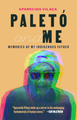
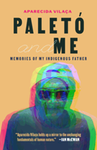
Paletó and me : memories of my Indigenous father
Vilaça, Aparecida; Rodgers, David
Stanford University Press
, 2021
; English
; 231 Pages
Winner of the prestigious Casa de las Américas Prize, this work spins a heartfelt story of an improbable relationship between an anthropologist and her charismatic Indigenous father.
When Aparecida Vilaça first traveled down the remote Negro River in Amazonia, she expected to come back with notebooks and tapes full of observations about the Indigenous Wari' people—but not with a new father. In Paletó and Me, Vilaça shares her life with her adoptive Wari' family, and the profound personal transformations involved in becoming kin.
Paletó—unfailingly charming, always prepared with a joke—shines with life in Vilaça's account of their unusual father-daughter relationship. Paletó was many things: he was a survivor, who lived through the arrival of violent invaders and diseases. He was a leader, who taught through laughter and care, spoke softly, yet was always ready to jump into the unknown. He could shift seamlessly between the roles of the observer and the observed, and in his visits to Rio de Janeiro, deconstructs urban social conventions with ease and wit.
Begun the day after Paletó's death at the age of 85, Paletó and Me is a celebration of life, weaving together the author's own memories of learning the lifeways of Indigenous Amazonia with her father's testimony to Wari' persistence in the face of colonization. Speaking from the heart as both anthropologist and daughter, Vilaça offers an intimate look at Indigenous lives in Brazil over nearly a century.
Vilaça, Aparecida; Rodgers, David
Stanford University Press
, 2021
; English
; 231 Pages
Winner of the prestigious Casa de las Américas Prize, this work spins a heartfelt story of an improbable relationship between an anthropologist and her charismatic Indigenous father.
When Aparecida Vilaça first traveled down the remote Negro River in Amazonia, she expected to come back with notebooks and tapes full of observations about the Indigenous Wari' people—but not with a new father. In Paletó and Me, Vilaça shares her life with her adoptive Wari' family, and the profound personal transformations involved in becoming kin.
Paletó—unfailingly charming, always prepared with a joke—shines with life in Vilaça's account of their unusual father-daughter relationship. Paletó was many things: he was a survivor, who lived through the arrival of violent invaders and diseases. He was a leader, who taught through laughter and care, spoke softly, yet was always ready to jump into the unknown. He could shift seamlessly between the roles of the observer and the observed, and in his visits to Rio de Janeiro, deconstructs urban social conventions with ease and wit.
Begun the day after Paletó's death at the age of 85, Paletó and Me is a celebration of life, weaving together the author's own memories of learning the lifeways of Indigenous Amazonia with her father's testimony to Wari' persistence in the face of colonization. Speaking from the heart as both anthropologist and daughter, Vilaça offers an intimate look at Indigenous lives in Brazil over nearly a century.
eBook
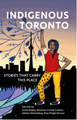
Indigenous Toronto : stories that carry this place
Bolduc, Denise; Gordon-Corbiere, Mnawaate; Tabobondung, Rebeka; Wright-McLeod, Brian
Coach House Books
, 2021
; English
; 305 Pages
"A collection of perspectives by and about Indigenous Toronto, past, present, and future. Beneath every major city in North America lies a deep and rich Indigenous history that has been colonized, paved over, and ignored. Few of its current inhabitants know that Toronto has seen 12,000 years of different peoples, including the Haudenosaunee, the Anishinaabe, the Huron-Wendat, and the Mississaugas of the New Credit, and a vibrant culture and history that thrives to this day. With original contributions by Indigenous elders, scholars, journalists, artists, activists, and historians about art, food, health, and more, this unique anthology explores the poles of erasure and cultural continuity that have come to define a crossroads city-region that was known as a meeting place long before the arrival of European settlers. Contributors include political scientist Hayden King, artist and curator Wanda Nanibush, chief Johl Whiteduck Ringuette, poet and broadcaster Duke Redbird, playwright Drew Hayden Taylor, educator Kerry Potts, writer/journalist Miles Morrisseau and photographer Nadya Kwandibens."
Bolduc, Denise; Gordon-Corbiere, Mnawaate; Tabobondung, Rebeka; Wright-McLeod, Brian
Coach House Books
, 2021
; English
; 305 Pages
"A collection of perspectives by and about Indigenous Toronto, past, present, and future. Beneath every major city in North America lies a deep and rich Indigenous history that has been colonized, paved over, and ignored. Few of its current inhabitants know that Toronto has seen 12,000 years of different peoples, including the Haudenosaunee, the Anishinaabe, the Huron-Wendat, and the Mississaugas of the New Credit, and a vibrant culture and history that thrives to this day. With original contributions by Indigenous elders, scholars, journalists, artists, activists, and historians about art, food, health, and more, this unique anthology explores the poles of erasure and cultural continuity that have come to define a crossroads city-region that was known as a meeting place long before the arrival of European settlers. Contributors include political scientist Hayden King, artist and curator Wanda Nanibush, chief Johl Whiteduck Ringuette, poet and broadcaster Duke Redbird, playwright Drew Hayden Taylor, educator Kerry Potts, writer/journalist Miles Morrisseau and photographer Nadya Kwandibens."

Audiobook
The Martyrdom of Collins Catch the Bear
Spence, Gerry; Bagby, Milton
Blackstone Publishing
, 2019
; English
The search for justice for a Lakota Sioux man wrongfully charged with murder told here for the first time by his trial lawyer, Gerry Spence
This is the untold story of Collins Catch the Bear, a Lakota Sioux, who was wrongfully charged as part of a conspiracy with the murder of a white man at Russell Means's Yellow Thunder Camp in 1982, a controversial American Indian encampment in the national forest. Though Collins was innocent, he took the fall for the actual killer, a man placed in the camp with the sole intention of destroying the reputation of AIM. This story reveals the struggle of the American Indian people in their attempt to survive in a white world, on land that was stolen from them. We live with Collins and see the beauty that was his, but that was lost to the pressures of a racist, white society. Today justice is still struggling to be heard in this case, as well as many like it in the American Indian nations.

Audiobook
Spence, Gerry; Bagby, Milton
Blackstone Publishing
, 2019
; English
The search for justice for a Lakota Sioux man wrongfully charged with murder told here for the first time by his trial lawyer, Gerry Spence
This is the untold story of Collins Catch the Bear, a Lakota Sioux, who was wrongfully charged as part of a conspiracy with the murder of a white man at Russell Means's Yellow Thunder Camp in 1982, a controversial American Indian encampment in the national forest. Though Collins was innocent, he took the fall for the actual killer, a man placed in the camp with the sole intention of destroying the reputation of AIM. This story reveals the struggle of the American Indian people in their attempt to survive in a white world, on land that was stolen from them. We live with Collins and see the beauty that was his, but that was lost to the pressures of a racist, white society. Today justice is still struggling to be heard in this case, as well as many like it in the American Indian nations.
eBook
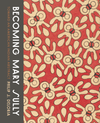
Becoming Mary Sully : toward an American Indian abstract
Deloria, Philip J.
University of Washington Press
, 2019
; English
; 338 Pages
Dakota Sioux artist Mary Sully was the great-granddaughter of respected nineteenth-century portraitist Thomas Sully, who captured the personalities of America’s first generation of celebrities (including the figure of Andrew Jackson immortalized on the twenty-dollar bill). Born on the Standing Rock reservation in South Dakota in 1896, she was largely self-taught. Steeped in the visual traditions of beadwork, quilling, and hide painting, she also engaged with the experiments in time, space, symbolism, and representation characteristic of early twentieth-century modernist art. And like her great-grandfather Sully was fascinated by celebrity: over two decades, she produced hundreds of colorful and dynamic abstract triptychs, a series of “personality prints” of American public figures like Amelia Earhart, Babe Ruth, and Gertrude Stein.
Sully’s position on the margins of the art world meant that her work was exhibited only a handful of times during her life. In Becoming Mary Sully, Philip J. Deloria reclaims that work from obscurity, exploring her stunning portfolio through the lenses of modernism, industrial design, Dakota women’s aesthetics, mental health, ethnography and anthropology, primitivism, and the American Indian politics of the 1930s. Working in a complex territory oscillating between representation, symbolism, and abstraction, Sully evoked multiple and simultaneous perspectives of time and space. With an intimate yet sweeping style, Deloria recovers in Sully’s work a move toward an anti-colonial aesthetic that claimed a critical role for Indigenous women in American Indian futures—within and distinct from American modernity and modernism.
Deloria, Philip J.
University of Washington Press
, 2019
; English
; 338 Pages
Dakota Sioux artist Mary Sully was the great-granddaughter of respected nineteenth-century portraitist Thomas Sully, who captured the personalities of America’s first generation of celebrities (including the figure of Andrew Jackson immortalized on the twenty-dollar bill). Born on the Standing Rock reservation in South Dakota in 1896, she was largely self-taught. Steeped in the visual traditions of beadwork, quilling, and hide painting, she also engaged with the experiments in time, space, symbolism, and representation characteristic of early twentieth-century modernist art. And like her great-grandfather Sully was fascinated by celebrity: over two decades, she produced hundreds of colorful and dynamic abstract triptychs, a series of “personality prints” of American public figures like Amelia Earhart, Babe Ruth, and Gertrude Stein.
Sully’s position on the margins of the art world meant that her work was exhibited only a handful of times during her life. In Becoming Mary Sully, Philip J. Deloria reclaims that work from obscurity, exploring her stunning portfolio through the lenses of modernism, industrial design, Dakota women’s aesthetics, mental health, ethnography and anthropology, primitivism, and the American Indian politics of the 1930s. Working in a complex territory oscillating between representation, symbolism, and abstraction, Sully evoked multiple and simultaneous perspectives of time and space. With an intimate yet sweeping style, Deloria recovers in Sully’s work a move toward an anti-colonial aesthetic that claimed a critical role for Indigenous women in American Indian futures—within and distinct from American modernity and modernism.
eBook
The gift of knowledge : Ttnúwit Átawish Nch’inch’imamí : reflections on Sahaptin ways
Beavert, Virginia R.; Underriner, Janne L.
University of Washington Press
, 2017
; English
; 202 Pages
The Gift of Knowledge / Ttnuwit Atawish Nch’inch’imamí is a treasure trove of material for those interested in Native American culture. Author Virginia Beavert grew up in a traditional, Indian-speaking household. Both her parents and her maternal grandmother were shamans, and her childhood was populated by people who spoke tribal dialects and languages: Nez Perce, Umatilla, Klikatat, and Yakima Ichishkíin. Her work on Native languages began at age twelve, when she met linguist Melville Jacobs while working for his student, Margaret Kendell. When Jacobs realized that Beavert was a fluent speaker of the Klikatat language, he taught her to read and write the orthography he had developed to record Klikatat myths.
After a stint in the U.S. Air Force during World War II, Beavert went on to earn graduate degrees in education and linguistics, and she has contributed to numerous projects for the preservation of Native language and teachings.
Beavert narrates highlights from her own life and presents cultural teachings, oral history, and stories (many in bilingual Ishishkíin-English format) about family life, religion, ceremonies, food gathering, and other aspects of traditional culture.
Beavert, Virginia R.; Underriner, Janne L.
University of Washington Press
, 2017
; English
; 202 Pages
The Gift of Knowledge / Ttnuwit Atawish Nch’inch’imamí is a treasure trove of material for those interested in Native American culture. Author Virginia Beavert grew up in a traditional, Indian-speaking household. Both her parents and her maternal grandmother were shamans, and her childhood was populated by people who spoke tribal dialects and languages: Nez Perce, Umatilla, Klikatat, and Yakima Ichishkíin. Her work on Native languages began at age twelve, when she met linguist Melville Jacobs while working for his student, Margaret Kendell. When Jacobs realized that Beavert was a fluent speaker of the Klikatat language, he taught her to read and write the orthography he had developed to record Klikatat myths.
After a stint in the U.S. Air Force during World War II, Beavert went on to earn graduate degrees in education and linguistics, and she has contributed to numerous projects for the preservation of Native language and teachings.
Beavert narrates highlights from her own life and presents cultural teachings, oral history, and stories (many in bilingual Ishishkíin-English format) about family life, religion, ceremonies, food gathering, and other aspects of traditional culture.
eBook
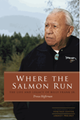
Where the salmon run : the life and legacy of Billy Frank Jr.
Heffernan, Trova
University of Washington Press
, 2017
; English
; 333 Pages
Billy Frank Jr. was an early participant in the fight for tribal fishing rights during the 1960s. Roughed up, belittled, and handcuffed on the riverbank, he emerged as one of the most influential Northwest Indians in modern history. His efforts helped bring about the 1974 ruling by Federal Judge George H. Boldt affirming Northwest tribal fishing rights and allocating half the harvestable catch to them. Today, he continues to support Indian country and people by working to protect salmon and restore the environment.
Where the Salmon Run tells the life story of Billy Frank Jr., from his father's influential tales, through the difficult and contentious days of the Fish Wars, to today. Based on extensive interviews with Billy, his family, close advisors, as well as political allies and former foes, and the holdings of Washington State's cultural institutions, we learn about the man behind the legend, and the people who helped him along the way.
Heffernan, Trova
University of Washington Press
, 2017
; English
; 333 Pages
Billy Frank Jr. was an early participant in the fight for tribal fishing rights during the 1960s. Roughed up, belittled, and handcuffed on the riverbank, he emerged as one of the most influential Northwest Indians in modern history. His efforts helped bring about the 1974 ruling by Federal Judge George H. Boldt affirming Northwest tribal fishing rights and allocating half the harvestable catch to them. Today, he continues to support Indian country and people by working to protect salmon and restore the environment.
Where the Salmon Run tells the life story of Billy Frank Jr., from his father's influential tales, through the difficult and contentious days of the Fish Wars, to today. Based on extensive interviews with Billy, his family, close advisors, as well as political allies and former foes, and the holdings of Washington State's cultural institutions, we learn about the man behind the legend, and the people who helped him along the way.

Audiobook
The Life of William Apess, Pequot
Gura, Philip F.; Burns, Traber
Blackstone Publishing
, 2015
; English
The Pequot Indian intellectual, author, and itinerant preacher William Apess was one the most important voices of the nineteenth century. Here, Philip F. Gura offers the first book-length chronicle of Apess' fascinating and consequential life.
After an impoverished childhood marked by abuse, Apess soldiered with American troops during the War of 1812, converted to Methodism, and rose to fame as a lecturer who lifted a powerful voice of protest against the plight of Native Americans in New England and beyond. His 1829 autobiography, A Son of the Forest, stands as the first published by a Native American writer.
Placing Apess' activism on behalf of Native American people in the context of the era's rising tide of abolitionism, Gura argues that this founding figure of Native intellectual history deserves greater recognition in the pantheon of antebellum reformers.
Following Apess from his early life through the development of his political radicalism to his tragic early death and enduring legacy, this much-needed biography showcases the accomplishments of an extraordinary Native American.

Audiobook
Gura, Philip F.; Burns, Traber
Blackstone Publishing
, 2015
; English
The Pequot Indian intellectual, author, and itinerant preacher William Apess was one the most important voices of the nineteenth century. Here, Philip F. Gura offers the first book-length chronicle of Apess' fascinating and consequential life.
After an impoverished childhood marked by abuse, Apess soldiered with American troops during the War of 1812, converted to Methodism, and rose to fame as a lecturer who lifted a powerful voice of protest against the plight of Native Americans in New England and beyond. His 1829 autobiography, A Son of the Forest, stands as the first published by a Native American writer.
Placing Apess' activism on behalf of Native American people in the context of the era's rising tide of abolitionism, Gura argues that this founding figure of Native intellectual history deserves greater recognition in the pantheon of antebellum reformers.
Following Apess from his early life through the development of his political radicalism to his tragic early death and enduring legacy, this much-needed biography showcases the accomplishments of an extraordinary Native American.
