



Navigation menu
Search
Databases
All Databases
eBook
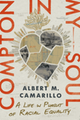
Compton in my soul : a life in pursuit of racial equality
Camarillo, Albert M.
Stanford University Press
, 2024
; English
; 310 Pages
Lessons and inspiration from a lifetime of teaching about race and ethnic relations
When Al Camarillo grew up in Compton, California, racial segregation was the rule. His relatives were among the first Mexican immigrants to settle there—in the only neighborhood where Mexicans were allowed to live. The city's majority was then White, and Compton would shift to a predominantly Black community over Al's youth. Compton in My Soul weaves Al's personal story with histories of this now-infamous place, and illuminates a changing US society—the progress and backslides over half a century for racial equality and educational opportunity.
Entering UCLA in the mid 1960s, Camarillo was among the first students of color, one of only forty-four Mexican Americans on a campus of thousands. He became the first Mexican American in the country to earn a PhD in Chicano/Mexican American history, and established himself as a preeminent US historian with a prestigious appointment at Stanford University. In this candid and warm-hearted memoir, Camarillo offers his career as a vehicle for tracing the evolution of ethnic studies, reflecting on intergenerational struggles to achieve racial equality from the perspective at once of a participant and an historian.
Camarillo's story is a quintessential American chronicle and speaks to the best and worst of who we are as a people and as a nation. He unmasks fundamental contradictions in American life—racial injustice and interracial cooperation, inequality and equal opportunity, racial strife and racial harmony. Even as legacies of inequality still haunt American society, Camarillo writes with a message of hope for a better, more inclusive America—and the aspiration that his life's journey can inspire others as they start down their own path.
Camarillo, Albert M.
Stanford University Press
, 2024
; English
; 310 Pages
Lessons and inspiration from a lifetime of teaching about race and ethnic relations
When Al Camarillo grew up in Compton, California, racial segregation was the rule. His relatives were among the first Mexican immigrants to settle there—in the only neighborhood where Mexicans were allowed to live. The city's majority was then White, and Compton would shift to a predominantly Black community over Al's youth. Compton in My Soul weaves Al's personal story with histories of this now-infamous place, and illuminates a changing US society—the progress and backslides over half a century for racial equality and educational opportunity.
Entering UCLA in the mid 1960s, Camarillo was among the first students of color, one of only forty-four Mexican Americans on a campus of thousands. He became the first Mexican American in the country to earn a PhD in Chicano/Mexican American history, and established himself as a preeminent US historian with a prestigious appointment at Stanford University. In this candid and warm-hearted memoir, Camarillo offers his career as a vehicle for tracing the evolution of ethnic studies, reflecting on intergenerational struggles to achieve racial equality from the perspective at once of a participant and an historian.
Camarillo's story is a quintessential American chronicle and speaks to the best and worst of who we are as a people and as a nation. He unmasks fundamental contradictions in American life—racial injustice and interracial cooperation, inequality and equal opportunity, racial strife and racial harmony. Even as legacies of inequality still haunt American society, Camarillo writes with a message of hope for a better, more inclusive America—and the aspiration that his life's journey can inspire others as they start down their own path.
eBook
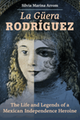
La Güera Rodríguez : the life and legends of a Mexican independence heroine
Arrom, Silvia Marina
University of California Press
, 2021
; English
; 265 Pages
Fact is torn from fiction in this first biography of Mexico’s famous independence heroine, which also traces her subsequent journey from history to myth. María Ignacia Rodríguez de Velasco y Osorio Barba (1778–1850) is an iconic figure in Mexican history. Known by the nickname “La Güera Rodríguez” because she was so fair, she is said to have possessed a remarkably sharp wit, a face fit for statuary, and a penchant for defying the status quo. Charming influential figures such as Simon Bolívar, Alexander von Humboldt, and Agustín de Iturbide, she utilized gold and guile in equal measure to support the independence movement—or so the stories say. In La Güera Rodríguez, Silvia Marina Arrom approaches the legends of Rodríguez de Velasco with a keen eye, seeking to disentangle the woman from the myth. Arrom uses a wide array of primary sources from the period to piece together an intimate portrait of this remarkable woman, followed by a review of her evolving representation in Mexican arts and letters that shows how the legends became ever more fanciful after her death. How much of the story is rooted in fact, and how much is fiction sculpted to fit the cultural sensibilities of a given moment in time? In our contemporary moment of unprecedented misinformation, it is particularly relevant to analyze how and why falsehoods become part of historical memory. La Güera Rodriguez will prove an indispensable resource for those searching to understand late-colonial Mexico, the role of women in the independence movement, and the use of historic figures in crafting national narratives.
Arrom, Silvia Marina
University of California Press
, 2021
; English
; 265 Pages
Fact is torn from fiction in this first biography of Mexico’s famous independence heroine, which also traces her subsequent journey from history to myth. María Ignacia Rodríguez de Velasco y Osorio Barba (1778–1850) is an iconic figure in Mexican history. Known by the nickname “La Güera Rodríguez” because she was so fair, she is said to have possessed a remarkably sharp wit, a face fit for statuary, and a penchant for defying the status quo. Charming influential figures such as Simon Bolívar, Alexander von Humboldt, and Agustín de Iturbide, she utilized gold and guile in equal measure to support the independence movement—or so the stories say. In La Güera Rodríguez, Silvia Marina Arrom approaches the legends of Rodríguez de Velasco with a keen eye, seeking to disentangle the woman from the myth. Arrom uses a wide array of primary sources from the period to piece together an intimate portrait of this remarkable woman, followed by a review of her evolving representation in Mexican arts and letters that shows how the legends became ever more fanciful after her death. How much of the story is rooted in fact, and how much is fiction sculpted to fit the cultural sensibilities of a given moment in time? In our contemporary moment of unprecedented misinformation, it is particularly relevant to analyze how and why falsehoods become part of historical memory. La Güera Rodriguez will prove an indispensable resource for those searching to understand late-colonial Mexico, the role of women in the independence movement, and the use of historic figures in crafting national narratives.

Audiobook
García Márquez, Gabriel; Grossman, Edith; Salazar, Christopher
Blackstone Publishing
, 2021
; English
One of the most acclaimed and revered Nobel laureates begins to tell us the story of his life.
Living to Tell the Tale spans Gabriel García Márquez's life from his birth in 1927 through the start of his career as a writer to the moment in the 1950s when he proposed to the woman who would become his wife. It has the shape, the quality, and the vividness of a conversation with the reader—a tale of people, places, and events as they occur to him: the colorful stories of his eccentric family members; the great influence of his mother and maternal grandfather; his consuming career in journalism, and the friends and mentors who encouraged him; the myths and mysteries of his beloved Colombia; personal details, undisclosed until now, that would appear later, transmuted and transposed, in his fiction; and, above all, his fervent desire to become a writer. And, as in his fiction, the narrator here is an inspired observer of the physical world, able to make clear the emotions and passions that lie at the heart of a life—in this instance, his own.
Living to Tell the Tale is a radiant, powerful, and beguiling memoir that gives us the formation of Gabriel García Márquez as a writer and as a man.

Audiobook
García Márquez, Gabriel; Grossman, Edith; Salazar, Christopher
Blackstone Publishing
, 2021
; English
One of the most acclaimed and revered Nobel laureates begins to tell us the story of his life.
Living to Tell the Tale spans Gabriel García Márquez's life from his birth in 1927 through the start of his career as a writer to the moment in the 1950s when he proposed to the woman who would become his wife. It has the shape, the quality, and the vividness of a conversation with the reader—a tale of people, places, and events as they occur to him: the colorful stories of his eccentric family members; the great influence of his mother and maternal grandfather; his consuming career in journalism, and the friends and mentors who encouraged him; the myths and mysteries of his beloved Colombia; personal details, undisclosed until now, that would appear later, transmuted and transposed, in his fiction; and, above all, his fervent desire to become a writer. And, as in his fiction, the narrator here is an inspired observer of the physical world, able to make clear the emotions and passions that lie at the heart of a life—in this instance, his own.
Living to Tell the Tale is a radiant, powerful, and beguiling memoir that gives us the formation of Gabriel García Márquez as a writer and as a man.

Audiobook
The Story of a Shipwrecked Sailor
García Márquez, Gabriel; Hogan, Randolph; Tiedemann, Gary
Blackstone Publishing
, 2021
; English
In 1955, García Márquez was working for El Espectador, a newspaper in Bogota, when in February of that year eight crew members of the Caldas, a Colombian destroyer, were washed overboard and disappeared. Ten days later one of them turned up, barely alive, on a deserted beach in northern Colombia. This book, which originally appeared as a series of newspaper articles, is García Márquez's account of that sailor's ordeal.

Audiobook
García Márquez, Gabriel; Hogan, Randolph; Tiedemann, Gary
Blackstone Publishing
, 2021
; English
In 1955, García Márquez was working for El Espectador, a newspaper in Bogota, when in February of that year eight crew members of the Caldas, a Colombian destroyer, were washed overboard and disappeared. Ten days later one of them turned up, barely alive, on a deserted beach in northern Colombia. This book, which originally appeared as a series of newspaper articles, is García Márquez's account of that sailor's ordeal.
eBook
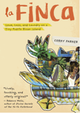
La Finca : love, loss, and laundry on a Tiny Puerto Rican Island
Parker, Corky
Trinity University Press
, 2021
; English
; 209 Pages
At age forty, Parker surrendered to her Swept Away meets Swiss Family Robinson fantasy of running an inn far from her home in the Pacific Northwest. For the next twenty-plus years Parker ran La Finca Caribe, an eco-lodge in Vieques, Puerto Rico. What started as a rough-and-tumble dream grew into a paradise enjoyed by guests from around the world. Sketchbook in hand, Parker chronicled her daily adventures living with the land. La Finca is a lively graphic memoir about a woman creating a new life amid countless challenges, including hurricanes that led her to reconsider everything. It is a story about trusting oneself, self-discovery, accepting disappointment and loss, and falling in love with a place.
Parker, Corky
Trinity University Press
, 2021
; English
; 209 Pages
At age forty, Parker surrendered to her Swept Away meets Swiss Family Robinson fantasy of running an inn far from her home in the Pacific Northwest. For the next twenty-plus years Parker ran La Finca Caribe, an eco-lodge in Vieques, Puerto Rico. What started as a rough-and-tumble dream grew into a paradise enjoyed by guests from around the world. Sketchbook in hand, Parker chronicled her daily adventures living with the land. La Finca is a lively graphic memoir about a woman creating a new life amid countless challenges, including hurricanes that led her to reconsider everything. It is a story about trusting oneself, self-discovery, accepting disappointment and loss, and falling in love with a place.
eBook
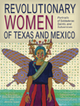
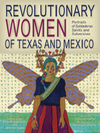
Revolutionary women of Texas and Mexico : portraits of soldaderas, saints, and subversives
Huerta, Dolores (Foreword by); Cantú, Norma Elia (Afterword by); Sosa, Kathy; Clark, Ellen Riojas; Speed, Jennifer; Sosa, Kathy; Sosa, Lionel
Maverick Books
, 2020
; English
; 289 Pages
Much ink has been spilled over the men of the Mexican Revolution, but far less has been written about its women. Kathy Sosa, Ellen Riojas Clark, and Jennifer Speed set out to right this wrong in Revolutionary Women of Texas and Mexico, which celebrates the women of early Texas and Mexico who refused to walk a traditional path.
The anthology embraces an expansive definition of the word revolutionary by looking at female role models from decades ago and subversives who continue to stand up for their visions and ideals. Eighteen portraits introduce readers to these rebels by providing glimpses into their lives and places in history. At the heart of the portraits are the women of the Mexican Revolution (1910–1920)—women like the soldaderas who shadowed the Mexican armies, tasked with caring for and treating the wounded troops. Filling in the gaps are iconic godmothers like the Virgin of Guadalupe and La Malinche whose stories are seamlessly woven into the collective history of Texas and Mexico. Portraits of artists Frida Kahlo and Nahui Olin and activists Emma Tenayuca and Genoveva Morales take readers from postrevolutionary Mexico into the present.
Portraits include a biography, an original pen-and-ink illustration, and a historical or literary piece by a contemporary writer who was inspired by their subject’s legacy. Sandra Cisneros, Laura Esquivel, Elena Poniatowska, Carmen Tafolla, and other contributors bring their experience to bear in their pieces, and historian Jennifer Speed’s introduction contextualizes each woman in her cultural-historical moment. A foreword by civil rights activist Dolores Huerta and an afterword by scholar Norma E. Cantú bookend this powerful celebration of women who revolutionized their worlds.
Huerta, Dolores (Foreword by); Cantú, Norma Elia (Afterword by); Sosa, Kathy; Clark, Ellen Riojas; Speed, Jennifer; Sosa, Kathy; Sosa, Lionel
Maverick Books
, 2020
; English
; 289 Pages
Much ink has been spilled over the men of the Mexican Revolution, but far less has been written about its women. Kathy Sosa, Ellen Riojas Clark, and Jennifer Speed set out to right this wrong in Revolutionary Women of Texas and Mexico, which celebrates the women of early Texas and Mexico who refused to walk a traditional path.
The anthology embraces an expansive definition of the word revolutionary by looking at female role models from decades ago and subversives who continue to stand up for their visions and ideals. Eighteen portraits introduce readers to these rebels by providing glimpses into their lives and places in history. At the heart of the portraits are the women of the Mexican Revolution (1910–1920)—women like the soldaderas who shadowed the Mexican armies, tasked with caring for and treating the wounded troops. Filling in the gaps are iconic godmothers like the Virgin of Guadalupe and La Malinche whose stories are seamlessly woven into the collective history of Texas and Mexico. Portraits of artists Frida Kahlo and Nahui Olin and activists Emma Tenayuca and Genoveva Morales take readers from postrevolutionary Mexico into the present.
Portraits include a biography, an original pen-and-ink illustration, and a historical or literary piece by a contemporary writer who was inspired by their subject’s legacy. Sandra Cisneros, Laura Esquivel, Elena Poniatowska, Carmen Tafolla, and other contributors bring their experience to bear in their pieces, and historian Jennifer Speed’s introduction contextualizes each woman in her cultural-historical moment. A foreword by civil rights activist Dolores Huerta and an afterword by scholar Norma E. Cantú bookend this powerful celebration of women who revolutionized their worlds.

eBook
Ordaz, Leticia; Calle, Juan
Immedium
, 2020
; English
; 41 Pages
Enjoy the first children's picture book about becoming a TV news anchor. Amazingly illustrated, this inspiring Latina autobiography features a bilingual Spanish translation.
Growing up near Sacramento, CA, little Leticia dreams of being a TV newscaster. But no one on TV looks like her. This shy, small-town girl overcomes barriers, like her fear of public speaking, to become the first in her hardworking Mexican family to attend college.
Then, starting as an intern, she climbs the ladder, travels to different cities, and reports on a rainbow of stories. Eventually can she land her dream job... to work at her hometown Channel 3? Join Leticia on her exciting journey to become that TV anchor who will encourage the next generation of children to attain their goals.
Children watch television every day but have never read a storybook about making a career in TV news... until now! Kids will be inspired by Leticia’s educational, funny, and poignant experiences. Parents will appreciate the perspective of a working woman and Latinx role model. Teachers and librarians will value the bilingual translation in Spanish and glossary of TV terms.
This autobiography is topical, as immigrants and women continue the struggle to claim their rightful place in America. The dynamic illustrations by Juan Calle go behind the scenes to show how breaking news is covered in a way no other storybook has done before. Join Leticia on her inspiring journey to achieve the American Dream.
“All children need attention to the spark that ignites their ambition. Leticia's true life quest for excellence in TV News is charmingly told and illustrated and will be the example that shows you the way.”
—Lois Hart and Dave Walker, first CNN TV anchors
Ordaz, Leticia; Calle, Juan
Immedium
, 2020
; English
; 41 Pages
Enjoy the first children's picture book about becoming a TV news anchor. Amazingly illustrated, this inspiring Latina autobiography features a bilingual Spanish translation.
Growing up near Sacramento, CA, little Leticia dreams of being a TV newscaster. But no one on TV looks like her. This shy, small-town girl overcomes barriers, like her fear of public speaking, to become the first in her hardworking Mexican family to attend college.
Then, starting as an intern, she climbs the ladder, travels to different cities, and reports on a rainbow of stories. Eventually can she land her dream job... to work at her hometown Channel 3? Join Leticia on her exciting journey to become that TV anchor who will encourage the next generation of children to attain their goals.
Children watch television every day but have never read a storybook about making a career in TV news... until now! Kids will be inspired by Leticia’s educational, funny, and poignant experiences. Parents will appreciate the perspective of a working woman and Latinx role model. Teachers and librarians will value the bilingual translation in Spanish and glossary of TV terms.
This autobiography is topical, as immigrants and women continue the struggle to claim their rightful place in America. The dynamic illustrations by Juan Calle go behind the scenes to show how breaking news is covered in a way no other storybook has done before. Join Leticia on her inspiring journey to achieve the American Dream.
“All children need attention to the spark that ignites their ambition. Leticia's true life quest for excellence in TV News is charmingly told and illustrated and will be the example that shows you the way.”
—Lois Hart and Dave Walker, first CNN TV anchors
eBook
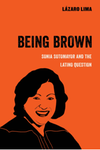
Being brown : Sonia Sotomayor and the Latino question
Lima, Lázaro
University of California Press
, 2019
; English
; 218 Pages
Being Brown: Sonia Sotomayor and the Latino Question tells the story of the country’s first Latina Supreme Court Associate Justice’s rise to the pinnacle of American public life at a moment of profound demographic and political transformation. While Sotomayor’s confirmation appeared to signal the greater acceptance and inclusion of Latinos—the nation’s largest “minority majority”—the uncritical embrace of her status as a “possibility model” and icon paradoxically erased the fact that her success was due to civil rights policies and safeguards that no longer existed.
Being Brown analyzes Sotomayor’s story of success and accomplishment, despite seemingly insurmountable odds, in order to ask: What do we lose in democratic practice when we allow symbolic inclusion to supplant the work of meaningful political enfranchisement? In a historical moment of resurgent racism, unrelenting Latino bashing, and previously unimaginable “blood and soil” Nazism, Being Brown explains what we stand to lose when we allow democratic values to be trampled for the sake of political expediency, and demonstrates how understanding “the Latino question” can fortify democratic practice.
Being Brown provides the historical vocabulary for understanding why the Latino body politic is central to the country’s future and why Sonia Sotomayor’s biography provides an important window into understanding America, and the country’s largest minority majority, at this historical juncture. In the process, Being Brown counters “alternative facts” with historical precision and ethical clarity to invigorate the best of democratic practice at a historical moment when we need it most.
Lima, Lázaro
University of California Press
, 2019
; English
; 218 Pages
Being Brown: Sonia Sotomayor and the Latino Question tells the story of the country’s first Latina Supreme Court Associate Justice’s rise to the pinnacle of American public life at a moment of profound demographic and political transformation. While Sotomayor’s confirmation appeared to signal the greater acceptance and inclusion of Latinos—the nation’s largest “minority majority”—the uncritical embrace of her status as a “possibility model” and icon paradoxically erased the fact that her success was due to civil rights policies and safeguards that no longer existed.
Being Brown analyzes Sotomayor’s story of success and accomplishment, despite seemingly insurmountable odds, in order to ask: What do we lose in democratic practice when we allow symbolic inclusion to supplant the work of meaningful political enfranchisement? In a historical moment of resurgent racism, unrelenting Latino bashing, and previously unimaginable “blood and soil” Nazism, Being Brown explains what we stand to lose when we allow democratic values to be trampled for the sake of political expediency, and demonstrates how understanding “the Latino question” can fortify democratic practice.
Being Brown provides the historical vocabulary for understanding why the Latino body politic is central to the country’s future and why Sonia Sotomayor’s biography provides an important window into understanding America, and the country’s largest minority majority, at this historical juncture. In the process, Being Brown counters “alternative facts” with historical precision and ethical clarity to invigorate the best of democratic practice at a historical moment when we need it most.

Audiobook
Retablos: Stories from a Life Lived along the Border
Solis, Octavio
Blackstone Publishing
, 2019
; English
Seminal moments, rites of passage, crystalline vignettes—a memoir about growing up brown at the US/Mexico border
The tradition of retablo painting dates back to the Spanish Conquest in both Mexico and the US Southwest. Humble ex-votos, retablos are usually painted on repurposed metal, and in one small tableau they tell the story of a crisis and offer thanks for its successful resolution.
In this uniquely framed memoir, playwright Octavio Solis channels his youth in El Paso, Texas. Like traditional retablos, the rituals of childhood and rites of passage are remembered as singular, dramatic events, self-contained episodes with life-changing reverberations.
Living in a home just a mile from the Rio Grande, Octavio is a skinny brown kid on the border, growing up among those who live there, and those passing through on their way north. From the first terrible self-awareness of racism to inspired afternoons playing air trumpet with Herb Alpert, from an innocent game of hide-and-seek to the discovery of a Mexican girl hiding in the cotton fields, Solis reflects on the moments of trauma and transformation that shaped him into a man.
Solis, Octavio
Blackstone Publishing
, 2019
; English
Seminal moments, rites of passage, crystalline vignettes—a memoir about growing up brown at the US/Mexico border
The tradition of retablo painting dates back to the Spanish Conquest in both Mexico and the US Southwest. Humble ex-votos, retablos are usually painted on repurposed metal, and in one small tableau they tell the story of a crisis and offer thanks for its successful resolution.
In this uniquely framed memoir, playwright Octavio Solis channels his youth in El Paso, Texas. Like traditional retablos, the rituals of childhood and rites of passage are remembered as singular, dramatic events, self-contained episodes with life-changing reverberations.
Living in a home just a mile from the Rio Grande, Octavio is a skinny brown kid on the border, growing up among those who live there, and those passing through on their way north. From the first terrible self-awareness of racism to inspired afternoons playing air trumpet with Herb Alpert, from an innocent game of hide-and-seek to the discovery of a Mexican girl hiding in the cotton fields, Solis reflects on the moments of trauma and transformation that shaped him into a man.
eBook
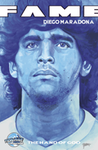
FAME: Diego Maradona: the hand of god
Frizell, Michael L.; Bernuy, Angel
TidalWave Productions
, 2016
; English
; 23 Pages
Americans call the game “soccer,” while the rest of the world dubs it “football.” Whatever it’s called, fans know the name while former and current players whisper it in respect for the man many consider to be the best player in world. Diego Maradona’s career was formed while he was only a child kicking a ball in the slums of Buenos Aires, Argentina, but he became a legend during the World Cup tournament in 1986 and named FIFA Player of the 20th Century alongside his childhood hero, the remarkable Pelé. His storied career is chronicled in this latest illustrated biography.
Frizell, Michael L.; Bernuy, Angel
TidalWave Productions
, 2016
; English
; 23 Pages
Americans call the game “soccer,” while the rest of the world dubs it “football.” Whatever it’s called, fans know the name while former and current players whisper it in respect for the man many consider to be the best player in world. Diego Maradona’s career was formed while he was only a child kicking a ball in the slums of Buenos Aires, Argentina, but he became a legend during the World Cup tournament in 1986 and named FIFA Player of the 20th Century alongside his childhood hero, the remarkable Pelé. His storied career is chronicled in this latest illustrated biography.
