

Navigation menu
Search
Databases
All Databases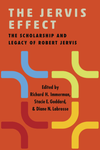
eBook
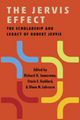
The Jervis effect : the scholarship and legacy of Robert Jervis
Immerman, Richard H.; Goddard, Stacie E.; Labrosse, Diane N.
Columbia University Press
, 2026
; English
; 389 Pages
Robert Jervis (1940–2021) was a titan in the field of international relations. Part political scientist, part psychologist, part historian, and part policy analyst, he drew on a vast array of theoretical approaches and empirical methods to develop keen and distinctive insights on a wide range of topics. From academic political science to the policy world, the scope of Jervis’s influence is astonishing. Bringing together top scholars in political science, international relations, and history, this book offers a deep dive into Jervis’s pathbreaking scholarship and its legacy across disciplines. The authors consider how his work reshaped subjects such as nuclear strategy, arms control, deterrence theory, structural realism, diplomatic history, intelligence analysis, and the causes of war. They further discuss Jervis’s leadership on the CIA’s declassification board, which provided a bridge between academics and the intelligence community, and his influence as a public intellectual. The contributors also pay tribute to Jervis as a mentor, colleague, and friend who worked to build and sustain a broad intellectual community. Offering a wide-ranging overview of Jervis’s most important contributions to many fields, this book provides a deep understanding of Jervis’s scholarly work, which continues to inspire new generations of scholars who seek to follow in his footsteps.
Immerman, Richard H.; Goddard, Stacie E.; Labrosse, Diane N.
Columbia University Press
, 2026
; English
; 389 Pages
Robert Jervis (1940–2021) was a titan in the field of international relations. Part political scientist, part psychologist, part historian, and part policy analyst, he drew on a vast array of theoretical approaches and empirical methods to develop keen and distinctive insights on a wide range of topics. From academic political science to the policy world, the scope of Jervis’s influence is astonishing. Bringing together top scholars in political science, international relations, and history, this book offers a deep dive into Jervis’s pathbreaking scholarship and its legacy across disciplines. The authors consider how his work reshaped subjects such as nuclear strategy, arms control, deterrence theory, structural realism, diplomatic history, intelligence analysis, and the causes of war. They further discuss Jervis’s leadership on the CIA’s declassification board, which provided a bridge between academics and the intelligence community, and his influence as a public intellectual. The contributors also pay tribute to Jervis as a mentor, colleague, and friend who worked to build and sustain a broad intellectual community. Offering a wide-ranging overview of Jervis’s most important contributions to many fields, this book provides a deep understanding of Jervis’s scholarly work, which continues to inspire new generations of scholars who seek to follow in his footsteps.
eBook
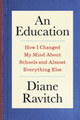
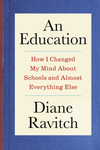
An education : how I changed my mind about schools and almost everything else
Ravitch, Diane
Columbia University Press
, 2025
; English
; 243 Pages
"From her early advocacy for voluntary national standards in the 1980s to her tenure as Assistant Secretary of Education under Presidents George H. W. Bush and Bill Clinton, Diane Ravitch was an advocate the policies in the style of No Child Left Behind-high-stakes testing, school choice, privatization, and charter schools. Then, as she writes in this memoir, "I looked at what happened when they were put into practice, and I realized how wrong I was." By 2010, with the publication of The Death and Life of the Great American School System, she had repudiated her earlier beliefs, arguing instead for holistic education, stronger social welfare for pregnant women, and rebuking the wave of charter schools, privatization, and union busting that had hollowed out the public school system. "To use current parlance," she writes, "I went from being a staunch conservative to being woke." In this memoir of her life's work as a historian and policy advocate, Ravitch traces her ideological evolution. From championing evidence-based curriculum and instruction, notably the Core Knowledge movement and the Common Core initiative, to her leftward turn, arguing for stronger collective bargaining for teachers and more investment in public schools. In this book, she explains her journey-from her childhood in Houston to her education at Columbia to her stints in government in the Department of Education and the National Assessment Governing Board. Through candid reflections on decades of research on education outcomes, Ravitch makes the case for becoming, as she calls herself, "an activist on behalf of public schools.""-- Provided by publisher
Ravitch, Diane
Columbia University Press
, 2025
; English
; 243 Pages
"From her early advocacy for voluntary national standards in the 1980s to her tenure as Assistant Secretary of Education under Presidents George H. W. Bush and Bill Clinton, Diane Ravitch was an advocate the policies in the style of No Child Left Behind-high-stakes testing, school choice, privatization, and charter schools. Then, as she writes in this memoir, "I looked at what happened when they were put into practice, and I realized how wrong I was." By 2010, with the publication of The Death and Life of the Great American School System, she had repudiated her earlier beliefs, arguing instead for holistic education, stronger social welfare for pregnant women, and rebuking the wave of charter schools, privatization, and union busting that had hollowed out the public school system. "To use current parlance," she writes, "I went from being a staunch conservative to being woke." In this memoir of her life's work as a historian and policy advocate, Ravitch traces her ideological evolution. From championing evidence-based curriculum and instruction, notably the Core Knowledge movement and the Common Core initiative, to her leftward turn, arguing for stronger collective bargaining for teachers and more investment in public schools. In this book, she explains her journey-from her childhood in Houston to her education at Columbia to her stints in government in the Department of Education and the National Assessment Governing Board. Through candid reflections on decades of research on education outcomes, Ravitch makes the case for becoming, as she calls herself, "an activist on behalf of public schools.""-- Provided by publisher
eBook
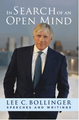
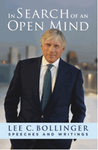
In search of an open mind : speeches and writings
Bollinger, Lee C.
Columbia University Press
, 2024
; English
; 359 Pages
Throughout his twenty-one-year tenure as president of Columbia University, Lee C. Bollinger was an outspoken national leader on many of the major issues confronting higher education and society more broadly. One of the country’s preeminent First Amendment scholars, he published frequently on free speech and press while leading a wide range of transformational university initiatives. During a period marked by profound change, he spoke within and beyond the academy about the challenges facing journalism, global free speech, and academic freedom, as well as the critical value of increasing racial and cultural diversity in higher education through affirmative action. In Search of an Open Mind is a curated selection of Bollinger’s speeches, articles, and opinion columns during these momentous decades, reflecting on many significant events and challenges. These pieces cover a broad array of topics, from civil rights and civil liberties to the nature of the university and living a good life. Bollinger spoke often about the essential role of affirmative action in college admissions in overcoming the long legacy of racial discrimination, having led the litigation in the landmark case of Grutter v. Bollinger, in which, for the first time, a majority of the Supreme Court upheld the practice as constitutional. With the engaging writing style of a seasoned speaker and gifted teacher, this book provides first-hand insights into central issues of our civic and political life that are as timely now as when they were originally delivered.
Bollinger, Lee C.
Columbia University Press
, 2024
; English
; 359 Pages
Throughout his twenty-one-year tenure as president of Columbia University, Lee C. Bollinger was an outspoken national leader on many of the major issues confronting higher education and society more broadly. One of the country’s preeminent First Amendment scholars, he published frequently on free speech and press while leading a wide range of transformational university initiatives. During a period marked by profound change, he spoke within and beyond the academy about the challenges facing journalism, global free speech, and academic freedom, as well as the critical value of increasing racial and cultural diversity in higher education through affirmative action. In Search of an Open Mind is a curated selection of Bollinger’s speeches, articles, and opinion columns during these momentous decades, reflecting on many significant events and challenges. These pieces cover a broad array of topics, from civil rights and civil liberties to the nature of the university and living a good life. Bollinger spoke often about the essential role of affirmative action in college admissions in overcoming the long legacy of racial discrimination, having led the litigation in the landmark case of Grutter v. Bollinger, in which, for the first time, a majority of the Supreme Court upheld the practice as constitutional. With the engaging writing style of a seasoned speaker and gifted teacher, this book provides first-hand insights into central issues of our civic and political life that are as timely now as when they were originally delivered.
eBook
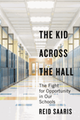
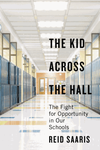
The kid across the hall : the fi ght for opportunity in our schools
Saaris, Reid
Redwood Press
, 2023
; English
; 354 Pages
Growing up, Reid was confused and disturbed by the radically different opportunities his best friend received. After a childhood spent together, Jamie and Reid found themselves on opposite sides of a high school hallway that separated kids based on a misunderstanding of their supposed "potential." The gap between the two friends widened as Reid's classes enabled him to pursue an elite college degree across the country studying educational opportunity and teaching.
Then, Reid became a teacher at an under-resourced South Carolina high school where efforts to serve the incredible students were stymied by internal segregation and administrative ambivalence. He was disabused of the Hollywood myth that a good teacher could simply save the day, when each false start with his students forced him to reckon with how much he didn't know. After Reid assigned students a project to create a positive change, they pushed him to figure out how he, too, could make a bigger difference.
While an individual's efforts are no match against entrenched systems, Reid learned firsthand that a community of people powered by data can effect change. This lesson motivated him to found Equal Opportunity Schools (EOS), a nationwide nonprofit dedicated to finding the students who were overlooked, discouraged, or otherwise missing from higher-level classes.
As EOS became more successful, partnering with major philanthropies, universities, and even the White House, Reid grappled with his role as a leader. Only through the efforts of, first, his students in South Carolina, and later his team at EOS, would he come to understand, and begin to overcome, the limitations of his vision. Informed by extensive new data on educational opportunity in America, The Kid Across the Hall is a powerful story of learning and unlearning
of leading and learning to follow.
Saaris, Reid
Redwood Press
, 2023
; English
; 354 Pages
Growing up, Reid was confused and disturbed by the radically different opportunities his best friend received. After a childhood spent together, Jamie and Reid found themselves on opposite sides of a high school hallway that separated kids based on a misunderstanding of their supposed "potential." The gap between the two friends widened as Reid's classes enabled him to pursue an elite college degree across the country studying educational opportunity and teaching.
Then, Reid became a teacher at an under-resourced South Carolina high school where efforts to serve the incredible students were stymied by internal segregation and administrative ambivalence. He was disabused of the Hollywood myth that a good teacher could simply save the day, when each false start with his students forced him to reckon with how much he didn't know. After Reid assigned students a project to create a positive change, they pushed him to figure out how he, too, could make a bigger difference.
While an individual's efforts are no match against entrenched systems, Reid learned firsthand that a community of people powered by data can effect change. This lesson motivated him to found Equal Opportunity Schools (EOS), a nationwide nonprofit dedicated to finding the students who were overlooked, discouraged, or otherwise missing from higher-level classes.
As EOS became more successful, partnering with major philanthropies, universities, and even the White House, Reid grappled with his role as a leader. Only through the efforts of, first, his students in South Carolina, and later his team at EOS, would he come to understand, and begin to overcome, the limitations of his vision. Informed by extensive new data on educational opportunity in America, The Kid Across the Hall is a powerful story of learning and unlearning
of leading and learning to follow.
eBook
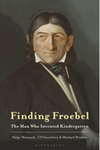
Finding Froebel : the man who invented kindergarten
Wasmuth, Helge; Sauerbrey, Ulf; Winkler, Michael
Bloomsbury Publishing
, 2023
; English
; 273 Pages
Friedrich Froebel, the 'father of kindergarten', is one of the most influential pedagogues of the 19th century. However, relatively little is known about his life, his successes and failures, and his personal relationships. Based on many untranslated and unknown letters, this new biography presents Froebel as a brilliant but also flawed man. Beginning with his childhood and the early death of his mother, as well as his difficult relationship with his father and stepmother, we see the early seeds of Froebel's interest in children and the training of early childhood practitioners. While Froebel lacked basic academic knowledge due to his poor early education, he was able to overcome these deficits and found an educational institute, and develop ground-breaking educational theories about play and pedagogy. He authored multiple books, including his most famous work The Education of Man. The focus of this book, though, is not on Froebel's educational theories but on his complicated relationships with his family, the Keilhau community, and the mother of one of his pupils, Caroline von Holzhausen, whom he called the "rune of his life". After many personal and professional disappointments, Froebel finally came up with the idea that made him famous until today: kindergarten. In the last decade of his life, he became a salesman of this new idea and worked tirelessly for the establishment of the kindergarten movement. However, when the Prussian government banned kindergarten shortly before his death, Froebel was broken - even if kindergarten lives until today
Wasmuth, Helge; Sauerbrey, Ulf; Winkler, Michael
Bloomsbury Publishing
, 2023
; English
; 273 Pages
Friedrich Froebel, the 'father of kindergarten', is one of the most influential pedagogues of the 19th century. However, relatively little is known about his life, his successes and failures, and his personal relationships. Based on many untranslated and unknown letters, this new biography presents Froebel as a brilliant but also flawed man. Beginning with his childhood and the early death of his mother, as well as his difficult relationship with his father and stepmother, we see the early seeds of Froebel's interest in children and the training of early childhood practitioners. While Froebel lacked basic academic knowledge due to his poor early education, he was able to overcome these deficits and found an educational institute, and develop ground-breaking educational theories about play and pedagogy. He authored multiple books, including his most famous work The Education of Man. The focus of this book, though, is not on Froebel's educational theories but on his complicated relationships with his family, the Keilhau community, and the mother of one of his pupils, Caroline von Holzhausen, whom he called the "rune of his life". After many personal and professional disappointments, Froebel finally came up with the idea that made him famous until today: kindergarten. In the last decade of his life, he became a salesman of this new idea and worked tirelessly for the establishment of the kindergarten movement. However, when the Prussian government banned kindergarten shortly before his death, Froebel was broken - even if kindergarten lives until today
eBook
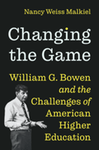
Changing the game : William G. Bowen and the challenges of American higher education
Malkiel, Nancy Weiss
Princeton University Press
, 2023
; English
; 465 Pages
As provost and then president of Princeton University, William G. Bowen (1933–2016) took on the biggest and most complex challenges confronting higher education: cost disease, inclusion, affirmative action, college access, and college completion. Later, as president of the Andrew W. Mellon Foundation, he took his vision for higher education—and the strategies for accomplishing that vision—to a larger arena. Along the way, he wrote a series of influential books, including the widely read The Shape of the River (coauthored with Derek Bok), which documented the success of policies designed to increase racial diversity at elite institutions. In Changing the Game, drawing on deep archival research and hundreds of interviews, Nancy Weiss Malkiel argues that Bowen was the most consequential higher education leader of his generation.
Bowen, who became Princeton’s president in 1972 at the age of 38, worked to shore up the university’s financial stability, implement coeducation, and create a more inclusive institution. Breaking through the traditional Ivy League demographics of white, Protestant, and male, he embraced equal access in admissions for women and men and actively sought to enroll Black, Hispanic, and Asian American students. To “increase the intellectual muscle of the faculty,” he used targeted recruiting and enforced higher scholarly standards. In 1988, Bowen moved on to Mellon, where, among many other accomplishments, he developed digital research tools, most notably JSTOR, and promoted racial diversity through the Mellon Mays Undergraduate Fellowship. Attacking problems with tenacity, insight, and deep knowledge, Bowen showed the world of higher education how a visionary leader can transform an institution.
Malkiel, Nancy Weiss
Princeton University Press
, 2023
; English
; 465 Pages
As provost and then president of Princeton University, William G. Bowen (1933–2016) took on the biggest and most complex challenges confronting higher education: cost disease, inclusion, affirmative action, college access, and college completion. Later, as president of the Andrew W. Mellon Foundation, he took his vision for higher education—and the strategies for accomplishing that vision—to a larger arena. Along the way, he wrote a series of influential books, including the widely read The Shape of the River (coauthored with Derek Bok), which documented the success of policies designed to increase racial diversity at elite institutions. In Changing the Game, drawing on deep archival research and hundreds of interviews, Nancy Weiss Malkiel argues that Bowen was the most consequential higher education leader of his generation.
Bowen, who became Princeton’s president in 1972 at the age of 38, worked to shore up the university’s financial stability, implement coeducation, and create a more inclusive institution. Breaking through the traditional Ivy League demographics of white, Protestant, and male, he embraced equal access in admissions for women and men and actively sought to enroll Black, Hispanic, and Asian American students. To “increase the intellectual muscle of the faculty,” he used targeted recruiting and enforced higher scholarly standards. In 1988, Bowen moved on to Mellon, where, among many other accomplishments, he developed digital research tools, most notably JSTOR, and promoted racial diversity through the Mellon Mays Undergraduate Fellowship. Attacking problems with tenacity, insight, and deep knowledge, Bowen showed the world of higher education how a visionary leader can transform an institution.
eBook
Scholarship and controversy : centenary essays on the life and work of Sir Kenneth Dover
Halliwell, Stephen; Stray, Christopher
Bloomsbury Publishing
, 2023
; English
; 377 Pages
The essays collected in this volume were written to mark the centenary of the birth of Sir Kenneth Dover, one of the twentieth century's most influential classical scholars. Between them, they explore the two major sides of his career: his groundbreaking scholarship on Greek language, literature and history, and the more public-facing roles he assumed in universities and at the British Academy which brought him into the national spotlight, not without some notoriety, in his later years.
The contributors consider the various facets of Dover's life and work from a range of perspectives which reflect the burgeoning field of the history of scholarship. Some contributors were students and colleagues of Dover's at different stages of his career, while others are themselves leading experts in areas of Classics to which he devoted his energies. Chapters on his academic publications and on the controversies he faced in the public realm are not bland celebrations of his legacy but offer critical assessments of his motivations and achievements, cumulatively demonstrating that there is much to be learned not just about Dover himself but also about the fields he helped to shape.
Halliwell, Stephen; Stray, Christopher
Bloomsbury Publishing
, 2023
; English
; 377 Pages
The essays collected in this volume were written to mark the centenary of the birth of Sir Kenneth Dover, one of the twentieth century's most influential classical scholars. Between them, they explore the two major sides of his career: his groundbreaking scholarship on Greek language, literature and history, and the more public-facing roles he assumed in universities and at the British Academy which brought him into the national spotlight, not without some notoriety, in his later years.
The contributors consider the various facets of Dover's life and work from a range of perspectives which reflect the burgeoning field of the history of scholarship. Some contributors were students and colleagues of Dover's at different stages of his career, while others are themselves leading experts in areas of Classics to which he devoted his energies. Chapters on his academic publications and on the controversies he faced in the public realm are not bland celebrations of his legacy but offer critical assessments of his motivations and achievements, cumulatively demonstrating that there is much to be learned not just about Dover himself but also about the fields he helped to shape.

Audiobook
Paper Belt on Fire: How Renegade Investors Sparked a Revolt Against the University
Gibson, Michael; Boyles, Alex
Blackstone Publishing
, 2022
; English
Paper Belt on Fire is the unlikely account of how two outsiders with no experience in finance―a charter school principal and defrocked philosopher―start a venture capital fund to short the higher education bubble.
Against the contempt of the education establishment, they discover, mentor, and back the leading lights in the next generation of dropout innovators and in the end make their investors millions.
Can such a madcap strategy help renew American creativity? Who would do such a thing?
This story is the behind-the-scenes romp of one team that threw educational authorities into a panic. It fuses real-life personal drama with history, science, and philosophy to show how higher education and other institutions must evolve to meet the dire challenges of tomorrow.
Gibson, Michael; Boyles, Alex
Blackstone Publishing
, 2022
; English
Paper Belt on Fire is the unlikely account of how two outsiders with no experience in finance―a charter school principal and defrocked philosopher―start a venture capital fund to short the higher education bubble.
Against the contempt of the education establishment, they discover, mentor, and back the leading lights in the next generation of dropout innovators and in the end make their investors millions.
Can such a madcap strategy help renew American creativity? Who would do such a thing?
This story is the behind-the-scenes romp of one team that threw educational authorities into a panic. It fuses real-life personal drama with history, science, and philosophy to show how higher education and other institutions must evolve to meet the dire challenges of tomorrow.
eBook
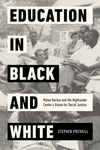
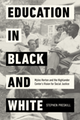
Education in black and white : Myles Horton and the Highlander Center’s vision for social justice
Preskill, Stephen
University of California Press
, 2021
; English
; 385 Pages
How Myles Horton and the Highlander Folk School catalyzed social justice and democratic education
For too long, the story of life-changing teacher and activist Myles Horton has escaped the public spotlight. An inspiring and humble leader whose work influenced the civil rights movement, Horton helped thousands of marginalized people gain greater control over their lives. Born and raised in early twentieth-century Tennessee, Horton was appalled by the disrespect and discrimination that was heaped on poor people—both black and white—throughout Appalachia. He resolved to create a place that would be available to all, where regular people could talk, learn from one another, and get to the heart of issues of class and race, and right and wrong. And so in 1932, Horton cofounded the Highlander Folk School, smack in the middle of Tennessee.
The first biography of Myles Horton in twenty-five years, Education in Black and White focuses on the educational theories and strategies he first developed at Highlander to serve the interests of the poor, the marginalized, and the oppressed. His personal vision keenly influenced everyone from Rosa Parks and Martin Luther King, Jr., to Eleanor Roosevelt and Congressman John Lewis. Stephen Preskill chronicles how Horton gained influence as an advocate for organized labor, an activist for civil rights, a supporter of Appalachian self-empowerment, an architect of an international popular-education network, and a champion for direct democracy, showing how the example Horton set remains education’s best hope for today.
eBook
Preskill, Stephen
University of California Press
, 2021
; English
; 385 Pages
How Myles Horton and the Highlander Folk School catalyzed social justice and democratic education
For too long, the story of life-changing teacher and activist Myles Horton has escaped the public spotlight. An inspiring and humble leader whose work influenced the civil rights movement, Horton helped thousands of marginalized people gain greater control over their lives. Born and raised in early twentieth-century Tennessee, Horton was appalled by the disrespect and discrimination that was heaped on poor people—both black and white—throughout Appalachia. He resolved to create a place that would be available to all, where regular people could talk, learn from one another, and get to the heart of issues of class and race, and right and wrong. And so in 1932, Horton cofounded the Highlander Folk School, smack in the middle of Tennessee.
The first biography of Myles Horton in twenty-five years, Education in Black and White focuses on the educational theories and strategies he first developed at Highlander to serve the interests of the poor, the marginalized, and the oppressed. His personal vision keenly influenced everyone from Rosa Parks and Martin Luther King, Jr., to Eleanor Roosevelt and Congressman John Lewis. Stephen Preskill chronicles how Horton gained influence as an advocate for organized labor, an activist for civil rights, a supporter of Appalachian self-empowerment, an architect of an international popular-education network, and a champion for direct democracy, showing how the example Horton set remains education’s best hope for today.
eBook
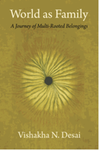
World as family : a journey of multi-rooted belongings
Desai, Vishakha N.
Columbia University Press
, 2021
; English
; 297 Pages
Vishakha N. Desai uses her life experiences to explore the significance of living globally and its urgency for our current moment. She weaves her narrative arc from growing up in a Gandhian household in Ahmedabad to arriving in the United States as a seventeen-year-old exchange student and her subsequent career as a dancer, curator, institutional leader, and teacher against the broad sweep of political and social changes in the two countries she calls home. Through her personal story, Desai reframes the idea of what it means to be global, considering how to lead a life of multiple belongings without losing local and national affinities. Vividly conjuring the complexities and exhilaration of a life that is rooted in many places, World as Family is a vital book for everyone who aspires to connect across borders-real and perceived-and bring to fruition the ideal of a global family.
Desai, Vishakha N.
Columbia University Press
, 2021
; English
; 297 Pages
Vishakha N. Desai uses her life experiences to explore the significance of living globally and its urgency for our current moment. She weaves her narrative arc from growing up in a Gandhian household in Ahmedabad to arriving in the United States as a seventeen-year-old exchange student and her subsequent career as a dancer, curator, institutional leader, and teacher against the broad sweep of political and social changes in the two countries she calls home. Through her personal story, Desai reframes the idea of what it means to be global, considering how to lead a life of multiple belongings without losing local and national affinities. Vividly conjuring the complexities and exhilaration of a life that is rooted in many places, World as Family is a vital book for everyone who aspires to connect across borders-real and perceived-and bring to fruition the ideal of a global family.
