

Navigation menu
Search
Databases
All Databases
eBook
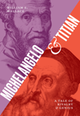
Michelangelo and Titian: a tale of rivalry and genius
Wallace, William E.
Princeton University Press
, 2026
; English
; 244 Pages
From the acclaimed author of Michelangelo, God's Architect , a dual biography of two towering artists of the Renaissance, whose decades-long rivalry spurred both to greater heights In 1529, Michelangelo was in Venice when he first met Titian, Venice's famed painter of princes, gods, and goddesses
Wallace, William E.
Princeton University Press
, 2026
; English
; 244 Pages
From the acclaimed author of Michelangelo, God's Architect , a dual biography of two towering artists of the Renaissance, whose decades-long rivalry spurred both to greater heights In 1529, Michelangelo was in Venice when he first met Titian, Venice's famed painter of princes, gods, and goddesses
eBook
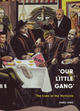
‘Our little gang’: the lives of the Vorticists
King, James
Reaktion Books
, 2025
; English
; 231 Pages
The Vorticists, a rebellious cohort of young artists in early twentieth-century England, defied the conventions of the art world with their distinctive abstract creations. Despite the brevity of their existence, from 1911 to 1914, their startling innovations left an indelible mark on English art history. In this book James King explores the personalities and lives of these colourful individuals, capturing the tumultuous environment in which they thrived. The narrative presents biographies of the group’s members – ‘our little gang’, as Ezra Pound called them – highlighting personal conflicts and providing a concise, highly readable history of the movement. This book is ideal for art enthusiasts, historians and anyone intrigued by avant-garde movements of the early twentieth century.
King, James
Reaktion Books
, 2025
; English
; 231 Pages
The Vorticists, a rebellious cohort of young artists in early twentieth-century England, defied the conventions of the art world with their distinctive abstract creations. Despite the brevity of their existence, from 1911 to 1914, their startling innovations left an indelible mark on English art history. In this book James King explores the personalities and lives of these colourful individuals, capturing the tumultuous environment in which they thrived. The narrative presents biographies of the group’s members – ‘our little gang’, as Ezra Pound called them – highlighting personal conflicts and providing a concise, highly readable history of the movement. This book is ideal for art enthusiasts, historians and anyone intrigued by avant-garde movements of the early twentieth century.
eBook
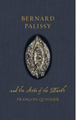
Bernard Palissy and the arts of the earth
Quiviger, François
Reaktion Books
, 2025
; English
; 184 Pages
Bernard Palissy, a French Renaissance artisan philosopher, saw intelligence and consciousness across all forms of life – soils, plants, animals – rejecting human superiority long before modern environmentalism. Known for crafting ceramic ware, fountains and grottos for royal patrons, Palissy used his knowledge of earth and agriculture to develop a unique, sometimes controversial philosophy of nature. Unlike many of his peers, he celebrated animal wisdom over human hubris, a view resonant today. This new biography explores his work within the courtly world of his patrons and highlights Palissy’s lasting influence on early modern artisan culture and our understanding of art, nature and intelligence.
Quiviger, François
Reaktion Books
, 2025
; English
; 184 Pages
Bernard Palissy, a French Renaissance artisan philosopher, saw intelligence and consciousness across all forms of life – soils, plants, animals – rejecting human superiority long before modern environmentalism. Known for crafting ceramic ware, fountains and grottos for royal patrons, Palissy used his knowledge of earth and agriculture to develop a unique, sometimes controversial philosophy of nature. Unlike many of his peers, he celebrated animal wisdom over human hubris, a view resonant today. This new biography explores his work within the courtly world of his patrons and highlights Palissy’s lasting influence on early modern artisan culture and our understanding of art, nature and intelligence.
eBook
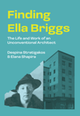
Finding Ella Briggs : the life and work of an unconventional architect
Stratigakos, Despina; Shapira, Elana
Princeton University Press
, 2025
; English
; 308 Pages
Ella Briggs (1880–1977) was a talented architect, designer, and writer whose influence was felt on both sides of the Atlantic. She trained with the Viennese Secessionists and brought their radical ideas to Gilded Age New York. She designed modernist housing for the masses in Austria, was jailed as a suspected spy in Mussolini’s Italy, and thrived in Weimar Germany before suffering persecution under the Nazis. Fleeing to London, she contributed to England’s postwar reconstruction. Yet despite a long and prolific career, her name is largely forgotten today. Finding Ella Briggs restores Briggs to her rightful place in the history of modernist design.
Despina Stratigakos and Elana Shapira bring together an international team of historians to provide the defining biography of this boldly unconventional designer. Whether she was fighting for integration at Europe’s architecture schools or writing about innovative houses for American women’s magazines like Good Housekeeping, Briggs embodied the transatlantic flow of modernism. This panoramic book uncovers new findings about Briggs, her networks, and projects, recovering the many facets of a life that spanned global borders and cultures.
Beautifully illustrated and drawing on a wealth of previously unpublished research from archives around the world, Finding Ella Briggs is the inspiring story of a woman who defied all obstacles to pursue her dream of designing for the modern client.
With contributions by Megan Brandow-Faller, Celina Kress, Dörte Kuhlmann, Ulrike Matzer, Christine Oertel, Eva B. Ottillinger, Barbara Penner, Sabine Plakolm-Forsthuber, Monika Platzer, Ursula Prokop, Sabrina Rahman, Katrin Stingl, Carmen Trifina, and Christine Zwingl.
Stratigakos, Despina; Shapira, Elana
Princeton University Press
, 2025
; English
; 308 Pages
Ella Briggs (1880–1977) was a talented architect, designer, and writer whose influence was felt on both sides of the Atlantic. She trained with the Viennese Secessionists and brought their radical ideas to Gilded Age New York. She designed modernist housing for the masses in Austria, was jailed as a suspected spy in Mussolini’s Italy, and thrived in Weimar Germany before suffering persecution under the Nazis. Fleeing to London, she contributed to England’s postwar reconstruction. Yet despite a long and prolific career, her name is largely forgotten today. Finding Ella Briggs restores Briggs to her rightful place in the history of modernist design.
Despina Stratigakos and Elana Shapira bring together an international team of historians to provide the defining biography of this boldly unconventional designer. Whether she was fighting for integration at Europe’s architecture schools or writing about innovative houses for American women’s magazines like Good Housekeeping, Briggs embodied the transatlantic flow of modernism. This panoramic book uncovers new findings about Briggs, her networks, and projects, recovering the many facets of a life that spanned global borders and cultures.
Beautifully illustrated and drawing on a wealth of previously unpublished research from archives around the world, Finding Ella Briggs is the inspiring story of a woman who defied all obstacles to pursue her dream of designing for the modern client.
With contributions by Megan Brandow-Faller, Celina Kress, Dörte Kuhlmann, Ulrike Matzer, Christine Oertel, Eva B. Ottillinger, Barbara Penner, Sabine Plakolm-Forsthuber, Monika Platzer, Ursula Prokop, Sabrina Rahman, Katrin Stingl, Carmen Trifina, and Christine Zwingl.
eBook
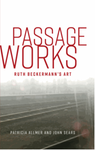
Passage works: Ruth Beckermann’s art
Allmer, Patricia; Sears, John
Manchester University Press
, 2025
; English
; 346 Pages
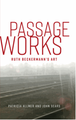
Passage Works is the first book-length English language critical analysis of the transdisciplinary work of the Austrian film-maker, writer, and artist Ruth Beckermann (b. 1952, Vienna). Beckermann’s works interrogate identity and geography as formations of the intersections between the past and the contemporary. Taking as her central topics Austria and its history and politics, her own identity as a Jewish woman, and the contemporary global geopolitics of migration and displacement, Beckermann develops wider meditations in film, art, and writing on the persistence of European memory, and the meanings of Europe itself
on borders, migrations, and identities
on memories, traumas, and traditions
on the image as marker of presence and absence, repository of the traces of historical violence
and on the passage as metaphor for a range of physical, psychological, and ideological movements defining the complexities of contemporary cosmopolitan identities.
Allmer, Patricia; Sears, John
Manchester University Press
, 2025
; English
; 346 Pages
Passage Works is the first book-length English language critical analysis of the transdisciplinary work of the Austrian film-maker, writer, and artist Ruth Beckermann (b. 1952, Vienna). Beckermann’s works interrogate identity and geography as formations of the intersections between the past and the contemporary. Taking as her central topics Austria and its history and politics, her own identity as a Jewish woman, and the contemporary global geopolitics of migration and displacement, Beckermann develops wider meditations in film, art, and writing on the persistence of European memory, and the meanings of Europe itself
on borders, migrations, and identities
on memories, traumas, and traditions
on the image as marker of presence and absence, repository of the traces of historical violence
and on the passage as metaphor for a range of physical, psychological, and ideological movements defining the complexities of contemporary cosmopolitan identities.
eBook
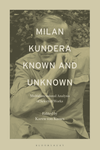
Milan Kundera known and unknown : multidimensional analysis of selected works
Karen von Kunes
Bloomsbury Academic
, 2024
; English
; 289 Pages
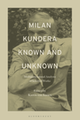
This collection of essays offers crucial and luminous insights into one of the best-known Czech authors, Milan Kundera, including his lesser known works.
With essays that focus on Kundera's poetry and plays, his last four novels written in French, and his nonfiction writings on the novelistic form and translation, Milan Kundera Known and Unknown explores the complex and productive career of this globally recognized author. The approach begins by examining Kundera's distinctive literary style, and then how his voice radiated outward from the small communist country of Czechoslovakia to the world.
Starting as a poet and playwright, Kundera transcended the Czech literary scene and rose to global prominence with his novelistic style of variations, paradoxes, humor, and clairvoyance into human relationships mixed with political tensions. His multi-dimensional existential topics introduced complex novelistic characters that have reached a large audience and remain evocative. Kundera also critically commented on creative works – his own and of others – thus contributing a unique approach to a specific aesthetic ideal and within the masterworks of world-renowned authors.
Chapters on Kundera's aesthetics and form, his philosophical leanings, his relationship to the burgeoning concept of “world literature,” and translations of his writings offer new perspectives on his life's work. These insights shed light on Kundera's understudied works, such as his early poetry and his recent French novels, making connections between his early and later writing, and cementing his literary legacy for English-language audiences.
Karen von Kunes
Bloomsbury Academic
, 2024
; English
; 289 Pages
This collection of essays offers crucial and luminous insights into one of the best-known Czech authors, Milan Kundera, including his lesser known works.
With essays that focus on Kundera's poetry and plays, his last four novels written in French, and his nonfiction writings on the novelistic form and translation, Milan Kundera Known and Unknown explores the complex and productive career of this globally recognized author. The approach begins by examining Kundera's distinctive literary style, and then how his voice radiated outward from the small communist country of Czechoslovakia to the world.
Starting as a poet and playwright, Kundera transcended the Czech literary scene and rose to global prominence with his novelistic style of variations, paradoxes, humor, and clairvoyance into human relationships mixed with political tensions. His multi-dimensional existential topics introduced complex novelistic characters that have reached a large audience and remain evocative. Kundera also critically commented on creative works – his own and of others – thus contributing a unique approach to a specific aesthetic ideal and within the masterworks of world-renowned authors.
Chapters on Kundera's aesthetics and form, his philosophical leanings, his relationship to the burgeoning concept of “world literature,” and translations of his writings offer new perspectives on his life's work. These insights shed light on Kundera's understudied works, such as his early poetry and his recent French novels, making connections between his early and later writing, and cementing his literary legacy for English-language audiences.
eBook
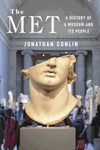
The Met : a history of a museum and its people
Conlin, Jonathan
Columbia University Press
, 2024
; English
; 440 Pages
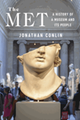
New York City’s Metropolitan Museum of Art is one of the world’s greatest cultural institutions. Its holdings encompass a vast range—including paintings, sculptures, costumes, instruments, and arms and armor—and span millennia, from ancient Egypt and Greece to Islamic art to European Old Masters and modern artists. How did the Met amass this trove, and what do the experiences of the people who bought, restored, catalogued, visited, and watched over these works tell us about the museum?
This book is a groundbreaking bottom-up history of the Metropolitan Museum of Art, exploring both its triumphs and its failings. Jonathan Conlin tells the stories of the people who have shaped the museum—from curators and artists to museumgoers and security guards—and the communities that have made it their own. Highlighting inequalities of wealth, race, and gender, he exposes the hidden costs of the museum’s reliance on "robber barons" and oligarchs, the exclusionary immigration policies that influenced the foundation of the American Wing, and the obstacles faced by women curators. Drawing on extensive interviews with past and current staff, Conlin brings the story up to the present, including the museum’s troubled 150th anniversary in 2020. As the Met faces continued controversy, this book offers a timely account of the people behind an iconic institution and a compelling case for the museum’s vision of shared human creativity.
Conlin, Jonathan
Columbia University Press
, 2024
; English
; 440 Pages
New York City’s Metropolitan Museum of Art is one of the world’s greatest cultural institutions. Its holdings encompass a vast range—including paintings, sculptures, costumes, instruments, and arms and armor—and span millennia, from ancient Egypt and Greece to Islamic art to European Old Masters and modern artists. How did the Met amass this trove, and what do the experiences of the people who bought, restored, catalogued, visited, and watched over these works tell us about the museum?
This book is a groundbreaking bottom-up history of the Metropolitan Museum of Art, exploring both its triumphs and its failings. Jonathan Conlin tells the stories of the people who have shaped the museum—from curators and artists to museumgoers and security guards—and the communities that have made it their own. Highlighting inequalities of wealth, race, and gender, he exposes the hidden costs of the museum’s reliance on "robber barons" and oligarchs, the exclusionary immigration policies that influenced the foundation of the American Wing, and the obstacles faced by women curators. Drawing on extensive interviews with past and current staff, Conlin brings the story up to the present, including the museum’s troubled 150th anniversary in 2020. As the Met faces continued controversy, this book offers a timely account of the people behind an iconic institution and a compelling case for the museum’s vision of shared human creativity.

eBook
Barbara Comyns : a savage innocence
Horner, Avril
Manchester University Press
, 2024
; English
; 373 Pages
The extraordinary twentieth-century writer Barbara Comyns led a life as captivating as the narratives she spun. This pioneering biography reveals the journey of a woman who experienced hardship and single-motherhood before the age of thirty but went on to publish a sequence of novels that are unique in the English language.
Comyns turned her hand to many jobs in order to survive, from artist's model to restoring pianos. Hundreds of unpublished letters reveal an occasionally desperate but resourceful and witty woman whose complicated life ranged from enduring poverty when young to mixing with spivs, spies and high society. While working as a housekeeper in her mid-thirties, Comyns began transforming the bleak episodes of her life into compelling fictions streaked with surrealism and deadpan humour. The Vet's Daughter (1959), championed by Graham Greene, brought her fame, although her use of the gothic and macabre divided readers and reviewers.This biography not only excavates Comyns's life but also reclaims her fiction, providing a timely reassessment of her literary contribution. It sheds new light on a remarkable author who deftly captured the complexities of human life.
Horner, Avril
Manchester University Press
, 2024
; English
; 373 Pages
The extraordinary twentieth-century writer Barbara Comyns led a life as captivating as the narratives she spun. This pioneering biography reveals the journey of a woman who experienced hardship and single-motherhood before the age of thirty but went on to publish a sequence of novels that are unique in the English language.
Comyns turned her hand to many jobs in order to survive, from artist's model to restoring pianos. Hundreds of unpublished letters reveal an occasionally desperate but resourceful and witty woman whose complicated life ranged from enduring poverty when young to mixing with spivs, spies and high society. While working as a housekeeper in her mid-thirties, Comyns began transforming the bleak episodes of her life into compelling fictions streaked with surrealism and deadpan humour. The Vet's Daughter (1959), championed by Graham Greene, brought her fame, although her use of the gothic and macabre divided readers and reviewers.This biography not only excavates Comyns's life but also reclaims her fiction, providing a timely reassessment of her literary contribution. It sheds new light on a remarkable author who deftly captured the complexities of human life.
eBook
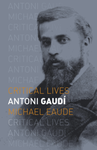
Eaude, Michael
Reaktion Books
, 2024
; English
; 192 Pages
An accessible account of the contradictory life and work of the modernist Catalan architect.
The celebrated art nouveau architect Antoni Gaudí was a contradictory figure: a deeply religious, politically right-wing man who nevertheless built revolutionary buildings. This book explores Gaudí’s life, work, and influences from Catalan nationalism to the industrial revolution. Michael Eaude expertly guides readers through Gaudí’s dozen great works, including the Sagrada Família that attracts millions of tourists each year. Gaudí’s life is also chronicled from his provincial upbringing in Reus to his time in Barcelona. He later suffered a nervous breakdown, became obsessively religious, and fused Gothic, Baroque, and Orientalist architecture into his unique style. This brief biography offers an accessible introduction to this perplexing and fascinating life.
eBook
Eaude, Michael
Reaktion Books
, 2024
; English
; 192 Pages
An accessible account of the contradictory life and work of the modernist Catalan architect.
The celebrated art nouveau architect Antoni Gaudí was a contradictory figure: a deeply religious, politically right-wing man who nevertheless built revolutionary buildings. This book explores Gaudí’s life, work, and influences from Catalan nationalism to the industrial revolution. Michael Eaude expertly guides readers through Gaudí’s dozen great works, including the Sagrada Família that attracts millions of tourists each year. Gaudí’s life is also chronicled from his provincial upbringing in Reus to his time in Barcelona. He later suffered a nervous breakdown, became obsessively religious, and fused Gothic, Baroque, and Orientalist architecture into his unique style. This brief biography offers an accessible introduction to this perplexing and fascinating life.
eBook
Lifework: on the autobiographical impulse in contemporary art, writing, and theory
Sheleg, Moran
Manchester University Press
, 2024
; English
; 335 Pages
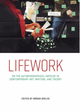
Following the critical scepticism surrounding the notion of the ‘self’ as a singular entity during the 1960s, many artists and writers sought to test the apparent problem posed by autobiography as both a traditional genre and as a way of working. Considering the consequent emergence of autotheory, Lifework traces this shift in artistic and literary production during the late twentieth century and beyond, examining a set of diverse practices that mine the line between what it is to make art and what it is to live life. The book’s chapters connect a variety of artistic strategies that cut across medium, geography and time, uncovering how the historical marginalisation of first-person experience has taken on larger social, cultural and political implications in the contemporary moment and how the work of living might still relate to the work of art.
Sheleg, Moran
Manchester University Press
, 2024
; English
; 335 Pages
Following the critical scepticism surrounding the notion of the ‘self’ as a singular entity during the 1960s, many artists and writers sought to test the apparent problem posed by autobiography as both a traditional genre and as a way of working. Considering the consequent emergence of autotheory, Lifework traces this shift in artistic and literary production during the late twentieth century and beyond, examining a set of diverse practices that mine the line between what it is to make art and what it is to live life. The book’s chapters connect a variety of artistic strategies that cut across medium, geography and time, uncovering how the historical marginalisation of first-person experience has taken on larger social, cultural and political implications in the contemporary moment and how the work of living might still relate to the work of art.
