
Navigation menu
Search
Databases
All Databases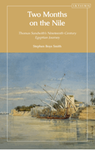
eBook
Two months on the Nile : Thomas Sandwith's nineteenth-century Egyptian journey
Boys Smith, Stephen
I.B. Tauris
, 2025
; English
; 217 Pages
British Consul with a long-standing interest in archaeology Thomas Sandwith's account of his two months travelling in Egypt provides a valuable new primary source on a dynamic period in Egyptian history. In January 1893 he began a diary in which he recorded his journey on the Nile aboard a dahabiya. Possessing a keen interest in antiquities and experience in acquiring them during his consular career, he recounts visiting newly discovered archaeological sites and meetings with Egyptologists, providing a unique snapshot of the 'golden age' of Egyptology. His astute descriptions of his journey from Cairo to Aswan and back give a vivid new perspective on the growth of European tourism in British-occupied Egypt and early Egyptian industry.
Sandwith's decades-long interest in archaeology and familiarity with the Levant mean this diary – until now on the long-hand pages as he wrote them on the boat – is thus unique among contemporary travel accounts. It is a valuable primary source for scholars interested in the history of the British in the Middle East, the history of travel in the Middle East and the history of archaeology and Egyptology.
Boys Smith, Stephen
I.B. Tauris
, 2025
; English
; 217 Pages
British Consul with a long-standing interest in archaeology Thomas Sandwith's account of his two months travelling in Egypt provides a valuable new primary source on a dynamic period in Egyptian history. In January 1893 he began a diary in which he recorded his journey on the Nile aboard a dahabiya. Possessing a keen interest in antiquities and experience in acquiring them during his consular career, he recounts visiting newly discovered archaeological sites and meetings with Egyptologists, providing a unique snapshot of the 'golden age' of Egyptology. His astute descriptions of his journey from Cairo to Aswan and back give a vivid new perspective on the growth of European tourism in British-occupied Egypt and early Egyptian industry.
Sandwith's decades-long interest in archaeology and familiarity with the Levant mean this diary – until now on the long-hand pages as he wrote them on the boat – is thus unique among contemporary travel accounts. It is a valuable primary source for scholars interested in the history of the British in the Middle East, the history of travel in the Middle East and the history of archaeology and Egyptology.
eBook
Smolin, Jonathan
Stanford University Press
, 2024
; English
; 378 Pages
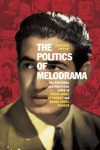
Ihsan Abdel Kouddous (1919–1990) is the most popular and prolific writer of Arabic fiction in the twentieth century. The Politics of Melodrama is the first book to take on this giant of Arabic fiction and consider both his outsized cultural influence and consequential position in Egyptian politics. Jonathan Smolin frames the work of Abdel Kouddous not only as romantic melodrama, but as an entirely new model of Arabic fiction as dissent—contesting the fate of the 1952 revolution, condemning Nasser's betrayal of democracy, and grappling with depths of guilt at what Egypt had become.
Smolin reveals the surprisingly close relationship between the famed writer and Nasser. He offers a new reading of fiction during the Nasser era that inserts the importance of non-elite culture in the history of the period and reevaluates the production of Nasserism. Unearthing Nasser's repeated interventions both to shape the work of Abdel Kouddous and to discipline him personally, this book demonstrates how the media and popular fiction became spaces of negotiation between the intellectual and the state, contesting Nasser and his politics during a period that has been widely assumed to be devoid of dissent.
Smolin, Jonathan
Stanford University Press
, 2024
; English
; 378 Pages
Ihsan Abdel Kouddous (1919–1990) is the most popular and prolific writer of Arabic fiction in the twentieth century. The Politics of Melodrama is the first book to take on this giant of Arabic fiction and consider both his outsized cultural influence and consequential position in Egyptian politics. Jonathan Smolin frames the work of Abdel Kouddous not only as romantic melodrama, but as an entirely new model of Arabic fiction as dissent—contesting the fate of the 1952 revolution, condemning Nasser's betrayal of democracy, and grappling with depths of guilt at what Egypt had become.
Smolin reveals the surprisingly close relationship between the famed writer and Nasser. He offers a new reading of fiction during the Nasser era that inserts the importance of non-elite culture in the history of the period and reevaluates the production of Nasserism. Unearthing Nasser's repeated interventions both to shape the work of Abdel Kouddous and to discipline him personally, this book demonstrates how the media and popular fiction became spaces of negotiation between the intellectual and the state, contesting Nasser and his politics during a period that has been widely assumed to be devoid of dissent.
eBook
Losing Istanbul : Arab-Ottoman imperialists and the end of empire
Mostafa Minawi
Stanford University Press
, 2022
; English
; 328 Pages
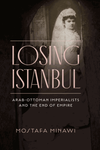
Losing Istanbul offers an intimate history of empire, following the rise and fall of a generation of Arab-Ottoman imperialists living in Istanbul. Mostafa Minawi shows how these men and women negotiated their loyalties and guarded their privileges through a microhistorical study of the changing social, political, and cultural currents between 1878 and the First World War. He narrates lives lived in these turbulent times—the joys and fears, triumphs and losses, pride and prejudices—while focusing on the complex dynamics of ethnicity and race in an increasingly Turco-centric imperial capital.
Drawing on archival records, newspaper articles, travelogues, personal letters, diaries, photos, and interviews, Minawi shows how the loyalties of these imperialists were questioned and their ethnic identification weaponized. As the once diverse empire comes to an end, they are forced to give up their home in the imperial capital. An alternative history of the last four decades of the Ottoman Empire, Losing Istanbul frames global pivotal events through the experiences of Arab-Ottoman imperial loyalists who called Istanbul home, on the eve of a vanishing imperial world order.
Mostafa Minawi
Stanford University Press
, 2022
; English
; 328 Pages
Losing Istanbul offers an intimate history of empire, following the rise and fall of a generation of Arab-Ottoman imperialists living in Istanbul. Mostafa Minawi shows how these men and women negotiated their loyalties and guarded their privileges through a microhistorical study of the changing social, political, and cultural currents between 1878 and the First World War. He narrates lives lived in these turbulent times—the joys and fears, triumphs and losses, pride and prejudices—while focusing on the complex dynamics of ethnicity and race in an increasingly Turco-centric imperial capital.
Drawing on archival records, newspaper articles, travelogues, personal letters, diaries, photos, and interviews, Minawi shows how the loyalties of these imperialists were questioned and their ethnic identification weaponized. As the once diverse empire comes to an end, they are forced to give up their home in the imperial capital. An alternative history of the last four decades of the Ottoman Empire, Losing Istanbul frames global pivotal events through the experiences of Arab-Ottoman imperial loyalists who called Istanbul home, on the eve of a vanishing imperial world order.
