

Navigation menu
Search
Databases
All Databases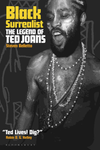
eBook
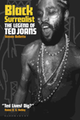
Black surrealist : the legend of Ted Joans
Belletto, Steven
Bloomsbury Academic
, 2025
; English
; 497 Pages
Black Surrealist. Poet. Collage artist. Jazz trumpeter. Painter. Member of the Beat Generation. Life-long wanderer. Pan-Africanist. Black Power agitator. Author of his own “poem-life.” Ted Joans (1928-2003) was all of these things, and yet none of these labels adequately capture the beauty and complexity of his life and work.
The proportions of Ted Joans's life are legendary. Born in Cairo, Illinois in 1928, as a young man he distinguished himself as a Surrealist painter. In the early 1950s, he moved to New York's Greenwich Village, where he opened the first Black-owned art gallery in the city, developed new styles of painting, and began reading his poetry in coffeehouses just as the Beat Generation was coalescing. A well-known raconteur and bon vivant on the Village scene, he threw elaborate parties (art events that prefigured the Happenings of the later 1950s), exhibited his “jazz action” paintings, and published poetry and collage books to acclaim. But at the height of his success, Joans left the States for Europe and Africa, and set up bases of operation in places such as Paris, Copenhagen, Tangier, and Timbuktu. He would spend the subsequent decades in constant movement around the globe, an itinerant poet, interdisciplinary artist, and self-styled “Surrealist griot” who was especially attuned to the magnetic power of chance encounters. He published some 40 books and booklets, and wrote much more that is still unpublished, including novels, autobiographies, and a comprehensive guide to Africa-all the while cultivating what he thought of as his greatest artwork, his own “poem-life."
Drawing on interviews and deep archival research, including discussions of Joans's vast body of unpublished-and previously-unseen-work, Black Surrealist explores how he swam in streams of literary and artistic thought seldom discussed together: Surrealism, the Beats, Négritude, and Black Power, among them, while always remaining a true original. Ted Joans's poem-life and body of work are unlike any other in the 20th Century, and Black Surrealist, illustrated with over 70 images, many never before published, is the first book to reckon with this singularly important poet-artist, and to show how and why his creative spirit lives on.
Belletto, Steven
Bloomsbury Academic
, 2025
; English
; 497 Pages
Black Surrealist. Poet. Collage artist. Jazz trumpeter. Painter. Member of the Beat Generation. Life-long wanderer. Pan-Africanist. Black Power agitator. Author of his own “poem-life.” Ted Joans (1928-2003) was all of these things, and yet none of these labels adequately capture the beauty and complexity of his life and work.
The proportions of Ted Joans's life are legendary. Born in Cairo, Illinois in 1928, as a young man he distinguished himself as a Surrealist painter. In the early 1950s, he moved to New York's Greenwich Village, where he opened the first Black-owned art gallery in the city, developed new styles of painting, and began reading his poetry in coffeehouses just as the Beat Generation was coalescing. A well-known raconteur and bon vivant on the Village scene, he threw elaborate parties (art events that prefigured the Happenings of the later 1950s), exhibited his “jazz action” paintings, and published poetry and collage books to acclaim. But at the height of his success, Joans left the States for Europe and Africa, and set up bases of operation in places such as Paris, Copenhagen, Tangier, and Timbuktu. He would spend the subsequent decades in constant movement around the globe, an itinerant poet, interdisciplinary artist, and self-styled “Surrealist griot” who was especially attuned to the magnetic power of chance encounters. He published some 40 books and booklets, and wrote much more that is still unpublished, including novels, autobiographies, and a comprehensive guide to Africa-all the while cultivating what he thought of as his greatest artwork, his own “poem-life."
Drawing on interviews and deep archival research, including discussions of Joans's vast body of unpublished-and previously-unseen-work, Black Surrealist explores how he swam in streams of literary and artistic thought seldom discussed together: Surrealism, the Beats, Négritude, and Black Power, among them, while always remaining a true original. Ted Joans's poem-life and body of work are unlike any other in the 20th Century, and Black Surrealist, illustrated with over 70 images, many never before published, is the first book to reckon with this singularly important poet-artist, and to show how and why his creative spirit lives on.
eBook
Adebanwi, Wale
Indiana University Press
, 2024
; English
; 591 Pages
Can subalterns transform themselves into members of the elite, and what does it take to do so? And how do those efforts reveal the nature of ethnic politics in postcolonial Africa?
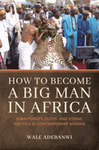
How to Become a Big Man in Africa: Subalternity, Elites, and Ethnic Politics in Contemporary Nigeria examines these questions by revealing how, through ethno-regional conflict, violence and cultural activities, an artisan, Gani Adams, transformed himself into the holder of the most prestigious chieftaincy title among the Yoruba. Addressing persistent gaps in anthropological studies of the subaltern and of "big men" in politics through in-depth biography and rich social history, Wale Adebanwi follows Adams and other major figures in Nigeria's Oodua People's Congress (OPC) over two decades of ethnographic study and visual representations. Challenging existing models of African political mobility by leveraging his initial lack of formal education into a position of power, Adams moved from a "radical lumpen" and "area boy" to a "big man" who continues to struggle—and reflect—over the significance of his role as a cultural subject. Blurring the lines between tradition and modernity, Adams and his group have used Yoruba rituals to simultaneously claim authenticity and champion new movements for democracy and self-determination.
How to Become a Big Man in Africa encourages us to understand the full complexity of Adams's political trajectory and how it reflects the structural and personal realities of becoming a "Big Man" in the contemporary postcolony.
Adebanwi, Wale
Indiana University Press
, 2024
; English
; 591 Pages
Can subalterns transform themselves into members of the elite, and what does it take to do so? And how do those efforts reveal the nature of ethnic politics in postcolonial Africa?
How to Become a Big Man in Africa: Subalternity, Elites, and Ethnic Politics in Contemporary Nigeria examines these questions by revealing how, through ethno-regional conflict, violence and cultural activities, an artisan, Gani Adams, transformed himself into the holder of the most prestigious chieftaincy title among the Yoruba. Addressing persistent gaps in anthropological studies of the subaltern and of "big men" in politics through in-depth biography and rich social history, Wale Adebanwi follows Adams and other major figures in Nigeria's Oodua People's Congress (OPC) over two decades of ethnographic study and visual representations. Challenging existing models of African political mobility by leveraging his initial lack of formal education into a position of power, Adams moved from a "radical lumpen" and "area boy" to a "big man" who continues to struggle—and reflect—over the significance of his role as a cultural subject. Blurring the lines between tradition and modernity, Adams and his group have used Yoruba rituals to simultaneously claim authenticity and champion new movements for democracy and self-determination.
How to Become a Big Man in Africa encourages us to understand the full complexity of Adams's political trajectory and how it reflects the structural and personal realities of becoming a "Big Man" in the contemporary postcolony.
eBook
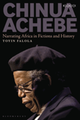
Chinua Achebe : narrating Africa in fictions and history
Falola, Toyin; Falola, Toyin (Series Editors); Adelakun, Abimbola A. (Series Editors)
Bloomsbury Academic
, 2024
; English
; 321 Pages
An imaginative, narratological reading of Chinua Achebe's novels, stories, poetry, and essays through a literary and historical framework.
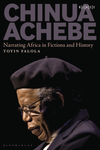
Toyin Falola analyzes fictional and historical cartographies of Africa in Achebe's literary works to offer a critical representation of Africa's present and future. In particular, he focuses on the historical valuation of a full range of the writer's works – novels including Things Fall Apart, but also short stories, poems, and essays – as important materials that have contributed to the political events in Nigeria and, by extension, Africa.
The raw creativity found in Achebe's stories and his ability to tell the Nigerian story – precolonial, colonial, and postcolonial – have endeared him to many, including readers and those critical of him and his works. Chinua Achebe: Narrating Africa in Fictions and History analyzes all of the writer's works, dwelling on the Nigerian political context upon which many, if not all, of his narratives lie. As a result, it examines methodologies of narration and ideologies that allow his works to resonate with the imagination of Africa.
Falola, Toyin; Falola, Toyin (Series Editors); Adelakun, Abimbola A. (Series Editors)
Bloomsbury Academic
, 2024
; English
; 321 Pages
An imaginative, narratological reading of Chinua Achebe's novels, stories, poetry, and essays through a literary and historical framework.
Toyin Falola analyzes fictional and historical cartographies of Africa in Achebe's literary works to offer a critical representation of Africa's present and future. In particular, he focuses on the historical valuation of a full range of the writer's works – novels including Things Fall Apart, but also short stories, poems, and essays – as important materials that have contributed to the political events in Nigeria and, by extension, Africa.
The raw creativity found in Achebe's stories and his ability to tell the Nigerian story – precolonial, colonial, and postcolonial – have endeared him to many, including readers and those critical of him and his works. Chinua Achebe: Narrating Africa in Fictions and History analyzes all of the writer's works, dwelling on the Nigerian political context upon which many, if not all, of his narratives lie. As a result, it examines methodologies of narration and ideologies that allow his works to resonate with the imagination of Africa.
eBook
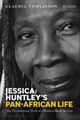
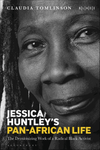
Jessica Huntley's Pan-African life : the decolonizing work of a radical black activist
Tomlinson, Claudia; Falola, Toyin (Series Editors); Adelakun, Abimbola A. (Series Editors)
Bloomsbury Academic
, 2024
; English
; 257 Pages
A powerful biography that presents analysis of a black working-class woman who rose from a tenement slum in intensely racialized British Guiana to become a leading anti-colonialism, workers' rights and women's liberation activist in Britain.
Jessica Huntley's Pan-African Life celebrates Huntley's importance as a leading figure in the Windrush-era resistance to the multiple, racialized injustices faced by black settlers, children and communities in Britain. Claudia Tomlinson details how Huntley became the elder stateswoman of radical black activism of her era through participation in decolonization movements and actions such as the Black Parents Movement and the International Bookfair of Radical Black and Third World Books, as well as her foundational role at Bogle L'Ouverture Publications, the leading black-led, pan-African publishing house and its associated radical bookshop.
Based on extensive archival research and over 40 interviews with Huntley's closest family members, associates, comrades, authors, artists and friends, this book affords readers an opportunity to take a long-lensed view of the historical roots of the many contemporary racial injustices re-invigorated in recent debates. Tomlinson re-writes the history of a period and a struggle often told through a master discourse that is male, middle-class and privileged. In so doing, she shows how Jessica Huntley's fight for justice and the rights of all black people in Britain provides a useful lens into UK-based, black literary and cultural expression in the 20th century.
Tomlinson, Claudia; Falola, Toyin (Series Editors); Adelakun, Abimbola A. (Series Editors)
Bloomsbury Academic
, 2024
; English
; 257 Pages
A powerful biography that presents analysis of a black working-class woman who rose from a tenement slum in intensely racialized British Guiana to become a leading anti-colonialism, workers' rights and women's liberation activist in Britain.
Jessica Huntley's Pan-African Life celebrates Huntley's importance as a leading figure in the Windrush-era resistance to the multiple, racialized injustices faced by black settlers, children and communities in Britain. Claudia Tomlinson details how Huntley became the elder stateswoman of radical black activism of her era through participation in decolonization movements and actions such as the Black Parents Movement and the International Bookfair of Radical Black and Third World Books, as well as her foundational role at Bogle L'Ouverture Publications, the leading black-led, pan-African publishing house and its associated radical bookshop.
Based on extensive archival research and over 40 interviews with Huntley's closest family members, associates, comrades, authors, artists and friends, this book affords readers an opportunity to take a long-lensed view of the historical roots of the many contemporary racial injustices re-invigorated in recent debates. Tomlinson re-writes the history of a period and a struggle often told through a master discourse that is male, middle-class and privileged. In so doing, she shows how Jessica Huntley's fight for justice and the rights of all black people in Britain provides a useful lens into UK-based, black literary and cultural expression in the 20th century.
eBook
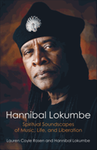
Hannibal Lokumbe : spiritual soundscapes of music, life, and liberation
Coyle Rosen, Lauren; Lokumbe, Hannibal
Columbia University Press
, 2024
; English
; 268 Pages
For Hannibal Lokumbe, music is a profound source of spiritual liberation. A pathbreaking orchestral composer and visionary jazz musician, he composes resonant works that give voice to the freedom struggle of the African diaspora, the broader African American experience, Indigenous histories, and humanity. Many of his works address historical traumas, such as the Middle Passage, the Vietnam War, global environmental disharmony, and targeted racial violence, and focus on major figures, including Medgar Evers, Dr. Martin Luther King Jr., Rosa Parks, Dr. Kim Phúc Phan Thị, and Anne Frank. This innovative book demonstrates that Lokumbe’s musical compositions, created in collaboration with his ancestors, are multisensorial spiritual soundscapes that aspire to chronicle, heal, and liberate.
This is a captivating, vital portrait and spiritual biography of Lokumbe. The cultural anthropologist Lauren Coyle Rosen draws on several years of close conversations with Lokumbe, as well as his journals, to provide a powerful collaborative account of his remarkable life and work. The authors explore Lokumbe’s creative journeys and the spiritual dimensions of his art. They trace Lokumbe’s entire career, from his early years in the Texas and New York City jazz scenes to his widely acclaimed orchestral compositions. The book also addresses Lokumbe’s work in prisons and schools with the Music Liberation Orchestra, founded in the 1970s. Illuminating his philosophies of music, spirituality, justice, and freedom, this book immerses readers in Lokumbe’s many revelatory worlds.
Coyle Rosen, Lauren; Lokumbe, Hannibal
Columbia University Press
, 2024
; English
; 268 Pages
For Hannibal Lokumbe, music is a profound source of spiritual liberation. A pathbreaking orchestral composer and visionary jazz musician, he composes resonant works that give voice to the freedom struggle of the African diaspora, the broader African American experience, Indigenous histories, and humanity. Many of his works address historical traumas, such as the Middle Passage, the Vietnam War, global environmental disharmony, and targeted racial violence, and focus on major figures, including Medgar Evers, Dr. Martin Luther King Jr., Rosa Parks, Dr. Kim Phúc Phan Thị, and Anne Frank. This innovative book demonstrates that Lokumbe’s musical compositions, created in collaboration with his ancestors, are multisensorial spiritual soundscapes that aspire to chronicle, heal, and liberate.
This is a captivating, vital portrait and spiritual biography of Lokumbe. The cultural anthropologist Lauren Coyle Rosen draws on several years of close conversations with Lokumbe, as well as his journals, to provide a powerful collaborative account of his remarkable life and work. The authors explore Lokumbe’s creative journeys and the spiritual dimensions of his art. They trace Lokumbe’s entire career, from his early years in the Texas and New York City jazz scenes to his widely acclaimed orchestral compositions. The book also addresses Lokumbe’s work in prisons and schools with the Music Liberation Orchestra, founded in the 1970s. Illuminating his philosophies of music, spirituality, justice, and freedom, this book immerses readers in Lokumbe’s many revelatory worlds.
eBook
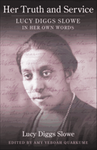
Her truth and service : Lucy Diggs Slowe in her own words
Slowe, Lucy Diggs; Yeboah Quarkume, Amy
Columbia University Press
, 2024
; English
; 317 Pages
Lucy Diggs Slowe (1885–1937) was one of the most remarkable and accomplished figures in the history of Black women’s higher education. She was a builder of institutions, organizing the first historically Black sorority, Alpha Kappa Alpha, while a student at Howard University in 1908
establishing the first junior high school for Black students in Washington, D.C.
and founding as well as leading other major national and community organizations. In 1922 Slowe was appointed the first Dean of Women at Howard, making her the first Black woman to serve as dean at any American university. Beyond her trailblazing career in higher education, she was a committed teacher, an ardent antiracist advocate, and even a national tennis champion.
Her Truth and Service showcases Slowe’s speeches, articles, and letters, illuminating her multifaceted accomplishments and unwavering dedication to the quest for equality and justice. In these texts, readers encounter Slowe’s powerful voice and keen intellect, witnessing her triumphs and travails as an educator, a leader, and a Black woman in a deeply exclusionary society. Slowe’s writings depict her personal and professional efforts to topple race and gender barriers and open up greater opportunities for Black women and girls, as well as the obstacles she faced in male-dominated institutions including the Howard administration. Her Truth and Service is an important document of a significant figure in the development of Black institutions and an inspiring testament to the lifelong struggle for social justice.
Slowe, Lucy Diggs; Yeboah Quarkume, Amy
Columbia University Press
, 2024
; English
; 317 Pages
Lucy Diggs Slowe (1885–1937) was one of the most remarkable and accomplished figures in the history of Black women’s higher education. She was a builder of institutions, organizing the first historically Black sorority, Alpha Kappa Alpha, while a student at Howard University in 1908
establishing the first junior high school for Black students in Washington, D.C.
and founding as well as leading other major national and community organizations. In 1922 Slowe was appointed the first Dean of Women at Howard, making her the first Black woman to serve as dean at any American university. Beyond her trailblazing career in higher education, she was a committed teacher, an ardent antiracist advocate, and even a national tennis champion.
Her Truth and Service showcases Slowe’s speeches, articles, and letters, illuminating her multifaceted accomplishments and unwavering dedication to the quest for equality and justice. In these texts, readers encounter Slowe’s powerful voice and keen intellect, witnessing her triumphs and travails as an educator, a leader, and a Black woman in a deeply exclusionary society. Slowe’s writings depict her personal and professional efforts to topple race and gender barriers and open up greater opportunities for Black women and girls, as well as the obstacles she faced in male-dominated institutions including the Howard administration. Her Truth and Service is an important document of a significant figure in the development of Black institutions and an inspiring testament to the lifelong struggle for social justice.
eBook
Black intellectuals and black society
Kilson, Martin L.
Columbia University Press
, 2024
; English
; 296 Pages
This book presents the trailblazing political scientist Martin L. Kilson’s essays on leading Black intellectuals of the twentieth century. Kilson examines the ideas and careers of several key thinkers, placing their intellectual odysseys in the context of the dynamics that shaped the Black intelligentsia more broadly. He argues that the trajectory of twentieth-century Black intellectuals was determined by the interplay between formal ideas and Black egalitarian struggle.
Beginning with the tension between W. E. B. Du Bois’s civil rights activism and Booker T. Washington’s accommodationism, Kilson explores the formation and evolution of Black intellectuals and activists across generations. Chapters consider Horace Mann Bond’s career in higher education, political scientist John Aubrey Davis’s transition from civil rights activist to federal policy technocrat, Ralph Bunche’s writings on European colonial rule in Africa, Harold Cruse’s classic polemic The Crisis of the Negro Intellectual, E. Franklin Frazier’s analysis of the Black bourgeoisie, Adelaide M. Cromwell’s studies of the challenges facing elite Black women, and Ishmael Reed and Cornel West’s advocacy as public intellectuals amid a conservative turn. Offering timely and engaging insights into the lives and work of pivotal Black intellectuals and activists, this book sheds new light on the abiding questions and debates in Black political thought.
Kilson, Martin L.
Columbia University Press
, 2024
; English
; 296 Pages
This book presents the trailblazing political scientist Martin L. Kilson’s essays on leading Black intellectuals of the twentieth century. Kilson examines the ideas and careers of several key thinkers, placing their intellectual odysseys in the context of the dynamics that shaped the Black intelligentsia more broadly. He argues that the trajectory of twentieth-century Black intellectuals was determined by the interplay between formal ideas and Black egalitarian struggle.
Beginning with the tension between W. E. B. Du Bois’s civil rights activism and Booker T. Washington’s accommodationism, Kilson explores the formation and evolution of Black intellectuals and activists across generations. Chapters consider Horace Mann Bond’s career in higher education, political scientist John Aubrey Davis’s transition from civil rights activist to federal policy technocrat, Ralph Bunche’s writings on European colonial rule in Africa, Harold Cruse’s classic polemic The Crisis of the Negro Intellectual, E. Franklin Frazier’s analysis of the Black bourgeoisie, Adelaide M. Cromwell’s studies of the challenges facing elite Black women, and Ishmael Reed and Cornel West’s advocacy as public intellectuals amid a conservative turn. Offering timely and engaging insights into the lives and work of pivotal Black intellectuals and activists, this book sheds new light on the abiding questions and debates in Black political thought.
eBook
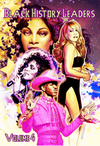
Black history leaders, volume 4 : Mariah Carey, Donna Summer, Whitney Houston and Lil Nas X
Frizell, Michael
TidalWave Productions
, 2023
; English
; 96 Pages
From the hit “Fame” and “Female Force” imprints by TidalWave comics, this volume explores the musicians who have made an indelible mark on our culture, including: LaDonna Adrian Gaines, better known as Donna Summer, the Queen of Disco. Lil Nas X, the multi-award-winning rapper who breaks glass ceilings as a gay man in hip-hop. Whitney Houston, an idol to millions with the voice of an angel whose meteoric career defined a generation, couldn’t keep her demons at bay. Often called the Queen of Christmas and the Songbird Supreme, Mariah Carey's rise to stardom was not without pitfalls – something she isn’t shy to explore with her five-octave range.
Frizell, Michael
TidalWave Productions
, 2023
; English
; 96 Pages
From the hit “Fame” and “Female Force” imprints by TidalWave comics, this volume explores the musicians who have made an indelible mark on our culture, including: LaDonna Adrian Gaines, better known as Donna Summer, the Queen of Disco. Lil Nas X, the multi-award-winning rapper who breaks glass ceilings as a gay man in hip-hop. Whitney Houston, an idol to millions with the voice of an angel whose meteoric career defined a generation, couldn’t keep her demons at bay. Often called the Queen of Christmas and the Songbird Supreme, Mariah Carey's rise to stardom was not without pitfalls – something she isn’t shy to explore with her five-octave range.
eBook
The life and thought of H. Odera Oruka : pursuing justice in Africa
Presbey, Gail M.
Bloomsbury Publishing
, 2023
; English
; 265 Pages
Henry Odera Oruka was one of the most influential figures in 20th-century African philosophy. During the early years of the decolonization of African countries, as universities worked to redefine themselves, Odera drove changes to curricula and research. A tireless advocate for democracy and human rights in Africa, he repeatedly intervened in the political debates of his time.
This is the first critical biography of both the man himself and African philosophy in the context of changing times, taking us through his early life, scholarly training, and Oruka's way of transforming the field of philosophy as it was taught in Kenya.
The narrative unfolds from the personal to the global, from Africa to the world, and from African philosophy to the wider field of philosophy. Biographical material is woven with narratives of the social conditions and live questions as they arise in Oruka's life in Kenya, Sweden, and the United States. We are introduced to his understanding of philosophy as a critique of society. Exposing prison practices in Africa and targeting capitalists, Oruka sought to remedy social problems on a global scale, from institutional racism and ethnic division to the wealth gap between rich and poor nations.
Through archival material, personal interviews and primary texts, this book shines a light on Oruka's monumental contribution to African philosophy and global justice. Finally we can see how Oruka's insights are still relevant to how we think about poverty, philosophy and human rights today.
Presbey, Gail M.
Bloomsbury Publishing
, 2023
; English
; 265 Pages
Henry Odera Oruka was one of the most influential figures in 20th-century African philosophy. During the early years of the decolonization of African countries, as universities worked to redefine themselves, Odera drove changes to curricula and research. A tireless advocate for democracy and human rights in Africa, he repeatedly intervened in the political debates of his time.
This is the first critical biography of both the man himself and African philosophy in the context of changing times, taking us through his early life, scholarly training, and Oruka's way of transforming the field of philosophy as it was taught in Kenya.
The narrative unfolds from the personal to the global, from Africa to the world, and from African philosophy to the wider field of philosophy. Biographical material is woven with narratives of the social conditions and live questions as they arise in Oruka's life in Kenya, Sweden, and the United States. We are introduced to his understanding of philosophy as a critique of society. Exposing prison practices in Africa and targeting capitalists, Oruka sought to remedy social problems on a global scale, from institutional racism and ethnic division to the wealth gap between rich and poor nations.
Through archival material, personal interviews and primary texts, this book shines a light on Oruka's monumental contribution to African philosophy and global justice. Finally we can see how Oruka's insights are still relevant to how we think about poverty, philosophy and human rights today.
eBook
African Americans in Indianapolis: the story of a people determined to be free
Williams, David L.
Indiana University Press
, 2022
; English
; 237 Pages
Indianapolis has long been steeped in important moments in African American history, from businesswoman Madame C. J. Walker's success to the rise of the Ku Klux Klan to the founding of Crispus Attucks High School, which remained segregated through the 1960s.
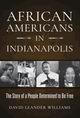
In African Americans in Indianapolis, author and historian David Leander Williams explores this history by examining the daunting and horrendous historical events African Americans living in Indianapolis encountered between 1820 and 1970, as well as the community's determination to overcome these challenges. Revealing many events that have yet to be recorded in history books, textbooks, or literature, Williams chronicles the lives and careers of many influential individuals and the organizations that worked tirelessly to open doors of opportunity to the entire African American community.
African Americans in Indianapolis serves as a reminder of the advancements that Black midwestern ancestors made toward freedom and equality, as well as the continual struggle against inequalities that must be overcome.
Williams, David L.
Indiana University Press
, 2022
; English
; 237 Pages
Indianapolis has long been steeped in important moments in African American history, from businesswoman Madame C. J. Walker's success to the rise of the Ku Klux Klan to the founding of Crispus Attucks High School, which remained segregated through the 1960s.
In African Americans in Indianapolis, author and historian David Leander Williams explores this history by examining the daunting and horrendous historical events African Americans living in Indianapolis encountered between 1820 and 1970, as well as the community's determination to overcome these challenges. Revealing many events that have yet to be recorded in history books, textbooks, or literature, Williams chronicles the lives and careers of many influential individuals and the organizations that worked tirelessly to open doors of opportunity to the entire African American community.
African Americans in Indianapolis serves as a reminder of the advancements that Black midwestern ancestors made toward freedom and equality, as well as the continual struggle against inequalities that must be overcome.
