



Navigation menu
Search
Databases
All Databases
eBook
Archipelagic cinemas : screening southeast asian modernity
Yngvesson, Dag S.
University of California Press
, 2025
; English
; 297 Pages
A free ebook version of this title is available through Luminos, University of California Press's Open Access publishing program. Visit www.luminosoa.org to learn more. Archipelagic Cinemas compares trajectories of cinematic and political development across Southeast Asia from the mid-twentieth century to the present, taking the Indonesian island of Java as a key point of departure. Its "archipelagic" approach reflects a region of tanah air (land-water) where strategies of communication are shaped by the inevitability of difference and constant change. Archipelagic Cinemas foregrounds the outgrowth of local motion pictures from established regional modes of expression, such as touring vernacular theaters, known for their improvised assemblies of narratives and aesthetics from diverse places and times. Similarly, Southeast Asian movies have distinguished themselves by rejecting the imposition of a single, sovereign, or necessarily masculine point of reference. Filmmakers respond to political and social shifts with populist shows of unruliness, mockery, and often horror while challenging binary interpretations of good and evil, self and other, and on- and off-screen space. A common cinematic "matrifocal gaze" takes the blurring of women's and men's roles in the region as a tool of engagement with nationalist contests over gender and power. Together, regional cinemas set the stage for a multifarious modern visuality rooted in the unique, intertwined histories of Southeast Asian nations
Yngvesson, Dag S.
University of California Press
, 2025
; English
; 297 Pages
A free ebook version of this title is available through Luminos, University of California Press's Open Access publishing program. Visit www.luminosoa.org to learn more. Archipelagic Cinemas compares trajectories of cinematic and political development across Southeast Asia from the mid-twentieth century to the present, taking the Indonesian island of Java as a key point of departure. Its "archipelagic" approach reflects a region of tanah air (land-water) where strategies of communication are shaped by the inevitability of difference and constant change. Archipelagic Cinemas foregrounds the outgrowth of local motion pictures from established regional modes of expression, such as touring vernacular theaters, known for their improvised assemblies of narratives and aesthetics from diverse places and times. Similarly, Southeast Asian movies have distinguished themselves by rejecting the imposition of a single, sovereign, or necessarily masculine point of reference. Filmmakers respond to political and social shifts with populist shows of unruliness, mockery, and often horror while challenging binary interpretations of good and evil, self and other, and on- and off-screen space. A common cinematic "matrifocal gaze" takes the blurring of women's and men's roles in the region as a tool of engagement with nationalist contests over gender and power. Together, regional cinemas set the stage for a multifarious modern visuality rooted in the unique, intertwined histories of Southeast Asian nations

eBook
The range of the river : a riverine history of empire across China, India, and Southeast Asia
Iqbal, Iftekhar
Stanford University Press
, 2025
; English
; 274 Pages
Spanning nearly 4 million square kilometers, the Tibetan river system—including the Brahmaputra, Irrawaddy, Salween, Mekong, Red, and Yangzi—forms the largest contiguous network of rivers on the planet, stretching across eastern South Asia, mainland Southeast Asia, and southern China.
The Range of the River uncovers the entwined histories of these vast waterways and the empires, human actors, and other-than-human forces that have shaped Asia since the 1850s.
Both ethnodiverse and biodiverse, these rivers were more than contested imperial spaces—they were also channels of communal and material exchange, linking near and distant contact zones.
They fostered connections across Asia, driving commerce, mobility, and cultural encounters that transformed them into shared, living commons bridging societies, political powers, and economic interests. Tracing six major rivers across eight countries, Iftekhar Iqbal argues that these river systems formed the core of a discursive space where empires, regional political forces, ethnic groups, boaters, peddlers, explorers, merchants, and mules encountered each other in layered pathos and pathways.
This groundbreaking study reimagines the river not as merely a tool of empire but as a dynamic force in itself, shaping a truly transregional Asia.
By weaving together diverse riverine life-worlds, The Range of the River invites us to rethink Asia's spatial history.
Iqbal, Iftekhar
Stanford University Press
, 2025
; English
; 274 Pages
Spanning nearly 4 million square kilometers, the Tibetan river system—including the Brahmaputra, Irrawaddy, Salween, Mekong, Red, and Yangzi—forms the largest contiguous network of rivers on the planet, stretching across eastern South Asia, mainland Southeast Asia, and southern China.
The Range of the River uncovers the entwined histories of these vast waterways and the empires, human actors, and other-than-human forces that have shaped Asia since the 1850s.
Both ethnodiverse and biodiverse, these rivers were more than contested imperial spaces—they were also channels of communal and material exchange, linking near and distant contact zones.
They fostered connections across Asia, driving commerce, mobility, and cultural encounters that transformed them into shared, living commons bridging societies, political powers, and economic interests. Tracing six major rivers across eight countries, Iftekhar Iqbal argues that these river systems formed the core of a discursive space where empires, regional political forces, ethnic groups, boaters, peddlers, explorers, merchants, and mules encountered each other in layered pathos and pathways.
This groundbreaking study reimagines the river not as merely a tool of empire but as a dynamic force in itself, shaping a truly transregional Asia.
By weaving together diverse riverine life-worlds, The Range of the River invites us to rethink Asia's spatial history.
eBook
Domestic nationalism : Muslim women, health, and modernity in Indonesia
Formichi, Chiara
Stanford University Press
, 2025
; English
; 296 Pages
Chiara Formichi argues that Muslim women in Java and Sumatra, from the late 1910s to the 1950s, were central to Indonesia's progress as guardians and promoters of health and piety through gendered activities of care work. While sidelined in the Dutch colonial project of hygienic modernity, women's labor of social reproduction became increasingly visible. Women from all walks of life were called upon to fulfill domestic and motherly roles for the production and socialization of laborers, soldiers, and citizens. The medicalization of cleanliness, intersecting with multiple patriarchal orders, marginalized women's traditional influence and knowledge. However, leveraging the critical importance of infant care, cleanliness, and nutrition, women pushed against the boundaries imposed on them by the colonial and postcolonial state.
Largely absent from government archives, their words and acts are evident in vernacular magazines and visual sources drawn from official outreach, news and lifestyle media, and advertisements. Women writers rearticulated scientific mothering, nationalist maternalism, and Islamic ideals of motherhood to create a public voice through gendered care work. Domestic Nationalism proposes that as the modern Indonesian nation-state took shape capitalizing on the public function of mothering, so did homemaking become a crossroads of national and international approaches to development, blurring nonaligned self-reliance and global capitalist interests.
Formichi, Chiara
Stanford University Press
, 2025
; English
; 296 Pages
Chiara Formichi argues that Muslim women in Java and Sumatra, from the late 1910s to the 1950s, were central to Indonesia's progress as guardians and promoters of health and piety through gendered activities of care work. While sidelined in the Dutch colonial project of hygienic modernity, women's labor of social reproduction became increasingly visible. Women from all walks of life were called upon to fulfill domestic and motherly roles for the production and socialization of laborers, soldiers, and citizens. The medicalization of cleanliness, intersecting with multiple patriarchal orders, marginalized women's traditional influence and knowledge. However, leveraging the critical importance of infant care, cleanliness, and nutrition, women pushed against the boundaries imposed on them by the colonial and postcolonial state.
Largely absent from government archives, their words and acts are evident in vernacular magazines and visual sources drawn from official outreach, news and lifestyle media, and advertisements. Women writers rearticulated scientific mothering, nationalist maternalism, and Islamic ideals of motherhood to create a public voice through gendered care work. Domestic Nationalism proposes that as the modern Indonesian nation-state took shape capitalizing on the public function of mothering, so did homemaking become a crossroads of national and international approaches to development, blurring nonaligned self-reliance and global capitalist interests.

eBook
Transcending the pearly whites: interesting life journeys of dental surgeons
Hong Sai Loh, Loh
World Scientific
, 2025
; English
; 288 Pages
The Faculty of Dentistry, National University of Singapore, was founded in 1929 and celebrated its 95th anniversary in 2024.
Over the decades, many successful and illustrious dental surgeons have emerged from its halls.
These alumni exemplify the quality of the faculty's dental education, research, and service.The editorial team approached and invited a diverse group of graduates from various cohorts to share their life stories and journeys in dentistry - the ups and downs, trials and tribulations they faced, and how they overcame challenges, adapted, and ultimately triumphed.Life, of course, is about more than just dentistry.
These individuals also pursued other skills, hobbies, and roles, leading fulfilling and happy lives beyond their professional careers.Each story chronicles a unique journey, offering relatable experiences for young undergraduates or dentists who aspire to succeed, especially those from similar backgrounds.
This book also serves as a reference for parents considering dentistry as a future path for their children.
Hopefully, it will also capture the interest of the general reader, offering insight into the diverse disciplines within dentistry and the exciting opportunities they present.Certainly, dentistry is more than the tooth - the whole tooth - and that's the truth!
Hong Sai Loh, Loh
World Scientific
, 2025
; English
; 288 Pages
The Faculty of Dentistry, National University of Singapore, was founded in 1929 and celebrated its 95th anniversary in 2024.
Over the decades, many successful and illustrious dental surgeons have emerged from its halls.
These alumni exemplify the quality of the faculty's dental education, research, and service.The editorial team approached and invited a diverse group of graduates from various cohorts to share their life stories and journeys in dentistry - the ups and downs, trials and tribulations they faced, and how they overcame challenges, adapted, and ultimately triumphed.Life, of course, is about more than just dentistry.
These individuals also pursued other skills, hobbies, and roles, leading fulfilling and happy lives beyond their professional careers.Each story chronicles a unique journey, offering relatable experiences for young undergraduates or dentists who aspire to succeed, especially those from similar backgrounds.
This book also serves as a reference for parents considering dentistry as a future path for their children.
Hopefully, it will also capture the interest of the general reader, offering insight into the diverse disciplines within dentistry and the exciting opportunities they present.Certainly, dentistry is more than the tooth - the whole tooth - and that's the truth!
eBook
Containing decolonisation: British imperialism and the politics of race in late colonial Burma
Bowser, Matthew
Manchester University Press
, 2025
; English
; 252 Pages
This book examines the relationship of imperialism and ethnonationalism. Through a case study of colonial Burma, it finds that British imperialists amplified ethnonationalism to protect their interests after decolonisation. This preference helped Burmese ethnonationalists to seize power in the post-colony, to the detriment of the country's people.
eBook
Bowser, Matthew
Manchester University Press
, 2025
; English
; 252 Pages
This book examines the relationship of imperialism and ethnonationalism. Through a case study of colonial Burma, it finds that British imperialists amplified ethnonationalism to protect their interests after decolonisation. This preference helped Burmese ethnonationalists to seize power in the post-colony, to the detriment of the country's people.
eBook
Sexuality and Islamic spirituality in early Malay writings : a textual history of sex and gender
Mohamad, Maznah; Rasheed, Syahirah
I.B. Tauris
, 2025
; English
; 273 Pages
It is argued here that before the extensive formalization of sharia laws from the late nineteenth century onwards, Islam was prominently influenced by elements of enchantment and mysticism, mirrored in its textual portrayal of passionate and sexual relations.
This book's analysis is based on Malay manuscripts and texts about the body, sex, and sexuality. These include religious guidebooks on sexual techniques and etiquette, of which some are translated from the original Arabic or Persian, but almost all of which have been adapted for local Malay relevance. Also analyzed are collections of Malay erotic poetry from the sixteenth to nineteenth centuries and the only known female-authored early twentieth-century text on sex and women's sexual pleasure.
Over the centuries changing sexual norms and attitudes in the Malay world has disengaged sex and sexuality from being a crucial component of faith and spirituality-gradually receding into the discreet margins of contemporary discourse on gender relations.
eBook
Mohamad, Maznah; Rasheed, Syahirah
I.B. Tauris
, 2025
; English
; 273 Pages
It is argued here that before the extensive formalization of sharia laws from the late nineteenth century onwards, Islam was prominently influenced by elements of enchantment and mysticism, mirrored in its textual portrayal of passionate and sexual relations.
This book's analysis is based on Malay manuscripts and texts about the body, sex, and sexuality. These include religious guidebooks on sexual techniques and etiquette, of which some are translated from the original Arabic or Persian, but almost all of which have been adapted for local Malay relevance. Also analyzed are collections of Malay erotic poetry from the sixteenth to nineteenth centuries and the only known female-authored early twentieth-century text on sex and women's sexual pleasure.
Over the centuries changing sexual norms and attitudes in the Malay world has disengaged sex and sexuality from being a crucial component of faith and spirituality-gradually receding into the discreet margins of contemporary discourse on gender relations.
eBook
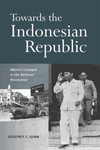
Towards the Indonesian Republic: Marxist lineages in the national revolution
Gunn, Geoffrey
ISEAS – Yusof Ishak Institute
, 2025
; English
; 449 Pages
Drawing on little known archival sources, this work brings to the fore the salience of a schism in the Indonesian communist movement between pro-Moscow loyalists and “national-communists” reaching back to the 1920s, which survived even the Japanese occupation and surfaced in the throes of the National Revolution (1945–49). At the heart of the rift lay contrasting visions of revolutionary tactics, the salience of Islam in an Islamic majority society, the vexed question of alliance between leftists and other anti-colonial forces, and even the concept and definition of state and national ideology. As such, we cannot ignore the lineages of Marxism in the National Revolution, which trace their roots to the pioneer actions on Java by Dutch communists, themselves influenced by the Bolshevik Revolution. Contrary to the image of a non-revolutionary peasantry and a nationalist leadership broken or tamed by colonial carceral practices, the picture that emerges is one of acute agency on the part of an awoken population at a critical historical moment at the end of World War II.
“There is no more complicated period in the history of the Indonesian national revolution than that of 1945–49 during the war with the Dutch colonial armies nor a more complicated strand in Indonesian history than that of its Marxist lineage. Dr Gunn’s book is a truly unique and fascinating account of both, fusing perspectives from a range of colonial as well as indigenous sources. Sukarno, Hatta, Sjahrir, Amir Sjariffudin, all appear, but none more so than Tan Malaka. It is as provocative a read as any well-researched historical novel, but it is not fiction but reality. It is very well documented and needs to be read at least twice.”
—Max Lane, Visiting Senior Fellow, Indonesia Studies Programme, ISEAS – Yusof Ishak Institute
“There have been numerous books on Indonesian independence movements that led to the birth of the Republic of Indonesia. Nevertheless, this book by Geoffrey Gunn differs from previous ones in the sense that it focuses on the role of Marxist radical movements, especially that of Tan Malaka, in the Indonesian anti-colonial struggle. It begins with the emergence of the Communist movement, failed rebellions of 1926–27, the Japanese occupation, the Madiun Affair, and ends with the international recognition of Indonesia’s independence in 1949. Using various newly available archives, including that of the Russian, and recently published articles and books on the subject, the author has presented a revisionist history of Indonesian independence with a fresh perspective.”
—Leo Suryadinata, Visiting Senior Fellow, ISEAS – Yusof Ishak Institute
formerly Professor in Political Science, National University of Singapore
Gunn, Geoffrey
ISEAS – Yusof Ishak Institute
, 2025
; English
; 449 Pages
Drawing on little known archival sources, this work brings to the fore the salience of a schism in the Indonesian communist movement between pro-Moscow loyalists and “national-communists” reaching back to the 1920s, which survived even the Japanese occupation and surfaced in the throes of the National Revolution (1945–49). At the heart of the rift lay contrasting visions of revolutionary tactics, the salience of Islam in an Islamic majority society, the vexed question of alliance between leftists and other anti-colonial forces, and even the concept and definition of state and national ideology. As such, we cannot ignore the lineages of Marxism in the National Revolution, which trace their roots to the pioneer actions on Java by Dutch communists, themselves influenced by the Bolshevik Revolution. Contrary to the image of a non-revolutionary peasantry and a nationalist leadership broken or tamed by colonial carceral practices, the picture that emerges is one of acute agency on the part of an awoken population at a critical historical moment at the end of World War II.
“There is no more complicated period in the history of the Indonesian national revolution than that of 1945–49 during the war with the Dutch colonial armies nor a more complicated strand in Indonesian history than that of its Marxist lineage. Dr Gunn’s book is a truly unique and fascinating account of both, fusing perspectives from a range of colonial as well as indigenous sources. Sukarno, Hatta, Sjahrir, Amir Sjariffudin, all appear, but none more so than Tan Malaka. It is as provocative a read as any well-researched historical novel, but it is not fiction but reality. It is very well documented and needs to be read at least twice.”
—Max Lane, Visiting Senior Fellow, Indonesia Studies Programme, ISEAS – Yusof Ishak Institute
“There have been numerous books on Indonesian independence movements that led to the birth of the Republic of Indonesia. Nevertheless, this book by Geoffrey Gunn differs from previous ones in the sense that it focuses on the role of Marxist radical movements, especially that of Tan Malaka, in the Indonesian anti-colonial struggle. It begins with the emergence of the Communist movement, failed rebellions of 1926–27, the Japanese occupation, the Madiun Affair, and ends with the international recognition of Indonesia’s independence in 1949. Using various newly available archives, including that of the Russian, and recently published articles and books on the subject, the author has presented a revisionist history of Indonesian independence with a fresh perspective.”
—Leo Suryadinata, Visiting Senior Fellow, ISEAS – Yusof Ishak Institute
formerly Professor in Political Science, National University of Singapore
eBook
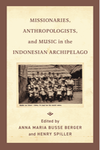
Missionaries, anthropologists, and music in the Indonesian archipelago
Busse Berger, Anna Maria; Spiller, Henry
University of California Press
, 2025
; English
; 350 Pages
A free ebook version of this title is available through Luminos, University of California Press's Open Access publishing program. Visit www.luminosoa.org to learn more.
Although the history of Indonesian music has received much attention from ethnomusicologists and Western composers alike, almost nothing has been written on the interaction of missionaries with local culture. This study represents the first attempt to concentrate on the musical dimension of missionary activities in Indonesia. In fourteen essays, a group of distinguished scholars show the complexity of the topic: while some missionaries did important scholarship on local music, making recordings and attempting to use local music in services, others tried to suppress whatever they found. Many were collaborating closely with anthropologists who admitted freely that they could not have done their work without them. And both parties brought colonial biases into their work. By grappling with these realities and records, this book is a collective effort to decolonize the project of making music histories.
Busse Berger, Anna Maria; Spiller, Henry
University of California Press
, 2025
; English
; 350 Pages
A free ebook version of this title is available through Luminos, University of California Press's Open Access publishing program. Visit www.luminosoa.org to learn more.
Although the history of Indonesian music has received much attention from ethnomusicologists and Western composers alike, almost nothing has been written on the interaction of missionaries with local culture. This study represents the first attempt to concentrate on the musical dimension of missionary activities in Indonesia. In fourteen essays, a group of distinguished scholars show the complexity of the topic: while some missionaries did important scholarship on local music, making recordings and attempting to use local music in services, others tried to suppress whatever they found. Many were collaborating closely with anthropologists who admitted freely that they could not have done their work without them. And both parties brought colonial biases into their work. By grappling with these realities and records, this book is a collective effort to decolonize the project of making music histories.
eBook
Queer Vietnam : a history of gender transgression, 1920-1945
Tran, Richard Quang-Anh
Stanford University Press
, 2025
; English
; 228 Pages
Queer Vietnam recovers the forgotten stories of variant genders and sexualities in early twentieth-century Vietnam. By the beginning of the 1900s, European imperialism had spread Western notions of gender across much of Asia, narrowing and delegitimizing what had been a wide range of acceptable gender practices. But in Vietnam, Western influence on gender remained uneven at best. Through archival research and innovative readings of literary sources, Richard Quang-Anh Tran argues that Vietnamese culture embraced a much less rigid view of the human body, and that a far more capacious vision of gendered personhood existed in this period than has been previously assumed. Popular love stories involved cross-dressing monks and traditional women who don male garb to fight in battle. And accounts of proto-lesbian friendships and a futuristic human civilization populated by a higher form of hermaphroditic species all found avid readers. Together, this material reveals that in Vietnam's interwar period, "tradition" coexisted with and jostled against the modern. While current perceptions of Vietnamese history rest on the exclusion of the "queer"—subjects who depart from heteronormative ways of being—this book brings them to the center, and opens up new directions for both the historical study of gender and Vietnam's modernity.
Tran, Richard Quang-Anh
Stanford University Press
, 2025
; English
; 228 Pages
Queer Vietnam recovers the forgotten stories of variant genders and sexualities in early twentieth-century Vietnam. By the beginning of the 1900s, European imperialism had spread Western notions of gender across much of Asia, narrowing and delegitimizing what had been a wide range of acceptable gender practices. But in Vietnam, Western influence on gender remained uneven at best. Through archival research and innovative readings of literary sources, Richard Quang-Anh Tran argues that Vietnamese culture embraced a much less rigid view of the human body, and that a far more capacious vision of gendered personhood existed in this period than has been previously assumed. Popular love stories involved cross-dressing monks and traditional women who don male garb to fight in battle. And accounts of proto-lesbian friendships and a futuristic human civilization populated by a higher form of hermaphroditic species all found avid readers. Together, this material reveals that in Vietnam's interwar period, "tradition" coexisted with and jostled against the modern. While current perceptions of Vietnamese history rest on the exclusion of the "queer"—subjects who depart from heteronormative ways of being—this book brings them to the center, and opens up new directions for both the historical study of gender and Vietnam's modernity.
eBook
Contemplating Sufism : dialogue and tradition across Southeast Asia
Aljunied, Khairudin
Wiley-Blackwell
, 2025
; English
; 227 Pages
Contemplating Sufism: Dialogue and Tradition across Southeast Asia
"Exploring Sufi sites and seminaries, Professor Aljunied vividly describes how a dialogic tradition facilitated the formation of a Sufi habitus and life form across Muslim-majority Southeast Asia. The work deftly articulates the synergies between Sufis and the wider public, showing how such dynamics infused increasingly powerful mediums and popular forms of mass mobilization during the colonial and post-colonial eras."
—ARMANDO SALVATORE, Barbara and Patrick Keenan Chair in Interfaith Studies, McGill University, Canada
"At once personal and scholarly, this book shows how Sufis were engaged in dual dialogues—with themselves and their surroundings—that made them agents of social change in Southeast Asia's past and present alike. Paying equal attention to devotion and miracles, and no less, the political and martial aspects of Sufi activism, Aljunied explains why Islam remains so important in the region today."
—NILE GREEN, Ibn Khaldun Endowed Chair in World History, University of California, Los Angeles
"Splendidly written and accessible, Khairudin Aljunied tells a lively and engaging story of Muslim piety, metaphysics, and politics as an integral part of Islamic thought and practice in Southeast Asia. Readers will gain a profound and nuanced understanding of Islam in a region with the world’s largest Muslim population. A compelling read!"
—EBRAHIM MOOSA, Mirza Family Professor of Islamic Thought and Muslim Societies, University of Notre Dame, USA
Contemplating Sufism employs a unique "contemplative histories" methodology to uncover how and why Sufis employed creative mediums to embed and sustain their importance in the region for many centuries. Recognizing Sufism as a dialogical tradition, Khairudin Aljunied reveals the emotional, institutional, and political forces that continue to influence Sufi thought and practices.
Providing an accessible and coherent synthesis of the latest scholarship in the field, this innovative study integrates data from around the world, vignettes and anecdotes of Southeast Asian Sufism, and the author's ethnographic observations and personal experiences. Lively and engaging chapters contain vivid descriptions and rich analyses of the texts, ideas, people, practices, and institutions that aided in the development of Sufism—and transformed Southeast Asia’s ideological, cultural, political, and social landscapes.
Illustrating the inventiveness and energy of the Sufis, Contemplating Sufism: Dialogue and Tradition across Southeast Asia is an excellent textbook for undergraduate and graduate courses on Sufism and a valuable resource for academics, scholars, and general readers with an interest in the mystical dimension of Islam in the non-Arab world.
Aljunied, Khairudin
Wiley-Blackwell
, 2025
; English
; 227 Pages
Contemplating Sufism: Dialogue and Tradition across Southeast Asia
"Exploring Sufi sites and seminaries, Professor Aljunied vividly describes how a dialogic tradition facilitated the formation of a Sufi habitus and life form across Muslim-majority Southeast Asia. The work deftly articulates the synergies between Sufis and the wider public, showing how such dynamics infused increasingly powerful mediums and popular forms of mass mobilization during the colonial and post-colonial eras."
—ARMANDO SALVATORE, Barbara and Patrick Keenan Chair in Interfaith Studies, McGill University, Canada
"At once personal and scholarly, this book shows how Sufis were engaged in dual dialogues—with themselves and their surroundings—that made them agents of social change in Southeast Asia's past and present alike. Paying equal attention to devotion and miracles, and no less, the political and martial aspects of Sufi activism, Aljunied explains why Islam remains so important in the region today."
—NILE GREEN, Ibn Khaldun Endowed Chair in World History, University of California, Los Angeles
"Splendidly written and accessible, Khairudin Aljunied tells a lively and engaging story of Muslim piety, metaphysics, and politics as an integral part of Islamic thought and practice in Southeast Asia. Readers will gain a profound and nuanced understanding of Islam in a region with the world’s largest Muslim population. A compelling read!"
—EBRAHIM MOOSA, Mirza Family Professor of Islamic Thought and Muslim Societies, University of Notre Dame, USA
Contemplating Sufism employs a unique "contemplative histories" methodology to uncover how and why Sufis employed creative mediums to embed and sustain their importance in the region for many centuries. Recognizing Sufism as a dialogical tradition, Khairudin Aljunied reveals the emotional, institutional, and political forces that continue to influence Sufi thought and practices.
Providing an accessible and coherent synthesis of the latest scholarship in the field, this innovative study integrates data from around the world, vignettes and anecdotes of Southeast Asian Sufism, and the author's ethnographic observations and personal experiences. Lively and engaging chapters contain vivid descriptions and rich analyses of the texts, ideas, people, practices, and institutions that aided in the development of Sufism—and transformed Southeast Asia’s ideological, cultural, political, and social landscapes.
Illustrating the inventiveness and energy of the Sufis, Contemplating Sufism: Dialogue and Tradition across Southeast Asia is an excellent textbook for undergraduate and graduate courses on Sufism and a valuable resource for academics, scholars, and general readers with an interest in the mystical dimension of Islam in the non-Arab world.
