
Navigation menu
Search
Databases
All Databases
eBook
The art of Indian Asia its mythology and transformations, volume two: plates
Zimmer, Heinrich; Elisofon, Eliot (WIIH PHOTOGRAPHS BY); Campbell, Joseph (COMPLETED AND EDITED BY)
Princeton University Press
, 2026
; English
; 655 Pages
he Art of Indian Asia is a unique work of scholarship and photography in two volumes (each sold separately). This is the second volume, which contains the photographic illustrations; the first volume contains the text. Together, the two volumes present a comprehensive view of Indian art, spanning from 3,000 BC to the twentieth century and an area from Afghanistan to Bali. The volume of text combined with the volume of photographs form an “imaginary temple” that conveys the spiritual messages of Hinduism, Buddhism, and Jainism.
It is recommended that readers buy both volumes of The Art of Indian Asia because together they form an integrated work—Volume 1 containing only the text and Volume 2 containing only the photographs.
Zimmer, Heinrich; Elisofon, Eliot (WIIH PHOTOGRAPHS BY); Campbell, Joseph (COMPLETED AND EDITED BY)
Princeton University Press
, 2026
; English
; 655 Pages
he Art of Indian Asia is a unique work of scholarship and photography in two volumes (each sold separately). This is the second volume, which contains the photographic illustrations; the first volume contains the text. Together, the two volumes present a comprehensive view of Indian art, spanning from 3,000 BC to the twentieth century and an area from Afghanistan to Bali. The volume of text combined with the volume of photographs form an “imaginary temple” that conveys the spiritual messages of Hinduism, Buddhism, and Jainism.
It is recommended that readers buy both volumes of The Art of Indian Asia because together they form an integrated work—Volume 1 containing only the text and Volume 2 containing only the photographs.
eBook
The art of Indian Asia its mythology and transformations, volume one: text
Zimmer, Heinrich; Elisofon, Eliot (WITH PHOTOGRAPHS BY); Campbell, Joseph (COMPLETED AND EDITED BY)
Princeton University Press
, 2026
; English
; 540 Pages
The Art of Indian Asia is a unique work of scholarship and photography in two volumes (each sold separately). This is the first volume, which contains the text
the second volume contains the photographic illustrations. Together, the two volumes present a comprehensive view of Indian art, spanning from 3,000 BC to the twentieth century and an area from Afghanistan to Bali. The volume of text combined with the volume of photographs form an “imaginary temple” that conveys the spiritual messages of Hinduism, Buddhism, and Jainism.
It is recommended that readers buy both volumes of The Art of Indian Asia because together they form an integrated work—Volume 1 containing only the text and Volume 2 containing only the photographs.
Zimmer, Heinrich; Elisofon, Eliot (WITH PHOTOGRAPHS BY); Campbell, Joseph (COMPLETED AND EDITED BY)
Princeton University Press
, 2026
; English
; 540 Pages
The Art of Indian Asia is a unique work of scholarship and photography in two volumes (each sold separately). This is the first volume, which contains the text
the second volume contains the photographic illustrations. Together, the two volumes present a comprehensive view of Indian art, spanning from 3,000 BC to the twentieth century and an area from Afghanistan to Bali. The volume of text combined with the volume of photographs form an “imaginary temple” that conveys the spiritual messages of Hinduism, Buddhism, and Jainism.
It is recommended that readers buy both volumes of The Art of Indian Asia because together they form an integrated work—Volume 1 containing only the text and Volume 2 containing only the photographs.
eBook
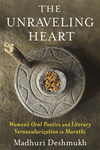
The unraveling heart : Women’s Oral Poetics and Literary Vernacularization in Marathi
Deshmukh, Madhuri
Columbia University Press
, 2025
; English
; 358 Pages
Women's songs of the grind mill are among the oldest oral traditions in South Asia. They have been sung to accompany a daily household labor, making flour using a stone hand mill, for many centuries. Even today, grind mill songs are still well known in Maharashtra, testifying to the endurance of a remarkable genre. Yet these songs have long been understood through sociological or anthropological lenses, treated as entirely separate from literary culture.
This groundbreaking book shows that women's songs of the grind mill played a foundational role in the vernacular turn to making literature in Marathi between the thirteenth and eighteenth centuries. Madhuri Deshmukh demonstrates that women's songs developed alongside and in intimate conversation with Marathi written literature, shaping the poetic structures and motifs of the bhakti tradition. Drawing on aesthetic categories from the songs themselves, she calls for understanding these artfully crafted compositions as oral poetry in a lyric mode, underscoring that women describe their songs as an "unraveling of the heart" while they compare written poetry to weaving. Deshmukh argues that women poets, Mahadaise and Janabai, were at the forefront of vernacularization, challenging common literary-historical narratives that neglect the role of communities excluded by elite regimes of writing. Considering what songs say about texts and what texts say about songs, The Unraveling Heart offers new insight into the importance of labor and gender to aesthetics and develops a novel approach to the concept of the literary.
Deshmukh, Madhuri
Columbia University Press
, 2025
; English
; 358 Pages
Women's songs of the grind mill are among the oldest oral traditions in South Asia. They have been sung to accompany a daily household labor, making flour using a stone hand mill, for many centuries. Even today, grind mill songs are still well known in Maharashtra, testifying to the endurance of a remarkable genre. Yet these songs have long been understood through sociological or anthropological lenses, treated as entirely separate from literary culture.
This groundbreaking book shows that women's songs of the grind mill played a foundational role in the vernacular turn to making literature in Marathi between the thirteenth and eighteenth centuries. Madhuri Deshmukh demonstrates that women's songs developed alongside and in intimate conversation with Marathi written literature, shaping the poetic structures and motifs of the bhakti tradition. Drawing on aesthetic categories from the songs themselves, she calls for understanding these artfully crafted compositions as oral poetry in a lyric mode, underscoring that women describe their songs as an "unraveling of the heart" while they compare written poetry to weaving. Deshmukh argues that women poets, Mahadaise and Janabai, were at the forefront of vernacularization, challenging common literary-historical narratives that neglect the role of communities excluded by elite regimes of writing. Considering what songs say about texts and what texts say about songs, The Unraveling Heart offers new insight into the importance of labor and gender to aesthetics and develops a novel approach to the concept of the literary.
eBook
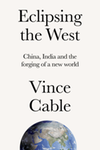
Eclipsing the West: China, India and the forging of a new world
Cable, Vince
Manchester University Press
, 2025
; English
; 353 Pages
This book traces how China and India have evolved from the point in the late 1940s when both countries assumed their present political form, with India’s independence from Britain and the establishment of the People’s Republic of China. It looks forwards to a future in which they are centrally important and - perhaps - the dominant economic and political actors on the world stage. The book presents two geopolitical challenges: the Thucydides Trap and the Kindleberger Trap. Politically, present day China and India have more in common than is comfortable for those who believe that liberal democracy or democratic capitalism is not merely the best model of governance but also the only one that works in the long run. India’s commitment to liberal democracy compares well with other big, complex, multi-ethnic countries. At the very least there is, in the concept of ‘frenemies’, a complex balancing of interests with each other and with Pakistan and Russia, among others. That picture is more consistent with the idea of ‘multi-alignment’ than the simpler view of a world divided into two. Economic growth rates are less predictable, though it seems reasonable to assume that the information and data processing revolution, and AI, will continue at pace and that knowledge will spread rapidly through internet connectivity, enabling less developed countries to catch up. Economic growth projections to 2050 suggest that China and India are both likely - though not certain - to be preeminent economic powers, perhaps even surpassing the USA
Cable, Vince
Manchester University Press
, 2025
; English
; 353 Pages
This book traces how China and India have evolved from the point in the late 1940s when both countries assumed their present political form, with India’s independence from Britain and the establishment of the People’s Republic of China. It looks forwards to a future in which they are centrally important and - perhaps - the dominant economic and political actors on the world stage. The book presents two geopolitical challenges: the Thucydides Trap and the Kindleberger Trap. Politically, present day China and India have more in common than is comfortable for those who believe that liberal democracy or democratic capitalism is not merely the best model of governance but also the only one that works in the long run. India’s commitment to liberal democracy compares well with other big, complex, multi-ethnic countries. At the very least there is, in the concept of ‘frenemies’, a complex balancing of interests with each other and with Pakistan and Russia, among others. That picture is more consistent with the idea of ‘multi-alignment’ than the simpler view of a world divided into two. Economic growth rates are less predictable, though it seems reasonable to assume that the information and data processing revolution, and AI, will continue at pace and that knowledge will spread rapidly through internet connectivity, enabling less developed countries to catch up. Economic growth projections to 2050 suggest that China and India are both likely - though not certain - to be preeminent economic powers, perhaps even surpassing the USA
eBook
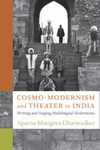
Cosmo-modernism and theater in India : writing and staging multilingual modernisms
Dharwadker, Aparna Bhargava
Columbia University Press
, 2025
; English
; 353 Pages
Urban theater took shape in postindependence India as a large and complex field produced in more than sixteen major languages, including Bengali, Marathi, Hindi, Gujarati, and Kannada. The cosmopolitan engagement of leading playwrights with modernist and postcolonial literary movements around the world created distinctly new aesthetic and political approaches to Indian myth, history, and sociocultural experience, which had become the most prominent subjects in modern Indian drama. Yet even as critics and scholars of global modernism have increasingly turned their attention beyond North America and Europe, they continue to focus on dominant world languages at the expense of multilingual cultures such as India’s. Despite their originality and significance, modernist works written in Indian languages other than English remain neglected.
In Cosmo-Modernism and Theater in India, Aparna Bhargava Dharwadker develops a new framework for understanding non-Anglophone Indian modernisms by recovering crucial theoretical concepts and using them to analyze the writing, staging, and reception of major plays in multiple languages. She argues that the output of prominent mid- to late-twentieth-century playwrights such as Dharamvir Bharati, Mohan Rakesh, Badal Sircar, Vijay Tendulkar, Girish Karnad, and Habib Tanvir registers a decisive rupture from nineteenth-century forms of colonial modernity. In representing the ancient Indian past, the postcolonial urban present, and the rich repertoire of precolonial performance traditions, these authors’ works became highly inventive expressions of modernist classicism, realism, and traditionalism. Dharwadker shows how a decommercialized performance economy and the incessant activity of translation further enhanced modernist production, and she connects Indian modernisms to regional, national, and transnational networks. Offering bold new insights into the theory and practice of modernist drama, this book delivers a radical remapping of global modernisms.
Dharwadker, Aparna Bhargava
Columbia University Press
, 2025
; English
; 353 Pages
Urban theater took shape in postindependence India as a large and complex field produced in more than sixteen major languages, including Bengali, Marathi, Hindi, Gujarati, and Kannada. The cosmopolitan engagement of leading playwrights with modernist and postcolonial literary movements around the world created distinctly new aesthetic and political approaches to Indian myth, history, and sociocultural experience, which had become the most prominent subjects in modern Indian drama. Yet even as critics and scholars of global modernism have increasingly turned their attention beyond North America and Europe, they continue to focus on dominant world languages at the expense of multilingual cultures such as India’s. Despite their originality and significance, modernist works written in Indian languages other than English remain neglected.
In Cosmo-Modernism and Theater in India, Aparna Bhargava Dharwadker develops a new framework for understanding non-Anglophone Indian modernisms by recovering crucial theoretical concepts and using them to analyze the writing, staging, and reception of major plays in multiple languages. She argues that the output of prominent mid- to late-twentieth-century playwrights such as Dharamvir Bharati, Mohan Rakesh, Badal Sircar, Vijay Tendulkar, Girish Karnad, and Habib Tanvir registers a decisive rupture from nineteenth-century forms of colonial modernity. In representing the ancient Indian past, the postcolonial urban present, and the rich repertoire of precolonial performance traditions, these authors’ works became highly inventive expressions of modernist classicism, realism, and traditionalism. Dharwadker shows how a decommercialized performance economy and the incessant activity of translation further enhanced modernist production, and she connects Indian modernisms to regional, national, and transnational networks. Offering bold new insights into the theory and practice of modernist drama, this book delivers a radical remapping of global modernisms.
eBook
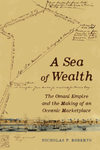
A sea of wealth : the Omani Empire and the making of an oceanic marketplace
Roberts, Nicholas P.
University of California Press
, 2025
; English
; 291 Pages
A Sea of Wealth is a sweeping retelling of the Omani position in the Indian Ocean. Here the reign of Oman’s longest-serving ruler, Saʿid bin Sultan, offers a keyhole through which we can peer to see the entangled histories of Arabia and the Gulf, South Asia, and East Africa in the Omani Empire. In centering this empire, Nicholas P. Roberts shows how Arabs, Africans, and Asians actively shaped the conditions of commercial engagement in the Western Indian Ocean, uniting the empire’s domains into a single oceanic marketplace in which Europeans and Americans had to accede if they wished to succeed. Drawing upon sources in three languages from four continents, A Sea of Wealth is a vivid narrative full of colorful characters that upturns many conventional understandings of our modern world.
Roberts, Nicholas P.
University of California Press
, 2025
; English
; 291 Pages
A Sea of Wealth is a sweeping retelling of the Omani position in the Indian Ocean. Here the reign of Oman’s longest-serving ruler, Saʿid bin Sultan, offers a keyhole through which we can peer to see the entangled histories of Arabia and the Gulf, South Asia, and East Africa in the Omani Empire. In centering this empire, Nicholas P. Roberts shows how Arabs, Africans, and Asians actively shaped the conditions of commercial engagement in the Western Indian Ocean, uniting the empire’s domains into a single oceanic marketplace in which Europeans and Americans had to accede if they wished to succeed. Drawing upon sources in three languages from four continents, A Sea of Wealth is a vivid narrative full of colorful characters that upturns many conventional understandings of our modern world.
eBook
Overdetermined : how Indian English literature becomes ethnic, postcolonial, and anglophone
Srinivasan, Ragini Tharoor
Columbia University Press
, 2025
; English
; 336 Pages
How Indian English Literature Becomes Ethnic, Postcolonial, and Anglophone
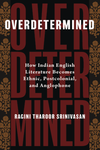
Why is it so difficult to account for the role of identity in literary studies? Why do both writers and scholars of Indian English literature express resistance to India and Indianness? What does this reveal about how non-Western literatures are read, taught, and understood? Drawing on years of experiences in classrooms and on U.S. university campuses, Ragini Tharoor Srinivasan explores how writers, critics, teachers, and students of Indian English literatures negotiate and resist the categories through which the field is defined: ethnic, postcolonial, and Anglophone. Overdetermined considers major contemporary authors who disavow identity even as their works and public personas respond in varied ways to the imperatives of being “Indian.” Chapters examine Bharati Mukherjee’s rejection of “ethnic” Americanness; Chetan Bhagat’s “bad English”; Amit Chaudhuri’s autofictional literary project; and Jhumpa Lahiri’s decision to write in Italian, interspersed with meditations on the iconicity of the theorists Gayatri Chakravorty Spivak, Homi Bhabha, and Edward Said. Through an innovative method of accented reading and sharing stories and syllabi from her teaching, Srinivasan relates the burdens of representation faced by ethnic and postcolonial writers to the institutional and disciplinary pressures that affect the scholars who study their works. Engaging and self-reflexive, Overdetermined offers new insight into the dynamics that shape contemporary Indian English literature, the politics of identity in literary studies, and the complexities of teaching minoritized literatures in the West.
Srinivasan, Ragini Tharoor
Columbia University Press
, 2025
; English
; 336 Pages
How Indian English Literature Becomes Ethnic, Postcolonial, and Anglophone
Why is it so difficult to account for the role of identity in literary studies? Why do both writers and scholars of Indian English literature express resistance to India and Indianness? What does this reveal about how non-Western literatures are read, taught, and understood? Drawing on years of experiences in classrooms and on U.S. university campuses, Ragini Tharoor Srinivasan explores how writers, critics, teachers, and students of Indian English literatures negotiate and resist the categories through which the field is defined: ethnic, postcolonial, and Anglophone. Overdetermined considers major contemporary authors who disavow identity even as their works and public personas respond in varied ways to the imperatives of being “Indian.” Chapters examine Bharati Mukherjee’s rejection of “ethnic” Americanness; Chetan Bhagat’s “bad English”; Amit Chaudhuri’s autofictional literary project; and Jhumpa Lahiri’s decision to write in Italian, interspersed with meditations on the iconicity of the theorists Gayatri Chakravorty Spivak, Homi Bhabha, and Edward Said. Through an innovative method of accented reading and sharing stories and syllabi from her teaching, Srinivasan relates the burdens of representation faced by ethnic and postcolonial writers to the institutional and disciplinary pressures that affect the scholars who study their works. Engaging and self-reflexive, Overdetermined offers new insight into the dynamics that shape contemporary Indian English literature, the politics of identity in literary studies, and the complexities of teaching minoritized literatures in the West.
eBook
Vali Dakhani and the early rekhtah networks : sharing poetry's pleasures
Pauwels, Heidi; Dhavan, Purnima
I.B. Tauris
, 2025
; English
; 265 Pages
This book reexamines the emergence of Urdu as a literary and poetic language in the 18th century, at the time called Rekhtah, highlighting its engagement with diverse regional cultures and communities in South Asia.
Sharing Poetry's Pleasures reframes the history of Urdu within the diverse contexts from which it emerged. It places the earliest Urdu-Rekhtah poets and their craft in the lively social gatherings, bazaars, shrines, and courts of 18th century South Asia.
Through aesthetic analysis and historical contextualization of poems, using primary sources in manuscripts, the authors reveal why everyday vernaculars, multi-lingual puns, alongside the use of courtly Persian and complex metaphors attracted a wide audience for this new literary language.
Dhavan and Pauwels re-examine the long-dominant mischaracterization of Urdu as an elite language of South Asian Muslims by analysing the poetic biographies of Vali Dakhani and his contemporaries Fa'iz, Abru and Hatim. The authors reveal how selective attention to a handful of poets and rarefied courtly texts obscured the much more diverse roots of an important vernacular tradition, thereby reconstructing a lost literary network of speakers, poets and participants in Urdu's past.
Pauwels, Heidi; Dhavan, Purnima
I.B. Tauris
, 2025
; English
; 265 Pages
This book reexamines the emergence of Urdu as a literary and poetic language in the 18th century, at the time called Rekhtah, highlighting its engagement with diverse regional cultures and communities in South Asia.
Sharing Poetry's Pleasures reframes the history of Urdu within the diverse contexts from which it emerged. It places the earliest Urdu-Rekhtah poets and their craft in the lively social gatherings, bazaars, shrines, and courts of 18th century South Asia.
Through aesthetic analysis and historical contextualization of poems, using primary sources in manuscripts, the authors reveal why everyday vernaculars, multi-lingual puns, alongside the use of courtly Persian and complex metaphors attracted a wide audience for this new literary language.
Dhavan and Pauwels re-examine the long-dominant mischaracterization of Urdu as an elite language of South Asian Muslims by analysing the poetic biographies of Vali Dakhani and his contemporaries Fa'iz, Abru and Hatim. The authors reveal how selective attention to a handful of poets and rarefied courtly texts obscured the much more diverse roots of an important vernacular tradition, thereby reconstructing a lost literary network of speakers, poets and participants in Urdu's past.
eBook
Migrant epistemologies in Indian nonfiction of the long twentieth century
Basu, Manisha
Edinburgh University Press
, 2025
; English
; 233 Pages
Attending to non-fiction texts from India and the Global South, Migrant Epistemologies identifies migratory contact zones as sites on which contrary epistemic stances may co-exist, despite their differences, in a symbiotic ecology.
Given the increasing traffic between differentially empowered groups around the world, their distinct cognitive practices must often meet one another head-on.
Manisha Basu argues that in the best of such circumstances, migrants and hosts open themselves to unlearning their own dominant worldviews and animating other ways of knowing.
Unlike accounts of migration that accentuate the violences involved in the movements of peoples, this book foregrounds relatively peaceable, but still complex, migratory encounters that imagine an epistemologically diverse world resulting in social and environmental justice.
Basu, Manisha
Edinburgh University Press
, 2025
; English
; 233 Pages
Attending to non-fiction texts from India and the Global South, Migrant Epistemologies identifies migratory contact zones as sites on which contrary epistemic stances may co-exist, despite their differences, in a symbiotic ecology.
Given the increasing traffic between differentially empowered groups around the world, their distinct cognitive practices must often meet one another head-on.
Manisha Basu argues that in the best of such circumstances, migrants and hosts open themselves to unlearning their own dominant worldviews and animating other ways of knowing.
Unlike accounts of migration that accentuate the violences involved in the movements of peoples, this book foregrounds relatively peaceable, but still complex, migratory encounters that imagine an epistemologically diverse world resulting in social and environmental justice.
eBook
Post-millennial Indian speculative fiction in English : desi dystopias and ideas of belonging
Varughese, E. Dawson
Bloomsbury Academic
, 2025
; English
; 201 Pages
Exploring expressions of 'Indianness' buried within and scattered across post-millennial Indian speculative fiction in English, this book asks questions around what it means to 'belong' to an India of 'now' and what it might mean to belong to multiple Indias of the (near) future.
With dystopia, near-future, apocalyptic Indias and fantastical metropolises all imagined across this body of writing, Post-Millennial Indian Speculative Fiction in English traces economic, social and political transformations in post-2000 'New India' across these various narratives. Drawing on established notions of the speculative, Dawson Varughese argues for a recognized, post-millennial canon of Indian speculative writing in English which moves beyond Western-centric frames of reference, centring instead on Indian sensibilities, expressions of belonging to India and speculative 'Indian' futures.
Organized around key tropes and characteristics of post-millennial Indian speculative fiction in English to date - urban infrastructures, citizenship, bodies and biotech, future (Indian) histories and climate catastrophes – it takes stock of a range of science fiction, fantasy, near-future and dystopian novels and short stories and offers critical insights into the writings of Samit Basu, Varun Thomas Mathew, Gautam Bhatia, Rimi B. Chatterjee, Prayaag Akbar and Anil Menon, alongside many others.
Post-millennial Indian Speculative Fiction in English examines shifting ideas of what it means to belong to India and conceptions of India as a nation and pulls these ideas together, creating a workable framework of understanding for this nascent field as we move into the third decade of the millennium.
Varughese, E. Dawson
Bloomsbury Academic
, 2025
; English
; 201 Pages
Exploring expressions of 'Indianness' buried within and scattered across post-millennial Indian speculative fiction in English, this book asks questions around what it means to 'belong' to an India of 'now' and what it might mean to belong to multiple Indias of the (near) future.
With dystopia, near-future, apocalyptic Indias and fantastical metropolises all imagined across this body of writing, Post-Millennial Indian Speculative Fiction in English traces economic, social and political transformations in post-2000 'New India' across these various narratives. Drawing on established notions of the speculative, Dawson Varughese argues for a recognized, post-millennial canon of Indian speculative writing in English which moves beyond Western-centric frames of reference, centring instead on Indian sensibilities, expressions of belonging to India and speculative 'Indian' futures.
Organized around key tropes and characteristics of post-millennial Indian speculative fiction in English to date - urban infrastructures, citizenship, bodies and biotech, future (Indian) histories and climate catastrophes – it takes stock of a range of science fiction, fantasy, near-future and dystopian novels and short stories and offers critical insights into the writings of Samit Basu, Varun Thomas Mathew, Gautam Bhatia, Rimi B. Chatterjee, Prayaag Akbar and Anil Menon, alongside many others.
Post-millennial Indian Speculative Fiction in English examines shifting ideas of what it means to belong to India and conceptions of India as a nation and pulls these ideas together, creating a workable framework of understanding for this nascent field as we move into the third decade of the millennium.
