
Navigation menu
Search
Databases
All Databases
eBook
Writing and materiality in ancient China : the textual culture of the Mawangdui tombs
Waring, Luke
Columbia University Press
, 2025
; English
; 377 Pages
Excavations at the famous Mawangdui tomb site in south-central China (early to mid-second century BCE) have unearthed many kinds of writing, including documents made of silk, wood, and bamboo as well as a wide range of inscribed artifacts. This book is an interdisciplinary study of these varied forms of writing, exploring the different roles that texts played in the lives and afterlives of Chinese elites during the Han dynasty. Examining documents and artifacts from the Mawangdui tombs in comparative perspective, Luke Waring demonstrates that early Chinese writing should be understood as part of the material and visual cultures of its time. Written texts were used to do more than simply preserve and transmit important information: they were also work tasks, storage items, performance aids, apotropaic talismans, aesthetically pleasing patterns, display pieces, possessions, and burial objects. Writing was even integrated into older, perhaps more powerful modes of cultural expression such as ritual performance and material display. Waring argues that manuscripts and inscribed objects were always things, artifacts that had powerful effects on the world that created them. Comprehensively researched and lavishly illustrated, Writing and Materiality in Ancient China offers a new understanding of the textual cultures of the early Western Han.
Waring, Luke
Columbia University Press
, 2025
; English
; 377 Pages
Excavations at the famous Mawangdui tomb site in south-central China (early to mid-second century BCE) have unearthed many kinds of writing, including documents made of silk, wood, and bamboo as well as a wide range of inscribed artifacts. This book is an interdisciplinary study of these varied forms of writing, exploring the different roles that texts played in the lives and afterlives of Chinese elites during the Han dynasty. Examining documents and artifacts from the Mawangdui tombs in comparative perspective, Luke Waring demonstrates that early Chinese writing should be understood as part of the material and visual cultures of its time. Written texts were used to do more than simply preserve and transmit important information: they were also work tasks, storage items, performance aids, apotropaic talismans, aesthetically pleasing patterns, display pieces, possessions, and burial objects. Writing was even integrated into older, perhaps more powerful modes of cultural expression such as ritual performance and material display. Waring argues that manuscripts and inscribed objects were always things, artifacts that had powerful effects on the world that created them. Comprehensively researched and lavishly illustrated, Writing and Materiality in Ancient China offers a new understanding of the textual cultures of the early Western Han.
eBook
Triangle republics : cross-border literary transits between the Cold War Koreas and Japan
Kief, I Jonathan
Columbia University Press
, 2025
; English
; 361 Pages
:"Explores the robust and dynamic literary dialogues that emerged between writers in North Korea, South Korea, and Japan during the Cold War decades of the 1950s-1980s. Unlike the dominant narrative of these years, which assumes that the post-1945 processes of decolonization and division isolated these three literary domains from one another, the book shows how the shared predicaments of the Cold War and national division in fact brought them together, with a key role played by the Korean diasporic community in Japan, which was uniquely positioned to interact with writers and texts from both Koreas. With its multilingual, regional perspective, the book challenges the "national literature" paradigm of literary studies, showing how cross-border networks of textual transit and exchange played a central role in the creative transformations of these decades"-- Provided by publisher
Kief, I Jonathan
Columbia University Press
, 2025
; English
; 361 Pages
:"Explores the robust and dynamic literary dialogues that emerged between writers in North Korea, South Korea, and Japan during the Cold War decades of the 1950s-1980s. Unlike the dominant narrative of these years, which assumes that the post-1945 processes of decolonization and division isolated these three literary domains from one another, the book shows how the shared predicaments of the Cold War and national division in fact brought them together, with a key role played by the Korean diasporic community in Japan, which was uniquely positioned to interact with writers and texts from both Koreas. With its multilingual, regional perspective, the book challenges the "national literature" paradigm of literary studies, showing how cross-border networks of textual transit and exchange played a central role in the creative transformations of these decades"-- Provided by publisher
eBook
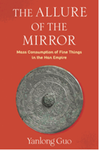
The allure of the mirror : mass consumption of fine things in the Han empire
Guo, Yanlong; Barbieri-Low, Anthony
Columbia University Press
, 2025
; English
; 377 Pages
"In Han China (202 B.C.E.-220 C.E.), few luxury objects were as widely coveted and consumed as bronze mirrors. The unprecedented and exponential growth of mirror consumption is evidenced by the abundance of specular metal discs dispersed across major museum collections in North America and excavated by Chinese archaeologists in recent decades. These mirrors, carrying diverse decorative and inscriptional patterns, were enjoyed by aristocrats and commoners alike. Mirrors Entangled , the first scholarly monograph on the bronze mirrors circulated across the early Chinese empire, foregrounds the seemingly trivial objects at center stage in Han society by revealing the physical, economic, and semiotic entanglements between mirrors and their users. I demonstrate that these specular discs were commodities acquired as personal possessions and gifts by people across different social classes. Reconstructing the lives and afterlives of Han mirrors, I argue that they embodied different dimensions of experience as intimate objects, bright discs, auspicious amulets, and funerary articles"-- Provided by publisher
Guo, Yanlong; Barbieri-Low, Anthony
Columbia University Press
, 2025
; English
; 377 Pages
"In Han China (202 B.C.E.-220 C.E.), few luxury objects were as widely coveted and consumed as bronze mirrors. The unprecedented and exponential growth of mirror consumption is evidenced by the abundance of specular metal discs dispersed across major museum collections in North America and excavated by Chinese archaeologists in recent decades. These mirrors, carrying diverse decorative and inscriptional patterns, were enjoyed by aristocrats and commoners alike. Mirrors Entangled , the first scholarly monograph on the bronze mirrors circulated across the early Chinese empire, foregrounds the seemingly trivial objects at center stage in Han society by revealing the physical, economic, and semiotic entanglements between mirrors and their users. I demonstrate that these specular discs were commodities acquired as personal possessions and gifts by people across different social classes. Reconstructing the lives and afterlives of Han mirrors, I argue that they embodied different dimensions of experience as intimate objects, bright discs, auspicious amulets, and funerary articles"-- Provided by publisher
eBook
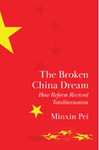
The broken China dream : how reform revived totalitarianism
Pei, Minxin
Princeton University Press
, 2025
; English
; 342 Pages
When China embarked on its transformative journey of modernization in 1979, many believed the country’s turn toward capitalism would put its totalitarian past to rest and mark the birth of a democratic, open society. Instead, China reverted to a neo-totalitarian state, one backed by one of the fastest-growing, most formidable economies on earth. The Broken China Dream pulls back the curtain on the regime of strongman Xi Jinping, revealing why the reforms of the post-Mao era have been reversed on nearly every front—and why the world failed to see it coming.
Exposing the truth behind China’s economic ascendency after the Cultural Revolution, Minxin Pei shows how, following Mao’s death in 1976, Deng Xiaoping strategically deployed the tools of capitalism to preserve the Chinese Communist Party. Deng kept intact the institutional foundations of totalitarianism even as he unleashed private entrepreneurship and courted foreign investment, giving China’s one-party state control of a vast repressive apparatus and the most critical sectors of the economy. Only a fragile balance of power among dueling factions prevented the rise of a totalitarian leader in the two decades after the Tiananmen crackdown in 1989—but this temporary equilibrium collapsed.
Essential to understanding today’s China, this meticulously researched book is a sobering account of why the country’s reformers and institutions could not stop a shrewd and ruthless politician like Xi from resurrecting dormant totalitarian practices that, for the foreseeable future, have spelled the end of the dream of a free and prosperous China.
Pei, Minxin
Princeton University Press
, 2025
; English
; 342 Pages
When China embarked on its transformative journey of modernization in 1979, many believed the country’s turn toward capitalism would put its totalitarian past to rest and mark the birth of a democratic, open society. Instead, China reverted to a neo-totalitarian state, one backed by one of the fastest-growing, most formidable economies on earth. The Broken China Dream pulls back the curtain on the regime of strongman Xi Jinping, revealing why the reforms of the post-Mao era have been reversed on nearly every front—and why the world failed to see it coming.
Exposing the truth behind China’s economic ascendency after the Cultural Revolution, Minxin Pei shows how, following Mao’s death in 1976, Deng Xiaoping strategically deployed the tools of capitalism to preserve the Chinese Communist Party. Deng kept intact the institutional foundations of totalitarianism even as he unleashed private entrepreneurship and courted foreign investment, giving China’s one-party state control of a vast repressive apparatus and the most critical sectors of the economy. Only a fragile balance of power among dueling factions prevented the rise of a totalitarian leader in the two decades after the Tiananmen crackdown in 1989—but this temporary equilibrium collapsed.
Essential to understanding today’s China, this meticulously researched book is a sobering account of why the country’s reformers and institutions could not stop a shrewd and ruthless politician like Xi from resurrecting dormant totalitarian practices that, for the foreseeable future, have spelled the end of the dream of a free and prosperous China.
eBook
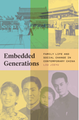
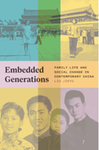
Embedded generations : family life and social change in contemporary China
Jieyu, Liu
Princeton University Press
, 2025
; English
; 288 Pages
With Embedded Generations, Liu Jieyu offers a comprehensive examination of Chinese family life since the Chinese Communist Revolution of 1949. Grounding her account in the analysis of 260 life history narratives and rich ethnographic data, Liu traces the changing ways families have navigated such experiential milestones as childhood, courtship and marriage, sex and intimacy, and aging over the past seven decades. Using generation, the urban-rural divide, and gender as her analytical lenses, she provides an alternative narrative of Chinese family life, countering the dominant Eurocentric accounts of modernization and family change.
Liu proposes the concept of “embedded generations” to capture the ongoing relational and socioeconomic shaping of family life, taking account of variation within and across generations, and of both intergenerational transmission and individual adaptations to changing conditions of everyday life. Resisting the notion that social and family changes are linear historical progressions, Liu reveals a family portrait of complex change, continuity, and diversity. Rather than a straightforward transition from the traditional to the modern and postmodern, she argues, changes in Chinese family life have entailed the adaptation and “re-serving” of traditional ideas and practices to produce a bricolage of modern and traditional elements.
Jieyu, Liu
Princeton University Press
, 2025
; English
; 288 Pages
With Embedded Generations, Liu Jieyu offers a comprehensive examination of Chinese family life since the Chinese Communist Revolution of 1949. Grounding her account in the analysis of 260 life history narratives and rich ethnographic data, Liu traces the changing ways families have navigated such experiential milestones as childhood, courtship and marriage, sex and intimacy, and aging over the past seven decades. Using generation, the urban-rural divide, and gender as her analytical lenses, she provides an alternative narrative of Chinese family life, countering the dominant Eurocentric accounts of modernization and family change.
Liu proposes the concept of “embedded generations” to capture the ongoing relational and socioeconomic shaping of family life, taking account of variation within and across generations, and of both intergenerational transmission and individual adaptations to changing conditions of everyday life. Resisting the notion that social and family changes are linear historical progressions, Liu reveals a family portrait of complex change, continuity, and diversity. Rather than a straightforward transition from the traditional to the modern and postmodern, she argues, changes in Chinese family life have entailed the adaptation and “re-serving” of traditional ideas and practices to produce a bricolage of modern and traditional elements.
eBook
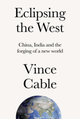
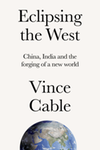
Eclipsing the West: China, India and the forging of a new world
Cable, Vince
Manchester University Press
, 2025
; English
; 353 Pages
This book traces how China and India have evolved from the point in the late 1940s when both countries assumed their present political form, with India’s independence from Britain and the establishment of the People’s Republic of China. It looks forwards to a future in which they are centrally important and - perhaps - the dominant economic and political actors on the world stage. The book presents two geopolitical challenges: the Thucydides Trap and the Kindleberger Trap. Politically, present day China and India have more in common than is comfortable for those who believe that liberal democracy or democratic capitalism is not merely the best model of governance but also the only one that works in the long run. India’s commitment to liberal democracy compares well with other big, complex, multi-ethnic countries. At the very least there is, in the concept of ‘frenemies’, a complex balancing of interests with each other and with Pakistan and Russia, among others. That picture is more consistent with the idea of ‘multi-alignment’ than the simpler view of a world divided into two. Economic growth rates are less predictable, though it seems reasonable to assume that the information and data processing revolution, and AI, will continue at pace and that knowledge will spread rapidly through internet connectivity, enabling less developed countries to catch up. Economic growth projections to 2050 suggest that China and India are both likely - though not certain - to be preeminent economic powers, perhaps even surpassing the USA
Cable, Vince
Manchester University Press
, 2025
; English
; 353 Pages
This book traces how China and India have evolved from the point in the late 1940s when both countries assumed their present political form, with India’s independence from Britain and the establishment of the People’s Republic of China. It looks forwards to a future in which they are centrally important and - perhaps - the dominant economic and political actors on the world stage. The book presents two geopolitical challenges: the Thucydides Trap and the Kindleberger Trap. Politically, present day China and India have more in common than is comfortable for those who believe that liberal democracy or democratic capitalism is not merely the best model of governance but also the only one that works in the long run. India’s commitment to liberal democracy compares well with other big, complex, multi-ethnic countries. At the very least there is, in the concept of ‘frenemies’, a complex balancing of interests with each other and with Pakistan and Russia, among others. That picture is more consistent with the idea of ‘multi-alignment’ than the simpler view of a world divided into two. Economic growth rates are less predictable, though it seems reasonable to assume that the information and data processing revolution, and AI, will continue at pace and that knowledge will spread rapidly through internet connectivity, enabling less developed countries to catch up. Economic growth projections to 2050 suggest that China and India are both likely - though not certain - to be preeminent economic powers, perhaps even surpassing the USA
eBook
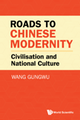
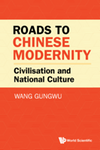
Roads to Chinese modernity : Sinic civilisation and national culture
Gungwu, Wang
World Scientific
, 2025
; English
; 313 Pages
What is China? While many perceive it as a rising power challenging Western dominance, eminent historian Professor Gungwu Wang posits that the country has no ambitions on that front.
In this illuminating book comprised of edited transcripts of selected lectures, it offers his interpretation of the answer.
He traces China's roots as an ancient, borderless Sinic civilisation with a distinctive past that has been a source of strength.
Following the establishment of the concept of a nation-state in the late 18th century, its identity was eventually forced to change from dynastic rule to a republic.
Revolution and reform characterised much of the evolution, compelling it to define a national culture that would propel it down the road of progress and enable it to take its rightful place on the world stage.
Interspersed with observations from his position as an overseas Chinese, this collection of insights is a must-read for anyone keen to understand China better.
Gungwu, Wang
World Scientific
, 2025
; English
; 313 Pages
What is China? While many perceive it as a rising power challenging Western dominance, eminent historian Professor Gungwu Wang posits that the country has no ambitions on that front.
In this illuminating book comprised of edited transcripts of selected lectures, it offers his interpretation of the answer.
He traces China's roots as an ancient, borderless Sinic civilisation with a distinctive past that has been a source of strength.
Following the establishment of the concept of a nation-state in the late 18th century, its identity was eventually forced to change from dynastic rule to a republic.
Revolution and reform characterised much of the evolution, compelling it to define a national culture that would propel it down the road of progress and enable it to take its rightful place on the world stage.
Interspersed with observations from his position as an overseas Chinese, this collection of insights is a must-read for anyone keen to understand China better.
eBook
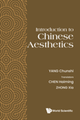
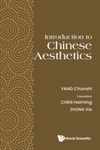
Introduction to Chinese Aesthetics
Chunshi, YANG; Haiming, CHEN; Xia, ZHONG
World Scientific
, 2025
; English
; 624 Pages
The purpose of this book is to systematize traditional Chinese aesthetic thought, reveal its internal logic, and carry out a dialogue with modern Western aesthetics, so as to rebuild the Chinese aesthetic system.
Chinese aesthetics embodies the concept of inter-subjectivity, which has modern significance.
It is based on the idea of unity between heaven and humanity, viewing aesthetic as the communication between the self-subject and the world-subject, in contrast to the Western aesthetic epistemology that regards aesthetic as the sensory perception of the subject toward the object.
Additionally, the methodology of intuitive perception is another characteristic of Chinese aesthetics that holds modern significance.
Chinese aesthetics emphasizes the emotionality of aesthetics from the perspective of value theory, distinguishing itself from the epistemological tradition of Western aesthetics.
It differs from Western consciousness aesthetics, as it embodies corporeality, representing aesthetics of experience that integrates body and mind.
It posits that aesthetic is not purely a spiritual activity, nor is it a form of 'contemplation,' but rather an experience that integrates body and mind, and an idealized way of life.
Therefore, aesthetic can nurture temperament and poeticize life.
Furthermore, in Chinese aesthetics, it is emphasized that aesthetics serves as a mode of experiencing the Way.
The Way is discovered through aesthetic intuition and emotional experiences, and it is actualized through imagery, thereby laying the groundwork for an aesthetic phenomenology.
The reinterpretation and reconstruction of Chinese aesthetics is a product of the dialogue between Chinese and Western aesthetics.
Since its publication, this book has garnered widespread attention and acclaim from the academic community in China.
It embodies professor Yang's Transcendental Aesthetic view with Inter-subjectivity, bridging ancient and modern perspectives, and fostering communication between Chinese and Western Aesthetics.
Chunshi, YANG; Haiming, CHEN; Xia, ZHONG
World Scientific
, 2025
; English
; 624 Pages
The purpose of this book is to systematize traditional Chinese aesthetic thought, reveal its internal logic, and carry out a dialogue with modern Western aesthetics, so as to rebuild the Chinese aesthetic system.
Chinese aesthetics embodies the concept of inter-subjectivity, which has modern significance.
It is based on the idea of unity between heaven and humanity, viewing aesthetic as the communication between the self-subject and the world-subject, in contrast to the Western aesthetic epistemology that regards aesthetic as the sensory perception of the subject toward the object.
Additionally, the methodology of intuitive perception is another characteristic of Chinese aesthetics that holds modern significance.
Chinese aesthetics emphasizes the emotionality of aesthetics from the perspective of value theory, distinguishing itself from the epistemological tradition of Western aesthetics.
It differs from Western consciousness aesthetics, as it embodies corporeality, representing aesthetics of experience that integrates body and mind.
It posits that aesthetic is not purely a spiritual activity, nor is it a form of 'contemplation,' but rather an experience that integrates body and mind, and an idealized way of life.
Therefore, aesthetic can nurture temperament and poeticize life.
Furthermore, in Chinese aesthetics, it is emphasized that aesthetics serves as a mode of experiencing the Way.
The Way is discovered through aesthetic intuition and emotional experiences, and it is actualized through imagery, thereby laying the groundwork for an aesthetic phenomenology.
The reinterpretation and reconstruction of Chinese aesthetics is a product of the dialogue between Chinese and Western aesthetics.
Since its publication, this book has garnered widespread attention and acclaim from the academic community in China.
It embodies professor Yang's Transcendental Aesthetic view with Inter-subjectivity, bridging ancient and modern perspectives, and fostering communication between Chinese and Western Aesthetics.
eBook
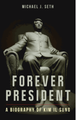
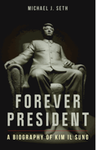
Forever president : a biography of Kim Il Sung
Seth, Michael J.
Reaktion Books
, 2025
; English
; 289 Pages
Kim Il Sung ruled his country, North Korea, for longer and shaped it more profoundly than almost any other modern leader. He created a unique and seemingly bizarre and menacing political and social system, establishing a dynasty that has maintained it for two more generations. Yet he remains a curiously inaccessible, little understood figure, partly due to the closed and secretive nature of the state he founded.
Michael J. Seth puts together what we know of Kim’s life from all available sources and places it in the context of Korean and modern world history to make both Kim and North Korea comprehensible. He looks at the unusual circumstances that contributed to Kim's rise to power and at the early experiences that help to explain the directions he took his country. Seth examines his impressive early achievements and his later failures, which left North Korea the isolated, impoverished half of a divided nation.
Kim was a charismatic and resourceful leader determined to reunify and modernize his country. But he pursued these aims with ruthlessness, egotism and extreme narrow-mindedness. Ultimately, his political inflexibility led to disaster.
Seth, Michael J.
Reaktion Books
, 2025
; English
; 289 Pages
Kim Il Sung ruled his country, North Korea, for longer and shaped it more profoundly than almost any other modern leader. He created a unique and seemingly bizarre and menacing political and social system, establishing a dynasty that has maintained it for two more generations. Yet he remains a curiously inaccessible, little understood figure, partly due to the closed and secretive nature of the state he founded.
Michael J. Seth puts together what we know of Kim’s life from all available sources and places it in the context of Korean and modern world history to make both Kim and North Korea comprehensible. He looks at the unusual circumstances that contributed to Kim's rise to power and at the early experiences that help to explain the directions he took his country. Seth examines his impressive early achievements and his later failures, which left North Korea the isolated, impoverished half of a divided nation.
Kim was a charismatic and resourceful leader determined to reunify and modernize his country. But he pursued these aims with ruthlessness, egotism and extreme narrow-mindedness. Ultimately, his political inflexibility led to disaster.
eBook
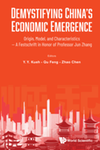
Kueh, Y. Y.; Feng, Qu; Chen, Zhao
World Scientific
, 2025
; English
; 832 Pages
The rise of China's economy is an integral part of world history.
Since 1978, China achieved tremendous economic success.
What is the secret behind China's economic rise? This book approaches the topic by focusing on origins, models, and characteristics - a comprehensive perspective that offers further reflection on the often-discussed and ever-relevant subject of China's economic rise.The rise of China's economy keeps puzzling the intellectual minds.
With clear and professional insights, the authors of the book systematically reveal the profound historical background, unique development path, and unparalleled characteristics of China's economic ascent compared to other countries.
The rise of China's economy is a result of global trends, historical accumulation, the wisdom of civilization, as well as the collective labor, struggle, and creativity of the Chinese people under the state's leadership.
Kueh, Y. Y.; Feng, Qu; Chen, Zhao
World Scientific
, 2025
; English
; 832 Pages
The rise of China's economy is an integral part of world history.
Since 1978, China achieved tremendous economic success.
What is the secret behind China's economic rise? This book approaches the topic by focusing on origins, models, and characteristics - a comprehensive perspective that offers further reflection on the often-discussed and ever-relevant subject of China's economic rise.The rise of China's economy keeps puzzling the intellectual minds.
With clear and professional insights, the authors of the book systematically reveal the profound historical background, unique development path, and unparalleled characteristics of China's economic ascent compared to other countries.
The rise of China's economy is a result of global trends, historical accumulation, the wisdom of civilization, as well as the collective labor, struggle, and creativity of the Chinese people under the state's leadership.
