




Navigation menu
Search
Databases
All Databases
eBook
Ancient civilizations of Afghanistan: from the earliest times to the Mongol conquest
Ball, Warwick
Reaktion Books
, 2025
; English
; 295 Pages
Afghanistan, at the meeting place of the Indian subcontinent, Middle East and Central Asia, holds a key place in the spread of ancient civilizations. Its remarkable cultural heritage includes the Bronze Age Helmand civilization, the Greek kingdom of Bactria, the Kushan Empire and the Ghaznavid Empire – yet much of its history remains unknown to a general audience. This beautifully illustrated book unveils Afghanistan’s ancient cities, temples, stupas, monasteries and other monuments set against breathtaking landscapes, presenting them to a wider audience. Incorporating the latest research and discoveries, it is a captivating journey through Afghanistan’s rich antiquities, brought to life with the author’s vivid, full-colour photographs.
Ball, Warwick
Reaktion Books
, 2025
; English
; 295 Pages
Afghanistan, at the meeting place of the Indian subcontinent, Middle East and Central Asia, holds a key place in the spread of ancient civilizations. Its remarkable cultural heritage includes the Bronze Age Helmand civilization, the Greek kingdom of Bactria, the Kushan Empire and the Ghaznavid Empire – yet much of its history remains unknown to a general audience. This beautifully illustrated book unveils Afghanistan’s ancient cities, temples, stupas, monasteries and other monuments set against breathtaking landscapes, presenting them to a wider audience. Incorporating the latest research and discoveries, it is a captivating journey through Afghanistan’s rich antiquities, brought to life with the author’s vivid, full-colour photographs.
eBook
Genealogical history in the Persianate world
Gross, Jo-Ann; Beben, Daniel
I.B. Tauris
, 2025
; English
; 321 Pages
Scholarship on the Muslim world has recently begun to pay increased attention to non-literary genres of documentation as sources for historical research.
Genealogical writings are one form of such documentation that has demonstrated significant potential for addressing a wide range of research concerns, particularly for topics that receive little attention in historical chronicles and other state-centered narrative sources. However, while genealogical documentation has received some attention in scholarship on the Arab world, it remains mostly unstudied in scholarship on Persianate societies. The chapters in this book offer reflections on theoretical and methodological issues concerning the study of genealogical documentation, combined with case studies based primarily on previously unpublished, unstudied source materials. The topics explored span the full breadth of the Persianate world, from Anatolia to the Ferghana Valley in Central Asia to the Gujarat region of India, utilizing sources dating from the fourteenth to the twentieth century. The book will be of significant interest to scholars and students of Islamic history and the Persianate ecumene as well as readers in other fields interested in comparative research demonstrating the use of genealogical documentation as historical sources.
Gross, Jo-Ann; Beben, Daniel
I.B. Tauris
, 2025
; English
; 321 Pages
Scholarship on the Muslim world has recently begun to pay increased attention to non-literary genres of documentation as sources for historical research.
Genealogical writings are one form of such documentation that has demonstrated significant potential for addressing a wide range of research concerns, particularly for topics that receive little attention in historical chronicles and other state-centered narrative sources. However, while genealogical documentation has received some attention in scholarship on the Arab world, it remains mostly unstudied in scholarship on Persianate societies. The chapters in this book offer reflections on theoretical and methodological issues concerning the study of genealogical documentation, combined with case studies based primarily on previously unpublished, unstudied source materials. The topics explored span the full breadth of the Persianate world, from Anatolia to the Ferghana Valley in Central Asia to the Gujarat region of India, utilizing sources dating from the fourteenth to the twentieth century. The book will be of significant interest to scholars and students of Islamic history and the Persianate ecumene as well as readers in other fields interested in comparative research demonstrating the use of genealogical documentation as historical sources.
eBook
Armenians and Land disputes in the Ottoman Empire, 1850–1914
Polatel, Mehmet
Edinburgh University Press
, 2025
; English
; 311 Pages
Examines the Armenian land question in its transnational context
- Discusses land dispute cases from different provinces of the Ottoman Empire especially from the Ottoman East, namely Bitlis, Van, Mamuretülaziz, Erzurum, Sivas, and Diyarbakır, between 1850 and 1914
- Examines the liberal and nationalist approaches to land and property rights and shows how the nationalist approach eventually prevailed
- Explores the impact of mass violence on socioeconomic life and structures and the relationship between competition for resources, intercommunal conflict, and mass violence
- Provides new insights for the history of the Ottoman Empire, especially in terms of population, land and citizenship policies
- Situates the Armenian land question into its larger historical context by discussing it in the light of land policies worldwide
Armenians and Land Disputes in the Ottoman Empire traces the transformation of land disputes involving Armenians into the Armenian land question from the mid-nineteenth century to the outbreak of the First World War. Situating this event into its historical context marked by the rise of the central administrative state, encroachment of capitalism and the new territorial turn that changed the political significance of land ownership, this book argues that the Armenian land question was shaped by two conflicting trends: liberalisation and nationalisation of land.
The book also shows how mass violence transformed competitive struggles and socioeconomic life and structures on the one hand, and how these struggles strained intercommunal relations and blocked possibilities of normalisation on the other. Examining the actions and discourses of Armenian and Kurdish intellectuals, Muslim powerholders in the provinces, and Ottoman officials and the Istanbul elite – along with the institutions, local and national, that sustained these groups, it populates a large blank space in our existing picture of the late Ottoman Empire.
Polatel, Mehmet
Edinburgh University Press
, 2025
; English
; 311 Pages
Examines the Armenian land question in its transnational context
- Discusses land dispute cases from different provinces of the Ottoman Empire especially from the Ottoman East, namely Bitlis, Van, Mamuretülaziz, Erzurum, Sivas, and Diyarbakır, between 1850 and 1914
- Examines the liberal and nationalist approaches to land and property rights and shows how the nationalist approach eventually prevailed
- Explores the impact of mass violence on socioeconomic life and structures and the relationship between competition for resources, intercommunal conflict, and mass violence
- Provides new insights for the history of the Ottoman Empire, especially in terms of population, land and citizenship policies
- Situates the Armenian land question into its larger historical context by discussing it in the light of land policies worldwide
Armenians and Land Disputes in the Ottoman Empire traces the transformation of land disputes involving Armenians into the Armenian land question from the mid-nineteenth century to the outbreak of the First World War. Situating this event into its historical context marked by the rise of the central administrative state, encroachment of capitalism and the new territorial turn that changed the political significance of land ownership, this book argues that the Armenian land question was shaped by two conflicting trends: liberalisation and nationalisation of land.
The book also shows how mass violence transformed competitive struggles and socioeconomic life and structures on the one hand, and how these struggles strained intercommunal relations and blocked possibilities of normalisation on the other. Examining the actions and discourses of Armenian and Kurdish intellectuals, Muslim powerholders in the provinces, and Ottoman officials and the Istanbul elite – along with the institutions, local and national, that sustained these groups, it populates a large blank space in our existing picture of the late Ottoman Empire.
eBook
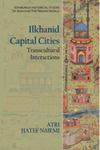
Ilkhanid capital cities : transcultural interactions
Naiemi, Atri Hatef
Edinburgh University Press
, 2025
; English
; 312 Pages
Studies the interaction between Perso-Islamic sedentary concepts and Mongolian nomadic traditions in the context of Ilkhanid capital cities
- Combines fields as diverse as history, art history, archaeology, religious studies, and comparative literature
- Works with a range of sources, from archaeological and architectural material, to aerial photographs, travel narratives, manuscript miniatures, and chronicles
- Uses primary sources in a multitude of languages including Persian, Arabic, and Chinese, and is based primarily on the works of thirteenth- and fourteenth-century authors writing in Persian
- Discusses several examples of the architectural and urban projects patronized by the Ilkhans in Iran
- Offers extensive evidence drawn from newly excavated archaeological sites in the northwest of Iran
- Illuminates the dialogue established between the Mongol conquerors and the Iranians following the conquest of Iran in the thirteenth century
Ilkhanid Capital Cities studies the capital cities founded by the Mongol Ilkhans in Iran during the Ilkhanid period (1256–1335). It primarily focuses on two major cities in the northwest of Iran, Ghazaniyya and Sultaniyya, and examines how the court-sponsored urban projects in these two cities reflected the interactions between Perso-Islamic sedentary concepts and Mongolian nomadic traditions.
Questioning the earlier reductive scholarly framework that positioned the Mongols as uncultured barbarians, this study stresses the active role of the Mongol elite not only as agents, but also cultural donors in the Perso-Mongol cultural zeitgeist of late thirteenth- and early fourteenth-century Iran. It provides a fuller and more convincing picture of the Ilkhanid city, which is characterized by a hybrid quality injected not only into the physical structure of the city, but also into the taste, motivations, and world views of its patrons.
Naiemi, Atri Hatef
Edinburgh University Press
, 2025
; English
; 312 Pages
Studies the interaction between Perso-Islamic sedentary concepts and Mongolian nomadic traditions in the context of Ilkhanid capital cities
- Combines fields as diverse as history, art history, archaeology, religious studies, and comparative literature
- Works with a range of sources, from archaeological and architectural material, to aerial photographs, travel narratives, manuscript miniatures, and chronicles
- Uses primary sources in a multitude of languages including Persian, Arabic, and Chinese, and is based primarily on the works of thirteenth- and fourteenth-century authors writing in Persian
- Discusses several examples of the architectural and urban projects patronized by the Ilkhans in Iran
- Offers extensive evidence drawn from newly excavated archaeological sites in the northwest of Iran
- Illuminates the dialogue established between the Mongol conquerors and the Iranians following the conquest of Iran in the thirteenth century
Ilkhanid Capital Cities studies the capital cities founded by the Mongol Ilkhans in Iran during the Ilkhanid period (1256–1335). It primarily focuses on two major cities in the northwest of Iran, Ghazaniyya and Sultaniyya, and examines how the court-sponsored urban projects in these two cities reflected the interactions between Perso-Islamic sedentary concepts and Mongolian nomadic traditions.
Questioning the earlier reductive scholarly framework that positioned the Mongols as uncultured barbarians, this study stresses the active role of the Mongol elite not only as agents, but also cultural donors in the Perso-Mongol cultural zeitgeist of late thirteenth- and early fourteenth-century Iran. It provides a fuller and more convincing picture of the Ilkhanid city, which is characterized by a hybrid quality injected not only into the physical structure of the city, but also into the taste, motivations, and world views of its patrons.

eBook
Dubai : um die Jahrtausendwende
Carl, Klaus H.
Parkstone International
, 2024
; German
; 98 Pages
Saint-Exupéry hat den Kleinen Prinzen vielleicht sagen lassen, dass er die Wüste mag, weil sich dort Kamele verstecken können. Dubai ist eines der sieben Golfemirate und hat sich zu einer avantgardistischen High-Tech-Metropole entwickelt, in der Superlative überflüssig sind. Zu den wichtigsten architektonischen Wundern gehören die National Bank of Dubai, der Clock Tower, die Creek Side und die Dubai Internet City. In Jebel Ali befindet sich auch der größte von Menschenhand geschaffene Hafen der Welt, in dem eine große Wasserentsalzungsanlage steht. Es ist nach Hongkong und Singapur der drittgrößte Umschlagplatz der Welt. Dennoch ist Dubai eng mit der Vergangenheit verbunden, die auf Beduinentraditionen, Kamelrennen, Falknerei, Perlentauchen und der Welt der Palmenhaine beruht. Das Land blühte vor der Ära der Ölbohrer auf und bereitet sich jetzt darauf vor, nach deren Abzug wieder zu leben, indem es in die Hochschulbildung investiert, in der Frauen herzlich willkommen sind. Die altehrwürdigen Legenden der arabischen Kavallerie, die durch die Wüsten fegte, leben noch immer in Pferderennen fort, die die Tradition des Pferdesports vor dem Hintergrund exklusiver, hochmoderner Fahrmaschinen zur Schau stellen: Willkommen zu diesem Vorgeschmack auf das 21. Jahrhundert!
Carl, Klaus H.
Parkstone International
, 2024
; German
; 98 Pages
Saint-Exupéry hat den Kleinen Prinzen vielleicht sagen lassen, dass er die Wüste mag, weil sich dort Kamele verstecken können. Dubai ist eines der sieben Golfemirate und hat sich zu einer avantgardistischen High-Tech-Metropole entwickelt, in der Superlative überflüssig sind. Zu den wichtigsten architektonischen Wundern gehören die National Bank of Dubai, der Clock Tower, die Creek Side und die Dubai Internet City. In Jebel Ali befindet sich auch der größte von Menschenhand geschaffene Hafen der Welt, in dem eine große Wasserentsalzungsanlage steht. Es ist nach Hongkong und Singapur der drittgrößte Umschlagplatz der Welt. Dennoch ist Dubai eng mit der Vergangenheit verbunden, die auf Beduinentraditionen, Kamelrennen, Falknerei, Perlentauchen und der Welt der Palmenhaine beruht. Das Land blühte vor der Ära der Ölbohrer auf und bereitet sich jetzt darauf vor, nach deren Abzug wieder zu leben, indem es in die Hochschulbildung investiert, in der Frauen herzlich willkommen sind. Die altehrwürdigen Legenden der arabischen Kavallerie, die durch die Wüsten fegte, leben noch immer in Pferderennen fort, die die Tradition des Pferdesports vor dem Hintergrund exklusiver, hochmoderner Fahrmaschinen zur Schau stellen: Willkommen zu diesem Vorgeschmack auf das 21. Jahrhundert!

eBook
Dubaï : au tournant du millénaire
Carl, Klaus H.
Parkstone International
, 2024
; French
; 98 Pages
Saint-Exupéry aurait pu faire dire au Petit Prince qu'il aimait le désert parce que c'est là que les chameaux peuvent se cacher. Dubaï est l'un des sept émirats du Golfe et est devenu une métropole d'avant-garde high-tech où les superlatifs sont superflus. Les principales merveilles de l'imagination et de l'échelle architecturales comprennent la Banque nationale de Dubaï, la Tour de l'horloge, le Creek Side et la Dubai Internet City. Elle exploite également le plus grand port artificiel du monde à Jebel Ali, qui abrite une importante usine de dessalement de l'eau. C'est le troisième centre de transbordement au monde, après Hong Kong et Singapour. Dubaï n'en conserve pas moins des liens étroits avec le passé, fondés sur la tradition bédouine, les courses de chameaux, la fauconnerie, la plongée dans les perles et l'univers des palmeraies. Le pays a prospéré avant l'ère des derricks pétroliers et se prépare aujourd'hui à revivre après leur départ en investissant dans l'enseignement supérieur qui accueille volontiers les femmes. Les légendes ancestrales des cavaleries arabes qui parcouraient les déserts perdurent à travers les courses de chevaux qui mettent en scène la tradition équestre sur fond d'attelages exclusifs à la pointe de la technologie : Bienvenue dans cet avant-goût du 21e siècle !
Carl, Klaus H.
Parkstone International
, 2024
; French
; 98 Pages
Saint-Exupéry aurait pu faire dire au Petit Prince qu'il aimait le désert parce que c'est là que les chameaux peuvent se cacher. Dubaï est l'un des sept émirats du Golfe et est devenu une métropole d'avant-garde high-tech où les superlatifs sont superflus. Les principales merveilles de l'imagination et de l'échelle architecturales comprennent la Banque nationale de Dubaï, la Tour de l'horloge, le Creek Side et la Dubai Internet City. Elle exploite également le plus grand port artificiel du monde à Jebel Ali, qui abrite une importante usine de dessalement de l'eau. C'est le troisième centre de transbordement au monde, après Hong Kong et Singapour. Dubaï n'en conserve pas moins des liens étroits avec le passé, fondés sur la tradition bédouine, les courses de chameaux, la fauconnerie, la plongée dans les perles et l'univers des palmeraies. Le pays a prospéré avant l'ère des derricks pétroliers et se prépare aujourd'hui à revivre après leur départ en investissant dans l'enseignement supérieur qui accueille volontiers les femmes. Les légendes ancestrales des cavaleries arabes qui parcouraient les déserts perdurent à travers les courses de chevaux qui mettent en scène la tradition équestre sur fond d'attelages exclusifs à la pointe de la technologie : Bienvenue dans cet avant-goût du 21e siècle !
eBook
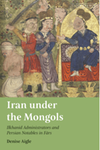
Iran under the Mongols : lkhanid administrators and Persian notables in Fars
Aigle, Denise
I.B. Tauris
, 2024
; English
; 257 Pages
What were the effects of Mongol rule in Iran? This book focuses on Shiraz and the province of Fars to provide a detailed political, social and economic history of Ilkhanid rule from the first Mongol invasions in 1220 until the end of the Injuid Dynasty in 1357. Using a vast collection of sources, Denise Aigle combines local and global approaches to integrate the history of the province into the whole administrative system. Central is the thesis that Mongol rule caused a break in traditional administrative patterns. A dual administrative system was set up, consisting of both Mongol and local Persian personnel, directed from the court. Charting the fortunes of each successive ruler, her research shows that the failings of individual rulers, as well as intriguing by Persian notables, were the principal reasons for Shiraz and Fars's economic decline under the Mongols in comparison with the more successful neighbouring province of Kirman. Iran Under the Mongols is a vital contribution to our understanding of the effects of Mongol rule in Iran.
Aigle, Denise
I.B. Tauris
, 2024
; English
; 257 Pages
What were the effects of Mongol rule in Iran? This book focuses on Shiraz and the province of Fars to provide a detailed political, social and economic history of Ilkhanid rule from the first Mongol invasions in 1220 until the end of the Injuid Dynasty in 1357. Using a vast collection of sources, Denise Aigle combines local and global approaches to integrate the history of the province into the whole administrative system. Central is the thesis that Mongol rule caused a break in traditional administrative patterns. A dual administrative system was set up, consisting of both Mongol and local Persian personnel, directed from the court. Charting the fortunes of each successive ruler, her research shows that the failings of individual rulers, as well as intriguing by Persian notables, were the principal reasons for Shiraz and Fars's economic decline under the Mongols in comparison with the more successful neighbouring province of Kirman. Iran Under the Mongols is a vital contribution to our understanding of the effects of Mongol rule in Iran.

eBook
Elverskog, Johan
Columbia University Press
, 2024
; English
; 295 Pages
Today, most Uyghurs are Muslims. For centuries, however, Uyghurs were Buddhists. By around 1000 CE, they, like many of their neighbors, had decisively turned toward the Dharma, and a golden age of Uyghur Buddhism flourished under the Mongol empire. Dwelling along the Silk Road in what is now northwestern China, they stood at the center of Buddhist Eurasia, linking far-flung regions and traditions. But as Muslim power grew, Uyghur Buddhists converted to Islam, rewriting their past and erasing their Buddhist history.
This book presents the first comprehensive history of Buddhism among the Uyghurs from the ninth to the seventeenth century. Johan Elverskog traces how the Uyghurs forged their distinctive tradition, considering a variety of social, political, cultural, and religious contexts. He argues that the religious history of the Uyghurs challenges conventional narratives of the meeting of Buddhism and Islam, showing that conversion took place gradually and was driven by factors such as geopolitics, climate change, and technological innovation. Elverskog also provides a nuanced understanding of lived Buddhism, focusing on ritual practices and materiality as well as the religion’s entanglements with economics, politics, and violence. A groundbreaking history of Uyghur Buddhism, this book makes a compelling case for the importance of the Uyghurs in shaping the course of both Buddhist and Asian history.
Elverskog, Johan
Columbia University Press
, 2024
; English
; 295 Pages
Today, most Uyghurs are Muslims. For centuries, however, Uyghurs were Buddhists. By around 1000 CE, they, like many of their neighbors, had decisively turned toward the Dharma, and a golden age of Uyghur Buddhism flourished under the Mongol empire. Dwelling along the Silk Road in what is now northwestern China, they stood at the center of Buddhist Eurasia, linking far-flung regions and traditions. But as Muslim power grew, Uyghur Buddhists converted to Islam, rewriting their past and erasing their Buddhist history.
This book presents the first comprehensive history of Buddhism among the Uyghurs from the ninth to the seventeenth century. Johan Elverskog traces how the Uyghurs forged their distinctive tradition, considering a variety of social, political, cultural, and religious contexts. He argues that the religious history of the Uyghurs challenges conventional narratives of the meeting of Buddhism and Islam, showing that conversion took place gradually and was driven by factors such as geopolitics, climate change, and technological innovation. Elverskog also provides a nuanced understanding of lived Buddhism, focusing on ritual practices and materiality as well as the religion’s entanglements with economics, politics, and violence. A groundbreaking history of Uyghur Buddhism, this book makes a compelling case for the importance of the Uyghurs in shaping the course of both Buddhist and Asian history.
eBook
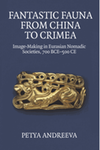
Fantastic fauna from China to Crimea : image-making in Eurasian nomadic societies, 700 BCE-500 CE
Andreeva, Petya
Edinburgh University Press
, 2024
; English
; 338 Pages
Numerous Iron-Age nomadic alliances flourished along the 5000-mile Eurasian steppe route. From Crimea to the Mongolian grassland, nomadic image-making was rooted in metonymically conveyed zoomorphic designs, creating an alternative ecological reality. The nomadic elite nucleus embraced this elaborate image system to construct collective memory in reluctant, diverse political alliances organised around shared geopolitical goals rather than ethnic ties. Largely known by the term "animal style", this zoomorphic visual rhetoric became so ubiquitous across the Eurasian steppe network that it transcended border regions and reached the heartland of sedentary empires like China and Persia.
This book shows how a shared fluency in animal-style design became a status-defining symbol and a bonding agent in opportunistic nomadic alliances, and was later adopted by their sedentary neighbours to showcase worldliness and control over the "Other". In this study of enormous geographical scope, the author raises broader questions about the place of nomadic societies in the art-historical canon.
eBook
Andreeva, Petya
Edinburgh University Press
, 2024
; English
; 338 Pages
Numerous Iron-Age nomadic alliances flourished along the 5000-mile Eurasian steppe route. From Crimea to the Mongolian grassland, nomadic image-making was rooted in metonymically conveyed zoomorphic designs, creating an alternative ecological reality. The nomadic elite nucleus embraced this elaborate image system to construct collective memory in reluctant, diverse political alliances organised around shared geopolitical goals rather than ethnic ties. Largely known by the term "animal style", this zoomorphic visual rhetoric became so ubiquitous across the Eurasian steppe network that it transcended border regions and reached the heartland of sedentary empires like China and Persia.
This book shows how a shared fluency in animal-style design became a status-defining symbol and a bonding agent in opportunistic nomadic alliances, and was later adopted by their sedentary neighbours to showcase worldliness and control over the "Other". In this study of enormous geographical scope, the author raises broader questions about the place of nomadic societies in the art-historical canon.

eBook
The Soviet–Afghan War: 1979–89
Fremont-Barnes, Gregory
Bloomsbury Publishing
, 2024
; English
; 145 Pages
A fully illustrated overview of the USSR's bloody conflict in Afghanistan and its long legacy.
The Soviet invasion of its neighbour Afghanistan in December 1979 sparked a nine-year conflict until Soviet forces withdrew in 1988-89, dooming the communist Afghanistan government to defeat at the hands of the mujahideen, the Afghan popular resistance backed by the USA and other powers. Gregory Fremont-Barnes reveals how the Soviet invasion had enormous implications on the global stage; it prompted the US Senate to refuse to ratify the hard-won SALT II arms-limitation treaty, and the USA and 64 other countries boycotted the 1980 Moscow Summer Olympics. For Afghanistan, the invasion served to prolong the interminable civil war that pitted central government against the regions and faction against faction.
Updated and revised for the new edition, with full-colour maps and new images throughout, this succinct account explains the origins, events and consequences of the Soviet intervention in Afghanistan, shedding new light on the more recent history - and prospects - of that troubled country.
Fremont-Barnes, Gregory
Bloomsbury Publishing
, 2024
; English
; 145 Pages
A fully illustrated overview of the USSR's bloody conflict in Afghanistan and its long legacy.
The Soviet invasion of its neighbour Afghanistan in December 1979 sparked a nine-year conflict until Soviet forces withdrew in 1988-89, dooming the communist Afghanistan government to defeat at the hands of the mujahideen, the Afghan popular resistance backed by the USA and other powers. Gregory Fremont-Barnes reveals how the Soviet invasion had enormous implications on the global stage; it prompted the US Senate to refuse to ratify the hard-won SALT II arms-limitation treaty, and the USA and 64 other countries boycotted the 1980 Moscow Summer Olympics. For Afghanistan, the invasion served to prolong the interminable civil war that pitted central government against the regions and faction against faction.
Updated and revised for the new edition, with full-colour maps and new images throughout, this succinct account explains the origins, events and consequences of the Soviet intervention in Afghanistan, shedding new light on the more recent history - and prospects - of that troubled country.
