
Navigation menu
Search
Databases
All Databases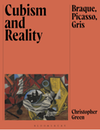
eBook
Cubism and reality: Braque, Picasso, Gris
Green, Christopher
Bloomsbury Visual Arts
, 2025
; English
; 289 Pages
What was Cubism? How did this strange new way of making paintings and sculptures enable artists so decisively to change the trajectory of 'Modern Art'? In responding to these questions, distinguished art historian Christopher Green presents a bold new interpretation of the movement and three of its key protagonists.
Stemming from a critical re-evaluation of the author's own first responses to Cubist artworks, as a student of the late artist and critic John Golding, Cubism and Reality challenges the commonly-held view of Cubism as either a retreat from reality into abstraction, or an invitation to convert the real into the 'surreal', arguing instead that Georges Braque, Pablo Picasso, and Juan Gris wanted, above all, to find ways of intensifying and expanding painting's capacity to give viewers more, not less, of their lived experience of the world.
Lavishly illustrated and filled with rich new insights and approaches to the artwork that are the product of decades' worth of research, Green argues that, for the three artists, 'reality' was not objectively always there, but was created by their own perceptions, and could be transformed by their imaginations. The artwork becomes not merely a dead material fact, but somewhere into which wishes, lived experiences and memories can enter – ours, over a century later, as well as theirs. Green explores how Cubist artworks ask us to reflect in far-reaching ways on visual art's relationship to everyday visual experience and questions how it is that we still believe that drawings, paintings and sculptures can represent the world as we see and know it. In doing so Cubism and Reality tackles a fundamental issue that has preoccupied artists, critics and art enthusiasts for over a century, well into our present age: the survival of hand-made representational artworks in the epoch of photography, film and, latterly, digital reproduction.
Green, Christopher
Bloomsbury Visual Arts
, 2025
; English
; 289 Pages
What was Cubism? How did this strange new way of making paintings and sculptures enable artists so decisively to change the trajectory of 'Modern Art'? In responding to these questions, distinguished art historian Christopher Green presents a bold new interpretation of the movement and three of its key protagonists.
Stemming from a critical re-evaluation of the author's own first responses to Cubist artworks, as a student of the late artist and critic John Golding, Cubism and Reality challenges the commonly-held view of Cubism as either a retreat from reality into abstraction, or an invitation to convert the real into the 'surreal', arguing instead that Georges Braque, Pablo Picasso, and Juan Gris wanted, above all, to find ways of intensifying and expanding painting's capacity to give viewers more, not less, of their lived experience of the world.
Lavishly illustrated and filled with rich new insights and approaches to the artwork that are the product of decades' worth of research, Green argues that, for the three artists, 'reality' was not objectively always there, but was created by their own perceptions, and could be transformed by their imaginations. The artwork becomes not merely a dead material fact, but somewhere into which wishes, lived experiences and memories can enter – ours, over a century later, as well as theirs. Green explores how Cubist artworks ask us to reflect in far-reaching ways on visual art's relationship to everyday visual experience and questions how it is that we still believe that drawings, paintings and sculptures can represent the world as we see and know it. In doing so Cubism and Reality tackles a fundamental issue that has preoccupied artists, critics and art enthusiasts for over a century, well into our present age: the survival of hand-made representational artworks in the epoch of photography, film and, latterly, digital reproduction.
eBook
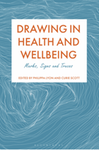
Drawing in health and wellbeing : marks, signs and traces
Lyon, Philippa; Scott, Curie
Bloomsbury Visual Arts
, 2025
; English
; 249 Pages
Drawing has an established history within medicine for learning, recording, investigating and discovery. Bringing together diverse drawing approaches in the form of research and practical projects, this book demonstrates how drawing has extended beyond the realm of medicine with relevance and value for a wide spectrum of health and wellbeing settings.
Drawing has significant benefits for health, yet it is only recently that drawing for health and wellbeing has become a focus for formal research investigation and development. Chapters critically examine how drawing helps us convey and understand complex illness experiences, supporting a deeper, more holistic form of communication between patient and professional. The authors also explore drawing as a popular mindful and meditative activity. Underlying all the chapters is the principle that manual drawing, such as sketching, diagrams, cartoons and many other forms of mark-making, has important qualities in enabling people to learn, investigate, explain, and express as well as alleviate suffering.
With renewed global interest in improving our health, this timely volume brings together prominent research in the field and highlights an array of drawing approaches to promote wellbeing.
Lyon, Philippa; Scott, Curie
Bloomsbury Visual Arts
, 2025
; English
; 249 Pages
Drawing has an established history within medicine for learning, recording, investigating and discovery. Bringing together diverse drawing approaches in the form of research and practical projects, this book demonstrates how drawing has extended beyond the realm of medicine with relevance and value for a wide spectrum of health and wellbeing settings.
Drawing has significant benefits for health, yet it is only recently that drawing for health and wellbeing has become a focus for formal research investigation and development. Chapters critically examine how drawing helps us convey and understand complex illness experiences, supporting a deeper, more holistic form of communication between patient and professional. The authors also explore drawing as a popular mindful and meditative activity. Underlying all the chapters is the principle that manual drawing, such as sketching, diagrams, cartoons and many other forms of mark-making, has important qualities in enabling people to learn, investigate, explain, and express as well as alleviate suffering.
With renewed global interest in improving our health, this timely volume brings together prominent research in the field and highlights an array of drawing approaches to promote wellbeing.
eBook
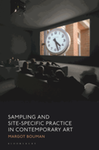
Sampling and site-specific practice in contemporary art
Bouman, Margot
Bloomsbury Visual Arts
, 2025
; English
; 217 Pages
In the early 20th century, copying, cutting and pasting entered the Western European avant-garde through collage and readymades, as artists employed found objects and ephemera to create new meaning from existing materials.
This book explores how this practice has evolved in contemporary art today, looking at its important and distinct outcomes in the practice of artists such as Andrea Fraser, Douglas Gordon, Isaac Julien, Christian Marclay, Amie Siegel and Christopher Williams. It analyses the pivotal consequences of the interrelationships these artists establish between fragments of culture, from television and film, to internet culture and their artwork's site, where the verb to "sample" has become deeply tied to digital music editing, writing, image production, database searches and social media.
Samples take many forms: quotations of other cultural works
replicas of other objects
reenactments of works by other artists
or fragments that are quite literally cut or removed from other works of art, design, or media. Via Bouman's analysis, we visualise the shared frameworks of meaning that underpin these multifaceted, multidimensional and medium-fluid works. Focussing on 'action' and 'form', the book discusses the relationship between the referent and reference, and the citational labor that any sample performs. The distributive sense of authorship that emerges places the audience in a new position of significance.
Concepts and themes discussed include: queer and race theory, postproduction and mirroring, mobile site specificity, now-time and dragging, and gender fluidity and Drag King performance, centring sampling as a key form of 21st-century art. With novel insights into the conceptual, material, and aesthetic dimensions of sampling in contemporary culture, the book provides a new critical framework for understanding the complex implications of this practice, as a vital resource for researchers in contemporary art practice and visual culture.
Bouman, Margot
Bloomsbury Visual Arts
, 2025
; English
; 217 Pages
In the early 20th century, copying, cutting and pasting entered the Western European avant-garde through collage and readymades, as artists employed found objects and ephemera to create new meaning from existing materials.
This book explores how this practice has evolved in contemporary art today, looking at its important and distinct outcomes in the practice of artists such as Andrea Fraser, Douglas Gordon, Isaac Julien, Christian Marclay, Amie Siegel and Christopher Williams. It analyses the pivotal consequences of the interrelationships these artists establish between fragments of culture, from television and film, to internet culture and their artwork's site, where the verb to "sample" has become deeply tied to digital music editing, writing, image production, database searches and social media.
Samples take many forms: quotations of other cultural works
replicas of other objects
reenactments of works by other artists
or fragments that are quite literally cut or removed from other works of art, design, or media. Via Bouman's analysis, we visualise the shared frameworks of meaning that underpin these multifaceted, multidimensional and medium-fluid works. Focussing on 'action' and 'form', the book discusses the relationship between the referent and reference, and the citational labor that any sample performs. The distributive sense of authorship that emerges places the audience in a new position of significance.
Concepts and themes discussed include: queer and race theory, postproduction and mirroring, mobile site specificity, now-time and dragging, and gender fluidity and Drag King performance, centring sampling as a key form of 21st-century art. With novel insights into the conceptual, material, and aesthetic dimensions of sampling in contemporary culture, the book provides a new critical framework for understanding the complex implications of this practice, as a vital resource for researchers in contemporary art practice and visual culture.
eBook
Mascheroni, Maridda
De Vecchi Ediciones
, 2024
; Spanish
; 36 Pages
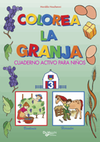
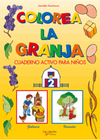
Que hay en la granja? Colorea y descubre: el vinedo, el lagar, el vallado, el prado, el establo, el jardin, el pajar, la prensa.
eBook
Mascheroni, Maridda
De Vecchi Ediciones
, 2024
; Spanish
; 36 Pages
Que hay en la granja? Colorea y descubre: el vinedo, el lagar, el vallado, el prado, el establo, el jardin, el pajar, la prensa.
eBook
Mascheroni, Maridda
De Vecchi Ediciones
, 2024
; Spanish
; 36 Pages
Que hay en la granja? Colorea y descubre: el gallinero, la conejera, la pocilga, el estanque, el colmenar, la pajarera, el huerto, el olivar.
eBook
Mascheroni, Maridda
De Vecchi Ediciones
, 2024
; Spanish
; 36 Pages
Que hay en la granja? Colorea y descubre: el gallinero, la conejera, la pocilga, el estanque, el colmenar, la pajarera, el huerto, el olivar.
eBook
Mascheroni, Maridda
De Vecchi Ediciones
, 2024
; Spanish
; 28 Pages
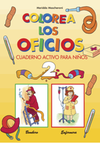
!Cuantos oficios hay! Colorea y descubre: el bombero, la florista, la maestra, la enfermera, el frutero, el librero, el escultor, el pintor, el guardia urbano, el veterinario, ... y muchos mas todavia.
eBook
Mascheroni, Maridda
De Vecchi Ediciones
, 2024
; Spanish
; 28 Pages
!Cuantos oficios hay! Colorea y descubre: el bombero, la florista, la maestra, la enfermera, el frutero, el librero, el escultor, el pintor, el guardia urbano, el veterinario, ... y muchos mas todavia.
eBook
Mascheroni, Maridda
De Vecchi Ediciones
, 2024
; Spanish
; 36 Pages
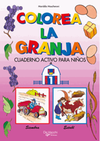
Que hay en la granja? Colorea y descubre: el tractor, el espantapajaros, el prado, el establo, el molino, la noria, el horno, el corral.
eBook
Mascheroni, Maridda
De Vecchi Ediciones
, 2024
; Spanish
; 36 Pages
Que hay en la granja? Colorea y descubre: el tractor, el espantapajaros, el prado, el establo, el molino, la noria, el horno, el corral.
eBook
Mascheroni, Maridda
De Vecchi Ediciones
, 2024
; Spanish
; 28 Pages
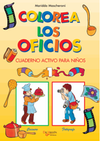
!Cuantos oficios hay! Colorea y descubre: el fotografo, el cocinero, el cartero, el pintor, la secretaria, la ninera, el musico, el medico, la peluquera, el arquitecto, el panadero, ... y muchos mas todavia.
eBook
Mascheroni, Maridda
De Vecchi Ediciones
, 2024
; Spanish
; 28 Pages
!Cuantos oficios hay! Colorea y descubre: el fotografo, el cocinero, el cartero, el pintor, la secretaria, la ninera, el musico, el medico, la peluquera, el arquitecto, el panadero, ... y muchos mas todavia.
eBook
Mascheroni, Maridda
De Vecchi Ediciones
, 2024
; Spanish
; 28 Pages
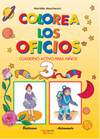
!Cuantos oficios hay! Colorea y descubre: el juez, el quimico, el ingeniero, la periodista, la bailarina, el explorador, la modista, el fontanero, el astronauta, el heladero, ... y muchos mas todavia.
eBook
Mascheroni, Maridda
De Vecchi Ediciones
, 2024
; Spanish
; 28 Pages
!Cuantos oficios hay! Colorea y descubre: el juez, el quimico, el ingeniero, la periodista, la bailarina, el explorador, la modista, el fontanero, el astronauta, el heladero, ... y muchos mas todavia.
eBook
Mascheroni, Maridda
De Vecchi Ediciones
, 2024
; Spanish
; 28 Pages
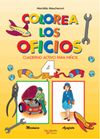
!Cuantos oficios hay! Colorea y descubre: el herrero, el conductor, el mecanico, la azafata, el pescador, el carpintero, el jardinero, el agricultor, el taxista, el arqueologo, ... y muchos mas todavia.
eBook
Mascheroni, Maridda
De Vecchi Ediciones
, 2024
; Spanish
; 28 Pages
!Cuantos oficios hay! Colorea y descubre: el herrero, el conductor, el mecanico, la azafata, el pescador, el carpintero, el jardinero, el agricultor, el taxista, el arqueologo, ... y muchos mas todavia.
