

Navigation menu
Search
Databases
All Databases
eBook
Gigante, Federica; Hillenbrand, Robert (Series Editor)
Edinburgh University Press
, 2025
; English
; 393 Pages
The ebook editions are now available to purchase. The hardback edition is due to publish October 2025.
Explores the history of material exchanges between the Islamic world and Italy in the seventeenth century
Analyses the procurement networks of Islamic artefacts from the Eastern Mediterranean to Florence and Bologna in the seventeenth century
Revisits the history of Italian perceptions of Islamic material culture
Explores for the first time the history of material exchanges between the Islamic world and Italy in the seventeenth century
Draws on unpublished archival sources
Brings together cultural history, political history, economic history and the history of Islamic art
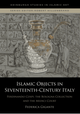
This book reassesses the idea that Islamic objects in seventeenth-century Italy were considered mere curiosities, sparking no cultural or historical interest. It focuses on Italy’s largest collection of Islamic artefacts of the time, assembled by the Medici agent and Bolognese nobleman Ferdinando Cospi in his public gallery: the Cospi Museum. Through an extensive investigation of inventories, letters, and archival documents, the book follows the objects through the various paths which took them from the eastern shores of the Mediterranean, through North African cities, to Livorno, Florence and, finally, Bologna. These paths reveal the presence of a network of enslaved Turks, Arab scholars, Egyptian fishermen and Armenian merchants, all responsible for importing both the items and their stories, biographies and anecdotes to Italy. The book thus brings forward to the seventeenth century a phenomenon of cultural inquisition that was thought to start only a century later.
Gigante, Federica; Hillenbrand, Robert (Series Editor)
Edinburgh University Press
, 2025
; English
; 393 Pages
The ebook editions are now available to purchase. The hardback edition is due to publish October 2025.
Explores the history of material exchanges between the Islamic world and Italy in the seventeenth century
Analyses the procurement networks of Islamic artefacts from the Eastern Mediterranean to Florence and Bologna in the seventeenth century
Revisits the history of Italian perceptions of Islamic material culture
Explores for the first time the history of material exchanges between the Islamic world and Italy in the seventeenth century
Draws on unpublished archival sources
Brings together cultural history, political history, economic history and the history of Islamic art
This book reassesses the idea that Islamic objects in seventeenth-century Italy were considered mere curiosities, sparking no cultural or historical interest. It focuses on Italy’s largest collection of Islamic artefacts of the time, assembled by the Medici agent and Bolognese nobleman Ferdinando Cospi in his public gallery: the Cospi Museum. Through an extensive investigation of inventories, letters, and archival documents, the book follows the objects through the various paths which took them from the eastern shores of the Mediterranean, through North African cities, to Livorno, Florence and, finally, Bologna. These paths reveal the presence of a network of enslaved Turks, Arab scholars, Egyptian fishermen and Armenian merchants, all responsible for importing both the items and their stories, biographies and anecdotes to Italy. The book thus brings forward to the seventeenth century a phenomenon of cultural inquisition that was thought to start only a century later.
eBook
Ropa, Anastasija
Reaktion Books
, 2025
; English
; 216 Pages
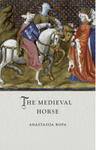
A vivid account of the deep connection between medieval people and horses.
eBook
Ropa, Anastasija
Reaktion Books
, 2025
; English
; 216 Pages
A vivid account of the deep connection between medieval people and horses.
eBook
Ocean art: from the shore to the deep
Scales, Helen
Reaktion Books
, 2025
; English
; 241 Pages
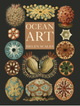
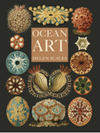
From a leading writer of the sea, an exquisitely illustrated deep dive into the beauty and meaning of art inspired by the life of the watery depths. Artists have captured the marvels of ocean life throughout history. From fine art to scientific illustrations, these portrayals help us to appreciate and interpret the diversity of shapes, colors, and patterns of the remarkable organisms that inhabit the oceans of the world. In Ocean Art, marine biologist and writer Helen Scales takes readers on a tour of ocean art, looking for the most striking and meaningful depictions of sea creatures, from ancient times to modern and from the coast to the deepest abyss, reflecting on how these works influence our view of life beneath the waves. This richly illustrated celebration of the beauty and wonders of ocean life is also a call to cherish and protect the endangered living seas
Scales, Helen
Reaktion Books
, 2025
; English
; 241 Pages
From a leading writer of the sea, an exquisitely illustrated deep dive into the beauty and meaning of art inspired by the life of the watery depths. Artists have captured the marvels of ocean life throughout history. From fine art to scientific illustrations, these portrayals help us to appreciate and interpret the diversity of shapes, colors, and patterns of the remarkable organisms that inhabit the oceans of the world. In Ocean Art, marine biologist and writer Helen Scales takes readers on a tour of ocean art, looking for the most striking and meaningful depictions of sea creatures, from ancient times to modern and from the coast to the deepest abyss, reflecting on how these works influence our view of life beneath the waves. This richly illustrated celebration of the beauty and wonders of ocean life is also a call to cherish and protect the endangered living seas
eBook
Beyond the feminine : the politics of skin colour and gender in visual culture
Lori, Ope
Bloomsbury Visual Arts
, 2025
; English
; 209 Pages
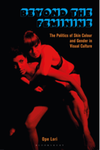
How can contemporary artists and image makers challenge representations of race and gender in visual culture and produce alternate visions?
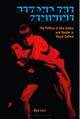
Exploring a range of lens-based British art that engages with questions of race and gender, this book critiques power structures that embed racial dichotomies to arrive at a nuanced understanding of the position of race in contemporary visual culture. It examines how white and light-skinned Black women are privileged over Black and dark-skinned women in music videos, advertising, and even in classic paintings. Focusing on skin colour as implicit in constructions of femininity, the works discussed deconstruct the links between race and gender to expose hidden power relations.
Presenting intimate interviews with four British artists – NT, Marcia Michael, Sadie Lee and Ajamu X – along with the author's own artistic practice, this book provides a much-needed toolkit for image-makers and critics alike. Using the analogy of the 'set up', this boundary-breaking book encourages us to not only question what we see, but to see differently, beyond the conventions of the male gaze. Reversing normative categories and social hierarchies, Beyond the Feminine puts forth a new gaze
an up-set to the system.
Lori, Ope
Bloomsbury Visual Arts
, 2025
; English
; 209 Pages
How can contemporary artists and image makers challenge representations of race and gender in visual culture and produce alternate visions?
Exploring a range of lens-based British art that engages with questions of race and gender, this book critiques power structures that embed racial dichotomies to arrive at a nuanced understanding of the position of race in contemporary visual culture. It examines how white and light-skinned Black women are privileged over Black and dark-skinned women in music videos, advertising, and even in classic paintings. Focusing on skin colour as implicit in constructions of femininity, the works discussed deconstruct the links between race and gender to expose hidden power relations.
Presenting intimate interviews with four British artists – NT, Marcia Michael, Sadie Lee and Ajamu X – along with the author's own artistic practice, this book provides a much-needed toolkit for image-makers and critics alike. Using the analogy of the 'set up', this boundary-breaking book encourages us to not only question what we see, but to see differently, beyond the conventions of the male gaze. Reversing normative categories and social hierarchies, Beyond the Feminine puts forth a new gaze
an up-set to the system.
eBook
Little beasts : art, wonder, and the natural world
Libby, Alexandra; Rich, Brooks; Sell, Stacey
Princeton University Press
, 2025
; English
; 226 Pages
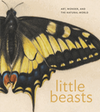
Art played a pivotal role in the development of natural history during the sixteenth and seventeenth centuries. European colonial expansion enabled naturalists to study previously unknown insects, animals, and other beestjes—“little beasts”—from around the globe. Little Beasts explores how artists such as Joris Hoefnagel and Jan van Kessel helped deepen and spread knowledge of these creatures with highly detailed and playful works that inspired generations of printmakers, painters, decorative artists, and naturalists.
This appealing book begins by mapping the origins of natural history as a discipline, showing how early illustrated treatises reflected a vibrant exchange between artists and naturalists that contributed to the growth of natural science and sparked public fascination with the animal kingdom. It shares insights into Hoefnagel’s engagement with contemporary natural history, as demonstrated in his Four Elements—a four-volume series of some three hundred watercolor miniatures of animals—and examines how intaglio printmaking enabled natural history studies to reach new audiences. The volume concludes with a discussion of Van Kessel’s small oil paintings, likely made for discerning collectors of both natural and artistic curiosities.
Blending lively and informative essays with beautiful illustrations, Little Beasts traces the connections between artists, naturalists, and collectors in an age of scientific discovery and broadening horizons, inviting readers to look with wonder at nature’s variety.
Libby, Alexandra; Rich, Brooks; Sell, Stacey
Princeton University Press
, 2025
; English
; 226 Pages
Art played a pivotal role in the development of natural history during the sixteenth and seventeenth centuries. European colonial expansion enabled naturalists to study previously unknown insects, animals, and other beestjes—“little beasts”—from around the globe. Little Beasts explores how artists such as Joris Hoefnagel and Jan van Kessel helped deepen and spread knowledge of these creatures with highly detailed and playful works that inspired generations of printmakers, painters, decorative artists, and naturalists.
This appealing book begins by mapping the origins of natural history as a discipline, showing how early illustrated treatises reflected a vibrant exchange between artists and naturalists that contributed to the growth of natural science and sparked public fascination with the animal kingdom. It shares insights into Hoefnagel’s engagement with contemporary natural history, as demonstrated in his Four Elements—a four-volume series of some three hundred watercolor miniatures of animals—and examines how intaglio printmaking enabled natural history studies to reach new audiences. The volume concludes with a discussion of Van Kessel’s small oil paintings, likely made for discerning collectors of both natural and artistic curiosities.
Blending lively and informative essays with beautiful illustrations, Little Beasts traces the connections between artists, naturalists, and collectors in an age of scientific discovery and broadening horizons, inviting readers to look with wonder at nature’s variety.
eBook
Princes, dervishes and dragons: the tile arcade from Safavid Isfahan (c. 1685–95)
Golombek, Lisa; Mason, Robert B.
Edinburgh University Press
, 2025
; English
; 314 Pages
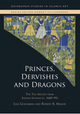
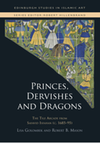
Toward the end of the nineteenth century much of Iran's architectural heritage gave way to urban development. Among the casualties were the seventeenth-century Safavid palaces of Isfahan. Local dealers salvaged a series of astonishingly beautiful pictorial arch-shaped panels composed of cuerda seca tiles from one of these. Beginning in 1911 whole panels and many single tiles were sold through Hagop Kevorkian. The authors have assembled (digitally) 36 friezes once part of this set.
The iconographic program consisted of three themes: secular pastimes (picnics, hunt, games), Persian literary episodes, and religious festivals (e.g., the Ashura). The first two themes have a long history in Iranian mural painting, but the third was new and will be of interest to cultural historians. The friezes are stylistically datable to c. 1685-95. One clue to the identity of the original site is the duplication of almost all the friezes. The authors deduce that the scenes were paired across a courtyard and suggest three possible sites. Fully assembled, the suite emerges as a hitherto unknown, outstanding creation that should be added to the canon of Safavid art.
Golombek, Lisa; Mason, Robert B.
Edinburgh University Press
, 2025
; English
; 314 Pages
Toward the end of the nineteenth century much of Iran's architectural heritage gave way to urban development. Among the casualties were the seventeenth-century Safavid palaces of Isfahan. Local dealers salvaged a series of astonishingly beautiful pictorial arch-shaped panels composed of cuerda seca tiles from one of these. Beginning in 1911 whole panels and many single tiles were sold through Hagop Kevorkian. The authors have assembled (digitally) 36 friezes once part of this set.
The iconographic program consisted of three themes: secular pastimes (picnics, hunt, games), Persian literary episodes, and religious festivals (e.g., the Ashura). The first two themes have a long history in Iranian mural painting, but the third was new and will be of interest to cultural historians. The friezes are stylistically datable to c. 1685-95. One clue to the identity of the original site is the duplication of almost all the friezes. The authors deduce that the scenes were paired across a courtyard and suggest three possible sites. Fully assembled, the suite emerges as a hitherto unknown, outstanding creation that should be added to the canon of Safavid art.
eBook
Wigal, Donald
Parkstone International
, 2024
; German
; 96 Pages
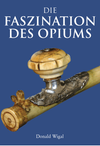
War das 20. Jahrhundert ein langer Krieg der Wirtschaft um den Besitz von Ölquellen, so war im 19. Jahrhundert das Opium als strategisch einsetzbares Produkt so wichtig wie heute das Öl. Es wurde das erste Tauschmittel mit dem damaligen China, das den “Barbaren” verschlossen bleiben wollte. Der Opiumkrieg (1840 bis 1842) erlaubte dem Abendland, sich einen Absatzmarkt in China zu eröffnen und den Chinesen, sich dem vermeintlichen Vergnügen, ihre Opiumpfeifen zu rauchen, hinzugeben. Im 19. Jahrhundert bezeichneten Intellektuelle das Opium als Die schwarze Fee. Dieses Buch erzählt, bebildert mit einer schönen, aus alten Fotos, Pfeifen etc. zusammengesetzten Ikonografie die Geschichte des Opiums.
Wigal, Donald
Parkstone International
, 2024
; German
; 96 Pages
War das 20. Jahrhundert ein langer Krieg der Wirtschaft um den Besitz von Ölquellen, so war im 19. Jahrhundert das Opium als strategisch einsetzbares Produkt so wichtig wie heute das Öl. Es wurde das erste Tauschmittel mit dem damaligen China, das den “Barbaren” verschlossen bleiben wollte. Der Opiumkrieg (1840 bis 1842) erlaubte dem Abendland, sich einen Absatzmarkt in China zu eröffnen und den Chinesen, sich dem vermeintlichen Vergnügen, ihre Opiumpfeifen zu rauchen, hinzugeben. Im 19. Jahrhundert bezeichneten Intellektuelle das Opium als Die schwarze Fee. Dieses Buch erzählt, bebildert mit einer schönen, aus alten Fotos, Pfeifen etc. zusammengesetzten Ikonografie die Geschichte des Opiums.
eBook
Zweig, Philip
Parkstone International
, 2024
; German
; 97 Pages
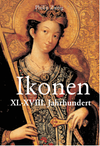
Obwohl Ikonen zunächst im Wesentlichen byzantinisch und später russisch waren, wussten auch die Christen des Orients, insbesondere die der Balkanstaaten und der Ukraine, eine neue Annäherung an ihren Glauben zu finden. So entsprachen die ersten ukrainischen Ikonen den Richtlinien des orthodoxen Glaubens, um erst später in eine speziellere Kunst überzugehen. Ab dem 14. Jahrhundert war die Inspiration mehr römischen denn byzantinischen Ursprungs und enthüllte einen starken Einfluss der slawischen Seele. Obwohl sie die Vorwerke der abendländischen Kunst aufgenommen hat, bewahrte die Epoche des Barock davon nicht wenige Besonderheiten. Dieses Werk stellt die repräsentativsten Ikonen vom 9. Jahrhundert bis zum Ende des Barock vor.
Zweig, Philip
Parkstone International
, 2024
; German
; 97 Pages
Obwohl Ikonen zunächst im Wesentlichen byzantinisch und später russisch waren, wussten auch die Christen des Orients, insbesondere die der Balkanstaaten und der Ukraine, eine neue Annäherung an ihren Glauben zu finden. So entsprachen die ersten ukrainischen Ikonen den Richtlinien des orthodoxen Glaubens, um erst später in eine speziellere Kunst überzugehen. Ab dem 14. Jahrhundert war die Inspiration mehr römischen denn byzantinischen Ursprungs und enthüllte einen starken Einfluss der slawischen Seele. Obwohl sie die Vorwerke der abendländischen Kunst aufgenommen hat, bewahrte die Epoche des Barock davon nicht wenige Besonderheiten. Dieses Werk stellt die repräsentativsten Ikonen vom 9. Jahrhundert bis zum Ende des Barock vor.
eBook
Döpp, Hans-Jürgen
Parkstone International
, 2024
; German
; 98 Pages
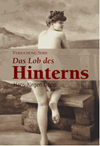
Obwohl die Menschen fast die einzigen Lebewesen sind, die den sexuellen Akt überwiegend im Angesicht des Partners vornehmen, übt der Po auf die meisten Menschen dennoch eine magische Anziehungskraft aus. Jenseits unserer religiösen oder ideologischen Zwänge bleibt der Po ein Symbol der Sexualität und der Lust.
eBook
Döpp, Hans-Jürgen
Parkstone International
, 2024
; German
; 98 Pages
Obwohl die Menschen fast die einzigen Lebewesen sind, die den sexuellen Akt überwiegend im Angesicht des Partners vornehmen, übt der Po auf die meisten Menschen dennoch eine magische Anziehungskraft aus. Jenseits unserer religiösen oder ideologischen Zwänge bleibt der Po ein Symbol der Sexualität und der Lust.
eBook
Die Völker des Hohen Nordens: Kunst und Kultur Sibiriens
Gorbatcheva, Valentina; Federova, Marina
Parkstone International
, 2024
; German
; 217 Pages
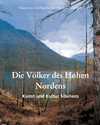
Die in den geheimen Archiven des Museums fur Volkerkunde in Sankt Petersburg entdeckten Dokumente, die hier erstmalig veroffentlicht werden, sind ein einzigartiges Zeugnis der bisher wenig beachteten Kultur der Volker des hohen Nordens.
Gegenstande der Kunst und Bilder aus dem Alltagsleben, die zu Beginn des letzten Jahrhunderts gemacht wurden, sind Zeugnisse eines reichen und voll endeten Lebensstils.
Sie zeugen von der Entwicklung dieser Volker, die sich weigern, ihre Kultur und Traditionen im Namen der Modernitat aufzugeben.
Die Autorinnen, Valentina Gorbatcheva und Marina Fede rova, sind Forscherinnen am Museum fur Volkerkunde in Sankt Petersburg.
Es ist ihnen gelungen, in einem leicht zuganglichen Stil ihre Leidenschaft fur diese Menschen zu vermitteln, die den weiten Norden eroberten.
Gorbatcheva, Valentina; Federova, Marina
Parkstone International
, 2024
; German
; 217 Pages
Die in den geheimen Archiven des Museums fur Volkerkunde in Sankt Petersburg entdeckten Dokumente, die hier erstmalig veroffentlicht werden, sind ein einzigartiges Zeugnis der bisher wenig beachteten Kultur der Volker des hohen Nordens.
Gegenstande der Kunst und Bilder aus dem Alltagsleben, die zu Beginn des letzten Jahrhunderts gemacht wurden, sind Zeugnisse eines reichen und voll endeten Lebensstils.
Sie zeugen von der Entwicklung dieser Volker, die sich weigern, ihre Kultur und Traditionen im Namen der Modernitat aufzugeben.
Die Autorinnen, Valentina Gorbatcheva und Marina Fede rova, sind Forscherinnen am Museum fur Volkerkunde in Sankt Petersburg.
Es ist ihnen gelungen, in einem leicht zuganglichen Stil ihre Leidenschaft fur diese Menschen zu vermitteln, die den weiten Norden eroberten.
