
Navigation menu
Search
Databases
All Databases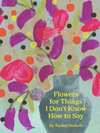
eBook
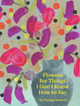
Flowers for things I don't know how to say
Nichols, Tucker
Chronicle Books LLC
, 2024
; English
; 179 Pages
This unique gift book is a reminder that whatever someone may be going through, they always deserve flowers.
When it's the most difficult to find the right words, we turn to flowers to express our compassion and care. This book is like a bouquet of flowers in book form. Based on Tucker Nichols's celebrated multimedia art project entitled Flowers for Sick People, this book gathers vibrant floral paintings and pairs them with poetic dedications that pay tribute to a kaleidoscope of human experiences, from acts of unsung heroism to mundane moments of everyday beauty: "Flowers for Anyone Currently Eating a Cinnamon Bun in a Hospital Cafeteria," "Flowers for the Last Time You Laughed So Hard It Hurt," "Flowers for Spectacular Failures," and more. Deeply relatable and equal parts heart-wrenching and humorous, this book is a comfort and encouragement in any moment and a salve for the loneliness that can come in life's toughest times.
INSPIRING PROJECT: PBS NewsHour spotlighted Tucker Nichols and his art for spreading kindness and connection during the isolating years of the pandemic. After inviting the public to submit names and addresses of their loved ones with illnesses, Nichols created and mailed original flower paintings to hundreds of requesters. This ongoing multimedia project evolved into the larger Flowers for series, which pays tribute to the vast array of moments and experiences that may be easy to overlook.
ACCLAIMED ARTIST: Along with his multimedia art and health projects, Tucker Nichols also sculpts and makes art for publication. His work has been published in McSweeney's, The New Yorker, and the op-ed pages of the New York Times and exhibited in hospitals, art centers, and fine art museums across the globe.
MEANINGFUL GIFT BOOK: This beautiful hardcover is like a bouquet of flowers, a caring gift not just in times of sickness, loneliness, and grief but whenever a loved one could use a little support or a thoughtful surprise. Full of colorful artwork and poetic text that speaks to all that we have to be grateful for—even when it's difficult—this book can be gifted in gratitude or sympathy to family and friends or to yourself as an act of self-care.
Perfect for:
• Fans of Tucker Nichols and public art projects like Flowers for Sick People
• People looking for uplifting encouragement and sympathy gifts
• Friends and family experiencing chronic illnesses, grief, or depression
• Anyone who could use some flowers and words of affirmation
• Minimalist poetry lovers and fans of Rupi Kaur, Yung Pueblo, and Morgan Harper Nichols
Nichols, Tucker
Chronicle Books LLC
, 2024
; English
; 179 Pages
This unique gift book is a reminder that whatever someone may be going through, they always deserve flowers.
When it's the most difficult to find the right words, we turn to flowers to express our compassion and care. This book is like a bouquet of flowers in book form. Based on Tucker Nichols's celebrated multimedia art project entitled Flowers for Sick People, this book gathers vibrant floral paintings and pairs them with poetic dedications that pay tribute to a kaleidoscope of human experiences, from acts of unsung heroism to mundane moments of everyday beauty: "Flowers for Anyone Currently Eating a Cinnamon Bun in a Hospital Cafeteria," "Flowers for the Last Time You Laughed So Hard It Hurt," "Flowers for Spectacular Failures," and more. Deeply relatable and equal parts heart-wrenching and humorous, this book is a comfort and encouragement in any moment and a salve for the loneliness that can come in life's toughest times.
INSPIRING PROJECT: PBS NewsHour spotlighted Tucker Nichols and his art for spreading kindness and connection during the isolating years of the pandemic. After inviting the public to submit names and addresses of their loved ones with illnesses, Nichols created and mailed original flower paintings to hundreds of requesters. This ongoing multimedia project evolved into the larger Flowers for series, which pays tribute to the vast array of moments and experiences that may be easy to overlook.
ACCLAIMED ARTIST: Along with his multimedia art and health projects, Tucker Nichols also sculpts and makes art for publication. His work has been published in McSweeney's, The New Yorker, and the op-ed pages of the New York Times and exhibited in hospitals, art centers, and fine art museums across the globe.
MEANINGFUL GIFT BOOK: This beautiful hardcover is like a bouquet of flowers, a caring gift not just in times of sickness, loneliness, and grief but whenever a loved one could use a little support or a thoughtful surprise. Full of colorful artwork and poetic text that speaks to all that we have to be grateful for—even when it's difficult—this book can be gifted in gratitude or sympathy to family and friends or to yourself as an act of self-care.
Perfect for:
• Fans of Tucker Nichols and public art projects like Flowers for Sick People
• People looking for uplifting encouragement and sympathy gifts
• Friends and family experiencing chronic illnesses, grief, or depression
• Anyone who could use some flowers and words of affirmation
• Minimalist poetry lovers and fans of Rupi Kaur, Yung Pueblo, and Morgan Harper Nichols
eBook
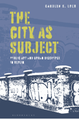
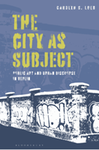
The city as subject : public art and urban discourse in Berlin
Loeb, Carolyn S.
Bloomsbury Publishing
, 2022
; English
; 289 Pages
In The City as Subject, Carolyn S. Loeb examines distinctive bodies of public art in Berlin: legal and illegal murals painted in West Berlin in the 1970s and 1980s, post-reunification public sculptures, and images and sites from the street art scene. Her careful analyses show how these developed new architectural and spatial vocabularies that drew on the city's infrastructure and daily urban experience. These works challenged mainstream urban development practices and engaged with citizen activism and with a wider civic discourse about what a city can be. Loeb extends this urban focus to her examination of the extensive outdoor installation of the Berlin Wall Memorial and its mandate to represent the history of the city's division. She studies its surrounding neighborhoods to show that, while the Memorial adopts many of the urban-oriented vocabularies established by the earlier works of public art she examines, it truncates the story of urban division, which stretches beyond the Wall's existence. Loeb suggests that, by embracing more multi-vocal perspectives, the Memorial could encourage the kind of participatory and heterogeneous construction of the city championed by the earlier works of public art.
Loeb, Carolyn S.
Bloomsbury Publishing
, 2022
; English
; 289 Pages
In The City as Subject, Carolyn S. Loeb examines distinctive bodies of public art in Berlin: legal and illegal murals painted in West Berlin in the 1970s and 1980s, post-reunification public sculptures, and images and sites from the street art scene. Her careful analyses show how these developed new architectural and spatial vocabularies that drew on the city's infrastructure and daily urban experience. These works challenged mainstream urban development practices and engaged with citizen activism and with a wider civic discourse about what a city can be. Loeb extends this urban focus to her examination of the extensive outdoor installation of the Berlin Wall Memorial and its mandate to represent the history of the city's division. She studies its surrounding neighborhoods to show that, while the Memorial adopts many of the urban-oriented vocabularies established by the earlier works of public art she examines, it truncates the story of urban division, which stretches beyond the Wall's existence. Loeb suggests that, by embracing more multi-vocal perspectives, the Memorial could encourage the kind of participatory and heterogeneous construction of the city championed by the earlier works of public art.
eBook
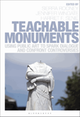
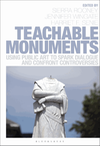
Teachable monuments : using public art to spark dialogue and confront controversy
Rooney, Sierra; Wingate, Jennifer; Senie, Harriet F.
Bloomsbury Visual Arts
, 2021
; English
; 297 Pages
Monuments around the world have become the focus of intense and sustained discussions, activism, vandalism, and removal. Since the convulsive events of 2015 and 2017, during which white supremacists committed violence in the shadow of Confederate symbols, and the 2020 nationwide protests against racism and police brutality, protesters and politicians in the United States have removed Confederate monuments, as well as monuments to historical figures like Christopher Columbus and Dr. J. Marion Sims, questioning their legitimacy as present-day heroes that their place in the public sphere reinforces.
The essays included in this anthology offer guidelines and case studies tailored for students and teachers to demonstrate how monuments can be used to deepen civic and historical engagement and social dialogue. Essays analyze specific controversies throughout North America with various outcomes as well as examples of monuments that convey outdated or unwelcome value systems without prompting debate.
Rooney, Sierra; Wingate, Jennifer; Senie, Harriet F.
Bloomsbury Visual Arts
, 2021
; English
; 297 Pages
Monuments around the world have become the focus of intense and sustained discussions, activism, vandalism, and removal. Since the convulsive events of 2015 and 2017, during which white supremacists committed violence in the shadow of Confederate symbols, and the 2020 nationwide protests against racism and police brutality, protesters and politicians in the United States have removed Confederate monuments, as well as monuments to historical figures like Christopher Columbus and Dr. J. Marion Sims, questioning their legitimacy as present-day heroes that their place in the public sphere reinforces.
The essays included in this anthology offer guidelines and case studies tailored for students and teachers to demonstrate how monuments can be used to deepen civic and historical engagement and social dialogue. Essays analyze specific controversies throughout North America with various outcomes as well as examples of monuments that convey outdated or unwelcome value systems without prompting debate.
eBook
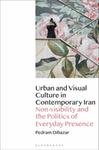
Urban and visual culture in contemporary Iran : non-visibility and the politics of everyday presence
Dibazar, Pedram
Bloomsbury Visual Arts
, 2020
; English
; 225 Pages
In Urban and Visual Culture in Contemporary Iran, Pedram Dibazar argues that everyday life in Iran is a rich domain of social existence and cultural production. Regular patterns of day-to-day practice in Iran are imbued with forms of expressivity that are unmarked and inconspicuous, but have remarkable critical value for a cultural study of contemporary society. Blended into the rhythms of everyday life are nonconformist modes of presence, subtle in their visibility and non-confrontational in their resistance to the established societal norms and structures. This volume is about such everyday tactics and creativity as lived in space, visualised in cultural forms and communicated through media.
Through its analysis of familiar everyday experiences, Urban and Visual Culture in Contemporary Iran covers a wide range of ordinary practices-such as walking, driving, shopping and doing or watching sports-and spatial conditions-such as streets, cars, rooftops, shopping centres and stadiums. It also explores a variety of cultural formations, including film, photography, architecture, literature, visual arts, television and digital media. This book offers new ways of thinking about visual and urban cultures by highlighting a politics of everyday life that is conditioned on concerns over visibility and presence.
eBook
Dibazar, Pedram
Bloomsbury Visual Arts
, 2020
; English
; 225 Pages
In Urban and Visual Culture in Contemporary Iran, Pedram Dibazar argues that everyday life in Iran is a rich domain of social existence and cultural production. Regular patterns of day-to-day practice in Iran are imbued with forms of expressivity that are unmarked and inconspicuous, but have remarkable critical value for a cultural study of contemporary society. Blended into the rhythms of everyday life are nonconformist modes of presence, subtle in their visibility and non-confrontational in their resistance to the established societal norms and structures. This volume is about such everyday tactics and creativity as lived in space, visualised in cultural forms and communicated through media.
Through its analysis of familiar everyday experiences, Urban and Visual Culture in Contemporary Iran covers a wide range of ordinary practices-such as walking, driving, shopping and doing or watching sports-and spatial conditions-such as streets, cars, rooftops, shopping centres and stadiums. It also explores a variety of cultural formations, including film, photography, architecture, literature, visual arts, television and digital media. This book offers new ways of thinking about visual and urban cultures by highlighting a politics of everyday life that is conditioned on concerns over visibility and presence.
eBook
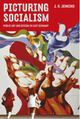
Picturing socialism : public art and design in East Germany
Jenkins, J. R.
Bloomsbury Visual Arts
, 2020
; English
; 265 Pages
This vibrant history of the former German Democratic Republic's public art reveals a barely known but visually and theoretically rich cultural legacy. Picturing Socialism shows how works of art and design in the urban spaces of East Germany were the site of a sustained struggle between practitioners, critics and political leaders. This was not the oft-assumed conflict between artistic freedom and political dogma; at stake was the self-identity of the republic as socialist. Art and its relationship to architecture functioned as the testing ground for East Germany's relationship to socialist realism and modernism against the backdrop of Cold War competition from the neighbouring Federal Republic.
Picturing Socialism makes a timely contribution to the recent groundswell of interest in the legacy of East Germany's art and architecture, illuminating and elucidating the public art which has been lost or remains under threat since unification in 1990.
Jenkins, J. R.
Bloomsbury Visual Arts
, 2020
; English
; 265 Pages
This vibrant history of the former German Democratic Republic's public art reveals a barely known but visually and theoretically rich cultural legacy. Picturing Socialism shows how works of art and design in the urban spaces of East Germany were the site of a sustained struggle between practitioners, critics and political leaders. This was not the oft-assumed conflict between artistic freedom and political dogma; at stake was the self-identity of the republic as socialist. Art and its relationship to architecture functioned as the testing ground for East Germany's relationship to socialist realism and modernism against the backdrop of Cold War competition from the neighbouring Federal Republic.
Picturing Socialism makes a timely contribution to the recent groundswell of interest in the legacy of East Germany's art and architecture, illuminating and elucidating the public art which has been lost or remains under threat since unification in 1990.
eBook
The creative edge : inspiring art explorations in libraries and beyond
Fletcher, Mary C.
Bloomsbury Publishing
, 2019
; English
; 196 Pages
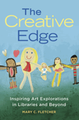
Library facilitators of art-based creativity sessions will learn how to choose materials and art experiences appropriate for young people from toddlers to teens and for intergenerational groups. In the modern world, innovative and creative individuals have a distinct advantage: the creative edge. The Creative Edge explains how you can design and conduct art-based creativity programming in your library. Written by a library creativity specialist, this book is the result of the author's many years of experience facilitating art groups for all ages. Her programs have achieved national recognition and will serve as a guide for others to establish art-based creativity sessions. In this book, she incorporates research that documents the importance of creativity as an essential component of childhood development and connects it to library learning goals, including literacy. Creativity research can be applied in libraries and at other public institutions to develop programs that will meet the needs of the next generation. The book includes many practical elements, such as lists for recommended art materials, step-by-step instructions on setup and procedures, and ideas inspired by picture book illustrations that connect to story time themes. The Creative Edge teaches readers how to provide programs that promote child-led exploration, experiential learning, innovative thought, and creative confidence.
Fletcher, Mary C.
Bloomsbury Publishing
, 2019
; English
; 196 Pages
Library facilitators of art-based creativity sessions will learn how to choose materials and art experiences appropriate for young people from toddlers to teens and for intergenerational groups. In the modern world, innovative and creative individuals have a distinct advantage: the creative edge. The Creative Edge explains how you can design and conduct art-based creativity programming in your library. Written by a library creativity specialist, this book is the result of the author's many years of experience facilitating art groups for all ages. Her programs have achieved national recognition and will serve as a guide for others to establish art-based creativity sessions. In this book, she incorporates research that documents the importance of creativity as an essential component of childhood development and connects it to library learning goals, including literacy. Creativity research can be applied in libraries and at other public institutions to develop programs that will meet the needs of the next generation. The book includes many practical elements, such as lists for recommended art materials, step-by-step instructions on setup and procedures, and ideas inspired by picture book illustrations that connect to story time themes. The Creative Edge teaches readers how to provide programs that promote child-led exploration, experiential learning, innovative thought, and creative confidence.
eBook
Public art and the fragility of democracy : an essay in political aesthetics
Evans, Fred J.
Columbia University Press
, 2018
; English
; 361 Pages
Public space is political space. When a work of public art is put up or taken down, it is an inherently political statement, and the work's aesthetics are inextricably entwined with its political valences.
Democracy's openness allows public art to explore its values critically and to suggest new ones.
However, it also facilitates artworks that can surreptitiously or fortuitously undermine democratic values.
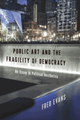
Today, as bigotry and authoritarianism are on the rise and democratic movements seek to combat them, as Confederate monuments fall and sculptures celebrating diversity rise, the struggle over the values enshrined in the public arena has taken on a new urgency.In this book, Fred Evans develops philosophical and political criteria for assessing how public art can respond to the fragility of democracy.
He calls for considering such artworks as acts of citizenship, pointing to their capacity to resist autocratic tendencies and reveal new dimensions of democratic society.
Through close considerations of Chicago's Millennium Park and New York's National September 11 Memorial, Evans shows how a wide range of artworks participate in democratic dialogues.
A nuanced consideration of contemporary art, aesthetics, and political theory, this book is a timely and rigorous elucidation of how thoughtful public art can contribute to the flourishing of a democratic way of life.
Evans, Fred J.
Columbia University Press
, 2018
; English
; 361 Pages
Public space is political space. When a work of public art is put up or taken down, it is an inherently political statement, and the work's aesthetics are inextricably entwined with its political valences.
Democracy's openness allows public art to explore its values critically and to suggest new ones.
However, it also facilitates artworks that can surreptitiously or fortuitously undermine democratic values.
Today, as bigotry and authoritarianism are on the rise and democratic movements seek to combat them, as Confederate monuments fall and sculptures celebrating diversity rise, the struggle over the values enshrined in the public arena has taken on a new urgency.In this book, Fred Evans develops philosophical and political criteria for assessing how public art can respond to the fragility of democracy.
He calls for considering such artworks as acts of citizenship, pointing to their capacity to resist autocratic tendencies and reveal new dimensions of democratic society.
Through close considerations of Chicago's Millennium Park and New York's National September 11 Memorial, Evans shows how a wide range of artworks participate in democratic dialogues.
A nuanced consideration of contemporary art, aesthetics, and political theory, this book is a timely and rigorous elucidation of how thoughtful public art can contribute to the flourishing of a democratic way of life.
eBook
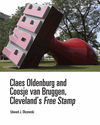
Claes Oldenburg and Coosje van Bruggen, Cleveland’s Free Stamp
Olszewski, Edward J.
Ohio University Press
, 2017
; English
; 209 Pages
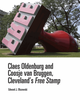
In 1985, the Sohio oil company commissioned Claes Oldenburg and Coosje van Bruggen to design and construct a large outdoor sculpture for its new corporate headquarters in Cleveland, Ohio. The result was Free Stamp, a bold and distinctive installation that captured both a Pop Art sensibility and a connection to the city’s industrial past. Sohio executives approved the design, and work was already underway, when British Petroleum acquired the company. The new owners quickly decided that the sculpture was “inappropriate” for their building and attempted to rid themselves of Free Stamp by donating it to the city of Cleveland—a gift that the city initially had no desire to accept. After much debate and public protest, the sculpture found a home in Willard Park, where it stands today.
This is the first study of any sculpture by Oldenburg and van Bruggen to examine the genesis of their art from conception to installation. Edward J. Olszewski has put together a fascinating narrative based on interviews with the artists, archival material from city records, and in-house corporate memoranda, as well as letters to the editor and political cartoons. He traces the development of the sculpture from the artists’ first sketches and models to the installation of the completed work in its urban environment.
Olszewski, Edward J.
Ohio University Press
, 2017
; English
; 209 Pages
In 1985, the Sohio oil company commissioned Claes Oldenburg and Coosje van Bruggen to design and construct a large outdoor sculpture for its new corporate headquarters in Cleveland, Ohio. The result was Free Stamp, a bold and distinctive installation that captured both a Pop Art sensibility and a connection to the city’s industrial past. Sohio executives approved the design, and work was already underway, when British Petroleum acquired the company. The new owners quickly decided that the sculpture was “inappropriate” for their building and attempted to rid themselves of Free Stamp by donating it to the city of Cleveland—a gift that the city initially had no desire to accept. After much debate and public protest, the sculpture found a home in Willard Park, where it stands today.
This is the first study of any sculpture by Oldenburg and van Bruggen to examine the genesis of their art from conception to installation. Edward J. Olszewski has put together a fascinating narrative based on interviews with the artists, archival material from city records, and in-house corporate memoranda, as well as letters to the editor and political cartoons. He traces the development of the sculpture from the artists’ first sketches and models to the installation of the completed work in its urban environment.
eBook
Copyright beyond law: regulating creativity in the graffiti subculture
Iljadica, Marta
Hart Publishing
, 2016
; English
; 325 Pages
The form of graffiti writing on trains and walls is not accidental. Nor is its absence on cars and houses. Employing a particular style of letters, choosing which walls and trains to write on, copying another writer, altering or destroying another writer's work: these acts are regulated within the graffiti subculture. Copyright Beyond Law presents findings from empirical research undertaken into the graffiti subculture to show that graffiti writers informally regulate their creativity through a system of norms that are remarkably similar to copyright. The 'graffiti rules' and their copyright law parallels include: the requirement of writing letters (subject matter) and appropriate placement (public policy and morality exceptions for copyright subsistence and the enforcement of copyright), originality and the prohibition of copying (originality and infringement by reproduction), and the prohibition of damage to another writer's works (the moral right of integrity). The intersection between the 'graffiti rules' and copyright law sheds light on the creation of subculture-specific commons and the limits of copyright law in incentivising and regulating the production and location of creativity.
Iljadica, Marta
Hart Publishing
, 2016
; English
; 325 Pages
The form of graffiti writing on trains and walls is not accidental. Nor is its absence on cars and houses. Employing a particular style of letters, choosing which walls and trains to write on, copying another writer, altering or destroying another writer's work: these acts are regulated within the graffiti subculture. Copyright Beyond Law presents findings from empirical research undertaken into the graffiti subculture to show that graffiti writers informally regulate their creativity through a system of norms that are remarkably similar to copyright. The 'graffiti rules' and their copyright law parallels include: the requirement of writing letters (subject matter) and appropriate placement (public policy and morality exceptions for copyright subsistence and the enforcement of copyright), originality and the prohibition of copying (originality and infringement by reproduction), and the prohibition of damage to another writer's works (the moral right of integrity). The intersection between the 'graffiti rules' and copyright law sheds light on the creation of subculture-specific commons and the limits of copyright law in incentivising and regulating the production and location of creativity.
