

Navigation menu
Search
Databases
All Databases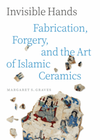
eBook
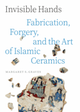
Invisible hands : fabrication, forgery, and the art of Islamic ceramics
Graves, Margaret S.
Princeton University Press
, 2026
; English
; 341 Pages
The remarkable history of forged and fabricated Islamic ceramics, their makers, and their unique role in colonial trade
In the heyday of Islamic art collecting around the turn of the twentieth century, thousands of premodern ceramic objects circulated on the international antiquities market. Invisible Hands tells the story of how traditional craft skills of the Islamic world, often thought to have died out with the advent of industrialization, were redirected toward a thriving new market in the colonial era: the fabrication and fictionalizing of antiquities, especially ceramics.
In this stunning work of art history, Margaret Graves shakes the foundations of the discipline, challenging us to reconsider what is and is not art. She traces how sophisticated fabrications—as modern as they were believed to be medieval—moved within an international network of diggers, dealers, and collectors who took advantage of a largely unregulated marketplace to exchange and amass objects that were fabulous in every sense of the word. She looks at canonical artworks as well as many previously unpublished and rarely seen objects, shedding light on the astonishingly varied ways Islamic ceramics were altered and remade by highly skilled craftspeople to meet the demands of Western collectors. Shifting away from the moralizing stance of past studies on reconstructed Islamic ceramics, Graves shows how fabrication and forgery became a major site of participation in modern global capitalism and establishes an entirely new paradigm in the history of art.
Drawing on a substantive new body of provenance research, archaeology, economic history, and laboratory analysis, Invisible Hands centers previously marginalized objects, reframing the practices of fabrication and forgery as crucial forms of invention and artistic skill worthy of study and admiration.
Graves, Margaret S.
Princeton University Press
, 2026
; English
; 341 Pages
The remarkable history of forged and fabricated Islamic ceramics, their makers, and their unique role in colonial trade
In the heyday of Islamic art collecting around the turn of the twentieth century, thousands of premodern ceramic objects circulated on the international antiquities market. Invisible Hands tells the story of how traditional craft skills of the Islamic world, often thought to have died out with the advent of industrialization, were redirected toward a thriving new market in the colonial era: the fabrication and fictionalizing of antiquities, especially ceramics.
In this stunning work of art history, Margaret Graves shakes the foundations of the discipline, challenging us to reconsider what is and is not art. She traces how sophisticated fabrications—as modern as they were believed to be medieval—moved within an international network of diggers, dealers, and collectors who took advantage of a largely unregulated marketplace to exchange and amass objects that were fabulous in every sense of the word. She looks at canonical artworks as well as many previously unpublished and rarely seen objects, shedding light on the astonishingly varied ways Islamic ceramics were altered and remade by highly skilled craftspeople to meet the demands of Western collectors. Shifting away from the moralizing stance of past studies on reconstructed Islamic ceramics, Graves shows how fabrication and forgery became a major site of participation in modern global capitalism and establishes an entirely new paradigm in the history of art.
Drawing on a substantive new body of provenance research, archaeology, economic history, and laboratory analysis, Invisible Hands centers previously marginalized objects, reframing the practices of fabrication and forgery as crucial forms of invention and artistic skill worthy of study and admiration.
eBook
Sparke, Penny; Scholze, Jana; Kirkham, Pat; Ioannidou, Ersi; Fisher, Fiona; Lara-Betancourt, Patricia
Bloomsbury Visual Arts
, 2025
; English
; 217 Pages
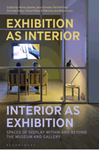
Exhibition design has long been studied in the fields of art, design and architecture, but the focus has been on the design of the exhibition narrative, rather than the design as interior space. This book breaks new ground, exploring the complex relationships which exist between exhibitions, museums and galleries and interior design.
Taking a case-study-driven approach, chapters explore a wealth of spaces
looking at contemporary art galleries and globally-renowned museums, and also subverted spaces like squatted homes, high-rises, distilleries and laboratories. Their geographic coverage ranges from socialist Eastern Europe to the US, stopping via many other countries such as Germany, Croatia, Australia and the UK.
These case studies rethink how exhibitions interact with their spatial surroundings, with key themes including the role of labour in creating these spaces, the dualism of public and private space, the impact of exhibition audiences and reception, the political implications of exhibitions and the influence of institutions.
With an interdisciplinary range of contributors, and combining a historical and contemporary outlook, this is a must-read for anyone designing or curating design-driven museum spaces.
Sparke, Penny; Scholze, Jana; Kirkham, Pat; Ioannidou, Ersi; Fisher, Fiona; Lara-Betancourt, Patricia
Bloomsbury Visual Arts
, 2025
; English
; 217 Pages
Exhibition design has long been studied in the fields of art, design and architecture, but the focus has been on the design of the exhibition narrative, rather than the design as interior space. This book breaks new ground, exploring the complex relationships which exist between exhibitions, museums and galleries and interior design.
Taking a case-study-driven approach, chapters explore a wealth of spaces
looking at contemporary art galleries and globally-renowned museums, and also subverted spaces like squatted homes, high-rises, distilleries and laboratories. Their geographic coverage ranges from socialist Eastern Europe to the US, stopping via many other countries such as Germany, Croatia, Australia and the UK.
These case studies rethink how exhibitions interact with their spatial surroundings, with key themes including the role of labour in creating these spaces, the dualism of public and private space, the impact of exhibition audiences and reception, the political implications of exhibitions and the influence of institutions.
With an interdisciplinary range of contributors, and combining a historical and contemporary outlook, this is a must-read for anyone designing or curating design-driven museum spaces.
eBook
Aranda-Alvarado, Rocío
University of California Press
, 2025
; English
; 432 Pages
A curated selection of key texts and artists' voices exploring US Latinx art and art history from the 1960s to the present.
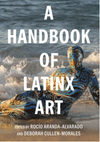
A Handbook of Latinx Art is the first anthology to explore the rich, deep, and often overlooked contributions that Latinx artists have made to art in the United States. Drawn from wide-ranging sources, this volume includes texts by artists, critics, and scholars from the 1960s to the present that reflect the diversity of the Latinx experience across the nation, from the West Coast and the Mexican border to New York, Miami, and the Midwest.
The anthology features essential writings by Mexican American, Puerto Rican, Cuban American, Dominican American, and Central American artists to highlight how visionaries of diverse immigrant groups negotiate issues of participation and belonging, material, style, and community in their own voices. These intersectional essays cut across region, gender, race, and class to lay out a complex emerging field that reckons with different histories, geographies, and political engagements and, ultimately, underscores the importance of Latinx artists to the history of American art.
eBook
Aranda-Alvarado, Rocío
University of California Press
, 2025
; English
; 432 Pages
A curated selection of key texts and artists' voices exploring US Latinx art and art history from the 1960s to the present.
A Handbook of Latinx Art is the first anthology to explore the rich, deep, and often overlooked contributions that Latinx artists have made to art in the United States. Drawn from wide-ranging sources, this volume includes texts by artists, critics, and scholars from the 1960s to the present that reflect the diversity of the Latinx experience across the nation, from the West Coast and the Mexican border to New York, Miami, and the Midwest.
The anthology features essential writings by Mexican American, Puerto Rican, Cuban American, Dominican American, and Central American artists to highlight how visionaries of diverse immigrant groups negotiate issues of participation and belonging, material, style, and community in their own voices. These intersectional essays cut across region, gender, race, and class to lay out a complex emerging field that reckons with different histories, geographies, and political engagements and, ultimately, underscores the importance of Latinx artists to the history of American art.
eBook
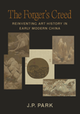
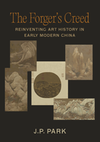
The forger's creed : reinventing art history in early modern China
Park, J. P.
University of California Press
, 2025
; English
; 236 Pages
The first in-depth look at the history and legacies of forgeries in Chinese art.
In 1634, scholar-official Zhang Taijie (b. ca. 1588) published a book titled A Record of Treasured Paintings (C. Baohui lu), presenting an extensive catalogue of a purportedly vast painting collection he claimed to have built. However, the entire book is Zhang's meticulously crafted forgery
he even forged paintings to match the documentation, and profited from trading them. Furthermore, the book intriguingly mirrors unfounded art-historical claims of its time. Prominent figures like Dong Qichang (1555–1636) made entirely fabricated arguments to assert legitimate lineages in Chinese art, designed to create a fictionalized history shaped by preferred beliefs rather than reality.
While presenting the first comprehensive exploration of various forgery practices in early modern China—fabricated texts, forged paintings, and fictitious art history—The Forger's Creed examines the cultural, social, and genealogical desires, anxieties, and tensions prevalent in early modern China. Through thorough scrutiny of the historical irregularities introduced by these forgeries, J. P. Park highlights a peculiar and paradoxical phenomenon wherein forgeries transform into legitimate materials across Chinese history.
Park, J. P.
University of California Press
, 2025
; English
; 236 Pages
The first in-depth look at the history and legacies of forgeries in Chinese art.
In 1634, scholar-official Zhang Taijie (b. ca. 1588) published a book titled A Record of Treasured Paintings (C. Baohui lu), presenting an extensive catalogue of a purportedly vast painting collection he claimed to have built. However, the entire book is Zhang's meticulously crafted forgery
he even forged paintings to match the documentation, and profited from trading them. Furthermore, the book intriguingly mirrors unfounded art-historical claims of its time. Prominent figures like Dong Qichang (1555–1636) made entirely fabricated arguments to assert legitimate lineages in Chinese art, designed to create a fictionalized history shaped by preferred beliefs rather than reality.
While presenting the first comprehensive exploration of various forgery practices in early modern China—fabricated texts, forged paintings, and fictitious art history—The Forger's Creed examines the cultural, social, and genealogical desires, anxieties, and tensions prevalent in early modern China. Through thorough scrutiny of the historical irregularities introduced by these forgeries, J. P. Park highlights a peculiar and paradoxical phenomenon wherein forgeries transform into legitimate materials across Chinese history.

eBook
Unburied : the true story of Hannah Beswick, the Manchester mummy
Priest, Hannah
Manchester University Press
, 2025
; English
; 260 Pages
The macabre tale of an eighteenth-century woman immortalised in folklore as the ‘Manchester Mummy’.
In 1835, the Manchester Natural History Society opened the doors of its museum. Taking pride of place in its collection were three mummies: one was Egyptian, one was Peruvian and one was a woman from Cheetham Hill.
This is the first time the true story of Hannah Beswick, the so-called ‘Manchester Mummy’, has been told. Over the years, explanations for the Manchester Mummy have ranged from the chilling – Hannah’s fear of being buried alive – to the downright bizarre – the legend of her buried gold – but the truth is more complex.
Exploring this fascinating episode from museum history, Unburied sheds light on the Victorian turn to the macabre and changing attitudes to the display of human remains. It debunks the legends and asks what Hannah Beswick can tell us about death and dying, mummies and museums.
Priest, Hannah
Manchester University Press
, 2025
; English
; 260 Pages
The macabre tale of an eighteenth-century woman immortalised in folklore as the ‘Manchester Mummy’.
In 1835, the Manchester Natural History Society opened the doors of its museum. Taking pride of place in its collection were three mummies: one was Egyptian, one was Peruvian and one was a woman from Cheetham Hill.
This is the first time the true story of Hannah Beswick, the so-called ‘Manchester Mummy’, has been told. Over the years, explanations for the Manchester Mummy have ranged from the chilling – Hannah’s fear of being buried alive – to the downright bizarre – the legend of her buried gold – but the truth is more complex.
Exploring this fascinating episode from museum history, Unburied sheds light on the Victorian turn to the macabre and changing attitudes to the display of human remains. It debunks the legends and asks what Hannah Beswick can tell us about death and dying, mummies and museums.
eBook
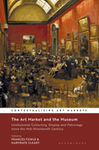
Fowle, Frances; Cleary, MaryKate
Bloomsbury Visual Arts
, 2025
; English
; 345 Pages
This book considers how art market stakeholders, including art dealers, collectors and agents, have shaped museum collections and affected exhibition practices since the mid-nineteenth century. Based on new archival research and data analysis, it explores the role of dealers not only in selling directly to museums, but in influencing museum collecting priorities, as well as potential donors. It also examines the important but hitherto overlooked contribution of the female curator-agent.
The book is divided into three sections, which address the relationship between art dealers and museums, women as art agents and influencers, and the strategies of entrepreneurial collectors. Featuring contributions from a wide range of international specialists in the market for decorative arts and antiquities, as well as European modernism, The Art Market and the Museum explores the origins and development of the modern Western art market and the global art networks that operated not only in Paris, London and New York, but in cities such as Glasgow, Vienna, Melbourne and Kansas City. It is perfect reading for scholars and researchers on the history of the art market, museum studies and art history more broadly.
Fowle, Frances; Cleary, MaryKate
Bloomsbury Visual Arts
, 2025
; English
; 345 Pages
This book considers how art market stakeholders, including art dealers, collectors and agents, have shaped museum collections and affected exhibition practices since the mid-nineteenth century. Based on new archival research and data analysis, it explores the role of dealers not only in selling directly to museums, but in influencing museum collecting priorities, as well as potential donors. It also examines the important but hitherto overlooked contribution of the female curator-agent.
The book is divided into three sections, which address the relationship between art dealers and museums, women as art agents and influencers, and the strategies of entrepreneurial collectors. Featuring contributions from a wide range of international specialists in the market for decorative arts and antiquities, as well as European modernism, The Art Market and the Museum explores the origins and development of the modern Western art market and the global art networks that operated not only in Paris, London and New York, but in cities such as Glasgow, Vienna, Melbourne and Kansas City. It is perfect reading for scholars and researchers on the history of the art market, museum studies and art history more broadly.
eBook
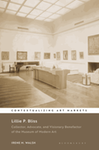
Lillie P. Bliss : collector, advocate, and visionary benefactor of the Museum of Modern Art
Walsh, Irene M.
Bloomsbury Visual Arts
, 2025
; English
; 249 Pages
She helped found MoMA and pioneered the promotion of work of American and French modern artists at the turn of the 20th century, but until now, her life and legacy remain woefully under examined.
An early pioneer and patron of French and American modernism, Lillie P. Bliss (1864-1931) was one of three female cofounders of MoMA in 1929, and went on to furnish the museum with one of the finest collections of modern art in the world. Presenting case-studies alongside data-driven analysis drawn from original research into the American art market, this book reconstructs Bliss's influential career in rich and compelling detail. It weaves together extensive archival material related to the art and the artists that Bliss collected and patronised – such as Paul Cezanne, Pierre-Auguste Renoir, Edgar Degas, Georges Seurat, and Odilon Redon – the art market of the time and the evolution of the New York museum ecosystem, and highlights the importance of private collecting in the development of American museums.
By revisiting MoMA's foundational history, author Irene Walsh explores how Lillie P. Bliss's visionary bequest of over 120 artworks upon her death in 1931 profoundly influenced and shaped the institution, questioning why her pioneering role has been overshadowed by other collectors. Combining biography, market knowledge, institutional analysis, and art history, it enriches our understanding of early 20th-century dealer dynamics and collection strategies in New York, illuminates the role of collections in shaping art narratives, while offering contemporary insights into women's agency in the arts. Global, interdisciplinary, and timely, the book provides fascinating first-hand research into a collector of great importance, and will make a long standing contribution to studies in the art market and 20th-century collecting.
Walsh, Irene M.
Bloomsbury Visual Arts
, 2025
; English
; 249 Pages
She helped found MoMA and pioneered the promotion of work of American and French modern artists at the turn of the 20th century, but until now, her life and legacy remain woefully under examined.
An early pioneer and patron of French and American modernism, Lillie P. Bliss (1864-1931) was one of three female cofounders of MoMA in 1929, and went on to furnish the museum with one of the finest collections of modern art in the world. Presenting case-studies alongside data-driven analysis drawn from original research into the American art market, this book reconstructs Bliss's influential career in rich and compelling detail. It weaves together extensive archival material related to the art and the artists that Bliss collected and patronised – such as Paul Cezanne, Pierre-Auguste Renoir, Edgar Degas, Georges Seurat, and Odilon Redon – the art market of the time and the evolution of the New York museum ecosystem, and highlights the importance of private collecting in the development of American museums.
By revisiting MoMA's foundational history, author Irene Walsh explores how Lillie P. Bliss's visionary bequest of over 120 artworks upon her death in 1931 profoundly influenced and shaped the institution, questioning why her pioneering role has been overshadowed by other collectors. Combining biography, market knowledge, institutional analysis, and art history, it enriches our understanding of early 20th-century dealer dynamics and collection strategies in New York, illuminates the role of collections in shaping art narratives, while offering contemporary insights into women's agency in the arts. Global, interdisciplinary, and timely, the book provides fascinating first-hand research into a collector of great importance, and will make a long standing contribution to studies in the art market and 20th-century collecting.
eBook
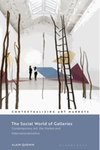
The social world of galleries : contemporary art, the market and internationalization
Quemin, Alain; Engelhardt, Keara
Bloomsbury Visual Arts
, 2024
; English
; 473 Pages
This book presents the first detailed study of the place of contemporary art galleries and gallerists, especially within the art markets of Europe and the United States. Based on the author's field research carried out for over a decade, and combining ethnographic material with quantitative data, the book reveals the major role galleries play in the creation of art value.
Despite being pillars of the art market, there has been very little in-depth research on galleries, especially when compared with the analysis of artists, critics, and dealers. Written by a sociologist who has spent a decade as an art critic, the book builds on work conducted by art historian and sociologist Raymonde Moulin from the 1960s to the 1990s. Drawing on ethnographic observations and interviews with those working in the field today, it provides a thorough and up-to-date analysis of what contemporary art galleries really are: the spaces they occupy both physically and online
their position within gallery 'districts'
their relation to art fairs and biennials
and how friendship with clients is built and trends within the business, in turn illuminating the hierarchized structure of the sector. The book concludes by addressing a significant gap in data on the art market by providing a sociological ranking of international contemporary art galleries.
Offering a detailed analysis to a topic that has never been fully studied, The Social World of Galleries is essential reading for scholars and students of art sociology, art history and art business, as well as gallerists, collectors or art lovers, and artists themselves.
Quemin, Alain; Engelhardt, Keara
Bloomsbury Visual Arts
, 2024
; English
; 473 Pages
This book presents the first detailed study of the place of contemporary art galleries and gallerists, especially within the art markets of Europe and the United States. Based on the author's field research carried out for over a decade, and combining ethnographic material with quantitative data, the book reveals the major role galleries play in the creation of art value.
Despite being pillars of the art market, there has been very little in-depth research on galleries, especially when compared with the analysis of artists, critics, and dealers. Written by a sociologist who has spent a decade as an art critic, the book builds on work conducted by art historian and sociologist Raymonde Moulin from the 1960s to the 1990s. Drawing on ethnographic observations and interviews with those working in the field today, it provides a thorough and up-to-date analysis of what contemporary art galleries really are: the spaces they occupy both physically and online
their position within gallery 'districts'
their relation to art fairs and biennials
and how friendship with clients is built and trends within the business, in turn illuminating the hierarchized structure of the sector. The book concludes by addressing a significant gap in data on the art market by providing a sociological ranking of international contemporary art galleries.
Offering a detailed analysis to a topic that has never been fully studied, The Social World of Galleries is essential reading for scholars and students of art sociology, art history and art business, as well as gallerists, collectors or art lovers, and artists themselves.
eBook
Representations of art and art museums in children's picture books
Nodelman, Perry
Bloomsbury Visual Arts
, 2024
; English
; 209 Pages
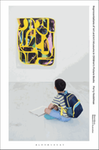
What happens when the assumptions and practices of museum curators and art educators intersect with the assumptions and practices of publishing for children?
This study explores how over three hundred children's picture books, most of them published in the last three decades in English, introduce children to art and art museums. It considers how the books emerge from and relate to a range of theories and assumptions about childhood and childhood development, children's literature and culture, illustration, visual art, museology, and art education.
As well as examining how these theories and assumptions influence what picture books teach young readers about visiting museums and about how to look at and think about art, it examines which artists and artworks appear most often in picture books and offers a survey of different kinds of art-related picture books: ones that claim to be purely informational, ones that make looking at art a game or a puzzle, ones in which children visit art museums, and many more. Since the books all include reproductions of or allusions to museum artworks, the study also considers the problems illustrators face in depicting museum artworks in illustrations in a different style.
Nodelman, Perry
Bloomsbury Visual Arts
, 2024
; English
; 209 Pages
What happens when the assumptions and practices of museum curators and art educators intersect with the assumptions and practices of publishing for children?
This study explores how over three hundred children's picture books, most of them published in the last three decades in English, introduce children to art and art museums. It considers how the books emerge from and relate to a range of theories and assumptions about childhood and childhood development, children's literature and culture, illustration, visual art, museology, and art education.
As well as examining how these theories and assumptions influence what picture books teach young readers about visiting museums and about how to look at and think about art, it examines which artists and artworks appear most often in picture books and offers a survey of different kinds of art-related picture books: ones that claim to be purely informational, ones that make looking at art a game or a puzzle, ones in which children visit art museums, and many more. Since the books all include reproductions of or allusions to museum artworks, the study also considers the problems illustrators face in depicting museum artworks in illustrations in a different style.
eBook
Creating the perfect form : how to interpret and display historical dress
Wood, Janet
Bloomsbury Visual Arts
, 2024
; English
; 193 Pages
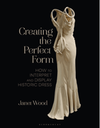
How can the cut of a 19th century gown control its shape? Can you re-create a historic profile from a contemporary mannequin? How can paintings help you analyse historic silhouettes and the corsets and petticoats worn underneath?
Conservation and historic dress display specialist Janet Wood will help you answer all these questions. You'll learn how historic garments can be safely handled and shown to best effect, with insight into the characteristic features of each piece and how to translate them from the garment to a display support.
Concentrating on Western women's wear from 1750–1950, and with over 250 colour images, plus drawings and charts, you'll learn how to interpret an individual garment's display needs and create safe, appropriate display forms.
Wood, Janet
Bloomsbury Visual Arts
, 2024
; English
; 193 Pages
How can the cut of a 19th century gown control its shape? Can you re-create a historic profile from a contemporary mannequin? How can paintings help you analyse historic silhouettes and the corsets and petticoats worn underneath?
Conservation and historic dress display specialist Janet Wood will help you answer all these questions. You'll learn how historic garments can be safely handled and shown to best effect, with insight into the characteristic features of each piece and how to translate them from the garment to a display support.
Concentrating on Western women's wear from 1750–1950, and with over 250 colour images, plus drawings and charts, you'll learn how to interpret an individual garment's display needs and create safe, appropriate display forms.
