
Navigation menu
Search
Databases
All Databases
eBook
Gigante, Federica; Hillenbrand, Robert (Series Editor)
Edinburgh University Press
, 2025
; English
; 393 Pages
The ebook editions are now available to purchase. The hardback edition is due to publish October 2025.
Explores the history of material exchanges between the Islamic world and Italy in the seventeenth century
Analyses the procurement networks of Islamic artefacts from the Eastern Mediterranean to Florence and Bologna in the seventeenth century
Revisits the history of Italian perceptions of Islamic material culture
Explores for the first time the history of material exchanges between the Islamic world and Italy in the seventeenth century
Draws on unpublished archival sources
Brings together cultural history, political history, economic history and the history of Islamic art
This book reassesses the idea that Islamic objects in seventeenth-century Italy were considered mere curiosities, sparking no cultural or historical interest. It focuses on Italy’s largest collection of Islamic artefacts of the time, assembled by the Medici agent and Bolognese nobleman Ferdinando Cospi in his public gallery: the Cospi Museum. Through an extensive investigation of inventories, letters, and archival documents, the book follows the objects through the various paths which took them from the eastern shores of the Mediterranean, through North African cities, to Livorno, Florence and, finally, Bologna. These paths reveal the presence of a network of enslaved Turks, Arab scholars, Egyptian fishermen and Armenian merchants, all responsible for importing both the items and their stories, biographies and anecdotes to Italy. The book thus brings forward to the seventeenth century a phenomenon of cultural inquisition that was thought to start only a century later.
Gigante, Federica; Hillenbrand, Robert (Series Editor)
Edinburgh University Press
, 2025
; English
; 393 Pages
The ebook editions are now available to purchase. The hardback edition is due to publish October 2025.
Explores the history of material exchanges between the Islamic world and Italy in the seventeenth century
Analyses the procurement networks of Islamic artefacts from the Eastern Mediterranean to Florence and Bologna in the seventeenth century
Revisits the history of Italian perceptions of Islamic material culture
Explores for the first time the history of material exchanges between the Islamic world and Italy in the seventeenth century
Draws on unpublished archival sources
Brings together cultural history, political history, economic history and the history of Islamic art
This book reassesses the idea that Islamic objects in seventeenth-century Italy were considered mere curiosities, sparking no cultural or historical interest. It focuses on Italy’s largest collection of Islamic artefacts of the time, assembled by the Medici agent and Bolognese nobleman Ferdinando Cospi in his public gallery: the Cospi Museum. Through an extensive investigation of inventories, letters, and archival documents, the book follows the objects through the various paths which took them from the eastern shores of the Mediterranean, through North African cities, to Livorno, Florence and, finally, Bologna. These paths reveal the presence of a network of enslaved Turks, Arab scholars, Egyptian fishermen and Armenian merchants, all responsible for importing both the items and their stories, biographies and anecdotes to Italy. The book thus brings forward to the seventeenth century a phenomenon of cultural inquisition that was thought to start only a century later.
eBook
Al-Hakim Mosque: religion and propaganda in fatimid egypt
Shehada, Housni Alkhateeb
Edinburgh University Press
, 2025
; English
; 314 Pages
This study explores the distinctive features of Fatimid ideology and propaganda, as demonstrated in the largest and most notable mosque of this era, built in Cairo during the Fatimid period (909-1171 AD).
It specifically examines the numerous Quranic inscriptions decorating various parts of the mosque.
These inscriptions are scrutinized in light of Arabic theosophic writings from the same period.
This study also highlights the mosque's significance as a primary medium for Fatimid propaganda (da'wa), aimed at disseminating Fatimid religious ideology throughout the Islamic world.
A substantial part of this work is dedicated to the figure of Imam al-?akim, who played a key role in the completion of the mosque bearing his name and was revered as a divine representative on Earth.
Shehada, Housni Alkhateeb
Edinburgh University Press
, 2025
; English
; 314 Pages
This study explores the distinctive features of Fatimid ideology and propaganda, as demonstrated in the largest and most notable mosque of this era, built in Cairo during the Fatimid period (909-1171 AD).
It specifically examines the numerous Quranic inscriptions decorating various parts of the mosque.
These inscriptions are scrutinized in light of Arabic theosophic writings from the same period.
This study also highlights the mosque's significance as a primary medium for Fatimid propaganda (da'wa), aimed at disseminating Fatimid religious ideology throughout the Islamic world.
A substantial part of this work is dedicated to the figure of Imam al-?akim, who played a key role in the completion of the mosque bearing his name and was revered as a divine representative on Earth.
eBook
Illustrated ottoman cosmographies, c. 1550–1700: the world through Muslim eyes
Moor, Bilha
Edinburgh University Press
, 2025
; English
; 450 Pages
This book explores the unprecedented Ottoman interest in illustrated cosmographies and their representation of the world and its inhabitants.
It analyses fifteen illustrated manuscripts of four cosmographical texts on the Old and New Worlds (in Arabic, Persian and Ottoman Turkish) produced in the capital Istanbul and the Ottoman provinces of Egypt, Syria and Baghdad, c. 15501700. Overall, dozens of richly illustrated cosmographies were copied across the span of six hundred years, from the late thirteenth until the nineteenth century, in different artistic centres and by different political entities in Iraq, Iran, Turkey, Egypt and India.
This study points to an unprecedented and unparalleled production of illustrated cosmographies in the Ottoman period, in particular during the second half of the sixteenth century.
It explores the changes introduced into Ottoman cosmographical manuscripts, including representations of holy geography, popular medicine, the dangers of seafaring, Egyptian antiquities, portraits of the Ottoman sultans and depictions of the Orthodox Christian and European.
Moor, Bilha
Edinburgh University Press
, 2025
; English
; 450 Pages
This book explores the unprecedented Ottoman interest in illustrated cosmographies and their representation of the world and its inhabitants.
It analyses fifteen illustrated manuscripts of four cosmographical texts on the Old and New Worlds (in Arabic, Persian and Ottoman Turkish) produced in the capital Istanbul and the Ottoman provinces of Egypt, Syria and Baghdad, c. 15501700. Overall, dozens of richly illustrated cosmographies were copied across the span of six hundred years, from the late thirteenth until the nineteenth century, in different artistic centres and by different political entities in Iraq, Iran, Turkey, Egypt and India.
This study points to an unprecedented and unparalleled production of illustrated cosmographies in the Ottoman period, in particular during the second half of the sixteenth century.
It explores the changes introduced into Ottoman cosmographical manuscripts, including representations of holy geography, popular medicine, the dangers of seafaring, Egyptian antiquities, portraits of the Ottoman sultans and depictions of the Orthodox Christian and European.
eBook
Princes, dervishes and dragons: the tile arcade from Safavid Isfahan (c. 1685–95)
Golombek, Lisa; Mason, Robert B.
Edinburgh University Press
, 2025
; English
; 314 Pages
Toward the end of the nineteenth century much of Iran's architectural heritage gave way to urban development. Among the casualties were the seventeenth-century Safavid palaces of Isfahan. Local dealers salvaged a series of astonishingly beautiful pictorial arch-shaped panels composed of cuerda seca tiles from one of these. Beginning in 1911 whole panels and many single tiles were sold through Hagop Kevorkian. The authors have assembled (digitally) 36 friezes once part of this set.
The iconographic program consisted of three themes: secular pastimes (picnics, hunt, games), Persian literary episodes, and religious festivals (e.g., the Ashura). The first two themes have a long history in Iranian mural painting, but the third was new and will be of interest to cultural historians. The friezes are stylistically datable to c. 1685-95. One clue to the identity of the original site is the duplication of almost all the friezes. The authors deduce that the scenes were paired across a courtyard and suggest three possible sites. Fully assembled, the suite emerges as a hitherto unknown, outstanding creation that should be added to the canon of Safavid art.
Golombek, Lisa; Mason, Robert B.
Edinburgh University Press
, 2025
; English
; 314 Pages
Toward the end of the nineteenth century much of Iran's architectural heritage gave way to urban development. Among the casualties were the seventeenth-century Safavid palaces of Isfahan. Local dealers salvaged a series of astonishingly beautiful pictorial arch-shaped panels composed of cuerda seca tiles from one of these. Beginning in 1911 whole panels and many single tiles were sold through Hagop Kevorkian. The authors have assembled (digitally) 36 friezes once part of this set.
The iconographic program consisted of three themes: secular pastimes (picnics, hunt, games), Persian literary episodes, and religious festivals (e.g., the Ashura). The first two themes have a long history in Iranian mural painting, but the third was new and will be of interest to cultural historians. The friezes are stylistically datable to c. 1685-95. One clue to the identity of the original site is the duplication of almost all the friezes. The authors deduce that the scenes were paired across a courtyard and suggest three possible sites. Fully assembled, the suite emerges as a hitherto unknown, outstanding creation that should be added to the canon of Safavid art.
eBook
Stucco in the islamic world: studies of architectural ornament from Spain to India
McClary, Richard P.
Edinburgh University Press
, 2025
; English
; 632 Pages
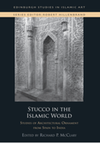
This is the first major book about Islamic stucco, and the central theme is the re-examination of the uses of stucco in architecture across the Islamic world in the pre-modern period.
The book engages with new methodological approaches, including those that go beyond traditional art-historical ones, and works with a wide range of disciplines, including material science and archaeology. It includes numerous sites that have not been previously studied in detail, as well as new approaches to the study of the material, and presents a greater understanding of the use of colour and understanding of materiality.
It includes contributions from a range of leading scholars from around the world working on this ubiquitous, important, but at times ephemeral and still poorly understood, medium in a wide variety of different cultural contexts. There are separate parts for each of the main geographic areas, with each of these sections arranged broadly chronologically. Coverage includes Iran and reaches as far afield as Spain and India.
McClary, Richard P.
Edinburgh University Press
, 2025
; English
; 632 Pages
This is the first major book about Islamic stucco, and the central theme is the re-examination of the uses of stucco in architecture across the Islamic world in the pre-modern period.
The book engages with new methodological approaches, including those that go beyond traditional art-historical ones, and works with a wide range of disciplines, including material science and archaeology. It includes numerous sites that have not been previously studied in detail, as well as new approaches to the study of the material, and presents a greater understanding of the use of colour and understanding of materiality.
It includes contributions from a range of leading scholars from around the world working on this ubiquitous, important, but at times ephemeral and still poorly understood, medium in a wide variety of different cultural contexts. There are separate parts for each of the main geographic areas, with each of these sections arranged broadly chronologically. Coverage includes Iran and reaches as far afield as Spain and India.
eBook
Art against authoritarianism in Southwest Asia and North Africa
Tunali, Tijen; Wessels, Josepha Ivanka
I.B. Tauris
, 2025
; English
; 209 Pages
Over the past decade, there has been a burgeoning interest in the realm of art activism within the Southwest Asia and North Africa region, shedding light on the political implications of aesthetic representation. Nevertheless, a critical inquiry into how political aesthetics can formulate both discernible and imperceptible resistance strategies in response to resurging authoritarianism and counter-revolution after the 2011 uprisings in the region remains conspicuously absent.
This book delves into a comprehensive examination of diverse art forms, ranging from street art and cinema to performance art, as well as music and theatre, scrutinizing the manifestations of aesthetic resilience at the epicentre of the political resistance against oppression and authoritarianism in Sudan, Iran, Egypt, Tunisia, Algeria, Morocco, Lebanon, Yemen and Syria. The editors employ a multifaceted approach to investigate artistic activism, encompassing analysis of visibility, ephemerality, and speech within the public sphere, the establishment and perpetuation of collective transnational solidarities, the portrayal of suppressed identities and narratives, and the innovation of alternative mechanisms for producing and disseminating art.
Tunali, Tijen; Wessels, Josepha Ivanka
I.B. Tauris
, 2025
; English
; 209 Pages
Over the past decade, there has been a burgeoning interest in the realm of art activism within the Southwest Asia and North Africa region, shedding light on the political implications of aesthetic representation. Nevertheless, a critical inquiry into how political aesthetics can formulate both discernible and imperceptible resistance strategies in response to resurging authoritarianism and counter-revolution after the 2011 uprisings in the region remains conspicuously absent.
This book delves into a comprehensive examination of diverse art forms, ranging from street art and cinema to performance art, as well as music and theatre, scrutinizing the manifestations of aesthetic resilience at the epicentre of the political resistance against oppression and authoritarianism in Sudan, Iran, Egypt, Tunisia, Algeria, Morocco, Lebanon, Yemen and Syria. The editors employ a multifaceted approach to investigate artistic activism, encompassing analysis of visibility, ephemerality, and speech within the public sphere, the establishment and perpetuation of collective transnational solidarities, the portrayal of suppressed identities and narratives, and the innovation of alternative mechanisms for producing and disseminating art.
eBook
Ilkhanid capital cities : transcultural interactions
Naiemi, Atri Hatef
Edinburgh University Press
, 2025
; English
; 312 Pages
Studies the interaction between Perso-Islamic sedentary concepts and Mongolian nomadic traditions in the context of Ilkhanid capital cities
- Combines fields as diverse as history, art history, archaeology, religious studies, and comparative literature
- Works with a range of sources, from archaeological and architectural material, to aerial photographs, travel narratives, manuscript miniatures, and chronicles
- Uses primary sources in a multitude of languages including Persian, Arabic, and Chinese, and is based primarily on the works of thirteenth- and fourteenth-century authors writing in Persian
- Discusses several examples of the architectural and urban projects patronized by the Ilkhans in Iran
- Offers extensive evidence drawn from newly excavated archaeological sites in the northwest of Iran
- Illuminates the dialogue established between the Mongol conquerors and the Iranians following the conquest of Iran in the thirteenth century
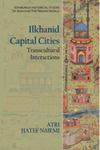
Ilkhanid Capital Cities studies the capital cities founded by the Mongol Ilkhans in Iran during the Ilkhanid period (1256–1335). It primarily focuses on two major cities in the northwest of Iran, Ghazaniyya and Sultaniyya, and examines how the court-sponsored urban projects in these two cities reflected the interactions between Perso-Islamic sedentary concepts and Mongolian nomadic traditions.
Questioning the earlier reductive scholarly framework that positioned the Mongols as uncultured barbarians, this study stresses the active role of the Mongol elite not only as agents, but also cultural donors in the Perso-Mongol cultural zeitgeist of late thirteenth- and early fourteenth-century Iran. It provides a fuller and more convincing picture of the Ilkhanid city, which is characterized by a hybrid quality injected not only into the physical structure of the city, but also into the taste, motivations, and world views of its patrons.
Naiemi, Atri Hatef
Edinburgh University Press
, 2025
; English
; 312 Pages
Studies the interaction between Perso-Islamic sedentary concepts and Mongolian nomadic traditions in the context of Ilkhanid capital cities
- Combines fields as diverse as history, art history, archaeology, religious studies, and comparative literature
- Works with a range of sources, from archaeological and architectural material, to aerial photographs, travel narratives, manuscript miniatures, and chronicles
- Uses primary sources in a multitude of languages including Persian, Arabic, and Chinese, and is based primarily on the works of thirteenth- and fourteenth-century authors writing in Persian
- Discusses several examples of the architectural and urban projects patronized by the Ilkhans in Iran
- Offers extensive evidence drawn from newly excavated archaeological sites in the northwest of Iran
- Illuminates the dialogue established between the Mongol conquerors and the Iranians following the conquest of Iran in the thirteenth century
Ilkhanid Capital Cities studies the capital cities founded by the Mongol Ilkhans in Iran during the Ilkhanid period (1256–1335). It primarily focuses on two major cities in the northwest of Iran, Ghazaniyya and Sultaniyya, and examines how the court-sponsored urban projects in these two cities reflected the interactions between Perso-Islamic sedentary concepts and Mongolian nomadic traditions.
Questioning the earlier reductive scholarly framework that positioned the Mongols as uncultured barbarians, this study stresses the active role of the Mongol elite not only as agents, but also cultural donors in the Perso-Mongol cultural zeitgeist of late thirteenth- and early fourteenth-century Iran. It provides a fuller and more convincing picture of the Ilkhanid city, which is characterized by a hybrid quality injected not only into the physical structure of the city, but also into the taste, motivations, and world views of its patrons.
eBook
Palace gardens in lower Mesopotamia : eighth to eleventh centuries
Mahmoudian, Safa; Hillenbrand, Robert (Series Editor)
Edinburgh University Press
, 2025
; English
; 285 Pages
Provides the first in-depth examination of palace gardens in the Abbasid caliphate’s Lower Mesopotamian heartland
Draws on a wide range of textual sources, including lexicons, geographies, histories, poetry, and science written by authors who lived primarily in Mesopotamia or visited there during the 8th to 11th centuries
Takes an interdisciplinary approach by also considering archaeological reports, aerial photographs, and archival sources like archaeologists’ letters and diaries
Revisits certain prevailing notions concerning the spatial arrangement and function of the adjoining covered spaces
Challenges the prevalent, essentialist view of an ‘Islamic garden’ typology, which presupposes a continuity in garden traditions, and leads to a more nuanced understanding of their forms and functions.
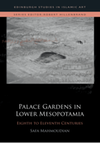
Gardens were both a setting and showcase for nearly every aspect of social and daily life at the royal court during the early Islamic period in Western Asia. Safa Mahmoudian uses a wide range of primary source materials including contemporary Arabic manuscripts, together with archaeological reports, aerial photographs, and archaeologists’ letters and diaries. Through close readings of this evidence, Mahmoudian creates a picture of these gardens in their historical, architectural and environmental contexts and examines various factors that influenced their design and placement. In doing so, Mahmoudian adds to our understanding of these gardens and palaces and, ultimately, early Islamic-period court culture as a whole.
Mahmoudian, Safa; Hillenbrand, Robert (Series Editor)
Edinburgh University Press
, 2025
; English
; 285 Pages
Provides the first in-depth examination of palace gardens in the Abbasid caliphate’s Lower Mesopotamian heartland
Draws on a wide range of textual sources, including lexicons, geographies, histories, poetry, and science written by authors who lived primarily in Mesopotamia or visited there during the 8th to 11th centuries
Takes an interdisciplinary approach by also considering archaeological reports, aerial photographs, and archival sources like archaeologists’ letters and diaries
Revisits certain prevailing notions concerning the spatial arrangement and function of the adjoining covered spaces
Challenges the prevalent, essentialist view of an ‘Islamic garden’ typology, which presupposes a continuity in garden traditions, and leads to a more nuanced understanding of their forms and functions.
Gardens were both a setting and showcase for nearly every aspect of social and daily life at the royal court during the early Islamic period in Western Asia. Safa Mahmoudian uses a wide range of primary source materials including contemporary Arabic manuscripts, together with archaeological reports, aerial photographs, and archaeologists’ letters and diaries. Through close readings of this evidence, Mahmoudian creates a picture of these gardens in their historical, architectural and environmental contexts and examines various factors that influenced their design and placement. In doing so, Mahmoudian adds to our understanding of these gardens and palaces and, ultimately, early Islamic-period court culture as a whole.
eBook
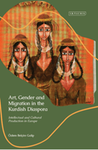
Art, gender and migration in the Kurdish diaspora : intellectual and cultural production in Europe
Galip, Özlem Belçim
I.B. Tauris
, 2024
; English
; 265 Pages
This book focuses on the cultural and intellectual activities of Kurdish migrant women through artistic and aesthetic forms of production in Belgium, France, Germany, Sweden and the UK. Using in-depth interviews with over 40 Kurdish women artists, Ozlem Galip examines how artistic, literary and cultural productions, incorporating the fields of film, theatre and music, are articulated within the structures of nation states, leading to the interrogation of the impact of western and local knowledge, patriarchy, the nation-state and globalisation. Galip also analyses how European policies affect the development of cultural engagement of Kurdish migrant women, and how such engagements help these women to integrate into European society.
Examining the gendered experiences of diaspora from all four regions of Kurdistan
Iraq, Iran, Syria and Turkey, this book challenges ideas about gender, migration and art through the lens of women artistic production with a focus on women-led activism and the changing integration and migration policies of Europe.
eBook
Galip, Özlem Belçim
I.B. Tauris
, 2024
; English
; 265 Pages
This book focuses on the cultural and intellectual activities of Kurdish migrant women through artistic and aesthetic forms of production in Belgium, France, Germany, Sweden and the UK. Using in-depth interviews with over 40 Kurdish women artists, Ozlem Galip examines how artistic, literary and cultural productions, incorporating the fields of film, theatre and music, are articulated within the structures of nation states, leading to the interrogation of the impact of western and local knowledge, patriarchy, the nation-state and globalisation. Galip also analyses how European policies affect the development of cultural engagement of Kurdish migrant women, and how such engagements help these women to integrate into European society.
Examining the gendered experiences of diaspora from all four regions of Kurdistan
Iraq, Iran, Syria and Turkey, this book challenges ideas about gender, migration and art through the lens of women artistic production with a focus on women-led activism and the changing integration and migration policies of Europe.
eBook
Lukonin, Vladimir; Ivanov, Anatoli
Parkstone International
, 2024
; English
; 72 Pages
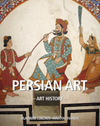
Housed in the Hermitage Museum along with other institutes, libraries, and museums in Russia and the republics of the former Soviet Union are some of the most magnif icent treasures of Persian Art. For the most part, many of these works have been lost, but have been catalogued and published here for the first time with an unsurpassed selection of colour plates. In a comprehensive introduction, Vladimir Loukonine, Director of the Oriental Art section of the Hermitage Museum, and his colleague Anatoli Ivanov have broadly documented the major developments of Persian Art: from the first signs of civilisation on the plains of Iran around the 10th-century BCE through the early 20thcentury. Persian Art demonstrates a common theme which runs through the art of the region over the past three millennia. Despite many religious and political upheavals, Persian Art – whether in its architecture, sculpture, frescoes, miniatures, porcelain, fabrics, or rugs, whether in the work of the humble craftsmen or the high art of court painters – displays the delicate touch and subtle refinement which has had a profound influence on art throughout the world.
eBook
Lukonin, Vladimir; Ivanov, Anatoli
Parkstone International
, 2024
; English
; 72 Pages
Housed in the Hermitage Museum along with other institutes, libraries, and museums in Russia and the republics of the former Soviet Union are some of the most magnif icent treasures of Persian Art. For the most part, many of these works have been lost, but have been catalogued and published here for the first time with an unsurpassed selection of colour plates. In a comprehensive introduction, Vladimir Loukonine, Director of the Oriental Art section of the Hermitage Museum, and his colleague Anatoli Ivanov have broadly documented the major developments of Persian Art: from the first signs of civilisation on the plains of Iran around the 10th-century BCE through the early 20thcentury. Persian Art demonstrates a common theme which runs through the art of the region over the past three millennia. Despite many religious and political upheavals, Persian Art – whether in its architecture, sculpture, frescoes, miniatures, porcelain, fabrics, or rugs, whether in the work of the humble craftsmen or the high art of court painters – displays the delicate touch and subtle refinement which has had a profound influence on art throughout the world.
