



Navigation menu
Search
Databases
All Databases
eBook
Object lessons in American art
Kusserow, Karl; Ballard, Horace D.; Buick, Kirsten Pai; Foutch, Ellery E.; Richmond-Moll, Jeffrey; Zorach, Rebecca; Kusserow, Karl
Princeton University Art Museum
, 2023
; English
; 201 Pages
Object Lessons in American Art explores a diverse gathering of Euro-American, Native American, and African American art from a range of contemporary perspectives, illustrating how innovative analysis of historical art can inform, enhance, and afford new relevance to artifacts of the American past. The book is grounded in the understanding that the meanings of objects change over time, in different contexts, and as a consequence of the ways in which they are considered. Inspired by the concept of the object lesson, the study of a material thing or group of things in juxtaposition to convey embodied and underlying ideas, Object Lessons in American Art examines a broad range of art from Princeton University’s venerable collections as well as contemporary works that imaginatively appropriate and reframe their subjects and style, situating them within current social, cultural, and artistic debates on race, gender, the environment, and more.
Kusserow, Karl; Ballard, Horace D.; Buick, Kirsten Pai; Foutch, Ellery E.; Richmond-Moll, Jeffrey; Zorach, Rebecca; Kusserow, Karl
Princeton University Art Museum
, 2023
; English
; 201 Pages
Object Lessons in American Art explores a diverse gathering of Euro-American, Native American, and African American art from a range of contemporary perspectives, illustrating how innovative analysis of historical art can inform, enhance, and afford new relevance to artifacts of the American past. The book is grounded in the understanding that the meanings of objects change over time, in different contexts, and as a consequence of the ways in which they are considered. Inspired by the concept of the object lesson, the study of a material thing or group of things in juxtaposition to convey embodied and underlying ideas, Object Lessons in American Art examines a broad range of art from Princeton University’s venerable collections as well as contemporary works that imaginatively appropriate and reframe their subjects and style, situating them within current social, cultural, and artistic debates on race, gender, the environment, and more.
eBook
Art, observation, and an anthropology of illustration
Carocci, Max; Pratt, Stephanie
Bloomsbury Visual Arts
, 2022
; English
; 262 Pages
Art, Observation, and an Anthropology of Illustration examines the role of sketches, drawings and other artworks in our understanding of human cultures of the past.
Bringing together art historians and anthropologists, it presents a selection of detailed case studies of various bodies of work produced by non-Western and Western artists from different world regions and from different time periods (from Native North America, Cameroon, and Nepal, to Italy, Solomon Islands, and Mexico) to explore the contemporary relevance and challenges implicit in artistic renditions of past peoples and places.
In an age when identities are partially constructed on the basis of existing visual records, the book asks important questions about the nature of observation and the inclusion of culturally-relevant information in artistic representations. How reliable are watercolours, paintings, or sketches for the understanding of past ways of life? How do old images of bygone peoples relate to art historical and anthropological canons? How have these images and technologies of representation been used to describe, illustrate, or explain unknown realities?
The book is an essential tool for art historians, anthropologists, and anyone who wants to understand how the observation of different realities has impacted upon the production of art and visual cultures. Incorporating current methodological and theoretical tools, the 10 chapters collected here expand the area of connection between the disciplines of art history and anthropology, bringing into sharp focus the multiple intersections of objectivity, evidence, and artistic licence.
Carocci, Max; Pratt, Stephanie
Bloomsbury Visual Arts
, 2022
; English
; 262 Pages
Art, Observation, and an Anthropology of Illustration examines the role of sketches, drawings and other artworks in our understanding of human cultures of the past.
Bringing together art historians and anthropologists, it presents a selection of detailed case studies of various bodies of work produced by non-Western and Western artists from different world regions and from different time periods (from Native North America, Cameroon, and Nepal, to Italy, Solomon Islands, and Mexico) to explore the contemporary relevance and challenges implicit in artistic renditions of past peoples and places.
In an age when identities are partially constructed on the basis of existing visual records, the book asks important questions about the nature of observation and the inclusion of culturally-relevant information in artistic representations. How reliable are watercolours, paintings, or sketches for the understanding of past ways of life? How do old images of bygone peoples relate to art historical and anthropological canons? How have these images and technologies of representation been used to describe, illustrate, or explain unknown realities?
The book is an essential tool for art historians, anthropologists, and anyone who wants to understand how the observation of different realities has impacted upon the production of art and visual cultures. Incorporating current methodological and theoretical tools, the 10 chapters collected here expand the area of connection between the disciplines of art history and anthropology, bringing into sharp focus the multiple intersections of objectivity, evidence, and artistic licence.
eBook
The art of ceremony : voices of renewal from Indigenous Oregon
Dobkins, Rebecca J.
University of Washington Press
, 2022
; English
; 290 Pages
Celebrates Indigenous renewal through ceremony, understanding the impact of the past and the possibilities for the future The practice of ceremony offers ways to build relationships between the land and its beings, reflecting change while drawing upon deep relationships going back millennia. Ceremony may involve intricate and spectacular regalia but may also involve simple tools, such as a plastic bucket for harvesting huckleberries or a river rock that holds heat for sweat. The Art of Ceremony provides a contemporary and historical overview of the nine federally recognized tribes in Oregon, through rich conversations with tribal representatives who convey their commitments to ceremonial practices and the inseparable need to renew language, art, ecological systems, kinship relations, and political and legal sovereignty. Vivid photographs illuminate the ties between land and people at the heart of such practice, and each chapter features specific ceremonies chosen by tribal co-collaborators, such as the Siletz Nee Dosh (Feather Dance), the huckleberry gathering of the Cow Creek Umpqua, and the Klamath Return of C'waam (sucker fish) Ceremony. Part of a larger global story of Indigenous rights and cultural resurgence in the twenty-first century, The Art of Ceremony celebrates the power of Indigenous renewal, sustainable connection to the land, and the ethics of responsibility and reciprocity between the earth and all its inhabitants.
Dobkins, Rebecca J.
University of Washington Press
, 2022
; English
; 290 Pages
Celebrates Indigenous renewal through ceremony, understanding the impact of the past and the possibilities for the future The practice of ceremony offers ways to build relationships between the land and its beings, reflecting change while drawing upon deep relationships going back millennia. Ceremony may involve intricate and spectacular regalia but may also involve simple tools, such as a plastic bucket for harvesting huckleberries or a river rock that holds heat for sweat. The Art of Ceremony provides a contemporary and historical overview of the nine federally recognized tribes in Oregon, through rich conversations with tribal representatives who convey their commitments to ceremonial practices and the inseparable need to renew language, art, ecological systems, kinship relations, and political and legal sovereignty. Vivid photographs illuminate the ties between land and people at the heart of such practice, and each chapter features specific ceremonies chosen by tribal co-collaborators, such as the Siletz Nee Dosh (Feather Dance), the huckleberry gathering of the Cow Creek Umpqua, and the Klamath Return of C'waam (sucker fish) Ceremony. Part of a larger global story of Indigenous rights and cultural resurgence in the twenty-first century, The Art of Ceremony celebrates the power of Indigenous renewal, sustainable connection to the land, and the ethics of responsibility and reciprocity between the earth and all its inhabitants.
eBook
Painful beauty : Tlingit women, beadwork, and the art of resilience
Smetzer, Megan A.
University of Washington Press
, 2021
; English
; 238 Pages
"For over 150 years, Tlingit women artists have beaded colorful, intricately beautiful designs on moccasins, dolls, octopus bags, tunics, and other garments. Painful Beauty suggests that at a time when Indigenous cultural practices were actively being repressed, beading supported cultural continuity, demonstrating Tlingit women's resilience, strength, and power. Beadwork served many uses, from the ceremonial to the economic, as women created beaded pieces for community use and to sell to tourists. Like other Tlingit art, beadwork reflects rich artistic visions with deep connections to the environment, clan histories, and Tlingit worldviews. Contemporary Tlingit artists Alison Bremner, Chloe French, Shgen Doo Tan George, Lily Hudson Hope, Tanis S'eiltin, and Larry McNeil foreground the significance of historical beading practices in their diverse, boundary-pushing artworks. Working with museum collection materials, photographs, archives, and interviews with artists and elders, Megan Smetzer reframes this often overlooked artform as a site of historical negotiations and contemporary inspirations. She shows how beading gave Tlingit women the freedom to innovate aesthetically, assert their clan crests and identities, support tribal sovereignty, and pass on cultural knowledge. Painful Beauty is the first dedicated study of Tlingit beadwork and contributes to the expanding literature addressing women's artistic expressions on the Northwest Coast"
Smetzer, Megan A.
University of Washington Press
, 2021
; English
; 238 Pages
"For over 150 years, Tlingit women artists have beaded colorful, intricately beautiful designs on moccasins, dolls, octopus bags, tunics, and other garments. Painful Beauty suggests that at a time when Indigenous cultural practices were actively being repressed, beading supported cultural continuity, demonstrating Tlingit women's resilience, strength, and power. Beadwork served many uses, from the ceremonial to the economic, as women created beaded pieces for community use and to sell to tourists. Like other Tlingit art, beadwork reflects rich artistic visions with deep connections to the environment, clan histories, and Tlingit worldviews. Contemporary Tlingit artists Alison Bremner, Chloe French, Shgen Doo Tan George, Lily Hudson Hope, Tanis S'eiltin, and Larry McNeil foreground the significance of historical beading practices in their diverse, boundary-pushing artworks. Working with museum collection materials, photographs, archives, and interviews with artists and elders, Megan Smetzer reframes this often overlooked artform as a site of historical negotiations and contemporary inspirations. She shows how beading gave Tlingit women the freedom to innovate aesthetically, assert their clan crests and identities, support tribal sovereignty, and pass on cultural knowledge. Painful Beauty is the first dedicated study of Tlingit beadwork and contributes to the expanding literature addressing women's artistic expressions on the Northwest Coast"
eBook
Unsettling Native art histories on the Northwest coast
Bunn-Marcuse, Kathryn; Jonaitis, Aldona
University of Washington Press
, 2020
; English
; 344 Pages
Inseparable from its communities, Northwest Coast art functions aesthetically and performatively beyond the scope of non-Indigenous scholarship, from demonstrating kinship connections to manifesting spiritual power. Contributors to this volume foreground Indigenous understandings in recognition of this rich context and its historical erasure within the discipline of art history.
By centering voices that uphold Indigenous priorities, integrating the expertise of Indigenous knowledge holders about their artistic heritage, and questioning current institutional practices, these new essays “unsettle” Northwest Coast art studies. Key themes include discussions of cultural heritage protections and Native sovereignty; re-centering women and their critical role in transmitting cultural knowledge; reflecting on decolonization work in museums; and examining how artworks function as living documents. The volume exemplifies respectful and relational engagement with Indigenous art and advocates for more accountable scholarship and practices.
Bunn-Marcuse, Kathryn; Jonaitis, Aldona
University of Washington Press
, 2020
; English
; 344 Pages
Inseparable from its communities, Northwest Coast art functions aesthetically and performatively beyond the scope of non-Indigenous scholarship, from demonstrating kinship connections to manifesting spiritual power. Contributors to this volume foreground Indigenous understandings in recognition of this rich context and its historical erasure within the discipline of art history.
By centering voices that uphold Indigenous priorities, integrating the expertise of Indigenous knowledge holders about their artistic heritage, and questioning current institutional practices, these new essays “unsettle” Northwest Coast art studies. Key themes include discussions of cultural heritage protections and Native sovereignty; re-centering women and their critical role in transmitting cultural knowledge; reflecting on decolonization work in museums; and examining how artworks function as living documents. The volume exemplifies respectful and relational engagement with Indigenous art and advocates for more accountable scholarship and practices.
eBook
Becoming Mary Sully : toward an American Indian abstract
Deloria, Philip J.
University of Washington Press
, 2019
; English
; 338 Pages
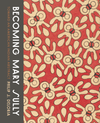
Dakota Sioux artist Mary Sully was the great-granddaughter of respected nineteenth-century portraitist Thomas Sully, who captured the personalities of America’s first generation of celebrities (including the figure of Andrew Jackson immortalized on the twenty-dollar bill). Born on the Standing Rock reservation in South Dakota in 1896, she was largely self-taught. Steeped in the visual traditions of beadwork, quilling, and hide painting, she also engaged with the experiments in time, space, symbolism, and representation characteristic of early twentieth-century modernist art. And like her great-grandfather Sully was fascinated by celebrity: over two decades, she produced hundreds of colorful and dynamic abstract triptychs, a series of “personality prints” of American public figures like Amelia Earhart, Babe Ruth, and Gertrude Stein.
Sully’s position on the margins of the art world meant that her work was exhibited only a handful of times during her life. In Becoming Mary Sully, Philip J. Deloria reclaims that work from obscurity, exploring her stunning portfolio through the lenses of modernism, industrial design, Dakota women’s aesthetics, mental health, ethnography and anthropology, primitivism, and the American Indian politics of the 1930s. Working in a complex territory oscillating between representation, symbolism, and abstraction, Sully evoked multiple and simultaneous perspectives of time and space. With an intimate yet sweeping style, Deloria recovers in Sully’s work a move toward an anti-colonial aesthetic that claimed a critical role for Indigenous women in American Indian futures—within and distinct from American modernity and modernism.
Deloria, Philip J.
University of Washington Press
, 2019
; English
; 338 Pages
Dakota Sioux artist Mary Sully was the great-granddaughter of respected nineteenth-century portraitist Thomas Sully, who captured the personalities of America’s first generation of celebrities (including the figure of Andrew Jackson immortalized on the twenty-dollar bill). Born on the Standing Rock reservation in South Dakota in 1896, she was largely self-taught. Steeped in the visual traditions of beadwork, quilling, and hide painting, she also engaged with the experiments in time, space, symbolism, and representation characteristic of early twentieth-century modernist art. And like her great-grandfather Sully was fascinated by celebrity: over two decades, she produced hundreds of colorful and dynamic abstract triptychs, a series of “personality prints” of American public figures like Amelia Earhart, Babe Ruth, and Gertrude Stein.
Sully’s position on the margins of the art world meant that her work was exhibited only a handful of times during her life. In Becoming Mary Sully, Philip J. Deloria reclaims that work from obscurity, exploring her stunning portfolio through the lenses of modernism, industrial design, Dakota women’s aesthetics, mental health, ethnography and anthropology, primitivism, and the American Indian politics of the 1930s. Working in a complex territory oscillating between representation, symbolism, and abstraction, Sully evoked multiple and simultaneous perspectives of time and space. With an intimate yet sweeping style, Deloria recovers in Sully’s work a move toward an anti-colonial aesthetic that claimed a critical role for Indigenous women in American Indian futures—within and distinct from American modernity and modernism.
eBook
Shifting grounds : landscape in contemporary native American art
Morris, Kate
University of Washington Press
, 2019
; English
; 210 Pages
A distinctly Indigenous form of landscape representation is emerging in the creations of contemporary Indigenous artists from North America. For centuries, landscape painting in European art typically used representational strategies such as single-point perspective to lure viewers—and settlers—into the territories of the old and new worlds. In the twentieth century, abstract expressionism transformed painting to encompass something beyond the visual world, and later, minimalism and the Land Art movement broadened the genre of landscape art to include sculptural forms and site-specific installations.
In Shifting Grounds, art historian Kate Morris argues that Indigenous artists are expanding, reconceptualizing, and remaking the forms of the genre still further, expressing Indigenous attitudes toward land and belonging even as they draw upon mainstream art practices. The resulting works are rarely if ever primarily visual representations, but instead evoke all five senses: from the overt sensuality of Kay WalkingStick’s tactile paintings to the eerie soundscapes of Alan Michelson’s videos and Postcommodity’s installations to the immersive environments of Kent Monkman’s dioramas, this landscape art resonates with a fully embodied and embedded subjectivity.
In the works of these and many other Native artists, Shifting Grounds explores themes of presence and absence, connection and dislocation, survival and vulnerability, memory and commemoration, and power and resistance, illuminating the artists’ sustained engagement not only with land and landscape but also with the history of representation itself.
Morris, Kate
University of Washington Press
, 2019
; English
; 210 Pages
A distinctly Indigenous form of landscape representation is emerging in the creations of contemporary Indigenous artists from North America. For centuries, landscape painting in European art typically used representational strategies such as single-point perspective to lure viewers—and settlers—into the territories of the old and new worlds. In the twentieth century, abstract expressionism transformed painting to encompass something beyond the visual world, and later, minimalism and the Land Art movement broadened the genre of landscape art to include sculptural forms and site-specific installations.
In Shifting Grounds, art historian Kate Morris argues that Indigenous artists are expanding, reconceptualizing, and remaking the forms of the genre still further, expressing Indigenous attitudes toward land and belonging even as they draw upon mainstream art practices. The resulting works are rarely if ever primarily visual representations, but instead evoke all five senses: from the overt sensuality of Kay WalkingStick’s tactile paintings to the eerie soundscapes of Alan Michelson’s videos and Postcommodity’s installations to the immersive environments of Kent Monkman’s dioramas, this landscape art resonates with a fully embodied and embedded subjectivity.
In the works of these and many other Native artists, Shifting Grounds explores themes of presence and absence, connection and dislocation, survival and vulnerability, memory and commemoration, and power and resistance, illuminating the artists’ sustained engagement not only with land and landscape but also with the history of representation itself.
eBook
Proud raven, panting wolf : carving Alaska's new deal totem parks
Moore, Emily L.
University of Washington Press
, 2018
; English
; 286 Pages
Among Southeast Alaska�s best-known tourist attractions are its totem parks, showcases for monumental wood sculptures by Tlingit and Haida artists. Although the art form is centuries old, the parks date back only to the waning years of the Great Depression, when the US government reversed its policy of suppressing Native practices and began to pay Tlingit and Haida communities to restore older totem poles and move them from ancestral villages into parks designed for tourists.
Dramatically altering the patronage and display of historic Tlingit and Haida crests, this New Deal restoration project had two key aims: to provide economic aid to Native people during the Depression and to recast their traditional art as part of America�s heritage. Less evident is why Haida and Tlingit people agreed to lend their crest monuments to tourist attractions at a time when they were battling the US Forest Service for control of their traditional lands and resources. Drawing on interviews and government records, as well as the totem poles themselves, Emily Moore shows how Tlingit and Haida leaders were able to channel the New Deal promotion of Native art as national art into an assertion of their cultural and political rights. Just as they had for centuries, the poles affirmed the ancestral ties of Haida and Tlingit lineages to their lands.
Moore, Emily L.
University of Washington Press
, 2018
; English
; 286 Pages
Among Southeast Alaska�s best-known tourist attractions are its totem parks, showcases for monumental wood sculptures by Tlingit and Haida artists. Although the art form is centuries old, the parks date back only to the waning years of the Great Depression, when the US government reversed its policy of suppressing Native practices and began to pay Tlingit and Haida communities to restore older totem poles and move them from ancestral villages into parks designed for tourists.
Dramatically altering the patronage and display of historic Tlingit and Haida crests, this New Deal restoration project had two key aims: to provide economic aid to Native people during the Depression and to recast their traditional art as part of America�s heritage. Less evident is why Haida and Tlingit people agreed to lend their crest monuments to tourist attractions at a time when they were battling the US Forest Service for control of their traditional lands and resources. Drawing on interviews and government records, as well as the totem poles themselves, Emily Moore shows how Tlingit and Haida leaders were able to channel the New Deal promotion of Native art as national art into an assertion of their cultural and political rights. Just as they had for centuries, the poles affirmed the ancestral ties of Haida and Tlingit lineages to their lands.
eBook
Northwest Coast Indian art : an analysis of form, 50th anniversary edition
Holm, Bill
University of Washington Press
, 2017
; English
; 145 Pages
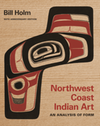
The 50th anniversary edition of this classic work on the art of Northwest Coast Indians now offers color illustrations for a new generation of readers along with reflections from contemporary Northwest Coast artists about the impact of this book. The masterworks of Northwest Coast Native artists are admired today as among the great achievements of the world's artists. The painted and carved wooden screens, chests and boxes, rattles, crest hats, and other artworks display the complex and sophisticated northern Northwest Coast style of art that is the visual language used to illustrate inherited crests and tell family stories. In the 1950s Bill Holm, a graduate student of Dr. Erna Gunther, former Director of the Burke Museum, began a systematic study of northern Northwest Coast art. In 1965, after studying hundreds of bentwood boxes and chests, he published Northwest Coast Indian Art: An Analysis of Form. This book is a foundational reference on northern Northwest Coast Native art. Through his careful studies, Bill Holm described this visual language using new terminology that has become part of the established vocabulary that allows us to talk about works like these and understand changes in style both through time and between individual artists' styles. Holm examines how these pieces, although varied in origin, material, size, and purpose, are related to a surprising degree in the organization and form of their two-dimensional surface decoration. The author presents an incisive analysis of the use of color, line, and texture, the organization of space, and such typical forms as ovoids, eyelids, U forms, and hands and feet. The evidence upon which he bases his conclusions constitutes a repository of valuable information for all succeeding researchers in the field.
Holm, Bill
University of Washington Press
, 2017
; English
; 145 Pages
The 50th anniversary edition of this classic work on the art of Northwest Coast Indians now offers color illustrations for a new generation of readers along with reflections from contemporary Northwest Coast artists about the impact of this book. The masterworks of Northwest Coast Native artists are admired today as among the great achievements of the world's artists. The painted and carved wooden screens, chests and boxes, rattles, crest hats, and other artworks display the complex and sophisticated northern Northwest Coast style of art that is the visual language used to illustrate inherited crests and tell family stories. In the 1950s Bill Holm, a graduate student of Dr. Erna Gunther, former Director of the Burke Museum, began a systematic study of northern Northwest Coast art. In 1965, after studying hundreds of bentwood boxes and chests, he published Northwest Coast Indian Art: An Analysis of Form. This book is a foundational reference on northern Northwest Coast Native art. Through his careful studies, Bill Holm described this visual language using new terminology that has become part of the established vocabulary that allows us to talk about works like these and understand changes in style both through time and between individual artists' styles. Holm examines how these pieces, although varied in origin, material, size, and purpose, are related to a surprising degree in the organization and form of their two-dimensional surface decoration. The author presents an incisive analysis of the use of color, line, and texture, the organization of space, and such typical forms as ovoids, eyelids, U forms, and hands and feet. The evidence upon which he bases his conclusions constitutes a repository of valuable information for all succeeding researchers in the field.
eBook
Miskwabik, metal of ritual: metallurgy in precontact Eastern North America
Trevelyan, Amelia M.
The University Press of Kentucky
, 2014
; English
; 358 Pages
Miskwabik, Metal of Ritual examines the thousands of beautiful and intricate ritual works of art—from ceremonial weaponry to delicate copper pendants and ear ornaments—created in eastern North America before the arrival of Europeans. The first comprehensive examination of this 3,000-year-old metallurgical tradition, the book provides unique insight into the motivation of the artisans and the significance of these objects, and highlights the brilliance and sophistication of the early civilizations of the Americas.Comparing the ritual architecture and metallurgy of the original Americans with the ethnological record, Amelia M. Trevelyan begins to unravel the mystery of the significance of the objects as well as their special functions within the societies that created them. The book includes dozens of striking color and black and white photographs.
Trevelyan, Amelia M.
The University Press of Kentucky
, 2014
; English
; 358 Pages
Miskwabik, Metal of Ritual examines the thousands of beautiful and intricate ritual works of art—from ceremonial weaponry to delicate copper pendants and ear ornaments—created in eastern North America before the arrival of Europeans. The first comprehensive examination of this 3,000-year-old metallurgical tradition, the book provides unique insight into the motivation of the artisans and the significance of these objects, and highlights the brilliance and sophistication of the early civilizations of the Americas.Comparing the ritual architecture and metallurgy of the original Americans with the ethnological record, Amelia M. Trevelyan begins to unravel the mystery of the significance of the objects as well as their special functions within the societies that created them. The book includes dozens of striking color and black and white photographs.
