
Navigation menu
Search
Databases
All Databases
eBook
The art of Indian Asia its mythology and transformations, volume two: plates
Zimmer, Heinrich; Elisofon, Eliot (WIIH PHOTOGRAPHS BY); Campbell, Joseph (COMPLETED AND EDITED BY)
Princeton University Press
, 2026
; English
; 655 Pages
he Art of Indian Asia is a unique work of scholarship and photography in two volumes (each sold separately). This is the second volume, which contains the photographic illustrations; the first volume contains the text. Together, the two volumes present a comprehensive view of Indian art, spanning from 3,000 BC to the twentieth century and an area from Afghanistan to Bali. The volume of text combined with the volume of photographs form an “imaginary temple” that conveys the spiritual messages of Hinduism, Buddhism, and Jainism.
It is recommended that readers buy both volumes of The Art of Indian Asia because together they form an integrated work—Volume 1 containing only the text and Volume 2 containing only the photographs.
Zimmer, Heinrich; Elisofon, Eliot (WIIH PHOTOGRAPHS BY); Campbell, Joseph (COMPLETED AND EDITED BY)
Princeton University Press
, 2026
; English
; 655 Pages
he Art of Indian Asia is a unique work of scholarship and photography in two volumes (each sold separately). This is the second volume, which contains the photographic illustrations; the first volume contains the text. Together, the two volumes present a comprehensive view of Indian art, spanning from 3,000 BC to the twentieth century and an area from Afghanistan to Bali. The volume of text combined with the volume of photographs form an “imaginary temple” that conveys the spiritual messages of Hinduism, Buddhism, and Jainism.
It is recommended that readers buy both volumes of The Art of Indian Asia because together they form an integrated work—Volume 1 containing only the text and Volume 2 containing only the photographs.
eBook
The art of Indian Asia its mythology and transformations, volume one: text
Zimmer, Heinrich; Elisofon, Eliot (WITH PHOTOGRAPHS BY); Campbell, Joseph (COMPLETED AND EDITED BY)
Princeton University Press
, 2026
; English
; 540 Pages
The Art of Indian Asia is a unique work of scholarship and photography in two volumes (each sold separately). This is the first volume, which contains the text
the second volume contains the photographic illustrations. Together, the two volumes present a comprehensive view of Indian art, spanning from 3,000 BC to the twentieth century and an area from Afghanistan to Bali. The volume of text combined with the volume of photographs form an “imaginary temple” that conveys the spiritual messages of Hinduism, Buddhism, and Jainism.
It is recommended that readers buy both volumes of The Art of Indian Asia because together they form an integrated work—Volume 1 containing only the text and Volume 2 containing only the photographs.
Zimmer, Heinrich; Elisofon, Eliot (WITH PHOTOGRAPHS BY); Campbell, Joseph (COMPLETED AND EDITED BY)
Princeton University Press
, 2026
; English
; 540 Pages
The Art of Indian Asia is a unique work of scholarship and photography in two volumes (each sold separately). This is the first volume, which contains the text
the second volume contains the photographic illustrations. Together, the two volumes present a comprehensive view of Indian art, spanning from 3,000 BC to the twentieth century and an area from Afghanistan to Bali. The volume of text combined with the volume of photographs form an “imaginary temple” that conveys the spiritual messages of Hinduism, Buddhism, and Jainism.
It is recommended that readers buy both volumes of The Art of Indian Asia because together they form an integrated work—Volume 1 containing only the text and Volume 2 containing only the photographs.
eBook
The archetypal world of Henry Moore
Neumann, Erich; Hull, R. F. C. (Translated from the German by)
Princeton University Press
, 2026
; English
; 213 Pages
Henry Moore (1898–1986) was an artist and sculptor renowned for his monumental semiabstract bronzes, many of them suggestive of the female form. The Archetypal World of Henry Moore is Erich Neumann’s thought-provoking analysis of Moore’s extraordinary work from the perspective of analytical psychology. In this landmark book, Neumann, one of the twentieth century’s most brilliant psychologists and a student of C. G. Jung, clarifies and enriches our understanding of the sculptor’s themes of mother and child and the reclining figure, demonstrating how both are supreme expressions of the archetypal feminine.
Neumann, Erich; Hull, R. F. C. (Translated from the German by)
Princeton University Press
, 2026
; English
; 213 Pages
Henry Moore (1898–1986) was an artist and sculptor renowned for his monumental semiabstract bronzes, many of them suggestive of the female form. The Archetypal World of Henry Moore is Erich Neumann’s thought-provoking analysis of Moore’s extraordinary work from the perspective of analytical psychology. In this landmark book, Neumann, one of the twentieth century’s most brilliant psychologists and a student of C. G. Jung, clarifies and enriches our understanding of the sculptor’s themes of mother and child and the reclining figure, demonstrating how both are supreme expressions of the archetypal feminine.
eBook
Invisible hands : fabrication, forgery, and the art of Islamic ceramics
Graves, Margaret S.
Princeton University Press
, 2026
; English
; 341 Pages
The remarkable history of forged and fabricated Islamic ceramics, their makers, and their unique role in colonial trade
In the heyday of Islamic art collecting around the turn of the twentieth century, thousands of premodern ceramic objects circulated on the international antiquities market. Invisible Hands tells the story of how traditional craft skills of the Islamic world, often thought to have died out with the advent of industrialization, were redirected toward a thriving new market in the colonial era: the fabrication and fictionalizing of antiquities, especially ceramics.
In this stunning work of art history, Margaret Graves shakes the foundations of the discipline, challenging us to reconsider what is and is not art. She traces how sophisticated fabrications—as modern as they were believed to be medieval—moved within an international network of diggers, dealers, and collectors who took advantage of a largely unregulated marketplace to exchange and amass objects that were fabulous in every sense of the word. She looks at canonical artworks as well as many previously unpublished and rarely seen objects, shedding light on the astonishingly varied ways Islamic ceramics were altered and remade by highly skilled craftspeople to meet the demands of Western collectors. Shifting away from the moralizing stance of past studies on reconstructed Islamic ceramics, Graves shows how fabrication and forgery became a major site of participation in modern global capitalism and establishes an entirely new paradigm in the history of art.
Drawing on a substantive new body of provenance research, archaeology, economic history, and laboratory analysis, Invisible Hands centers previously marginalized objects, reframing the practices of fabrication and forgery as crucial forms of invention and artistic skill worthy of study and admiration.
Graves, Margaret S.
Princeton University Press
, 2026
; English
; 341 Pages
The remarkable history of forged and fabricated Islamic ceramics, their makers, and their unique role in colonial trade
In the heyday of Islamic art collecting around the turn of the twentieth century, thousands of premodern ceramic objects circulated on the international antiquities market. Invisible Hands tells the story of how traditional craft skills of the Islamic world, often thought to have died out with the advent of industrialization, were redirected toward a thriving new market in the colonial era: the fabrication and fictionalizing of antiquities, especially ceramics.
In this stunning work of art history, Margaret Graves shakes the foundations of the discipline, challenging us to reconsider what is and is not art. She traces how sophisticated fabrications—as modern as they were believed to be medieval—moved within an international network of diggers, dealers, and collectors who took advantage of a largely unregulated marketplace to exchange and amass objects that were fabulous in every sense of the word. She looks at canonical artworks as well as many previously unpublished and rarely seen objects, shedding light on the astonishingly varied ways Islamic ceramics were altered and remade by highly skilled craftspeople to meet the demands of Western collectors. Shifting away from the moralizing stance of past studies on reconstructed Islamic ceramics, Graves shows how fabrication and forgery became a major site of participation in modern global capitalism and establishes an entirely new paradigm in the history of art.
Drawing on a substantive new body of provenance research, archaeology, economic history, and laboratory analysis, Invisible Hands centers previously marginalized objects, reframing the practices of fabrication and forgery as crucial forms of invention and artistic skill worthy of study and admiration.
eBook
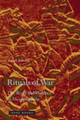
Rituals of War : the body and violence in Mesopotamia
Bahrani, Zainab
Zone Books
, 2025
; English
; 279 Pages
Rituals of war and images of violence in Mesopotamia ca. 3000-500 BCE examined as "magical technologies of warfare."Rituals of War is an investigation into the earliest historical records of violence and biopolitics.
In Mesopotamia, ancient (ca. 3000-500 BCE) Iraqi rituals of war and images of violence constituted part of the magical technologies of warfare that formed the underlying irrational processes of war.
In Rituals of War, Zainab Bahrani weaves together three lines of inquiry into one historical domain of violence: war, the body, and representation.
Building on Foucault's argument in Discipline and Punish that the art of punishing must rest on a whole technology of representation, Bahrani investigates the ancient Mesopotamian record to reveal how that culture relied on the portrayal of violence and control as part of the mechanics of warfare.
Moreover, she takes up the more recent arguments of Giorgio Agamben on sovereign power and biopolitics to focus on the relationship of power, the body, and violence in Assyro-Babylonian texts and monuments of war.
Bahrani analyzes facets of war and sovereign power that fall under the categories of representation and display, the aesthetic, the ritualistic, and the supernatural.
Besides the invention of the public monument of war and the rituals of iconoclasm, destruction, and relocation of monuments in war, she investigates formulations of power through the body, narrative displays in battle, the reading of omens before the battle, and historical divination through the body and body parts.
Bahrani describes these as the magical technologies of war, the realm of the irrational that enables the ideologies of just war in the distant past as today.
Bahrani, Zainab
Zone Books
, 2025
; English
; 279 Pages
Rituals of war and images of violence in Mesopotamia ca. 3000-500 BCE examined as "magical technologies of warfare."Rituals of War is an investigation into the earliest historical records of violence and biopolitics.
In Mesopotamia, ancient (ca. 3000-500 BCE) Iraqi rituals of war and images of violence constituted part of the magical technologies of warfare that formed the underlying irrational processes of war.
In Rituals of War, Zainab Bahrani weaves together three lines of inquiry into one historical domain of violence: war, the body, and representation.
Building on Foucault's argument in Discipline and Punish that the art of punishing must rest on a whole technology of representation, Bahrani investigates the ancient Mesopotamian record to reveal how that culture relied on the portrayal of violence and control as part of the mechanics of warfare.
Moreover, she takes up the more recent arguments of Giorgio Agamben on sovereign power and biopolitics to focus on the relationship of power, the body, and violence in Assyro-Babylonian texts and monuments of war.
Bahrani analyzes facets of war and sovereign power that fall under the categories of representation and display, the aesthetic, the ritualistic, and the supernatural.
Besides the invention of the public monument of war and the rituals of iconoclasm, destruction, and relocation of monuments in war, she investigates formulations of power through the body, narrative displays in battle, the reading of omens before the battle, and historical divination through the body and body parts.
Bahrani describes these as the magical technologies of war, the realm of the irrational that enables the ideologies of just war in the distant past as today.
eBook
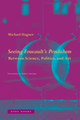
Seeing Foucault's Pendulum : between science, politics, and art
Hagner, Michael; Savage, Robert
Zone Books
, 2025
; English
; 337 Pages
In 1851, the physicist Léon Foucault performed an unforgettable experiment. By suspending a large pendulum inside the dome of Paris’ Pantheon, Foucault provided the first simple, direct empirical evidence of the Earth’s rotation—an undeniable demonstration of heliocentrism. This experiment, conducted long after the Copernican Revolution and using a laboratory apparatus rather than astronomical observation, visually confirmed what had previously been accepted as theory. The pendulum’s motion clearly illustrated the Earth’s rotation. But Foucault’s experiment did not end there. It sparked a range of subsequent reenactments and interpretations, each adding new layers to its meaning. Repeated over and again, its afterlives were many as were its ramifications.
Historian Michael Hagner revisits this epoch-making experiment and its reception from the nineteenth century to the present day and follows how cosmological questions conjoined political and aesthetic judgments about the public staging and history of science. The pendulum experiment, Hagner argues, is more than just a mere scientific demonstration. It contains within it the histories of technological innovation, ideological conflicts, and the rise of popular culture and visual media. In a series of insightful studies of literary, artistic, and scientific reenactments, Hagner uses both words and images to narrate the rich and complex legacy of this experiment.
Seeing Foucault’s Pendulum includes among other fascinating tales, a short but stunning history of the Copernican Revolution, the paradigm-shifting work of the nineteenth-century astronomer Camille Flammarion, and the reenactments of Foucault’s experiment at the Smithsonian Institution and New York’s United Nations building. Linking nature to culture and calling for world unity, the experiment’s legacy extends beyond science. It has been reimagined in Umberto Eco’s novel Foucault’s Pendulum and in Gerhard Richter’s 2018 installation, enchantments of the postmodern world theater where the relationship between knowledge and sensory experience is problematized anew. A complex symbol in the history of ideas—challenging our assumptions, inspiring artistic expression, and prompting philosophical reflection on our place in the cosmos—Foucault’s experiment serves as a powerful reminder that both the Earth and the universe should never be reduced to a disposable mass of human hubris and of irresponsible manipulation.
Hagner, Michael; Savage, Robert
Zone Books
, 2025
; English
; 337 Pages
In 1851, the physicist Léon Foucault performed an unforgettable experiment. By suspending a large pendulum inside the dome of Paris’ Pantheon, Foucault provided the first simple, direct empirical evidence of the Earth’s rotation—an undeniable demonstration of heliocentrism. This experiment, conducted long after the Copernican Revolution and using a laboratory apparatus rather than astronomical observation, visually confirmed what had previously been accepted as theory. The pendulum’s motion clearly illustrated the Earth’s rotation. But Foucault’s experiment did not end there. It sparked a range of subsequent reenactments and interpretations, each adding new layers to its meaning. Repeated over and again, its afterlives were many as were its ramifications.
Historian Michael Hagner revisits this epoch-making experiment and its reception from the nineteenth century to the present day and follows how cosmological questions conjoined political and aesthetic judgments about the public staging and history of science. The pendulum experiment, Hagner argues, is more than just a mere scientific demonstration. It contains within it the histories of technological innovation, ideological conflicts, and the rise of popular culture and visual media. In a series of insightful studies of literary, artistic, and scientific reenactments, Hagner uses both words and images to narrate the rich and complex legacy of this experiment.
Seeing Foucault’s Pendulum includes among other fascinating tales, a short but stunning history of the Copernican Revolution, the paradigm-shifting work of the nineteenth-century astronomer Camille Flammarion, and the reenactments of Foucault’s experiment at the Smithsonian Institution and New York’s United Nations building. Linking nature to culture and calling for world unity, the experiment’s legacy extends beyond science. It has been reimagined in Umberto Eco’s novel Foucault’s Pendulum and in Gerhard Richter’s 2018 installation, enchantments of the postmodern world theater where the relationship between knowledge and sensory experience is problematized anew. A complex symbol in the history of ideas—challenging our assumptions, inspiring artistic expression, and prompting philosophical reflection on our place in the cosmos—Foucault’s experiment serves as a powerful reminder that both the Earth and the universe should never be reduced to a disposable mass of human hubris and of irresponsible manipulation.
eBook
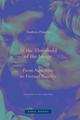
At the threshold of the image : from Narcissus to virtual reality
Pinotti, Andrea
Zone Books
, 2025
; English
; 281 Pages
In this groundbreaking book, philosopher Andrea Pinotti explores the impacts of a desire that has motivated human beings since prehistory: the desire to enter an image. He proposes that over the centuries, every culture has tried to realize this wish with whatever visual resources were available at the time, and today’s virtual reality technologies seem close to fulfilling it. The image in VR becomes an immersive 360-degree environment and the frame that used to confine it to a world apart disappears. Even the physical medium in which the image materializes appears to be transparent. However, Pinotti insists that once the border between the real world and the iconic world becomes permeable, we are faced with a troubling two-way passage: we penetrate the world of the image, but the image floods into our world. The desire for being encompassed by the image, he shows, is accompanied by fear of this overflowing. In its analysis of this desire/fear, At the Threshold of the Image takes the reader on an extraordinary journey from the myths of Narcissus and Pygmalion to contemporary VR headsets, passing through the pictorial traditions of trompe l’oeil and living sculptures, the mirrors in Alice in Wonderland, illusionistic architecture, panoramas and phantasmagorias, and 3D cinema.
Pinotti, Andrea
Zone Books
, 2025
; English
; 281 Pages
In this groundbreaking book, philosopher Andrea Pinotti explores the impacts of a desire that has motivated human beings since prehistory: the desire to enter an image. He proposes that over the centuries, every culture has tried to realize this wish with whatever visual resources were available at the time, and today’s virtual reality technologies seem close to fulfilling it. The image in VR becomes an immersive 360-degree environment and the frame that used to confine it to a world apart disappears. Even the physical medium in which the image materializes appears to be transparent. However, Pinotti insists that once the border between the real world and the iconic world becomes permeable, we are faced with a troubling two-way passage: we penetrate the world of the image, but the image floods into our world. The desire for being encompassed by the image, he shows, is accompanied by fear of this overflowing. In its analysis of this desire/fear, At the Threshold of the Image takes the reader on an extraordinary journey from the myths of Narcissus and Pygmalion to contemporary VR headsets, passing through the pictorial traditions of trompe l’oeil and living sculptures, the mirrors in Alice in Wonderland, illusionistic architecture, panoramas and phantasmagorias, and 3D cinema.
eBook
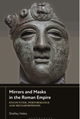
Mirrors and masks in the Roman Empire: encounter, performance and metamorphosis
Hales, Shelley
Bloomsbury Academic
, 2025
; English
; 265 Pages
This book explores the ways in which masks and mirrors mediated encounters, enabled performances and effected visual and social metamorphoses across the Roman empire. The complex and multifaceted roles played by masks and mirrors in Roman culture has been the subject of several sophisticated analyses, though to date there has been a lack of significant scholarly engagement with geographical context. This volume explores the experiences of classical mirror and mask users in the Roman provinces, from Gaul and Africa to Asia Minor and the Levant. It explores how particular themes are instantiated across a range of imperial contexts, as well as offering carefully selected case studies for detailed analysis. At once confrontational and evasive, enabling and terrifying, mirrors and masks hold extraordinary resonance as objects, images and metaphors. As such, they had the capacity to mediate encounters, enable performances and effect visual and social metamorphoses in myriad different ways throughout the Roman Empire. Exploring these contexts can enrich our understanding of the meanings and uses of mirrors and masks in the Roman world, not only in isolation in their immediate locations, but also in the influence they might have exerted on each other. By examining how the populations of empire encountered themselves and each other through these masks and mirrors, we can also observe how classical culture allowed communication and miscommunication between these communities. Crucially, too, we can trace how Roman understandings of these objects not only shaped their own attitude to provincial users, but have also helped form perceptions that continue to mask those provincial populations today
Hales, Shelley
Bloomsbury Academic
, 2025
; English
; 265 Pages
This book explores the ways in which masks and mirrors mediated encounters, enabled performances and effected visual and social metamorphoses across the Roman empire. The complex and multifaceted roles played by masks and mirrors in Roman culture has been the subject of several sophisticated analyses, though to date there has been a lack of significant scholarly engagement with geographical context. This volume explores the experiences of classical mirror and mask users in the Roman provinces, from Gaul and Africa to Asia Minor and the Levant. It explores how particular themes are instantiated across a range of imperial contexts, as well as offering carefully selected case studies for detailed analysis. At once confrontational and evasive, enabling and terrifying, mirrors and masks hold extraordinary resonance as objects, images and metaphors. As such, they had the capacity to mediate encounters, enable performances and effect visual and social metamorphoses in myriad different ways throughout the Roman Empire. Exploring these contexts can enrich our understanding of the meanings and uses of mirrors and masks in the Roman world, not only in isolation in their immediate locations, but also in the influence they might have exerted on each other. By examining how the populations of empire encountered themselves and each other through these masks and mirrors, we can also observe how classical culture allowed communication and miscommunication between these communities. Crucially, too, we can trace how Roman understandings of these objects not only shaped their own attitude to provincial users, but have also helped form perceptions that continue to mask those provincial populations today
eBook
Picturing the romantic : new perspectives on European romanticism(s) in the visual arts
Ansel, Elisabeth; Grave, Johannes; Neubauer, Christin; Zadrozny, Mira Claire
Manchester University Press
, 2025
; English
; 376 Pages
Picturing the Romantic redefines European Romanticism by exploring its transnational connections in the visual arts. This volume, featuring fifteen essays by established and emerging scholars, delves into various Romantic works of art, challenging conventional definitions and highlighting the dynamic exchanges that shaped the artistic movement
Ansel, Elisabeth; Grave, Johannes; Neubauer, Christin; Zadrozny, Mira Claire
Manchester University Press
, 2025
; English
; 376 Pages
Picturing the Romantic redefines European Romanticism by exploring its transnational connections in the visual arts. This volume, featuring fifteen essays by established and emerging scholars, delves into various Romantic works of art, challenging conventional definitions and highlighting the dynamic exchanges that shaped the artistic movement
eBook
Counter Print The alternative art press in Britain after 1970
Horne, Victoria
Manchester University Press
, 2025
; English
; 352 Pages
The history of contemporary art is also a history of its newsletters, manifestos, magazines, pamphlets and journals. Those periodical publications do not simply communicate or record ideas but have worked in multiple ways to shape art’s practices, histories and communities. As a new generation of artists, activists and scholars seek to uncover the histories of alternative publishing and artistic networks, this book gathers original archival discoveries while offering methodologies for studying and thinking with those artefacts. Through case studies it tells the story of an independent media culture of artists, critics and historians operating on the edges of mainstream institutions. It examines the queer, feminist, Black and transnational communities that reshaped Britain’s cultural landscape through groundbreaking publications including Black Phoenix, Bazaar, Artscribe, Spare Rib, Mukti, Feminist Arts News and Urban Fox Press, and tracks changes to an expanding field of post-digital publishing through Inventory, e-flux and The White Pube. As the first essay collection to focus on the UK’s periodical art press and the ways we study it, Counter Print offers readers an alternative route into contemporary art after 1970; one that is defiantly collaborative, border crossing and disruptive
Horne, Victoria
Manchester University Press
, 2025
; English
; 352 Pages
The history of contemporary art is also a history of its newsletters, manifestos, magazines, pamphlets and journals. Those periodical publications do not simply communicate or record ideas but have worked in multiple ways to shape art’s practices, histories and communities. As a new generation of artists, activists and scholars seek to uncover the histories of alternative publishing and artistic networks, this book gathers original archival discoveries while offering methodologies for studying and thinking with those artefacts. Through case studies it tells the story of an independent media culture of artists, critics and historians operating on the edges of mainstream institutions. It examines the queer, feminist, Black and transnational communities that reshaped Britain’s cultural landscape through groundbreaking publications including Black Phoenix, Bazaar, Artscribe, Spare Rib, Mukti, Feminist Arts News and Urban Fox Press, and tracks changes to an expanding field of post-digital publishing through Inventory, e-flux and The White Pube. As the first essay collection to focus on the UK’s periodical art press and the ways we study it, Counter Print offers readers an alternative route into contemporary art after 1970; one that is defiantly collaborative, border crossing and disruptive
