



Navigation menu
Search
Databases
All Databases
eBook
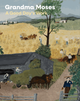
Grandma Moses : a good day's work
Umberger, Leslie; Griffey, Randall R.; Doss, Erika (WITH CONTRIBUTIONS BY); Harvey, Eleanor Jones (WITH CONTRIBUTIONS BY); Hollander, Stacy C. (WITH CONTRIBUTIONS BY); Jentleson, Katherine (WITH CONTRIBUTIONS BY); Kallir, Jane (WITH CONTRIBUTIONS BY)
Princeton University Press
, 2025
; English
; 273 Pages
Grandma Moses: A Good Day’s Work repositions Anna Mary Robertson “Grandma” Moses (1860–1961) as a multidimensional force in American art, whose beloved recollections of rural life earned her a distinctive place in the cultural imagination of the postwar era. Moses was eighty years old when Otto Kallir, a New York art dealer and recent émigré from Nazi-held Austria, introduced her to the world. “Grandma Moses,” as the press dubbed her, quickly became a polarizing figure, beloved by the public yet dismissed by the art world for her story-time scenes and lack of formal training.
Drawing on Moses’s reflection on her own life as “a good day’s work,” the book charts Moses’s creative development from her earliest artistic efforts to the emergence of her signature style, revealing a multidimensional artist who fused direct observation of nature, labor, and personal memories to tell idiosyncratic yet compelling stories. It positions Moses as a central figure in the history of twentieth-century American art, a painter whose life and work bore witness to the Civil War, two world wars, and the civil rights era.
Beautifully illustrated, Grandma Moses: A Good Day’s Work captures the indomitable spirit Moses brought to her artmaking, conveying a candor and authority that still resonate today with the quest for a homespun American visual tradition.
Published in association with the Smithsonian American Art Museum, Washington, DC
Umberger, Leslie; Griffey, Randall R.; Doss, Erika (WITH CONTRIBUTIONS BY); Harvey, Eleanor Jones (WITH CONTRIBUTIONS BY); Hollander, Stacy C. (WITH CONTRIBUTIONS BY); Jentleson, Katherine (WITH CONTRIBUTIONS BY); Kallir, Jane (WITH CONTRIBUTIONS BY)
Princeton University Press
, 2025
; English
; 273 Pages
Grandma Moses: A Good Day’s Work repositions Anna Mary Robertson “Grandma” Moses (1860–1961) as a multidimensional force in American art, whose beloved recollections of rural life earned her a distinctive place in the cultural imagination of the postwar era. Moses was eighty years old when Otto Kallir, a New York art dealer and recent émigré from Nazi-held Austria, introduced her to the world. “Grandma Moses,” as the press dubbed her, quickly became a polarizing figure, beloved by the public yet dismissed by the art world for her story-time scenes and lack of formal training.
Drawing on Moses’s reflection on her own life as “a good day’s work,” the book charts Moses’s creative development from her earliest artistic efforts to the emergence of her signature style, revealing a multidimensional artist who fused direct observation of nature, labor, and personal memories to tell idiosyncratic yet compelling stories. It positions Moses as a central figure in the history of twentieth-century American art, a painter whose life and work bore witness to the Civil War, two world wars, and the civil rights era.
Beautifully illustrated, Grandma Moses: A Good Day’s Work captures the indomitable spirit Moses brought to her artmaking, conveying a candor and authority that still resonate today with the quest for a homespun American visual tradition.
Published in association with the Smithsonian American Art Museum, Washington, DC
eBook
Art and identity in Spain, 1833–1956 : the Orient within
Hopkins, Claudia
Bloomsbury Visual Arts
, 2024
; English
; 353 Pages
Richly illustrated, this is the first study in English to explore the longevity of Orientalist art in Spain over a period of 120 years.
It highlights how artists in Spain shaped perceptions of Al-Andalus (Iberia under Islam 711–1492) and northern Morocco, from Spain's liberal revolution of the 1830s to the end of the Protectorate of Morocco in 1956. Combining art history with a cultural studies approach, and using exemplary case studies, Hopkins foregrounds the diverse issues that underpin Orientalist expression: reflections on history and the nation, cultural nationalism, gender and sexuality, aesthetics and art commerce, colonialism and racial thinking. In the process, the book challenges over-familiar understandings of Western Orientalism.
Beyond Fortuny and Sorolla, many unfamiliar artists and exhibitions are introduced, amongst them Villaamil, whose nostalgic landscapes evoked the loss of Andalusi culture
Bécquer, who celebrated Spanish-Moroccan peace-making through the lens of Velázquez
the Symbolist Rusiñol, whose images of the Alhambra are infused with melancholy
Morcillo, whose extraordinary camp images opened a new space for male subjectivity
Tapiró and Bertuchi, who dedicated their lives to Morocco, and the Moroccan Sarghini, who participated in the state-funded Painters of Africa exhibitions in Franco's Madrid – an annual exhibition that served the colonial concept of a Hispano-Moroccan brotherhood under the dictatorship.
This book traces the shifting impulses and meanings of Orientalist expression in Spain. It makes an original intervention in the field of Spanish art studies and contributes new material to the ongoing debates about Western Orientalism.
Hopkins, Claudia
Bloomsbury Visual Arts
, 2024
; English
; 353 Pages
Richly illustrated, this is the first study in English to explore the longevity of Orientalist art in Spain over a period of 120 years.
It highlights how artists in Spain shaped perceptions of Al-Andalus (Iberia under Islam 711–1492) and northern Morocco, from Spain's liberal revolution of the 1830s to the end of the Protectorate of Morocco in 1956. Combining art history with a cultural studies approach, and using exemplary case studies, Hopkins foregrounds the diverse issues that underpin Orientalist expression: reflections on history and the nation, cultural nationalism, gender and sexuality, aesthetics and art commerce, colonialism and racial thinking. In the process, the book challenges over-familiar understandings of Western Orientalism.
Beyond Fortuny and Sorolla, many unfamiliar artists and exhibitions are introduced, amongst them Villaamil, whose nostalgic landscapes evoked the loss of Andalusi culture
Bécquer, who celebrated Spanish-Moroccan peace-making through the lens of Velázquez
the Symbolist Rusiñol, whose images of the Alhambra are infused with melancholy
Morcillo, whose extraordinary camp images opened a new space for male subjectivity
Tapiró and Bertuchi, who dedicated their lives to Morocco, and the Moroccan Sarghini, who participated in the state-funded Painters of Africa exhibitions in Franco's Madrid – an annual exhibition that served the colonial concept of a Hispano-Moroccan brotherhood under the dictatorship.
This book traces the shifting impulses and meanings of Orientalist expression in Spain. It makes an original intervention in the field of Spanish art studies and contributes new material to the ongoing debates about Western Orientalism.
eBook
Ethnic and tourist arts : cultural expressions from the fourth world
Graburn, Nelson H. H.
University of California Press
, 2024
; English
; 437 Pages
This title is part of UC Press's Voices Revived program, which commemorates University of California Press's mission to seek out and cultivate the brightest minds and give them voice, reach, and impact. Drawing on a backlist dating to 1893, Voices Revived makes high-quality, peer-reviewed scholarship accessible once again using print-on-demand technology. This title was originally published in 1976. This title is part of UC Press's Voices Revived
Graburn, Nelson H. H.
University of California Press
, 2024
; English
; 437 Pages
This title is part of UC Press's Voices Revived program, which commemorates University of California Press's mission to seek out and cultivate the brightest minds and give them voice, reach, and impact. Drawing on a backlist dating to 1893, Voices Revived makes high-quality, peer-reviewed scholarship accessible once again using print-on-demand technology. This title was originally published in 1976. This title is part of UC Press's Voices Revived
eBook
Art is art : collaborating with neurodiverse artists at Creativity Explored
Kappes, Ann
Chronicle Books LLC
, 2023
; English
; 371 Pages
Creativity Explored celebrates its 40th anniversary with a collection of powerful artwork and perspectives from its talented studio artists.
This vibrant book uplifts the voices of the artists of Creativity Explored, a nonprofit that gives people with developmental disabilities the opportunity to express themselves through art and share their work with audiences from their local community and in the contemporary art world.
This curated collection features more than one hundred original paintings, drawings, illustrations, and sculptures—as well as quotes and stories from the artists—inviting readers to examine and challenge their perceptions about disability. Some artworks are humorous and blunt, while others are affecting and abstract, speaking to the artistic community's diversity and creativity. This book offers an engaging introduction to person-centered thinking for art lovers or anyone interested in learning about disability justice in a visual way.
DEMYSTIFYING DISABILITY: This significant new anthology showcases an array of developmentally disabled artists and organizes their works into thematic chapters, such as "Self Medication," "On the Spectrum," "Yes I Do Think About Sex," and "Our Fears." These chapters provide interesting stylistic juxtapositions and personal reflections that highlight both individual and shared experiences as diverse disabled artists.
BEAUTIFUL AND CONTENT RICH: This gorgeous hardcover art book features more than one hundred original artworks in full color, from lively portraits and detailed drawings to abstract paintings and captivating illustrations. Quotes, interviews, personal stories, and artist statements also give readers deeper insight into the artists' creative practices, processes, and rituals. This book is a rich visual trove and source of inspiration for any contemporary art lover.
SUPPORT A GREAT CAUSE: Creativity Explored was founded in 1983 with the belief that art is essential to life. This book celebrates the organization's mission and its talented artists after forty years of creating impactful arts and career programs with developmentally disabled artists. This collection is a meaningful way to learn more about Creativity Explored and the diverse community it continues to support today.
Perfect for:
• Art lovers and activists
• People who admire the mission and work of Creativity Explored
• The disabled community, allies, and educators
• Gift seekers for family and friends interested in learning more about disability justice
• Fans of self-taught artists, folk arts, and "outsider art"
• Contemporary art anthology and art book collectors
• #OwnVoices readers and anyone interested in diversifying their contemporary art knowledge
Kappes, Ann
Chronicle Books LLC
, 2023
; English
; 371 Pages
Creativity Explored celebrates its 40th anniversary with a collection of powerful artwork and perspectives from its talented studio artists.
This vibrant book uplifts the voices of the artists of Creativity Explored, a nonprofit that gives people with developmental disabilities the opportunity to express themselves through art and share their work with audiences from their local community and in the contemporary art world.
This curated collection features more than one hundred original paintings, drawings, illustrations, and sculptures—as well as quotes and stories from the artists—inviting readers to examine and challenge their perceptions about disability. Some artworks are humorous and blunt, while others are affecting and abstract, speaking to the artistic community's diversity and creativity. This book offers an engaging introduction to person-centered thinking for art lovers or anyone interested in learning about disability justice in a visual way.
DEMYSTIFYING DISABILITY: This significant new anthology showcases an array of developmentally disabled artists and organizes their works into thematic chapters, such as "Self Medication," "On the Spectrum," "Yes I Do Think About Sex," and "Our Fears." These chapters provide interesting stylistic juxtapositions and personal reflections that highlight both individual and shared experiences as diverse disabled artists.
BEAUTIFUL AND CONTENT RICH: This gorgeous hardcover art book features more than one hundred original artworks in full color, from lively portraits and detailed drawings to abstract paintings and captivating illustrations. Quotes, interviews, personal stories, and artist statements also give readers deeper insight into the artists' creative practices, processes, and rituals. This book is a rich visual trove and source of inspiration for any contemporary art lover.
SUPPORT A GREAT CAUSE: Creativity Explored was founded in 1983 with the belief that art is essential to life. This book celebrates the organization's mission and its talented artists after forty years of creating impactful arts and career programs with developmentally disabled artists. This collection is a meaningful way to learn more about Creativity Explored and the diverse community it continues to support today.
Perfect for:
• Art lovers and activists
• People who admire the mission and work of Creativity Explored
• The disabled community, allies, and educators
• Gift seekers for family and friends interested in learning more about disability justice
• Fans of self-taught artists, folk arts, and "outsider art"
• Contemporary art anthology and art book collectors
• #OwnVoices readers and anyone interested in diversifying their contemporary art knowledge
eBook
Folk art : continuity, creativity, and the Brazilian quotidian
Glassie, Henry; Shukla, Pravina
Indiana University Press
, 2023
; English
; 612 Pages
Listen to the artists of the Brazilian Northeast. Their work, they say, comes of continuity and creativity. Continuity runs along lines of learning toward social coherence. Creativity brings challenges and deep personal satisfaction.
What they say and do in Brazil aligns with ethnographic evidence from New Mexico and North Carolina
from Ireland, Portugal, and Italy
from Nigeria, Turkey, India, and Bangladesh
from China and Japan.
This book is about that, about folk art as a sign of human unity.
Glassie, Henry; Shukla, Pravina
Indiana University Press
, 2023
; English
; 612 Pages
Listen to the artists of the Brazilian Northeast. Their work, they say, comes of continuity and creativity. Continuity runs along lines of learning toward social coherence. Creativity brings challenges and deep personal satisfaction.
What they say and do in Brazil aligns with ethnographic evidence from New Mexico and North Carolina
from Ireland, Portugal, and Italy
from Nigeria, Turkey, India, and Bangladesh
from China and Japan.
This book is about that, about folk art as a sign of human unity.
eBook
Art of the Northwest Coast Indians, second edition
Inverarity, Robert Bruce
University of California Press
, 2023
; English
; 261 Pages
Here is the most complete text and general collection of illustrations of Northwest Coast Indian art written in the last twenty years. The art objects shown and described in this book are to the anthropologist and the artist what original documents are to the historian. Each individual work of art shows in concrete form the speculations about life and nature which took root among these primitive peoples. As such they form part of the vast mosaic of culture patterns of early North America.
Inverarity, Robert Bruce
University of California Press
, 2023
; English
; 261 Pages
Here is the most complete text and general collection of illustrations of Northwest Coast Indian art written in the last twenty years. The art objects shown and described in this book are to the anthropologist and the artist what original documents are to the historian. Each individual work of art shows in concrete form the speculations about life and nature which took root among these primitive peoples. As such they form part of the vast mosaic of culture patterns of early North America.
eBook
We are made of stories : self-taught artists in the Robson Family Collection
Umberger, Leslie
Princeton University Press
, 2022
; English
; 289 Pages
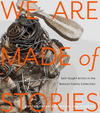
A richly illustrated history of self-taught artists and how they changed American art. Artists without formal training, who learned from family, community, and personal journeys, have long been a presence in American art. But it wasn't until the 1980s, with the help of trailblazing advocates, that the collective force of their creative vision and bold self-definition permanently changed the mainstream art world. In We Are Made of Stories, Leslie Umberger traces the rise of self-taught artists in the twentieth century and examines how, despite wide-ranging societal, racial, and gender-based obstacles, they redefined who could be rightfully seen as an artist and revealed a much more diverse community of American makers.Lavishly illustrated throughout, We Are Made of Stories features more than one hundred drawings, paintings, and sculptures, ranging from the narrative to the abstract, by forty-three artists--including James Castle, Thornton Dial, William Edmondson, Howard Finster, Bessie Harvey, Dan Miller, Sister Gertrude Morgan, the Philadelphia Wireman, Nellie Mae Rowe, Judith Scott, and Bill Traylor. The book centralizes the personal stories behind the art, and explores enduring themes, including self-definition, cultural heritage, struggle and joy, and inequity and achievement. At the same time, it offers a sweeping history of self-taught artists, the critical debates surrounding their art, and how museums have gradually diversified their collections across lines of race, gender, class, and ability.Recasting American art history to embrace artists who have been excluded for too long, We Are Made of Stories vividly captures the power of art to show us the world through the eyes of another. Published in association with the Smithsonian American Art MuseumExhibition ScheduleSmithsonian American Art Museum, Washington, DC. July 1, 2022-March 26, 2023.
Umberger, Leslie
Princeton University Press
, 2022
; English
; 289 Pages
A richly illustrated history of self-taught artists and how they changed American art. Artists without formal training, who learned from family, community, and personal journeys, have long been a presence in American art. But it wasn't until the 1980s, with the help of trailblazing advocates, that the collective force of their creative vision and bold self-definition permanently changed the mainstream art world. In We Are Made of Stories, Leslie Umberger traces the rise of self-taught artists in the twentieth century and examines how, despite wide-ranging societal, racial, and gender-based obstacles, they redefined who could be rightfully seen as an artist and revealed a much more diverse community of American makers.Lavishly illustrated throughout, We Are Made of Stories features more than one hundred drawings, paintings, and sculptures, ranging from the narrative to the abstract, by forty-three artists--including James Castle, Thornton Dial, William Edmondson, Howard Finster, Bessie Harvey, Dan Miller, Sister Gertrude Morgan, the Philadelphia Wireman, Nellie Mae Rowe, Judith Scott, and Bill Traylor. The book centralizes the personal stories behind the art, and explores enduring themes, including self-definition, cultural heritage, struggle and joy, and inequity and achievement. At the same time, it offers a sweeping history of self-taught artists, the critical debates surrounding their art, and how museums have gradually diversified their collections across lines of race, gender, class, and ability.Recasting American art history to embrace artists who have been excluded for too long, We Are Made of Stories vividly captures the power of art to show us the world through the eyes of another. Published in association with the Smithsonian American Art MuseumExhibition ScheduleSmithsonian American Art Museum, Washington, DC. July 1, 2022-March 26, 2023.
eBook
Blue & white embroidery : elegant projects using classic motifs and colors
Yazawa, Kozue
Tuttle Publishing
, 2021
; English
; 104 Pages
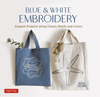
Simple stitches, elegant and quirky motifs & a classic color scheme combine to create 30 fun embroidery projects for all skill levels!
Calming blues from a day at the beach, the soft white tones of clouds and seashells--we never tire of pairing shades of blue with white. In this book, author Kozue Yazawa draws inspiration from the natural world and her own surroundings, using an array of classic nautical motifs to evoke a sense of elegance and nostalgia.
Lessons demonstrate the basic embroidery stitches, making it easy to embroider these designs even if you've never picked up a hoop and needle before.
Follow the simple instructions and diagrams to turn your embroidery into delightful things to make and use, like:
-A sea urchin pincushion, conch shell scissors holder and needle book for your sewing supplies
-Tote bags sporting anchors, starfish, and sailor hats to carry anything you might need--from groceries to supplies for a day at the beach
-An elegant garland of flowers for your wrist and a stylish shawl to keep warm
-A notebook cover and keychain charms to elevate your accessories
-And much more--30 projects in all!
These projects are easy to complete quickly, but fun to savor slowly, leaving room for creativity. Let Blue & White Embroidery be just the start of adding this well-loved color scheme to your favorite things.
Yazawa, Kozue
Tuttle Publishing
, 2021
; English
; 104 Pages
Simple stitches, elegant and quirky motifs & a classic color scheme combine to create 30 fun embroidery projects for all skill levels!
Calming blues from a day at the beach, the soft white tones of clouds and seashells--we never tire of pairing shades of blue with white. In this book, author Kozue Yazawa draws inspiration from the natural world and her own surroundings, using an array of classic nautical motifs to evoke a sense of elegance and nostalgia.
Lessons demonstrate the basic embroidery stitches, making it easy to embroider these designs even if you've never picked up a hoop and needle before.
Follow the simple instructions and diagrams to turn your embroidery into delightful things to make and use, like:
-A sea urchin pincushion, conch shell scissors holder and needle book for your sewing supplies
-Tote bags sporting anchors, starfish, and sailor hats to carry anything you might need--from groceries to supplies for a day at the beach
-An elegant garland of flowers for your wrist and a stylish shawl to keep warm
-A notebook cover and keychain charms to elevate your accessories
-And much more--30 projects in all!
These projects are easy to complete quickly, but fun to savor slowly, leaving room for creativity. Let Blue & White Embroidery be just the start of adding this well-loved color scheme to your favorite things.
eBook
Japanese paper flowers : elegant kirigami blossoms, bouquets, wreaths and more
Yamazaki, Hiromi
Tuttle Publishing
, 2019
; English
; 98 Pages
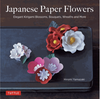
Learn how to bring a Japanese aesthetic into your life with these elegant works of floral art. Japanese kirigami (cut paper) flowers are delicate and beautiful examples of paper craft, but are surprisingly easy to make. This inspirational how-to guide shows you how to make 31 gorgeous designs that can virtually pass for the real thing except they will never wilt!
Yamazaki, Hiromi
Tuttle Publishing
, 2019
; English
; 98 Pages
Learn how to bring a Japanese aesthetic into your life with these elegant works of floral art. Japanese kirigami (cut paper) flowers are delicate and beautiful examples of paper craft, but are surprisingly easy to make. This inspirational how-to guide shows you how to make 31 gorgeous designs that can virtually pass for the real thing except they will never wilt!
eBook
Islamic chinoiserie the art of mongol Iran
Kadoi, Yuka
Edinburgh University Press
, 2019
; English
; 305 Pages
Winner of Honourable Mention, Saidi-Sirjani Book Award 2008-9, International Society for Iranian Studies
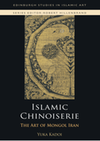
The Mongol invasion in the thirteenth century marked a new phase in the development of Islamic art. Trans-Eurasian exchanges of goods, people and ideas were encouraged on a large scale under the auspices of the Pax Mongolica. With the fascination of portable objects brought from China and Central Asia, a distinctive, hitherto unknown style – Islamic chinoiserie – was born in the art of Iran.
This illustrated book offers a fascinating glimpse into the artistic interaction between Iran and China under the Mongols. By using rich visual materials from various media of decorative and pictorial arts – textiles, ceramics, metalwork and manuscript painting – the book illustrates the process of adoption and adaptation of Chinese themes in the art of Mongol-ruled Iran in a visually compelling way. The observation of this unique artistic phenomenon serves to promote the understanding of the artistic diversity of Islamic art in the Middle-Ages.
Key features
Covers various media of decorative and pictorial arts from Iran, Central Asia and China
Deals with a diverse range of issues related to the East-West artistic relationship in the Middle-Ages
Includes in-depth studies of style, technique and iconography in Iranian art under the Mongols
Kadoi, Yuka
Edinburgh University Press
, 2019
; English
; 305 Pages
Winner of Honourable Mention, Saidi-Sirjani Book Award 2008-9, International Society for Iranian Studies
The Mongol invasion in the thirteenth century marked a new phase in the development of Islamic art. Trans-Eurasian exchanges of goods, people and ideas were encouraged on a large scale under the auspices of the Pax Mongolica. With the fascination of portable objects brought from China and Central Asia, a distinctive, hitherto unknown style – Islamic chinoiserie – was born in the art of Iran.
This illustrated book offers a fascinating glimpse into the artistic interaction between Iran and China under the Mongols. By using rich visual materials from various media of decorative and pictorial arts – textiles, ceramics, metalwork and manuscript painting – the book illustrates the process of adoption and adaptation of Chinese themes in the art of Mongol-ruled Iran in a visually compelling way. The observation of this unique artistic phenomenon serves to promote the understanding of the artistic diversity of Islamic art in the Middle-Ages.
Key features
Covers various media of decorative and pictorial arts from Iran, Central Asia and China
Deals with a diverse range of issues related to the East-West artistic relationship in the Middle-Ages
Includes in-depth studies of style, technique and iconography in Iranian art under the Mongols
