


Navigation menu
Search
Databases
All Databases
eBook
Domenico Ghirlandaio: an elite artisan and his world
Cadogan, Jean K.
Reaktion Books
, 2025
; English
; 256 Pages
Examines Domenico Ghirlandaio's career through the craft traditions that shaped his art
Cadogan, Jean K.
Reaktion Books
, 2025
; English
; 256 Pages
Examines Domenico Ghirlandaio's career through the craft traditions that shaped his art
eBook
Picturing the romantic : new perspectives on European romanticism(s) in the visual arts
Ansel, Elisabeth; Grave, Johannes; Neubauer, Christin; Zadrozny, Mira Claire
Manchester University Press
, 2025
; English
; 376 Pages
Picturing the Romantic redefines European Romanticism by exploring its transnational connections in the visual arts. This volume, featuring fifteen essays by established and emerging scholars, delves into various Romantic works of art, challenging conventional definitions and highlighting the dynamic exchanges that shaped the artistic movement
Ansel, Elisabeth; Grave, Johannes; Neubauer, Christin; Zadrozny, Mira Claire
Manchester University Press
, 2025
; English
; 376 Pages
Picturing the Romantic redefines European Romanticism by exploring its transnational connections in the visual arts. This volume, featuring fifteen essays by established and emerging scholars, delves into various Romantic works of art, challenging conventional definitions and highlighting the dynamic exchanges that shaped the artistic movement
eBook
Art and citizenship in conflict : British women war artists, 1939-45
Curzon, Lucy
Manchester University Press
, 2025
; English
; 247 Pages
Art and citizenship in conflict examines how British women war artists used visual art to question, even reframe prevailing ideas about citizenship during the Second World War. Their paintings, prints, and drawings expose the sometimes-deep contradiction laying at the intersection of being a woman and being a citizen at war
Curzon, Lucy
Manchester University Press
, 2025
; English
; 247 Pages
Art and citizenship in conflict examines how British women war artists used visual art to question, even reframe prevailing ideas about citizenship during the Second World War. Their paintings, prints, and drawings expose the sometimes-deep contradiction laying at the intersection of being a woman and being a citizen at war
eBook
Versailles mirrored : the power of luxury, Louis XIV to Donald Trump
Wellington, Robert
Bloomsbury Visual Arts
, 2025
; English
; 257 Pages
Why has Louis XIV's Palace of Versailles, defining symbol of hedonistic opulence in 17th-century France and synonymous with the notion of the divine right of kings, continued to shape the aesthetics of cultural capital in the centuries since his death?
In Versailles Mirrored, Robert Wellington tracks this enduring fascination with the Sun King's palace through eight case studies spanning the 17th to 21st centuries. The book demonstrates how the extravagant palace style began as a symbol of the state in the 17th century
how it was adopted by the nouveau riche to show off their financial success in the 19th century
and, remarkably, how that palace look returned to play a role in statecraft in the hands of US President Donald Trump. Wellington links the aristocratic architectural traditions of France, England, and Germany to North America through the lens of Versailles, French architecture, and the decorative arts.
Opening with a brief overview of the history of Versailles and the political and cultural motivations of its creation, subsequent chapters address aristocratic buildings in France and Germany built by the Sun King's contemporaries
historicism in the 19th century in Britain, Germany, and America
and the present day, with Trump's buildings and Château Louis XIV, known as the 'world's most expensive home', purchased by the Crown Prince of Saudi Arabia.
In uncovering the motivations of those patrons, the book ultimately reveals why Versailles remains a powerful point of reference for those who wish to flaunt their social, cultural, and political capital.
Wellington, Robert
Bloomsbury Visual Arts
, 2025
; English
; 257 Pages
Why has Louis XIV's Palace of Versailles, defining symbol of hedonistic opulence in 17th-century France and synonymous with the notion of the divine right of kings, continued to shape the aesthetics of cultural capital in the centuries since his death?
In Versailles Mirrored, Robert Wellington tracks this enduring fascination with the Sun King's palace through eight case studies spanning the 17th to 21st centuries. The book demonstrates how the extravagant palace style began as a symbol of the state in the 17th century
how it was adopted by the nouveau riche to show off their financial success in the 19th century
and, remarkably, how that palace look returned to play a role in statecraft in the hands of US President Donald Trump. Wellington links the aristocratic architectural traditions of France, England, and Germany to North America through the lens of Versailles, French architecture, and the decorative arts.
Opening with a brief overview of the history of Versailles and the political and cultural motivations of its creation, subsequent chapters address aristocratic buildings in France and Germany built by the Sun King's contemporaries
historicism in the 19th century in Britain, Germany, and America
and the present day, with Trump's buildings and Château Louis XIV, known as the 'world's most expensive home', purchased by the Crown Prince of Saudi Arabia.
In uncovering the motivations of those patrons, the book ultimately reveals why Versailles remains a powerful point of reference for those who wish to flaunt their social, cultural, and political capital.
eBook
Murder in the Rue Marat : a case of art in revolution
Crow, Thomas
Princeton University Press
, 2025
; English
; 175 Pages
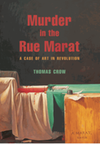
Jacques-Louis David’s The Death of Marat depicts the painter’s friend and fellow revolutionary Jean-Paul Marat collapsed in his bath after being fatally stabbed by a female assassin who stands just outside the frame. In this fascinating book, Thomas Crow traces the radical legacy of a painting that has been called the Pietà of the French Revolution, showing how David’s masterpiece captures the saga of that violent era in the single figure of Marat, and how it reveals itself anew today.
Crow begins by describing how the painting’s enduring power came to the fore during the countercultural tumult of the 1960s, discussing how his vocation as a scholar arose out of his own encounter with the work. He then takes readers back to 1793, telling the story of the painting’s creation through the eyes of David, his subject, and Marat’s charismatic assassin, Charlotte Corday. Charting the history of its impact across more than two centuries, Crow shows how this multilayered portrait surfaced in succeeding waves of political dissent as an enduring talisman of popular insurgency.
Beautifully illustrated, Murder in the Rue Marat is an art historian’s disarmingly personal account of a painting whose hidden complexities bear witness to the promise and peril of revolution in Marat’s time and our own.
Crow, Thomas
Princeton University Press
, 2025
; English
; 175 Pages
Jacques-Louis David’s The Death of Marat depicts the painter’s friend and fellow revolutionary Jean-Paul Marat collapsed in his bath after being fatally stabbed by a female assassin who stands just outside the frame. In this fascinating book, Thomas Crow traces the radical legacy of a painting that has been called the Pietà of the French Revolution, showing how David’s masterpiece captures the saga of that violent era in the single figure of Marat, and how it reveals itself anew today.
Crow begins by describing how the painting’s enduring power came to the fore during the countercultural tumult of the 1960s, discussing how his vocation as a scholar arose out of his own encounter with the work. He then takes readers back to 1793, telling the story of the painting’s creation through the eyes of David, his subject, and Marat’s charismatic assassin, Charlotte Corday. Charting the history of its impact across more than two centuries, Crow shows how this multilayered portrait surfaced in succeeding waves of political dissent as an enduring talisman of popular insurgency.
Beautifully illustrated, Murder in the Rue Marat is an art historian’s disarmingly personal account of a painting whose hidden complexities bear witness to the promise and peril of revolution in Marat’s time and our own.
eBook
Child creativity and the visual arts : from secessionist Vienna to postwar America
Brandow-Faller, Megan
Bloomsbury Visual Arts
, 2025
; English
; 265 Pages
Tracing the dissemination of Secessionist ideas of child creativity – from their origination in early-20th century Vienna through to their eventual commodification in postwar America – this book highlights the central role that visual art has played in child education and in nurturing creativity in elementary and preschool curricula.
Taking the reader through the ideas of three artistic visionaries and their students – Franz Cižek, and Austrian-American émigrés Emmy Zweybrück and Viktor Löwenfeld – this book reveals how these ideas developed in postwar America through a focus on child-centered methods of 'learning by doing' in artistic practice. By centring the visual arts as a vital educational medium, we see how these teachings have been popularized as a means of nurturing creativity in childhood.
Across three chapter length case studies, interspersed with three 'mini chapters' on the reception of each artist-educator's radical teachings in the American education system, Child Creativity and the Visual Arts provides new interpretations into the impact of these three luminaries' differing philosophies on a broader program of socio-political activism in the USA. Drawing on previously untapped archival and primary source materials, it blends deep material culture analysis with narrative elements to present a compelling account of the unrecognized influence of émigré art pedagogy on progressive, international art education. In doing so, it provides fresh transregional and thematic perspectives on early-1900s Vienna as a hotbed of creative and cultural experimentation and 'mecca' of progressive art education.
Brandow-Faller, Megan
Bloomsbury Visual Arts
, 2025
; English
; 265 Pages
Tracing the dissemination of Secessionist ideas of child creativity – from their origination in early-20th century Vienna through to their eventual commodification in postwar America – this book highlights the central role that visual art has played in child education and in nurturing creativity in elementary and preschool curricula.
Taking the reader through the ideas of three artistic visionaries and their students – Franz Cižek, and Austrian-American émigrés Emmy Zweybrück and Viktor Löwenfeld – this book reveals how these ideas developed in postwar America through a focus on child-centered methods of 'learning by doing' in artistic practice. By centring the visual arts as a vital educational medium, we see how these teachings have been popularized as a means of nurturing creativity in childhood.
Across three chapter length case studies, interspersed with three 'mini chapters' on the reception of each artist-educator's radical teachings in the American education system, Child Creativity and the Visual Arts provides new interpretations into the impact of these three luminaries' differing philosophies on a broader program of socio-political activism in the USA. Drawing on previously untapped archival and primary source materials, it blends deep material culture analysis with narrative elements to present a compelling account of the unrecognized influence of émigré art pedagogy on progressive, international art education. In doing so, it provides fresh transregional and thematic perspectives on early-1900s Vienna as a hotbed of creative and cultural experimentation and 'mecca' of progressive art education.
eBook
Antifascism and the avant-garde : radical documentary in the 1960s
Alekseyeva, Julia
University of California Press
, 2025
; English
; 271 Pages
Leftist filmmakers of the 1960s revolutionized the art of documentary. Often inspired by the radical art of the Soviet 1920s, filmmakers in countries like France and Japan dared to make film form a powerful weapon in the fight against fascism, weaving fiction into nonfiction and surrealism with neorealism to rupture everyday ways of being, seeing, and thinking. Through careful readings of Matsumoto Toshio, Jean-Luc Godard, Chris Marker, Agnès Varda, Hani Susumu, and others, Julia Alekseyeva shows that avant-garde documentary films of the 1960s did not strive to inoculate the viewer with the ideology of Truth but instead aimed to unveil and estrange, so that viewers might approach capitalist, imperialist, and fascist media with critical awareness. Antifascism and the Avant-Garde thus provides a transnational ecology of antifascist art that resonates profoundly with our current age.
Alekseyeva, Julia
University of California Press
, 2025
; English
; 271 Pages
Leftist filmmakers of the 1960s revolutionized the art of documentary. Often inspired by the radical art of the Soviet 1920s, filmmakers in countries like France and Japan dared to make film form a powerful weapon in the fight against fascism, weaving fiction into nonfiction and surrealism with neorealism to rupture everyday ways of being, seeing, and thinking. Through careful readings of Matsumoto Toshio, Jean-Luc Godard, Chris Marker, Agnès Varda, Hani Susumu, and others, Julia Alekseyeva shows that avant-garde documentary films of the 1960s did not strive to inoculate the viewer with the ideology of Truth but instead aimed to unveil and estrange, so that viewers might approach capitalist, imperialist, and fascist media with critical awareness. Antifascism and the Avant-Garde thus provides a transnational ecology of antifascist art that resonates profoundly with our current age.
eBook
Little beasts : art, wonder, and the natural world
Libby, Alexandra; Rich, Brooks; Sell, Stacey
Princeton University Press
, 2025
; English
; 226 Pages
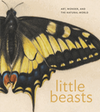
Art played a pivotal role in the development of natural history during the sixteenth and seventeenth centuries. European colonial expansion enabled naturalists to study previously unknown insects, animals, and other beestjes—“little beasts”—from around the globe. Little Beasts explores how artists such as Joris Hoefnagel and Jan van Kessel helped deepen and spread knowledge of these creatures with highly detailed and playful works that inspired generations of printmakers, painters, decorative artists, and naturalists.
This appealing book begins by mapping the origins of natural history as a discipline, showing how early illustrated treatises reflected a vibrant exchange between artists and naturalists that contributed to the growth of natural science and sparked public fascination with the animal kingdom. It shares insights into Hoefnagel’s engagement with contemporary natural history, as demonstrated in his Four Elements—a four-volume series of some three hundred watercolor miniatures of animals—and examines how intaglio printmaking enabled natural history studies to reach new audiences. The volume concludes with a discussion of Van Kessel’s small oil paintings, likely made for discerning collectors of both natural and artistic curiosities.
Blending lively and informative essays with beautiful illustrations, Little Beasts traces the connections between artists, naturalists, and collectors in an age of scientific discovery and broadening horizons, inviting readers to look with wonder at nature’s variety.
Libby, Alexandra; Rich, Brooks; Sell, Stacey
Princeton University Press
, 2025
; English
; 226 Pages
Art played a pivotal role in the development of natural history during the sixteenth and seventeenth centuries. European colonial expansion enabled naturalists to study previously unknown insects, animals, and other beestjes—“little beasts”—from around the globe. Little Beasts explores how artists such as Joris Hoefnagel and Jan van Kessel helped deepen and spread knowledge of these creatures with highly detailed and playful works that inspired generations of printmakers, painters, decorative artists, and naturalists.
This appealing book begins by mapping the origins of natural history as a discipline, showing how early illustrated treatises reflected a vibrant exchange between artists and naturalists that contributed to the growth of natural science and sparked public fascination with the animal kingdom. It shares insights into Hoefnagel’s engagement with contemporary natural history, as demonstrated in his Four Elements—a four-volume series of some three hundred watercolor miniatures of animals—and examines how intaglio printmaking enabled natural history studies to reach new audiences. The volume concludes with a discussion of Van Kessel’s small oil paintings, likely made for discerning collectors of both natural and artistic curiosities.
Blending lively and informative essays with beautiful illustrations, Little Beasts traces the connections between artists, naturalists, and collectors in an age of scientific discovery and broadening horizons, inviting readers to look with wonder at nature’s variety.
eBook
Jewish dealers and the European art market, c. 1860–1940 : negotiating cultural modernity
Davoli, Silvia; Stammers, Tom
Bloomsbury Visual Arts
, 2025
; English
; 345 Pages
Before the tragedy of the Holocaust, many of the leading art and antiques dealers across Europe were Jewish, establishing dynamic cross-Channel, international and transatlantic networks. Aside from a few famous examples, however, we are only at the beginning of exploring the diversity of Jewish dealers' commercial and cultural worlds, and reflecting on the particular conditions that made possible their dramatic expansion within the profession.
Adopting a wider geography than any previous study, this book brings together a team of distinguished international contributors to consider Jewish art dealers as an interconnected cohort, tied together by common strategies and a shared vulnerability. After an extended historiographical introduction, the volume presents case studies and trends from 1860-1940, including: Jewish family businesses in Western Europe
the role of Jews as mediators of art from East Asia
the antisemitism and suspicion faced by Jewish dealers
Jews as theorists, exhibition makers and promoters of modern art
and the geographical mobility and professional reinvention of Jewish dealers in times of economic and political crisis.
With a wide variety of illustrations, including paintings, decorative arts, historic photographs and archival material, the volume adopts a mix of methodological approaches to analyse a key chapter in Jewish cultural history and in the history of the international art market.
Includes Afterword by Charles Dellheim, author of Belonging and Betrayal: How Jews Made the Art World Modern (2021).
Davoli, Silvia; Stammers, Tom
Bloomsbury Visual Arts
, 2025
; English
; 345 Pages
Before the tragedy of the Holocaust, many of the leading art and antiques dealers across Europe were Jewish, establishing dynamic cross-Channel, international and transatlantic networks. Aside from a few famous examples, however, we are only at the beginning of exploring the diversity of Jewish dealers' commercial and cultural worlds, and reflecting on the particular conditions that made possible their dramatic expansion within the profession.
Adopting a wider geography than any previous study, this book brings together a team of distinguished international contributors to consider Jewish art dealers as an interconnected cohort, tied together by common strategies and a shared vulnerability. After an extended historiographical introduction, the volume presents case studies and trends from 1860-1940, including: Jewish family businesses in Western Europe
the role of Jews as mediators of art from East Asia
the antisemitism and suspicion faced by Jewish dealers
Jews as theorists, exhibition makers and promoters of modern art
and the geographical mobility and professional reinvention of Jewish dealers in times of economic and political crisis.
With a wide variety of illustrations, including paintings, decorative arts, historic photographs and archival material, the volume adopts a mix of methodological approaches to analyse a key chapter in Jewish cultural history and in the history of the international art market.
Includes Afterword by Charles Dellheim, author of Belonging and Betrayal: How Jews Made the Art World Modern (2021).
eBook
American artists in Rome : mid-century art and cultural exchange
Benson Miller, Peter
Bloomsbury Visual Arts
, 2025
; English
; 345 Pages
Drawing on unpublished archival sources, this book reconstitutes the experiences of a wide range of American artists, critics, and writers working in Rome in a charged environment of "Cold War cosmopolitanism."
After the Second World War, American artists flocked to Rome in record numbers, even as the United States shored up Italy as a bulwark against the spread of Communism. While the market for modern art in Rome was less vigorous as those in Paris and New York, numerous galleries, artist-run spaces, and other institutions acted as important catalysts, making Rome an international artistic hub. The city attracted now canonical figures Lee Bontecou, Philip Guston, Robert Rauschenberg, Paul Thek, and Cy Twombly, along with less well-known artists, such as Eugene Berman, Gene Charlton, Carlyle Brown, Peter Chinni, William Congdon, Claire Falkenstein, Marcia Hafif, John Heliker, James Leong, Beverly Pepper, and Laura Ziegler, among many others.
Rather than focusing on institutions and diplomatic relationships, the book centres the experience of artists, and also addresses Rome's gay subculture and the role of female artists during the period, eschewing traditional narratives of the male "cultural ambassador." Through case-study based investigation, Peter Benson Miller explores the reciprocal relationships between American modernist artists and Italian artists in postwar Rome, and reveals how these artists perceived Rome as less constrained by the demands of a national school, and as an alternative to New York. This congenial creative atmosphere yielded "new pictorial forms" developed in tandem with or absorbed from like-minded Italian artists, engaging the city and its multiple layers of history, from antiquity to the profound trauma inflicted by the recent conflict.
The book also establishes the entangled social networks, galleries, exhibitions, and institutions sustaining their work and providing entrée into local artistic circles. Focusing on a series of specific exchanges, this study contributes to our understanding American modernism in an international context.
Benson Miller, Peter
Bloomsbury Visual Arts
, 2025
; English
; 345 Pages
Drawing on unpublished archival sources, this book reconstitutes the experiences of a wide range of American artists, critics, and writers working in Rome in a charged environment of "Cold War cosmopolitanism."
After the Second World War, American artists flocked to Rome in record numbers, even as the United States shored up Italy as a bulwark against the spread of Communism. While the market for modern art in Rome was less vigorous as those in Paris and New York, numerous galleries, artist-run spaces, and other institutions acted as important catalysts, making Rome an international artistic hub. The city attracted now canonical figures Lee Bontecou, Philip Guston, Robert Rauschenberg, Paul Thek, and Cy Twombly, along with less well-known artists, such as Eugene Berman, Gene Charlton, Carlyle Brown, Peter Chinni, William Congdon, Claire Falkenstein, Marcia Hafif, John Heliker, James Leong, Beverly Pepper, and Laura Ziegler, among many others.
Rather than focusing on institutions and diplomatic relationships, the book centres the experience of artists, and also addresses Rome's gay subculture and the role of female artists during the period, eschewing traditional narratives of the male "cultural ambassador." Through case-study based investigation, Peter Benson Miller explores the reciprocal relationships between American modernist artists and Italian artists in postwar Rome, and reveals how these artists perceived Rome as less constrained by the demands of a national school, and as an alternative to New York. This congenial creative atmosphere yielded "new pictorial forms" developed in tandem with or absorbed from like-minded Italian artists, engaging the city and its multiple layers of history, from antiquity to the profound trauma inflicted by the recent conflict.
The book also establishes the entangled social networks, galleries, exhibitions, and institutions sustaining their work and providing entrée into local artistic circles. Focusing on a series of specific exchanges, this study contributes to our understanding American modernism in an international context.
