
Navigation menu
Search
Databases
All Databases
eBook
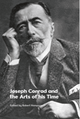
Joseph Conrad and the arts of his time
Hampson, Robert
Edinburgh University Press
, 2026
; English
; 271 Pages
This volume is the product of new research on Conrad’s engagement with the arts during his lifetime.
Beginning with nineteenth-century Polish landscape painting and Polish theatre, the essays move through music and the performing arts during Conrad’s time in Marseilles; the opera Conrad encountered in Australia; and Conrad’s later-life knowledge of recent and contemporary classical music.
Subsequent essays demonstrate his familiarity with contemporary visual art (particularly through his friendships with various artists in London); his interest in dance; and his active involvement in contemporary theatre and screen-writing.
The volume concludes with a discussion of Conrad’s art as a novelist and playwright, his ‘theatrical imagination’, in relation to developments in theatre theory of the time.
Hampson, Robert
Edinburgh University Press
, 2026
; English
; 271 Pages
This volume is the product of new research on Conrad’s engagement with the arts during his lifetime.
Beginning with nineteenth-century Polish landscape painting and Polish theatre, the essays move through music and the performing arts during Conrad’s time in Marseilles; the opera Conrad encountered in Australia; and Conrad’s later-life knowledge of recent and contemporary classical music.
Subsequent essays demonstrate his familiarity with contemporary visual art (particularly through his friendships with various artists in London); his interest in dance; and his active involvement in contemporary theatre and screen-writing.
The volume concludes with a discussion of Conrad’s art as a novelist and playwright, his ‘theatrical imagination’, in relation to developments in theatre theory of the time.
eBook
Fashion in theory : historicization, subjectivity and practice
Pecorari, Marco
Manchester University Press
, 2025
; English
; 306 Pages
For Spring Summer 2020, Gucci showed a collection questioning identity politics and capitalism. Rather than the usual explanation of the material, shapes or inspirations behind the collection, the press release handed out at the show quoted the philosopher Michel Foucault and questioned the very nature of fashion itself.
Gucci's press release reflects the popularization of critical theory in public discourse and fashion in particular. Philosophers, activists and academics are increasingly recruited to collaborate with luxury brands, and main-stream fashion brands have begun to adopt a discourse about politics and critical thinking using, in their communication, concepts such as "resistance", "gender fluidity", "national identity" or "cultural heritage" without accompanying these discourses with any form of political engagement or activism.
Based on this intellectualization of the fashion industry and the recent proliferation of critical theory in fashion education, this book stresses the importance of rethinking the relationship between fashion and theory. Drawing together eleven chapters and four conversations by and with philosophers, cultural theorists, historians, anthropologists, activists, performers and designers, the book investigates both the theorization of fashion and the ways in which fashion offers a useful landscape in understanding the current state of critical theory today.
Pecorari, Marco
Manchester University Press
, 2025
; English
; 306 Pages
For Spring Summer 2020, Gucci showed a collection questioning identity politics and capitalism. Rather than the usual explanation of the material, shapes or inspirations behind the collection, the press release handed out at the show quoted the philosopher Michel Foucault and questioned the very nature of fashion itself.
Gucci's press release reflects the popularization of critical theory in public discourse and fashion in particular. Philosophers, activists and academics are increasingly recruited to collaborate with luxury brands, and main-stream fashion brands have begun to adopt a discourse about politics and critical thinking using, in their communication, concepts such as "resistance", "gender fluidity", "national identity" or "cultural heritage" without accompanying these discourses with any form of political engagement or activism.
Based on this intellectualization of the fashion industry and the recent proliferation of critical theory in fashion education, this book stresses the importance of rethinking the relationship between fashion and theory. Drawing together eleven chapters and four conversations by and with philosophers, cultural theorists, historians, anthropologists, activists, performers and designers, the book investigates both the theorization of fashion and the ways in which fashion offers a useful landscape in understanding the current state of critical theory today.
eBook
Auteur-publishers: small press practices as avant-garde writing
Saper, Craig J.
Edinburgh University Press
, 2025
; English
; 185 Pages
An examination of the way in which small presses expanded authorship to include publishing practices as forms of avant-garde conceptual writing
Applies the concept of auteurism to the work of small press publishers
Traces the development of modernist publishing from Arts & Crafts to Fluxus
Explores small press publishing as a mode of conceptual poetry
Auteur Publishers relocates authorial intention from the lone writer's vision to the publishers' arts and artisanal craft. Using the notion of auteurism, initially developed by François Truffaut to reframe authorship away from a script writer to a director's creative vision, this book looks at auteur-publishers working from the 1890s through to the present. These small independent book publishers acquired, designed and sometimes printed the books they published. Presses including William Morris with Way & Williams, Nancy Cunard's Hours Press, Kathleen Tankersley Young's The Modern Editions Press and Dick Higgin's Something Else Press played crucial roles in modern art and literary movements. Motivated by their idiosyncratic literary and aesthetic values, they cultivated publishing practices and, in retrospect, provide a lineage for publishers today: presses like Information As Material; Punctum Books; Siglio; Sublunary and Roving Eye Press are a few examples of the hundreds of small presses continuing the small press tradition.
Saper, Craig J.
Edinburgh University Press
, 2025
; English
; 185 Pages
An examination of the way in which small presses expanded authorship to include publishing practices as forms of avant-garde conceptual writing
Applies the concept of auteurism to the work of small press publishers
Traces the development of modernist publishing from Arts & Crafts to Fluxus
Explores small press publishing as a mode of conceptual poetry
Auteur Publishers relocates authorial intention from the lone writer's vision to the publishers' arts and artisanal craft. Using the notion of auteurism, initially developed by François Truffaut to reframe authorship away from a script writer to a director's creative vision, this book looks at auteur-publishers working from the 1890s through to the present. These small independent book publishers acquired, designed and sometimes printed the books they published. Presses including William Morris with Way & Williams, Nancy Cunard's Hours Press, Kathleen Tankersley Young's The Modern Editions Press and Dick Higgin's Something Else Press played crucial roles in modern art and literary movements. Motivated by their idiosyncratic literary and aesthetic values, they cultivated publishing practices and, in retrospect, provide a lineage for publishers today: presses like Information As Material; Punctum Books; Siglio; Sublunary and Roving Eye Press are a few examples of the hundreds of small presses continuing the small press tradition.
eBook
Unseparate: Modernism, Interdisciplinary Art, and Network Aesthetics
Madoff, Steven Henry
Stanford University Press
, 2025
; English
; 294 Pages
Art historian and critic Steven Henry Madoff offers a contemporary reframing of modernist art and the way it presages installation and performance art
For more than a century, European modernist art has been written about as a profound expression of fragmentation—of an alienated world in pieces. In Unseparate, Steven Henry Madoff proposes that there was always another artistic intention present among the modernists, offering visions of wholeness in the face of the instability and alienation brought on by war and new technologies.
Blending history, philosophy, and media theory, Madoff argues that from the mid-nineteenth century—when Richard Wagner championed his idea of the Gesamtkunstwerk (the total work of art)—to the rise of the Bauhaus, the urge to connect different art forms into single, unified works anticipates our contemporary networked culture.
Madoff revisits the artworks and projects of such leading figures of European modernism as Paul Cézanne, Marcel Duchamp, Hugo Ball, and Walter Gropius, proposing that their various ambitions for totality were both aesthetically beneficent and politically dangerous. This striking contemporary rethinking gives readers a way to understand modernism's complex history more fully. Modernism, seen through the lens of network aesthetics and its emphasis on interconnectivity, presages many different forms of contemporary art, including installation and performance art. Further, as Madoff reveals, the modernist drive for wholeness and unity can give us a way to look at our own increasingly divisive society.
Madoff, Steven Henry
Stanford University Press
, 2025
; English
; 294 Pages
Art historian and critic Steven Henry Madoff offers a contemporary reframing of modernist art and the way it presages installation and performance art
For more than a century, European modernist art has been written about as a profound expression of fragmentation—of an alienated world in pieces. In Unseparate, Steven Henry Madoff proposes that there was always another artistic intention present among the modernists, offering visions of wholeness in the face of the instability and alienation brought on by war and new technologies.
Blending history, philosophy, and media theory, Madoff argues that from the mid-nineteenth century—when Richard Wagner championed his idea of the Gesamtkunstwerk (the total work of art)—to the rise of the Bauhaus, the urge to connect different art forms into single, unified works anticipates our contemporary networked culture.
Madoff revisits the artworks and projects of such leading figures of European modernism as Paul Cézanne, Marcel Duchamp, Hugo Ball, and Walter Gropius, proposing that their various ambitions for totality were both aesthetically beneficent and politically dangerous. This striking contemporary rethinking gives readers a way to understand modernism's complex history more fully. Modernism, seen through the lens of network aesthetics and its emphasis on interconnectivity, presages many different forms of contemporary art, including installation and performance art. Further, as Madoff reveals, the modernist drive for wholeness and unity can give us a way to look at our own increasingly divisive society.
eBook
The new lives of images : digital ecologies and anthropocene imaginaries in more-than- human worlds
Ivakhiv, Adrian J.
Stanford University Press
, 2025
; English
; 438 Pages
In this ambitious new work, eco-philosopher and cultural theorist Adrian Ivakhiv presents an incisive new way of thinking about images and imagination. Drawing upon an immense range of materials, Ivakhiv reassesses the place of imagination in cultural life, analyzing how people have interacted with images in the past and the ways that digital media are profoundly altering these relationships today. The book contributes powerfully to the study of visual culture and digital media, and provides provocative interpretations of a range of important artists and media movements: from the work of photographer Edward Burtynsky, the ambitious multi-screen installations of John Akomfrah, the abstract art of Swedish spiritualist Hilma af Klint, and the Afrofuturism of jazz musicians like Sun Ra and poet Alexis Pauline Gumbs, to the ever-expanding universe of animal videos on YouTube. Along the way, the book delves into animacy and religious imagery, iconophilia and iconoclasm, divination and prophecy, "truthiness" and "enchantment networks," online communities and artificial intelligence, the political and affective economies of digital media, and the role of utopian futurism in the present "climate-colonial Anthropocene" predicament. The result is a vital contribution toward a more empowering conception of the creative imagination and its possibilities in today's emerging digital ecology.
eBook
Ivakhiv, Adrian J.
Stanford University Press
, 2025
; English
; 438 Pages
In this ambitious new work, eco-philosopher and cultural theorist Adrian Ivakhiv presents an incisive new way of thinking about images and imagination. Drawing upon an immense range of materials, Ivakhiv reassesses the place of imagination in cultural life, analyzing how people have interacted with images in the past and the ways that digital media are profoundly altering these relationships today. The book contributes powerfully to the study of visual culture and digital media, and provides provocative interpretations of a range of important artists and media movements: from the work of photographer Edward Burtynsky, the ambitious multi-screen installations of John Akomfrah, the abstract art of Swedish spiritualist Hilma af Klint, and the Afrofuturism of jazz musicians like Sun Ra and poet Alexis Pauline Gumbs, to the ever-expanding universe of animal videos on YouTube. Along the way, the book delves into animacy and religious imagery, iconophilia and iconoclasm, divination and prophecy, "truthiness" and "enchantment networks," online communities and artificial intelligence, the political and affective economies of digital media, and the role of utopian futurism in the present "climate-colonial Anthropocene" predicament. The result is a vital contribution toward a more empowering conception of the creative imagination and its possibilities in today's emerging digital ecology.
eBook
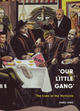
‘Our little gang’: the lives of the Vorticists
King, James
Reaktion Books
, 2025
; English
; 231 Pages
The Vorticists, a rebellious cohort of young artists in early twentieth-century England, defied the conventions of the art world with their distinctive abstract creations. Despite the brevity of their existence, from 1911 to 1914, their startling innovations left an indelible mark on English art history. In this book James King explores the personalities and lives of these colourful individuals, capturing the tumultuous environment in which they thrived. The narrative presents biographies of the group’s members – ‘our little gang’, as Ezra Pound called them – highlighting personal conflicts and providing a concise, highly readable history of the movement. This book is ideal for art enthusiasts, historians and anyone intrigued by avant-garde movements of the early twentieth century.
King, James
Reaktion Books
, 2025
; English
; 231 Pages
The Vorticists, a rebellious cohort of young artists in early twentieth-century England, defied the conventions of the art world with their distinctive abstract creations. Despite the brevity of their existence, from 1911 to 1914, their startling innovations left an indelible mark on English art history. In this book James King explores the personalities and lives of these colourful individuals, capturing the tumultuous environment in which they thrived. The narrative presents biographies of the group’s members – ‘our little gang’, as Ezra Pound called them – highlighting personal conflicts and providing a concise, highly readable history of the movement. This book is ideal for art enthusiasts, historians and anyone intrigued by avant-garde movements of the early twentieth century.
eBook
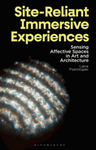
Site-reliant immersive experiences : sensing affective spaces in art and architecture
Psarologaki, Liana
Bloomsbury Visual Arts
, 2025
; English
; 185 Pages
Site-Reliant Immersive Experiences offers a new theoretical approach to the concept of immersive experiences in relation to space, site and atmosphere.
An interdisciplinary work, interweaving philosophy, theory, and creative methods in contemporary art and architecture, this book looks beyond phenomenological accounts of immersion as felt spaces, and technological experiences of VR and AR, to link immersion to actual architectural sites, to the human capacity to contemplate, and to affective atmospheres in art and architectural installations.
Fusing atmosphere, sense, and experience, the book introduces a novel vocabulary for understanding immersive spaces in art and architectural contexts from a post-phenomenological perspective. Furthermore, it offers illuminating insights through key reflective case studies of contemporary practices at the intersection of art and architecture, featuring work by Peter Zumthor, Mike Nelson, and Li Xiaodong among others.
Bringing together critical theory, neuroscience, and aesthetics of affect to create new methods of praxis in contemporary architecture and art, Site-Reliant Immersive Experiences introduces an innovative framework for understanding immersive experiences within the realm of critical spatial practice.
Psarologaki, Liana
Bloomsbury Visual Arts
, 2025
; English
; 185 Pages
Site-Reliant Immersive Experiences offers a new theoretical approach to the concept of immersive experiences in relation to space, site and atmosphere.
An interdisciplinary work, interweaving philosophy, theory, and creative methods in contemporary art and architecture, this book looks beyond phenomenological accounts of immersion as felt spaces, and technological experiences of VR and AR, to link immersion to actual architectural sites, to the human capacity to contemplate, and to affective atmospheres in art and architectural installations.
Fusing atmosphere, sense, and experience, the book introduces a novel vocabulary for understanding immersive spaces in art and architectural contexts from a post-phenomenological perspective. Furthermore, it offers illuminating insights through key reflective case studies of contemporary practices at the intersection of art and architecture, featuring work by Peter Zumthor, Mike Nelson, and Li Xiaodong among others.
Bringing together critical theory, neuroscience, and aesthetics of affect to create new methods of praxis in contemporary architecture and art, Site-Reliant Immersive Experiences introduces an innovative framework for understanding immersive experiences within the realm of critical spatial practice.
eBook
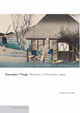
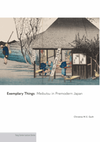
Exemplary things : Meibutsu in premodern Japan
Guth, Christine M. E.
Princeton University Press
, 2025
; English
; 213 Pages
The Japanese term meibutsu refers to things of the highest cultural value, evolving over time to encompass both craft and fine art, high and low culture, and manufactured and natural items. Material goods designated as meibutsu range from precious art objects to regional products like bamboo baskets and ceramics. Exemplary Things traces the history of this epistemic classificatory system in Japanese culture from its elite origins in the fifteenth century to its commercial appropriation today.
Christine Guth explores the use of meibutsu to designate famous things (especially in the elevated context of tea practice), the term’s institutionalization, and its popularization through print media and replicas (utsushi), and discusses how the term was used in critiques of the extravagance associated with collecting these costly treasures. She looks at the intertwined histories of meibutsu swords, incense, and tea utensils, focusing on their identities and agency as things with personal names. Guth explains how meibutsu evolved from a culture of tributes, taxes, and gift giving associated with a sense of place into a term essential to cultural literacy, and how Japan’s modern legislation for the protection of its national treasures (kokuhō) drew on this legacy.
With stunning illustrations, Exemplary Things casts the art history of Japan in a new light, showing how the concept of meibutsu blurs the lines between economic value, cultural and aesthetic worth, and the furtherance of political power.
Published in association with the P. Y. and Kinmay W. Tang Center for East Asian Art at Princeton University
Guth, Christine M. E.
Princeton University Press
, 2025
; English
; 213 Pages
The Japanese term meibutsu refers to things of the highest cultural value, evolving over time to encompass both craft and fine art, high and low culture, and manufactured and natural items. Material goods designated as meibutsu range from precious art objects to regional products like bamboo baskets and ceramics. Exemplary Things traces the history of this epistemic classificatory system in Japanese culture from its elite origins in the fifteenth century to its commercial appropriation today.
Christine Guth explores the use of meibutsu to designate famous things (especially in the elevated context of tea practice), the term’s institutionalization, and its popularization through print media and replicas (utsushi), and discusses how the term was used in critiques of the extravagance associated with collecting these costly treasures. She looks at the intertwined histories of meibutsu swords, incense, and tea utensils, focusing on their identities and agency as things with personal names. Guth explains how meibutsu evolved from a culture of tributes, taxes, and gift giving associated with a sense of place into a term essential to cultural literacy, and how Japan’s modern legislation for the protection of its national treasures (kokuhō) drew on this legacy.
With stunning illustrations, Exemplary Things casts the art history of Japan in a new light, showing how the concept of meibutsu blurs the lines between economic value, cultural and aesthetic worth, and the furtherance of political power.
Published in association with the P. Y. and Kinmay W. Tang Center for East Asian Art at Princeton University
eBook
New materialist affirmations: creative research interventions in methods and practice
Hickey-Moody, Anna; Pihkala, Suvi; Coombs , Gretchen; Willcox, Marissa
Edinburgh University Press
, 2025
; English
; 375 Pages
This international collection brings together arts-based researchers to explore how new materialisms have changed creative research practice.
Grounded in a framework of affective and conceptual creativity, it makes existing and emerging pathways in research visible to challenge dualistic modes of thought-in-practice. With a focus on the methods employed by individual researchers, the coverage is interdisciplinary, including screen and sound production, dance, literary theory, social media, creative writing and community arts.
The collection explores transformations in scholarly practice through methods of 'crimping' which reflect the 4 thematic sections: bending, joining, making waves and holding.
Hickey-Moody, Anna; Pihkala, Suvi; Coombs , Gretchen; Willcox, Marissa
Edinburgh University Press
, 2025
; English
; 375 Pages
This international collection brings together arts-based researchers to explore how new materialisms have changed creative research practice.
Grounded in a framework of affective and conceptual creativity, it makes existing and emerging pathways in research visible to challenge dualistic modes of thought-in-practice. With a focus on the methods employed by individual researchers, the coverage is interdisciplinary, including screen and sound production, dance, literary theory, social media, creative writing and community arts.
The collection explores transformations in scholarly practice through methods of 'crimping' which reflect the 4 thematic sections: bending, joining, making waves and holding.
eBook
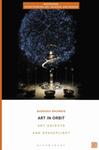
Art in orbit: art objects and spaceflight
Brownie, Barbara
Bloomsbury Visual Arts
, 2025
; English
; 225 Pages
What role do the visual arts play in the emerging commercial spaceflight industry, and vice versa? This book considers the relationship between art practice and space science, presenting new methodologies for art-sci collaboration informed by non-terrestrial contexts.
Regarded widely as an irreverent luxury accessible to only a select few, commercial space exploration seems an unlikely setting for contemporary art practice. However, faced with the inevitability of this developing industry and the new environments it presents, a new field of creative practice is emerging. In Art in Orbit design theorist Barbara Brownie argues that these new environments offer novel opportunities that are yet to be fully recognized by the creative industries.
Throughout the book, Brownie explores the contexts, questions, challenges and opportunities for creative exploration of form, materials, and the body, in space. Drawing on original research in the STEAM subjects, the book highlights how artists, engineers, and theorists have begun working in close collaboration to reconsider practices that have been taken for granted throughout the history of art practice, demonstrating how ideas about orientation, weight, balance, and the familiar behaviours of art and craft materials are all radically altered in the microgravity of orbital space.
The research presented is supplemented by 9 original case studies from sculpture, craft, performance, and land art, together with exclusive interviews with artists who have produced work for space. Taking an original, critical approach to the spaceflight sector, Art in Orbit sets out to define a new field of artistic practice and the real-world impact of art-sci collaboration. It provides a template for developing new narrative strategies for space projects which will engage artists, scientists, and collaborative teams from across disciplines.
Brownie, Barbara
Bloomsbury Visual Arts
, 2025
; English
; 225 Pages
What role do the visual arts play in the emerging commercial spaceflight industry, and vice versa? This book considers the relationship between art practice and space science, presenting new methodologies for art-sci collaboration informed by non-terrestrial contexts.
Regarded widely as an irreverent luxury accessible to only a select few, commercial space exploration seems an unlikely setting for contemporary art practice. However, faced with the inevitability of this developing industry and the new environments it presents, a new field of creative practice is emerging. In Art in Orbit design theorist Barbara Brownie argues that these new environments offer novel opportunities that are yet to be fully recognized by the creative industries.
Throughout the book, Brownie explores the contexts, questions, challenges and opportunities for creative exploration of form, materials, and the body, in space. Drawing on original research in the STEAM subjects, the book highlights how artists, engineers, and theorists have begun working in close collaboration to reconsider practices that have been taken for granted throughout the history of art practice, demonstrating how ideas about orientation, weight, balance, and the familiar behaviours of art and craft materials are all radically altered in the microgravity of orbital space.
The research presented is supplemented by 9 original case studies from sculpture, craft, performance, and land art, together with exclusive interviews with artists who have produced work for space. Taking an original, critical approach to the spaceflight sector, Art in Orbit sets out to define a new field of artistic practice and the real-world impact of art-sci collaboration. It provides a template for developing new narrative strategies for space projects which will engage artists, scientists, and collaborative teams from across disciplines.
