
Navigation menu
Search
Databases
All Databases
eBook
Gunnison, Anne; Joselit, David; Gunnison, Anne; Joselit, David
Princeton University Press
, 2025
; English
; 161 Pages
Modern and contemporary art wouldn’t exist without the invention of plastics. From sculpture to paint, and photography to film, plastics have shaped every major medium of art. In turn, plastics have revolutionized art conservation, transforming the possibilities of preservation but also producing new challenges for conservators struggling to preserve toxic and degrading material. Hailed as utopian in the twentieth century, plastics today are often understood as pollution and waste—a central cause of ecological crisis. Plastics is the first book to address the multifaceted history of plastics from the perspective of artists, art historians, conservators, and environmental scientists.
Plastics demonstrates that this material cannot easily be summarized as toxic or utopian, catastrophic or necessary. Instead, plastics define the modern world in both its possibility and failures. The book also reveals how artists have been a critical overlooked voice in debates about plastics, and how they have offered theories of the material through works that explore its potential and harmfulness.
Presenting a variety of perspectives on the world of plastics through the lens of art, artmaking, art history, and art conservation, Plastics shows why and how coming to terms with this material is critical to understanding not only modern and contemporary art and art conservation but also the crises of the twenty-first century.
eBook
Gunnison, Anne; Joselit, David; Gunnison, Anne; Joselit, David
Princeton University Press
, 2025
; English
; 161 Pages
Modern and contemporary art wouldn’t exist without the invention of plastics. From sculpture to paint, and photography to film, plastics have shaped every major medium of art. In turn, plastics have revolutionized art conservation, transforming the possibilities of preservation but also producing new challenges for conservators struggling to preserve toxic and degrading material. Hailed as utopian in the twentieth century, plastics today are often understood as pollution and waste—a central cause of ecological crisis. Plastics is the first book to address the multifaceted history of plastics from the perspective of artists, art historians, conservators, and environmental scientists.
Plastics demonstrates that this material cannot easily be summarized as toxic or utopian, catastrophic or necessary. Instead, plastics define the modern world in both its possibility and failures. The book also reveals how artists have been a critical overlooked voice in debates about plastics, and how they have offered theories of the material through works that explore its potential and harmfulness.
Presenting a variety of perspectives on the world of plastics through the lens of art, artmaking, art history, and art conservation, Plastics shows why and how coming to terms with this material is critical to understanding not only modern and contemporary art and art conservation but also the crises of the twenty-first century.
eBook
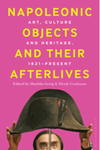
Napoleonic objects and their afterlives : art, culture and heritage, 1821–present
Greig, Matilda; Cochrane, Nicole
Bloomsbury Visual Arts
, 2025
; English
; 249 Pages
Two centuries after Napoleon Bonaparte's death, this edited volume brings together a diverse group of historians, art historians, and museum professionals to critically examine the enduring power of visual and material culture in the making of Napoleonic memory. While most discussions surrounding the legendary figure explore his impact on legislative, political, or military reform, this innovative volume explores the global dimensions of the trade in Napoleonic collectibles, art, and relics over time.
Representing new avenues of research and scholarship, Napoleonic Objects and their Afterlives investigates the material objects and cultural forms that Napoleon inspired through a range of themes. These include art collecting, the circulation and display of objects, political and imperial symbolism, and the flexibility and ambiguity of Napoleon's enduring legacy. The essays examine how and why, despite his contentious role in contemporary memory, Napoleon continues to escape much historical and popular censure. They explore the ways people have connected with the idea of him: on stage and screen
in museums and galleries
and most intimately of all, by gathering items said to have belonged to him, right down to his toothbrush and locks of his hair.
Napoleonic items can be official or personal, serious or comical, luxury or disposable, yet little work has been done to bring together these diverse cultural histories into conversation with one another. With its broad, multi-disciplinary approach, including perspectives from art history, film studies, cultural history, and museum curation, the book provides a deep critical insight into the cult of personality surrounding Napoleon and its effect on our understanding of celebrity culture today and in the future.
Includes an additional foreword by Napoleon's biographer, Ruth Scurr, author of In Gardens and Shadows (2021).
Greig, Matilda; Cochrane, Nicole
Bloomsbury Visual Arts
, 2025
; English
; 249 Pages
Two centuries after Napoleon Bonaparte's death, this edited volume brings together a diverse group of historians, art historians, and museum professionals to critically examine the enduring power of visual and material culture in the making of Napoleonic memory. While most discussions surrounding the legendary figure explore his impact on legislative, political, or military reform, this innovative volume explores the global dimensions of the trade in Napoleonic collectibles, art, and relics over time.
Representing new avenues of research and scholarship, Napoleonic Objects and their Afterlives investigates the material objects and cultural forms that Napoleon inspired through a range of themes. These include art collecting, the circulation and display of objects, political and imperial symbolism, and the flexibility and ambiguity of Napoleon's enduring legacy. The essays examine how and why, despite his contentious role in contemporary memory, Napoleon continues to escape much historical and popular censure. They explore the ways people have connected with the idea of him: on stage and screen
in museums and galleries
and most intimately of all, by gathering items said to have belonged to him, right down to his toothbrush and locks of his hair.
Napoleonic items can be official or personal, serious or comical, luxury or disposable, yet little work has been done to bring together these diverse cultural histories into conversation with one another. With its broad, multi-disciplinary approach, including perspectives from art history, film studies, cultural history, and museum curation, the book provides a deep critical insight into the cult of personality surrounding Napoleon and its effect on our understanding of celebrity culture today and in the future.
Includes an additional foreword by Napoleon's biographer, Ruth Scurr, author of In Gardens and Shadows (2021).
eBook
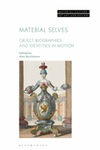
Material selves : object biographies and identities in motion
Burchmore, Alex
Bloomsbury Visual Arts
, 2024
; English
; 257 Pages
What do Persian robes of honour, 20th-century still-life painting, fur garments, and 18th-century porcelain all have in common? Prized, possessed and modelled, they highlight the deep connections we share with cultural objects.
Establishing new connections between people and things via artistic media and material culture, this highly interdisciplinary volume brings together both established and emerging scholars in the fields of art history, material culture, museum and heritage studies and literary studies to investigate the intersection of the personal with the material.
Raising vital questions of cultural identity, belonging and selfhood, Material Selves is the first book of its kind to consider the relationship between people and things across transcultural and transhistorical contexts. It employs innovative methodologies across ten chapters and critically expands on current models for understanding the dynamic relationship between people and things by tracing the central role objects have played in the construction, creation and performance of identity throughout history.
Structured around four key sections exploring biography and narrative
adornment and ornament
reclamation and intervention
and subjects and objects, the volume presents a global selection of case studies that explore, amongst other things, Margaret Olley's enduring fame, the significance of the Khil'a in Safavid Persia and early modern Europe, and 17th-century French painter Charles LeBrun's royal portraiture. Fusing these with contemporary theories of identity, the contributors provide analyses informed by posthumanism, the environmental humanities, race and gender. At the same time, they confront vital questions of identity, agency, and materiality, and highlight the way in which we use objects to tell stories, construct myths and make sense of our place in the world. In doing so, the book illuminates a wide range of cultural and chronological settings whilst giving close attention to the mobility of people and things between, across, and through time and place.
Burchmore, Alex
Bloomsbury Visual Arts
, 2024
; English
; 257 Pages
What do Persian robes of honour, 20th-century still-life painting, fur garments, and 18th-century porcelain all have in common? Prized, possessed and modelled, they highlight the deep connections we share with cultural objects.
Establishing new connections between people and things via artistic media and material culture, this highly interdisciplinary volume brings together both established and emerging scholars in the fields of art history, material culture, museum and heritage studies and literary studies to investigate the intersection of the personal with the material.
Raising vital questions of cultural identity, belonging and selfhood, Material Selves is the first book of its kind to consider the relationship between people and things across transcultural and transhistorical contexts. It employs innovative methodologies across ten chapters and critically expands on current models for understanding the dynamic relationship between people and things by tracing the central role objects have played in the construction, creation and performance of identity throughout history.
Structured around four key sections exploring biography and narrative
adornment and ornament
reclamation and intervention
and subjects and objects, the volume presents a global selection of case studies that explore, amongst other things, Margaret Olley's enduring fame, the significance of the Khil'a in Safavid Persia and early modern Europe, and 17th-century French painter Charles LeBrun's royal portraiture. Fusing these with contemporary theories of identity, the contributors provide analyses informed by posthumanism, the environmental humanities, race and gender. At the same time, they confront vital questions of identity, agency, and materiality, and highlight the way in which we use objects to tell stories, construct myths and make sense of our place in the world. In doing so, the book illuminates a wide range of cultural and chronological settings whilst giving close attention to the mobility of people and things between, across, and through time and place.
eBook
Berrie, Barbara H.; Leonhard, Karin; Fowler, Caroline; Weinryb, Ittai; Fowler, Caroline; Weinryb, Ittai
Princeton University Press
, 2024
; English
; 177 Pages
A concise illustrated history of one of art's most important and elusive elements
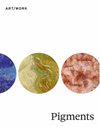
Over the millennia, humans have used pigments to decorate, narrate, and instruct. Charred bone, ground earth, stones, bugs, and blood were the first pigments. New pigments were manufactured by simple processes such as corrosion and calcination until the Industrial Revolution introduced colors outside the spectrum of the natural world. Pigments brings together leading art historians and conservators to trace the history of the materials used to create color and their invention across diverse cultures and time periods. This richly illustrated book features incisive historical essays and case studies that shed light on the many forms of pigments—the organic and inorganic
the edible and the toxic
and those that are more precious than gold. It shows how pigments were as central to the earliest art forms and global trade networks as they are to commerce, ornamentation, and artistic expression today. The book reveals the innate instability and mutability of most pigments and discusses how few artworks or objects look as they did when they were first created.
From cave paintings to contemporary art, Pigments demonstrates how a material understanding of color opens new perspectives on visual culture and the history of art.
eBook
Berrie, Barbara H.; Leonhard, Karin; Fowler, Caroline; Weinryb, Ittai; Fowler, Caroline; Weinryb, Ittai
Princeton University Press
, 2024
; English
; 177 Pages
A concise illustrated history of one of art's most important and elusive elements
Over the millennia, humans have used pigments to decorate, narrate, and instruct. Charred bone, ground earth, stones, bugs, and blood were the first pigments. New pigments were manufactured by simple processes such as corrosion and calcination until the Industrial Revolution introduced colors outside the spectrum of the natural world. Pigments brings together leading art historians and conservators to trace the history of the materials used to create color and their invention across diverse cultures and time periods. This richly illustrated book features incisive historical essays and case studies that shed light on the many forms of pigments—the organic and inorganic
the edible and the toxic
and those that are more precious than gold. It shows how pigments were as central to the earliest art forms and global trade networks as they are to commerce, ornamentation, and artistic expression today. The book reveals the innate instability and mutability of most pigments and discusses how few artworks or objects look as they did when they were first created.
From cave paintings to contemporary art, Pigments demonstrates how a material understanding of color opens new perspectives on visual culture and the history of art.
eBook
Applying aesthetics to everyday life : methodologies, history and new directions
Giombini, Lisa; Kvokacka, Adrián
Bloomsbury Publishing
, 2023
; English
; 209 Pages
Applying Aesthetics to Everyday Life surveys current debates in the field of everyday aesthetics, examining its history, methodology and intersections with cognate research areas. Lisa Giombini and Adrián Kvokacka bring together an international team of renowned scholars who are shaping the present and future of the discipline.
They demonstrate how the historical origins of everyday aesthetics emerges across the history of Western aesthetic thought, from Renaissance thinkers to the modern German philosophers Baumgarten, Kant and Heidegger. Chapters shed light on the field's methodological underpinnings, tracing its theoretical foundations back to epistemology and ethics and assess the potential of everyday aesthetics as a theoretical tool. They reveal its interdisciplinary nature and how it assists various fields of inquiry, including environmental and urban aesthetics, conservation ethics and the philosophy of art.
Through fresh explorations of its origins, background and contemporary developments, this collection advances a new definition of everyday aesthetics and provides a cutting edge reflection on the world we inhabit today.
Giombini, Lisa; Kvokacka, Adrián
Bloomsbury Publishing
, 2023
; English
; 209 Pages
Applying Aesthetics to Everyday Life surveys current debates in the field of everyday aesthetics, examining its history, methodology and intersections with cognate research areas. Lisa Giombini and Adrián Kvokacka bring together an international team of renowned scholars who are shaping the present and future of the discipline.
They demonstrate how the historical origins of everyday aesthetics emerges across the history of Western aesthetic thought, from Renaissance thinkers to the modern German philosophers Baumgarten, Kant and Heidegger. Chapters shed light on the field's methodological underpinnings, tracing its theoretical foundations back to epistemology and ethics and assess the potential of everyday aesthetics as a theoretical tool. They reveal its interdisciplinary nature and how it assists various fields of inquiry, including environmental and urban aesthetics, conservation ethics and the philosophy of art.
Through fresh explorations of its origins, background and contemporary developments, this collection advances a new definition of everyday aesthetics and provides a cutting edge reflection on the world we inhabit today.
eBook
Graves, Margaret S.; Miller, Sequoia; Odundo, Magdalene; Parry, Vicki
Princeton University Press
, 2023
; English
; 169 Pages
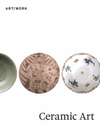
Concise but comprehensive, Ceramic Art brings together the voices of art historians, conservators, and artists to tell the history of making art from fired clay. The story spans history and continents, examining the global traditions of ceramists that range from pre-Columbian Peruvian artisans to contemporary African studio potters.
The volume shows how human need gave rise to multiple traditions in earthenware, stoneware, porcelain, glaze, and surface decoration from Africa, Asia, Europe, the Middle East, and the Americas. Essays describe the core materials and practice of ceramics, followed by consideration of its production, consumption, and use. Throughout, the focus is on the power of materials and the role conservation plays in the afterlife of a ceramic object.
An accessible introduction to an ancient practice, Ceramic Art offers new ways of thinking about the broader forces that have shaped the traditions of the medium.
eBook
Graves, Margaret S.; Miller, Sequoia; Odundo, Magdalene; Parry, Vicki
Princeton University Press
, 2023
; English
; 169 Pages
Concise but comprehensive, Ceramic Art brings together the voices of art historians, conservators, and artists to tell the history of making art from fired clay. The story spans history and continents, examining the global traditions of ceramists that range from pre-Columbian Peruvian artisans to contemporary African studio potters.
The volume shows how human need gave rise to multiple traditions in earthenware, stoneware, porcelain, glaze, and surface decoration from Africa, Asia, Europe, the Middle East, and the Americas. Essays describe the core materials and practice of ceramics, followed by consideration of its production, consumption, and use. Throughout, the focus is on the power of materials and the role conservation plays in the afterlife of a ceramic object.
An accessible introduction to an ancient practice, Ceramic Art offers new ways of thinking about the broader forces that have shaped the traditions of the medium.
eBook
Bracken, Susan; Turpin, Adriana
Bloomsbury Visual Arts
, 2021
; English
; 417 Pages
"The case studies provided in this manuscript, based on letters and detailed archival research, nuance the history of the art market and the role of the collector within it. Using letters, diaries, account books and other archival sources, the essays show how agents set up networks and acquired works of art, often developing the taste and knowledge of the collectors for whom they were working. They are therefore seen as important actors in the market, having a specific role that separates them from auctioneers, dealers, museum curators or amateurs, while at the same time acknowledging and analyzing the dual positions that many held. Each chronological period is introduced by a contextual essay, written by a leading expert in the field, setting out the art market in the period concerned and the ways in which agents functioned, making it an invaluable tool for those who wish a broader introduction to the intricate workings of the art market"
Bracken, Susan; Turpin, Adriana
Bloomsbury Visual Arts
, 2021
; English
; 417 Pages
"The case studies provided in this manuscript, based on letters and detailed archival research, nuance the history of the art market and the role of the collector within it. Using letters, diaries, account books and other archival sources, the essays show how agents set up networks and acquired works of art, often developing the taste and knowledge of the collectors for whom they were working. They are therefore seen as important actors in the market, having a specific role that separates them from auctioneers, dealers, museum curators or amateurs, while at the same time acknowledging and analyzing the dual positions that many held. Each chronological period is introduced by a contextual essay, written by a leading expert in the field, setting out the art market in the period concerned and the ways in which agents functioned, making it an invaluable tool for those who wish a broader introduction to the intricate workings of the art market"
eBook
Angkor wat : a transcultural history of heritage (2 volumes set)
Falser, Michael
De Gruyter
, 2019
; English
; 1171 Pages
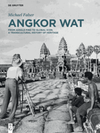
This book unravels the formation of the modern concept of cultural heritage by charting its colonial, postcolonial-nationalist and global trajectories. By bringing to light many unresearched dimensions of the twelfth-century Cambodian temple of Angkor Wat during its modern history, the study argues for a conceptual, connected history that unfolded within the transcultural interstices of European and Asian projects. With more than 1,400 black-and-white and colour illustrations of historic photographs, architectural plans and samples of public media, the monograph discusses the multiple lives of Angkor Wat over a 150-year-long period from the 1860s to the 2010s. Volume 1 (Angkor in France) reconceptualises the Orientalist, French-colonial 'discovery' of the temple in the nineteenth century and brings to light the manifold strategies at play in its physical representations as plaster cast substitutes in museums and as hybrid pavilions in universal and colonial exhibitions in Marseille and Paris from 1867 to 1937. Volume 2 (Angkor in Cambodia) covers, for the first time in this depth, the various on-site restoration efforts inside the 'Archaeological Park of Angkor' from 1907 until 1970, and the temple's gradual canonisation as a symbol of national identity during Cambodia's troublesome decolonisation (1953-89), from independence to Khmer Rouge terror and Vietnamese occupation, and, finally, as a global icon of UNESCO World Heritage since 1992 until today.
Falser, Michael
De Gruyter
, 2019
; English
; 1171 Pages
This book unravels the formation of the modern concept of cultural heritage by charting its colonial, postcolonial-nationalist and global trajectories. By bringing to light many unresearched dimensions of the twelfth-century Cambodian temple of Angkor Wat during its modern history, the study argues for a conceptual, connected history that unfolded within the transcultural interstices of European and Asian projects. With more than 1,400 black-and-white and colour illustrations of historic photographs, architectural plans and samples of public media, the monograph discusses the multiple lives of Angkor Wat over a 150-year-long period from the 1860s to the 2010s. Volume 1 (Angkor in France) reconceptualises the Orientalist, French-colonial 'discovery' of the temple in the nineteenth century and brings to light the manifold strategies at play in its physical representations as plaster cast substitutes in museums and as hybrid pavilions in universal and colonial exhibitions in Marseille and Paris from 1867 to 1937. Volume 2 (Angkor in Cambodia) covers, for the first time in this depth, the various on-site restoration efforts inside the 'Archaeological Park of Angkor' from 1907 until 1970, and the temple's gradual canonisation as a symbol of national identity during Cambodia's troublesome decolonisation (1953-89), from independence to Khmer Rouge terror and Vietnamese occupation, and, finally, as a global icon of UNESCO World Heritage since 1992 until today.
eBook
The information audit : a practical guide
Henczel, Susan
De Gruyter Saur
, 2013
; English
; 297 Pages
The Information Audit is a process by which an organisation investigates its information requirements and matches them against the information resources and services that are currently provided. Using a seven stage model this book will take the information professional through the process of an audit.
Henczel, Susan
De Gruyter Saur
, 2013
; English
; 297 Pages
The Information Audit is a process by which an organisation investigates its information requirements and matches them against the information resources and services that are currently provided. Using a seven stage model this book will take the information professional through the process of an audit.
