



Navigation menu
Search
Databases
All Databases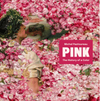
eBook
Pastoureau, Michel; Gladding, Jody
Princeton University Press
, 2025
; English
; 192 Pages
From the acclaimed author of Blue and other color histories, the beautifully illustrated story of pink, from the first ancient pigments to Barbie
Pink has such powerful associations today that it's hard to imagine the color could ever have meant anything different. But it's only since the introduction of the Barbie doll in 1959 that pink has become decisively feminized. Indeed, in the eighteenth century, pink was frequently masculine, and the color has signified many things beyond gender over the course of its long history—from the prim to the vulgar, and from the romantic to the eccentric. In this richly illustrated book, Michel Pastoureau, a celebrated authority on the history of colors, presents a fascinating visual, social, and cultural history of pink in the West, from antiquity to today.
Pink pigments first appear in ancient Macedonian paintings, but it was not until the eighteenth century that vivid, saturated pinks were developed for dyeing and painting. At the same time, a popular new flower—the pink rose—finally gave the color a standard name, and pink, assuming a place in everyday life, began to acquire its own symbolism, distinct from that of red, yellow, or white. Bringing the story up to the twentieth and twenty-first centuries, Pink describes how the color, both adored and detested, became associated with many other things, from softness and pleasure to nudity and sex.Illustrated throughout with a wealth of captivating images, Pink is an entertaining and enlightening account of the evolving role and significance of the color in art, fashion, literature, religion, science, and everyday life across the millennia.
Pastoureau, Michel; Gladding, Jody
Princeton University Press
, 2025
; English
; 192 Pages
From the acclaimed author of Blue and other color histories, the beautifully illustrated story of pink, from the first ancient pigments to Barbie
Pink has such powerful associations today that it's hard to imagine the color could ever have meant anything different. But it's only since the introduction of the Barbie doll in 1959 that pink has become decisively feminized. Indeed, in the eighteenth century, pink was frequently masculine, and the color has signified many things beyond gender over the course of its long history—from the prim to the vulgar, and from the romantic to the eccentric. In this richly illustrated book, Michel Pastoureau, a celebrated authority on the history of colors, presents a fascinating visual, social, and cultural history of pink in the West, from antiquity to today.
Pink pigments first appear in ancient Macedonian paintings, but it was not until the eighteenth century that vivid, saturated pinks were developed for dyeing and painting. At the same time, a popular new flower—the pink rose—finally gave the color a standard name, and pink, assuming a place in everyday life, began to acquire its own symbolism, distinct from that of red, yellow, or white. Bringing the story up to the twentieth and twenty-first centuries, Pink describes how the color, both adored and detested, became associated with many other things, from softness and pleasure to nudity and sex.Illustrated throughout with a wealth of captivating images, Pink is an entertaining and enlightening account of the evolving role and significance of the color in art, fashion, literature, religion, science, and everyday life across the millennia.
eBook
Kandel, Eric R.
Columbia University Press
, 2024
; English
; 233 Pages
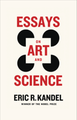
When we view a work of art, we often experience an emotional response, but the causes of our reactions are complex. Our knowledge of why we respond to art as we do is rooted in science—in psychology and biology. Eric R. Kandel traces the origins of this understanding to early twentieth-century Vienna, which gave rise to the concept of the "beholder’s share," the realization that art is incomplete without the perceptual and emotional involvement of the viewer—that is, without our responses to it.
But what causes our response? Our brain is a creativity machine that brings to bear on any image—including a painting—certain innate, universal processes related to sensory perception as well as higher-order processes related to our personal experiences, memories, and emotions. Understanding how these unconscious processes in the brain interact to create the beholder’s share is one of the great challenges currently confronting brain science.
The essays on art and science in this book vary widely in subject matter, including the angst-ridden portraits of Soutine, conflicting views of women’s sexuality, Cubism’s challenge to our innate visual processes, and why we react differently to abstract versus figurative art. But each essay focuses on the interaction of art and science. Woven throughout are the many notable scientists, art historians, artists, and others, both Jewish and non-Jewish, who contributed to our understanding of how we experience art.
Kandel, Eric R.
Columbia University Press
, 2024
; English
; 233 Pages
When we view a work of art, we often experience an emotional response, but the causes of our reactions are complex. Our knowledge of why we respond to art as we do is rooted in science—in psychology and biology. Eric R. Kandel traces the origins of this understanding to early twentieth-century Vienna, which gave rise to the concept of the "beholder’s share," the realization that art is incomplete without the perceptual and emotional involvement of the viewer—that is, without our responses to it.
But what causes our response? Our brain is a creativity machine that brings to bear on any image—including a painting—certain innate, universal processes related to sensory perception as well as higher-order processes related to our personal experiences, memories, and emotions. Understanding how these unconscious processes in the brain interact to create the beholder’s share is one of the great challenges currently confronting brain science.
The essays on art and science in this book vary widely in subject matter, including the angst-ridden portraits of Soutine, conflicting views of women’s sexuality, Cubism’s challenge to our innate visual processes, and why we react differently to abstract versus figurative art. But each essay focuses on the interaction of art and science. Woven throughout are the many notable scientists, art historians, artists, and others, both Jewish and non-Jewish, who contributed to our understanding of how we experience art.
eBook
Varichon, Anne; Deimling, Kate
Princeton University Press
, 2024
; English
; 285 Pages
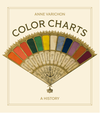
A beautifully illustrated history of the many inventive, poetic, and alluring ways in which color swatches have been selected and staged
The need to categorize and communicate color has mobilized practitioners and scholars for centuries. Color Charts describes the many different methods and ingenious devices developed since the fifteenth century by doctors, naturalists, dyers, and painters to catalog fragments of colors. With the advent of industrial society, manufacturers and merchants developed some of the most beautiful and varied tools ever designed to present all the available colors. Thanks to them, society has discovered the abundance of color embodied in a plethora of materials: cuts of fabric, leather, paper, and rubber
slats of wood and linoleum
delicate skeins of silk
careful deposits of paint and pastels
fragments of lipstick
and arrangements of flower petals. These samples shape a visual culture and a chromatic vocabulary and instill a deep desire for color.
Anne Varichon traces the emergence of modern color charts from a set of processes developed over the centuries in various contexts. She presents illuminating examples that bring this remarkable story to life, from ancient writings revealing attention to precise shade to contemporary designers' color charts, dyers' notebooks, and Werner's famous color nomenclature. Varichon argues that color charts have linked generations of artists, artisans, scientists, industrialists, and merchants, and have played an essential and enduring role in the way societies think about color.
Drawing on nearly two hundred documents from public and private collections, almost all of them previously unpublished, this wonderfully illustrated book shows how the color chart, in its many distinct forms and expressions, is a practical tool that has transcended its original purpose to become an educational aid and subject of contemplation worthy of being studied and admired.

eBook
Varichon, Anne; Deimling, Kate
Princeton University Press
, 2024
; English
; 285 Pages
A beautifully illustrated history of the many inventive, poetic, and alluring ways in which color swatches have been selected and staged
The need to categorize and communicate color has mobilized practitioners and scholars for centuries. Color Charts describes the many different methods and ingenious devices developed since the fifteenth century by doctors, naturalists, dyers, and painters to catalog fragments of colors. With the advent of industrial society, manufacturers and merchants developed some of the most beautiful and varied tools ever designed to present all the available colors. Thanks to them, society has discovered the abundance of color embodied in a plethora of materials: cuts of fabric, leather, paper, and rubber
slats of wood and linoleum
delicate skeins of silk
careful deposits of paint and pastels
fragments of lipstick
and arrangements of flower petals. These samples shape a visual culture and a chromatic vocabulary and instill a deep desire for color.
Anne Varichon traces the emergence of modern color charts from a set of processes developed over the centuries in various contexts. She presents illuminating examples that bring this remarkable story to life, from ancient writings revealing attention to precise shade to contemporary designers' color charts, dyers' notebooks, and Werner's famous color nomenclature. Varichon argues that color charts have linked generations of artists, artisans, scientists, industrialists, and merchants, and have played an essential and enduring role in the way societies think about color.
Drawing on nearly two hundred documents from public and private collections, almost all of them previously unpublished, this wonderfully illustrated book shows how the color chart, in its many distinct forms and expressions, is a practical tool that has transcended its original purpose to become an educational aid and subject of contemplation worthy of being studied and admired.
eBook
Grey on grey : at the threshold of philosophy and art
Vellodi, Kamini; Vinegar, Aron
Edinburgh University Press
, 2023
; English
; 481 Pages
Explores the spectrum of ideas, theories, and practices raised by the colour grey
- Addresses the ongoing relevance of Hegel's articulation of philosophy as a painting of 'grey on grey'
- Provides an interdisciplinary study of philosophical and theoretical issues raised by grey, including the relationships between abstraction and immediacy, determinancy and indeterminancy, colour and colourlessness, indifference and
difference, and concepts of neutrality, repetition, tautology, and equivalence
Inspired by Hegel’s invocation of philosophy as a painting of ‘grey on grey’, this collection of essays explores the rich scope of ideas implicated by grey, as a colour and a philosophical concept. The volume attests to the insistent logic of grey´s self-differing at stake in the ontology of artworks and images, revealing their deadlocks and potentials both past and present. Crossing art history, visual studies, philosophy, anthropology, media, literary and decolonial studies, contributions consider the immanence of grey on grey in rethinking the temporalities, techniques and media of art.
Vellodi, Kamini; Vinegar, Aron
Edinburgh University Press
, 2023
; English
; 481 Pages
Explores the spectrum of ideas, theories, and practices raised by the colour grey
- Addresses the ongoing relevance of Hegel's articulation of philosophy as a painting of 'grey on grey'
- Provides an interdisciplinary study of philosophical and theoretical issues raised by grey, including the relationships between abstraction and immediacy, determinancy and indeterminancy, colour and colourlessness, indifference and
difference, and concepts of neutrality, repetition, tautology, and equivalence
Inspired by Hegel’s invocation of philosophy as a painting of ‘grey on grey’, this collection of essays explores the rich scope of ideas implicated by grey, as a colour and a philosophical concept. The volume attests to the insistent logic of grey´s self-differing at stake in the ontology of artworks and images, revealing their deadlocks and potentials both past and present. Crossing art history, visual studies, philosophy, anthropology, media, literary and decolonial studies, contributions consider the immanence of grey on grey in rethinking the temporalities, techniques and media of art.
eBook
Electrographic architecture : New York color, Las Vegas light, and America's white imaginary
Kane, Carolyn L.
University of California Press
, 2023
; English
; 316 Pages
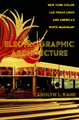
Bridging histories of technology, media studies, and aesthetics, Electrographic Architecture forges a critical narrative of the ways in which illuminated light and color have played key roles in the formation of America's white imaginary. Carolyn L. Kane charts the rise of the country's urban advertisements, light empires, and neoclassical buildings in the early twentieth century; the midcentury construction of polychromatic electrographic spectacles; and their eclipse by informatically intense, invisible algorithms at the dawn of the new millennium. Drawing on archival research, interviews, and visual analysis, Electrographic Architecture shows how the development of America's electrographic surround runs parallel to a new paradigm of power, property, and possession.
Kane, Carolyn L.
University of California Press
, 2023
; English
; 316 Pages
Bridging histories of technology, media studies, and aesthetics, Electrographic Architecture forges a critical narrative of the ways in which illuminated light and color have played key roles in the formation of America's white imaginary. Carolyn L. Kane charts the rise of the country's urban advertisements, light empires, and neoclassical buildings in the early twentieth century; the midcentury construction of polychromatic electrographic spectacles; and their eclipse by informatically intense, invisible algorithms at the dawn of the new millennium. Drawing on archival research, interviews, and visual analysis, Electrographic Architecture shows how the development of America's electrographic surround runs parallel to a new paradigm of power, property, and possession.
eBook
White : the history of a color
Pastoureau, Michel
Princeton University Press
, 2023
; English
; 242 Pages
As a pigment, white is often thought to represent an absence of color, but it is without doubt an important color in its own right, just like red, blue, green, or yellow—and, like them, white has its own intriguing history. In this richly illustrated book, Michel Pastoureau, a celebrated authority on the history of colors, presents a fascinating visual, social, and cultural history of the color white in European societies, from antiquity to today.
Illustrated throughout with a wealth of captivating images ranging from the ancient world to the twenty-first century, White examines the evolving place, perception, and meaning of this deceptively simple but complex hue in art, fashion, literature, religion, science, and everyday life across the millennia. Before the seventeenth century, white’s status as a true color was never contested. On the contrary, from antiquity until the height of the Middle Ages, white formed with red and black a chromatic triad that played a central role in life and art. Nor has white always been thought of as the opposite of black. Through the Middle Ages, the true opposite of white was red. White also has an especially rich symbolic history, and the color has often been associated with purity, virginity, innocence, wisdom, peace, beauty, and cleanliness.
With its striking design and compelling text, White is a colorful history of a surprisingly vivid and various color.
Pastoureau, Michel
Princeton University Press
, 2023
; English
; 242 Pages
As a pigment, white is often thought to represent an absence of color, but it is without doubt an important color in its own right, just like red, blue, green, or yellow—and, like them, white has its own intriguing history. In this richly illustrated book, Michel Pastoureau, a celebrated authority on the history of colors, presents a fascinating visual, social, and cultural history of the color white in European societies, from antiquity to today.
Illustrated throughout with a wealth of captivating images ranging from the ancient world to the twenty-first century, White examines the evolving place, perception, and meaning of this deceptively simple but complex hue in art, fashion, literature, religion, science, and everyday life across the millennia. Before the seventeenth century, white’s status as a true color was never contested. On the contrary, from antiquity until the height of the Middle Ages, white formed with red and black a chromatic triad that played a central role in life and art. Nor has white always been thought of as the opposite of black. Through the Middle Ages, the true opposite of white was red. White also has an especially rich symbolic history, and the color has often been associated with purity, virginity, innocence, wisdom, peace, beauty, and cleanliness.
With its striking design and compelling text, White is a colorful history of a surprisingly vivid and various color.
eBook
Hibit, Eric
For Dummies
, 2022
; English
; 291 Pages
Choose the right colors and color combinations for your projects
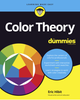
Color theory is the art and science of using color. Color Theory For Dummies explains, in simple terms, how colors relate to one another and how they can be combined to work together in an aesthetically pleasing way. An understanding of color theory can help you create art, decorate your home, design a beautiful wedding, and impress your friends at parties. With this book, you’ll learn how humans perceive color, how colors harmonize or clash with each other, and how you can apply these principles in your life and work to add a little, well, color to things.
• Discover the history and science behind how we see colors
• Understand how colors mix, match, and contrast so you can create better color combinations
• Learn how certain colors have the ability to affect how we feel and think
• Apply color theory to design, art, décor, photography, and beyond
Color Theory For Dummies simplifies and illuminates the world of color theory, outlining and defining color in a digestible and applicable way.
eBook
Hibit, Eric
For Dummies
, 2022
; English
; 291 Pages
Choose the right colors and color combinations for your projects
Color theory is the art and science of using color. Color Theory For Dummies explains, in simple terms, how colors relate to one another and how they can be combined to work together in an aesthetically pleasing way. An understanding of color theory can help you create art, decorate your home, design a beautiful wedding, and impress your friends at parties. With this book, you’ll learn how humans perceive color, how colors harmonize or clash with each other, and how you can apply these principles in your life and work to add a little, well, color to things.
• Discover the history and science behind how we see colors
• Understand how colors mix, match, and contrast so you can create better color combinations
• Learn how certain colors have the ability to affect how we feel and think
• Apply color theory to design, art, décor, photography, and beyond
Color Theory For Dummies simplifies and illuminates the world of color theory, outlining and defining color in a digestible and applicable way.
eBook
Pink flamingos & The yellow pages : the stories behind the colors of our world
Hambly, Bob
Chronicle Books LLC
, 2022
; English
; 114 Pages
Discover the weird and wonderful stories of our colorful world!
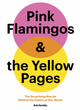
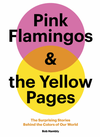
Why are wedding dresses white? And what is the Ketchup and Mustard Theory? The answers always come back to color. Color infuses our lives with meaning, manifesting in science, language, design, pop culture, and beyond. Specific hues shape our everyday actions and define entire generations. In 75 short essays, this book reveals the hidden histories behind a range of fascinating hues—from shocking shades to subtle tints, from jockey silks on the racetrack to corals on the ocean floor. This elegant little hardcover is bursting with bright photographs throughout. It's a vivid tour across geography and through time that will leave you with a renewed sense of curiosity and wonder about our colorful world.
KNOWLEDGEABLE AUTHOR: Designer Bob Hambly brings both expertise and irresistible enthusiasm to this exploration of color. His blog Colour Studies has received publicity in the design blog world since its 2017 launch—including a feature in Uppercase Magazine.
THE JOY OF COLOR: Color is a universal element of the world
it lifts our mood and fascinates us. Everyone from artists to designers to rainbow lovers will enjoy this fresh spin on the topic.
APPROACHABLE AND COMPELLING: Hambly shares his insights in a direct and appealing style sprinkled with wry humor. Photographs and a bold, colorful design make this book a delight to read.
PERFECT FOR TRIVIA LOVERS: With wow-worthy information presented in bitesize chapters, this is the perfect gift for anyone who loves collecting trivia.
Perfect for:
• Trivia enthusiasts
• Color and rainbow lovers
• Art and design fans
• History buffs
• Pop culture fiends
Hambly, Bob
Chronicle Books LLC
, 2022
; English
; 114 Pages
Discover the weird and wonderful stories of our colorful world!
Why are wedding dresses white? And what is the Ketchup and Mustard Theory? The answers always come back to color. Color infuses our lives with meaning, manifesting in science, language, design, pop culture, and beyond. Specific hues shape our everyday actions and define entire generations. In 75 short essays, this book reveals the hidden histories behind a range of fascinating hues—from shocking shades to subtle tints, from jockey silks on the racetrack to corals on the ocean floor. This elegant little hardcover is bursting with bright photographs throughout. It's a vivid tour across geography and through time that will leave you with a renewed sense of curiosity and wonder about our colorful world.
KNOWLEDGEABLE AUTHOR: Designer Bob Hambly brings both expertise and irresistible enthusiasm to this exploration of color. His blog Colour Studies has received publicity in the design blog world since its 2017 launch—including a feature in Uppercase Magazine.
THE JOY OF COLOR: Color is a universal element of the world
it lifts our mood and fascinates us. Everyone from artists to designers to rainbow lovers will enjoy this fresh spin on the topic.
APPROACHABLE AND COMPELLING: Hambly shares his insights in a direct and appealing style sprinkled with wry humor. Photographs and a bold, colorful design make this book a delight to read.
PERFECT FOR TRIVIA LOVERS: With wow-worthy information presented in bitesize chapters, this is the perfect gift for anyone who loves collecting trivia.
Perfect for:
• Trivia enthusiasts
• Color and rainbow lovers
• Art and design fans
• History buffs
• Pop culture fiends
eBook
Color it true : impressions of cinema
Pomerance, Murray
Bloomsbury Publishing
, 2022
; English
; 361 Pages
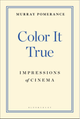
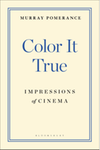
This often-startlingly original book introduces a new way of thinking about color in film as distinct from existing approaches which tend to emphasize either technical processes and/or histories of film coloration, or the meaning(s) of color as metaphor or symbol, or else part of a broader signifying system. Murray Pomerance's latest meditation on cinema has the author embed himself in various ways of thinking about color; not ways of framing it as a production trick or a symbolic language but ways of wondering how the color effect onscreen can work in the act of viewing.
Pomerance examines many issues, including acuity, dreaming, interrelationships, saturations, color contrasts, color and performance (color as a performance aid or even performance substitute), and more. The lavender of the photographer's seamless in Antonioni's Blow-Up taken in itself as an explosion of color worked into form, and then considered both as part of the story and part of our experience.
The 14 chapters of this book each discuss a single primary color as regards to our experience of cinema. After opening the idea of such an exploration in terms of the history of our apperception and the variation in our experience that color germinates, Color it True takes form.
Pomerance, Murray
Bloomsbury Publishing
, 2022
; English
; 361 Pages
This often-startlingly original book introduces a new way of thinking about color in film as distinct from existing approaches which tend to emphasize either technical processes and/or histories of film coloration, or the meaning(s) of color as metaphor or symbol, or else part of a broader signifying system. Murray Pomerance's latest meditation on cinema has the author embed himself in various ways of thinking about color; not ways of framing it as a production trick or a symbolic language but ways of wondering how the color effect onscreen can work in the act of viewing.
Pomerance examines many issues, including acuity, dreaming, interrelationships, saturations, color contrasts, color and performance (color as a performance aid or even performance substitute), and more. The lavender of the photographer's seamless in Antonioni's Blow-Up taken in itself as an explosion of color worked into form, and then considered both as part of the story and part of our experience.
The 14 chapters of this book each discuss a single primary color as regards to our experience of cinema. After opening the idea of such an exploration in terms of the history of our apperception and the variation in our experience that color germinates, Color it True takes form.
eBook
Color scheme : an irreverent history of art and pop culture in color palettes
Young, Edith
Princeton Architectural Press
, 2021
; English
; 144 Pages
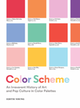
Change the way you see color forever in this dazzling collection of color palettes spanning art history and pop culture, and told in writer and artist Edith Young's accessible, inviting style.
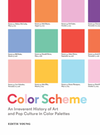
From the shades of pink in the blush of Madame de Pompadour's cheeks to Prince's concert costumes, Color Scheme decodes the often overlooked color concepts that can be found in art history and visual culture. Edith Young's forty color palettes and accompanying essays reveal the systems of color that underpin everything we see, allowing original and, at times, even humorous themes to emerge. Color Scheme is the perfect book for anyone interested in learning more about, or rethinking, how we see the world around us.
Young, Edith
Princeton Architectural Press
, 2021
; English
; 144 Pages
Change the way you see color forever in this dazzling collection of color palettes spanning art history and pop culture, and told in writer and artist Edith Young's accessible, inviting style.
From the shades of pink in the blush of Madame de Pompadour's cheeks to Prince's concert costumes, Color Scheme decodes the often overlooked color concepts that can be found in art history and visual culture. Edith Young's forty color palettes and accompanying essays reveal the systems of color that underpin everything we see, allowing original and, at times, even humorous themes to emerge. Color Scheme is the perfect book for anyone interested in learning more about, or rethinking, how we see the world around us.
