

Navigation menu
Search
Databases
All Databases
eBook
Invisible hands : fabrication, forgery, and the art of Islamic ceramics
Graves, Margaret S.
Princeton University Press
, 2026
; English
; 341 Pages
The remarkable history of forged and fabricated Islamic ceramics, their makers, and their unique role in colonial trade
In the heyday of Islamic art collecting around the turn of the twentieth century, thousands of premodern ceramic objects circulated on the international antiquities market. Invisible Hands tells the story of how traditional craft skills of the Islamic world, often thought to have died out with the advent of industrialization, were redirected toward a thriving new market in the colonial era: the fabrication and fictionalizing of antiquities, especially ceramics.
In this stunning work of art history, Margaret Graves shakes the foundations of the discipline, challenging us to reconsider what is and is not art. She traces how sophisticated fabrications—as modern as they were believed to be medieval—moved within an international network of diggers, dealers, and collectors who took advantage of a largely unregulated marketplace to exchange and amass objects that were fabulous in every sense of the word. She looks at canonical artworks as well as many previously unpublished and rarely seen objects, shedding light on the astonishingly varied ways Islamic ceramics were altered and remade by highly skilled craftspeople to meet the demands of Western collectors. Shifting away from the moralizing stance of past studies on reconstructed Islamic ceramics, Graves shows how fabrication and forgery became a major site of participation in modern global capitalism and establishes an entirely new paradigm in the history of art.
Drawing on a substantive new body of provenance research, archaeology, economic history, and laboratory analysis, Invisible Hands centers previously marginalized objects, reframing the practices of fabrication and forgery as crucial forms of invention and artistic skill worthy of study and admiration.
Graves, Margaret S.
Princeton University Press
, 2026
; English
; 341 Pages
The remarkable history of forged and fabricated Islamic ceramics, their makers, and their unique role in colonial trade
In the heyday of Islamic art collecting around the turn of the twentieth century, thousands of premodern ceramic objects circulated on the international antiquities market. Invisible Hands tells the story of how traditional craft skills of the Islamic world, often thought to have died out with the advent of industrialization, were redirected toward a thriving new market in the colonial era: the fabrication and fictionalizing of antiquities, especially ceramics.
In this stunning work of art history, Margaret Graves shakes the foundations of the discipline, challenging us to reconsider what is and is not art. She traces how sophisticated fabrications—as modern as they were believed to be medieval—moved within an international network of diggers, dealers, and collectors who took advantage of a largely unregulated marketplace to exchange and amass objects that were fabulous in every sense of the word. She looks at canonical artworks as well as many previously unpublished and rarely seen objects, shedding light on the astonishingly varied ways Islamic ceramics were altered and remade by highly skilled craftspeople to meet the demands of Western collectors. Shifting away from the moralizing stance of past studies on reconstructed Islamic ceramics, Graves shows how fabrication and forgery became a major site of participation in modern global capitalism and establishes an entirely new paradigm in the history of art.
Drawing on a substantive new body of provenance research, archaeology, economic history, and laboratory analysis, Invisible Hands centers previously marginalized objects, reframing the practices of fabrication and forgery as crucial forms of invention and artistic skill worthy of study and admiration.
eBook
Bernard Palissy and the arts of the earth
Quiviger, François
Reaktion Books
, 2025
; English
; 184 Pages
Bernard Palissy, a French Renaissance artisan philosopher, saw intelligence and consciousness across all forms of life – soils, plants, animals – rejecting human superiority long before modern environmentalism. Known for crafting ceramic ware, fountains and grottos for royal patrons, Palissy used his knowledge of earth and agriculture to develop a unique, sometimes controversial philosophy of nature. Unlike many of his peers, he celebrated animal wisdom over human hubris, a view resonant today. This new biography explores his work within the courtly world of his patrons and highlights Palissy’s lasting influence on early modern artisan culture and our understanding of art, nature and intelligence.
Quiviger, François
Reaktion Books
, 2025
; English
; 184 Pages
Bernard Palissy, a French Renaissance artisan philosopher, saw intelligence and consciousness across all forms of life – soils, plants, animals – rejecting human superiority long before modern environmentalism. Known for crafting ceramic ware, fountains and grottos for royal patrons, Palissy used his knowledge of earth and agriculture to develop a unique, sometimes controversial philosophy of nature. Unlike many of his peers, he celebrated animal wisdom over human hubris, a view resonant today. This new biography explores his work within the courtly world of his patrons and highlights Palissy’s lasting influence on early modern artisan culture and our understanding of art, nature and intelligence.
eBook
Beautiful clay : a traditional craft as art
Burrison, John A.
Indiana University Press
, 2025
; English
; 351 Pages
For most of human history, all pottery was what we would now consider traditional folk pottery. Not all artifacts go beyond the basic requirements of utility in pursuit of beauty, but Beautiful Clay considers those that do.
In Beautiful Clay, noted scholar of traditional ceramics John A. Burrison writes about how a potter applies aesthetics to utilitarian objects to transform raw clay into something beautiful. Though what is considered beautiful in art changes from culture to culture and person to person, there are universal techniques such as manipulating form, color, texture, and more that tap into clay's potential for beauty. Burrison uses an approach from a perspective of international artistry rather than an approach bound by history or geography. After beginning with more than 40,000 images that the author curated as a study resource, Beautiful Clay narrows it down to around 230 images that capture the artistry within traditional ceramics worldwide.
Beautiful Clay examines the aesthetic dimensions of what is essentially a traditional utilitarian craft, the ancient clay-based craft of pottery, from earliest times to the present.
Burrison, John A.
Indiana University Press
, 2025
; English
; 351 Pages
For most of human history, all pottery was what we would now consider traditional folk pottery. Not all artifacts go beyond the basic requirements of utility in pursuit of beauty, but Beautiful Clay considers those that do.
In Beautiful Clay, noted scholar of traditional ceramics John A. Burrison writes about how a potter applies aesthetics to utilitarian objects to transform raw clay into something beautiful. Though what is considered beautiful in art changes from culture to culture and person to person, there are universal techniques such as manipulating form, color, texture, and more that tap into clay's potential for beauty. Burrison uses an approach from a perspective of international artistry rather than an approach bound by history or geography. After beginning with more than 40,000 images that the author curated as a study resource, Beautiful Clay narrows it down to around 230 images that capture the artistry within traditional ceramics worldwide.
Beautiful Clay examines the aesthetic dimensions of what is essentially a traditional utilitarian craft, the ancient clay-based craft of pottery, from earliest times to the present.
eBook
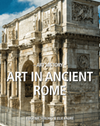
Art History Art in ancient Rome
Strong, Eugenie; Faure, Elie
Parkstone International
, 2024
; English
; 72 Pages
Centred in the city of Rome, the civilization of Ancient Rome ruled much of Europe for over 1000 years. The diverse phases of Roman art correspond to as many phases in the spiritual and political life of the Roman people. It has its origin in the national character and circumstances of the Romans. The ideal in matters of taste in ancient Rome was only derived by them from the gods through the medium of another nation. Their own notion of the highest of all things, their summum bonum, was not the beautiful, but the powerful. And this they thought they had as a nation received from heaven. In order to fully to appreciate Rome's contribution to the art of the West, we need to understand how upon the old Latin stock were grafted shoots brought in turn from Etruria, from Greece, from the great Hellenistic cities of Asia and of Africa. And if these foreign growths threatened at times, as towards the end of the Republic, to absorb the vital sap of the original tree, yet the Roman type recovered itself under the Empire and gradually reached its full and independent development.
Strong, Eugenie; Faure, Elie
Parkstone International
, 2024
; English
; 72 Pages
Centred in the city of Rome, the civilization of Ancient Rome ruled much of Europe for over 1000 years. The diverse phases of Roman art correspond to as many phases in the spiritual and political life of the Roman people. It has its origin in the national character and circumstances of the Romans. The ideal in matters of taste in ancient Rome was only derived by them from the gods through the medium of another nation. Their own notion of the highest of all things, their summum bonum, was not the beautiful, but the powerful. And this they thought they had as a nation received from heaven. In order to fully to appreciate Rome's contribution to the art of the West, we need to understand how upon the old Latin stock were grafted shoots brought in turn from Etruria, from Greece, from the great Hellenistic cities of Asia and of Africa. And if these foreign growths threatened at times, as towards the end of the Republic, to absorb the vital sap of the original tree, yet the Roman type recovered itself under the Empire and gradually reached its full and independent development.
eBook
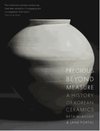
Precious beyond measure : a history of Korean ceramics
McKillop, Beth; Portal, Jane
Reaktion Books
, 2024
; English
; 271 Pages
An illustrated history of Korean ceramics from ancient origins to today.
This book is a captivating, richly illustrated history of fired clay in Korea, spanning ancient times to the present day. Drawing on the latest research, this book features a wide range of examples from archaeological sites and museums. In addition, it offers a rare glimpse into the world of modern North Korean ceramics. The authors devote substantial chapters to the refined celadons of the Goryeo and porcelains of the Joseon dynasties (tenth to twentieth centuries), as well as an array of blue-and-white vessels. Merging maritime archaeology, textual evidence, and kiln excavation reports, this overview reveals a remarkable and enduring ceramic tradition in Korea.
McKillop, Beth; Portal, Jane
Reaktion Books
, 2024
; English
; 271 Pages
An illustrated history of Korean ceramics from ancient origins to today.
This book is a captivating, richly illustrated history of fired clay in Korea, spanning ancient times to the present day. Drawing on the latest research, this book features a wide range of examples from archaeological sites and museums. In addition, it offers a rare glimpse into the world of modern North Korean ceramics. The authors devote substantial chapters to the refined celadons of the Goryeo and porcelains of the Joseon dynasties (tenth to twentieth centuries), as well as an array of blue-and-white vessels. Merging maritime archaeology, textual evidence, and kiln excavation reports, this overview reveals a remarkable and enduring ceramic tradition in Korea.
eBook
McClary, Richard P.
Edinburgh University Press
, 2024
; English
; 362 Pages
Mina'i, or polychrome overglaze, ware was made in Iran between the late 12th and the early 13th centuries.
However, most pieces in museums have in fact been rebuilt, often from pieces of multiple different vessels with extensive plaster fill and modern overpaint.
Only by closely examining unrestored archaeological sherds - genuine fragments of pots - can we build an authentic picture of what mina'i ware actually looked like.
In this innovative book, Richard P. McClary studies sherds in collections around the world to help us to understand the production, decoration and distribution of the wares.
He then examines the increased popularity of mina'i ware from the late-19th to the mid-20th century, with a focus on the dealers, collectors and curators, as well as the various types of faking, restoration, repair and conservation that has occurred over the last century.
McClary, Richard P.
Edinburgh University Press
, 2024
; English
; 362 Pages
Mina'i, or polychrome overglaze, ware was made in Iran between the late 12th and the early 13th centuries.
However, most pieces in museums have in fact been rebuilt, often from pieces of multiple different vessels with extensive plaster fill and modern overpaint.
Only by closely examining unrestored archaeological sherds - genuine fragments of pots - can we build an authentic picture of what mina'i ware actually looked like.
In this innovative book, Richard P. McClary studies sherds in collections around the world to help us to understand the production, decoration and distribution of the wares.
He then examines the increased popularity of mina'i ware from the late-19th to the mid-20th century, with a focus on the dealers, collectors and curators, as well as the various types of faking, restoration, repair and conservation that has occurred over the last century.
eBook
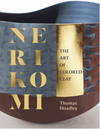
Nerikomi: the art of colored clay
Hoadley, Thomas
Bloomsbury Publishing
, 2024
; English
; 193 Pages
A fully illustrated examination of the use of color in clay, outlining its history and exploring the styles and techniques of the leading modern makers. Mix two or more colors of clay as part of a piece's design, and you are creating nerikomi. There are many techniques – stacking, stretching, slicing – but with nerikomi, the decoration is built and fired into the work's very fabric, rather than glazing it later. This beautifully illustrated introduction by accomplished nerikomi specialist Thomas Hoadley includes: – A brief history of the origins and international styles of colored clay – A section dedicated to the most honored Japanese Masters of nerikomi – Stunning examples of work from the world's leading experts – Step-by-step examples of many of the techniques employed Whether you simply enjoy the beauty of multicolored clay, or are seeking inspiration, this essential volume contains everything you need to embark on your own nerikomi projects.
Hoadley, Thomas
Bloomsbury Publishing
, 2024
; English
; 193 Pages
A fully illustrated examination of the use of color in clay, outlining its history and exploring the styles and techniques of the leading modern makers. Mix two or more colors of clay as part of a piece's design, and you are creating nerikomi. There are many techniques – stacking, stretching, slicing – but with nerikomi, the decoration is built and fired into the work's very fabric, rather than glazing it later. This beautifully illustrated introduction by accomplished nerikomi specialist Thomas Hoadley includes: – A brief history of the origins and international styles of colored clay – A section dedicated to the most honored Japanese Masters of nerikomi – Stunning examples of work from the world's leading experts – Step-by-step examples of many of the techniques employed Whether you simply enjoy the beauty of multicolored clay, or are seeking inspiration, this essential volume contains everything you need to embark on your own nerikomi projects.
eBook
Tales things tell : material histories of early globalisms
Flood, Finbarr Barry; Fricke, Beate
Princeton University Press
, 2023
; English
; 303 Pages
New perspectives on early globalisms from objects and images
Tales Things Tell offers new perspectives on histories of connectivity between Africa, Asia, and Europe in the period before the Mongol conquests of the thirteenth century. Reflected in objects and materials whose circulation and reception defined aesthetic, economic, and technological networks that existed outside established political and sectarian boundaries, many of these histories are not documented in the written sources on which historians usually rely. Tales Things Tell charts bold new directions in art history, making a compelling case for the archival value of mobile artifacts and images in reconstructing the past.
In this beautifully illustrated book, Finbarr Barry Flood and Beate Fricke present six illuminating case studies from the sixth to the thirteenth centuries to show how portable objects mediated the mobility of concepts, iconographies, and techniques. The case studies range from metalwork to stone reliefs, manuscript paintings, and objects using natural materials such as coconut and rock crystal. Whether as booty, commodities, gifts, or souvenirs, many of the objects discussed in Tales Things Tell functioned as sources of aesthetic, iconographic, or technical knowledge in the lands in which they came to rest. Remapping the histories of exchange between medieval Islam and Christendom, from Europe to the Indian Ocean, Tales Things Tell ventures beyond standard narratives drawn from written archival records to demonstrate the value of objects and images as documents of early globalisms.
Flood, Finbarr Barry; Fricke, Beate
Princeton University Press
, 2023
; English
; 303 Pages
New perspectives on early globalisms from objects and images
Tales Things Tell offers new perspectives on histories of connectivity between Africa, Asia, and Europe in the period before the Mongol conquests of the thirteenth century. Reflected in objects and materials whose circulation and reception defined aesthetic, economic, and technological networks that existed outside established political and sectarian boundaries, many of these histories are not documented in the written sources on which historians usually rely. Tales Things Tell charts bold new directions in art history, making a compelling case for the archival value of mobile artifacts and images in reconstructing the past.
In this beautifully illustrated book, Finbarr Barry Flood and Beate Fricke present six illuminating case studies from the sixth to the thirteenth centuries to show how portable objects mediated the mobility of concepts, iconographies, and techniques. The case studies range from metalwork to stone reliefs, manuscript paintings, and objects using natural materials such as coconut and rock crystal. Whether as booty, commodities, gifts, or souvenirs, many of the objects discussed in Tales Things Tell functioned as sources of aesthetic, iconographic, or technical knowledge in the lands in which they came to rest. Remapping the histories of exchange between medieval Islam and Christendom, from Europe to the Indian Ocean, Tales Things Tell ventures beyond standard narratives drawn from written archival records to demonstrate the value of objects and images as documents of early globalisms.
eBook
The armor of light : stained glass in western France, 1250-1325
Lillich, Meredith Parsons
University of California Press
, 2023
; English
; 483 Pages
This landmark study is the first to look closely at the stained glass produced between 1250 and 1325 in western France during the late Capetian era. Generously illustrated with a wealth of color and black-and-white images never before published including many from French churches now closed to the public, Lillich greatly expands our knowledge of both the art and the society from which it emerged. The period Lillich chronicles begins with the region's new vitality following the knights' return from the crusades and ends with the onset of economic uncertainty and unrest that preceded the Hundred Years' War. She reveals that the stained glass of this 75-year span is forceful and uninhibited, dramatic and dazzling, characteristic of what we now term expressionism. Lillich tracks and identifies painters, glazing shops, working methods, models, and sources to argue that the stained glass is a major style with its own developmental evolution and character, putting to rest the notion that this art is merely transitional and provincial.
Lillich, Meredith Parsons
University of California Press
, 2023
; English
; 483 Pages
This landmark study is the first to look closely at the stained glass produced between 1250 and 1325 in western France during the late Capetian era. Generously illustrated with a wealth of color and black-and-white images never before published including many from French churches now closed to the public, Lillich greatly expands our knowledge of both the art and the society from which it emerged. The period Lillich chronicles begins with the region's new vitality following the knights' return from the crusades and ends with the onset of economic uncertainty and unrest that preceded the Hundred Years' War. She reveals that the stained glass of this 75-year span is forceful and uninhibited, dramatic and dazzling, characteristic of what we now term expressionism. Lillich tracks and identifies painters, glazing shops, working methods, models, and sources to argue that the stained glass is a major style with its own developmental evolution and character, putting to rest the notion that this art is merely transitional and provincial.

eBook
Ash glazes : techniques and glazing from natural sources , third edition
Rogers, Phil
Bloomsbury Publishing
, 2023
; English
; 193 Pages
Fully updated and revised, with new photographs and glaze recipes, this is the third edition of this classic guide to ash glazes.
Forever curious and eager to learn new things about ceramics, Phil Rogers constantly tinkered with clay bodies, glaze formulae and approaches to firing. This volume is his seminal work on transforming ash into glaze: an essential text for all potters and ceramicists with additional relevance today with its focus on prioritising the use of natural resources.
Ash Glazes examines the practicalities of collecting and testing wood ashes, demonstrates the process of making them into glazes and offers a step-by-step guide to using them to decorate your pots.
This edition, updated and revised by Hajeong Lee Rogers, is a celebration of pottery at its best. Starting with an introduction to the history of ash glazes, then moving on to a wide range of practical advice and methods, the book is enlivened by photographs of the work of potters from around the world, who use ash in colourful and imaginative ways. It provides true inspiration for working potters and delight for all those interested in contemporary ceramics.
Rogers, Phil
Bloomsbury Publishing
, 2023
; English
; 193 Pages
Fully updated and revised, with new photographs and glaze recipes, this is the third edition of this classic guide to ash glazes.
Forever curious and eager to learn new things about ceramics, Phil Rogers constantly tinkered with clay bodies, glaze formulae and approaches to firing. This volume is his seminal work on transforming ash into glaze: an essential text for all potters and ceramicists with additional relevance today with its focus on prioritising the use of natural resources.
Ash Glazes examines the practicalities of collecting and testing wood ashes, demonstrates the process of making them into glazes and offers a step-by-step guide to using them to decorate your pots.
This edition, updated and revised by Hajeong Lee Rogers, is a celebration of pottery at its best. Starting with an introduction to the history of ash glazes, then moving on to a wide range of practical advice and methods, the book is enlivened by photographs of the work of potters from around the world, who use ash in colourful and imaginative ways. It provides true inspiration for working potters and delight for all those interested in contemporary ceramics.
