
Navigation menu
Search
Databases
All Databases
eBook
Myths and symbols in Indian art and civilization
Zimmer, Heinrich; Campbell, Joseph
Princeton University Press
, 2026
; English
; 297 Pages
In this landmark study of Indian art and religion, Heinrich Zimmer offers a compelling introduction to the visual language of India’s sacred traditions. Featuring seventy illustrations and drawing directly from Sanskrit sources, Myths and Symbols in Indian Art and Civilization explores the meanings of key motifs in myth, legend, and folklore. With clarity and insight, the book reveals how Hindu and Buddhist symbols express timeless human concerns in ways that resonate across cultures and eras.
Zimmer, Heinrich; Campbell, Joseph
Princeton University Press
, 2026
; English
; 297 Pages
In this landmark study of Indian art and religion, Heinrich Zimmer offers a compelling introduction to the visual language of India’s sacred traditions. Featuring seventy illustrations and drawing directly from Sanskrit sources, Myths and Symbols in Indian Art and Civilization explores the meanings of key motifs in myth, legend, and folklore. With clarity and insight, the book reveals how Hindu and Buddhist symbols express timeless human concerns in ways that resonate across cultures and eras.
eBook
The art of Indian Asia its mythology and transformations, volume two: plates
Zimmer, Heinrich; Elisofon, Eliot (WIIH PHOTOGRAPHS BY); Campbell, Joseph (COMPLETED AND EDITED BY)
Princeton University Press
, 2026
; English
; 655 Pages
he Art of Indian Asia is a unique work of scholarship and photography in two volumes (each sold separately). This is the second volume, which contains the photographic illustrations; the first volume contains the text. Together, the two volumes present a comprehensive view of Indian art, spanning from 3,000 BC to the twentieth century and an area from Afghanistan to Bali. The volume of text combined with the volume of photographs form an “imaginary temple” that conveys the spiritual messages of Hinduism, Buddhism, and Jainism.
It is recommended that readers buy both volumes of The Art of Indian Asia because together they form an integrated work—Volume 1 containing only the text and Volume 2 containing only the photographs.
Zimmer, Heinrich; Elisofon, Eliot (WIIH PHOTOGRAPHS BY); Campbell, Joseph (COMPLETED AND EDITED BY)
Princeton University Press
, 2026
; English
; 655 Pages
he Art of Indian Asia is a unique work of scholarship and photography in two volumes (each sold separately). This is the second volume, which contains the photographic illustrations; the first volume contains the text. Together, the two volumes present a comprehensive view of Indian art, spanning from 3,000 BC to the twentieth century and an area from Afghanistan to Bali. The volume of text combined with the volume of photographs form an “imaginary temple” that conveys the spiritual messages of Hinduism, Buddhism, and Jainism.
It is recommended that readers buy both volumes of The Art of Indian Asia because together they form an integrated work—Volume 1 containing only the text and Volume 2 containing only the photographs.
eBook
The art of Indian Asia its mythology and transformations, volume one: text
Zimmer, Heinrich; Elisofon, Eliot (WITH PHOTOGRAPHS BY); Campbell, Joseph (COMPLETED AND EDITED BY)
Princeton University Press
, 2026
; English
; 540 Pages
The Art of Indian Asia is a unique work of scholarship and photography in two volumes (each sold separately). This is the first volume, which contains the text
the second volume contains the photographic illustrations. Together, the two volumes present a comprehensive view of Indian art, spanning from 3,000 BC to the twentieth century and an area from Afghanistan to Bali. The volume of text combined with the volume of photographs form an “imaginary temple” that conveys the spiritual messages of Hinduism, Buddhism, and Jainism.
It is recommended that readers buy both volumes of The Art of Indian Asia because together they form an integrated work—Volume 1 containing only the text and Volume 2 containing only the photographs.
Zimmer, Heinrich; Elisofon, Eliot (WITH PHOTOGRAPHS BY); Campbell, Joseph (COMPLETED AND EDITED BY)
Princeton University Press
, 2026
; English
; 540 Pages
The Art of Indian Asia is a unique work of scholarship and photography in two volumes (each sold separately). This is the first volume, which contains the text
the second volume contains the photographic illustrations. Together, the two volumes present a comprehensive view of Indian art, spanning from 3,000 BC to the twentieth century and an area from Afghanistan to Bali. The volume of text combined with the volume of photographs form an “imaginary temple” that conveys the spiritual messages of Hinduism, Buddhism, and Jainism.
It is recommended that readers buy both volumes of The Art of Indian Asia because together they form an integrated work—Volume 1 containing only the text and Volume 2 containing only the photographs.
eBook
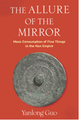
The allure of the mirror : mass consumption of fine things in the Han empire
Guo, Yanlong; Barbieri-Low, Anthony
Columbia University Press
, 2025
; English
; 377 Pages
"In Han China (202 B.C.E.-220 C.E.), few luxury objects were as widely coveted and consumed as bronze mirrors. The unprecedented and exponential growth of mirror consumption is evidenced by the abundance of specular metal discs dispersed across major museum collections in North America and excavated by Chinese archaeologists in recent decades. These mirrors, carrying diverse decorative and inscriptional patterns, were enjoyed by aristocrats and commoners alike. Mirrors Entangled , the first scholarly monograph on the bronze mirrors circulated across the early Chinese empire, foregrounds the seemingly trivial objects at center stage in Han society by revealing the physical, economic, and semiotic entanglements between mirrors and their users. I demonstrate that these specular discs were commodities acquired as personal possessions and gifts by people across different social classes. Reconstructing the lives and afterlives of Han mirrors, I argue that they embodied different dimensions of experience as intimate objects, bright discs, auspicious amulets, and funerary articles"-- Provided by publisher
Guo, Yanlong; Barbieri-Low, Anthony
Columbia University Press
, 2025
; English
; 377 Pages
"In Han China (202 B.C.E.-220 C.E.), few luxury objects were as widely coveted and consumed as bronze mirrors. The unprecedented and exponential growth of mirror consumption is evidenced by the abundance of specular metal discs dispersed across major museum collections in North America and excavated by Chinese archaeologists in recent decades. These mirrors, carrying diverse decorative and inscriptional patterns, were enjoyed by aristocrats and commoners alike. Mirrors Entangled , the first scholarly monograph on the bronze mirrors circulated across the early Chinese empire, foregrounds the seemingly trivial objects at center stage in Han society by revealing the physical, economic, and semiotic entanglements between mirrors and their users. I demonstrate that these specular discs were commodities acquired as personal possessions and gifts by people across different social classes. Reconstructing the lives and afterlives of Han mirrors, I argue that they embodied different dimensions of experience as intimate objects, bright discs, auspicious amulets, and funerary articles"-- Provided by publisher
eBook
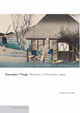
Exemplary things : Meibutsu in premodern Japan
Guth, Christine M. E.
Princeton University Press
, 2025
; English
; 213 Pages
The Japanese term meibutsu refers to things of the highest cultural value, evolving over time to encompass both craft and fine art, high and low culture, and manufactured and natural items. Material goods designated as meibutsu range from precious art objects to regional products like bamboo baskets and ceramics. Exemplary Things traces the history of this epistemic classificatory system in Japanese culture from its elite origins in the fifteenth century to its commercial appropriation today.
Christine Guth explores the use of meibutsu to designate famous things (especially in the elevated context of tea practice), the term’s institutionalization, and its popularization through print media and replicas (utsushi), and discusses how the term was used in critiques of the extravagance associated with collecting these costly treasures. She looks at the intertwined histories of meibutsu swords, incense, and tea utensils, focusing on their identities and agency as things with personal names. Guth explains how meibutsu evolved from a culture of tributes, taxes, and gift giving associated with a sense of place into a term essential to cultural literacy, and how Japan’s modern legislation for the protection of its national treasures (kokuhō) drew on this legacy.
With stunning illustrations, Exemplary Things casts the art history of Japan in a new light, showing how the concept of meibutsu blurs the lines between economic value, cultural and aesthetic worth, and the furtherance of political power.
Published in association with the P. Y. and Kinmay W. Tang Center for East Asian Art at Princeton University
Guth, Christine M. E.
Princeton University Press
, 2025
; English
; 213 Pages
The Japanese term meibutsu refers to things of the highest cultural value, evolving over time to encompass both craft and fine art, high and low culture, and manufactured and natural items. Material goods designated as meibutsu range from precious art objects to regional products like bamboo baskets and ceramics. Exemplary Things traces the history of this epistemic classificatory system in Japanese culture from its elite origins in the fifteenth century to its commercial appropriation today.
Christine Guth explores the use of meibutsu to designate famous things (especially in the elevated context of tea practice), the term’s institutionalization, and its popularization through print media and replicas (utsushi), and discusses how the term was used in critiques of the extravagance associated with collecting these costly treasures. She looks at the intertwined histories of meibutsu swords, incense, and tea utensils, focusing on their identities and agency as things with personal names. Guth explains how meibutsu evolved from a culture of tributes, taxes, and gift giving associated with a sense of place into a term essential to cultural literacy, and how Japan’s modern legislation for the protection of its national treasures (kokuhō) drew on this legacy.
With stunning illustrations, Exemplary Things casts the art history of Japan in a new light, showing how the concept of meibutsu blurs the lines between economic value, cultural and aesthetic worth, and the furtherance of political power.
Published in association with the P. Y. and Kinmay W. Tang Center for East Asian Art at Princeton University
eBook
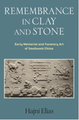
Remembrance in clay and stone : early memorial and funerary art of Southwest China
Elias, Hajni
Columbia University Press
, 2025
; English
; 377 Pages
This book explores the memorial and funerary artistic traditions of Southwest China during the Eastern Han dynasty (25–220 CE). In early imperial times, the art of this region—present-day Sichuan province—differed in both style and content from tomb and memorial art produced in other parts of the Han empire, especially that of the Central Plains, considered the heartland of Chinese civilization. Although Southwest China was described in contemporaneous accounts as an uncultured backwater, it had a vibrant and sophisticated artistic tradition.
Hajni Elias examines the Southwest’s rich material culture, which includes pictorial brick tiles, mingqi or spirit vessels, pottery figurines, decorated stone sarcophagi, architectural gate towers, and commemorative and ancestral stelae. She sheds light on the distinct traits and practices that arose from the region’s complex geographical, cultural, and economic tapestry. Elias also places the Southwest in a broader Han cultural framework, offering a new perspective on early Chinese society and its mortuary and memorial practices. Showcasing the quality and breadth of the achievements of the Southwest’s artisans and craftsmen, Remembrance in Clay and Stone reveals the distinctive and sophisticated ways in which people of this era recorded and memorialized their lives.
Elias, Hajni
Columbia University Press
, 2025
; English
; 377 Pages
This book explores the memorial and funerary artistic traditions of Southwest China during the Eastern Han dynasty (25–220 CE). In early imperial times, the art of this region—present-day Sichuan province—differed in both style and content from tomb and memorial art produced in other parts of the Han empire, especially that of the Central Plains, considered the heartland of Chinese civilization. Although Southwest China was described in contemporaneous accounts as an uncultured backwater, it had a vibrant and sophisticated artistic tradition.
Hajni Elias examines the Southwest’s rich material culture, which includes pictorial brick tiles, mingqi or spirit vessels, pottery figurines, decorated stone sarcophagi, architectural gate towers, and commemorative and ancestral stelae. She sheds light on the distinct traits and practices that arose from the region’s complex geographical, cultural, and economic tapestry. Elias also places the Southwest in a broader Han cultural framework, offering a new perspective on early Chinese society and its mortuary and memorial practices. Showcasing the quality and breadth of the achievements of the Southwest’s artisans and craftsmen, Remembrance in Clay and Stone reveals the distinctive and sophisticated ways in which people of this era recorded and memorialized their lives.
eBook
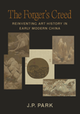
The forger's creed : reinventing art history in early modern China
Park, J. P.
University of California Press
, 2025
; English
; 236 Pages
The first in-depth look at the history and legacies of forgeries in Chinese art.
In 1634, scholar-official Zhang Taijie (b. ca. 1588) published a book titled A Record of Treasured Paintings (C. Baohui lu), presenting an extensive catalogue of a purportedly vast painting collection he claimed to have built. However, the entire book is Zhang's meticulously crafted forgery
he even forged paintings to match the documentation, and profited from trading them. Furthermore, the book intriguingly mirrors unfounded art-historical claims of its time. Prominent figures like Dong Qichang (1555–1636) made entirely fabricated arguments to assert legitimate lineages in Chinese art, designed to create a fictionalized history shaped by preferred beliefs rather than reality.
While presenting the first comprehensive exploration of various forgery practices in early modern China—fabricated texts, forged paintings, and fictitious art history—The Forger's Creed examines the cultural, social, and genealogical desires, anxieties, and tensions prevalent in early modern China. Through thorough scrutiny of the historical irregularities introduced by these forgeries, J. P. Park highlights a peculiar and paradoxical phenomenon wherein forgeries transform into legitimate materials across Chinese history.
Park, J. P.
University of California Press
, 2025
; English
; 236 Pages
The first in-depth look at the history and legacies of forgeries in Chinese art.
In 1634, scholar-official Zhang Taijie (b. ca. 1588) published a book titled A Record of Treasured Paintings (C. Baohui lu), presenting an extensive catalogue of a purportedly vast painting collection he claimed to have built. However, the entire book is Zhang's meticulously crafted forgery
he even forged paintings to match the documentation, and profited from trading them. Furthermore, the book intriguingly mirrors unfounded art-historical claims of its time. Prominent figures like Dong Qichang (1555–1636) made entirely fabricated arguments to assert legitimate lineages in Chinese art, designed to create a fictionalized history shaped by preferred beliefs rather than reality.
While presenting the first comprehensive exploration of various forgery practices in early modern China—fabricated texts, forged paintings, and fictitious art history—The Forger's Creed examines the cultural, social, and genealogical desires, anxieties, and tensions prevalent in early modern China. Through thorough scrutiny of the historical irregularities introduced by these forgeries, J. P. Park highlights a peculiar and paradoxical phenomenon wherein forgeries transform into legitimate materials across Chinese history.
eBook
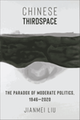
Chinese thirdspace : the paradox of moderate politics, 1946-2020
Liu, Jianmei; Wang, David Der-wei (Series Editor)
Columbia University Press
, 2025
; English
; 375 Pages
Chinese intellectuals have long chafed under the dominance of dualities—the sense that they are trapped between two diametrically opposed forces, with no choice but to pick one side or the other. Over the years, they have been driven into binary debates such as reform versus revolution, tradition versus modernity, the West versus the East, and left versus right. At the same time, a number of key thinkers have sought to transcend the extremes and find middle ground. This book examines how a diverse set of Chinese intellectuals carved out in-between spaces beyond the poles of competing ideologies for greater openness, multiplicity, and pluralism. Reappropriating and rehistoricizing the concept of Thirdspace—theorized by Homi Bhabha and Edward Soja—Jianmei Liu traces how writers and artists, in different times and places, have explored and developed alternatives to either/or dichotomies. Chinese Thirdspace brings together an unexpected group of cases, including Zhang Dongsun’s political philosophy, Yin Haiguang’s “colorless thought,” Jin Yong’s martial arts fiction, Liu Zaifu’s fragmentary writing, Gao Xingjian’s transmedia cine-poems, Xi Xi’s hybrid works, Chi Zijian’s eulogy of shamanism, Chu Tien-Hsin’s various heterotopias, and Chan Koonchung’s speculative political novel, concluding with the controversy over Fang Fang’s Wuhan Diary. Their works offer new ways to grapple with the modern Chinese experience, and as Liu shows, they contain alternative possibilities for a future beyond the binary oppositions of our current era. Wide-ranging and theoretically rich, this interdisciplinary book demonstrates the pivotal role of Thirdspace in the intellectual history, politics, philosophy, literature, aesthetics, art, and film of modern China.
Liu, Jianmei; Wang, David Der-wei (Series Editor)
Columbia University Press
, 2025
; English
; 375 Pages
Chinese intellectuals have long chafed under the dominance of dualities—the sense that they are trapped between two diametrically opposed forces, with no choice but to pick one side or the other. Over the years, they have been driven into binary debates such as reform versus revolution, tradition versus modernity, the West versus the East, and left versus right. At the same time, a number of key thinkers have sought to transcend the extremes and find middle ground. This book examines how a diverse set of Chinese intellectuals carved out in-between spaces beyond the poles of competing ideologies for greater openness, multiplicity, and pluralism. Reappropriating and rehistoricizing the concept of Thirdspace—theorized by Homi Bhabha and Edward Soja—Jianmei Liu traces how writers and artists, in different times and places, have explored and developed alternatives to either/or dichotomies. Chinese Thirdspace brings together an unexpected group of cases, including Zhang Dongsun’s political philosophy, Yin Haiguang’s “colorless thought,” Jin Yong’s martial arts fiction, Liu Zaifu’s fragmentary writing, Gao Xingjian’s transmedia cine-poems, Xi Xi’s hybrid works, Chi Zijian’s eulogy of shamanism, Chu Tien-Hsin’s various heterotopias, and Chan Koonchung’s speculative political novel, concluding with the controversy over Fang Fang’s Wuhan Diary. Their works offer new ways to grapple with the modern Chinese experience, and as Liu shows, they contain alternative possibilities for a future beyond the binary oppositions of our current era. Wide-ranging and theoretically rich, this interdisciplinary book demonstrates the pivotal role of Thirdspace in the intellectual history, politics, philosophy, literature, aesthetics, art, and film of modern China.
eBook
Visual counterculture in Japan : political shifts and the dynamics of resistance
Bohr, Marco
Bloomsbury Visual Arts
, 2025
; English
; 265 Pages
This book presents innovative analysis of emergent visual trends in Japan from the late 1960s to the present day. Adopting a thematic approach, this interdisciplinary text deconstructs the role that visual practices played in shaping a variety of countercultural discourses related to politics, gender, identity, sexuality, censorship, ethics and disasters. The book makes the case that visual practices do not merely function as a way to record counterculture, but that such practices are in themselves contributing to dynamics of resistance.
By considering a wide range of artists, photographers, film makers and practitioners, the book focuses on the way that visual culture transgresses, subverts or in the very least questions assumed socio-cultural boundaries in Japan. In doing so, the book foregrounds the crucial role that images play in our society today. Images are no just depictions of political shifts as and when they do occur, but they form part of this very shift in their own right. The book also highlights the interconnectedness between various visual practices and how they fit into wider geopolitical considerations on a global scale.
Bohr, Marco
Bloomsbury Visual Arts
, 2025
; English
; 265 Pages
This book presents innovative analysis of emergent visual trends in Japan from the late 1960s to the present day. Adopting a thematic approach, this interdisciplinary text deconstructs the role that visual practices played in shaping a variety of countercultural discourses related to politics, gender, identity, sexuality, censorship, ethics and disasters. The book makes the case that visual practices do not merely function as a way to record counterculture, but that such practices are in themselves contributing to dynamics of resistance.
By considering a wide range of artists, photographers, film makers and practitioners, the book focuses on the way that visual culture transgresses, subverts or in the very least questions assumed socio-cultural boundaries in Japan. In doing so, the book foregrounds the crucial role that images play in our society today. Images are no just depictions of political shifts as and when they do occur, but they form part of this very shift in their own right. The book also highlights the interconnectedness between various visual practices and how they fit into wider geopolitical considerations on a global scale.
eBook
Manga for dummies, 2nd edition
Okabayashi, Kensuke
For Dummies
, 2024
; English
; 411 Pages
Get started with the powerful visual language and storytelling medium that is manga
Manga is a unique style of drawing. It's also a great way to make topics like history and politics appealing to a wide audience. Manga For Dummies teaches you the basics of drawing in the manga style. This step-by-step guide shows you how to apply the basic rules of manga figure drawing, whether you're a complete beginner or a professional artist. You'll learn how to create manga characters, from rough sketch through final rendering. Simple drawing exercises help you build and develop your skills. Plus, you can add interest and depth to your drawings with ideas and techniques from a manga pro. This book also covers how to create scripts and storyboards, so you can tell a great manga story from start to finish.
• Gather the tools you'll need—including the latest digital illustration tools
• Learn what makes manga drawing different from other illustration styles
• Create compelling characters, storylines, and visual settings
• Share your creations and be a part of the manga community on social media
If you're a fan of manga and other graphic arts and would like to start drawing your own characters and stories, this is the Dummies guide for you. Designers, artists, and writers of all skill levels are welcome!
Okabayashi, Kensuke
For Dummies
, 2024
; English
; 411 Pages
Get started with the powerful visual language and storytelling medium that is manga
Manga is a unique style of drawing. It's also a great way to make topics like history and politics appealing to a wide audience. Manga For Dummies teaches you the basics of drawing in the manga style. This step-by-step guide shows you how to apply the basic rules of manga figure drawing, whether you're a complete beginner or a professional artist. You'll learn how to create manga characters, from rough sketch through final rendering. Simple drawing exercises help you build and develop your skills. Plus, you can add interest and depth to your drawings with ideas and techniques from a manga pro. This book also covers how to create scripts and storyboards, so you can tell a great manga story from start to finish.
• Gather the tools you'll need—including the latest digital illustration tools
• Learn what makes manga drawing different from other illustration styles
• Create compelling characters, storylines, and visual settings
• Share your creations and be a part of the manga community on social media
If you're a fan of manga and other graphic arts and would like to start drawing your own characters and stories, this is the Dummies guide for you. Designers, artists, and writers of all skill levels are welcome!
