


Navigation menu
Search
Databases
All Databases
eBook
Grandma Moses : a good day's work
Umberger, Leslie; Griffey, Randall R.; Doss, Erika (WITH CONTRIBUTIONS BY); Harvey, Eleanor Jones (WITH CONTRIBUTIONS BY); Hollander, Stacy C. (WITH CONTRIBUTIONS BY); Jentleson, Katherine (WITH CONTRIBUTIONS BY); Kallir, Jane (WITH CONTRIBUTIONS BY)
Princeton University Press
, 2025
; English
; 273 Pages
Grandma Moses: A Good Day’s Work repositions Anna Mary Robertson “Grandma” Moses (1860–1961) as a multidimensional force in American art, whose beloved recollections of rural life earned her a distinctive place in the cultural imagination of the postwar era. Moses was eighty years old when Otto Kallir, a New York art dealer and recent émigré from Nazi-held Austria, introduced her to the world. “Grandma Moses,” as the press dubbed her, quickly became a polarizing figure, beloved by the public yet dismissed by the art world for her story-time scenes and lack of formal training.
Drawing on Moses’s reflection on her own life as “a good day’s work,” the book charts Moses’s creative development from her earliest artistic efforts to the emergence of her signature style, revealing a multidimensional artist who fused direct observation of nature, labor, and personal memories to tell idiosyncratic yet compelling stories. It positions Moses as a central figure in the history of twentieth-century American art, a painter whose life and work bore witness to the Civil War, two world wars, and the civil rights era.
Beautifully illustrated, Grandma Moses: A Good Day’s Work captures the indomitable spirit Moses brought to her artmaking, conveying a candor and authority that still resonate today with the quest for a homespun American visual tradition.
Published in association with the Smithsonian American Art Museum, Washington, DC
Umberger, Leslie; Griffey, Randall R.; Doss, Erika (WITH CONTRIBUTIONS BY); Harvey, Eleanor Jones (WITH CONTRIBUTIONS BY); Hollander, Stacy C. (WITH CONTRIBUTIONS BY); Jentleson, Katherine (WITH CONTRIBUTIONS BY); Kallir, Jane (WITH CONTRIBUTIONS BY)
Princeton University Press
, 2025
; English
; 273 Pages
Grandma Moses: A Good Day’s Work repositions Anna Mary Robertson “Grandma” Moses (1860–1961) as a multidimensional force in American art, whose beloved recollections of rural life earned her a distinctive place in the cultural imagination of the postwar era. Moses was eighty years old when Otto Kallir, a New York art dealer and recent émigré from Nazi-held Austria, introduced her to the world. “Grandma Moses,” as the press dubbed her, quickly became a polarizing figure, beloved by the public yet dismissed by the art world for her story-time scenes and lack of formal training.
Drawing on Moses’s reflection on her own life as “a good day’s work,” the book charts Moses’s creative development from her earliest artistic efforts to the emergence of her signature style, revealing a multidimensional artist who fused direct observation of nature, labor, and personal memories to tell idiosyncratic yet compelling stories. It positions Moses as a central figure in the history of twentieth-century American art, a painter whose life and work bore witness to the Civil War, two world wars, and the civil rights era.
Beautifully illustrated, Grandma Moses: A Good Day’s Work captures the indomitable spirit Moses brought to her artmaking, conveying a candor and authority that still resonate today with the quest for a homespun American visual tradition.
Published in association with the Smithsonian American Art Museum, Washington, DC
eBook
Child creativity and the visual arts : from secessionist Vienna to postwar America
Brandow-Faller, Megan
Bloomsbury Visual Arts
, 2025
; English
; 265 Pages
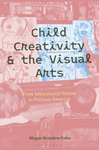
Tracing the dissemination of Secessionist ideas of child creativity – from their origination in early-20th century Vienna through to their eventual commodification in postwar America – this book highlights the central role that visual art has played in child education and in nurturing creativity in elementary and preschool curricula.
Taking the reader through the ideas of three artistic visionaries and their students – Franz Cižek, and Austrian-American émigrés Emmy Zweybrück and Viktor Löwenfeld – this book reveals how these ideas developed in postwar America through a focus on child-centered methods of 'learning by doing' in artistic practice. By centring the visual arts as a vital educational medium, we see how these teachings have been popularized as a means of nurturing creativity in childhood.
Across three chapter length case studies, interspersed with three 'mini chapters' on the reception of each artist-educator's radical teachings in the American education system, Child Creativity and the Visual Arts provides new interpretations into the impact of these three luminaries' differing philosophies on a broader program of socio-political activism in the USA. Drawing on previously untapped archival and primary source materials, it blends deep material culture analysis with narrative elements to present a compelling account of the unrecognized influence of émigré art pedagogy on progressive, international art education. In doing so, it provides fresh transregional and thematic perspectives on early-1900s Vienna as a hotbed of creative and cultural experimentation and 'mecca' of progressive art education.
Brandow-Faller, Megan
Bloomsbury Visual Arts
, 2025
; English
; 265 Pages
Tracing the dissemination of Secessionist ideas of child creativity – from their origination in early-20th century Vienna through to their eventual commodification in postwar America – this book highlights the central role that visual art has played in child education and in nurturing creativity in elementary and preschool curricula.
Taking the reader through the ideas of three artistic visionaries and their students – Franz Cižek, and Austrian-American émigrés Emmy Zweybrück and Viktor Löwenfeld – this book reveals how these ideas developed in postwar America through a focus on child-centered methods of 'learning by doing' in artistic practice. By centring the visual arts as a vital educational medium, we see how these teachings have been popularized as a means of nurturing creativity in childhood.
Across three chapter length case studies, interspersed with three 'mini chapters' on the reception of each artist-educator's radical teachings in the American education system, Child Creativity and the Visual Arts provides new interpretations into the impact of these three luminaries' differing philosophies on a broader program of socio-political activism in the USA. Drawing on previously untapped archival and primary source materials, it blends deep material culture analysis with narrative elements to present a compelling account of the unrecognized influence of émigré art pedagogy on progressive, international art education. In doing so, it provides fresh transregional and thematic perspectives on early-1900s Vienna as a hotbed of creative and cultural experimentation and 'mecca' of progressive art education.
eBook
Aranda-Alvarado, Rocío
University of California Press
, 2025
; English
; 432 Pages
A curated selection of key texts and artists' voices exploring US Latinx art and art history from the 1960s to the present.
A Handbook of Latinx Art is the first anthology to explore the rich, deep, and often overlooked contributions that Latinx artists have made to art in the United States. Drawn from wide-ranging sources, this volume includes texts by artists, critics, and scholars from the 1960s to the present that reflect the diversity of the Latinx experience across the nation, from the West Coast and the Mexican border to New York, Miami, and the Midwest.
The anthology features essential writings by Mexican American, Puerto Rican, Cuban American, Dominican American, and Central American artists to highlight how visionaries of diverse immigrant groups negotiate issues of participation and belonging, material, style, and community in their own voices. These intersectional essays cut across region, gender, race, and class to lay out a complex emerging field that reckons with different histories, geographies, and political engagements and, ultimately, underscores the importance of Latinx artists to the history of American art.
eBook
Aranda-Alvarado, Rocío
University of California Press
, 2025
; English
; 432 Pages
A curated selection of key texts and artists' voices exploring US Latinx art and art history from the 1960s to the present.
A Handbook of Latinx Art is the first anthology to explore the rich, deep, and often overlooked contributions that Latinx artists have made to art in the United States. Drawn from wide-ranging sources, this volume includes texts by artists, critics, and scholars from the 1960s to the present that reflect the diversity of the Latinx experience across the nation, from the West Coast and the Mexican border to New York, Miami, and the Midwest.
The anthology features essential writings by Mexican American, Puerto Rican, Cuban American, Dominican American, and Central American artists to highlight how visionaries of diverse immigrant groups negotiate issues of participation and belonging, material, style, and community in their own voices. These intersectional essays cut across region, gender, race, and class to lay out a complex emerging field that reckons with different histories, geographies, and political engagements and, ultimately, underscores the importance of Latinx artists to the history of American art.
eBook
Katzman, Laura
Princeton University Press
, 2025
; English
; 289 Pages
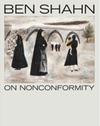
A richly illustrated new exploration of the painting, photography, and illustration of the politically progressive American artist
Ben Shahn, On Nonconformity offers a fresh and wide-ranging account of the work of Ben Shahn (1898–1969), a Jewish immigrant from Russian-controlled Lithuania who became one of America's most prominent and prolific "social viewpoint" artists from the Great Depression through the Vietnam War.
Revealing why Shahn remains so relevant today, the book examines his commitment to progressive political causes, from combating fascism to fighting for civil rights. Incorporating international perspectives, it investigates his World War II poster art, labor-related work, and engagement in postwar artistic debates. It brings new insights to Shahn's social realist and documentary styles and their evolution into allegorical, lyrical, and often abstract idioms that embrace the philosophical and the spiritual. And it demonstrates the underappreciated complexity of Shahn's layered visual language and how he experimented with modernist conceptual strategies—often involving photography—to create his paintings, murals, drawings, prints, posters, illustrated books, and commercial designs.
Shahn's guiding credo—formulated in the Cold War—asserted that nonconformity was the precondition for all significant art and great social change. Ben Shahn, On Nonconformity illuminates why the artist's work should be seen as a series of "nonconformities" driven by his steadfast dedication to social justice and humanistic values.
Published by the Jewish Museum, New York and the Museo Nacional Centro de Arte Reina Sofía, Madrid, in association with Princeton University Press
Exhibition Schedule
The Jewish Museum, New York
May 23–October 12, 2025
Katzman, Laura
Princeton University Press
, 2025
; English
; 289 Pages
A richly illustrated new exploration of the painting, photography, and illustration of the politically progressive American artist
Ben Shahn, On Nonconformity offers a fresh and wide-ranging account of the work of Ben Shahn (1898–1969), a Jewish immigrant from Russian-controlled Lithuania who became one of America's most prominent and prolific "social viewpoint" artists from the Great Depression through the Vietnam War.
Revealing why Shahn remains so relevant today, the book examines his commitment to progressive political causes, from combating fascism to fighting for civil rights. Incorporating international perspectives, it investigates his World War II poster art, labor-related work, and engagement in postwar artistic debates. It brings new insights to Shahn's social realist and documentary styles and their evolution into allegorical, lyrical, and often abstract idioms that embrace the philosophical and the spiritual. And it demonstrates the underappreciated complexity of Shahn's layered visual language and how he experimented with modernist conceptual strategies—often involving photography—to create his paintings, murals, drawings, prints, posters, illustrated books, and commercial designs.
Shahn's guiding credo—formulated in the Cold War—asserted that nonconformity was the precondition for all significant art and great social change. Ben Shahn, On Nonconformity illuminates why the artist's work should be seen as a series of "nonconformities" driven by his steadfast dedication to social justice and humanistic values.
Published by the Jewish Museum, New York and the Museo Nacional Centro de Arte Reina Sofía, Madrid, in association with Princeton University Press
Exhibition Schedule
The Jewish Museum, New York
May 23–October 12, 2025
eBook
American artists in Rome : mid-century art and cultural exchange
Benson Miller, Peter
Bloomsbury Visual Arts
, 2025
; English
; 345 Pages
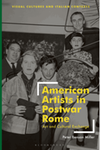
Drawing on unpublished archival sources, this book reconstitutes the experiences of a wide range of American artists, critics, and writers working in Rome in a charged environment of "Cold War cosmopolitanism."
After the Second World War, American artists flocked to Rome in record numbers, even as the United States shored up Italy as a bulwark against the spread of Communism. While the market for modern art in Rome was less vigorous as those in Paris and New York, numerous galleries, artist-run spaces, and other institutions acted as important catalysts, making Rome an international artistic hub. The city attracted now canonical figures Lee Bontecou, Philip Guston, Robert Rauschenberg, Paul Thek, and Cy Twombly, along with less well-known artists, such as Eugene Berman, Gene Charlton, Carlyle Brown, Peter Chinni, William Congdon, Claire Falkenstein, Marcia Hafif, John Heliker, James Leong, Beverly Pepper, and Laura Ziegler, among many others.
Rather than focusing on institutions and diplomatic relationships, the book centres the experience of artists, and also addresses Rome's gay subculture and the role of female artists during the period, eschewing traditional narratives of the male "cultural ambassador." Through case-study based investigation, Peter Benson Miller explores the reciprocal relationships between American modernist artists and Italian artists in postwar Rome, and reveals how these artists perceived Rome as less constrained by the demands of a national school, and as an alternative to New York. This congenial creative atmosphere yielded "new pictorial forms" developed in tandem with or absorbed from like-minded Italian artists, engaging the city and its multiple layers of history, from antiquity to the profound trauma inflicted by the recent conflict.
The book also establishes the entangled social networks, galleries, exhibitions, and institutions sustaining their work and providing entrée into local artistic circles. Focusing on a series of specific exchanges, this study contributes to our understanding American modernism in an international context.
Benson Miller, Peter
Bloomsbury Visual Arts
, 2025
; English
; 345 Pages
Drawing on unpublished archival sources, this book reconstitutes the experiences of a wide range of American artists, critics, and writers working in Rome in a charged environment of "Cold War cosmopolitanism."
After the Second World War, American artists flocked to Rome in record numbers, even as the United States shored up Italy as a bulwark against the spread of Communism. While the market for modern art in Rome was less vigorous as those in Paris and New York, numerous galleries, artist-run spaces, and other institutions acted as important catalysts, making Rome an international artistic hub. The city attracted now canonical figures Lee Bontecou, Philip Guston, Robert Rauschenberg, Paul Thek, and Cy Twombly, along with less well-known artists, such as Eugene Berman, Gene Charlton, Carlyle Brown, Peter Chinni, William Congdon, Claire Falkenstein, Marcia Hafif, John Heliker, James Leong, Beverly Pepper, and Laura Ziegler, among many others.
Rather than focusing on institutions and diplomatic relationships, the book centres the experience of artists, and also addresses Rome's gay subculture and the role of female artists during the period, eschewing traditional narratives of the male "cultural ambassador." Through case-study based investigation, Peter Benson Miller explores the reciprocal relationships between American modernist artists and Italian artists in postwar Rome, and reveals how these artists perceived Rome as less constrained by the demands of a national school, and as an alternative to New York. This congenial creative atmosphere yielded "new pictorial forms" developed in tandem with or absorbed from like-minded Italian artists, engaging the city and its multiple layers of history, from antiquity to the profound trauma inflicted by the recent conflict.
The book also establishes the entangled social networks, galleries, exhibitions, and institutions sustaining their work and providing entrée into local artistic circles. Focusing on a series of specific exchanges, this study contributes to our understanding American modernism in an international context.

eBook
Native lands : culture and gender in Indigenous territorial claims
Huhndorf, Shari M.
University of California Press
, 2024
; English
; 224 Pages
Native Lands analyzes the role of visual and literary culture in contemporary Indigenous campaigns for territorial rights. In the post-1960s era, Indigenous artists and writers have created works that align with the goals and strategies of new Native land-based movements. These works represent Native histories and epistemologies in ways that complement activist endeavors, while also probing the limits of these political projects, especially with regard to gender. The social marginalization of Native women was integral to dispossession. And yet its enduring consequences have remained largely neglected, even in Native organizing, as a pressing concern associated with the status of Indigenous people in settler nation-states. The cultural works discussed in this book provide an urgent Indigenous feminist rethinking of Native politics that exposes the innate gendered dimensions of ongoing settler colonialism. They insist that Indigenous campaigns for territorial rights must entail gender justice for Native women.
Huhndorf, Shari M.
University of California Press
, 2024
; English
; 224 Pages
Native Lands analyzes the role of visual and literary culture in contemporary Indigenous campaigns for territorial rights. In the post-1960s era, Indigenous artists and writers have created works that align with the goals and strategies of new Native land-based movements. These works represent Native histories and epistemologies in ways that complement activist endeavors, while also probing the limits of these political projects, especially with regard to gender. The social marginalization of Native women was integral to dispossession. And yet its enduring consequences have remained largely neglected, even in Native organizing, as a pressing concern associated with the status of Indigenous people in settler nation-states. The cultural works discussed in this book provide an urgent Indigenous feminist rethinking of Native politics that exposes the innate gendered dimensions of ongoing settler colonialism. They insist that Indigenous campaigns for territorial rights must entail gender justice for Native women.

eBook
Heilbut, Anthony
University of California Press
, 2024
; English
; 538 Pages
A brilliant look at the writers, artists, scientists, movie directors, and scholars—ranging from Bertolt Brecht to Albert Einstein, Hannah Arendt, Thomas Mann, and Fritz Lang—who fled Hitler's Germany and how they changed the very fabric of American culture. In a new postscript, Heilbut draws attention to the recent changes in reputation and image that have shaped the reception of the German exiles.
This title is part of UC Press's Voices Revived program, which commemorates University of California Press's mission to seek out and cultivate the brightest minds and give them voice, reach, and impact. Drawing on a backlist dating to 1893, Voices Revived makes high-quality, peer-reviewed scholarship accessible once again using print-on-demand technology. This title was originally published in 1983 with a paperback in 1997.
Heilbut, Anthony
University of California Press
, 2024
; English
; 538 Pages
A brilliant look at the writers, artists, scientists, movie directors, and scholars—ranging from Bertolt Brecht to Albert Einstein, Hannah Arendt, Thomas Mann, and Fritz Lang—who fled Hitler's Germany and how they changed the very fabric of American culture. In a new postscript, Heilbut draws attention to the recent changes in reputation and image that have shaped the reception of the German exiles.
This title is part of UC Press's Voices Revived program, which commemorates University of California Press's mission to seek out and cultivate the brightest minds and give them voice, reach, and impact. Drawing on a backlist dating to 1893, Voices Revived makes high-quality, peer-reviewed scholarship accessible once again using print-on-demand technology. This title was originally published in 1983 with a paperback in 1997.
eBook
Mexican muralist, international Marxist: David Alfaro Siqueiros, 1941–74
Swope, Curtis
Manchester University Press
, 2024
; English
; 345 Pages
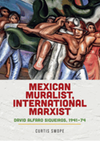
David Alfaro Siqueiros was perhaps the most important communist painter of the twentieth century. This book, the first sustained engagement with Siqueiros's work in the English language, focuses on the artist's late murals, which are both aesthetically innovative and politically provocative. It places Siqueiros in an international context, revealing that the dogmatism he has been charged with was in reality a complex phenomenon. It provided a foundation for – rather than an obstacle to – his efforts to create an art embedded in the day-to-day concerns and theoretical debates of the world-wide mass movement he saw himself as a part of.
Swope, Curtis
Manchester University Press
, 2024
; English
; 345 Pages
David Alfaro Siqueiros was perhaps the most important communist painter of the twentieth century. This book, the first sustained engagement with Siqueiros's work in the English language, focuses on the artist's late murals, which are both aesthetically innovative and politically provocative. It places Siqueiros in an international context, revealing that the dogmatism he has been charged with was in reality a complex phenomenon. It provided a foundation for – rather than an obstacle to – his efforts to create an art embedded in the day-to-day concerns and theoretical debates of the world-wide mass movement he saw himself as a part of.
eBook
Cases of citation : on literature in art
Julius, Chloë; Green, Michael; Holman, Matthew
Manchester University Press
, 2024
; English
; 202 Pages
Cases of citation presents a history of artists who incorporated literary references into their work from the 1960s onwards.
Through a series of object-focused chapters that each take up a singular 'case of citation', the collection considers how literary citation emerged as a viable and urgent strategy for artists during this period. It surveys nine artworks by a diverse group of artists – including David Wojnarowicz, Lis Rhodes, Romare Bearden and Silvia Kolbowski – whose citations draw on literary works with authors ranging from Gertrude Stein to Jean Genet.The book also features an interview with pioneering feminist artist Elaine Reichek that discusses her career-long commitment to working with text. Together, the artworks and cited texts are approached from various critical angles, with each author questioning and complicating the ways in which we can 'read' textual citations in art.
Julius, Chloë; Green, Michael; Holman, Matthew
Manchester University Press
, 2024
; English
; 202 Pages
Cases of citation presents a history of artists who incorporated literary references into their work from the 1960s onwards.
Through a series of object-focused chapters that each take up a singular 'case of citation', the collection considers how literary citation emerged as a viable and urgent strategy for artists during this period. It surveys nine artworks by a diverse group of artists – including David Wojnarowicz, Lis Rhodes, Romare Bearden and Silvia Kolbowski – whose citations draw on literary works with authors ranging from Gertrude Stein to Jean Genet.The book also features an interview with pioneering feminist artist Elaine Reichek that discusses her career-long commitment to working with text. Together, the artworks and cited texts are approached from various critical angles, with each author questioning and complicating the ways in which we can 'read' textual citations in art.
eBook
The shape of power : stories of race and American sculpture
Lemmey, Karen; Wofford, Tobias; Yasumura, Grace
Princeton University Press
, 2024
; English
; 293 Pages
A major new survey of American sculpture, exploring how it both reflects and redefines concepts of race and identity in the United States
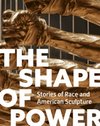
When viewing a sculpture, how quickly do we tend to assign race to the subject? The three-dimensional qualities of sculpture give it a distinct advantage over other art forms in capturing a subject's likeness, and our minds can swiftly conjure a body and racialize it from the most minimal of prompts. The Shape of Power examines American sculpture from the mid-nineteenth century to today, showing how this medium gives physical form to racist ideas and has shaped how generations have learned to visualize and think about race.
Exploring the relationship between sculpture and ideas about race in the United States, this book provides fresh perspectives on artists ranging from Hiram Powers, Edmonia Lewis, and Augusta Savage to Barbara Chase-Riboud, Titus Kaphar, Raven Halfmoon, Sanford Biggers, Betye Saar, Yolanda López, and Simone Leigh. It reveals how sculptors use this versatile medium to challenge discriminatory ideologies and entrenched social and cultural constructions of race while offering bold new visions of community, identity, and selfhood.
Featuring superb illustrations of sculptural works in a broad range of media, The Shape of Power exposes the racist undertones inherent in American sculpture and reflects on the enduring power of sculpture in the making and unmaking of race in the United States.
Published in association with the Smithsonian American Art Museum, Washington, DC
Exhibition Schedule
Smithsonian American Art Museum, Washington, DC
November 8, 2024–September 14, 2025
Lemmey, Karen; Wofford, Tobias; Yasumura, Grace
Princeton University Press
, 2024
; English
; 293 Pages
A major new survey of American sculpture, exploring how it both reflects and redefines concepts of race and identity in the United States
When viewing a sculpture, how quickly do we tend to assign race to the subject? The three-dimensional qualities of sculpture give it a distinct advantage over other art forms in capturing a subject's likeness, and our minds can swiftly conjure a body and racialize it from the most minimal of prompts. The Shape of Power examines American sculpture from the mid-nineteenth century to today, showing how this medium gives physical form to racist ideas and has shaped how generations have learned to visualize and think about race.
Exploring the relationship between sculpture and ideas about race in the United States, this book provides fresh perspectives on artists ranging from Hiram Powers, Edmonia Lewis, and Augusta Savage to Barbara Chase-Riboud, Titus Kaphar, Raven Halfmoon, Sanford Biggers, Betye Saar, Yolanda López, and Simone Leigh. It reveals how sculptors use this versatile medium to challenge discriminatory ideologies and entrenched social and cultural constructions of race while offering bold new visions of community, identity, and selfhood.
Featuring superb illustrations of sculptural works in a broad range of media, The Shape of Power exposes the racist undertones inherent in American sculpture and reflects on the enduring power of sculpture in the making and unmaking of race in the United States.
Published in association with the Smithsonian American Art Museum, Washington, DC
Exhibition Schedule
Smithsonian American Art Museum, Washington, DC
November 8, 2024–September 14, 2025
