
Navigation menu
Search
Databases
All Databases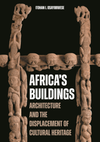
eBook
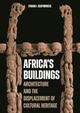
Africa's buildings : architecture and the displacement of cultural heritage
Osayimwese, Itohan I.
Princeton University Press
, 2025
; English
; 297 Pages
Between the nineteenth century and today, colonial officials, collectors, and anthropologists dismembered African buildings and dispersed their parts to museums in Europe and the United States. Most of these artifacts were cataloged as ornamental art objects, which erased their intended functions, and the removal of these objects often had catastrophic consequences for the original structures. Africa’s Buildings traces the history of the collection and distribution of African architectural fragments, documenting the brutality of the colonial regimes that looted Africa’s buildings and addressing the ethical questions surrounding the display of these objects.
Itohan Osayimwese ranges across the whole of Africa, from Egypt in the north to Zimbabwe in the south, and spanning the western, central, and eastern regions of the continent. She describes how collectors employed violent means to remove elements such as columns and door panels from buildings, and how these methods differentiated architectural collecting from conventional collecting. She shows how Western collectors mischaracterized building components as ornament, erasing their architectural character and concealing the evidence of their theft. Osayimwese discusses how the very act of displacing building parts like floor tiles and woven screen walls has resulted in a loss of knowledge about their original function and argues that because of these removals, scholars have yet to fully grasp the variety and character of African architecture.
Richly illustrated, Africa’s Buildings uncovers the vast scale of cultural displacement perpetrated by the West and proposes a new role for museums in this history, one in which they champion the repatriation of Africa’s architectural heritage and restitution for African communities.
Osayimwese, Itohan I.
Princeton University Press
, 2025
; English
; 297 Pages
Between the nineteenth century and today, colonial officials, collectors, and anthropologists dismembered African buildings and dispersed their parts to museums in Europe and the United States. Most of these artifacts were cataloged as ornamental art objects, which erased their intended functions, and the removal of these objects often had catastrophic consequences for the original structures. Africa’s Buildings traces the history of the collection and distribution of African architectural fragments, documenting the brutality of the colonial regimes that looted Africa’s buildings and addressing the ethical questions surrounding the display of these objects.
Itohan Osayimwese ranges across the whole of Africa, from Egypt in the north to Zimbabwe in the south, and spanning the western, central, and eastern regions of the continent. She describes how collectors employed violent means to remove elements such as columns and door panels from buildings, and how these methods differentiated architectural collecting from conventional collecting. She shows how Western collectors mischaracterized building components as ornament, erasing their architectural character and concealing the evidence of their theft. Osayimwese discusses how the very act of displacing building parts like floor tiles and woven screen walls has resulted in a loss of knowledge about their original function and argues that because of these removals, scholars have yet to fully grasp the variety and character of African architecture.
Richly illustrated, Africa’s Buildings uncovers the vast scale of cultural displacement perpetrated by the West and proposes a new role for museums in this history, one in which they champion the repatriation of Africa’s architectural heritage and restitution for African communities.
eBook
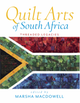
Quilt arts of South Africa : threaded legacies
MacDowell, Marsha
Indiana University Press
, 2025
; English
; 251 Pages
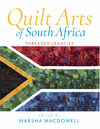
In the southernmost region of the African continent, women have been piecing together materials—textile construction techniques commonly used in quilting— to create bed coverings throughout the history of the San and Khoi peoples. From the late seventeenth century through the early nineteenth century, an influx of Dutch, French, Indian, and British military personnel, traders, miners, and missionaries came to South Africa, bringing with them their own cultural traditions, including making and using quilts. Today, the making of quilts in South Africa is flourishing.
Quilt Arts of South Africa stitches together the history, production, and significance of quilt making from its earliest appearance in the continent's southernmost region to the twenty-first century. With input from curators, linguists, art historians, activist artists, and folklorists, this book presents disparate yet connected inquiries into a wide-ranging history of the quilt. These perspectives connect a rich expressive art to place, showing how the quilting traditions in South Africa together reflect a unique cultural history and natural landscape.
Itself pieced together from diverse voices, Quilt Arts of South Africa offers glimpses into the histories and meanings of quilting in South Africa.
MacDowell, Marsha
Indiana University Press
, 2025
; English
; 251 Pages
In the southernmost region of the African continent, women have been piecing together materials—textile construction techniques commonly used in quilting— to create bed coverings throughout the history of the San and Khoi peoples. From the late seventeenth century through the early nineteenth century, an influx of Dutch, French, Indian, and British military personnel, traders, miners, and missionaries came to South Africa, bringing with them their own cultural traditions, including making and using quilts. Today, the making of quilts in South Africa is flourishing.
Quilt Arts of South Africa stitches together the history, production, and significance of quilt making from its earliest appearance in the continent's southernmost region to the twenty-first century. With input from curators, linguists, art historians, activist artists, and folklorists, this book presents disparate yet connected inquiries into a wide-ranging history of the quilt. These perspectives connect a rich expressive art to place, showing how the quilting traditions in South Africa together reflect a unique cultural history and natural landscape.
Itself pieced together from diverse voices, Quilt Arts of South Africa offers glimpses into the histories and meanings of quilting in South Africa.
eBook
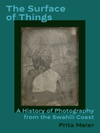
The surface of things : a history of photography from the Swahili Coast
Meier, Prita
Princeton University Press
, 2024
; English
; 281 Pages
The first major history of photography from coastal East Africa
The ports of the Swahili coast—Zanzibar and Mombasa among them—have long been dynamic centers of trade where diverse peoples, ideas, and materials converge. With the arrival of photography in the mid-nineteenth century, these predominantly Muslim coastal communities cultivated and transformed the medium. The Surface of Things examines the complex maritime dynamics that shaped the photography of coastal Africa, exploring the pleasure and power of beautiful things and the ways people and their pictures transcended the boundaries of the colonial world.
Immersing readers in the globally interconnected networks of eastern Africa's port cities, Prita Meier demonstrates how photographs are not static images but mobile objects with remarkable shape-shifting qualities. Beginning with the earliest photographs introduced through seaborne commerce, the medium's integration into the cultural landscape was swift. Photographs functioned as objects of decoration, good taste, and cosmopolitanism, but were also used by local elites and foreigners to coerce and objectify enslaved people. Meier uncovers the oppressive agenda behind postcards and other popular images while describing African strategies of subversion and rebellion, revealing the performative authority that individuals exerted over their photographic likenesses.
Featuring more than two hundred images published here for the first time, The Surface of Things repositions the continent's islands and archipelagos at the center of global photographic histories and shows how the people of the African Indian Ocean world experienced photography as a force of both oppression and freedom.
Meier, Prita
Princeton University Press
, 2024
; English
; 281 Pages
The first major history of photography from coastal East Africa
The ports of the Swahili coast—Zanzibar and Mombasa among them—have long been dynamic centers of trade where diverse peoples, ideas, and materials converge. With the arrival of photography in the mid-nineteenth century, these predominantly Muslim coastal communities cultivated and transformed the medium. The Surface of Things examines the complex maritime dynamics that shaped the photography of coastal Africa, exploring the pleasure and power of beautiful things and the ways people and their pictures transcended the boundaries of the colonial world.
Immersing readers in the globally interconnected networks of eastern Africa's port cities, Prita Meier demonstrates how photographs are not static images but mobile objects with remarkable shape-shifting qualities. Beginning with the earliest photographs introduced through seaborne commerce, the medium's integration into the cultural landscape was swift. Photographs functioned as objects of decoration, good taste, and cosmopolitanism, but were also used by local elites and foreigners to coerce and objectify enslaved people. Meier uncovers the oppressive agenda behind postcards and other popular images while describing African strategies of subversion and rebellion, revealing the performative authority that individuals exerted over their photographic likenesses.
Featuring more than two hundred images published here for the first time, The Surface of Things repositions the continent's islands and archipelagos at the center of global photographic histories and shows how the people of the African Indian Ocean world experienced photography as a force of both oppression and freedom.
eBook
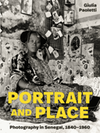
Portrait and place : photography in Senegal, 1840-1960
Paoletti, Giulia
Princeton University Press
, 2024
; English
; 240 Pages
A richly illustrated history of photography in one of the epicenters of African modernity
When the daguerreotype first arrived in sub-Saharan Africa in the early nineteenth century, local kingdoms still held power in Senegal and the French presence was limited to trading outposts along the coast. The pioneers of photography in Senegal worked within, across, and beyond the borders of colonial empire, expanding the medium's possibilities and contributing to a global visual language. Portrait and Place explores these unique encounters, providing an in-depth and nuanced look at the images made at the intersection of Black Atlantic, Islamic, and African cultures.
Giulia Paoletti takes readers on a visual journey from the 1840s, when the oldest-surviving daguerreotype from West Africa was made, to the 1960s, when photography became the most popular medium as Senegal achieved its independence. She discusses some of Africa's most celebrated modernists, such as Mama Casset, and also offers insights into lesser-known photographers like Oumar Ka and once-anonymous figures such as Macky Kane. Paoletti examines both professional and amateur artists in genres ranging from portraiture to landscape and across media such as glass painting and lithography.
Featuring a wealth of breathtaking images published here for the first time, Portrait and Place brings to life the important histories of photography on the African continent.
Paoletti, Giulia
Princeton University Press
, 2024
; English
; 240 Pages
A richly illustrated history of photography in one of the epicenters of African modernity
When the daguerreotype first arrived in sub-Saharan Africa in the early nineteenth century, local kingdoms still held power in Senegal and the French presence was limited to trading outposts along the coast. The pioneers of photography in Senegal worked within, across, and beyond the borders of colonial empire, expanding the medium's possibilities and contributing to a global visual language. Portrait and Place explores these unique encounters, providing an in-depth and nuanced look at the images made at the intersection of Black Atlantic, Islamic, and African cultures.
Giulia Paoletti takes readers on a visual journey from the 1840s, when the oldest-surviving daguerreotype from West Africa was made, to the 1960s, when photography became the most popular medium as Senegal achieved its independence. She discusses some of Africa's most celebrated modernists, such as Mama Casset, and also offers insights into lesser-known photographers like Oumar Ka and once-anonymous figures such as Macky Kane. Paoletti examines both professional and amateur artists in genres ranging from portraiture to landscape and across media such as glass painting and lithography.
Featuring a wealth of breathtaking images published here for the first time, Portrait and Place brings to life the important histories of photography on the African continent.
eBook
Arab world cinemas : a reader and guide
Hammond, Marlé
Edinburgh University Press
, 2024
; English
; 249 Pages
Celebrates the variety and richness of Arabic-language cinema, from The White Rose (Egypt, 1933/4) to Casablanca Beats (Morocco, 2021)
- Analyses 28 films released between 1933 and 2021 including Muhammad Khan’s Dreams of Hind and Camilia (1989), Moufida Tlatli’s Silences of the Palace (1994) and Elia Suleiman’s Divine Intervention (2002)
- Dedicates a short chapter to each film, looking at the content and form with analysis grounded in cinematic technique and theories drawn from interdisciplinary studies
- Features screen-grabs, questions for discussion and suggestions for further reading in each of the short chapters
- Includes 3 expansive and rigorous introductory essays that historicise and contextualise the cinematic traditions of Egypt, North Africa and the eastern Arab world
From the exaggerated emotions of 1930s Egyptian melodrama to the cryptic allegories of late 20th-century Palestinian cinema, Arab World Cinemas guides you through 28 Arabic-language feature films. Written specially for students, the book is split into 3 parts: Egypt, North Africa and the eastern Arab world. Each part begins with an introductory essay that highlights the aesthetic and socio-historical trends and currents in the cinematic traditions particular to that region. Marlé Hammond then dedicates individual chapters to a group of films from the highlighted region, interpreting their form and content through the lenses of cinematic technique and concepts drawn from various disciplines in the arts, humanities and social sciences.
Hammond, Marlé
Edinburgh University Press
, 2024
; English
; 249 Pages
Celebrates the variety and richness of Arabic-language cinema, from The White Rose (Egypt, 1933/4) to Casablanca Beats (Morocco, 2021)
- Analyses 28 films released between 1933 and 2021 including Muhammad Khan’s Dreams of Hind and Camilia (1989), Moufida Tlatli’s Silences of the Palace (1994) and Elia Suleiman’s Divine Intervention (2002)
- Dedicates a short chapter to each film, looking at the content and form with analysis grounded in cinematic technique and theories drawn from interdisciplinary studies
- Features screen-grabs, questions for discussion and suggestions for further reading in each of the short chapters
- Includes 3 expansive and rigorous introductory essays that historicise and contextualise the cinematic traditions of Egypt, North Africa and the eastern Arab world
From the exaggerated emotions of 1930s Egyptian melodrama to the cryptic allegories of late 20th-century Palestinian cinema, Arab World Cinemas guides you through 28 Arabic-language feature films. Written specially for students, the book is split into 3 parts: Egypt, North Africa and the eastern Arab world. Each part begins with an introductory essay that highlights the aesthetic and socio-historical trends and currents in the cinematic traditions particular to that region. Marlé Hammond then dedicates individual chapters to a group of films from the highlighted region, interpreting their form and content through the lenses of cinematic technique and concepts drawn from various disciplines in the arts, humanities and social sciences.
eBook
Curating transcultural spaces : perspectives on postcolonial conflicts in museum culture
Hegenbart, Sarah; Barnstone, Deborah Ascher; Haakenson, Thomas O.
Bloomsbury Publishing
, 2024
; English
; 281 Pages
"Curating Transcultural Spaces asks what a museum which enables the presentation of multiple perspectives might look like. Can identity be global and local at the same time? How may one curate dual identity? More broadly, what is the link between the arts and processes of identity construction? This volume, an indispensable source for the process of engaging with colonial history in Germany and beyond, takes its starting point from the 'scandal' of the Humboldt Forum. The transfer of German state collections from the Ethnological Museum and the Museum for Asian Art, located at the margins of Berlin in Dahlem, into the centre of Germany's capital indicates the nation's aspiration of purported multiculturalism and cosmopolitanism; yet the project's resurrection of the site's former Prussian city palace, which was demolished during the GDR, stands in opposition to its very mission, given that the Prussian rulers benefited from colonial exploitation. By examining the contrasting successes of other projects, such as the National Museum of African American History and Culture in Washington DC, Curating Transcultural Spaces compellingly argues for the necessity of taking post-colonial thinking on board in the construction of museum spaces in order to generate genuine exchange between multiple perspectives"-- Provided by publisher.
Hegenbart, Sarah; Barnstone, Deborah Ascher; Haakenson, Thomas O.
Bloomsbury Publishing
, 2024
; English
; 281 Pages
"Curating Transcultural Spaces asks what a museum which enables the presentation of multiple perspectives might look like. Can identity be global and local at the same time? How may one curate dual identity? More broadly, what is the link between the arts and processes of identity construction? This volume, an indispensable source for the process of engaging with colonial history in Germany and beyond, takes its starting point from the 'scandal' of the Humboldt Forum. The transfer of German state collections from the Ethnological Museum and the Museum for Asian Art, located at the margins of Berlin in Dahlem, into the centre of Germany's capital indicates the nation's aspiration of purported multiculturalism and cosmopolitanism; yet the project's resurrection of the site's former Prussian city palace, which was demolished during the GDR, stands in opposition to its very mission, given that the Prussian rulers benefited from colonial exploitation. By examining the contrasting successes of other projects, such as the National Museum of African American History and Culture in Washington DC, Curating Transcultural Spaces compellingly argues for the necessity of taking post-colonial thinking on board in the construction of museum spaces in order to generate genuine exchange between multiple perspectives"-- Provided by publisher.
eBook
Tales things tell : material histories of early globalisms
Flood, Finbarr Barry; Fricke, Beate
Princeton University Press
, 2023
; English
; 303 Pages
New perspectives on early globalisms from objects and images
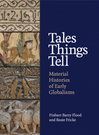
Tales Things Tell offers new perspectives on histories of connectivity between Africa, Asia, and Europe in the period before the Mongol conquests of the thirteenth century. Reflected in objects and materials whose circulation and reception defined aesthetic, economic, and technological networks that existed outside established political and sectarian boundaries, many of these histories are not documented in the written sources on which historians usually rely. Tales Things Tell charts bold new directions in art history, making a compelling case for the archival value of mobile artifacts and images in reconstructing the past.
In this beautifully illustrated book, Finbarr Barry Flood and Beate Fricke present six illuminating case studies from the sixth to the thirteenth centuries to show how portable objects mediated the mobility of concepts, iconographies, and techniques. The case studies range from metalwork to stone reliefs, manuscript paintings, and objects using natural materials such as coconut and rock crystal. Whether as booty, commodities, gifts, or souvenirs, many of the objects discussed in Tales Things Tell functioned as sources of aesthetic, iconographic, or technical knowledge in the lands in which they came to rest. Remapping the histories of exchange between medieval Islam and Christendom, from Europe to the Indian Ocean, Tales Things Tell ventures beyond standard narratives drawn from written archival records to demonstrate the value of objects and images as documents of early globalisms.
Flood, Finbarr Barry; Fricke, Beate
Princeton University Press
, 2023
; English
; 303 Pages
New perspectives on early globalisms from objects and images
Tales Things Tell offers new perspectives on histories of connectivity between Africa, Asia, and Europe in the period before the Mongol conquests of the thirteenth century. Reflected in objects and materials whose circulation and reception defined aesthetic, economic, and technological networks that existed outside established political and sectarian boundaries, many of these histories are not documented in the written sources on which historians usually rely. Tales Things Tell charts bold new directions in art history, making a compelling case for the archival value of mobile artifacts and images in reconstructing the past.
In this beautifully illustrated book, Finbarr Barry Flood and Beate Fricke present six illuminating case studies from the sixth to the thirteenth centuries to show how portable objects mediated the mobility of concepts, iconographies, and techniques. The case studies range from metalwork to stone reliefs, manuscript paintings, and objects using natural materials such as coconut and rock crystal. Whether as booty, commodities, gifts, or souvenirs, many of the objects discussed in Tales Things Tell functioned as sources of aesthetic, iconographic, or technical knowledge in the lands in which they came to rest. Remapping the histories of exchange between medieval Islam and Christendom, from Europe to the Indian Ocean, Tales Things Tell ventures beyond standard narratives drawn from written archival records to demonstrate the value of objects and images as documents of early globalisms.
eBook
Martin, Michael T.; Kaboré, Gaston J. M.; Brown, Allison J.; Nelson, Cole; Roskos, Joseph E.
Indiana University Press
, 2023
; English
; 661 Pages
Challenging established views and assumptions about traditions and practices of filmmaking in the African diaspora, this three-volume set offers readers a researched critique on black film.
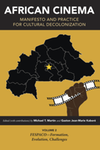
Volume Two of this landmark series on African cinema is devoted to the decolonizing mediation of the Pan African Film & Television Festival of Ouagadougou (FESPACO), the most important, inclusive, and consequential cinematic convocation of its kind in the world. Since its creation in 1969, FESPACO's mission is, in principle, remarkably unchanged: to unapologetically recover, chronicle, affirm, and reconstitute the representation of the African continent and its global diasporas of people, thereby enunciating in the cinematic, all manner of Pan-African identity, experience, and the futurity of the Black World.
This volume features historically significant and commissioned essays, commentaries, conversations, dossiers, and programmatic statements and manifestos that mark and elaborate the key moments in the evolution of FESPACO over the span of the past five decades.
Martin, Michael T.; Kaboré, Gaston J. M.; Brown, Allison J.; Nelson, Cole; Roskos, Joseph E.
Indiana University Press
, 2023
; English
; 661 Pages
Challenging established views and assumptions about traditions and practices of filmmaking in the African diaspora, this three-volume set offers readers a researched critique on black film.
Volume Two of this landmark series on African cinema is devoted to the decolonizing mediation of the Pan African Film & Television Festival of Ouagadougou (FESPACO), the most important, inclusive, and consequential cinematic convocation of its kind in the world. Since its creation in 1969, FESPACO's mission is, in principle, remarkably unchanged: to unapologetically recover, chronicle, affirm, and reconstitute the representation of the African continent and its global diasporas of people, thereby enunciating in the cinematic, all manner of Pan-African identity, experience, and the futurity of the Black World.
This volume features historically significant and commissioned essays, commentaries, conversations, dossiers, and programmatic statements and manifestos that mark and elaborate the key moments in the evolution of FESPACO over the span of the past five decades.
eBook
Martin, Michael T.; Kaboré, Gaston Jean-Marie; Brown, Allison J.; Nelson, Cole; Roskos, Joseph E.
Indiana University Press
, 2023
; English
; 692 Pages
Challenging established views and assumptions about traditions and practices of filmmaking in the African diaspora, this three-volume set offers readers a researched critique on black film.
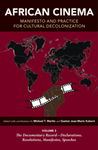
Volume Three of this landmark series on African cinema spans the past century and is devoted to the documentation of decoloniality in cultural policy in both Africa and the Black diaspora worldwide. A compendium of formal resolutions, declarations, manifestos, and programmatic statements, it chronologically maps the long history and trajectories of cultural policy in Africa and the Black Atlantic. Beginning with the 1920 declaration of the Rights of the Negro Peoples of the World, which anticipates cinema as we know it today, and the formal oppositional assertions—aspirational and practical. The first part of this work references formal statements that pertain directly to cultural policy and cinematic formations in Africa, while the next part addresses the Black diaspora. Each entry is chronologically ordered to account for when the statement was created, followed by where and in what context it was enunciated.
Martin, Michael T.; Kaboré, Gaston Jean-Marie; Brown, Allison J.; Nelson, Cole; Roskos, Joseph E.
Indiana University Press
, 2023
; English
; 692 Pages
Challenging established views and assumptions about traditions and practices of filmmaking in the African diaspora, this three-volume set offers readers a researched critique on black film.
Volume Three of this landmark series on African cinema spans the past century and is devoted to the documentation of decoloniality in cultural policy in both Africa and the Black diaspora worldwide. A compendium of formal resolutions, declarations, manifestos, and programmatic statements, it chronologically maps the long history and trajectories of cultural policy in Africa and the Black Atlantic. Beginning with the 1920 declaration of the Rights of the Negro Peoples of the World, which anticipates cinema as we know it today, and the formal oppositional assertions—aspirational and practical. The first part of this work references formal statements that pertain directly to cultural policy and cinematic formations in Africa, while the next part addresses the Black diaspora. Each entry is chronologically ordered to account for when the statement was created, followed by where and in what context it was enunciated.
eBook
Martin, Michael T.; Kaboré, Gaston J. M.; Brown, Allison J.; Nelson, Cole; Roskos, Joseph E.
Indiana University Press
, 2023
; English
; 638 Pages
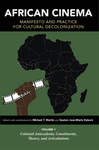
Challenging established views and assumptions about traditions and practices of filmmaking in the African diaspora, this three-volume set offers readers a researched critique on black film.Volume One of this landmark series on African cinema draws together foundational scholarship on its history and evolution. Beginning with the ideological project of colonial film to legitimize the economic exploitation and cultural hegemony of the African continent during imperial rule to its counter-historical formation and theorization. It comprises essays by film scholars and filmmakers alike, among them Roy Armes, Med Hondo, Frid Boughedir, Haile Gerima, Oliver Barlet, Teshome Gabriel, and David Murphy, including three distinct dossiers: a timeline of key dates in the history of African cinema; a comprehensive chronicle and account of the contributions by African women in cinema; and a homage and overview of Ousmane Sembne, the "Father" of African cinema.
Martin, Michael T.; Kaboré, Gaston J. M.; Brown, Allison J.; Nelson, Cole; Roskos, Joseph E.
Indiana University Press
, 2023
; English
; 638 Pages
Challenging established views and assumptions about traditions and practices of filmmaking in the African diaspora, this three-volume set offers readers a researched critique on black film.Volume One of this landmark series on African cinema draws together foundational scholarship on its history and evolution. Beginning with the ideological project of colonial film to legitimize the economic exploitation and cultural hegemony of the African continent during imperial rule to its counter-historical formation and theorization. It comprises essays by film scholars and filmmakers alike, among them Roy Armes, Med Hondo, Frid Boughedir, Haile Gerima, Oliver Barlet, Teshome Gabriel, and David Murphy, including three distinct dossiers: a timeline of key dates in the history of African cinema; a comprehensive chronicle and account of the contributions by African women in cinema; and a homage and overview of Ousmane Sembne, the "Father" of African cinema.
