

Navigation menu
Search
Databases
All Databases
eBook
Sustainable design for uncertain futures : dialogues on time-based architecture
Lee, Joshua D.; Murray, Joseph
Wiley
, 2025
; English
; 194 Pages
Explore pivotal intersections and themes between strategies for buildings and cities to adapt to shifting circumstances.
Sustainable Design for Uncertain Futures introduces fourteen time-based strategies in architecture through a series of dialogues between experts. This format embraces a dynamic exploration of strategies ranging from Adaptive Reuse to Bio Design, revealing how each one addresses forces of change and adds adaptive capacity to the built environment.
The book’s structure invites readers to engage with these strategies on multiple levels. Each chapter begins with a framing of the fundamentals, providing context and key examples to situate the strategies in the wider field. At the core of each chapter is a moderated dialogue that offers key insights into how these strategies work in practice and how they can be used in combination. By presenting these strategies through dialogue, the editors demonstrate the collaborative thinking needed to address growing uncertainty in the built environment and provide readers with an actionable framework of technical and management approaches.
The book’s practical focus helps bridge the gap between theory and application, making this edited volume an invaluable resource for both academics and practitioners. Readers will find dialogues involving fifteen renowned experts in their respective fields:
Avi Friedman & Naomi Keena (Mass Customization) ↔ Michael Fox (Computationally Responsive Environments) / Bie Plevoets (Adaptive Reuse) ↔ John Dale (Open Building) / Aki Ishida (Metabolism) ↔ Michelle Laboy (Persistence) / Felix Heisel (Circular Construction) ↔ Jenni Minner (Preservation) / Kim Trogal (Repair) ↔ Brad Guy (Design for Disassembly & Adaptability) / Sarah Wigglesworth (Inclusive Design) ↔ Irena Bauman (Resilience) / Doris Sung (Smart Materials) ↔ Mitchell Joachim (Bio Design)
Sustainable Design for Uncertain Futures presents:
The fundamentals of each strategy, along with a short summary of each with its affordances and challenges and a few key examples
The editors’ theory of primary time signatures, enabling readers to see and plan the combination of different time-based strategies to increase building lifecycle coverage for adaptive capacity
Critical insights from thought leaders across a wide spectrum of approaches to sustainability
Academics, practitioners, and others interested in change in the built environment can use the strategies discussed in Sustainable Design for Uncertain Futures to develop architectural solutions that accommodate climate change, shifting demographics, new live-work patterns, and many other uncertainties.
Lee, Joshua D.; Murray, Joseph
Wiley
, 2025
; English
; 194 Pages
Explore pivotal intersections and themes between strategies for buildings and cities to adapt to shifting circumstances.
Sustainable Design for Uncertain Futures introduces fourteen time-based strategies in architecture through a series of dialogues between experts. This format embraces a dynamic exploration of strategies ranging from Adaptive Reuse to Bio Design, revealing how each one addresses forces of change and adds adaptive capacity to the built environment.
The book’s structure invites readers to engage with these strategies on multiple levels. Each chapter begins with a framing of the fundamentals, providing context and key examples to situate the strategies in the wider field. At the core of each chapter is a moderated dialogue that offers key insights into how these strategies work in practice and how they can be used in combination. By presenting these strategies through dialogue, the editors demonstrate the collaborative thinking needed to address growing uncertainty in the built environment and provide readers with an actionable framework of technical and management approaches.
The book’s practical focus helps bridge the gap between theory and application, making this edited volume an invaluable resource for both academics and practitioners. Readers will find dialogues involving fifteen renowned experts in their respective fields:
Avi Friedman & Naomi Keena (Mass Customization) ↔ Michael Fox (Computationally Responsive Environments) / Bie Plevoets (Adaptive Reuse) ↔ John Dale (Open Building) / Aki Ishida (Metabolism) ↔ Michelle Laboy (Persistence) / Felix Heisel (Circular Construction) ↔ Jenni Minner (Preservation) / Kim Trogal (Repair) ↔ Brad Guy (Design for Disassembly & Adaptability) / Sarah Wigglesworth (Inclusive Design) ↔ Irena Bauman (Resilience) / Doris Sung (Smart Materials) ↔ Mitchell Joachim (Bio Design)
Sustainable Design for Uncertain Futures presents:
The fundamentals of each strategy, along with a short summary of each with its affordances and challenges and a few key examples
The editors’ theory of primary time signatures, enabling readers to see and plan the combination of different time-based strategies to increase building lifecycle coverage for adaptive capacity
Critical insights from thought leaders across a wide spectrum of approaches to sustainability
Academics, practitioners, and others interested in change in the built environment can use the strategies discussed in Sustainable Design for Uncertain Futures to develop architectural solutions that accommodate climate change, shifting demographics, new live-work patterns, and many other uncertainties.
eBook
Smart cities for inclusive innovation : concepts, technologies and solutions
Lazaroiu, George Cristian; Roscia, Mariacristina; Dancu, Vasile Sebastian
The Institution of Engineering and Technology
, 2025
; English
; 320 Pages
Cities that promote inclusion not only ensure greater opportunities for their citizens but often reap large economic benefits. In recent years, smart cities have exploited and used technologies to guarantee a better quality of services and to predictively analyse and provide responses to urban changes in a proactive way. However, it has become clear that some initiatives have made existing inequalities stronger by failing to address the needs of all citizens. Today, more than ever, it is necessary to address inclusiveness in smart cities from the ground up. Sustainable solutions and energy efficient methods have led to cleaner energy, pollution reduction, improvements in the life of citizens, and transformed environments and regulatory structures to be more inclusive. This is creating smarter cities where citizens, inclusivity and sustainability are at the core.
Designing a new smart city is much simpler than incorporating new technologies into an already built urban space. This book covers technology advances, innovative concepts, solutions and applications in smart cities, both from engineering and social perspectives.
Smart Cities for Inclusive Innovation: Concepts, technologies and solutions is a useful resource for researchers and engineers in smart cities and their associated technologies as well as specialists such as planners, decision-makers and stakeholders in urban communities and local governments, and administrators involved in current and impending smart cities-related activities.
Lazaroiu, George Cristian; Roscia, Mariacristina; Dancu, Vasile Sebastian
The Institution of Engineering and Technology
, 2025
; English
; 320 Pages
Cities that promote inclusion not only ensure greater opportunities for their citizens but often reap large economic benefits. In recent years, smart cities have exploited and used technologies to guarantee a better quality of services and to predictively analyse and provide responses to urban changes in a proactive way. However, it has become clear that some initiatives have made existing inequalities stronger by failing to address the needs of all citizens. Today, more than ever, it is necessary to address inclusiveness in smart cities from the ground up. Sustainable solutions and energy efficient methods have led to cleaner energy, pollution reduction, improvements in the life of citizens, and transformed environments and regulatory structures to be more inclusive. This is creating smarter cities where citizens, inclusivity and sustainability are at the core.
Designing a new smart city is much simpler than incorporating new technologies into an already built urban space. This book covers technology advances, innovative concepts, solutions and applications in smart cities, both from engineering and social perspectives.
Smart Cities for Inclusive Innovation: Concepts, technologies and solutions is a useful resource for researchers and engineers in smart cities and their associated technologies as well as specialists such as planners, decision-makers and stakeholders in urban communities and local governments, and administrators involved in current and impending smart cities-related activities.
eBook
Sustainable smart homes and buildings with internet of things
Rathore, Pramod Singh; Kumar, Abhishek; Bhatia, Surbhi; Mashat, Arwa; Gadekal, Thippa Reddy
Wiley-Scrivener
, 2024
; English
; 356 Pages
Written and edited by a team of experts in the field, this exciting new volume explores the real-world applications and methods for using Internet of Things (IoT) to make homes and buildings smart and sustainable and to continue working toward a “greener” world.
Sustainable Smart Homes and Buildings with Internet of Things (IoT) is a book that explores the integration of renewable energy sources and IoT technology in the design and management of smart homes and buildings. The book covers various topics related to the subject, including energy efficiency, real-time monitoring, control and optimization of renewable energy sources, smart grid integration, energy storage systems, and microgrids.
The book explains how IoT technology can be used to collect data from various sensors and devices installed in smart homes and buildings to create a real-time monitoring and control system for renewable energy sources, which can help optimize energy usage and reduce waste. It also discusses the challenges and opportunities associated with the integration of renewable energy sources in smart homes and buildings, and how these challenges can be addressed through the use of IoT technology.
The book is intended for architects, engineers, building managers, energy professionals, and researchers interested in the design and management of sustainable smart homes and buildings. It provides practical insights, case studies, and examples that illustrate the benefits of using renewable energy sources and IoT technology to create energy-efficient, environmentally friendly, and comfortable living spaces.
Rathore, Pramod Singh; Kumar, Abhishek; Bhatia, Surbhi; Mashat, Arwa; Gadekal, Thippa Reddy
Wiley-Scrivener
, 2024
; English
; 356 Pages
Written and edited by a team of experts in the field, this exciting new volume explores the real-world applications and methods for using Internet of Things (IoT) to make homes and buildings smart and sustainable and to continue working toward a “greener” world.
Sustainable Smart Homes and Buildings with Internet of Things (IoT) is a book that explores the integration of renewable energy sources and IoT technology in the design and management of smart homes and buildings. The book covers various topics related to the subject, including energy efficiency, real-time monitoring, control and optimization of renewable energy sources, smart grid integration, energy storage systems, and microgrids.
The book explains how IoT technology can be used to collect data from various sensors and devices installed in smart homes and buildings to create a real-time monitoring and control system for renewable energy sources, which can help optimize energy usage and reduce waste. It also discusses the challenges and opportunities associated with the integration of renewable energy sources in smart homes and buildings, and how these challenges can be addressed through the use of IoT technology.
The book is intended for architects, engineers, building managers, energy professionals, and researchers interested in the design and management of sustainable smart homes and buildings. It provides practical insights, case studies, and examples that illustrate the benefits of using renewable energy sources and IoT technology to create energy-efficient, environmentally friendly, and comfortable living spaces.
eBook
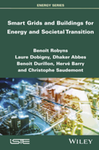
Smart grids and buildings for energy and societal transition
Robyns, Benoît; Dobigny, Laure; Abbes, Dhaker; Durillon, Benoit; Barry, Hervé; Saudemont, Christophe
Wiley-ISTE
, 2024
; English
; 421 Pages
This book presents interdisciplinary approaches to help buildings, electrical energy networks and their users contribute to the energy and societal transition.
Smart Grids and Buildings for Energy and Societal Transition examines the technologies, uses and imaginaries involved in implementing smart buildings and smart grids. Production and consumption forecasts, modeling of stakeholder involvement and self-consumption within a renewable energy community exploiting blockchain technology are examples developed with a view to fostering the emergence of smart grids. The potential of smart buildings, taking into account user comfort while increasing energy efficiency, is identified. Full-scale demonstrators are used to test the proposed solutions, and to ensure that users take full advantage of the potential for electrical flexibility.
Robyns, Benoît; Dobigny, Laure; Abbes, Dhaker; Durillon, Benoit; Barry, Hervé; Saudemont, Christophe
Wiley-ISTE
, 2024
; English
; 421 Pages
This book presents interdisciplinary approaches to help buildings, electrical energy networks and their users contribute to the energy and societal transition.
Smart Grids and Buildings for Energy and Societal Transition examines the technologies, uses and imaginaries involved in implementing smart buildings and smart grids. Production and consumption forecasts, modeling of stakeholder involvement and self-consumption within a renewable energy community exploiting blockchain technology are examples developed with a view to fostering the emergence of smart grids. The potential of smart buildings, taking into account user comfort while increasing energy efficiency, is identified. Full-scale demonstrators are used to test the proposed solutions, and to ensure that users take full advantage of the potential for electrical flexibility.
eBook
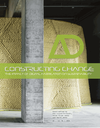
Constructing change : the impact of digital fabrication on sustainability
Lloret-Fritschi, Ena (Guest-edited by); Ercan Jenny, Selen (Guest-edited by); Jenny, David (Guest-edited by)
Wiley
, 2024
; English
; 149 Pages
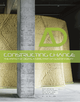
Every year, nearly 100 billion tonnes of raw material globally is extracted from the earth – approximately half of it for construction purposes. The construction industry is responsible for an estimated third of global waste, while reuse of construction materials is not increasing fast enough. The same sector accounts for at least 40 per cent of global carbon-dioxide emissions. There is thus an urgent need to showcase how novel approaches in digital fabrication might be able to enhance thesustainability of buildings and transform construction. Featuring specialists from architecture, engineering and materials science, this AD presents innovative research and new construction systems, approaches and trends to demonstrate how existing methods and unique concepts that utilise cutting-edge technologies can, in a short space of time, help us advance towards a culture of sustainable construction. It focuses on digital design and manufacturing, including XR technologies, and highlights unique ways to build with earth or concrete.
Lloret-Fritschi, Ena (Guest-edited by); Ercan Jenny, Selen (Guest-edited by); Jenny, David (Guest-edited by)
Wiley
, 2024
; English
; 149 Pages
Every year, nearly 100 billion tonnes of raw material globally is extracted from the earth – approximately half of it for construction purposes. The construction industry is responsible for an estimated third of global waste, while reuse of construction materials is not increasing fast enough. The same sector accounts for at least 40 per cent of global carbon-dioxide emissions. There is thus an urgent need to showcase how novel approaches in digital fabrication might be able to enhance thesustainability of buildings and transform construction. Featuring specialists from architecture, engineering and materials science, this AD presents innovative research and new construction systems, approaches and trends to demonstrate how existing methods and unique concepts that utilise cutting-edge technologies can, in a short space of time, help us advance towards a culture of sustainable construction. It focuses on digital design and manufacturing, including XR technologies, and highlights unique ways to build with earth or concrete.
eBook
Sustainable development and planning XIII
S. Syngellakis
WIT Press
, 2024
; English
; 1040 Pages
This volume comprises a selection of papers presented at the 13th International Conference on Sustainable Development and Planning which was held in Seville between 23 and 25 September 2024. Sustainability issues addressed relate to city and regional planning, the built environment, energy production and use, natural resources and the quality of life
S. Syngellakis
WIT Press
, 2024
; English
; 1040 Pages
This volume comprises a selection of papers presented at the 13th International Conference on Sustainable Development and Planning which was held in Seville between 23 and 25 September 2024. Sustainability issues addressed relate to city and regional planning, the built environment, energy production and use, natural resources and the quality of life
eBook
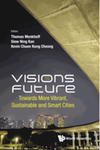
Visions for the future : towards more vibrant, sustainable and smart cities
Menkhoff, Thomas; Kan, Siew Ning; Cheong, Kevin Chuen Kong
World Scientific
, 2024
; English
; 335 Pages
With reference to Singapore's smart urban initiatives, this book provides insights into how urban planning, digital technology and sustainability issues are impacting people and businesses.The chapters are loosely structured with regards to key dimensions of smart cities such as urban innovation spaces, open innovation ecosystems, smart manufacturing, undergraduate education with regards to A.I. readiness, gamified leadership & team-building skills, and digital sustainability, ESG, environmental handprint, workplace sustainability and climate resilience, pillars of successful aging & inclusiveness and smart city management challenges.How does Singapore develop vibrant urban innovation spaces? In what ways can living labs create sustainable impact? How can SMEs benefit from the adoption of Industry 4.0? What is the role of chatbots in making undergraduate students 'AI-ready'? How does gamification help learners to acquire leadership and team-building skills? Why is digital sustainability important and how can educators sensitize youths toward cultivating more sustainable ways of living? What is the business case for ESG (environmental, social, and corporate governance) stewardship? How to steer Singapore's built environment towards a sustainable future? How to connect companies and help them to combat climate change by regenerating our planet? How to induct new employees to an organization and acclimatize them to the company's culture of sustainability, job roles and workplace sustainability? How to enable smart(er) aging? What is the future of inclusive smart cities? What are some of the opportunities for more theory-based, empirical research on smart city management challenges from a purpose-driven business perspective linked to human betterment? These questions and more are addressed in this book.Visions for the Future is a complementary reading resource suitable for anyone interested in understanding how the concept of Smart Cities can improve lives and livelihoods for all in a sustainable manner — from undergraduate and graduate students to smart city stakeholders in business and society as well as educators and municipal leaders.
Menkhoff, Thomas; Kan, Siew Ning; Cheong, Kevin Chuen Kong
World Scientific
, 2024
; English
; 335 Pages
With reference to Singapore's smart urban initiatives, this book provides insights into how urban planning, digital technology and sustainability issues are impacting people and businesses.The chapters are loosely structured with regards to key dimensions of smart cities such as urban innovation spaces, open innovation ecosystems, smart manufacturing, undergraduate education with regards to A.I. readiness, gamified leadership & team-building skills, and digital sustainability, ESG, environmental handprint, workplace sustainability and climate resilience, pillars of successful aging & inclusiveness and smart city management challenges.How does Singapore develop vibrant urban innovation spaces? In what ways can living labs create sustainable impact? How can SMEs benefit from the adoption of Industry 4.0? What is the role of chatbots in making undergraduate students 'AI-ready'? How does gamification help learners to acquire leadership and team-building skills? Why is digital sustainability important and how can educators sensitize youths toward cultivating more sustainable ways of living? What is the business case for ESG (environmental, social, and corporate governance) stewardship? How to steer Singapore's built environment towards a sustainable future? How to connect companies and help them to combat climate change by regenerating our planet? How to induct new employees to an organization and acclimatize them to the company's culture of sustainability, job roles and workplace sustainability? How to enable smart(er) aging? What is the future of inclusive smart cities? What are some of the opportunities for more theory-based, empirical research on smart city management challenges from a purpose-driven business perspective linked to human betterment? These questions and more are addressed in this book.Visions for the Future is a complementary reading resource suitable for anyone interested in understanding how the concept of Smart Cities can improve lives and livelihoods for all in a sustainable manner — from undergraduate and graduate students to smart city stakeholders in business and society as well as educators and municipal leaders.
eBook
Botanical architecture: plants, buildings and us
Dobraszczyk, Paul
Reaktion Books
, 2024
; English
; 276 Pages
An original call to reorient architecture around our relationship to plants.
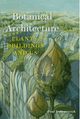
When we look at trees, we see a form of natural architecture, and yet we have seemingly always exploited trees to make new buildings of our own. Whereas a tree creates its own structure, humans generally destroy other things to build, with increasingly disastrous consequences. In Botanical Architecture, Paul Dobraszczyk looks closely at how elements of plants—seeds, roots, trunks, branches, leaves, flowers, and canopies—compare with and constitute human-made buildings.
Given the omnipresence of plant life in and around our structures, Dobraszczyk argues that we ought to build as much for plants as for ourselves, understanding that our lives are always totally dependent on theirs. Botanical Architecture offers a provocative and original take on the relationship between ecology and architecture.
Dobraszczyk, Paul
Reaktion Books
, 2024
; English
; 276 Pages
An original call to reorient architecture around our relationship to plants.
When we look at trees, we see a form of natural architecture, and yet we have seemingly always exploited trees to make new buildings of our own. Whereas a tree creates its own structure, humans generally destroy other things to build, with increasingly disastrous consequences. In Botanical Architecture, Paul Dobraszczyk looks closely at how elements of plants—seeds, roots, trunks, branches, leaves, flowers, and canopies—compare with and constitute human-made buildings.
Given the omnipresence of plant life in and around our structures, Dobraszczyk argues that we ought to build as much for plants as for ourselves, understanding that our lives are always totally dependent on theirs. Botanical Architecture offers a provocative and original take on the relationship between ecology and architecture.
eBook
The 15-minute city : a solution to saving our time & our planet
Moreno, Carlos
Wiley
, 2024
; English
; 301 Pages
A fresh and innovative perspective on urban issues and creating sustainable cities
In The 15-Minute City: A Solution for Saving Our Time and Our Planet, human city pioneer and international scientific advisor Carlos Moreno delivers an exciting and insightful discussion of the deceptively simple and revolutionary idea that everyday destinations like schools, stores, and offices should only be a short walk or bike ride away from home.
This book tells the story of an idea that spread from city to city, describing a new way of looking at living that addresses many of the most intractable challenges of our time. Hundreds of mayors worldwide have already embraced the concept as a way to help recover from the pandemic, and the idea continues to gain speed. You'll learn why more and more cities are planning to make cars far less necessary for contemporary city-dwellers and how they're planning to achieve that goal. You'll also find:
• Strategies for cities to recover and adapt to benefit residents, saving them precious time
• Techniques to change the habits of automobile-dependent city residents and maximize social benefits of living in a human-centric city
• Scientifically developed, research-backed solutions for enduring urban issues and problems
Deeply committed to science, progress, and creativity, Moreno presents an essential and timely resource in The 15-Minute City, which will prove invaluable to anyone with an interest in modern and innovative approaches to consistently challenging urban issues that have bedeviled policy makers and city residents since the invention of the car.
Moreno, Carlos
Wiley
, 2024
; English
; 301 Pages
A fresh and innovative perspective on urban issues and creating sustainable cities
In The 15-Minute City: A Solution for Saving Our Time and Our Planet, human city pioneer and international scientific advisor Carlos Moreno delivers an exciting and insightful discussion of the deceptively simple and revolutionary idea that everyday destinations like schools, stores, and offices should only be a short walk or bike ride away from home.
This book tells the story of an idea that spread from city to city, describing a new way of looking at living that addresses many of the most intractable challenges of our time. Hundreds of mayors worldwide have already embraced the concept as a way to help recover from the pandemic, and the idea continues to gain speed. You'll learn why more and more cities are planning to make cars far less necessary for contemporary city-dwellers and how they're planning to achieve that goal. You'll also find:
• Strategies for cities to recover and adapt to benefit residents, saving them precious time
• Techniques to change the habits of automobile-dependent city residents and maximize social benefits of living in a human-centric city
• Scientifically developed, research-backed solutions for enduring urban issues and problems
Deeply committed to science, progress, and creativity, Moreno presents an essential and timely resource in The 15-Minute City, which will prove invaluable to anyone with an interest in modern and innovative approaches to consistently challenging urban issues that have bedeviled policy makers and city residents since the invention of the car.
eBook
Building futures : technology, ecology, and architectural practice
Garber, Richard
Wiley
, 2023
; English
; 275 Pages
BUILDING FUTURES
An approach to Information Modeling engaging concepts of equality, sustainability, and labor as they relate to environment and architectural practice
Building Futures: Technology, Ecology, and Architectural Practice explores how architects, and the buildings and environments we create, can engage future realities, both abstract and readily understood. These range from climate change and public health to advanced ideas about manufacture and construction. The text demonstrates multiple and hybrid paths in which building information modeling (BIM) and outgrowth technological processes including environmental simulation and human-robot interaction can be utilized in today’s contemporary context, expanding the architect’s agency by focusing on a more conceptual, and ecological, basis for our work. Moving beyond a basic understanding of the role of computation in architecture and design, the work shows how to think critically and speculatively about technology’s deeper and more lasting impacts on both architecture and society. Topics covered in Building Futures include:
• Technology: information modeling and the relationship between computational and real objects, new approaches to coding in architectural design, and direct-to-manufacture workflows
• Environment: understanding part-to-whole relationships at a variety of scales and the interconnectedness of things, post-subjective architectural approaches to ecology, and new ideas about sustainability
• Practice: revisiting architecture by remote control in the time of new global challenges, and novel ideas about creativity, authorship, and professionalism
Design professionals and practice leaders grappling with the relationship of technology to design pedagogy will use Building Futures to better theorize and execute their architectural vision. Students in upper-level courses studying technique and theory will also find value in the work, which prepares incoming professionals for the major changes that the Architecture, Engineering, and Construction (AEC) industry may undergo in the coming years and decades.
“The book prompts us to consider simulating events where architecture and architects could mitigate, redirect or develop contingencies, in relation to the environment, flows of material and capital, and other “things” that operate from the immediate, through to almost geological timescales.”
From the Foreword by Robert Stuart-Smith, Director of the Autonomous Manufacturing Lab, University of Pennsylvania
Garber, Richard
Wiley
, 2023
; English
; 275 Pages
BUILDING FUTURES
An approach to Information Modeling engaging concepts of equality, sustainability, and labor as they relate to environment and architectural practice
Building Futures: Technology, Ecology, and Architectural Practice explores how architects, and the buildings and environments we create, can engage future realities, both abstract and readily understood. These range from climate change and public health to advanced ideas about manufacture and construction. The text demonstrates multiple and hybrid paths in which building information modeling (BIM) and outgrowth technological processes including environmental simulation and human-robot interaction can be utilized in today’s contemporary context, expanding the architect’s agency by focusing on a more conceptual, and ecological, basis for our work. Moving beyond a basic understanding of the role of computation in architecture and design, the work shows how to think critically and speculatively about technology’s deeper and more lasting impacts on both architecture and society. Topics covered in Building Futures include:
• Technology: information modeling and the relationship between computational and real objects, new approaches to coding in architectural design, and direct-to-manufacture workflows
• Environment: understanding part-to-whole relationships at a variety of scales and the interconnectedness of things, post-subjective architectural approaches to ecology, and new ideas about sustainability
• Practice: revisiting architecture by remote control in the time of new global challenges, and novel ideas about creativity, authorship, and professionalism
Design professionals and practice leaders grappling with the relationship of technology to design pedagogy will use Building Futures to better theorize and execute their architectural vision. Students in upper-level courses studying technique and theory will also find value in the work, which prepares incoming professionals for the major changes that the Architecture, Engineering, and Construction (AEC) industry may undergo in the coming years and decades.
“The book prompts us to consider simulating events where architecture and architects could mitigate, redirect or develop contingencies, in relation to the environment, flows of material and capital, and other “things” that operate from the immediate, through to almost geological timescales.”
From the Foreword by Robert Stuart-Smith, Director of the Autonomous Manufacturing Lab, University of Pennsylvania
