


Navigation menu
Search
Databases
All Databases
eBook
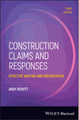
Construction claims and responses : effective writing and presentation, third edition
Hewitt, Andy
Wiley-Blackwell
, 2025
; English
; 200 Pages
The latest and most up-to-date edition of the best hands-on guide to construction claims and claims response preparation
In the newly revised third edition of Construction Claims and Responses: Effective Writing and Presentation, renowned construction claims and disputes consultant Andy Hewitt delivers yet another authoritative and practical discussion of how to prepare and respond to construction claims. Covering a variety of different types of claims – including variations, extensions of time, and additional payment – the book demonstrates an effective step-by-step process of building up a claim by breaking it down into manageable sections: contract details, causes, effects, entitlement, and quantum.
You’ll find worked examples of typical claims, complete with sample wording, as well as updated and simplified examples of responses, additional detail on cost calculations, and updates to material to maintain compliance with FIDIC 2017.
Readers will also discover:
A thorough introduction to properly constituted and presented claims, including the establishment of contractual entitlement and comprehensive documentation
Comprehensive explorations of what constitutes sufficient cause and effect for a construction claim
Revised and clarified worked examples of commonly made construction claims and responses
Complete discussions of accurate quantum calculations
Perfect for all construction project personnel around the world involved in the preparation of construction claims, Construction Claims and Responses will also benefit those preparing responses to such claims, as well as quantity surveyors, contracts managers, project managers, claims consultants, commercial managers, engineers, architects, and adjudicators.
Hewitt, Andy
Wiley-Blackwell
, 2025
; English
; 200 Pages
The latest and most up-to-date edition of the best hands-on guide to construction claims and claims response preparation
In the newly revised third edition of Construction Claims and Responses: Effective Writing and Presentation, renowned construction claims and disputes consultant Andy Hewitt delivers yet another authoritative and practical discussion of how to prepare and respond to construction claims. Covering a variety of different types of claims – including variations, extensions of time, and additional payment – the book demonstrates an effective step-by-step process of building up a claim by breaking it down into manageable sections: contract details, causes, effects, entitlement, and quantum.
You’ll find worked examples of typical claims, complete with sample wording, as well as updated and simplified examples of responses, additional detail on cost calculations, and updates to material to maintain compliance with FIDIC 2017.
Readers will also discover:
A thorough introduction to properly constituted and presented claims, including the establishment of contractual entitlement and comprehensive documentation
Comprehensive explorations of what constitutes sufficient cause and effect for a construction claim
Revised and clarified worked examples of commonly made construction claims and responses
Complete discussions of accurate quantum calculations
Perfect for all construction project personnel around the world involved in the preparation of construction claims, Construction Claims and Responses will also benefit those preparing responses to such claims, as well as quantity surveyors, contracts managers, project managers, claims consultants, commercial managers, engineers, architects, and adjudicators.
eBook
Teter, Joshua Alan
Packt Publishing
, 2024
; English
; 368 Pages
Explore the TPM role in depth with this revised second edition. New coverage includes advanced program management techniques, emotional intelligence, and AI integration. Join business with technology and elevate your career.
Key Features
• Learn advanced system design principles and architectural concepts necessary for a TPM
• Get up to speed with AI-driven project planning, risk management, and stakeholder communication tools
• Benefit from practical tools, methodologies, case studies, and real-world examples
Book Description
The role of the Technical Program Manager (TPM) is crucial in the tech industry, bridging the gap between technical expertise and business acumen. The second edition of the Technical Program Manager’s Handbook offers a comprehensive guide to excelling in this role. Building on the foundational concepts from the first edition, this updated version introduces new chapters that explore the integration of AI and Emotional Intelligence (EI) in program management. These crucial additions complement the broader focus of the book on bridging business and technology but don’t overshadow it. You'll learn how to apply AI-driven tools to enhance project planning, risk management, and stakeholder communication, as well as how to leverage EI to build strong team relationships and improve leadership effectiveness. This book provides practical tools, methodologies, and case studies, offering insights from industry leaders to help both aspiring and practicing TPMs apply advanced concepts and strategies effectively. It also explores the unique aspects of the TPM role in major tech companies, helping you to navigate and thrive in your career. By the end of this book, you'll have a clear understanding of the TPM role, along with a breakdown of the necessary technical and program management skills, to develop a clear roadmap for your career.What you will learn
• Uncover the critical importance of the TPM role in the tech industry
• Understand and leverage the unique aspects of the TPM role
• Discover what makes a successful TPM through real-world case studies
• Master project management with advanced technical skills and AI tools
• Apply EI to enhance leadership and team management
• Explore careers and paths for TPMs in the Big Five tech companies
Who this book is for
This book is designed for aspiring and established Technical Program Managers (TPMs), tech professionals transitioning into TPM roles, and recent graduates embarking on careers in technology consulting. It's also valuable for business analysts, project managers, and anyone supporting or working alongside TPMs. To fully benefit from this book, readers should have a basic understanding of the project management life cycle and be comfortable with technical concepts, as it dives into advanced topics and real-world applications.
Teter, Joshua Alan
Packt Publishing
, 2024
; English
; 368 Pages
Explore the TPM role in depth with this revised second edition. New coverage includes advanced program management techniques, emotional intelligence, and AI integration. Join business with technology and elevate your career.
Key Features
• Learn advanced system design principles and architectural concepts necessary for a TPM
• Get up to speed with AI-driven project planning, risk management, and stakeholder communication tools
• Benefit from practical tools, methodologies, case studies, and real-world examples
Book Description
The role of the Technical Program Manager (TPM) is crucial in the tech industry, bridging the gap between technical expertise and business acumen. The second edition of the Technical Program Manager’s Handbook offers a comprehensive guide to excelling in this role. Building on the foundational concepts from the first edition, this updated version introduces new chapters that explore the integration of AI and Emotional Intelligence (EI) in program management. These crucial additions complement the broader focus of the book on bridging business and technology but don’t overshadow it. You'll learn how to apply AI-driven tools to enhance project planning, risk management, and stakeholder communication, as well as how to leverage EI to build strong team relationships and improve leadership effectiveness. This book provides practical tools, methodologies, and case studies, offering insights from industry leaders to help both aspiring and practicing TPMs apply advanced concepts and strategies effectively. It also explores the unique aspects of the TPM role in major tech companies, helping you to navigate and thrive in your career. By the end of this book, you'll have a clear understanding of the TPM role, along with a breakdown of the necessary technical and program management skills, to develop a clear roadmap for your career.What you will learn
• Uncover the critical importance of the TPM role in the tech industry
• Understand and leverage the unique aspects of the TPM role
• Discover what makes a successful TPM through real-world case studies
• Master project management with advanced technical skills and AI tools
• Apply EI to enhance leadership and team management
• Explore careers and paths for TPMs in the Big Five tech companies
Who this book is for
This book is designed for aspiring and established Technical Program Managers (TPMs), tech professionals transitioning into TPM roles, and recent graduates embarking on careers in technology consulting. It's also valuable for business analysts, project managers, and anyone supporting or working alongside TPMs. To fully benefit from this book, readers should have a basic understanding of the project management life cycle and be comfortable with technical concepts, as it dives into advanced topics and real-world applications.
eBook
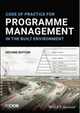
Code of practice for programme management in the built environment, second edition
CIOB (The Chartered Institute of Building)
Wiley-Blackwell
, 2024
; English
; 193 Pages
CODE OF PRACTICE FOR PROGRAMME MANAGEMENT IN THE BUILT ENVIRONMENT
Manage a construction programme from start to finish with this up-to-date guide
The maturation and proliferation of project management principles has been one of the most important stories in recent business history. So widely has project management spread throughout the corporate world that it has now given way to a similar discipline, programme management, designed to align, coordinate and manage a number of related projects as a whole. In the construction industry particularly, programme management can deliver benefits that would not have been possible to realise had individual projects been managed independently.
Produced by the Chartered Institute of Building (CIOB), the revised Code of Practice for Programme Management in the Built Environment provides a comprehensive overview of the tools required to deliver such benefits, and how they are applied in construction programmes. A natural complement to the CIOB’s popular Code of Practice for Project Management for the Built Environment, it is now fully updated to reflect new insights and best practices.
Readers of the second edition of Code of Practice for Programme Management in the Built Environment will find:
• Theoretical and practical insights derived from research and experience
• Coverage of setting up programmes successfully so that teams feel confident to deliver the final outcome
• Guidelines for implementing programme management for the built environment
Code of Practice for Programme Management in the Built Environment is ideal for programme management and project management professionals involved in this industry and in particular, contractors and client organisations, as well as for advanced undergraduate and postgraduate students in construction project management and other related disciplines.
The Chartered Institute of Building is the world’s largest professional body for construction management and leadership. It has a Royal Charter to promote the science and practice of building and construction for the benefit of society. Members across the world work in the development, conservation, and improvement of the built environment.
CIOB (The Chartered Institute of Building)
Wiley-Blackwell
, 2024
; English
; 193 Pages
CODE OF PRACTICE FOR PROGRAMME MANAGEMENT IN THE BUILT ENVIRONMENT
Manage a construction programme from start to finish with this up-to-date guide
The maturation and proliferation of project management principles has been one of the most important stories in recent business history. So widely has project management spread throughout the corporate world that it has now given way to a similar discipline, programme management, designed to align, coordinate and manage a number of related projects as a whole. In the construction industry particularly, programme management can deliver benefits that would not have been possible to realise had individual projects been managed independently.
Produced by the Chartered Institute of Building (CIOB), the revised Code of Practice for Programme Management in the Built Environment provides a comprehensive overview of the tools required to deliver such benefits, and how they are applied in construction programmes. A natural complement to the CIOB’s popular Code of Practice for Project Management for the Built Environment, it is now fully updated to reflect new insights and best practices.
Readers of the second edition of Code of Practice for Programme Management in the Built Environment will find:
• Theoretical and practical insights derived from research and experience
• Coverage of setting up programmes successfully so that teams feel confident to deliver the final outcome
• Guidelines for implementing programme management for the built environment
Code of Practice for Programme Management in the Built Environment is ideal for programme management and project management professionals involved in this industry and in particular, contractors and client organisations, as well as for advanced undergraduate and postgraduate students in construction project management and other related disciplines.
The Chartered Institute of Building is the world’s largest professional body for construction management and leadership. It has a Royal Charter to promote the science and practice of building and construction for the benefit of society. Members across the world work in the development, conservation, and improvement of the built environment.
eBook
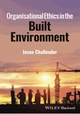
Organisational ethics in the built environment
Challender, Jason
Wiley-Blackwell
, 2023
; English
; 332 Pages
Organisational Ethics in the Built Environment
A comprehensive analysis of the critical role played by ethics in construction organisations, and a toolkit for implementing a strong ethical culture
In Organisational Ethics in the Built Environment, accomplished construction leader Jason Challender delivers an insightful and important resource for construction industry professionals contributing to the creation of safe and suitable projects. The author explains how to construct the foundation for ethical building and business practices in the construction industry, and explores the methods, motives and rationales behind successful and ethical projects from an organisational and industry perspective.
You’ll learn how practical improvements to organisational ethics can promote ethical standards, behaviours and practices and influence the success of projects in the built environment. You’ll also discover the importance of leadership, motivational management, human resource management, corporate responsibility and social value in encouraging strict compliance and adherence to ethical principles, values and standards within organisations.
Readers will also find:
• A thorough introduction to the critical importance of trust, collaborative working and partnering arrangements in contemporary construction and engineering organisations
• Comprehensive explorations of the relevance of environmental ethics
• Practical discussions of how to link corporate policies and strategies to ethical guidelines
• Case studies from across a variety of knowledge fields, including manufacturing and retail
Perfect for construction managers, Organisational Ethics in the Built Environment will also benefit undergraduate and postgraduate students of construction, business, management, engineering and other construction related subjects.
Challender, Jason
Wiley-Blackwell
, 2023
; English
; 332 Pages
Organisational Ethics in the Built Environment
A comprehensive analysis of the critical role played by ethics in construction organisations, and a toolkit for implementing a strong ethical culture
In Organisational Ethics in the Built Environment, accomplished construction leader Jason Challender delivers an insightful and important resource for construction industry professionals contributing to the creation of safe and suitable projects. The author explains how to construct the foundation for ethical building and business practices in the construction industry, and explores the methods, motives and rationales behind successful and ethical projects from an organisational and industry perspective.
You’ll learn how practical improvements to organisational ethics can promote ethical standards, behaviours and practices and influence the success of projects in the built environment. You’ll also discover the importance of leadership, motivational management, human resource management, corporate responsibility and social value in encouraging strict compliance and adherence to ethical principles, values and standards within organisations.
Readers will also find:
• A thorough introduction to the critical importance of trust, collaborative working and partnering arrangements in contemporary construction and engineering organisations
• Comprehensive explorations of the relevance of environmental ethics
• Practical discussions of how to link corporate policies and strategies to ethical guidelines
• Case studies from across a variety of knowledge fields, including manufacturing and retail
Perfect for construction managers, Organisational Ethics in the Built Environment will also benefit undergraduate and postgraduate students of construction, business, management, engineering and other construction related subjects.
eBook
Higginbottom, Guy
Wiley-Blackwell
, 2023
; English
; 435 Pages
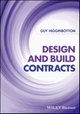
DESIGN AND BUILD CONTRACTS
Design and build (D&B) construction procurement relies on a project’s main contractor shouldering the responsibility for creating the design and executing the construction for a project. While the extent of contractor-produced design can vary, this method of construction procurement affords the contractor a greater level of input and responsibility than traditionally procured contracts (where the employer has greater design responsibility). Over the last decade in the UK, it has become clear that D&B contracts are becoming the most popular method for procuring construction projects; often echoing the ways in which contracts for infrastructure and process plant can be procured.
Whilst D&B can provide a greater degree of contractor input for producing feasibility and concept designs, then the detailed design to deliver a project, many clients amend standard forms of D&B contracts to alter the contractors’ design input. This can significantly change D&B, deviating from the procedures set out in the standard forms of D&B contract.
This book firstly takes the reader through each stage of a project (based upon the RIBA Plan of Work 2020) to provide guidance on how D&B contracts were intended to operate, then secondly, identifying how D&B contracts and their procedures have changed.
Readers will find:
Outline commentary and guidance on commonly used standard forms of D&B contract, including: JCT Design and Build 2016; FIDIC Conditions of Contract for Plant Design-Build 2017; and NEC4
How each D&B contract is intended to operate during each stage of the RIBA Plan of Work 2020
How the operation of D&B contracts and their procedures are often amended.
An ideal resource for contractors, employers, and consultants, as well as those studying construction at university, Design and Build Contracts offers helpful commentary and guidance for how each stage of a D&B engineering or construction project should progress.
Higginbottom, Guy
Wiley-Blackwell
, 2023
; English
; 435 Pages
DESIGN AND BUILD CONTRACTS
Design and build (D&B) construction procurement relies on a project’s main contractor shouldering the responsibility for creating the design and executing the construction for a project. While the extent of contractor-produced design can vary, this method of construction procurement affords the contractor a greater level of input and responsibility than traditionally procured contracts (where the employer has greater design responsibility). Over the last decade in the UK, it has become clear that D&B contracts are becoming the most popular method for procuring construction projects; often echoing the ways in which contracts for infrastructure and process plant can be procured.
Whilst D&B can provide a greater degree of contractor input for producing feasibility and concept designs, then the detailed design to deliver a project, many clients amend standard forms of D&B contracts to alter the contractors’ design input. This can significantly change D&B, deviating from the procedures set out in the standard forms of D&B contract.
This book firstly takes the reader through each stage of a project (based upon the RIBA Plan of Work 2020) to provide guidance on how D&B contracts were intended to operate, then secondly, identifying how D&B contracts and their procedures have changed.
Readers will find:
Outline commentary and guidance on commonly used standard forms of D&B contract, including: JCT Design and Build 2016; FIDIC Conditions of Contract for Plant Design-Build 2017; and NEC4
How each D&B contract is intended to operate during each stage of the RIBA Plan of Work 2020
How the operation of D&B contracts and their procedures are often amended.
An ideal resource for contractors, employers, and consultants, as well as those studying construction at university, Design and Build Contracts offers helpful commentary and guidance for how each stage of a D&B engineering or construction project should progress.
eBook
Building a body of knowledge in project management in developing countries
Ofori, George
World Scientific
, 2023
; English
; 951 Pages
This book presents a state-of-the-art account of the recent developments and needs for project management in developing countries.
It adds to the current state of knowledge on project management in general by capturing current trends, how they widen the content and scope of the field, and why there is a need for a specialist body of knowledge for developing countries.
Eminent experts in this domain address the specific nature and demands of project management in developing countries, in the context of its scope and priorities, and discuss the relationships between this emerging field and established bodies of knowledge.
The book also addresses the future of project management in developing countries and how this might influence mainstream project management.
This important book will be an essential reference for practitioners, students, researchers and policymakers engaged in how to improve the effectiveness and efficiency of project management in developing countries.
Ofori, George
World Scientific
, 2023
; English
; 951 Pages
This book presents a state-of-the-art account of the recent developments and needs for project management in developing countries.
It adds to the current state of knowledge on project management in general by capturing current trends, how they widen the content and scope of the field, and why there is a need for a specialist body of knowledge for developing countries.
Eminent experts in this domain address the specific nature and demands of project management in developing countries, in the context of its scope and priorities, and discuss the relationships between this emerging field and established bodies of knowledge.
The book also addresses the future of project management in developing countries and how this might influence mainstream project management.
This important book will be an essential reference for practitioners, students, researchers and policymakers engaged in how to improve the effectiveness and efficiency of project management in developing countries.
eBook
Teter, Joshua Alan
Packt Publishing
, 2022
; English
; 215 Pages
The technical program manager (TPM) is a relatively new role born out of the need of the tech industry to have a specialized practitioner who speaks both tech and business and leverages this bilingual talent to get results that no one else can. This book dives into what makes a TPM tick. You’ll find out which project and program management skills will help you shine and how you can apply your technical skills for effective results. This book looks at the TPM role across the Big Five tech companies (Amazon, Google, Microsoft, Apple, and Meta) to help you discern the most effective skills to be successful no matter which company you work for. Are you already a well-performing TPM looking to see what’s next? This book identifies the career paths for a TPM at the Big Five to help you decide the next step for you. By the end of this book, you’ll have a clear understanding of how to be a TPM, along with a breakdown of the necessary technical and program management skills to develop a clear roadmap for your career.
Teter, Joshua Alan
Packt Publishing
, 2022
; English
; 215 Pages
The technical program manager (TPM) is a relatively new role born out of the need of the tech industry to have a specialized practitioner who speaks both tech and business and leverages this bilingual talent to get results that no one else can. This book dives into what makes a TPM tick. You’ll find out which project and program management skills will help you shine and how you can apply your technical skills for effective results. This book looks at the TPM role across the Big Five tech companies (Amazon, Google, Microsoft, Apple, and Meta) to help you discern the most effective skills to be successful no matter which company you work for. Are you already a well-performing TPM looking to see what’s next? This book identifies the career paths for a TPM at the Big Five to help you decide the next step for you. By the end of this book, you’ll have a clear understanding of how to be a TPM, along with a breakdown of the necessary technical and program management skills to develop a clear roadmap for your career.
eBook
Building a body of knowledge in construction project delivery, procurement and contracting
Migliaccio, Giovanni C.; Shrestha, Pramen P.
World Scientific
, 2022
; English
; 378 Pages
This book aims to consolidate, structure and articulate collective knowledge on construction project delivery, procurement and contracting, so that it can serve as a gateway to the contiguous topics of construction project delivery. In addition to supporting the education of student researchers, as well as broadening and deepening the knowledge of practitioners, the book is also intended to serve as a foundation for future education and as a reference book. Academicians can use it to benchmark and support their research and also as a textbook for an undergraduate or graduate course on the topics of project delivery, procurement and contracting.
Migliaccio, Giovanni C.; Shrestha, Pramen P.
World Scientific
, 2022
; English
; 378 Pages
This book aims to consolidate, structure and articulate collective knowledge on construction project delivery, procurement and contracting, so that it can serve as a gateway to the contiguous topics of construction project delivery. In addition to supporting the education of student researchers, as well as broadening and deepening the knowledge of practitioners, the book is also intended to serve as a foundation for future education and as a reference book. Academicians can use it to benchmark and support their research and also as a textbook for an undergraduate or graduate course on the topics of project delivery, procurement and contracting.
eBook
Code of practice for project management for the built environment, sixth edition
Wiley-Blackwell
, 2022
; English
; 288 Pages
The latest edition of the gold standard in construction project management references
The newly revised sixth edition of the Code of Practice for Project Management for the Built Environment, prepared by the Chartered Institute of Building, is an up-to-date and comprehensive reference covering the principles and practice of project management in construction and development. This latest edition covers the new technologies, internationalisation, changing legislation, and productivity and profitability challenges faced by contractors which all combine to drive significant change in the industry.
The book demonstrates the application of systematic documentation and quality control to complex construction projects and offers guidance and tools that link key principles to practical project management. It is worldwide in scope and widely recognised as the industry standard on the subject.
With fresh discussions of quality assurance, global codes and standards, time management, joint ventures, contract compliance, supply chain integration, design digitisation, and much more, the Code of Practice for Project Management for the Built Environment also includes:
A thorough introduction to project inception, feasibility analysis, strategy, and the pre-construction process
Comprehensive explorations of the construction stage of projects, as well as testing and commissioning, and project completion, handover, and operation
Practical discussions of post-completion review
A glossary and index of essential terms in construction project management
Perfect for project management professionals in construction contracting and client organisations, Code of Practice for Project Management for the Built Environment will also earn a place in the libraries of undergraduate and postgraduate students of project management and construction-related subjects.
The Chartered Institute of Building is the world’s largest professional body for construction management and leadership. It has a Royal Charter to promote the science and practice of building and construction for the benefit of society. Members across the world work in the development, conservation, and improvement of the built environment.
Wiley-Blackwell
, 2022
; English
; 288 Pages
The latest edition of the gold standard in construction project management references
The newly revised sixth edition of the Code of Practice for Project Management for the Built Environment, prepared by the Chartered Institute of Building, is an up-to-date and comprehensive reference covering the principles and practice of project management in construction and development. This latest edition covers the new technologies, internationalisation, changing legislation, and productivity and profitability challenges faced by contractors which all combine to drive significant change in the industry.
The book demonstrates the application of systematic documentation and quality control to complex construction projects and offers guidance and tools that link key principles to practical project management. It is worldwide in scope and widely recognised as the industry standard on the subject.
With fresh discussions of quality assurance, global codes and standards, time management, joint ventures, contract compliance, supply chain integration, design digitisation, and much more, the Code of Practice for Project Management for the Built Environment also includes:
A thorough introduction to project inception, feasibility analysis, strategy, and the pre-construction process
Comprehensive explorations of the construction stage of projects, as well as testing and commissioning, and project completion, handover, and operation
Practical discussions of post-completion review
A glossary and index of essential terms in construction project management
Perfect for project management professionals in construction contracting and client organisations, Code of Practice for Project Management for the Built Environment will also earn a place in the libraries of undergraduate and postgraduate students of project management and construction-related subjects.
The Chartered Institute of Building is the world’s largest professional body for construction management and leadership. It has a Royal Charter to promote the science and practice of building and construction for the benefit of society. Members across the world work in the development, conservation, and improvement of the built environment.
eBook
Edwards, Peter J.; Vaz Serra, Paulo; Edwards, Michael
Wiley-Blackwell
, 2019
; English
; 463 Pages
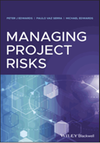
A comprehensive overview of project risk management, providing guidance on implementing and improving project risk management systems in organizations
This book provides a comprehensive overview of project risk management. Besides offering an easy-to-follow, yet systematic approach to project risk management, it also introduces topics which have an important bearing on how risks are managed but which are generally not found in other books, including risk knowledge management, cultural risk-shaping, project complexity, political risks, and strategic risk management. Many new concepts about risk management are introduced. Diagrams and tables, together with project examples and case studies, illustrate the authors’ precepts and ideas.
Each chapter in Managing Project Risks begins with an introduction to its topic and ends with a summary. The book starts by providing an understanding and overview of risk and continues with coverage of projects and project stakeholders. Ensuing chapters look at project risk management processes, contexts and risk drivers, identification, assessment and evaluation, response and treatment options, and risk monitoring and control. One chapter focuses entirely on risk knowledge management. Others explore the cultural shaping of risk, political risk in projects, computer applications, and more. The book finishes by examining the current state and potential future of project risk management.
In essence, this book:
- Effectively communicates a conceptual and philosophical understanding of risk
- Establishes the nature of projects and the stakeholders involved in them
- Presents a systematic and logically progressive approach to the processes of project risk management
- Demonstrates how to recognize the drivers of project risks and the factors which shape them
- Emphasizes the importance of capturing and exploiting project risk knowledge
- Provides guidance about implementing and building (or improving) project risk management systems in organizations
Managing Project Risks will benefit practitioners and students of project management across a wide range of industries and professions.
eBook
Edwards, Peter J.; Vaz Serra, Paulo; Edwards, Michael
Wiley-Blackwell
, 2019
; English
; 463 Pages
A comprehensive overview of project risk management, providing guidance on implementing and improving project risk management systems in organizations
This book provides a comprehensive overview of project risk management. Besides offering an easy-to-follow, yet systematic approach to project risk management, it also introduces topics which have an important bearing on how risks are managed but which are generally not found in other books, including risk knowledge management, cultural risk-shaping, project complexity, political risks, and strategic risk management. Many new concepts about risk management are introduced. Diagrams and tables, together with project examples and case studies, illustrate the authors’ precepts and ideas.
Each chapter in Managing Project Risks begins with an introduction to its topic and ends with a summary. The book starts by providing an understanding and overview of risk and continues with coverage of projects and project stakeholders. Ensuing chapters look at project risk management processes, contexts and risk drivers, identification, assessment and evaluation, response and treatment options, and risk monitoring and control. One chapter focuses entirely on risk knowledge management. Others explore the cultural shaping of risk, political risk in projects, computer applications, and more. The book finishes by examining the current state and potential future of project risk management.
In essence, this book:
- Effectively communicates a conceptual and philosophical understanding of risk
- Establishes the nature of projects and the stakeholders involved in them
- Presents a systematic and logically progressive approach to the processes of project risk management
- Demonstrates how to recognize the drivers of project risks and the factors which shape them
- Emphasizes the importance of capturing and exploiting project risk knowledge
- Provides guidance about implementing and building (or improving) project risk management systems in organizations
Managing Project Risks will benefit practitioners and students of project management across a wide range of industries and professions.
