

Navigation menu
Search
Databases
All Databases
eBook
The art of Indian Asia its mythology and transformations, volume two: plates
Zimmer, Heinrich; Elisofon, Eliot (WIIH PHOTOGRAPHS BY); Campbell, Joseph (COMPLETED AND EDITED BY)
Princeton University Press
, 2026
; English
; 655 Pages
he Art of Indian Asia is a unique work of scholarship and photography in two volumes (each sold separately). This is the second volume, which contains the photographic illustrations; the first volume contains the text. Together, the two volumes present a comprehensive view of Indian art, spanning from 3,000 BC to the twentieth century and an area from Afghanistan to Bali. The volume of text combined with the volume of photographs form an “imaginary temple” that conveys the spiritual messages of Hinduism, Buddhism, and Jainism.
It is recommended that readers buy both volumes of The Art of Indian Asia because together they form an integrated work—Volume 1 containing only the text and Volume 2 containing only the photographs.
Zimmer, Heinrich; Elisofon, Eliot (WIIH PHOTOGRAPHS BY); Campbell, Joseph (COMPLETED AND EDITED BY)
Princeton University Press
, 2026
; English
; 655 Pages
he Art of Indian Asia is a unique work of scholarship and photography in two volumes (each sold separately). This is the second volume, which contains the photographic illustrations; the first volume contains the text. Together, the two volumes present a comprehensive view of Indian art, spanning from 3,000 BC to the twentieth century and an area from Afghanistan to Bali. The volume of text combined with the volume of photographs form an “imaginary temple” that conveys the spiritual messages of Hinduism, Buddhism, and Jainism.
It is recommended that readers buy both volumes of The Art of Indian Asia because together they form an integrated work—Volume 1 containing only the text and Volume 2 containing only the photographs.

eBook
The art of Indian Asia its mythology and transformations, volume one: text
Zimmer, Heinrich; Elisofon, Eliot (WITH PHOTOGRAPHS BY); Campbell, Joseph (COMPLETED AND EDITED BY)
Princeton University Press
, 2026
; English
; 540 Pages
The Art of Indian Asia is a unique work of scholarship and photography in two volumes (each sold separately). This is the first volume, which contains the text
the second volume contains the photographic illustrations. Together, the two volumes present a comprehensive view of Indian art, spanning from 3,000 BC to the twentieth century and an area from Afghanistan to Bali. The volume of text combined with the volume of photographs form an “imaginary temple” that conveys the spiritual messages of Hinduism, Buddhism, and Jainism.
It is recommended that readers buy both volumes of The Art of Indian Asia because together they form an integrated work—Volume 1 containing only the text and Volume 2 containing only the photographs.
Zimmer, Heinrich; Elisofon, Eliot (WITH PHOTOGRAPHS BY); Campbell, Joseph (COMPLETED AND EDITED BY)
Princeton University Press
, 2026
; English
; 540 Pages
The Art of Indian Asia is a unique work of scholarship and photography in two volumes (each sold separately). This is the first volume, which contains the text
the second volume contains the photographic illustrations. Together, the two volumes present a comprehensive view of Indian art, spanning from 3,000 BC to the twentieth century and an area from Afghanistan to Bali. The volume of text combined with the volume of photographs form an “imaginary temple” that conveys the spiritual messages of Hinduism, Buddhism, and Jainism.
It is recommended that readers buy both volumes of The Art of Indian Asia because together they form an integrated work—Volume 1 containing only the text and Volume 2 containing only the photographs.
eBook
How structures work: design and behaviour from bridges to buildings, third edition
Yeomans, David
Wiley-Blackwell
, 2025
; English
; 291 Pages
HOW STRUCTURES WORK DESIGN AND BEHAVIOUR FROM BRIDGES TO BUILDINGS, THIRD EDITION DAVID YEOMANS Structural engineering is essential to the design of a building.
How the building behaves when subjected to various forces the weight of the materials used to build it, the weight of the occupants or the traffic it carries, the force of the wind, etc. is fundamental to its stability. The alliance between architecture and structural engineering is therefore critical to the successful design and completion of the buildings and infrastructure that surrounds us.
Yet structure is often cloaked in mathematics which many architects and surveyors find difficult to understand.
How Structures Work has been written to explain the bahaviour of structures in a clear way without resorting to complex mathematics.
It is aimed at all who require a good qualitative understanding of structures, their behaviour, and design, and as such will be of benefit to students of architecture, architectural history, building surveying and civil engineering.
The straightforward, nonmathematical approach ensures it will also be suitable for a wider audience including building administrators and the interested layman.
This new edition includes a new chapter to deal with some little understood structures both ancient and modern.
Reviews of the first edition How Structures work is the most compelling on structures that I have ever read. And I have read a lot of books on structures. R.L.Brungraber, Ph.D., P.E Timber Framing: Journal of the Timber Framers Guild, December 2009 The author writes beautifully.
It is a user-friendly engaging book to read and one that is very easy to understand.
One learns a lot by reading it I think it should be a compulsory text for all first year engineering students. From a review of the first edition commissioned by the publisher.
Yeomans, David
Wiley-Blackwell
, 2025
; English
; 291 Pages
HOW STRUCTURES WORK DESIGN AND BEHAVIOUR FROM BRIDGES TO BUILDINGS, THIRD EDITION DAVID YEOMANS Structural engineering is essential to the design of a building.
How the building behaves when subjected to various forces the weight of the materials used to build it, the weight of the occupants or the traffic it carries, the force of the wind, etc. is fundamental to its stability. The alliance between architecture and structural engineering is therefore critical to the successful design and completion of the buildings and infrastructure that surrounds us.
Yet structure is often cloaked in mathematics which many architects and surveyors find difficult to understand.
How Structures Work has been written to explain the bahaviour of structures in a clear way without resorting to complex mathematics.
It is aimed at all who require a good qualitative understanding of structures, their behaviour, and design, and as such will be of benefit to students of architecture, architectural history, building surveying and civil engineering.
The straightforward, nonmathematical approach ensures it will also be suitable for a wider audience including building administrators and the interested layman.
This new edition includes a new chapter to deal with some little understood structures both ancient and modern.
Reviews of the first edition How Structures work is the most compelling on structures that I have ever read. And I have read a lot of books on structures. R.L.Brungraber, Ph.D., P.E Timber Framing: Journal of the Timber Framers Guild, December 2009 The author writes beautifully.
It is a user-friendly engaging book to read and one that is very easy to understand.
One learns a lot by reading it I think it should be a compulsory text for all first year engineering students. From a review of the first edition commissioned by the publisher.
eBook
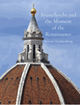
Brunelleschi and the moment of the Renaissance
Trachtenberg, Marvin
Reaktion Books
, 2025
; English
; 276 Pages
Filippo Brunelleschi is at once the most famous and most misunderstood architect of the Renaissance. The founding architect of the movement that led the way to modernity, his originality was not expressed in words or theory but rather in the materials he used, the scenography of space he engineered, the ingenuity of his designs, the exquisite workmanship of his detailing and the strikingly creative reworking of classical elements that make up his buildings. Marvin Trachtenberg offers a new view of Brunelleschi’s brilliant career as well as his life, guiding the reader through his most iconic works in Florence. In the process, this book sheds light on the driven, competitive culture of Renaissance Italy. This is an original, lively account of a key Renaissance figure.
Trachtenberg, Marvin
Reaktion Books
, 2025
; English
; 276 Pages
Filippo Brunelleschi is at once the most famous and most misunderstood architect of the Renaissance. The founding architect of the movement that led the way to modernity, his originality was not expressed in words or theory but rather in the materials he used, the scenography of space he engineered, the ingenuity of his designs, the exquisite workmanship of his detailing and the strikingly creative reworking of classical elements that make up his buildings. Marvin Trachtenberg offers a new view of Brunelleschi’s brilliant career as well as his life, guiding the reader through his most iconic works in Florence. In the process, this book sheds light on the driven, competitive culture of Renaissance Italy. This is an original, lively account of a key Renaissance figure.
eBook
Africa's buildings : architecture and the displacement of cultural heritage
Osayimwese, Itohan I.
Princeton University Press
, 2025
; English
; 297 Pages
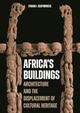
Between the nineteenth century and today, colonial officials, collectors, and anthropologists dismembered African buildings and dispersed their parts to museums in Europe and the United States. Most of these artifacts were cataloged as ornamental art objects, which erased their intended functions, and the removal of these objects often had catastrophic consequences for the original structures. Africa’s Buildings traces the history of the collection and distribution of African architectural fragments, documenting the brutality of the colonial regimes that looted Africa’s buildings and addressing the ethical questions surrounding the display of these objects.
Itohan Osayimwese ranges across the whole of Africa, from Egypt in the north to Zimbabwe in the south, and spanning the western, central, and eastern regions of the continent. She describes how collectors employed violent means to remove elements such as columns and door panels from buildings, and how these methods differentiated architectural collecting from conventional collecting. She shows how Western collectors mischaracterized building components as ornament, erasing their architectural character and concealing the evidence of their theft. Osayimwese discusses how the very act of displacing building parts like floor tiles and woven screen walls has resulted in a loss of knowledge about their original function and argues that because of these removals, scholars have yet to fully grasp the variety and character of African architecture.
Richly illustrated, Africa’s Buildings uncovers the vast scale of cultural displacement perpetrated by the West and proposes a new role for museums in this history, one in which they champion the repatriation of Africa’s architectural heritage and restitution for African communities.
Osayimwese, Itohan I.
Princeton University Press
, 2025
; English
; 297 Pages
Between the nineteenth century and today, colonial officials, collectors, and anthropologists dismembered African buildings and dispersed their parts to museums in Europe and the United States. Most of these artifacts were cataloged as ornamental art objects, which erased their intended functions, and the removal of these objects often had catastrophic consequences for the original structures. Africa’s Buildings traces the history of the collection and distribution of African architectural fragments, documenting the brutality of the colonial regimes that looted Africa’s buildings and addressing the ethical questions surrounding the display of these objects.
Itohan Osayimwese ranges across the whole of Africa, from Egypt in the north to Zimbabwe in the south, and spanning the western, central, and eastern regions of the continent. She describes how collectors employed violent means to remove elements such as columns and door panels from buildings, and how these methods differentiated architectural collecting from conventional collecting. She shows how Western collectors mischaracterized building components as ornament, erasing their architectural character and concealing the evidence of their theft. Osayimwese discusses how the very act of displacing building parts like floor tiles and woven screen walls has resulted in a loss of knowledge about their original function and argues that because of these removals, scholars have yet to fully grasp the variety and character of African architecture.
Richly illustrated, Africa’s Buildings uncovers the vast scale of cultural displacement perpetrated by the West and proposes a new role for museums in this history, one in which they champion the repatriation of Africa’s architectural heritage and restitution for African communities.
eBook
Versailles mirrored : the power of luxury, Louis XIV to Donald Trump
Wellington, Robert
Bloomsbury Visual Arts
, 2025
; English
; 257 Pages
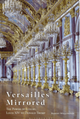
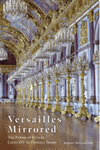
Why has Louis XIV's Palace of Versailles, defining symbol of hedonistic opulence in 17th-century France and synonymous with the notion of the divine right of kings, continued to shape the aesthetics of cultural capital in the centuries since his death?
In Versailles Mirrored, Robert Wellington tracks this enduring fascination with the Sun King's palace through eight case studies spanning the 17th to 21st centuries. The book demonstrates how the extravagant palace style began as a symbol of the state in the 17th century
how it was adopted by the nouveau riche to show off their financial success in the 19th century
and, remarkably, how that palace look returned to play a role in statecraft in the hands of US President Donald Trump. Wellington links the aristocratic architectural traditions of France, England, and Germany to North America through the lens of Versailles, French architecture, and the decorative arts.
Opening with a brief overview of the history of Versailles and the political and cultural motivations of its creation, subsequent chapters address aristocratic buildings in France and Germany built by the Sun King's contemporaries
historicism in the 19th century in Britain, Germany, and America
and the present day, with Trump's buildings and Château Louis XIV, known as the 'world's most expensive home', purchased by the Crown Prince of Saudi Arabia.
In uncovering the motivations of those patrons, the book ultimately reveals why Versailles remains a powerful point of reference for those who wish to flaunt their social, cultural, and political capital.
Wellington, Robert
Bloomsbury Visual Arts
, 2025
; English
; 257 Pages
Why has Louis XIV's Palace of Versailles, defining symbol of hedonistic opulence in 17th-century France and synonymous with the notion of the divine right of kings, continued to shape the aesthetics of cultural capital in the centuries since his death?
In Versailles Mirrored, Robert Wellington tracks this enduring fascination with the Sun King's palace through eight case studies spanning the 17th to 21st centuries. The book demonstrates how the extravagant palace style began as a symbol of the state in the 17th century
how it was adopted by the nouveau riche to show off their financial success in the 19th century
and, remarkably, how that palace look returned to play a role in statecraft in the hands of US President Donald Trump. Wellington links the aristocratic architectural traditions of France, England, and Germany to North America through the lens of Versailles, French architecture, and the decorative arts.
Opening with a brief overview of the history of Versailles and the political and cultural motivations of its creation, subsequent chapters address aristocratic buildings in France and Germany built by the Sun King's contemporaries
historicism in the 19th century in Britain, Germany, and America
and the present day, with Trump's buildings and Château Louis XIV, known as the 'world's most expensive home', purchased by the Crown Prince of Saudi Arabia.
In uncovering the motivations of those patrons, the book ultimately reveals why Versailles remains a powerful point of reference for those who wish to flaunt their social, cultural, and political capital.
eBook
Sparke, Penny; Scholze, Jana; Kirkham, Pat; Ioannidou, Ersi; Fisher, Fiona; Lara-Betancourt, Patricia
Bloomsbury Visual Arts
, 2025
; English
; 217 Pages
Exhibition design has long been studied in the fields of art, design and architecture, but the focus has been on the design of the exhibition narrative, rather than the design as interior space. This book breaks new ground, exploring the complex relationships which exist between exhibitions, museums and galleries and interior design.
Taking a case-study-driven approach, chapters explore a wealth of spaces
looking at contemporary art galleries and globally-renowned museums, and also subverted spaces like squatted homes, high-rises, distilleries and laboratories. Their geographic coverage ranges from socialist Eastern Europe to the US, stopping via many other countries such as Germany, Croatia, Australia and the UK.
These case studies rethink how exhibitions interact with their spatial surroundings, with key themes including the role of labour in creating these spaces, the dualism of public and private space, the impact of exhibition audiences and reception, the political implications of exhibitions and the influence of institutions.
With an interdisciplinary range of contributors, and combining a historical and contemporary outlook, this is a must-read for anyone designing or curating design-driven museum spaces.
Sparke, Penny; Scholze, Jana; Kirkham, Pat; Ioannidou, Ersi; Fisher, Fiona; Lara-Betancourt, Patricia
Bloomsbury Visual Arts
, 2025
; English
; 217 Pages
Exhibition design has long been studied in the fields of art, design and architecture, but the focus has been on the design of the exhibition narrative, rather than the design as interior space. This book breaks new ground, exploring the complex relationships which exist between exhibitions, museums and galleries and interior design.
Taking a case-study-driven approach, chapters explore a wealth of spaces
looking at contemporary art galleries and globally-renowned museums, and also subverted spaces like squatted homes, high-rises, distilleries and laboratories. Their geographic coverage ranges from socialist Eastern Europe to the US, stopping via many other countries such as Germany, Croatia, Australia and the UK.
These case studies rethink how exhibitions interact with their spatial surroundings, with key themes including the role of labour in creating these spaces, the dualism of public and private space, the impact of exhibition audiences and reception, the political implications of exhibitions and the influence of institutions.
With an interdisciplinary range of contributors, and combining a historical and contemporary outlook, this is a must-read for anyone designing or curating design-driven museum spaces.
eBook
Retrospective columns : ionic capitals and perceptions of the past in Greek architecture
Holzman, Samuel
Princeton University Press
, 2025
; English
; 295 Pages
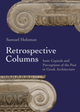
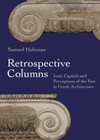
The Ionic order of ancient Greek architecture gradually evolved over the course of the sixth century BCE. In Retrospective Columns, Samuel Holzman examines an overlooked group of nine Ionic monuments that are varied in design but have capitals that combine the pillowy, convex volutes of sixth-century Ionia on one side and the crisp concave volutes of more contemporary styles on the other. Such hybrid capitals had a surprising longevity and range, spanning Greece, Italy, and Turkey between 550 and 250 BCE.
Why did ancient Greek builders sometimes revert to older carving styles and combine them with newer ones? One old theory is that outdated styles were a labor-saving shortcut—a notion Holzman puts to rest with a marble carving experiment that recreated the volutes of one capital. Rather, he argues that hybrid capitals represented an important parallel to other trends in Greek art, notably “bilingual” Attic vases, which combined older and newer painting techniques for sheer visual delight. By studying the chiaroscuro carving effects and painted polychrome decoration of Ionic architecture, Holzman shows that ancient viewers were primed to look for differences in such details, which the book illustrates with many original drawings and diagrams.
Exploring works of Ionic architecture from different periods in Ionia, the Cyclades, Athens, and the Northern Aegean, Retrospective Columns demonstrates that their builders ultimately returned to outmoded elements to establish continuity with the past, reinforcing community identities and architectural tradition.
Holzman, Samuel
Princeton University Press
, 2025
; English
; 295 Pages
The Ionic order of ancient Greek architecture gradually evolved over the course of the sixth century BCE. In Retrospective Columns, Samuel Holzman examines an overlooked group of nine Ionic monuments that are varied in design but have capitals that combine the pillowy, convex volutes of sixth-century Ionia on one side and the crisp concave volutes of more contemporary styles on the other. Such hybrid capitals had a surprising longevity and range, spanning Greece, Italy, and Turkey between 550 and 250 BCE.
Why did ancient Greek builders sometimes revert to older carving styles and combine them with newer ones? One old theory is that outdated styles were a labor-saving shortcut—a notion Holzman puts to rest with a marble carving experiment that recreated the volutes of one capital. Rather, he argues that hybrid capitals represented an important parallel to other trends in Greek art, notably “bilingual” Attic vases, which combined older and newer painting techniques for sheer visual delight. By studying the chiaroscuro carving effects and painted polychrome decoration of Ionic architecture, Holzman shows that ancient viewers were primed to look for differences in such details, which the book illustrates with many original drawings and diagrams.
Exploring works of Ionic architecture from different periods in Ionia, the Cyclades, Athens, and the Northern Aegean, Retrospective Columns demonstrates that their builders ultimately returned to outmoded elements to establish continuity with the past, reinforcing community identities and architectural tradition.
eBook
How to make a home: an ancient guide to style and comfort
Nichols, Marden Fitzpatrick; Nichols, Marden Fitzpatrick
Princeton University Press
, 2025
; English
; 234 Pages
The idea that our homes can communicate professional as well as personal identities may seem as new as the work-from-home revolution. But it was second nature to the ancient Romans, for whom the home was in many ways the center of public and private life. Roman authors saw infinite practical and symbolic value in houses, and they have much to say about them. How to Make a Home presents some of the best Roman writings on houses—from buying and selling to designing and decorating.
Edited and elegantly translated by Marden Fitzpatrick Nichols, How to Make a Home gathers selections by Cicero, Vitruvius, Seneca, and others, with the original Latin or Greek on facing pages. These writings reveal the pleasures and pitfalls of the Roman practice of making one’s home a cornerstone of self-expression. While the ideal home enshrined Roman virtues and could make a career, lavish building projects could lead to financial ruin and moral condemnation. These authors memorably describe such travails as deceptive staging, decorators run amok, know-it-all owners, unsupervised contractors, and buyer’s remorse. Along the way, they also explain why simplicity is bliss, privacy is for nobodies, a neglected house is a sign of a neglected soul, and much more.
A unique and charming introduction to Roman domestic architecture and its cultural significance, How to Make a Home reveals that the obsession with house and home has a long and fascinating history.
Nichols, Marden Fitzpatrick; Nichols, Marden Fitzpatrick
Princeton University Press
, 2025
; English
; 234 Pages
The idea that our homes can communicate professional as well as personal identities may seem as new as the work-from-home revolution. But it was second nature to the ancient Romans, for whom the home was in many ways the center of public and private life. Roman authors saw infinite practical and symbolic value in houses, and they have much to say about them. How to Make a Home presents some of the best Roman writings on houses—from buying and selling to designing and decorating.
Edited and elegantly translated by Marden Fitzpatrick Nichols, How to Make a Home gathers selections by Cicero, Vitruvius, Seneca, and others, with the original Latin or Greek on facing pages. These writings reveal the pleasures and pitfalls of the Roman practice of making one’s home a cornerstone of self-expression. While the ideal home enshrined Roman virtues and could make a career, lavish building projects could lead to financial ruin and moral condemnation. These authors memorably describe such travails as deceptive staging, decorators run amok, know-it-all owners, unsupervised contractors, and buyer’s remorse. Along the way, they also explain why simplicity is bliss, privacy is for nobodies, a neglected house is a sign of a neglected soul, and much more.
A unique and charming introduction to Roman domestic architecture and its cultural significance, How to Make a Home reveals that the obsession with house and home has a long and fascinating history.
eBook
Classical taste in the architectural world of Thomas Jefferson
Jordan, Alley Marie
Bloomsbury Academic
, 2025
; English
; 225 Pages
Reaching beyond politics and law, this book focuses on Thomas Jefferson as an aesthetic classicist.
Jefferson embraced the influence of antiquity through his adoption of classical architecture in his Virginia residences, in order to establish Rome as an ancestor to America. In a time of significant political and cultural change, he aligned himself with a Greco-Romano legacy that represented knowledge, power and art. Alley Marie Jordan studies the architectural and landscape spaces of Jefferson's classical taste, which include the villas of Monticello and Poplar Forest, as well as the University of Virginia. An examination of these places exposes his deeply entrenched views of the importance of classics in Virginia, and reveals them as expressions of admiration of classical antiquity.
Seeking to uncover an underexplored side of his character, Jordan deconstructs his identity through a classical lens and illustrates his influence on American culture, as well as his desire to reform it via the classics. By dislodging Jefferson from American politics, this study redefines his worldview and motivations for inventing an American virtue based on Horace's utile dulci. Although his participation in acquiring classical taste was not unique for his time, he did accomplish a unique aim with classicism: the blending of the American landscape with classical culture to create a 'new' American virtue.
Jordan, Alley Marie
Bloomsbury Academic
, 2025
; English
; 225 Pages
Reaching beyond politics and law, this book focuses on Thomas Jefferson as an aesthetic classicist.
Jefferson embraced the influence of antiquity through his adoption of classical architecture in his Virginia residences, in order to establish Rome as an ancestor to America. In a time of significant political and cultural change, he aligned himself with a Greco-Romano legacy that represented knowledge, power and art. Alley Marie Jordan studies the architectural and landscape spaces of Jefferson's classical taste, which include the villas of Monticello and Poplar Forest, as well as the University of Virginia. An examination of these places exposes his deeply entrenched views of the importance of classics in Virginia, and reveals them as expressions of admiration of classical antiquity.
Seeking to uncover an underexplored side of his character, Jordan deconstructs his identity through a classical lens and illustrates his influence on American culture, as well as his desire to reform it via the classics. By dislodging Jefferson from American politics, this study redefines his worldview and motivations for inventing an American virtue based on Horace's utile dulci. Although his participation in acquiring classical taste was not unique for his time, he did accomplish a unique aim with classicism: the blending of the American landscape with classical culture to create a 'new' American virtue.
