



Navigation menu
Search
Databases
All Databases
eBook
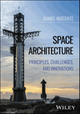
Space architecture : principles, challenges, and innovations
Inocente, Daniel
Wiley
, 2025
; English
; 563 Pages
An exciting and authoritative discussion of the latest advances in the technology required for space travel and space exploration In Space Architecture: Principles, Challenges, and Innovations, experienced architect and designer Daniel Inocente delivers a comprehensive exploration of the design and development of habitats and infrastructure required to support human life in space.
The book offers readers a thorough description of the principles, challenges, and solutions currently animating discussions in this emerging field.
Beginning with an introduction that establishes the central importance of space architecture, Inocente explains the interdisciplinary nature of the field and demonstrates how integrated knowledge from engineering, architecture, environmental science, and psychology are coming together to build a spacefaring future for humanity.
Readers will also find: A thorough introduction to space habitat design, including discussions of pre-integrated, prefabricated, and in-situ derived habitats Comprehensive explorations of the environmental challenges posed by space and space travel, including microgravity, extreme temperatures, vacuum, and ionizing radiation Practical discussions of space destinations, like low-earth orbit, deep space, moons, and planets Complete treatments of mobility architecture, including surface mobility systems and lunar terrain vehicles Perfect for both architecture and aerospace professionals, Space Architecture: Principles, Challenges, and Innovations will also benefit researchers with an interest in space architecture, students of architecture, aerospace engineering, or space studies, and laypeople enthusiastic about space travel and space exploration.
Inocente, Daniel
Wiley
, 2025
; English
; 563 Pages
An exciting and authoritative discussion of the latest advances in the technology required for space travel and space exploration In Space Architecture: Principles, Challenges, and Innovations, experienced architect and designer Daniel Inocente delivers a comprehensive exploration of the design and development of habitats and infrastructure required to support human life in space.
The book offers readers a thorough description of the principles, challenges, and solutions currently animating discussions in this emerging field.
Beginning with an introduction that establishes the central importance of space architecture, Inocente explains the interdisciplinary nature of the field and demonstrates how integrated knowledge from engineering, architecture, environmental science, and psychology are coming together to build a spacefaring future for humanity.
Readers will also find: A thorough introduction to space habitat design, including discussions of pre-integrated, prefabricated, and in-situ derived habitats Comprehensive explorations of the environmental challenges posed by space and space travel, including microgravity, extreme temperatures, vacuum, and ionizing radiation Practical discussions of space destinations, like low-earth orbit, deep space, moons, and planets Complete treatments of mobility architecture, including surface mobility systems and lunar terrain vehicles Perfect for both architecture and aerospace professionals, Space Architecture: Principles, Challenges, and Innovations will also benefit researchers with an interest in space architecture, students of architecture, aerospace engineering, or space studies, and laypeople enthusiastic about space travel and space exploration.

eBook
Heart and mind: the world of Edmund Tie
Woon, Tai Ho
World Scientific
, 2025
; English
; 262 Pages
In the 1990s, a time when multinationals reigned supreme, Edmund Tie did the unthinkable when he walked out of his job at a big MNC to start his own real estate consulting firm. The market gave his firm six months to survive, but he defied the odds, creating a brand that endured and grew beyond Singapore's shores. But his business smarts are just one facet of the Edmund Tie story
what he truly stands out for are his big heart and his philanthropic work. From his care for his mother to his charity work, his contributions have gone a long way to build a society that protects the underprivileged.The story of Edmund Tie is the story of a renaissance man, one who has the big heart of a unique human being and the mind of a strategic and brilliant real estate whiz. This book captures in its pages the story of how his deep-rooted sense of empathy came to be, starting from his childhood years and going on to show how his experiences shaped his care for the vulnerable and his dedication to social responsibility.
Woon, Tai Ho
World Scientific
, 2025
; English
; 262 Pages
In the 1990s, a time when multinationals reigned supreme, Edmund Tie did the unthinkable when he walked out of his job at a big MNC to start his own real estate consulting firm. The market gave his firm six months to survive, but he defied the odds, creating a brand that endured and grew beyond Singapore's shores. But his business smarts are just one facet of the Edmund Tie story
what he truly stands out for are his big heart and his philanthropic work. From his care for his mother to his charity work, his contributions have gone a long way to build a society that protects the underprivileged.The story of Edmund Tie is the story of a renaissance man, one who has the big heart of a unique human being and the mind of a strategic and brilliant real estate whiz. This book captures in its pages the story of how his deep-rooted sense of empathy came to be, starting from his childhood years and going on to show how his experiences shaped his care for the vulnerable and his dedication to social responsibility.
eBook
Foundations of architectural engineering
Bencheikh, Darda
Arcler Press
, 2025
; English
; 332 Pages
Architectural engineering merges architecture and engineering, uniting the imaginative visions of architects with the technical prowess of engineers. This interdisciplinary field focuses on designing, constructing, and maintaining buildings and structures, with a strong emphasis on optimizing functionality, safety, and environmental sustainability. The roots of architectural engineering can be traced back to ancient civilizations that erected remarkable structures like the pyramids and Roman aqueducts. However, it truly blossomed as a distinct discipline during the industrial revolution, when the integration of architectural principles and scientific knowledge became necessary due to advancements in engineering and construction techniques. Today, architectural engineers play a pivotal role in shaping the built environment by skillfully combining aesthetics with practicality. Their expertise in structural systems, materials, HVAC, lighting, acoustics, and energy efficiency ensures the creation of sustainable and resilient spaces for the betterment of society. "Foundations of Architectural Engineering" is a comprehensive resource that explores the principles and practices of architectural engineering. Designed for aspiring engineers, professionals, and students, this book provides a clear understanding of key concepts and skills in the field. It covers a range of topics, including the integration of architecture and engineering, building materials, structural engineering principles, building systems and services, acoustics and lighting, sustainable design, BIM and digital tools, and future trends. With concise explanations and insights, this book serves as an invaluable guide to the fundamental aspects of architectural engineering, equipping readers with the knowledge needed to excel in the field.
Bencheikh, Darda
Arcler Press
, 2025
; English
; 332 Pages
Architectural engineering merges architecture and engineering, uniting the imaginative visions of architects with the technical prowess of engineers. This interdisciplinary field focuses on designing, constructing, and maintaining buildings and structures, with a strong emphasis on optimizing functionality, safety, and environmental sustainability. The roots of architectural engineering can be traced back to ancient civilizations that erected remarkable structures like the pyramids and Roman aqueducts. However, it truly blossomed as a distinct discipline during the industrial revolution, when the integration of architectural principles and scientific knowledge became necessary due to advancements in engineering and construction techniques. Today, architectural engineers play a pivotal role in shaping the built environment by skillfully combining aesthetics with practicality. Their expertise in structural systems, materials, HVAC, lighting, acoustics, and energy efficiency ensures the creation of sustainable and resilient spaces for the betterment of society. "Foundations of Architectural Engineering" is a comprehensive resource that explores the principles and practices of architectural engineering. Designed for aspiring engineers, professionals, and students, this book provides a clear understanding of key concepts and skills in the field. It covers a range of topics, including the integration of architecture and engineering, building materials, structural engineering principles, building systems and services, acoustics and lighting, sustainable design, BIM and digital tools, and future trends. With concise explanations and insights, this book serves as an invaluable guide to the fundamental aspects of architectural engineering, equipping readers with the knowledge needed to excel in the field.
eBook
Ghost stories : architecture and the intangible
Baldwin, Peter J. (Guest-edited by)
Wiley
, 2024
; English
; 149 Pages
It is not without irony that in an age characterised by the dissolution of certainty – a consequence of digital dematerialisation and the catastrophic destabilisation of our social institutions and natural world – architecture, for so long the repository for our myths and the vessel for our intangible narratives and rituals, has been stripped bare. Increasingly preoccupied with the physical, material and measurable, architecture has forfeited its original purpose as a mediating link between the tacit and the tangible. Drawing on the current resurgence and our enduring cultural fascination with the ethereal and uncanny, this AD frames the spectral as a deconstructive gesture that undermines the fixedness and certainties of binary logics, a means to develop new practices and positions from which to address our contemporary uncertainties. Gathering a body of work that explores and speculates on architecture’s long romance with the incorporeal, the issue is intended as a catalyst through which latency, contingency and indeterminacy, inherent characteristics of the architectural condition, can once more be valued, cultivated and nurtured.
Contributors: Kirsty Badenoch; Michael Chapman;Nat Chard;Oliver G Goche and Peter P Goché; Perry Kulper; Ifigeneia Liangi and Daniel Dream; Eva Menuhin; Mark Morris; Mike Phillips; Ian Ritchie; Chris Speed, and Cameron Stebbing
Featured architects and designers: Captivate: Spatial Modelling Research Group, Daniel Libeskind, Night Kitchen Studio, Michael Sandle, and Ritchie Studio
Baldwin, Peter J. (Guest-edited by)
Wiley
, 2024
; English
; 149 Pages
It is not without irony that in an age characterised by the dissolution of certainty – a consequence of digital dematerialisation and the catastrophic destabilisation of our social institutions and natural world – architecture, for so long the repository for our myths and the vessel for our intangible narratives and rituals, has been stripped bare. Increasingly preoccupied with the physical, material and measurable, architecture has forfeited its original purpose as a mediating link between the tacit and the tangible. Drawing on the current resurgence and our enduring cultural fascination with the ethereal and uncanny, this AD frames the spectral as a deconstructive gesture that undermines the fixedness and certainties of binary logics, a means to develop new practices and positions from which to address our contemporary uncertainties. Gathering a body of work that explores and speculates on architecture’s long romance with the incorporeal, the issue is intended as a catalyst through which latency, contingency and indeterminacy, inherent characteristics of the architectural condition, can once more be valued, cultivated and nurtured.
Contributors: Kirsty Badenoch; Michael Chapman;Nat Chard;Oliver G Goche and Peter P Goché; Perry Kulper; Ifigeneia Liangi and Daniel Dream; Eva Menuhin; Mark Morris; Mike Phillips; Ian Ritchie; Chris Speed, and Cameron Stebbing
Featured architects and designers: Captivate: Spatial Modelling Research Group, Daniel Libeskind, Night Kitchen Studio, Michael Sandle, and Ritchie Studio
eBook
Nietzsche and architecture : the grand style for modern living
Huskinson, Lucy
Bloomsbury Visual Arts
, 2024
; English
; 281 Pages
Nietzsche and Architecture explores Nietzsche's relationship to the architects, buildings, and modern architectural movements he went on to inspire, and situates his philosophy more appropriately and comprehensively within the field of architectural studies, architectural history, and theory.
Divided into two parts, the book first examines Nietzsche's philosophy of architecture, exploring his notions of rhythm, ornament, style, and power. It then goes on to examine Nietzsche's ambiguous architectural legacy, scrutinising iconic architects, thinkers, designs, and cultural movements to ascertain their relationship with Nietzschean ideas, from the crystal architecture of Bruno Taut and Peter Behrens, to the 'new styles' of the Bauhaus and Le Corbusier, Louis H. Sullivan's desire for the heights, and the cultural propaganda of 'Nazi architecture'.
Clearly explaining the subtleties and complexities of Nietzsche's architectural thought, Nietzsche and Architecture provides an accessible insight into Nietzsche's philosophy and its significance to the development of modern architecture in the 19th and early 20th centuries, shedding vital light on the continued relevance of Nietzsche to architecture today.
Huskinson, Lucy
Bloomsbury Visual Arts
, 2024
; English
; 281 Pages
Nietzsche and Architecture explores Nietzsche's relationship to the architects, buildings, and modern architectural movements he went on to inspire, and situates his philosophy more appropriately and comprehensively within the field of architectural studies, architectural history, and theory.
Divided into two parts, the book first examines Nietzsche's philosophy of architecture, exploring his notions of rhythm, ornament, style, and power. It then goes on to examine Nietzsche's ambiguous architectural legacy, scrutinising iconic architects, thinkers, designs, and cultural movements to ascertain their relationship with Nietzschean ideas, from the crystal architecture of Bruno Taut and Peter Behrens, to the 'new styles' of the Bauhaus and Le Corbusier, Louis H. Sullivan's desire for the heights, and the cultural propaganda of 'Nazi architecture'.
Clearly explaining the subtleties and complexities of Nietzsche's architectural thought, Nietzsche and Architecture provides an accessible insight into Nietzsche's philosophy and its significance to the development of modern architecture in the 19th and early 20th centuries, shedding vital light on the continued relevance of Nietzsche to architecture today.
eBook
Is architecture art? : an introduction to the aesthetics of architecture
Macarthur, John
Bloomsbury Visual Arts
, 2024
; English
; 241 Pages
Is architecture an art, like literature or music? Or is it more akin to science or engineering? Can buildings be artworks, just like paintings and sculptures, or does their fundamentally functional nature mean they cannot be considered pure works of art?
Questions of architecture, art, and aesthetics do not allow for simple answers. But by asking such questions, we can usefully reveal the ways in which the concepts and meanings of architecture have changed over the centuries, and how they continue to change in the contemporary era.
Is Architecture Art? explores the key conceptual questions about the aesthetic appreciation of architecture and its persistently contested status as an artform. It engages the work of thinkers ranging from Hume and Kant to Adorno, Tafuri, and Rancière, and draws on accessible and thought-provoking accounts of historical and contemporary architectural and art theory. Taking novel approaches to issues that will be familiar to the practising architect, it shows how aesthetics and art theory can open up and illuminate architectural theory, issue by issue. Is Architecture Art? will provoke discussion and debate among architects and architectural theorists, and force a new understanding of the purpose of architectural practice in the contemporary era as the concepts of 'art', 'the arts', and of the creative economy have shifted and blurred as never before.
Macarthur, John
Bloomsbury Visual Arts
, 2024
; English
; 241 Pages
Is architecture an art, like literature or music? Or is it more akin to science or engineering? Can buildings be artworks, just like paintings and sculptures, or does their fundamentally functional nature mean they cannot be considered pure works of art?
Questions of architecture, art, and aesthetics do not allow for simple answers. But by asking such questions, we can usefully reveal the ways in which the concepts and meanings of architecture have changed over the centuries, and how they continue to change in the contemporary era.
Is Architecture Art? explores the key conceptual questions about the aesthetic appreciation of architecture and its persistently contested status as an artform. It engages the work of thinkers ranging from Hume and Kant to Adorno, Tafuri, and Rancière, and draws on accessible and thought-provoking accounts of historical and contemporary architectural and art theory. Taking novel approaches to issues that will be familiar to the practising architect, it shows how aesthetics and art theory can open up and illuminate architectural theory, issue by issue. Is Architecture Art? will provoke discussion and debate among architects and architectural theorists, and force a new understanding of the purpose of architectural practice in the contemporary era as the concepts of 'art', 'the arts', and of the creative economy have shifted and blurred as never before.

eBook
Spain : modern architectures in history
Cohn, David
Reaktion Books
, 2024
; English
; 345 Pages
An investigation of the influences and evolution of modern Spain's underappreciated, but foundational, architecture.
Spain's remarkable twentieth-century architecture evolved against a turbulent background of revolution, civil war, dictatorship, and transition to democracy. Architecture played a key role in Spain's struggle out of poverty and isolation, and its search for identity in the modern world.This book examines Spanish architecture from the roots of Modernism in the eighteenth and nineteenth centuries to the present, analyzing significant figures and their works in relation to their political, social, and cultural contexts, as well as their contributions to architecture as a whole. From the austere, local Modernism of the 1920s, the influence of international trends in the '30s, the renewed, "Organicist" Modernism of the '50s and '60s, to the flourishing public architecture of the late twentieth century and beyond, Spain provides a penetrating account of the country's rich and varied built environment.
Cohn, David
Reaktion Books
, 2024
; English
; 345 Pages
An investigation of the influences and evolution of modern Spain's underappreciated, but foundational, architecture.
Spain's remarkable twentieth-century architecture evolved against a turbulent background of revolution, civil war, dictatorship, and transition to democracy. Architecture played a key role in Spain's struggle out of poverty and isolation, and its search for identity in the modern world.This book examines Spanish architecture from the roots of Modernism in the eighteenth and nineteenth centuries to the present, analyzing significant figures and their works in relation to their political, social, and cultural contexts, as well as their contributions to architecture as a whole. From the austere, local Modernism of the 1920s, the influence of international trends in the '30s, the renewed, "Organicist" Modernism of the '50s and '60s, to the flourishing public architecture of the late twentieth century and beyond, Spain provides a penetrating account of the country's rich and varied built environment.
eBook
The eyes of the skin : architecture and the senses
Pallasmaa, Juhani
Wiley
, 2024
; English
; 115 Pages
THE EYES OF THE SKIN
Explore the relationship between architecture and the sensory experience with the fourth edition of this groundbreaking work
First published in 1996, The Eyes of the Skin is a classic of architectural theory. It asks the far-reaching question why, when there are five senses, is one single sense—sight—so predominant in architectural culture and design? With the ascendancy of the digital and the all-pervasive use of the image electronically, the subject is all the more pressing and topical since the first edition’s publication. Juhani Pallasmaa argues that the suppression of the other four sensory realms has led to the overall impoverishment of our built environment, often diminishing the emphasis on the spatial experience of a building and architecture’s ability to inspire, engage and be wholly life enhancing.
For a student reading this text for the first time, The Eyes of the Skin is a revelation. It provides a fresh, compelling insight into architectural culture which continues to inspire more than a quarter-century after its initial publication.
The fourth edition of The Eyes of the Skin also features:
• The author’s latest views on the emphasis of place, unfocused perception and existential experience
• Updates and clarifications throughout, to reinforce how our sense of self in the world remains our most important sense with the greatest architectural impact
• An updated Foreword that touches on the current understanding of the seminal importance of the existential sense
The Eyes of the Skin is a must-read for all architecture students, who will find its insights transformative.
Pallasmaa, Juhani
Wiley
, 2024
; English
; 115 Pages
THE EYES OF THE SKIN
Explore the relationship between architecture and the sensory experience with the fourth edition of this groundbreaking work
First published in 1996, The Eyes of the Skin is a classic of architectural theory. It asks the far-reaching question why, when there are five senses, is one single sense—sight—so predominant in architectural culture and design? With the ascendancy of the digital and the all-pervasive use of the image electronically, the subject is all the more pressing and topical since the first edition’s publication. Juhani Pallasmaa argues that the suppression of the other four sensory realms has led to the overall impoverishment of our built environment, often diminishing the emphasis on the spatial experience of a building and architecture’s ability to inspire, engage and be wholly life enhancing.
For a student reading this text for the first time, The Eyes of the Skin is a revelation. It provides a fresh, compelling insight into architectural culture which continues to inspire more than a quarter-century after its initial publication.
The fourth edition of The Eyes of the Skin also features:
• The author’s latest views on the emphasis of place, unfocused perception and existential experience
• Updates and clarifications throughout, to reinforce how our sense of self in the world remains our most important sense with the greatest architectural impact
• An updated Foreword that touches on the current understanding of the seminal importance of the existential sense
The Eyes of the Skin is a must-read for all architecture students, who will find its insights transformative.
eBook
Rootedness: reflections for young architects
Pallasmaa, Juhani; MacKeith, Peter
Wiley
, 2024
; English
; 155 Pages
rootedness
Discover the insights and lessons of architect Juhani Pallasmaa
In Rootedness: Reflections for Young Architects, Juhani Pallasmaa delivers an insightful and expansive collection of his most compelling ideas into architecture’s position among arts and culture. Pallasmaa speaks to architecture students and young professionals, discussing each topic with sincerity and openness, suggesting what can be learned from areas of culture beyond the boundaries of familiar professional disciplines. He outlines the growing need for an architecture based in self-awareness, reconnection to the environment, and a sense of ethical responsibility.
Each essay in Rootedness was initially conceived and presented as an educational lecture and has been carefully edited with clarifications, refinements, and valuable expansions. Accompanying sketches by the author emphasize the personal and intimate nature of the essays. The book also includes:
• Explorations of perception, creative practice, and the need for an ethical stance
• Thoughts, meditations, and challenges emerging from the author’s search for identity and purpose in his architectural work
• A wealth of references within the essays, as well as recommendations for books and films from which readers may draw further inspiration
Designed for students of architecture at any age, Rootedness: Reflections for Young Architects will also inspire professional architects, designers, and those in other creative professions.
Pallasmaa, Juhani; MacKeith, Peter
Wiley
, 2024
; English
; 155 Pages
rootedness
Discover the insights and lessons of architect Juhani Pallasmaa
In Rootedness: Reflections for Young Architects, Juhani Pallasmaa delivers an insightful and expansive collection of his most compelling ideas into architecture’s position among arts and culture. Pallasmaa speaks to architecture students and young professionals, discussing each topic with sincerity and openness, suggesting what can be learned from areas of culture beyond the boundaries of familiar professional disciplines. He outlines the growing need for an architecture based in self-awareness, reconnection to the environment, and a sense of ethical responsibility.
Each essay in Rootedness was initially conceived and presented as an educational lecture and has been carefully edited with clarifications, refinements, and valuable expansions. Accompanying sketches by the author emphasize the personal and intimate nature of the essays. The book also includes:
• Explorations of perception, creative practice, and the need for an ethical stance
• Thoughts, meditations, and challenges emerging from the author’s search for identity and purpose in his architectural work
• A wealth of references within the essays, as well as recommendations for books and films from which readers may draw further inspiration
Designed for students of architecture at any age, Rootedness: Reflections for Young Architects will also inspire professional architects, designers, and those in other creative professions.
eBook
Lebbeus Woods : exquisite experiments, early years
Wagner, Aleksandra; Spiller, Neil
Wiley
, 2024
; English
; 141 Pages
American architect Lebbeus Woods (1940–2012) remains a quiet hero not only among his colleagues, but also for architectural students intrigued by the ideas and fluent beauty of his powerful graphic verve, as well as of his writing. His projects from the mid-1980s until the end of his life have been widely published. However, this AD, in collaboration with the Estate of Lebbeus Woods, explores the earlier period beginning in the late 1960s when Woodswas honing his draughtsmanship and theoretical positions while experimenting with a variety of themes and different modes of expression.
When he burst onto the international architectural scene with a solo exhibition and accompanying catalogue (Lebbeus Woods: Origins) at the Architectural Association, London, in 1985, some wondered how anyone could emerge so fully formed, from nowhere. Working against the logic of ‘nowhere’, this issue charts his early trajectory through the largely unpublished drawings and texts, linking them with what came after. Aiming to generate new scholarship, its roster of international interdisciplinary critics and commentators offer a new understanding of Woods’s work and of his formative years, also shining a light on how we might think about the ‘early work’ of any architect’s career.
Contributors: Joseph Becker, Aaron Betsky, Peter Cook, Mark Dorrian, Riet Eeckhout, Kevin Erickson, Joerg Gleiter, Sharon Irish, Eliyahu Keller, Lawrence Rinder, Ashley Simone, Ben Sweeting.
Wagner, Aleksandra; Spiller, Neil
Wiley
, 2024
; English
; 141 Pages
American architect Lebbeus Woods (1940–2012) remains a quiet hero not only among his colleagues, but also for architectural students intrigued by the ideas and fluent beauty of his powerful graphic verve, as well as of his writing. His projects from the mid-1980s until the end of his life have been widely published. However, this AD, in collaboration with the Estate of Lebbeus Woods, explores the earlier period beginning in the late 1960s when Woodswas honing his draughtsmanship and theoretical positions while experimenting with a variety of themes and different modes of expression.
When he burst onto the international architectural scene with a solo exhibition and accompanying catalogue (Lebbeus Woods: Origins) at the Architectural Association, London, in 1985, some wondered how anyone could emerge so fully formed, from nowhere. Working against the logic of ‘nowhere’, this issue charts his early trajectory through the largely unpublished drawings and texts, linking them with what came after. Aiming to generate new scholarship, its roster of international interdisciplinary critics and commentators offer a new understanding of Woods’s work and of his formative years, also shining a light on how we might think about the ‘early work’ of any architect’s career.
Contributors: Joseph Becker, Aaron Betsky, Peter Cook, Mark Dorrian, Riet Eeckhout, Kevin Erickson, Joerg Gleiter, Sharon Irish, Eliyahu Keller, Lawrence Rinder, Ashley Simone, Ben Sweeting.
